
Russian English and Spanish proverbs Peculiarities of translation
Russian, English and Spanish proverbs. Peculiarities of translation. Performed: Reshetnikov Stepan 7 “D” Teachers: Poltavets Oksana Viktorovna Rab Polina Alexandrovna
The main aim: to study Russian, English and Spanish proverbs and to identify the peculiarities of the translation of English and Spanish proverbs into Russian Our objectives: 1. Find out the sources of origin of Russian, English and Spanish proverbs. 2. Identify ways to translate them. 3. Classify English and Spanish proverbs by their coincidence with Russian equivalents.
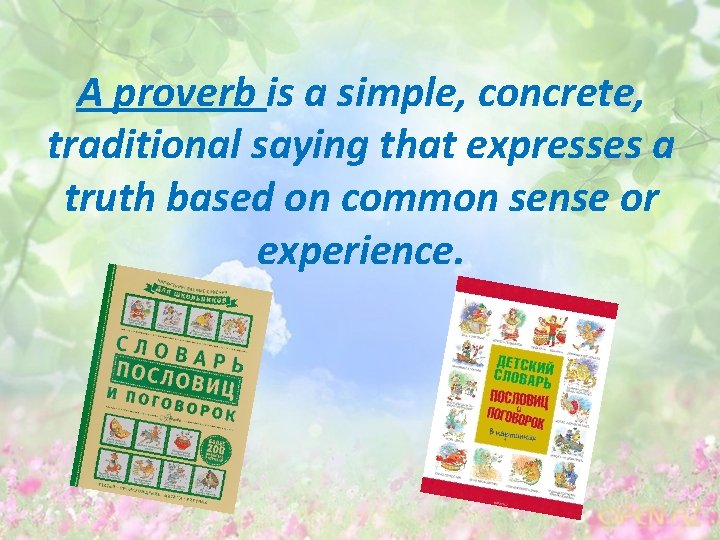
A proverb is a simple, concrete, traditional saying that expresses a truth based on common sense or experience.
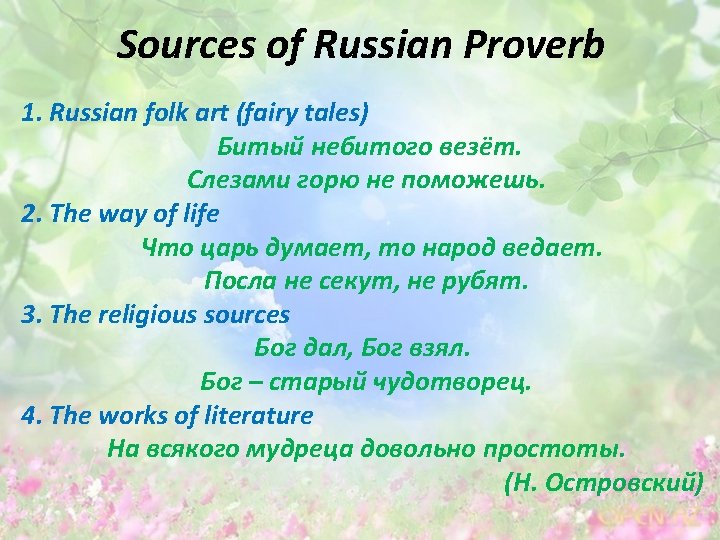
Sources of origin of Russian, English and Spanish proverbs
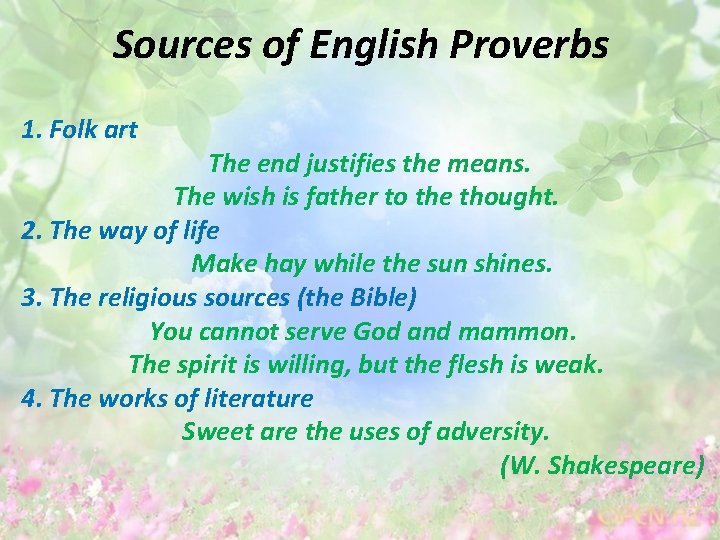
Sources of English Proverbs 1. Folk art The end justifies the means. The wish is father to the thought. 2. The way of life Make hay while the sun shines. 3. The religious sources (the Bible) You cannot serve God and mammon. The spirit is willing, but the flesh is weak. 4. The works of literature Sweet are the uses of adversity. (W. Shakespeare)
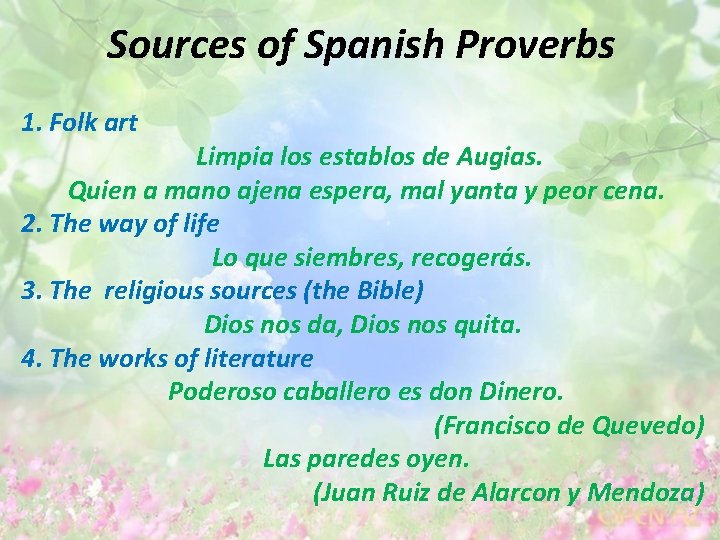
Sources of Spanish Proverbs 1. Folk art Limpia los establos de Augias. Quien a mano ajena espera, mal yanta y peor cena. 2. The way of life Lo que siembres, recogerás. 3. The religious sources (the Bible) Dios nos da, Dios nos quita. 4. The works of literature Poderoso caballero es don Dinero. (Francisco de Quevedo) Las paredes oyen. (Juan Ruiz de Alarcon y Mendoza)
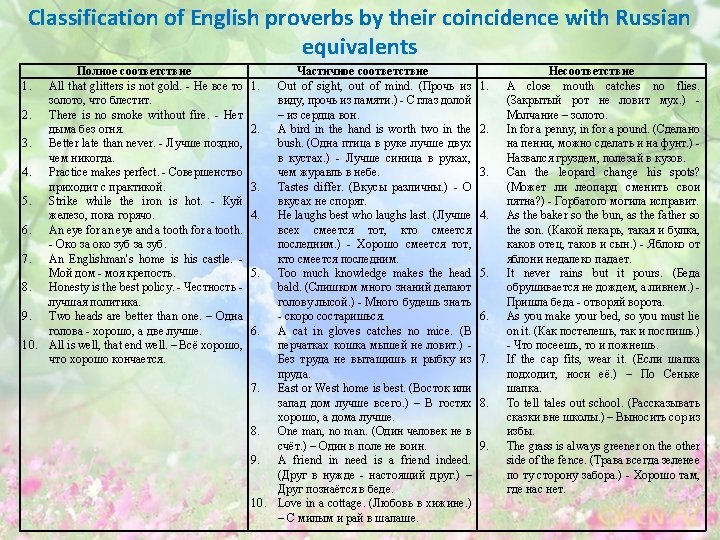
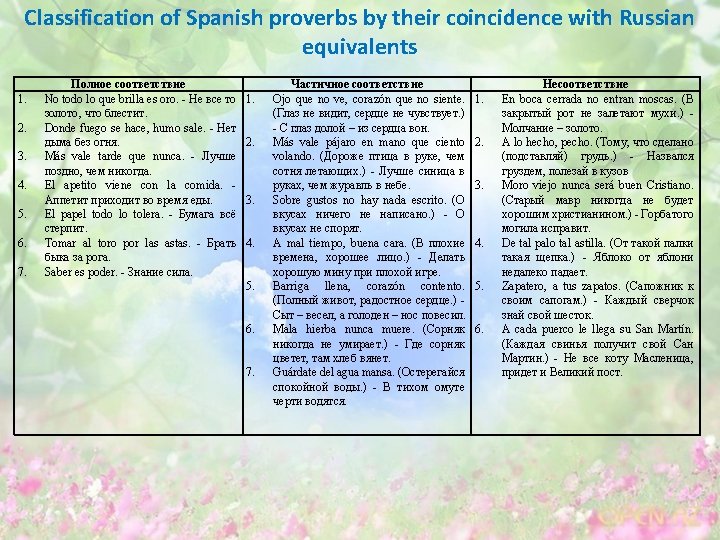
Methods of translation of English and Spanish proverbs into Russian 1. Proverbs that have an exact coincidence in the target language
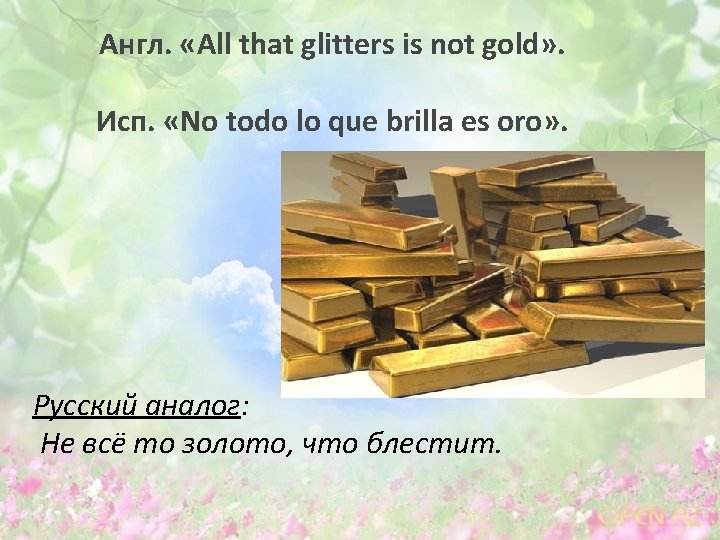
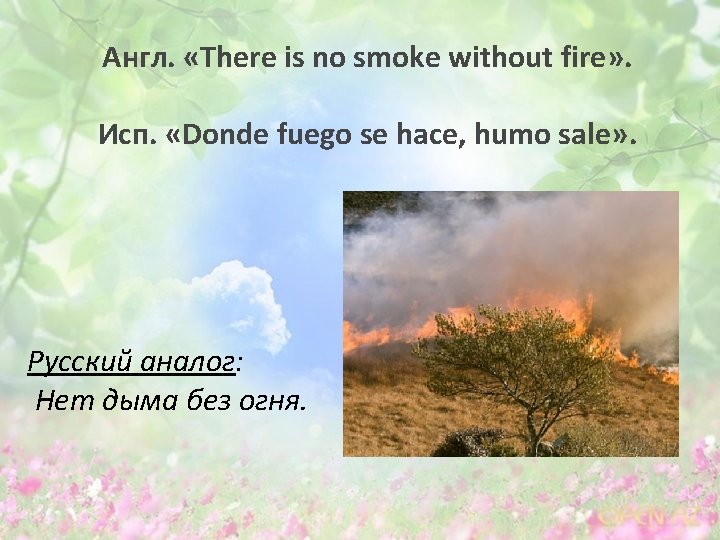
Англ. «There is no smoke without fire» . Исп. «Donde fuego se hace, humo sale» . Русский аналог: Нет дыма без огня.

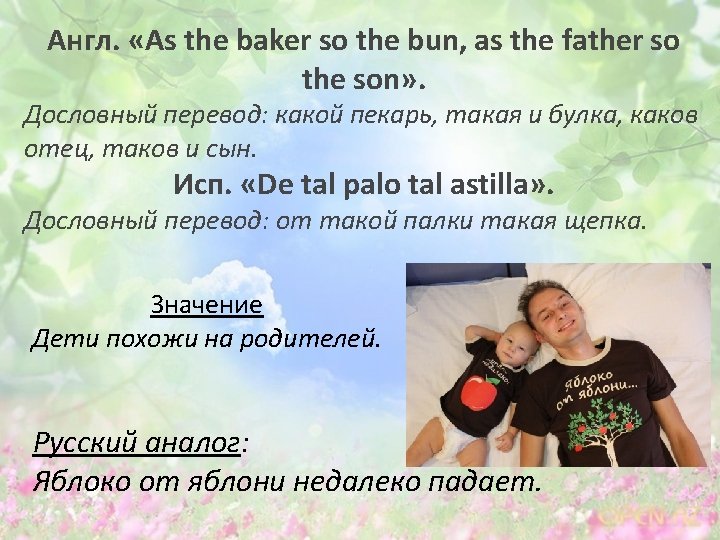
Methods of translation of English and Spanish proverbs into Russian 2. Proverbs that have a partial match with the target language
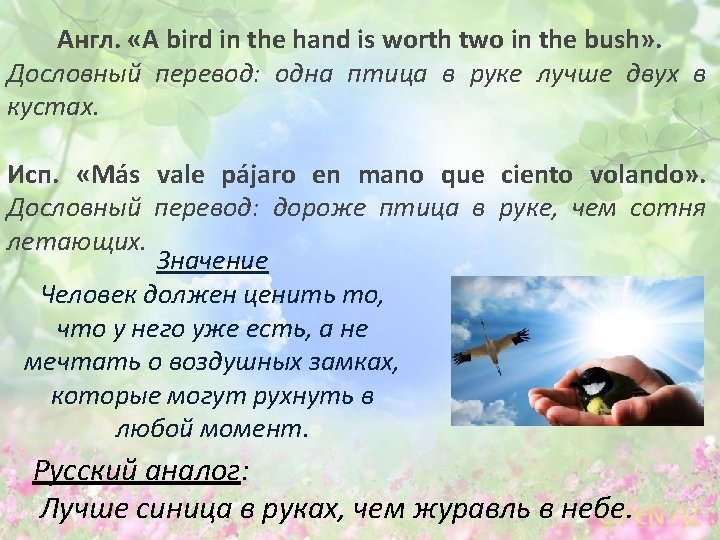
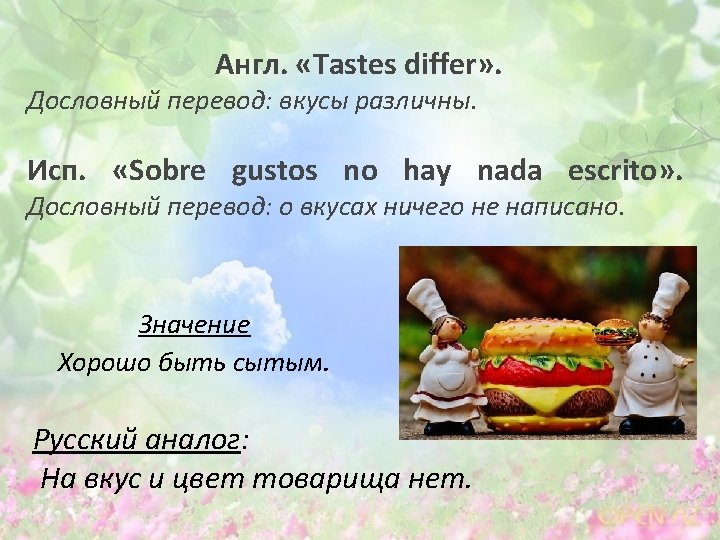
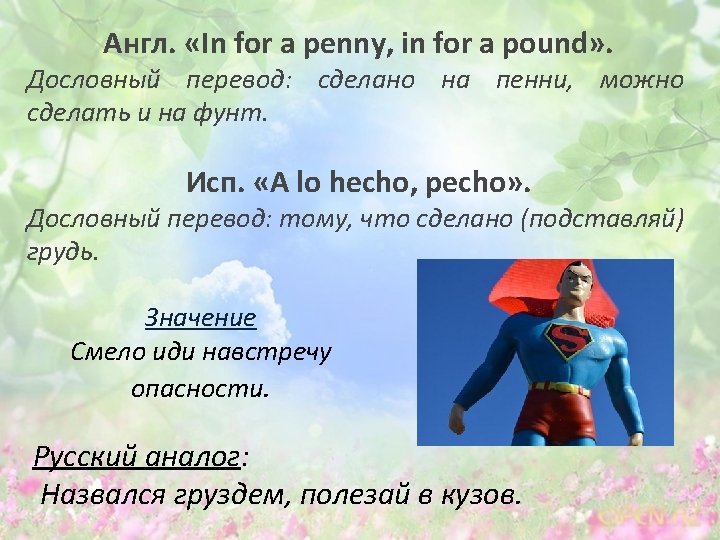
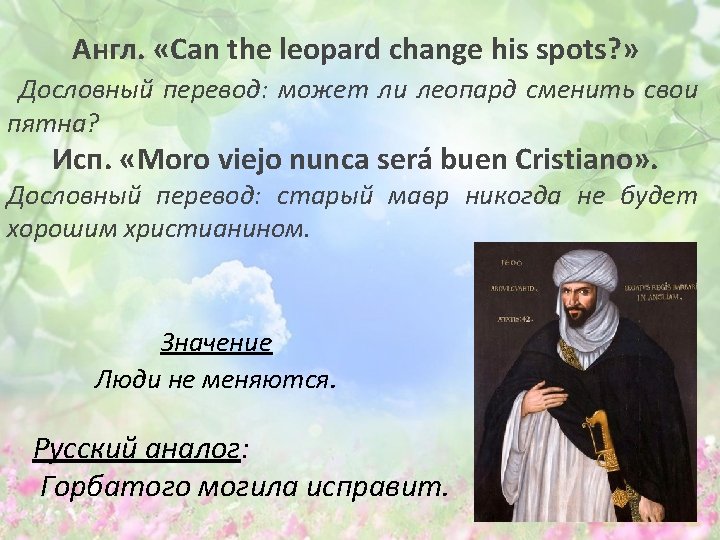
Methods of translation of English and Spanish proverbs into Russian 3. The original version does not match the target language
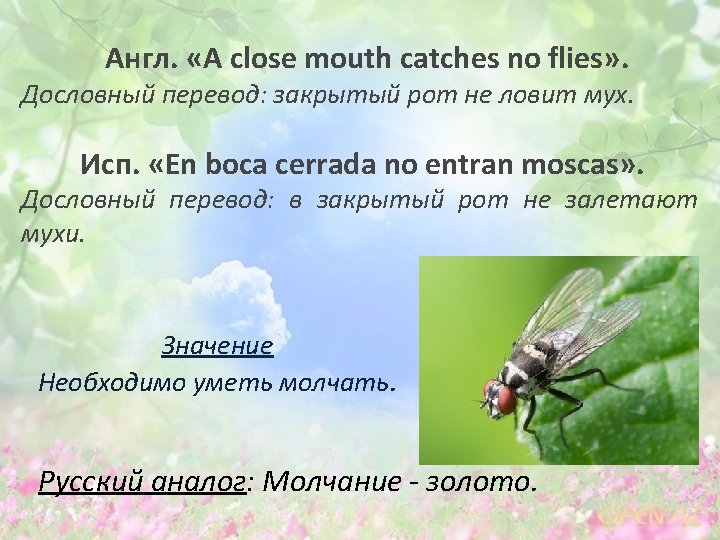
Conclusions 1. Proverbs are polysemantic and bright. They cover all spheres of life and are used by all segments of the population. 2. Both English and Spanish proverbs can be classified into three groups: - exact match in the target language; - partial match with the target language; - the original version does not correspond to the language of translation. 3. When we translate proverbs from one language to another, it is necessary to know the national characteristics of the studied language and the selection of appropriate equivalents within the meaning. 4. Frequent use of proverbs gives speech a special flavor, and knowledge of foreign proverbs improves the communicative function of the language.

Thank you for your attention!
- Slides: 24