
Russia A Quick History The Byzantine Empire After
Russia: A Quick History
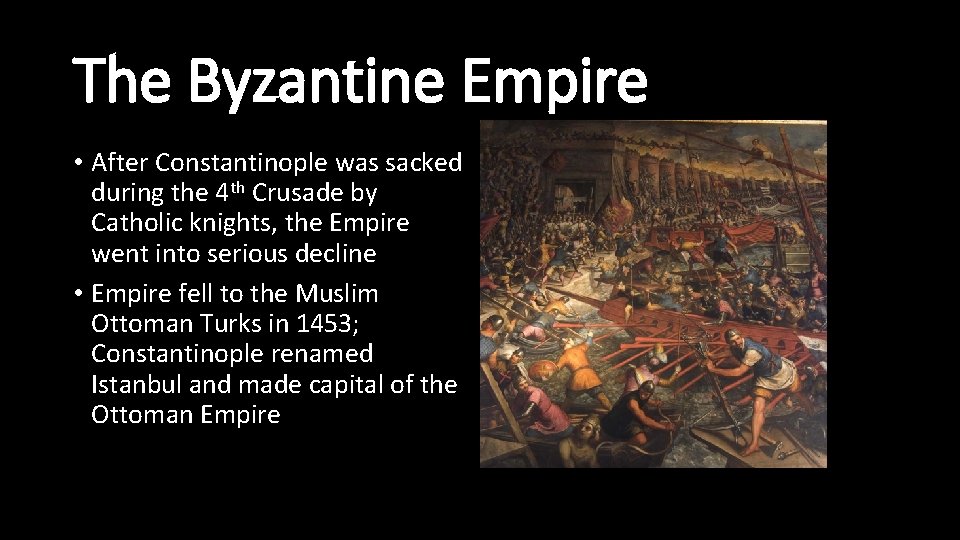
The Byzantine Empire • After Constantinople was sacked during the 4 th Crusade by Catholic knights, the Empire went into serious decline • Empire fell to the Muslim Ottoman Turks in 1453; Constantinople renamed Istanbul and made capital of the Ottoman Empire
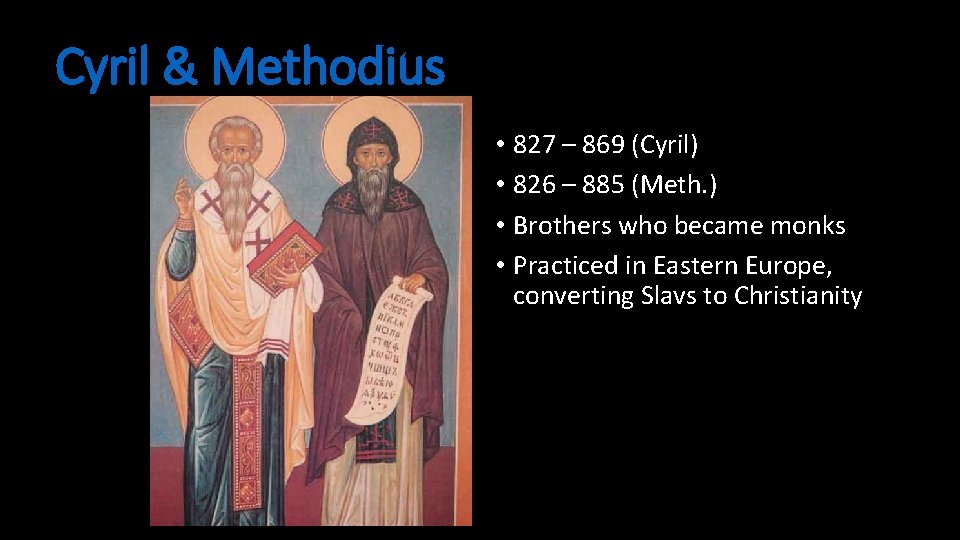
Cyril & Methodius • 827 – 869 (Cyril) • 826 – 885 (Meth. ) • Brothers who became monks • Practiced in Eastern Europe, converting Slavs to Christianity
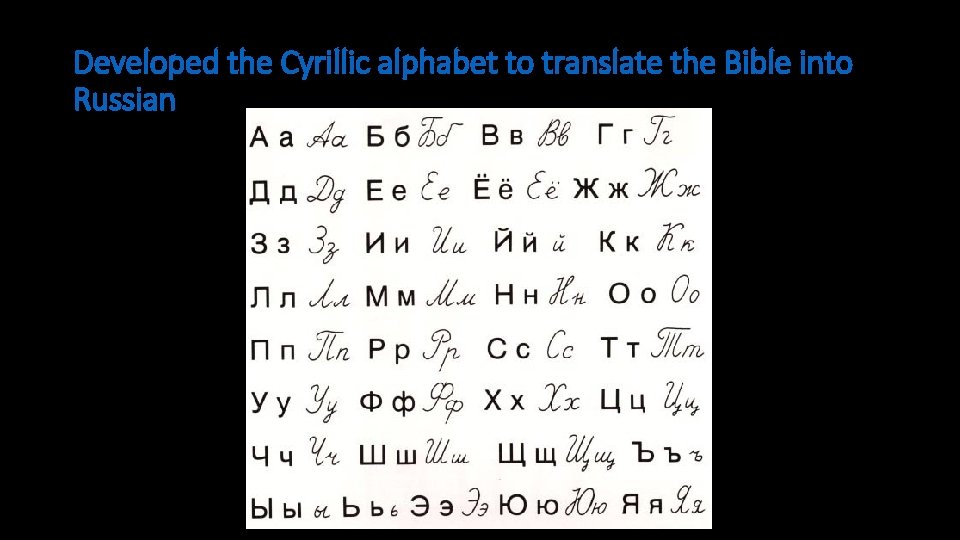
Developed the Cyrillic alphabet to translate the Bible into Russian
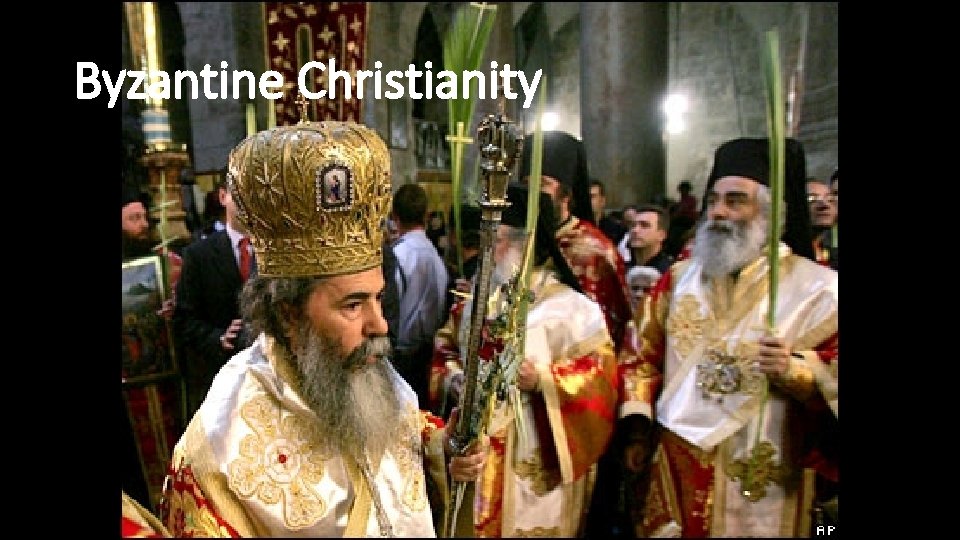
Byzantine Christianity
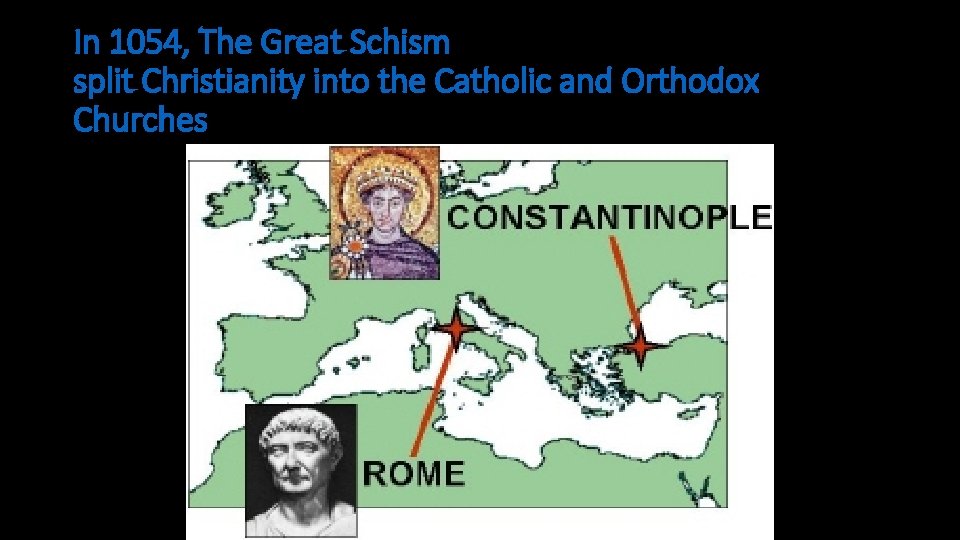
In 1054, The Great Schism split Christianity into the Catholic and Orthodox Churches
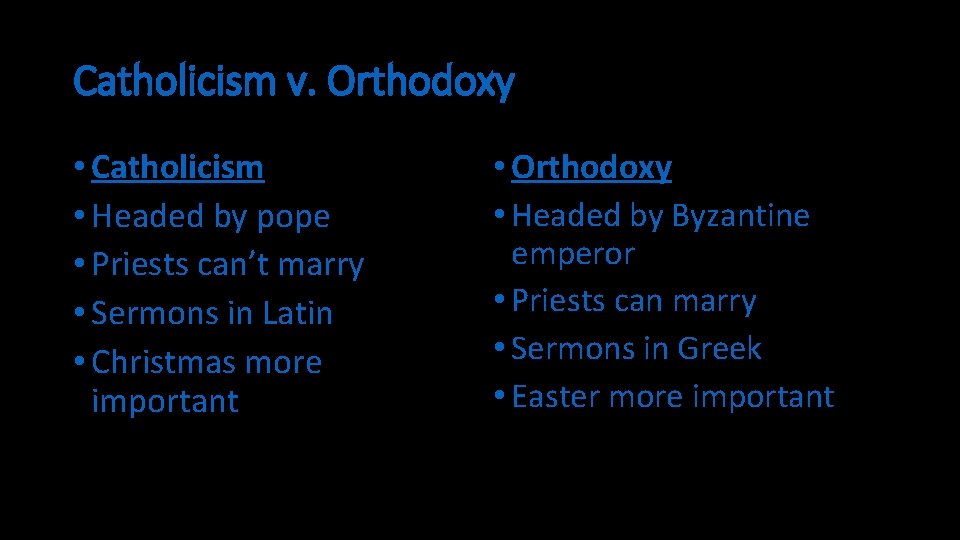
Catholicism v. Orthodoxy • Catholicism • Headed by pope • Priests can’t marry • Sermons in Latin • Christmas more important • Orthodoxy • Headed by Byzantine emperor • Priests can marry • Sermons in Greek • Easter more important
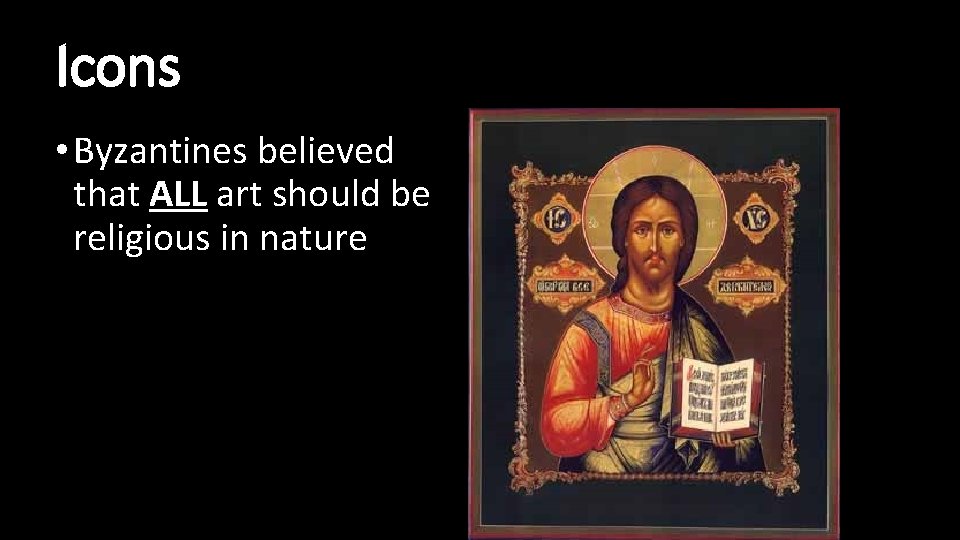
Icons • Byzantines believed that ALL art should be religious in nature
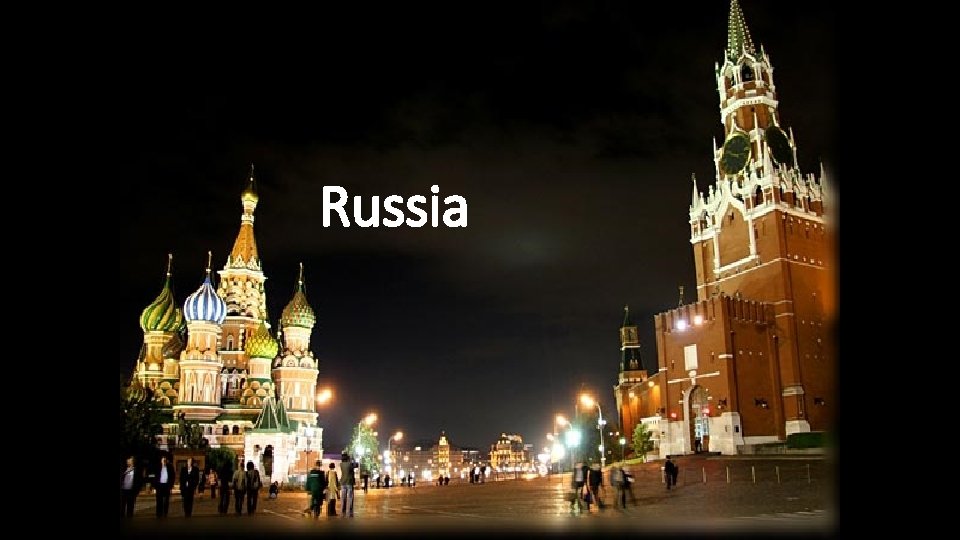
Russia
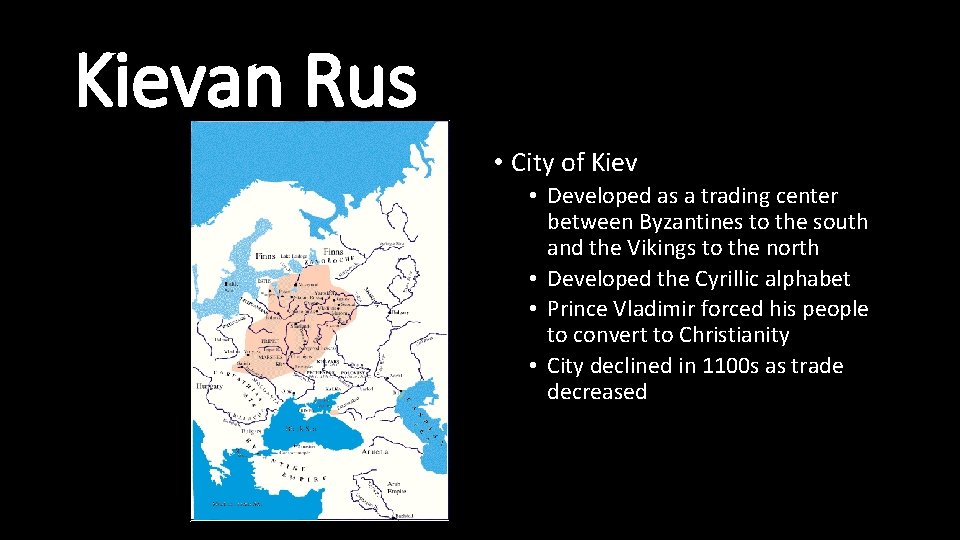
Kievan Rus • City of Kiev • Developed as a trading center between Byzantines to the south and the Vikings to the north • Developed the Cyrillic alphabet • Prince Vladimir forced his people to convert to Christianity • City declined in 1100 s as trade decreased
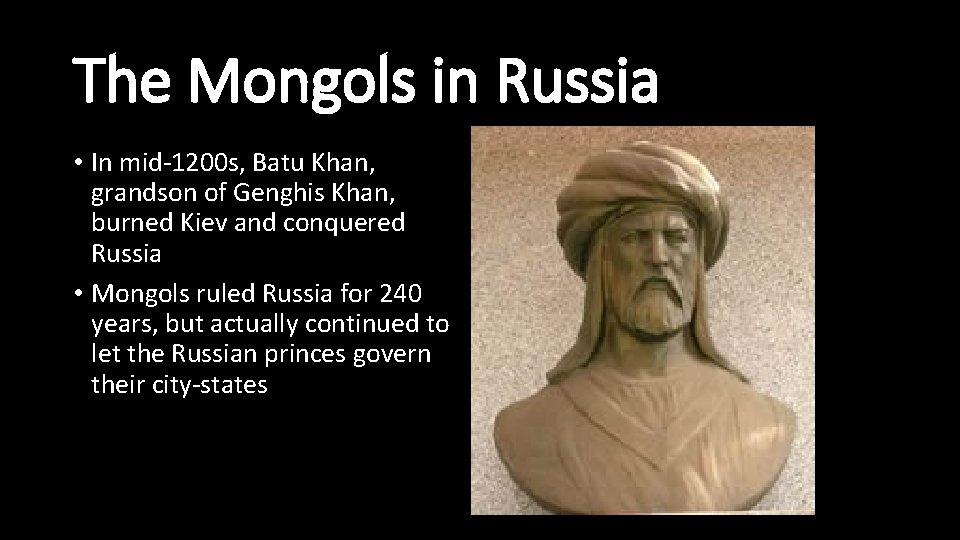
The Mongols in Russia • In mid-1200 s, Batu Khan, grandson of Genghis Khan, burned Kiev and conquered Russia • Mongols ruled Russia for 240 years, but actually continued to let the Russian princes govern their city-states
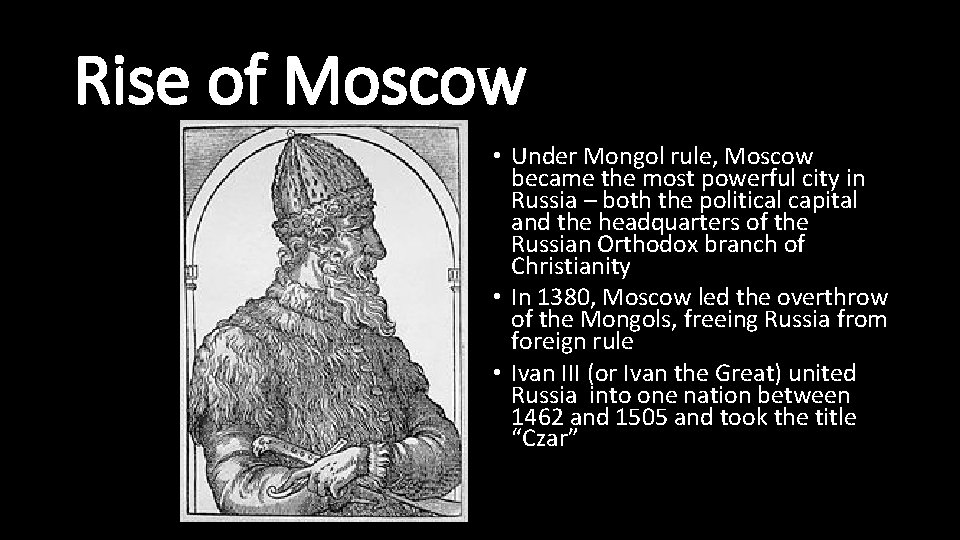
Rise of Moscow • Under Mongol rule, Moscow became the most powerful city in Russia – both the political capital and the headquarters of the Russian Orthodox branch of Christianity • In 1380, Moscow led the overthrow of the Mongols, freeing Russia from foreign rule • Ivan III (or Ivan the Great) united Russia into one nation between 1462 and 1505 and took the title “Czar”
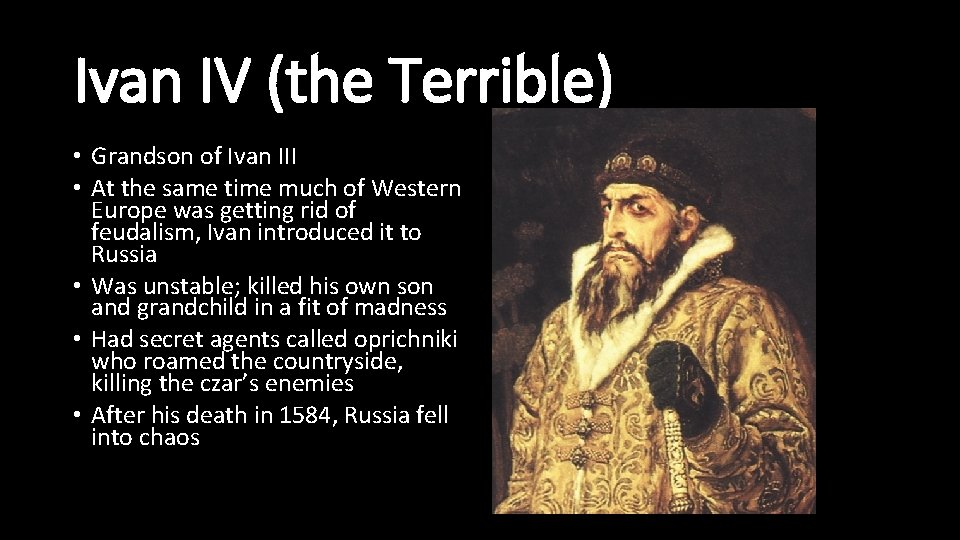
Ivan IV (the Terrible) • Grandson of Ivan III • At the same time much of Western Europe was getting rid of feudalism, Ivan introduced it to Russia • Was unstable; killed his own son and grandchild in a fit of madness • Had secret agents called oprichniki who roamed the countryside, killing the czar’s enemies • After his death in 1584, Russia fell into chaos
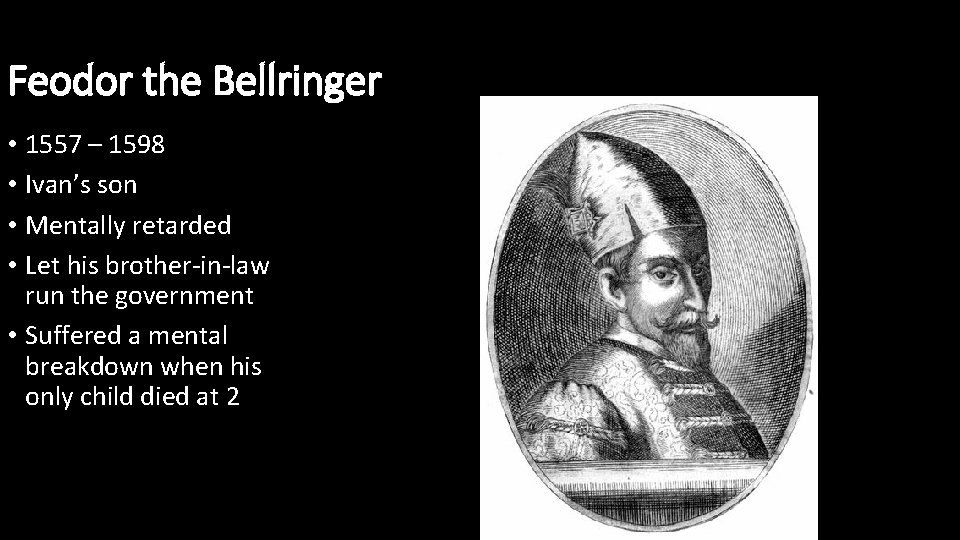
Feodor the Bellringer • 1557 – 1598 • Ivan’s son • Mentally retarded • Let his brother-in-law run the government • Suffered a mental breakdown when his only child died at 2
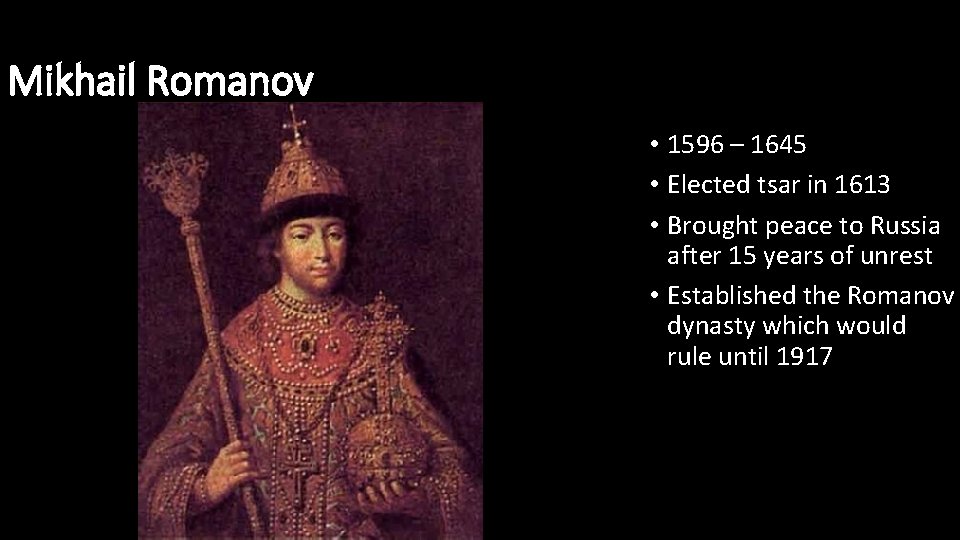
Mikhail Romanov • 1596 – 1645 • Elected tsar in 1613 • Brought peace to Russia after 15 years of unrest • Established the Romanov dynasty which would rule until 1917
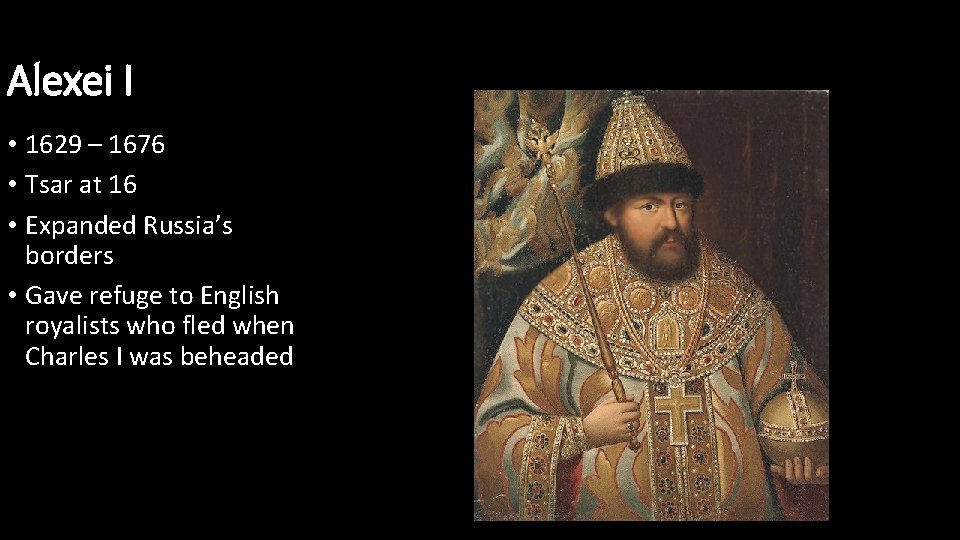
Alexei I • 1629 – 1676 • Tsar at 16 • Expanded Russia’s borders • Gave refuge to English royalists who fled when Charles I was beheaded
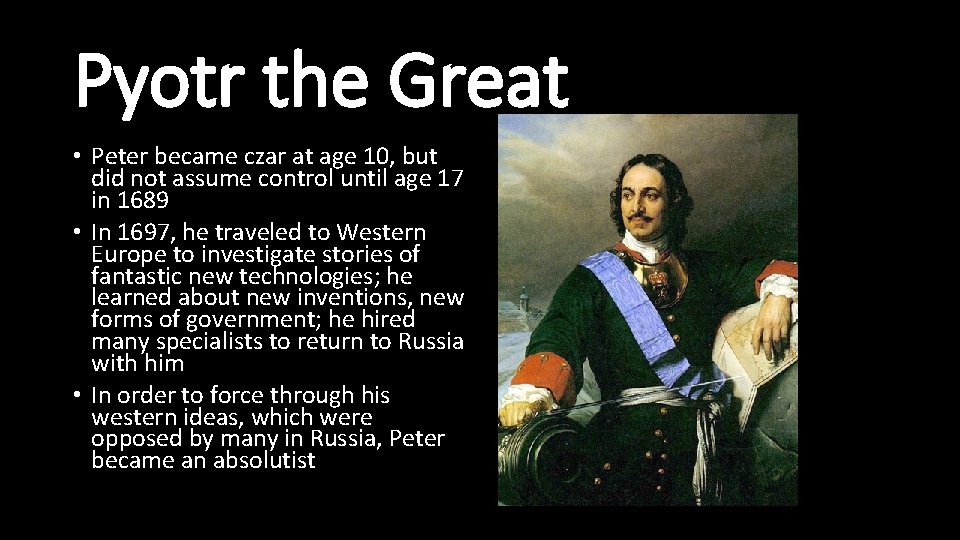
Pyotr the Great • Peter became czar at age 10, but did not assume control until age 17 in 1689 • In 1697, he traveled to Western Europe to investigate stories of fantastic new technologies; he learned about new inventions, new forms of government; he hired many specialists to return to Russia with him • In order to force through his western ideas, which were opposed by many in Russia, Peter became an absolutist
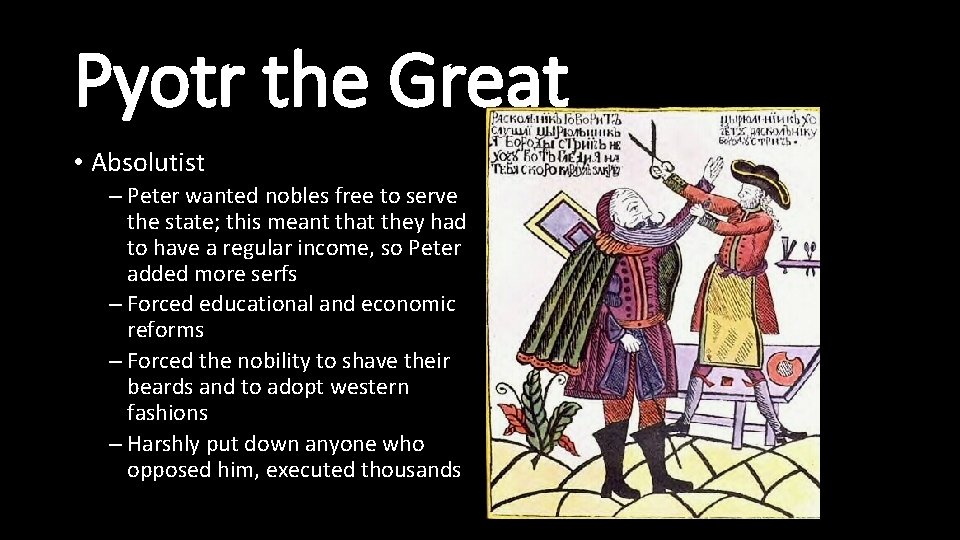
Pyotr the Great • Absolutist – Peter wanted nobles free to serve the state; this meant that they had to have a regular income, so Peter added more serfs – Forced educational and economic reforms – Forced the nobility to shave their beards and to adopt western fashions – Harshly put down anyone who opposed him, executed thousands
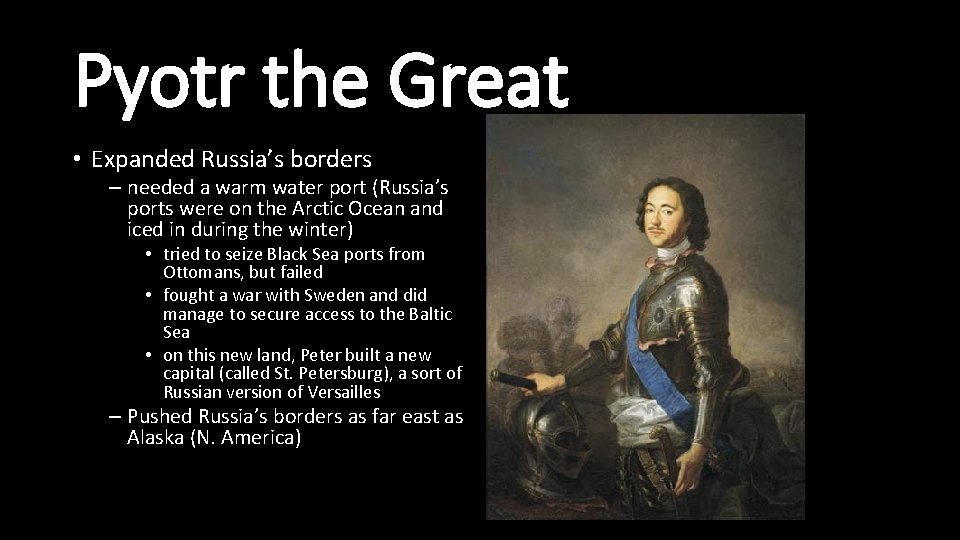
Pyotr the Great • Expanded Russia’s borders – needed a warm water port (Russia’s ports were on the Arctic Ocean and iced in during the winter) • tried to seize Black Sea ports from Ottomans, but failed • fought a war with Sweden and did manage to secure access to the Baltic Sea • on this new land, Peter built a new capital (called St. Petersburg), a sort of Russian version of Versailles – Pushed Russia’s borders as far east as Alaska (N. America)
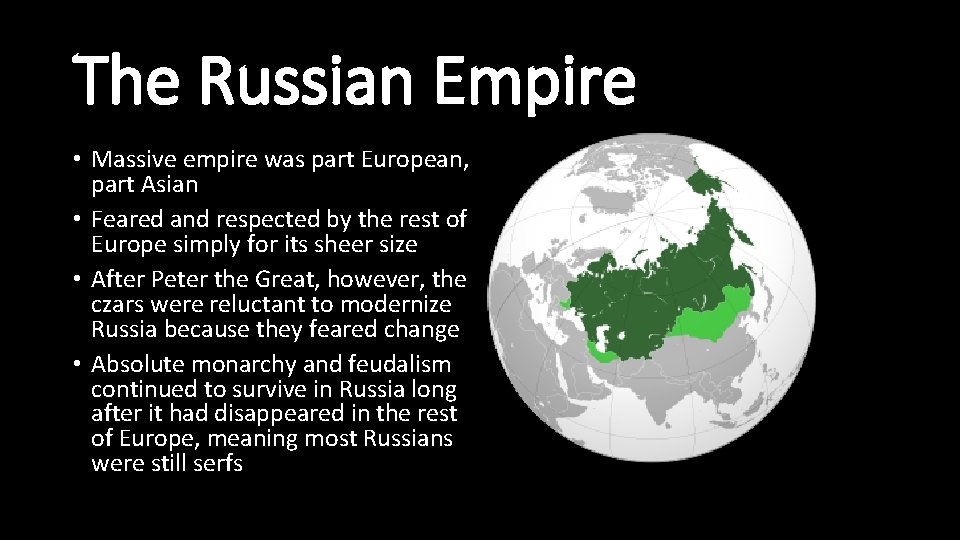
The Russian Empire • Massive empire was part European, part Asian • Feared and respected by the rest of Europe simply for its sheer size • After Peter the Great, however, the czars were reluctant to modernize Russia because they feared change • Absolute monarchy and feudalism continued to survive in Russia long after it had disappeared in the rest of Europe, meaning most Russians were still serfs
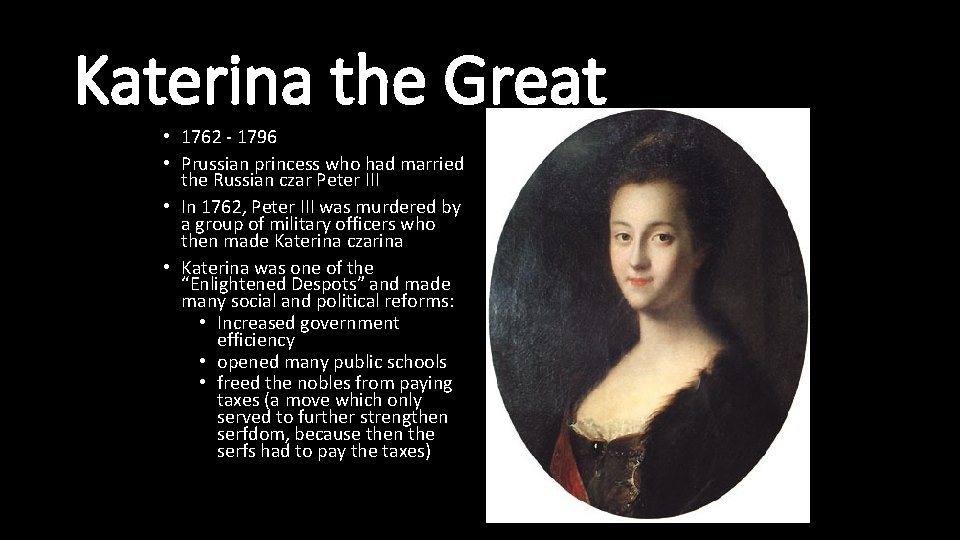
Katerina the Great • 1762 - 1796 • Prussian princess who had married the Russian czar Peter III • In 1762, Peter III was murdered by a group of military officers who then made Katerina czarina • Katerina was one of the “Enlightened Despots” and made many social and political reforms: • Increased government efficiency • opened many public schools • freed the nobles from paying taxes (a move which only served to further strengthen serfdom, because then the serfs had to pay the taxes)
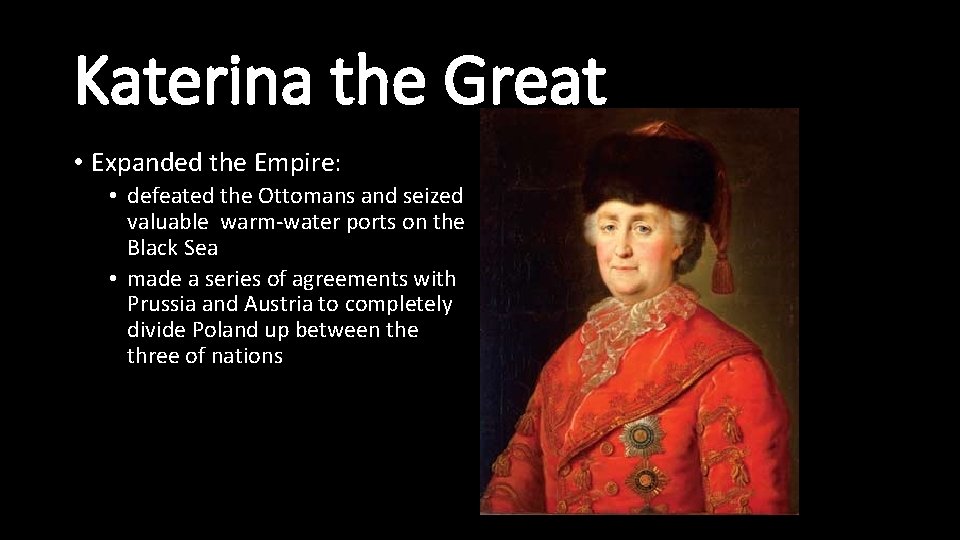
Katerina the Great • Expanded the Empire: • defeated the Ottomans and seized valuable warm-water ports on the Black Sea • made a series of agreements with Prussia and Austria to completely divide Poland up between the three of nations
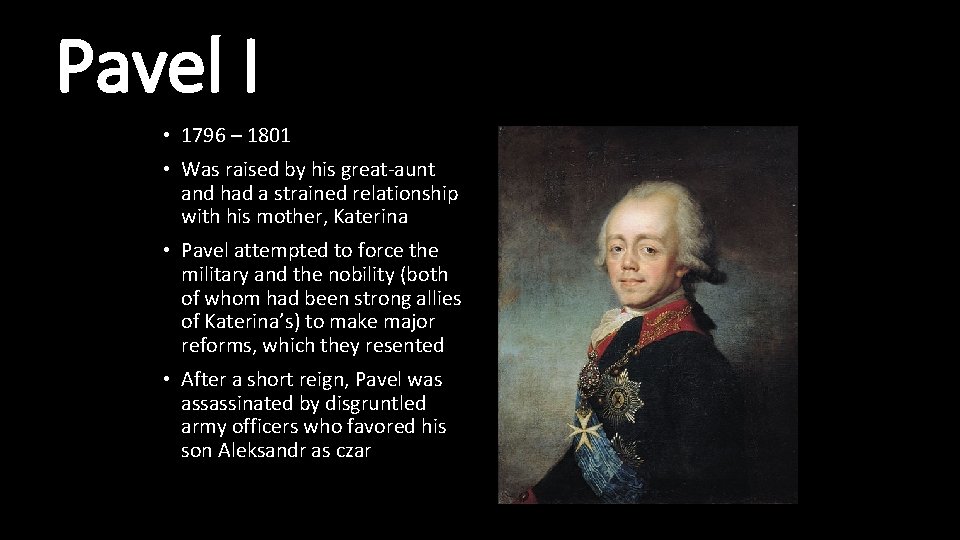
Pavel I • 1796 – 1801 • Was raised by his great-aunt and had a strained relationship with his mother, Katerina • Pavel attempted to force the military and the nobility (both of whom had been strong allies of Katerina’s) to make major reforms, which they resented • After a short reign, Pavel was assassinated by disgruntled army officers who favored his son Aleksandr as czar
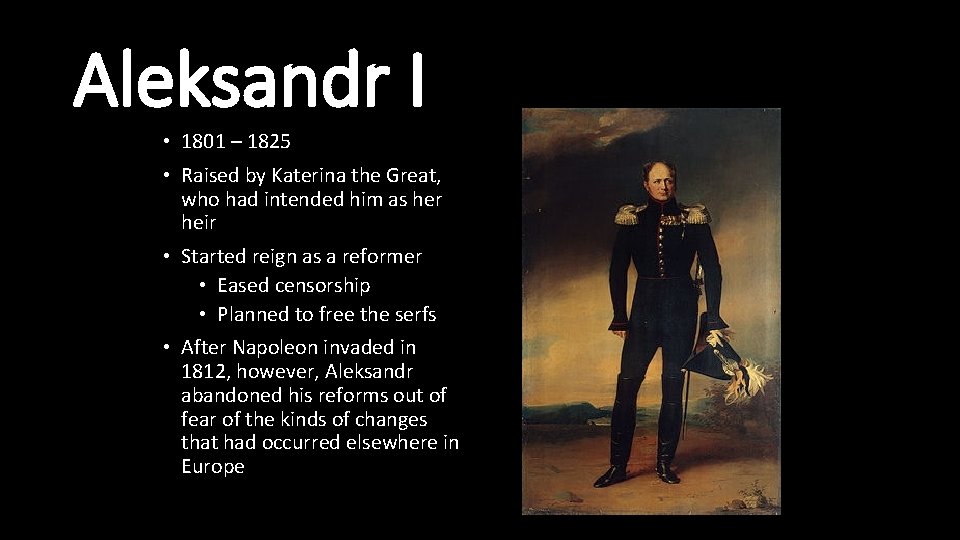
Aleksandr I • 1801 – 1825 • Raised by Katerina the Great, who had intended him as her heir • Started reign as a reformer • Eased censorship • Planned to free the serfs • After Napoleon invaded in 1812, however, Aleksandr abandoned his reforms out of fear of the kinds of changes that had occurred elsewhere in Europe
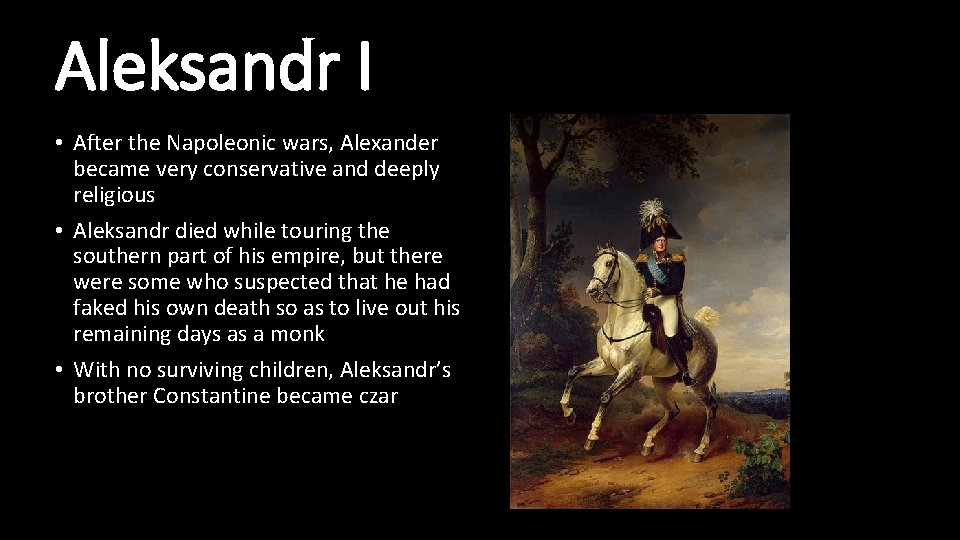
Aleksandr I • After the Napoleonic wars, Alexander became very conservative and deeply religious • Aleksandr died while touring the southern part of his empire, but there were some who suspected that he had faked his own death so as to live out his remaining days as a monk • With no surviving children, Aleksandr’s brother Constantine became czar
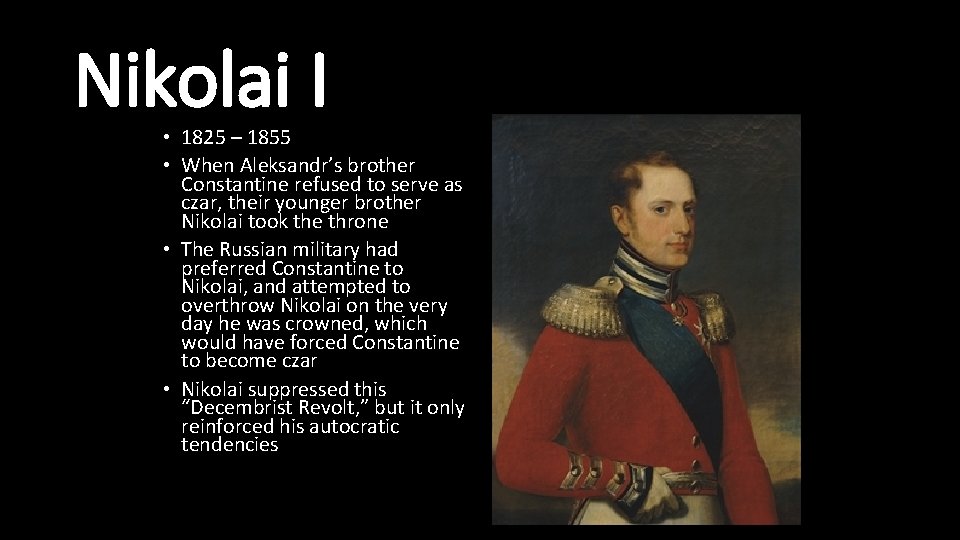
Nikolai I • 1825 – 1855 • When Aleksandr’s brother Constantine refused to serve as czar, their younger brother Nikolai took the throne • The Russian military had preferred Constantine to Nikolai, and attempted to overthrow Nikolai on the very day he was crowned, which would have forced Constantine to become czar • Nikolai suppressed this “Decembrist Revolt, ” but it only reinforced his autocratic tendencies
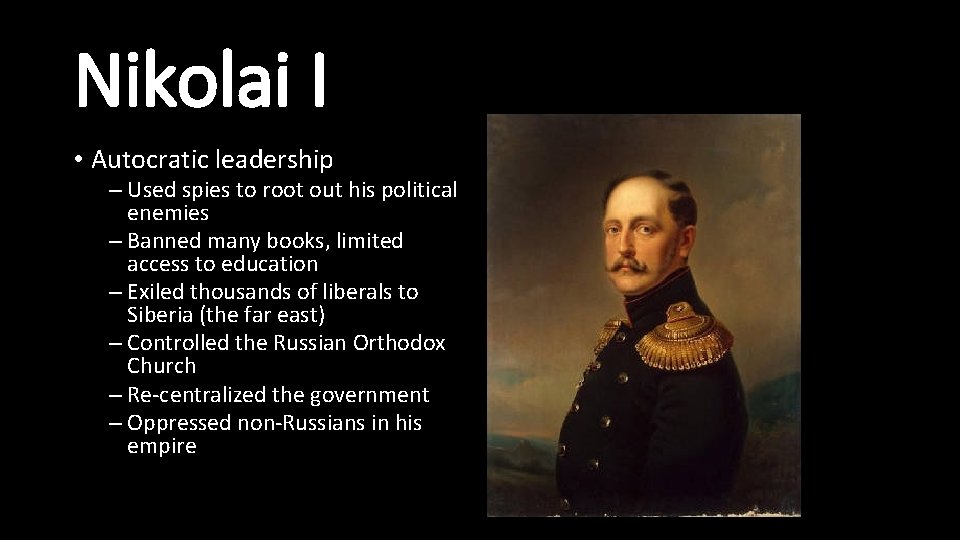
Nikolai I • Autocratic leadership – Used spies to root out his political enemies – Banned many books, limited access to education – Exiled thousands of liberals to Siberia (the far east) – Controlled the Russian Orthodox Church – Re-centralized the government – Oppressed non-Russians in his empire
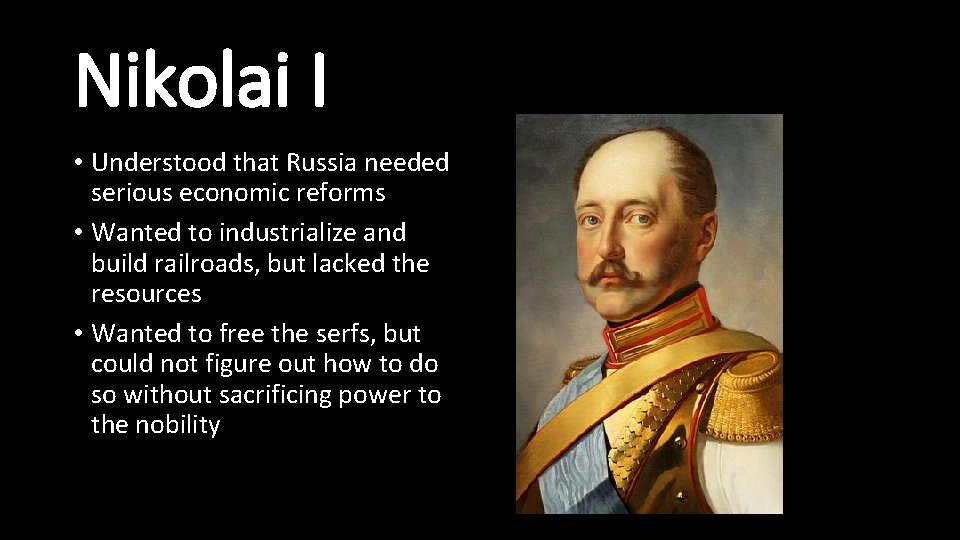
Nikolai I • Understood that Russia needed serious economic reforms • Wanted to industrialize and build railroads, but lacked the resources • Wanted to free the serfs, but could not figure out how to do so without sacrificing power to the nobility
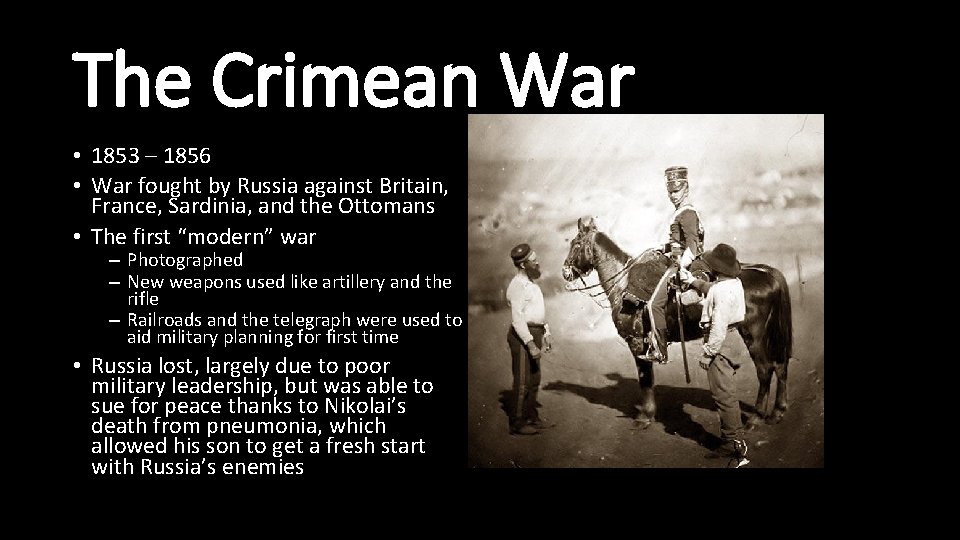
The Crimean War • 1853 – 1856 • War fought by Russia against Britain, France, Sardinia, and the Ottomans • The first “modern” war – Photographed – New weapons used like artillery and the rifle – Railroads and the telegraph were used to aid military planning for first time • Russia lost, largely due to poor military leadership, but was able to sue for peace thanks to Nikolai’s death from pneumonia, which allowed his son to get a fresh start with Russia’s enemies
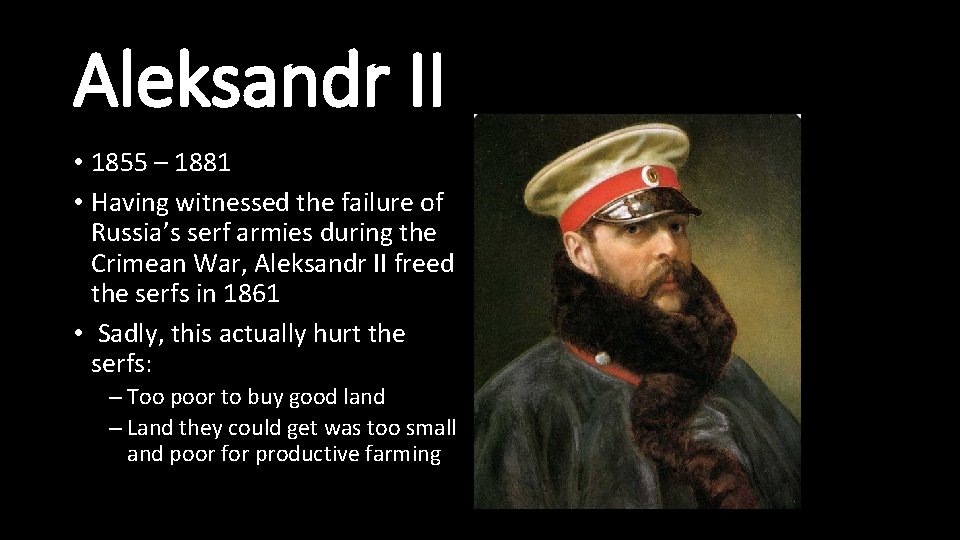
Aleksandr II • 1855 – 1881 • Having witnessed the failure of Russia’s serf armies during the Crimean War, Aleksandr II freed the serfs in 1861 • Sadly, this actually hurt the serfs: – Too poor to buy good land – Land they could get was too small and poor for productive farming
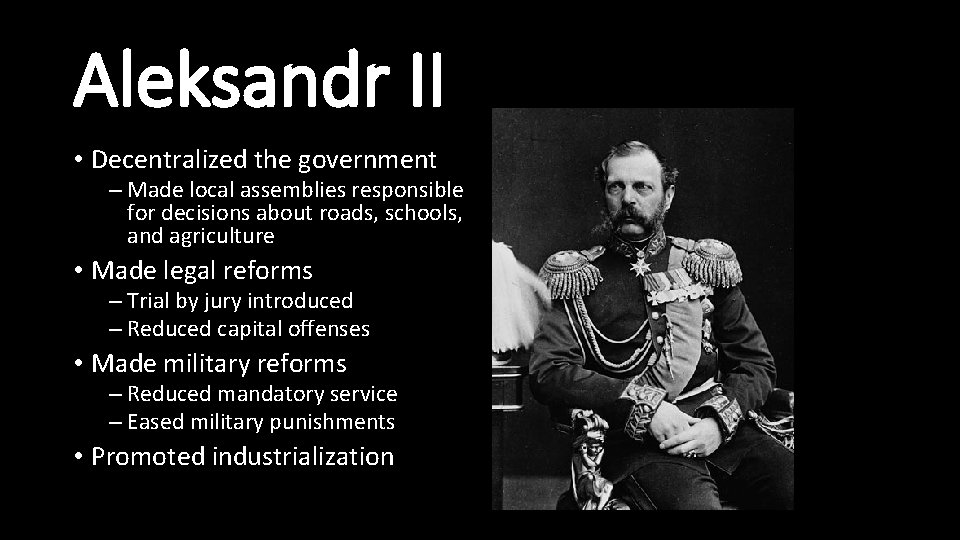
Aleksandr II • Decentralized the government – Made local assemblies responsible for decisions about roads, schools, and agriculture • Made legal reforms – Trial by jury introduced – Reduced capital offenses • Made military reforms – Reduced mandatory service – Eased military punishments • Promoted industrialization
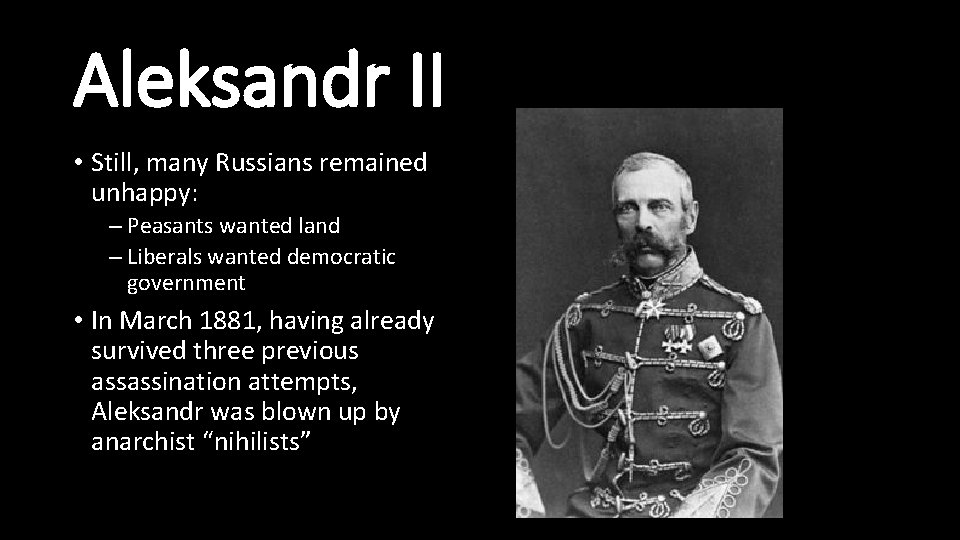
Aleksandr II • Still, many Russians remained unhappy: – Peasants wanted land – Liberals wanted democratic government • In March 1881, having already survived three previous assassination attempts, Aleksandr was blown up by anarchist “nihilists”
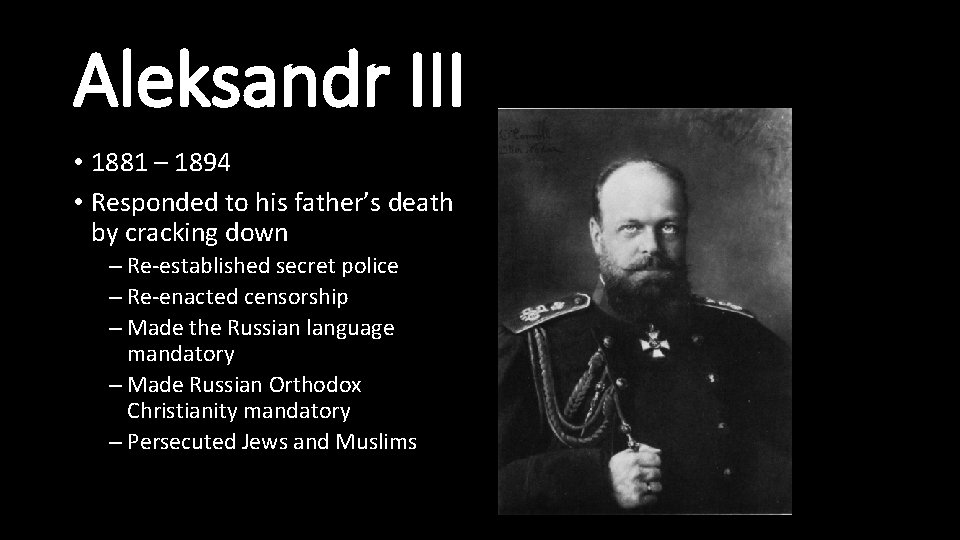
Aleksandr III • 1881 – 1894 • Responded to his father’s death by cracking down – Re-established secret police – Re-enacted censorship – Made the Russian language mandatory – Made Russian Orthodox Christianity mandatory – Persecuted Jews and Muslims
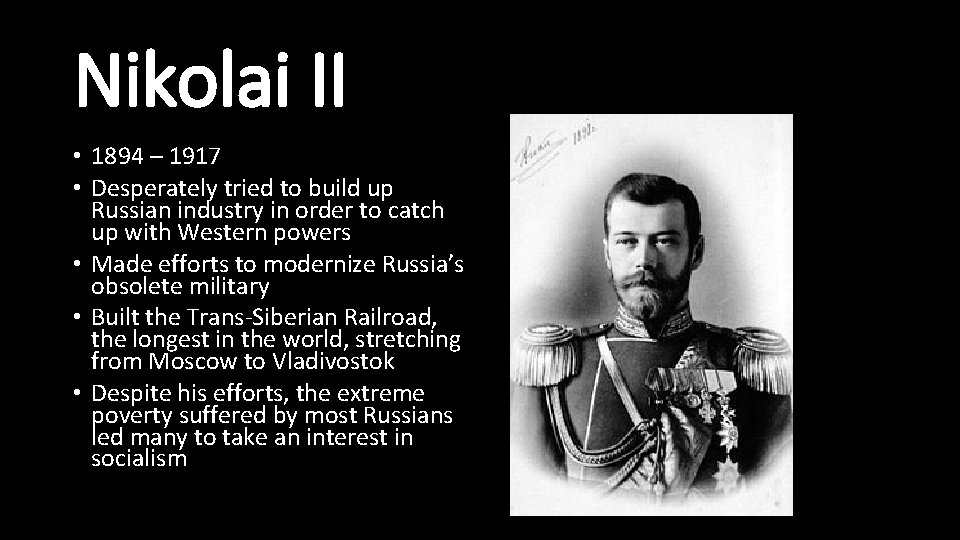
Nikolai II • 1894 – 1917 • Desperately tried to build up Russian industry in order to catch up with Western powers • Made efforts to modernize Russia’s obsolete military • Built the Trans-Siberian Railroad, the longest in the world, stretching from Moscow to Vladivostok • Despite his efforts, the extreme poverty suffered by most Russians led many to take an interest in socialism
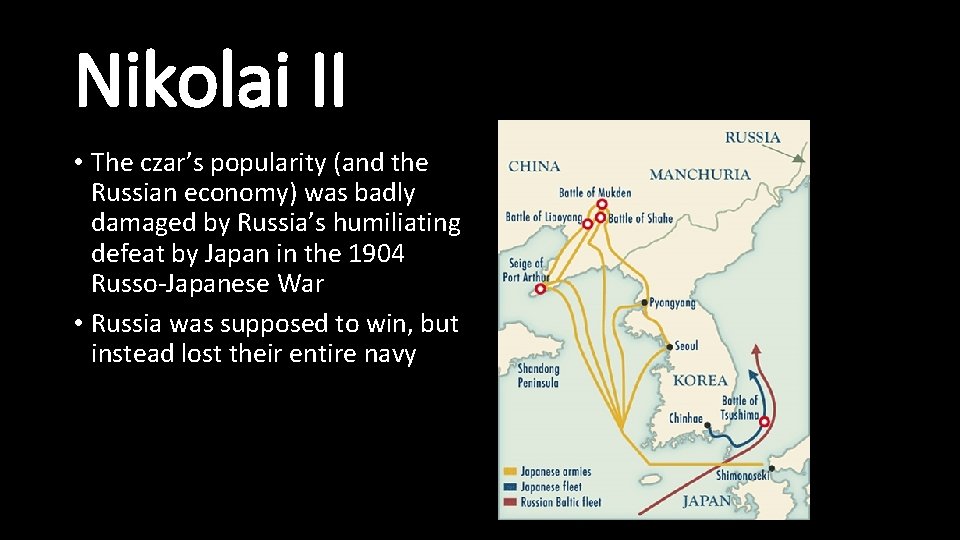
Nikolai II • The czar’s popularity (and the Russian economy) was badly damaged by Russia’s humiliating defeat by Japan in the 1904 Russo-Japanese War • Russia was supposed to win, but instead lost their entire navy
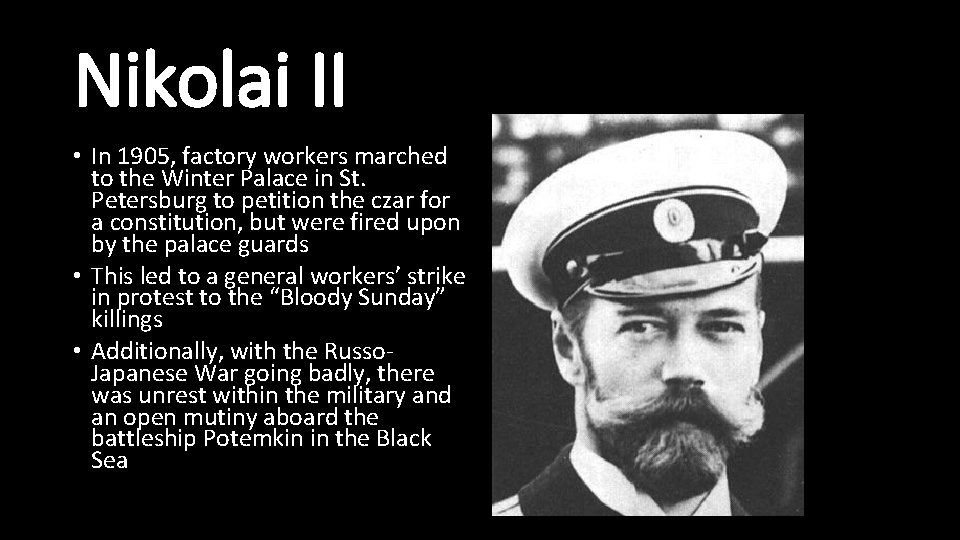
Nikolai II • In 1905, factory workers marched to the Winter Palace in St. Petersburg to petition the czar for a constitution, but were fired upon by the palace guards • This led to a general workers’ strike in protest to the “Bloody Sunday” killings • Additionally, with the Russo. Japanese War going badly, there was unrest within the military and an open mutiny aboard the battleship Potemkin in the Black Sea
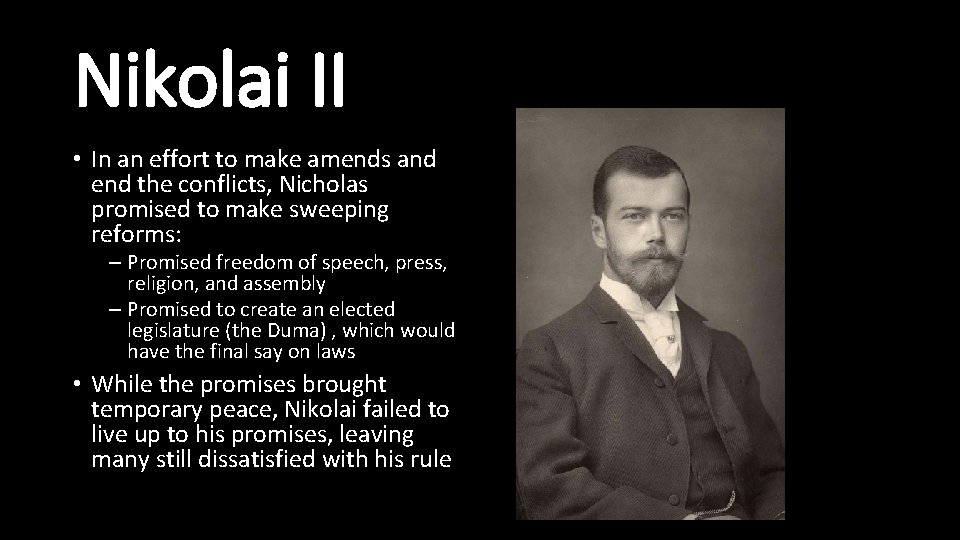
Nikolai II • In an effort to make amends and end the conflicts, Nicholas promised to make sweeping reforms: – Promised freedom of speech, press, religion, and assembly – Promised to create an elected legislature (the Duma) , which would have the final say on laws • While the promises brought temporary peace, Nikolai failed to live up to his promises, leaving many still dissatisfied with his rule
- Slides: 37