
Runway Safety Strategic Plan 2018 2020 1 FAA
- Slides: 11
Runway Safety Strategic Plan 2018 -2020 1
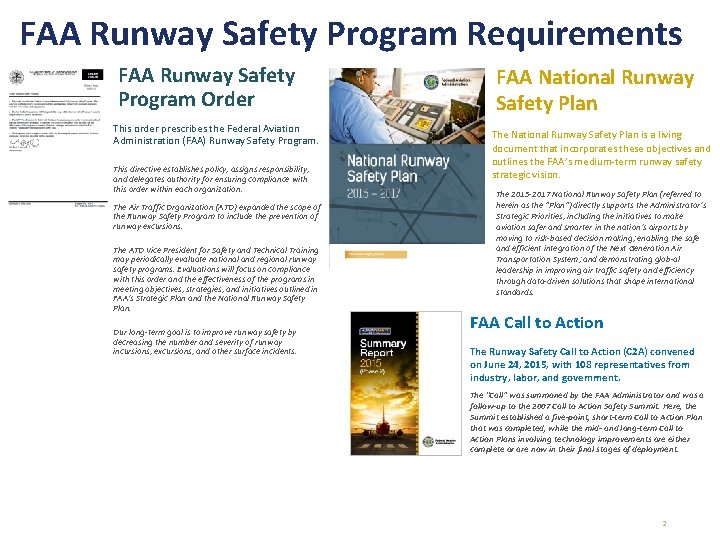
FAA Runway Safety Program Requirements FAA Runway Safety Program Order This order prescribes the Federal Aviation Administration (FAA) Runway Safety Program. This directive establishes policy, assigns responsibility, and delegates authority for ensuring compliance with this order within each organization. The Air Traffic Organization (ATO) expanded the scope of the Runway Safety Program to include the prevention of runway excursions. The ATO Vice President for Safety and Technical Training may periodically evaluate national and regional runway safety programs. Evaluations will focus on compliance with this order and the effectiveness of the programs in meeting objectives, strategies, and initiatives outlined in FAA’s Strategic Plan and the National Runway Safety Plan. Our long-term goal is to improve runway safety by decreasing the number and severity of runway incursions, excursions, and other surface incidents. FAA National Runway Safety Plan The National Runway Safety Plan is a living document that incorporates these objectives and outlines the FAA’s medium-term runway safety strategic vision. The 2015 -2017 National Runway Safety Plan (referred to herein as the “Plan”) directly supports the Administrator’s Strategic Priorities, including the initiatives to make aviation safer and smarter in the nation’s airports by moving to risk-based decision making; enabling the safe and efficient integration of the Next Generation Air Transportation System; and demonstrating glob-al leadership in improving air traffic safety and efficiency through data-driven solutions that shape international standards. FAA Call to Action The Runway Safety Call to Action (C 2 A) convened on June 24, 2015, with 108 representatives from industry, labor, and government. The “Call” was summoned by the FAA Administrator and was a follow-up to the 2007 Call to Action Safety Summit. Here, the Summit established a five-point, short-term Call to Action Plan that was completed, while the mid- and long-term Call to Action Plans involving technology improvements are either complete or are now in their final stages of deployment. 2
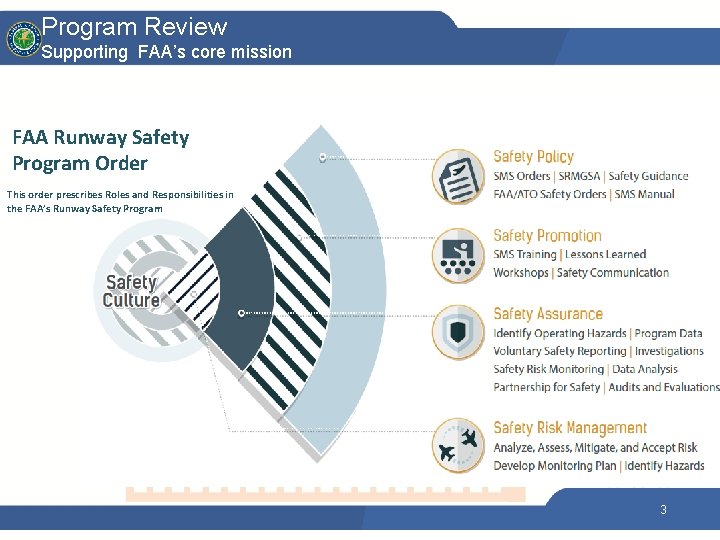
Program Review Supporting FAA’s core mission FAA Runway Safety Program Order This order prescribes Roles and Responsibilities in the FAA’s Runway Safety Program 3
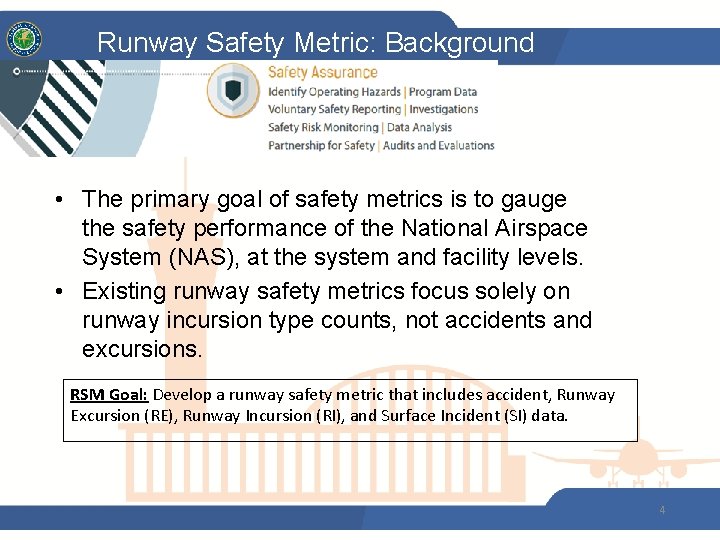
Runway Safety Metric: Background • The primary goal of safety metrics is to gauge the safety performance of the National Airspace System (NAS), at the system and facility levels. • Existing runway safety metrics focus solely on runway incursion type counts, not accidents and excursions. RSM Goal: Develop a runway safety metric that includes accident, Runway Excursion (RE), Runway Incursion (RI), and Surface Incident (SI) data. 4
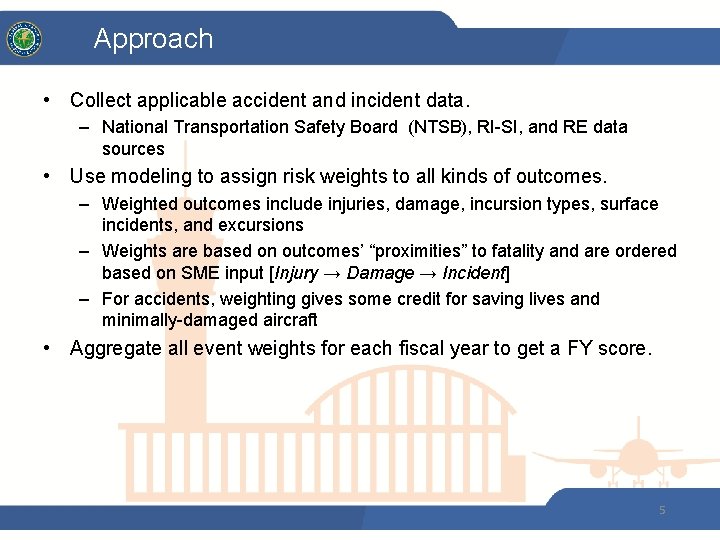
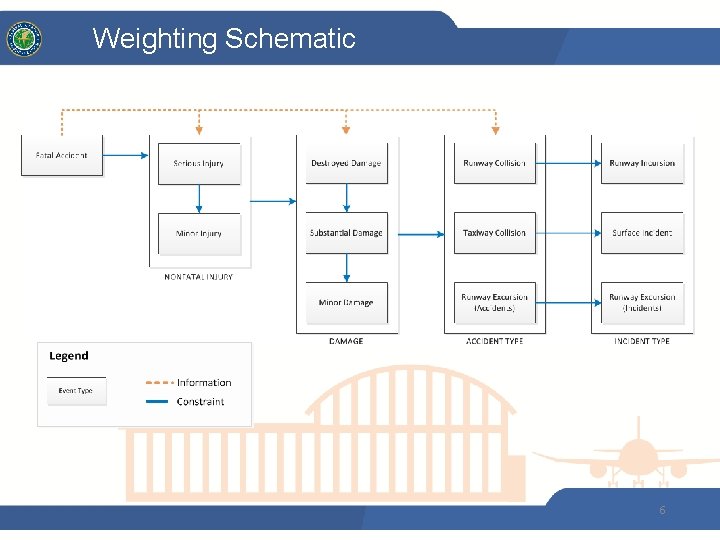
Approach • Collect applicable accident and incident data. – National Transportation Safety Board (NTSB), RI-SI, and RE data sources • Use modeling to assign risk weights to all kinds of outcomes. – Weighted outcomes include injuries, damage, incursion types, surface incidents, and excursions – Weights are based on outcomes’ “proximities” to fatality and are ordered based on SME input [Injury → Damage → Incident] – For accidents, weighting gives some credit for saving lives and minimally-damaged aircraft • Aggregate all event weights for each fiscal year to get a FY score. 5
Weighting Schematic 6
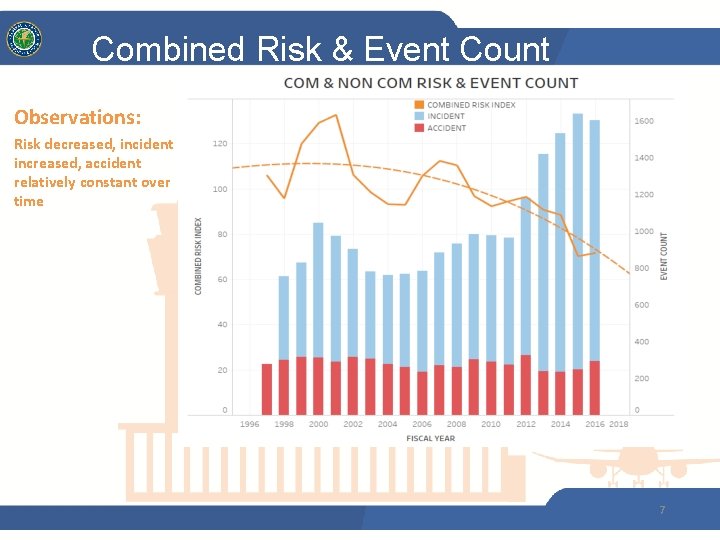
Combined Risk & Event Count Observations: Risk decreased, incident increased, accident relatively constant over time 7
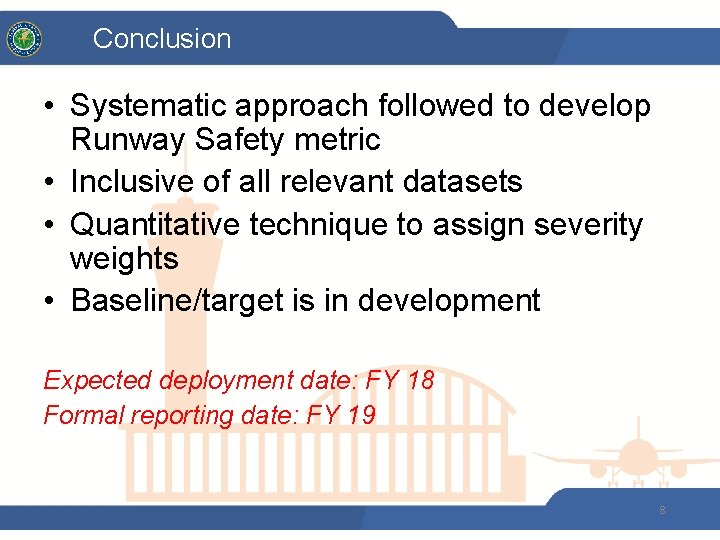
Conclusion • Systematic approach followed to develop Runway Safety metric • Inclusive of all relevant datasets • Quantitative technique to assign severity weights • Baseline/target is in development Expected deployment date: FY 18 Formal reporting date: FY 19 8
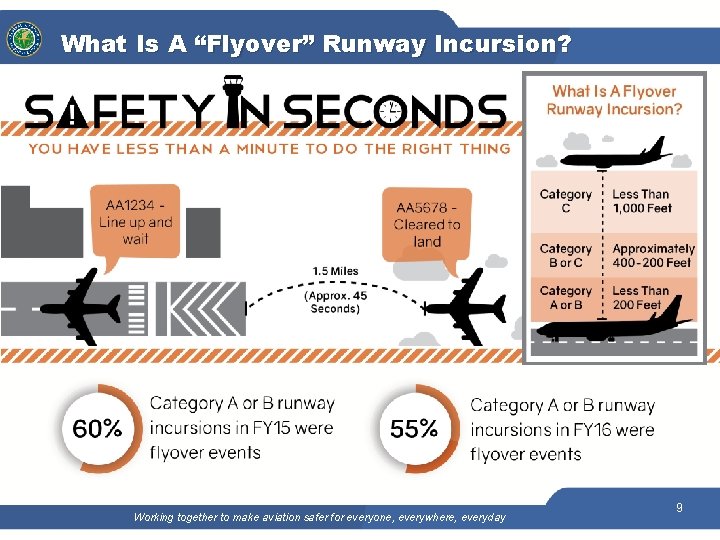
What Is A “Flyover” Runway Incursion? Working together to make aviation safer for everyone, everywhere, everyday 9
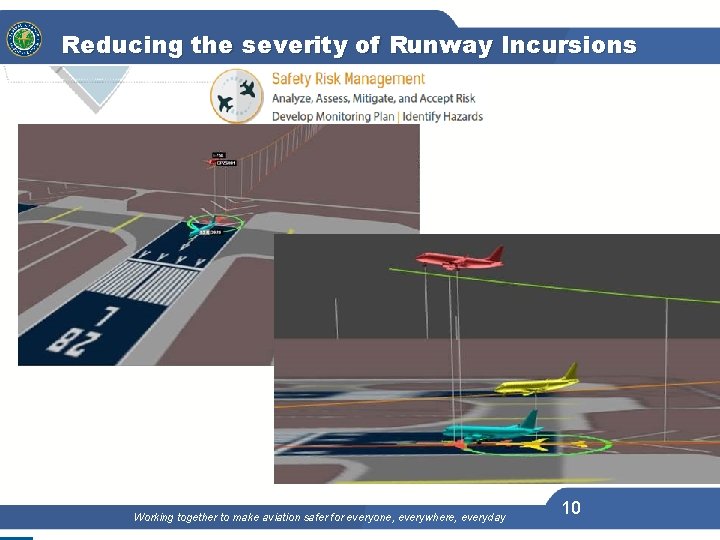
| 10 | Reducing the severity of Runway Incursions Working together to make aviation safer for everyone, everywhere, everyday © 2017 The MITRE Corporation. All rights reserved. 10
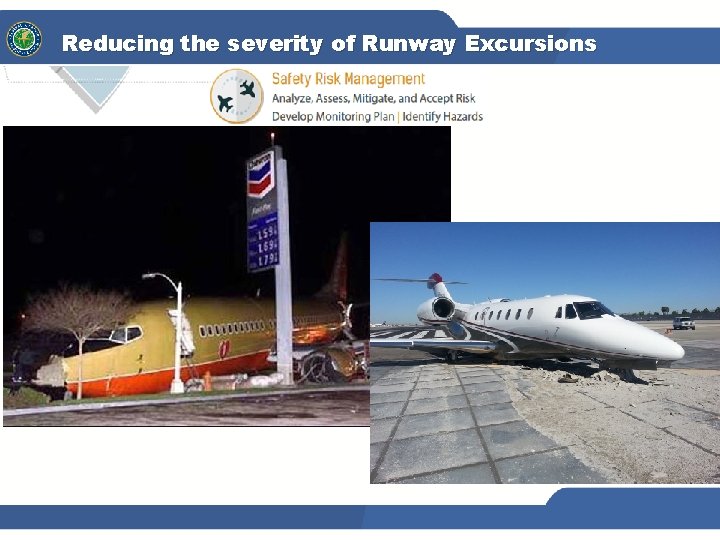
Reducing the severity of Runway Excursions