
Runoff Generation Infiltration and unsaturated flow Hydro Viz
- Slides: 22
Runoff Generation, Infiltration and unsaturated flow (Hydro. Viz 3, Mays p 310 -321) Learning objective • Be able to describe the processes involved in runoff generation • Be able to calculate flow through unsaturated soil • Be able to calculate infiltration, cumulative infiltration and time to ponding using the Green-Ampt method The rate at which water can infiltrate is important for determining the partition between whether rainfall infiltrates or becomes runoff that flows overland to streams.
The class of problem we need to solve Consider a soil of given type (e. g. silty clay loam) and given an input rainfall hyetograph, calculate the infiltration and the runoff. Rainfall rate 2 cm/hr, for 3 hours Initial soil moisture content 0. 3
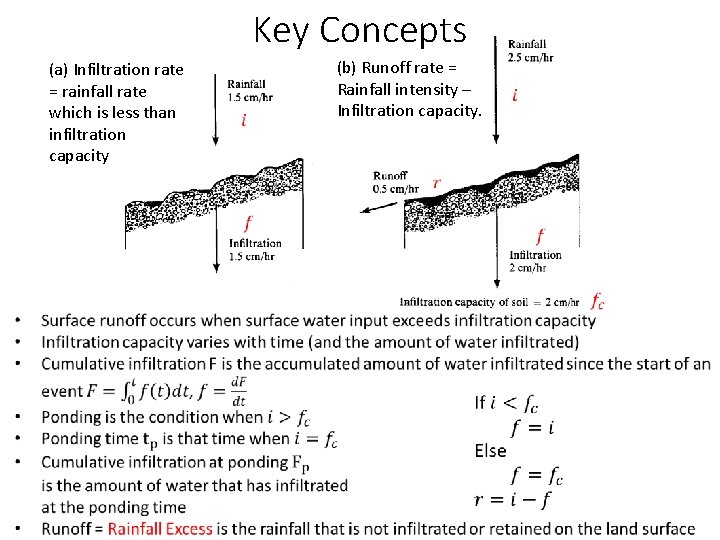
Key Concepts (a) Infiltration rate = rainfall rate which is less than infiltration capacity (b) Runoff rate = Rainfall intensity – Infiltration capacity.
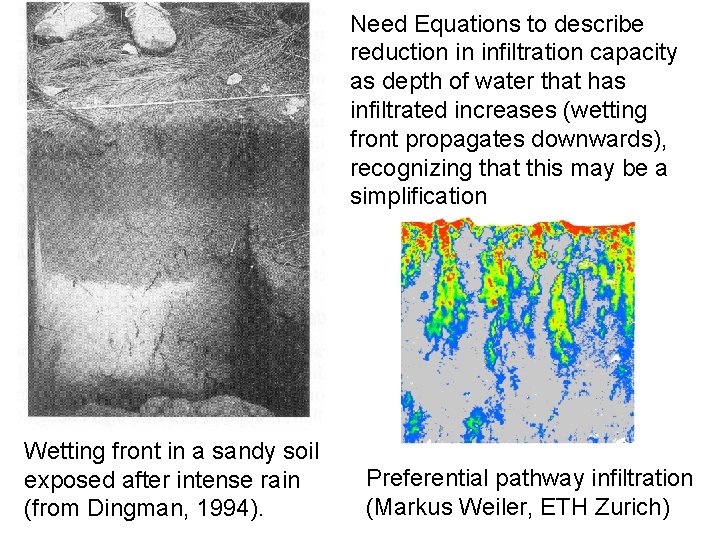
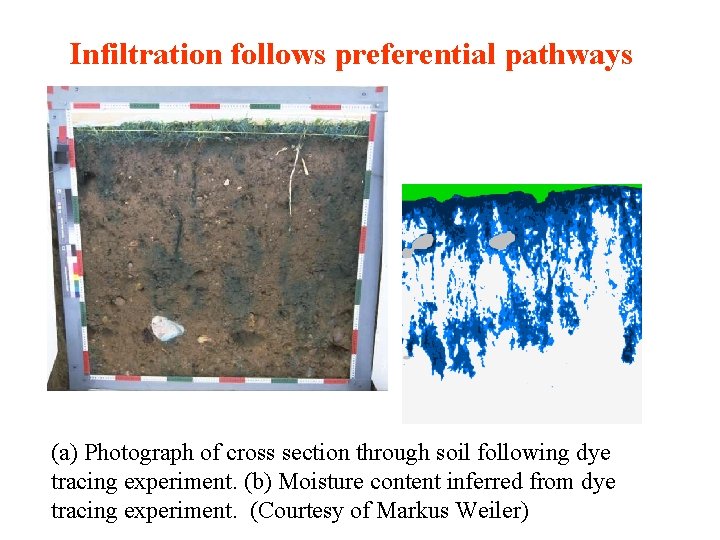
Need Equations to describe reduction in infiltration capacity as depth of water that has infiltrated increases (wetting front propagates downwards), recognizing that this may be a simplification Wetting front in a sandy soil exposed after intense rain (from Dingman, 1994). Preferential pathway infiltration (Markus Weiler, ETH Zurich)
Infiltration follows preferential pathways (a) Photograph of cross section through soil following dye tracing experiment. (b) Moisture content inferred from dye tracing experiment. (Courtesy of Markus Weiler)
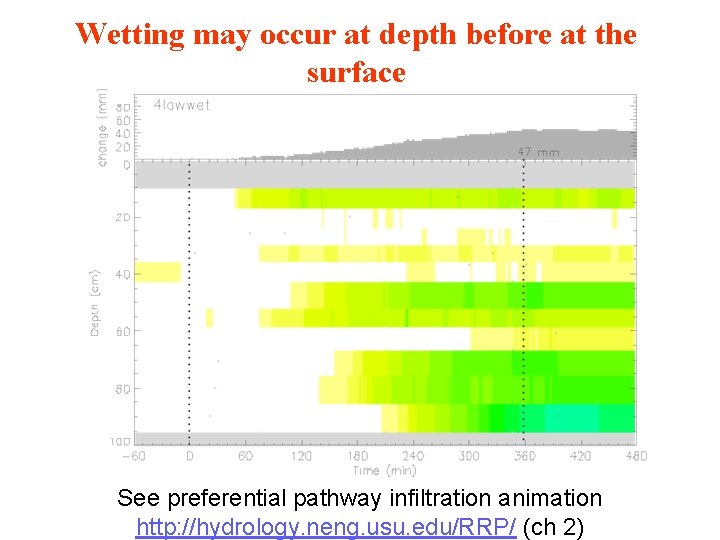
Wetting may occur at depth before at the surface See preferential pathway infiltration animation http: //hydrology. neng. usu. edu/RRP/ (ch 2)
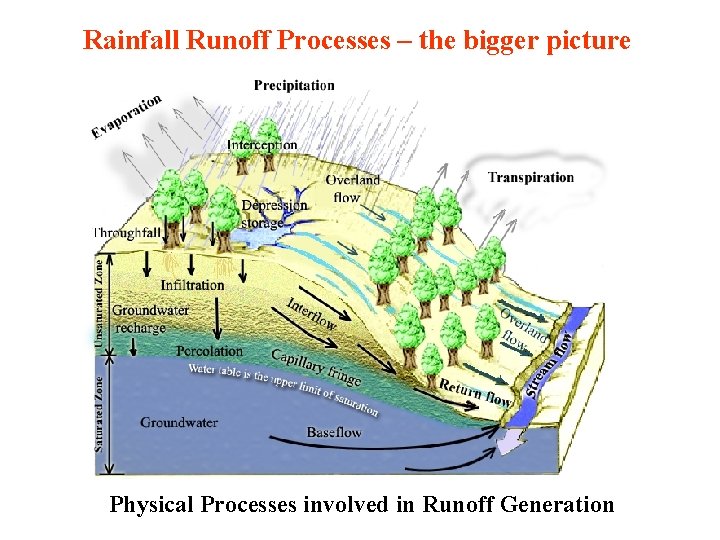
Rainfall Runoff Processes – the bigger picture Physical Processes involved in Runoff Generation
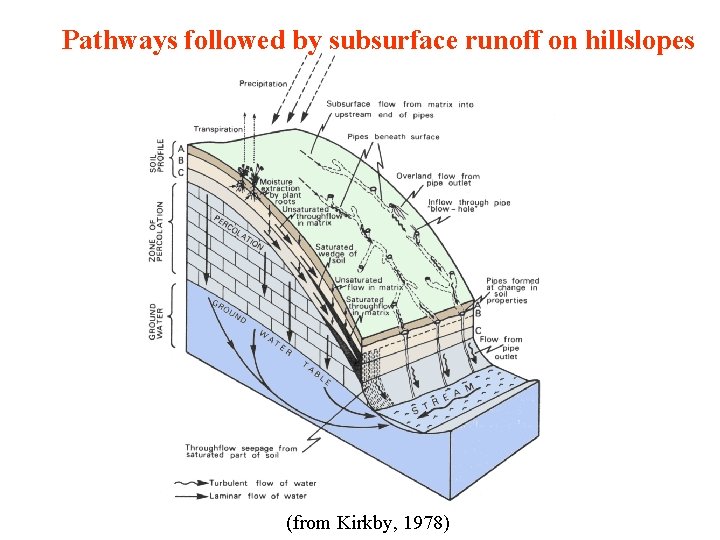
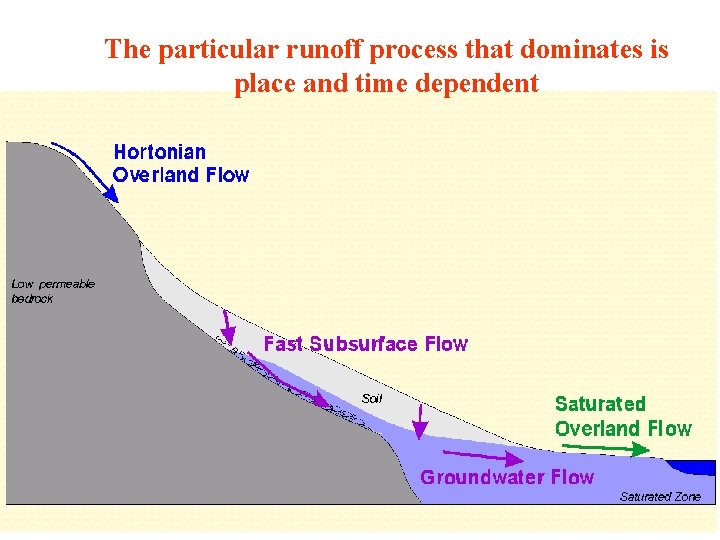
Pathways followed by subsurface runoff on hillslopes (from Kirkby, 1978)
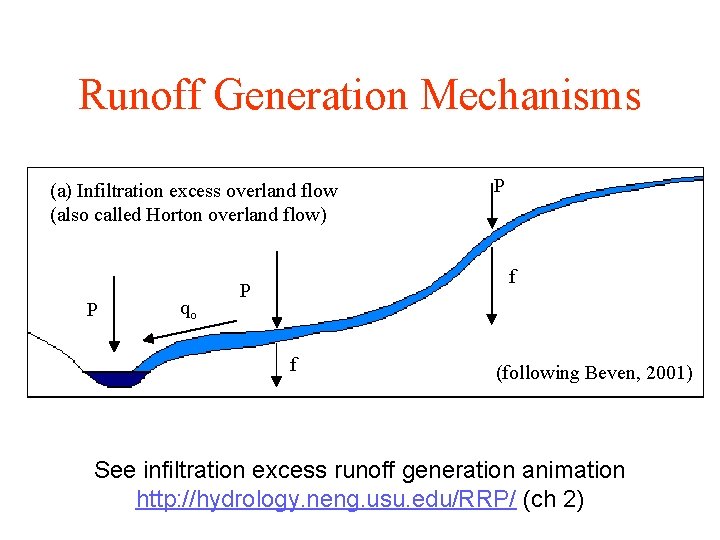
Runoff Generation Mechanisms (a) Infiltration excess overland flow (also called Horton overland flow) P qo P f (following Beven, 2001) See infiltration excess runoff generation animation http: //hydrology. neng. usu. edu/RRP/ (ch 2)
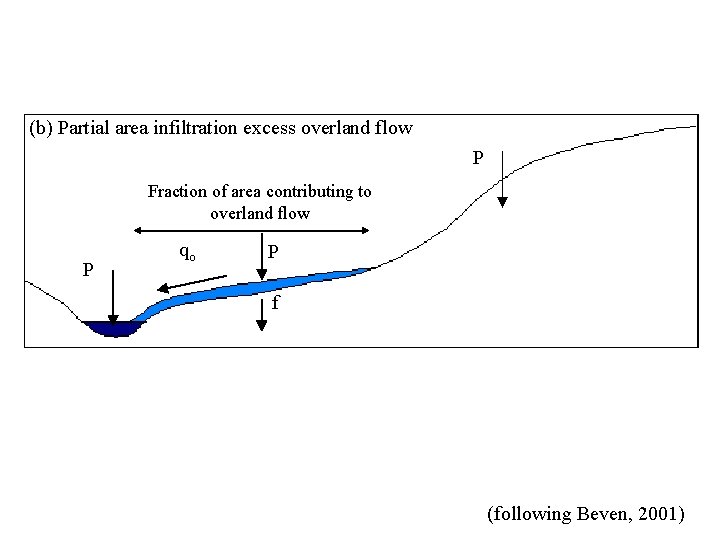
(b) Partial area infiltration excess overland flow P Fraction of area contributing to overland flow P qo P f (following Beven, 2001)
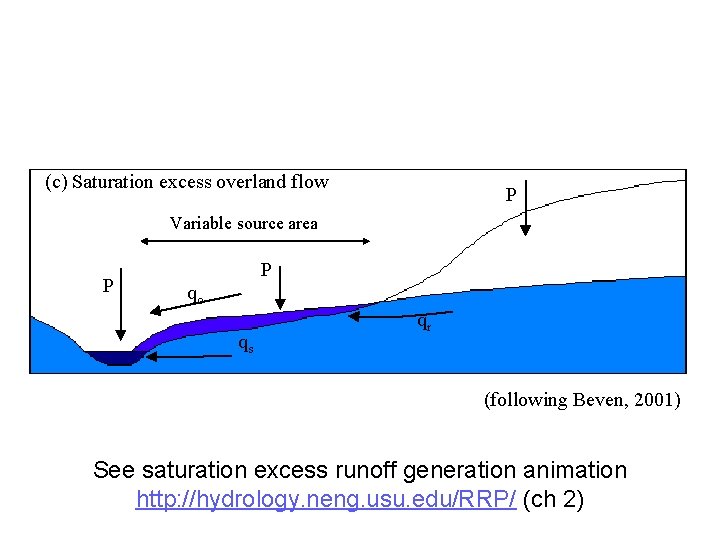
(c) Saturation excess overland flow P Variable source area P P qo qs qr (following Beven, 2001) See saturation excess runoff generation animation http: //hydrology. neng. usu. edu/RRP/ (ch 2)
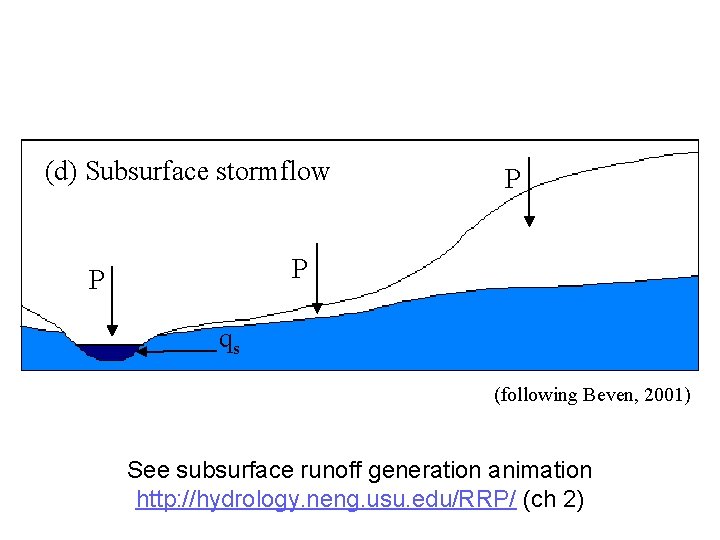
(d) Subsurface stormflow P P P qs (following Beven, 2001) See subsurface runoff generation animation http: //hydrology. neng. usu. edu/RRP/ (ch 2)
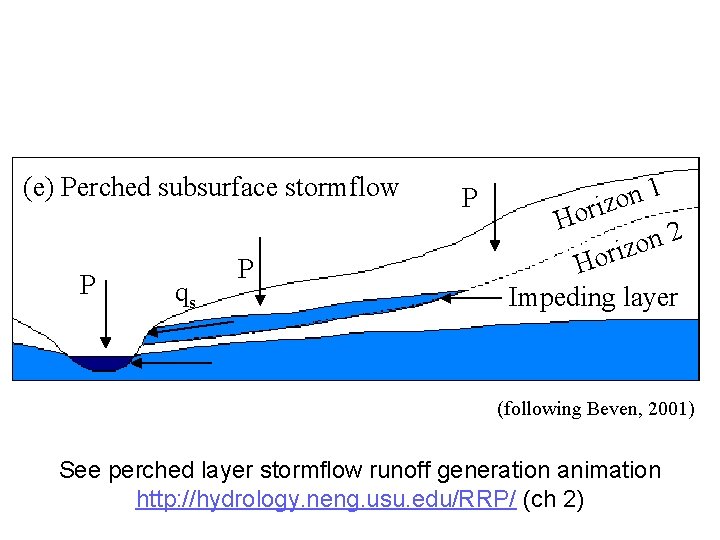
(e) Perched subsurface stormflow P qs P P 1 n o iz r o H 2 n o iz r o H Impeding layer (following Beven, 2001) See perched layer stormflow runoff generation animation http: //hydrology. neng. usu. edu/RRP/ (ch 2)
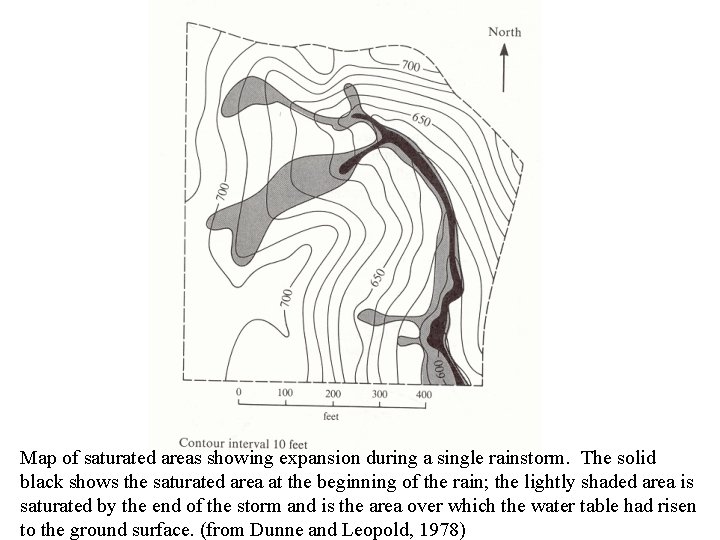
Map of saturated areas showing expansion during a single rainstorm. The solid black shows the saturated area at the beginning of the rain; the lightly shaded area is saturated by the end of the storm and is the area over which the water table had risen to the ground surface. (from Dunne and Leopold, 1978)
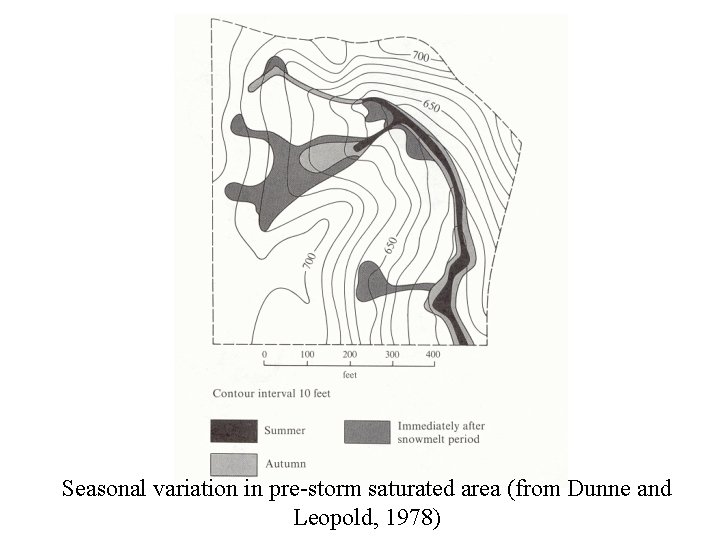
Seasonal variation in pre-storm saturated area (from Dunne and Leopold, 1978)
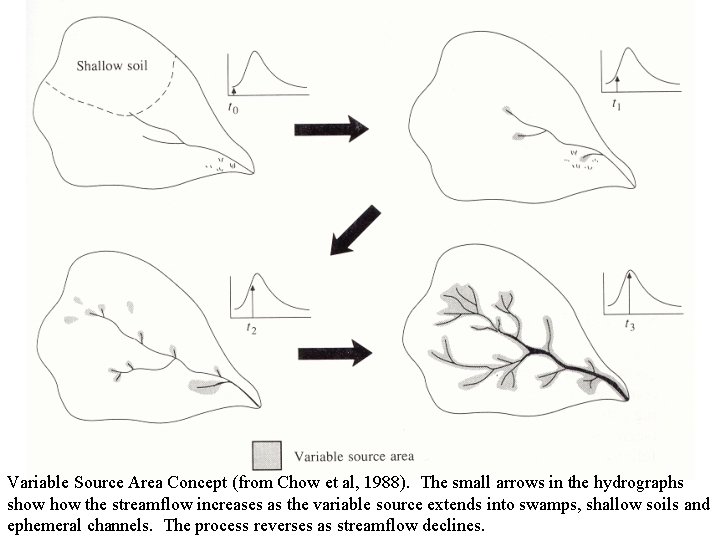
Variable Source Area Concept (from Chow et al, 1988). The small arrows in the hydrographs show the streamflow increases as the variable source extends into swamps, shallow soils and ephemeral channels. The process reverses as streamflow declines.
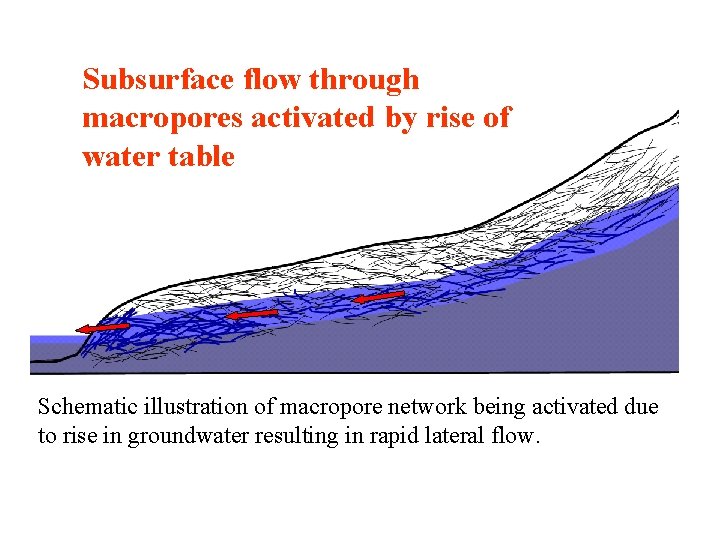
Subsurface flow through macropores activated by rise of water table Schematic illustration of macropore network being activated due to rise in groundwater resulting in rapid lateral flow.
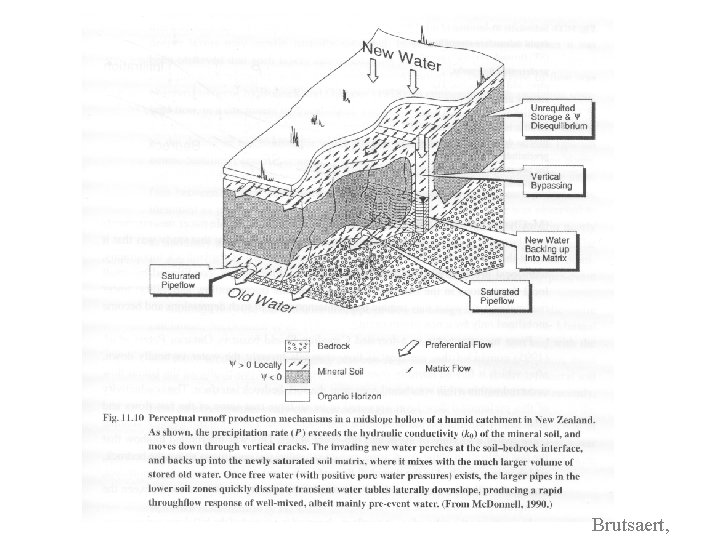
Brutsaert,
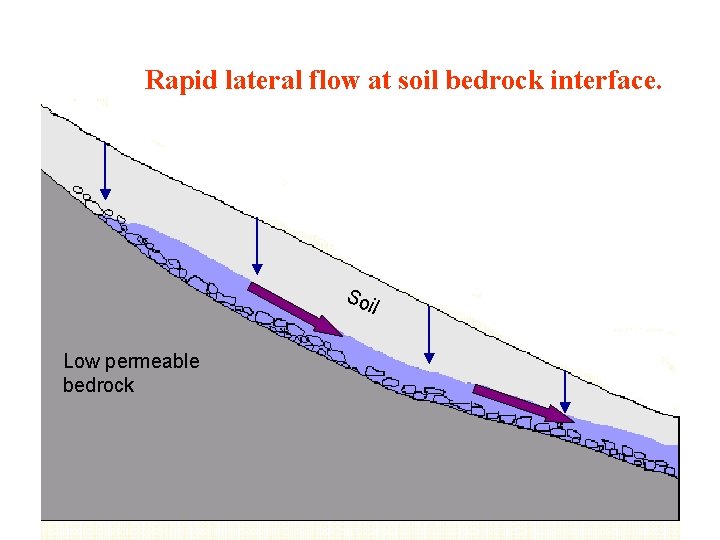
Rapid lateral flow at soil bedrock interface. So il Low permeable bedrock
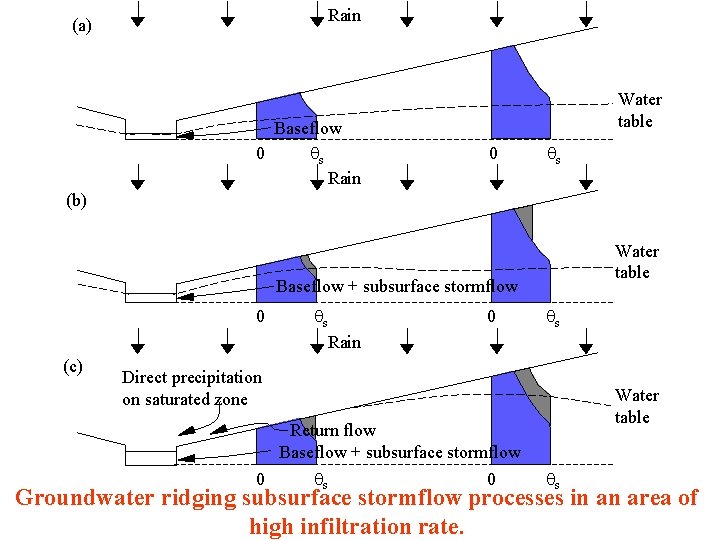
Rain (a) Baseflow 0 s Rain Water table 0 s (b) Water table Baseflow + subsurface stormflow 0 (c) s Rain 0 s Direct precipitation on saturated zone Water table Return flow Baseflow + subsurface stormflow 0 s Groundwater ridging subsurface stormflow processes in an area of high infiltration rate.
The particular runoff process that dominates is place and time dependent
Summary points • The runoff that appears at an outlet is often old water indicating the presence of displacement mechanisms • Subsurface pathways and mechanisms are often responsible for rapid response stormflow • The particular mechanism for runoff generation depends on the topography, soils, geology and antecedent wetness • The runoff calculations we perform are often rather idealistic empirical approximations – Check with data wherever possible – Mathematical rigor may instill false confidence and undeserved sense of realism