
Running Red Lights February 2020 Topics covered Statistics
Running Red Lights February 2020
Topics covered • Statistics • Intersections • Photo controlled intersections • Distracted driving • Risks • Change Driver Behavior • Pedestrians and cyclists 2
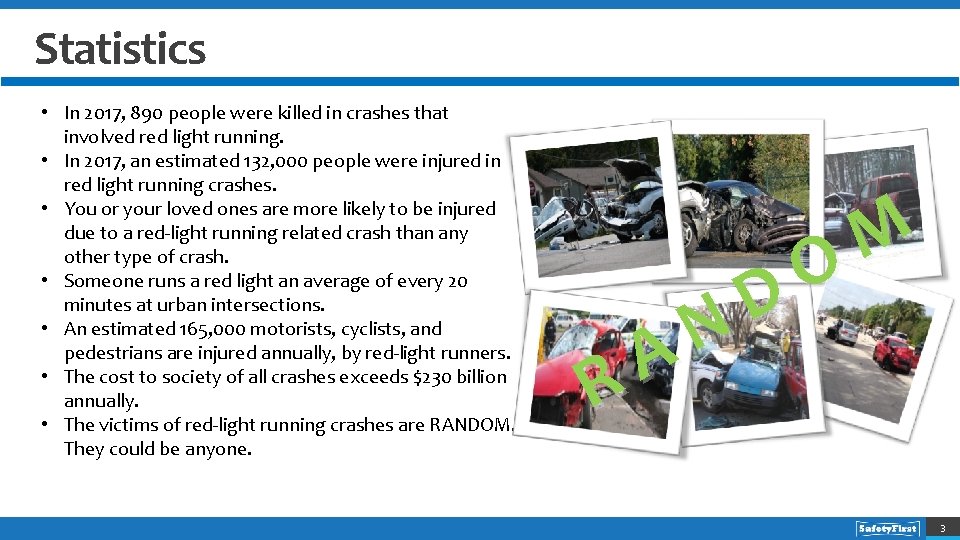
Statistics • In 2017, 890 people were killed in crashes that involved red light running. • In 2017, an estimated 132, 000 people were injured in red light running crashes. • You or your loved ones are more likely to be injured due to a red-light running related crash than any other type of crash. • Someone runs a red light an average of every 20 minutes at urban intersections. • An estimated 165, 000 motorists, cyclists, and pedestrians are injured annually, by red-light runners. • The cost to society of all crashes exceeds $230 billion annually. • The victims of red-light running crashes are RANDOM. They could be anyone. A R D N M O 3

Intersections Roughly a third of all collisions occur at intersections. • When driving in urban areas with many intersections, or when you spot an intersection in the distance, minimize your own distractions (radio, conversations with passengers, etc. ) and focus on the road ahead. • It is best not to use your cell phone while driving. • A study for the Insurance Institute for Highway Safety (IIHS) identified speeders as more likely to run red lights – monitor your speed closely. Speeding can lead to rear-end collisions and/or pedestrian collisions. • If you see that the light is changing from green to yellow, prepare to stop - the light could change very quickly as you approach the intersection. • BE ALERT! 4
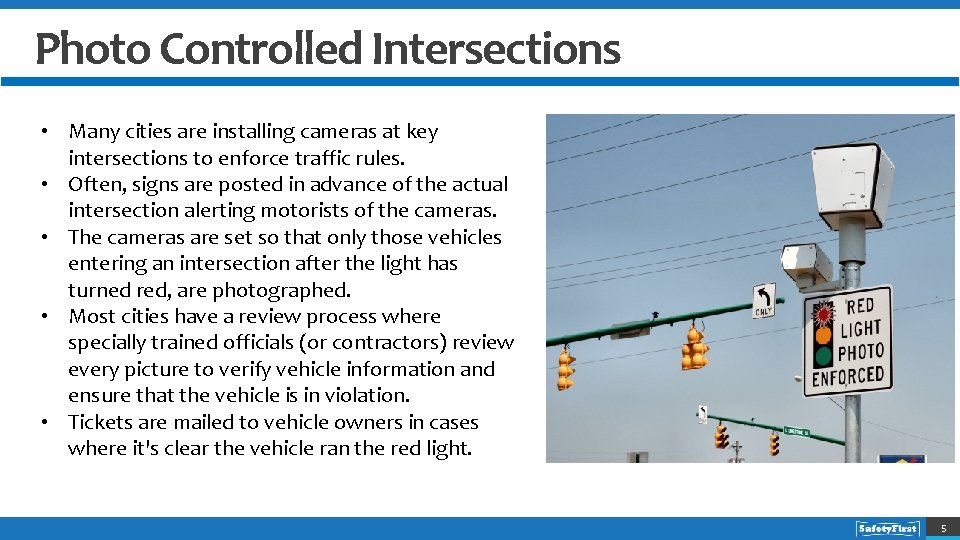
Photo Controlled Intersections • Many cities are installing cameras at key intersections to enforce traffic rules. • Often, signs are posted in advance of the actual intersection alerting motorists of the cameras. • The cameras are set so that only those vehicles entering an intersection after the light has turned red, are photographed. • Most cities have a review process where specially trained officials (or contractors) review every picture to verify vehicle information and ensure that the vehicle is in violation. • Tickets are mailed to vehicle owners in cases where it's clear the vehicle ran the red light. 5
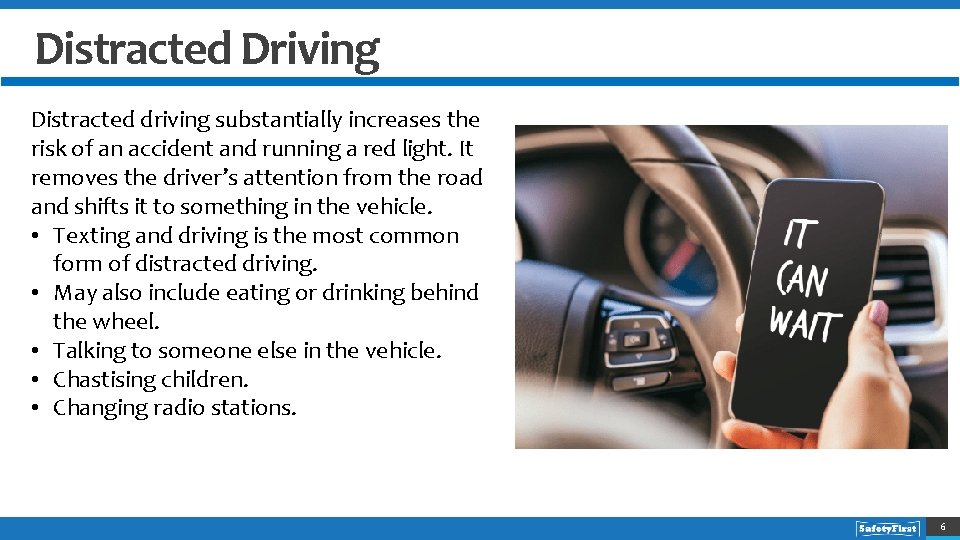
Distracted Driving Distracted driving substantially increases the risk of an accident and running a red light. It removes the driver’s attention from the road and shifts it to something in the vehicle. • Texting and driving is the most common form of distracted driving. • May also include eating or drinking behind the wheel. • Talking to someone else in the vehicle. • Chastising children. • Changing radio stations. 6
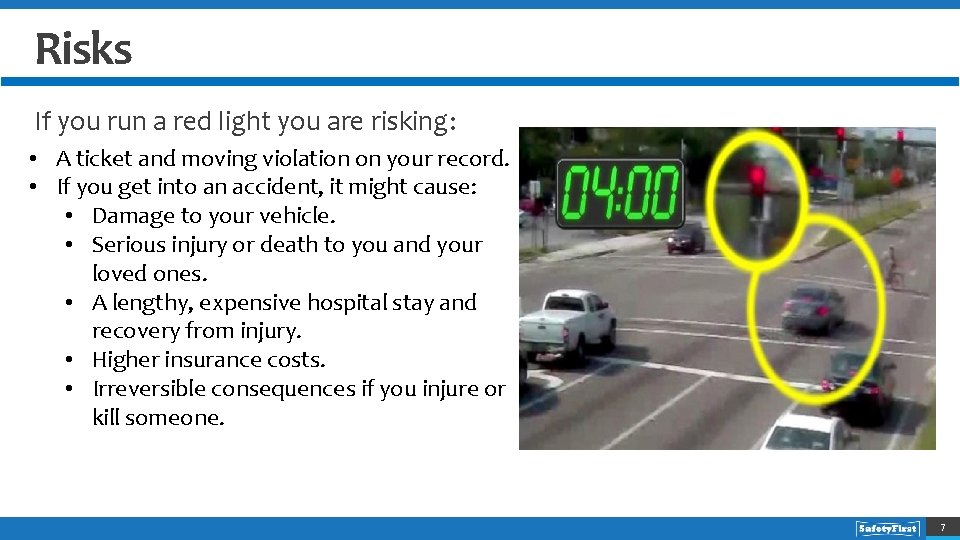
Risks If you run a red light you are risking: • A ticket and moving violation on your record. • If you get into an accident, it might cause: • Damage to your vehicle. • Serious injury or death to you and your loved ones. • A lengthy, expensive hospital stay and recovery from injury. • Higher insurance costs. • Irreversible consequences if you injure or kill someone. 7
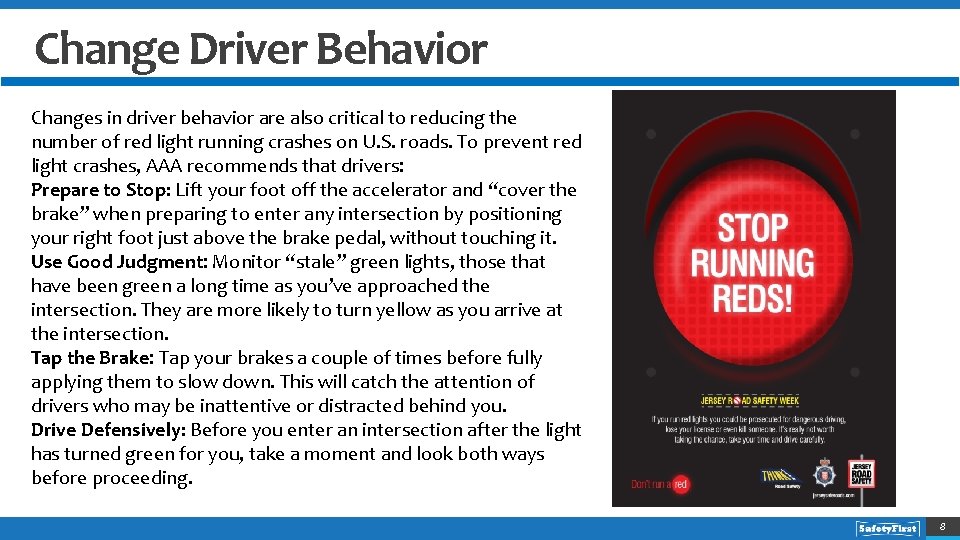
Change Driver Behavior Changes in driver behavior are also critical to reducing the number of red light running crashes on U. S. roads. To prevent red light crashes, AAA recommends that drivers: Prepare to Stop: Lift your foot off the accelerator and “cover the brake” when preparing to enter any intersection by positioning your right foot just above the brake pedal, without touching it. Use Good Judgment: Monitor “stale” green lights, those that have been green a long time as you’ve approached the intersection. They are more likely to turn yellow as you arrive at the intersection. Tap the Brake: Tap your brakes a couple of times before fully applying them to slow down. This will catch the attention of drivers who may be inattentive or distracted behind you. Drive Defensively: Before you enter an intersection after the light has turned green for you, take a moment and look both ways before proceeding. 8
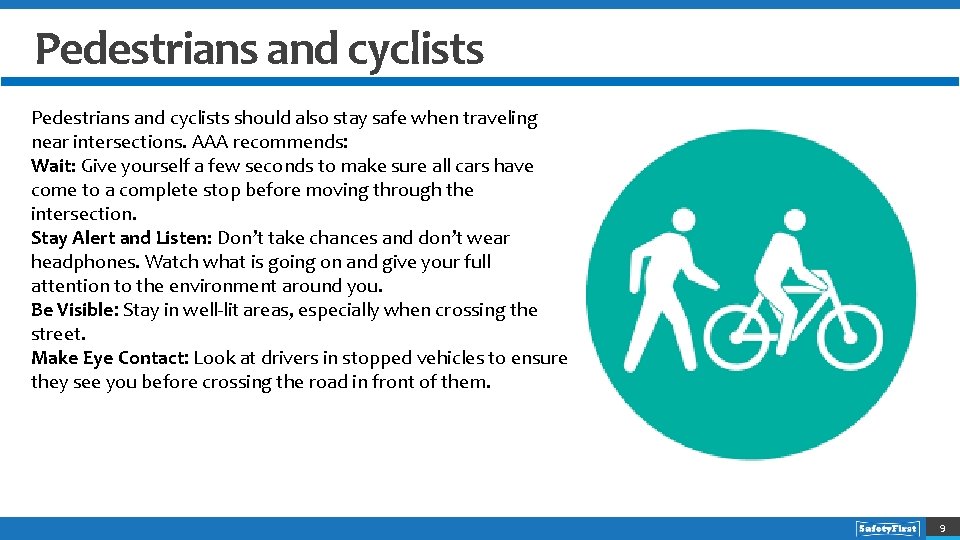
Pedestrians and cyclists should also stay safe when traveling near intersections. AAA recommends: Wait: Give yourself a few seconds to make sure all cars have come to a complete stop before moving through the intersection. Stay Alert and Listen: Don’t take chances and don’t wear headphones. Watch what is going on and give your full attention to the environment around you. Be Visible: Stay in well-lit areas, especially when crossing the street. Make Eye Contact: Look at drivers in stopped vehicles to ensure they see you before crossing the road in front of them. 9
Running Red Lights • Accidents caused by motorists running red lights is the most common type of crash. • Be more cautious at intersections. Pay extra attention! • Understand what needs to be done at each color of the traffic light. BE ALERT! • Avoid distraction from electronic devices – GPS navigation, cellphones, radios, etc. – these can be helpful tools, but their use also increases risk to the driver. • Running a red light might cause unnecessary risks and both physical and monetary damage. • When a driver intentionally or negligently runs a red light and injures someone, the law will hold the driver accountable. Injured victims of such behavior can recover for property loss, medical expenses, lost wages, and other appropriate damages. • Photo controlled intersections may yield a ticket in the mail if you fail to stop. • Be alert in congested traffic areas at peak times (a prime time for red light runners). • Obey NO TURN ON RED and RED ARROW signs and signals. 10
Safety First Training Quiz Congratulations on completing the February’s Safety First Training on Running Red Lights Please complete the quiz by clicking the link below. You will receive your results & Certificate Via email. Safety First Training Quiz
- Slides: 11