
Running Landing Casing Design Workshop Chapter 8 Outline
- Slides: 52
Running & Landing Casing Design Workshop
Chapter 8 Outline § Handling Casing • • Transport to Location On Location Communicate Design to Rig Supervisor Pipe Measurements
Outline Cont. § Running Casing • • Getting Pipe to Rig Floor Stabbing Filling Casing Makeup Torque Thread Locking Casing Handling Tools Getting Casing to Bottom Crossover Joints
Outline Cont. § Landing Practices • Freeze Point • Maximum Hanging Weight § Wellhead Equipment for Casing
Video Links for Cementing Casing & Centralizers § https: //www. youtube. com/watch? v=7 Er 7 Lh. SBe. Ks • Cementing Offshore Drilling § https: //www. youtube. com/watch? v=Cn 64 f. Lc-KEE • Casing Centralizer Placement
Video Link for Running Casing § https: //www. youtube. com/watch? v=OXg. UKXFs. J_I • Running Casing Animation
Transport to Location § Prevent damage • • • Thread protectors Stripping Secured with straps Protection from environment Unloading procedures Stripping on pipe racks § Loading and unloading sequence • Get it correct
On Location § Minimum movement or relocation § Drift for internal diameter & obstructions § Remove thread protectors and clean threads and protectors § Visually inspect threads § Lubricate threads with proper lubricant (especially offshore) § Reinstall protectors (depending on handling facilities and methods) § Do not set equipment on casing on pipe racks
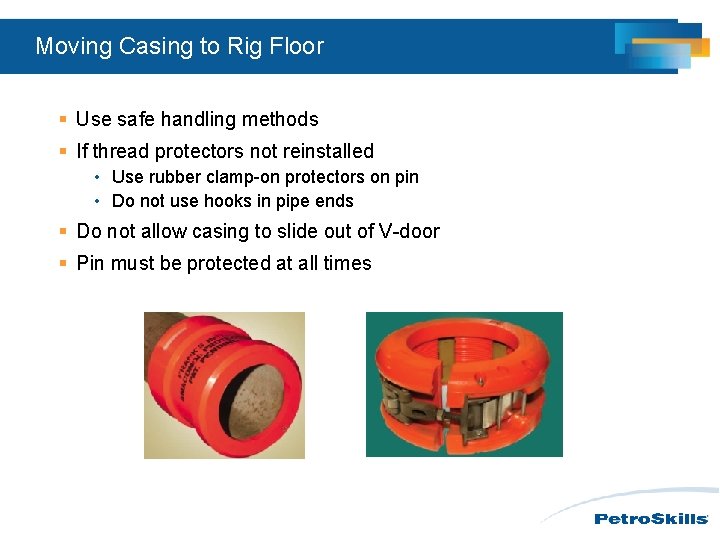
Moving Casing to Rig Floor § Use safe handling methods § If thread protectors not reinstalled • Use rubber clamp-on protectors on pin • Do not use hooks in pipe ends § Do not allow casing to slide out of V-door § Pin must be protected at all times
Pipe Measurements § Who is responsible for accurate casing measurements • Company representative ! Always! • Not the responsibility of the rig crew ! § Joints should be numbered (paint marker) § Talley book should be orderly, neat, and systematic so errors are easily spotted § Double check the addition !
Cross-over Joints § Check all cross-over joints • • Correct threads Measure and mark with identification Proprietary threads cut by licensed machine shop or manufacturer Check the grade of the tube § Isolate to separate area or place in string in proper position § Always have redundant cross-over joints on location
ST&C to LT&C § ST&C pin will make up in LT&C coupling § LT&C pin will not make up into an ST&C coupling § Use a dedicated cross-over joint § LT&C coupling as a cross-over ? • Avoid if possible • ST&C coupling often difficult to remove • May damage pin when removing ST&C coupling
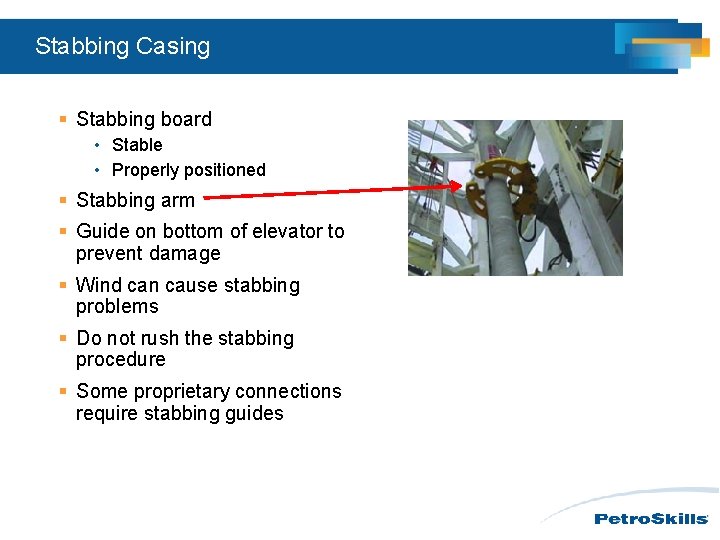
Stabbing Casing § Stabbing board • Stable • Properly positioned § Stabbing arm § Guide on bottom of elevator to prevent damage § Wind can cause stabbing problems § Do not rush the stabbing procedure § Some proprietary connections require stabbing guides
Filling Casing § Fill casing as it is run § Verify fill visually § Large diameter pipe requires large capacity fill line § Self-fill and differential-fill float equipment • Can allow cuttings and other objects in casing and plug float equipment • Avoid when possible, and never use in unconsolidated formation environments
Make-up Torque § Determine proper makeup torque for connections § Rig casing tong line at 90°to tong arm for proper torque reading § Use only approved thread lubricants on clean threads § Proper number of turns can also be measured
Thread Lubricant § Apply to box, not pin § Do not use DP or DC dope § Standard is API Modified § Proprietary threads – check manufacturer § Environmental Considerations • Special formulations available • Some threads specially coated for self lube § Friction factor – specified relative to API Mod, adjust make-up torque accordingly
Thread Locking § Prevents back-off of lower joints during drill-out of float equipment § Polymer compound • Used on bottom joints & float equipment • Inexpensive and easy to use § Lock mill end of connections? § In the event casing has to be pulled before reaching bottom? § Welding? (never on N 80 or higher grade!)
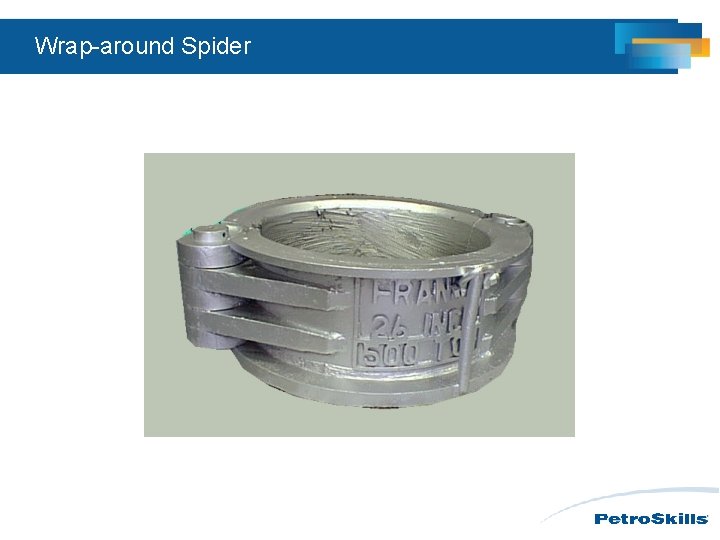
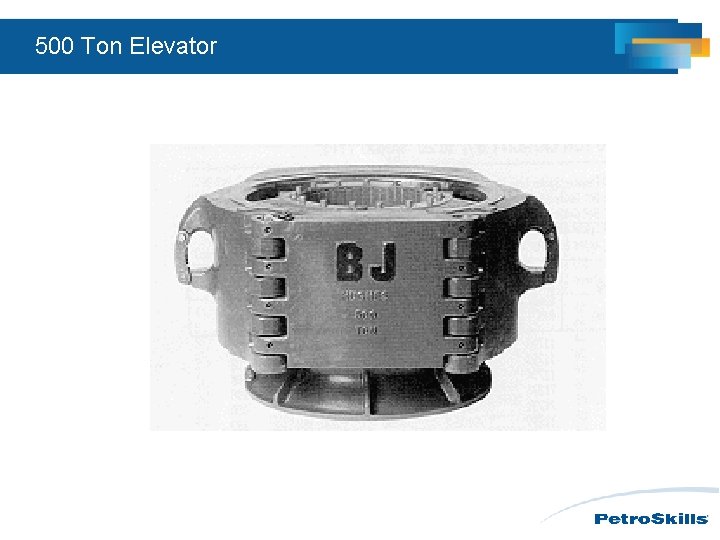
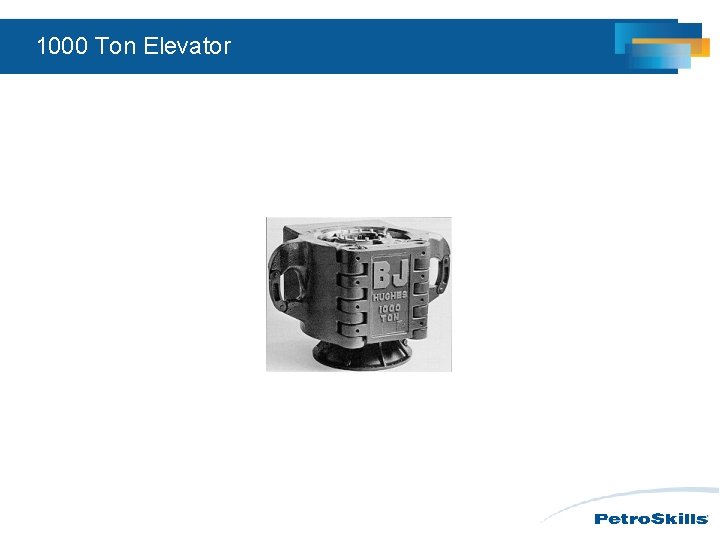
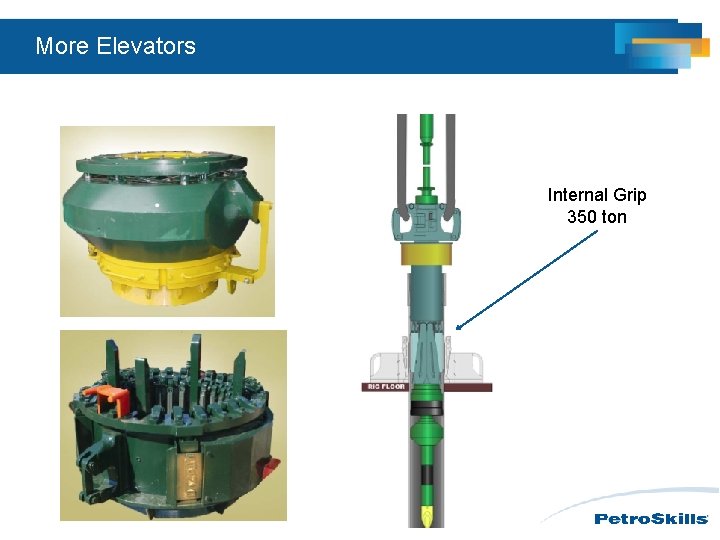
Casing Handling Tools § Spider • Sets on rig floor • Slip type (integral or manual removable) • Wrap-around (must open for each joint) § Elevator • Attached to traveling block bails • Slip type (always integral) • Wrap-around type (must open for each joint)
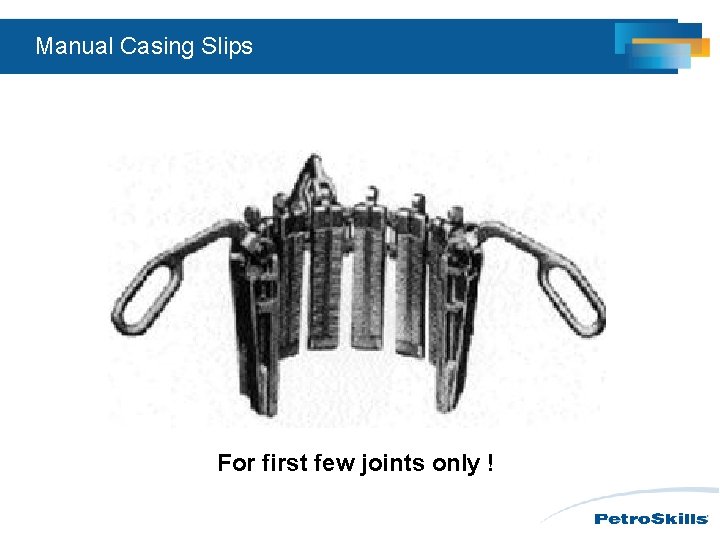
Manual Casing Slips For first few joints only !
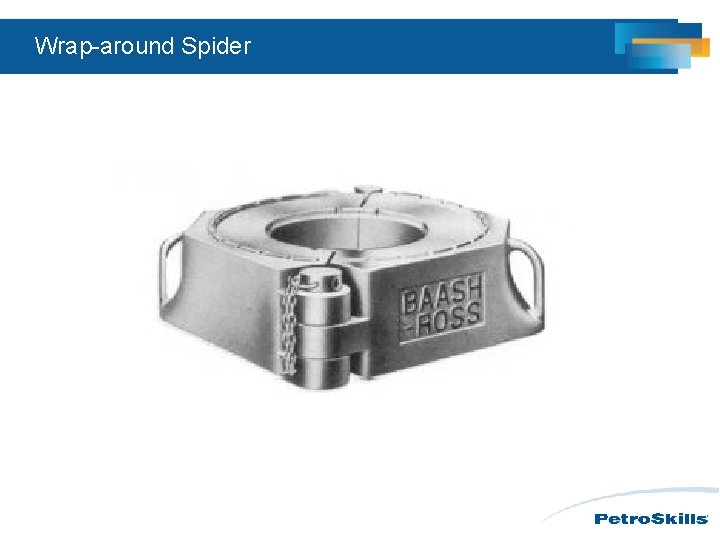
Wrap-around Spider
Wrap-around Spider
500 Ton Elevator
1000 Ton Elevator
More Elevators Internal Grip 350 ton
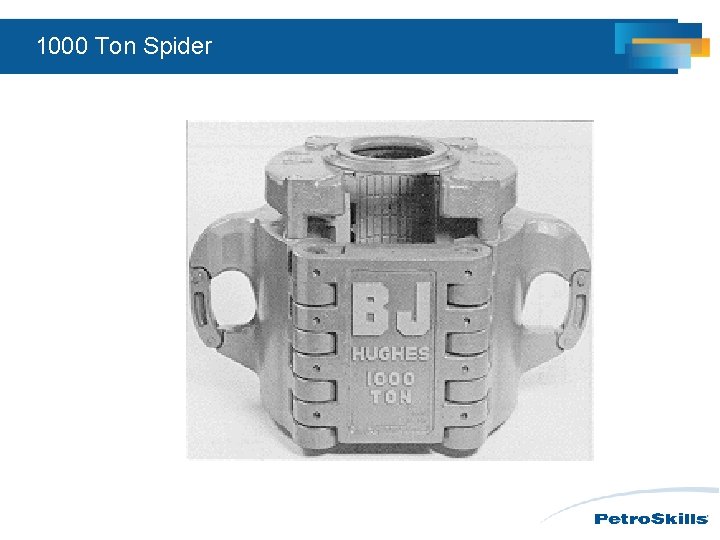
1000 Ton Spider
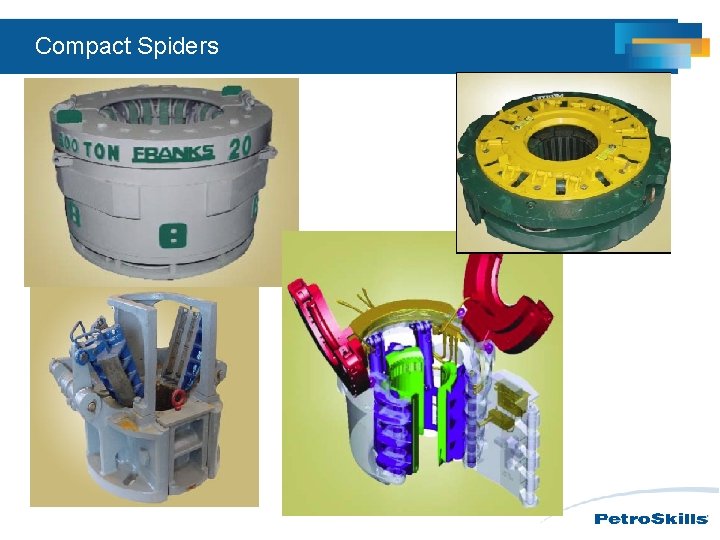
Compact Spiders
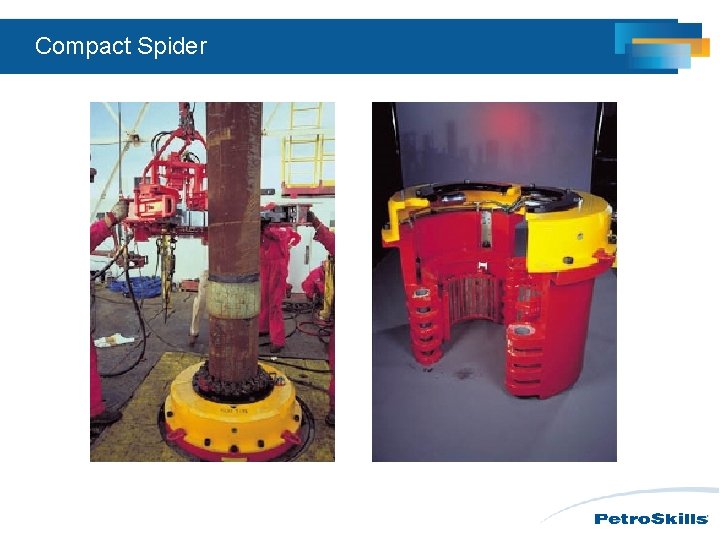
Compact Spider
Precautions § High capacity tools open very easily with light casing load § Care must be taken to prevent accidental opening § Some air systems prevent opening if the other component is already open § Good practice: • start string in hole with low capacity tools • switch to high capacity once there is sufficient casing weight to prevent accidental opening
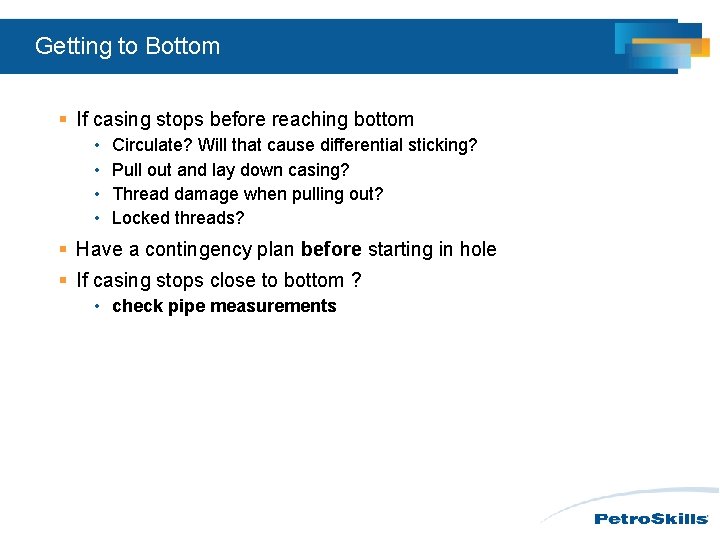
Getting to Bottom § If casing stops before reaching bottom • • Circulate? Will that cause differential sticking? Pull out and lay down casing? Thread damage when pulling out? Locked threads? § Have a contingency plan before starting in hole § If casing stops close to bottom ? • check pipe measurements
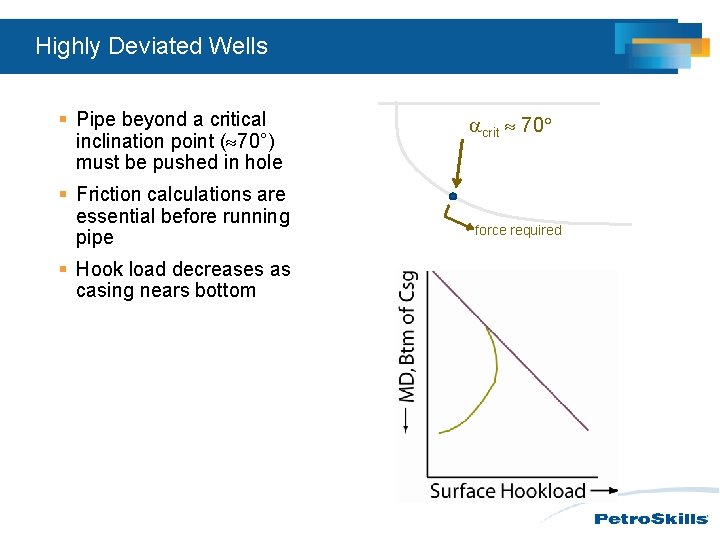
Highly Deviated Wells § Pipe beyond a critical inclination point ( 70°) must be pushed in hole § Friction calculations are essential before running pipe § Hook load decreases as casing nears bottom crit 70 force required
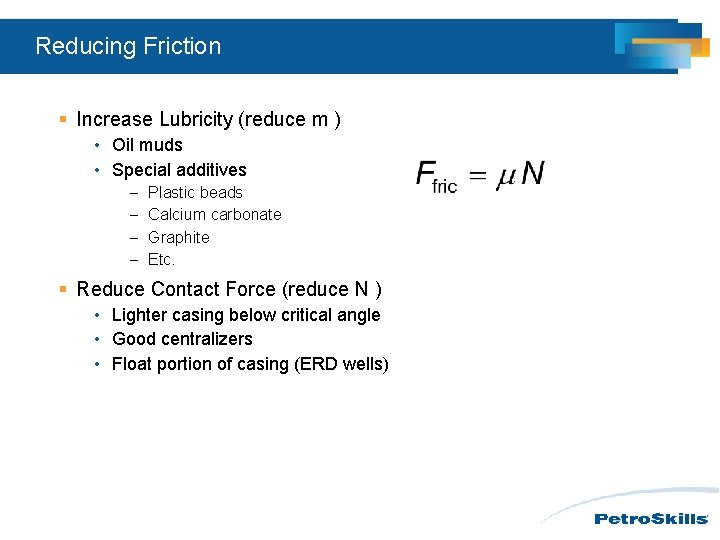
Reducing Friction § Increase Lubricity (reduce m ) • Oil muds • Special additives – – Plastic beads Calcium carbonate Graphite Etc. § Reduce Contact Force (reduce N ) • Lighter casing below critical angle • Good centralizers • Float portion of casing (ERD wells)
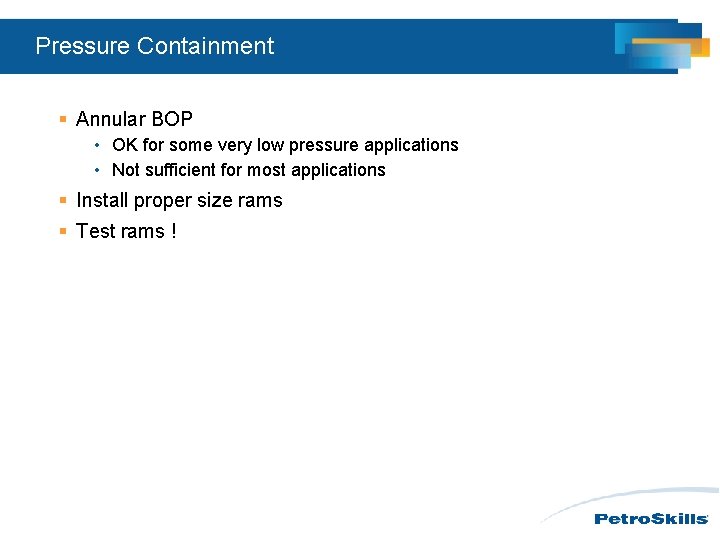
Pressure Containment § Annular BOP • OK for some very low pressure applications • Not sufficient for most applications § Install proper size rams § Test rams !
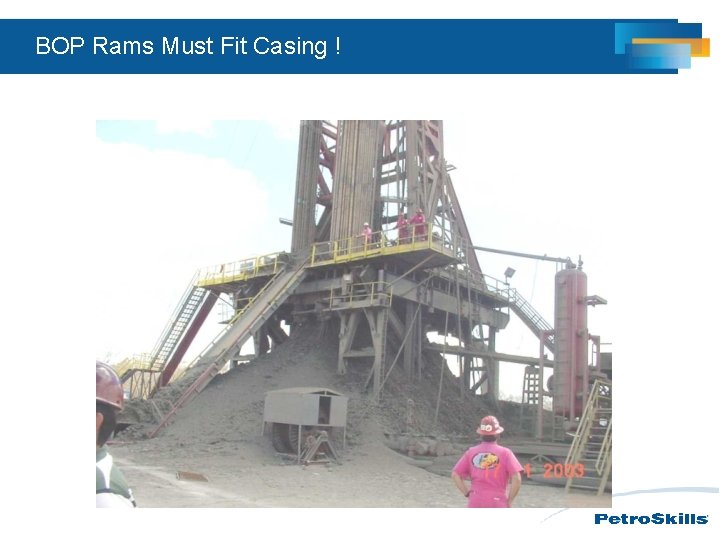
BOP Rams Must Fit Casing !
Landing Practices (Slip-type Hangers) § How much string weight should be applied to casing hanger? • No standard practice • Probably as many practices as there are companies § Considerations: • Prevent buckling above freeze point to reduce casing wear • Prevent buckling in un-cemented areas; can cause failure
Freeze Point ? § A point at which the pipe is fixed down hole § Usually taken to be the top of cement § Actual freeze point is never known
Neutral Point ? § The point at which the “effective” axial load goes from tension to compression § Not known, can be estimated from calculations § This is not the same point as the neutral point as defined on the true axial loads which has no meaning for buckling
Common Landing Practices § Same load on hanger as hook load § Tension in all casing above freeze point § Neutral point at the freeze point § Some percentage of hook load on hanger (e. g. 80%, 75% etc. ) Why? • Hanging weight sometimes reduced to avoid too much compression load on top of conductor/surface pipe. • No choices for mandrel type hangers
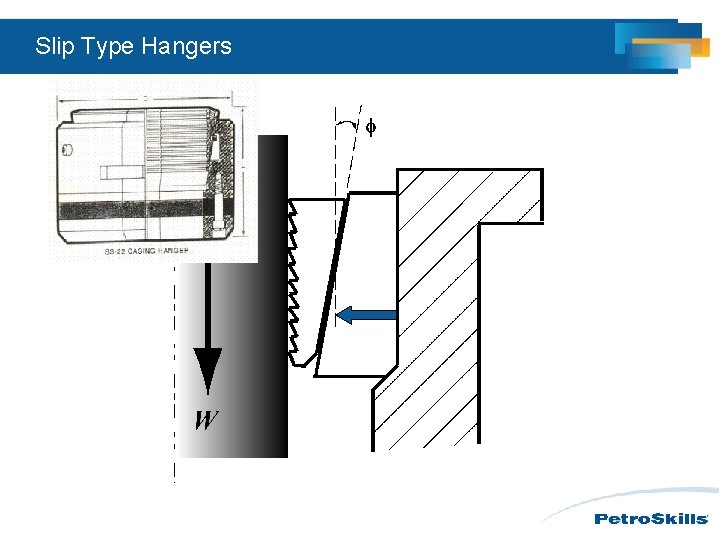
Slip Type Hangers
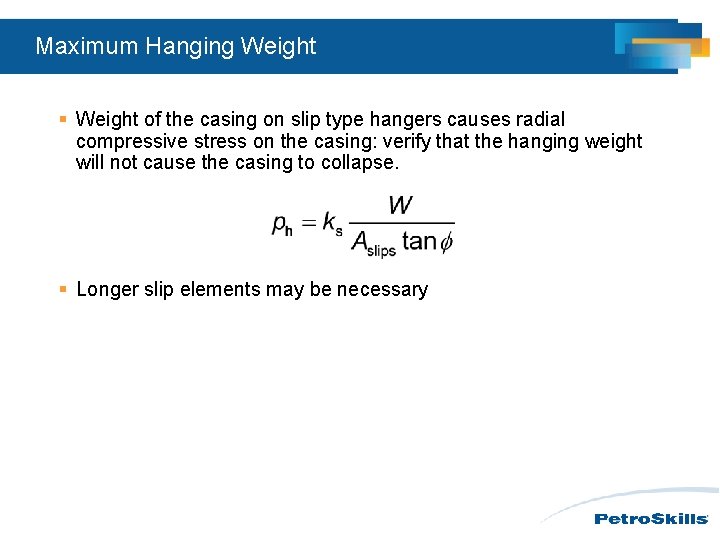
Maximum Hanging Weight § Weight of the casing on slip type hangers causes radial compressive stress on the casing: verify that the hanging weight will not cause the casing to collapse. § Longer slip elements may be necessary
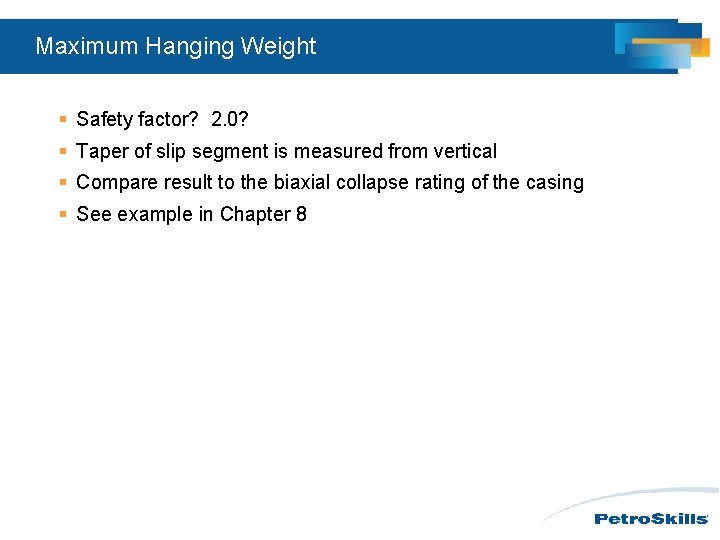
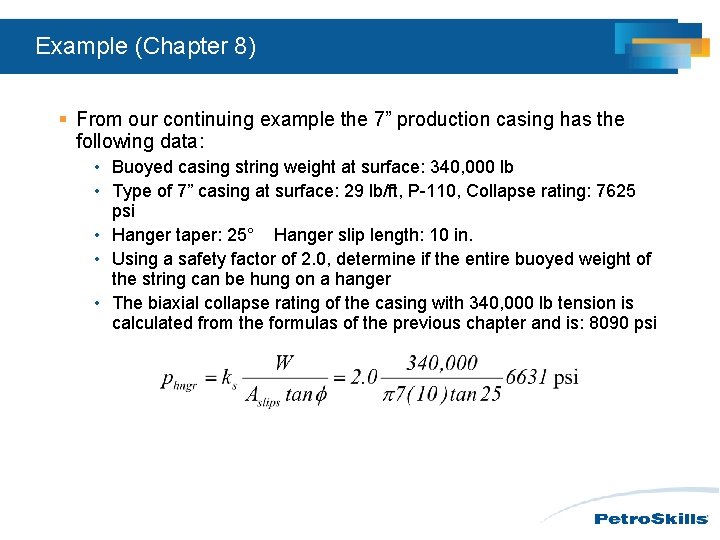
Maximum Hanging Weight § Safety factor? 2. 0? § Taper of slip segment is measured from vertical § Compare result to the biaxial collapse rating of the casing § See example in Chapter 8
Example (Chapter 8) § From our continuing example the 7” production casing has the following data: • Buoyed casing string weight at surface: 340, 000 lb • Type of 7” casing at surface: 29 lb/ft, P-110, Collapse rating: 7625 psi • Hanger taper: 25° Hanger slip length: 10 in. • Using a safety factor of 2. 0, determine if the entire buoyed weight of the string can be hung on a hanger • The biaxial collapse rating of the casing with 340, 000 lb tension is calculated from the formulas of the previous chapter and is: 8090 psi
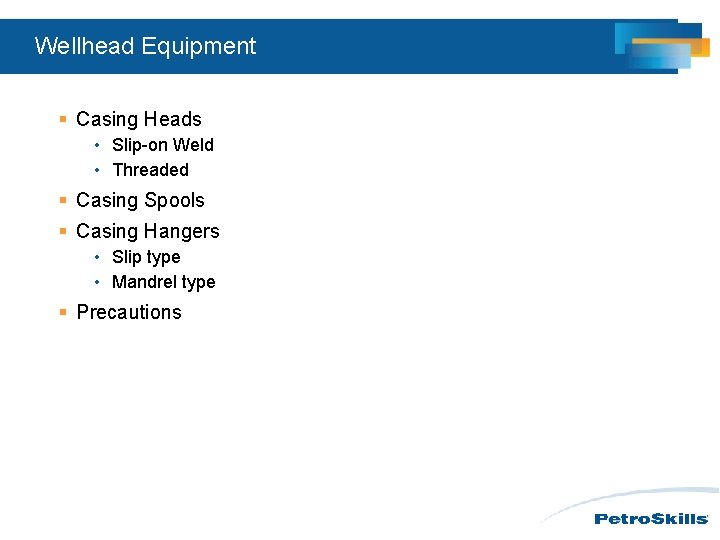
Wellhead Equipment § Casing Heads • Slip-on Weld • Threaded § Casing Spools § Casing Hangers • Slip type • Mandrel type § Precautions
Video Clip on Wellhead Equipment § https: //www. youtube. com/watch? v=khqq. Mzbg 8 xk&list=PLVi. EMM m 4 R 8 k 6 BC 5 Yj. Wv. Ew 9 t. Hbivt. MS 5 MD&index=19 • Well Completion : Casing Head Optional: https: //www. youtube. com/watch? v=z 9 e. WHp. EDRME Wellhead instillation. wmv
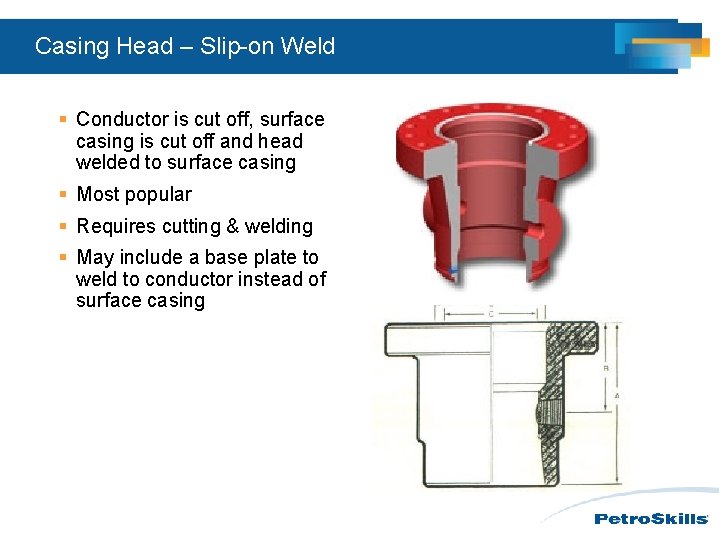
Casing Head – Slip-on Weld § Conductor is cut off, surface casing is cut off and head welded to surface casing § Most popular § Requires cutting & welding § May include a base plate to weld to conductor instead of surface casing
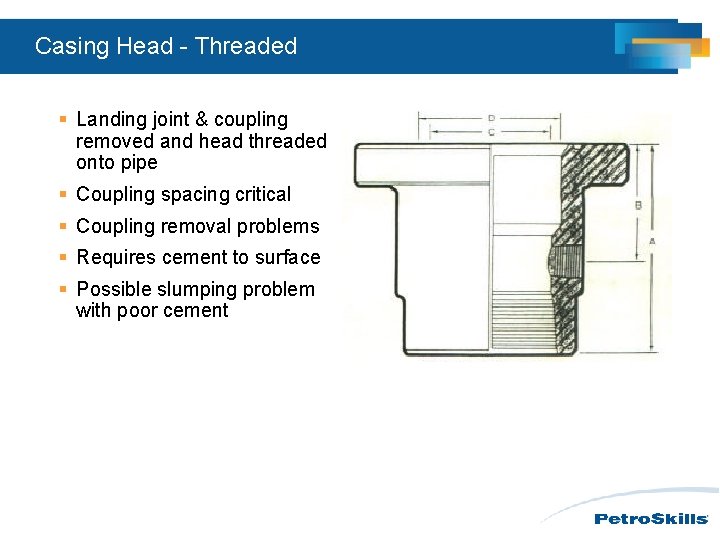
Casing Head - Threaded § Landing joint & coupling removed and head threaded onto pipe § Coupling spacing critical § Coupling removal problems § Requires cement to surface § Possible slumping problem with poor cement
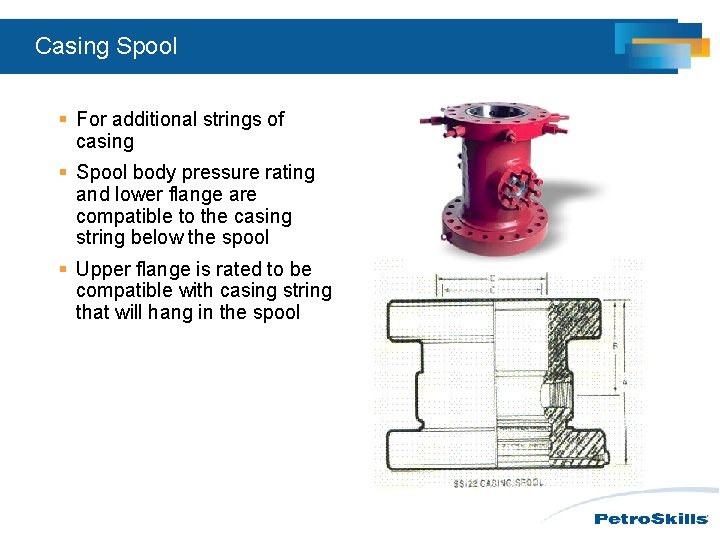
Casing Spool § For additional strings of casing § Spool body pressure rating and lower flange are compatible to the casing string below the spool § Upper flange is rated to be compatible with casing string that will hang in the spool
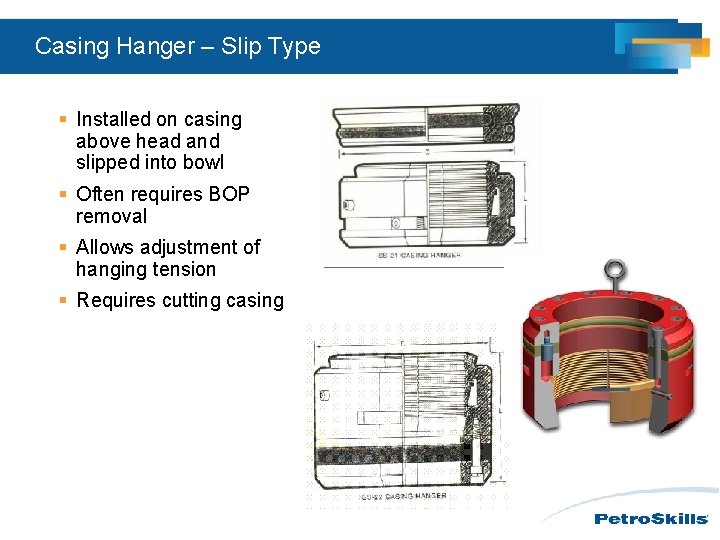
Casing Hanger – Slip Type § Installed on casing above head and slipped into bowl § Often requires BOP removal § Allows adjustment of hanging tension § Requires cutting casing
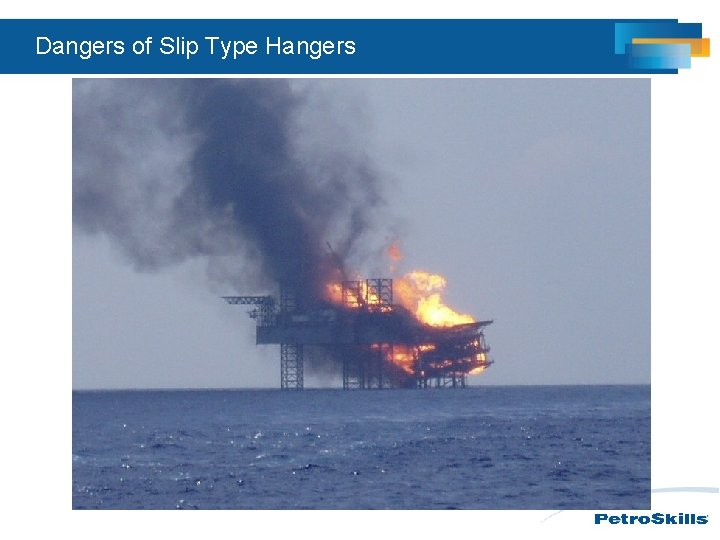
Dangers of Slip Type Hangers
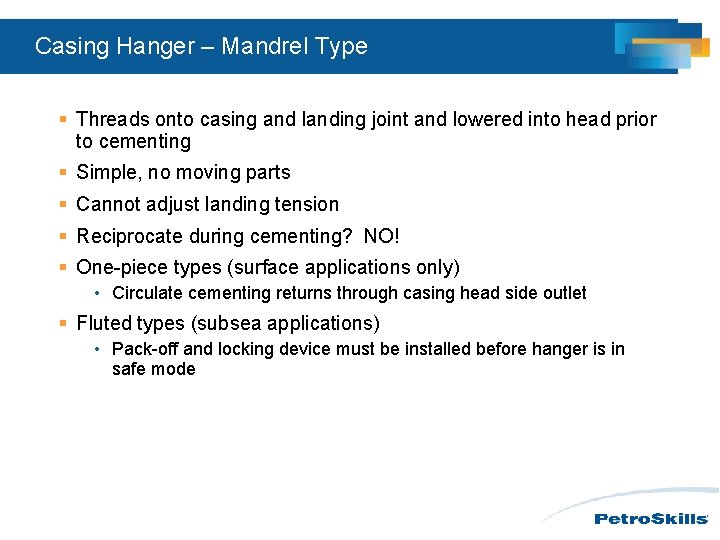
Casing Hanger – Mandrel Type § Threads onto casing and landing joint and lowered into head prior to cementing § Simple, no moving parts § Cannot adjust landing tension § Reciprocate during cementing? NO! § One-piece types (surface applications only) • Circulate cementing returns through casing head side outlet § Fluted types (subsea applications) • Pack-off and locking device must be installed before hanger is in safe mode
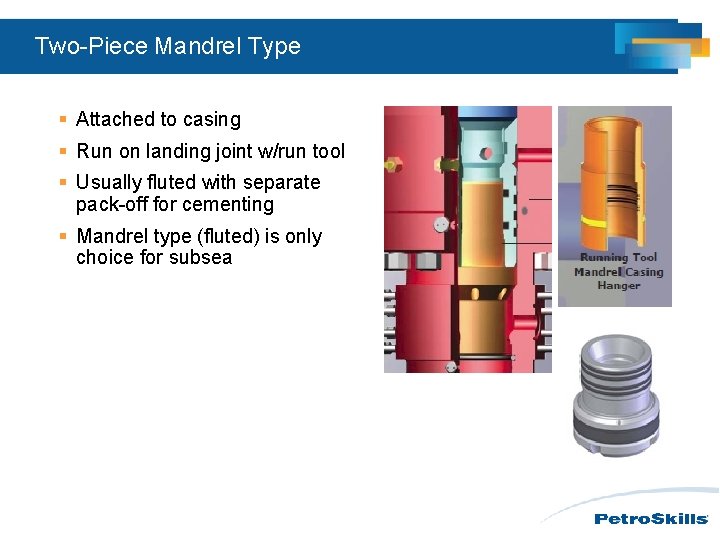
Two-Piece Mandrel Type § Attached to casing § Run on landing joint w/run tool § Usually fluted with separate pack-off for cementing § Mandrel type (fluted) is only choice for subsea
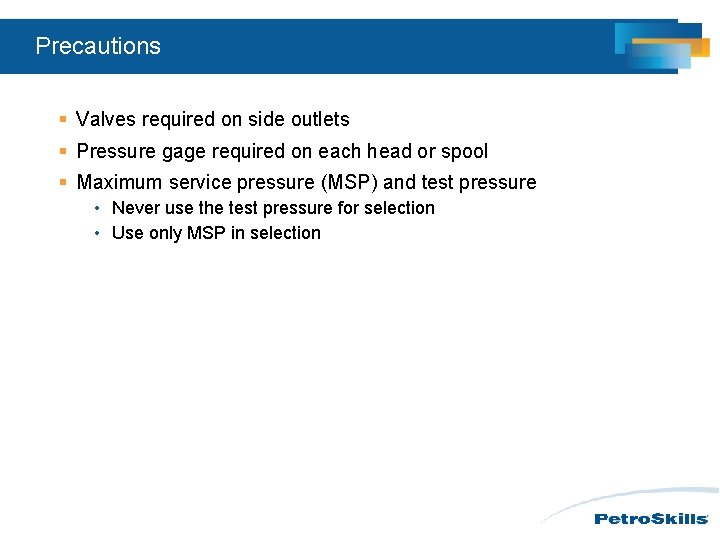
Precautions § Valves required on side outlets § Pressure gage required on each head or spool § Maximum service pressure (MSP) and test pressure • Never use the test pressure for selection • Use only MSP in selection
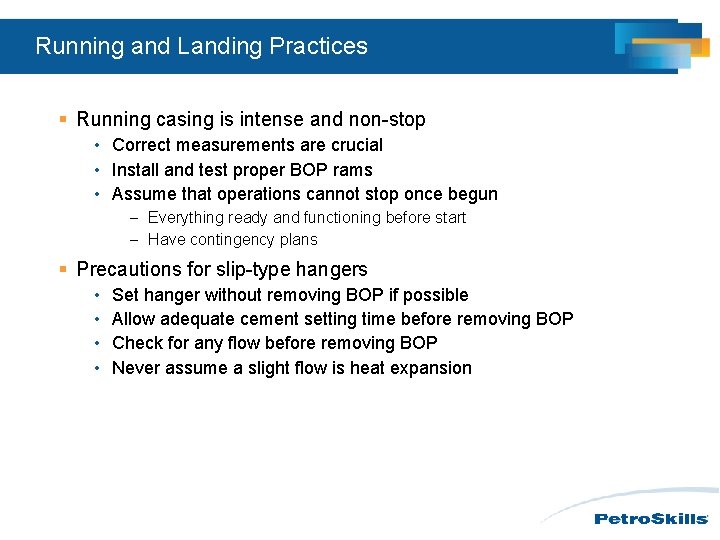
Running and Landing Practices § Running casing is intense and non-stop • Correct measurements are crucial • Install and test proper BOP rams • Assume that operations cannot stop once begun – Everything ready and functioning before start – Have contingency plans § Precautions for slip-type hangers • • Set hanger without removing BOP if possible Allow adequate cement setting time before removing BOP Check for any flow before removing BOP Never assume a slight flow is heat expansion