
Ruminant Protein Nutrition More appropriate Rumen Nitrogen Metabolism
Ruminant Protein Nutrition More appropriate: Rumen Nitrogen Metabolism


Protein Pathways in the Ruminant
General Information n No proteases in saliva No rumen secretions Microorganisms responsible for protein digestion in rumen (and reticulum) n n Bacteria Protozoa
Sources of Rumen Nitrogen n Feed n Protein nitrogen n n Nonprotein nitrogen (NPN) n n n Protein supplements (SBM, CSM, grains, forages, silages. . . Usually means urea However, from 5% of N in grains to 50% of N in silage and immature forages can be NPN Endogenous (recycled) N n n Saliva Rumen wall

Ruminal Protein Degradation n Fermentative digestion – enzymes of microbial origin n MO proteases & peptidases cleave peptide bonds and release AA AA deaminated by microbes, releasing NH 3 and C-skeleton MO’s use NH 3, C-skeleton and energy to synthesize their own AA n n Energy primarily from CHO’s (starch, cellulose) Formation of NH 3 rapid. . . very few free AA in rumen
NPN Utilization n n Urea (and most sources of NPN) rapidly degraded to NH 3 MO’s don’t care where NH 3 comes from
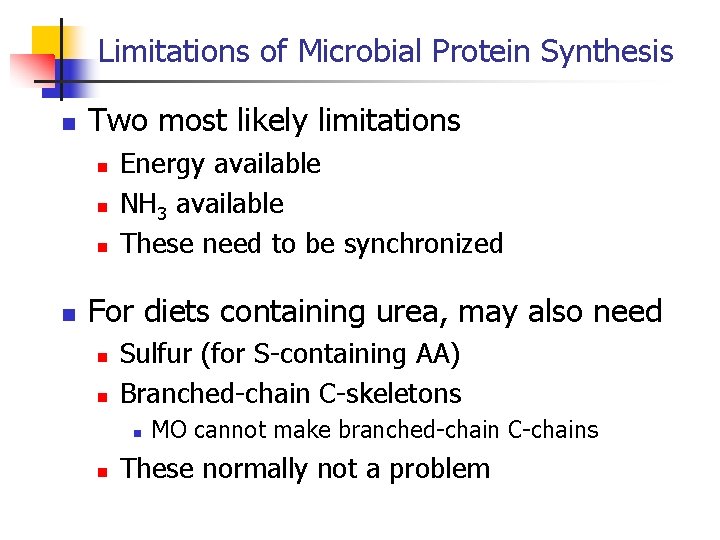
Limitations of Microbial Protein Synthesis n Two most likely limitations n n Energy available NH 3 available These need to be synchronized For diets containing urea, may also need n n Sulfur (for S-containing AA) Branched-chain C-skeletons n n MO cannot make branched-chain C-chains These normally not a problem
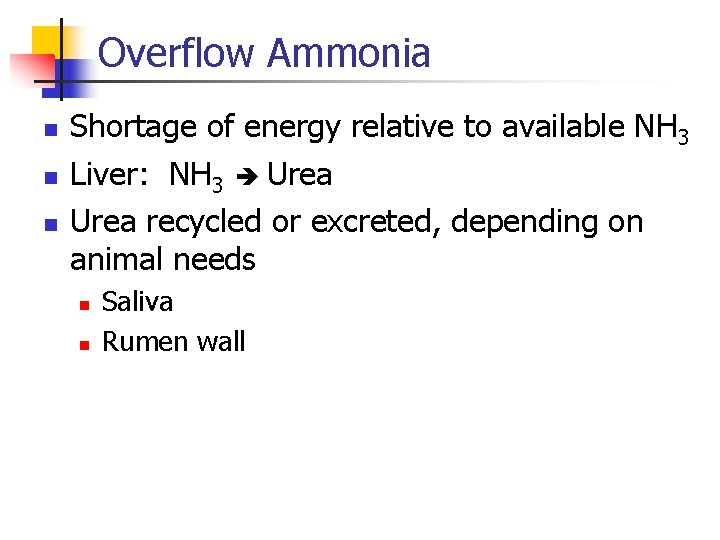
Overflow Ammonia n n n Shortage of energy relative to available NH 3 Liver: NH 3 Urea recycled or excreted, depending on animal needs n n Saliva Rumen wall

Protein Leaving Rumen n Microbial protein Escape protein (also called “bypass” protein) n Enter abomasum & small intestine n n n Digested by proteolytic enzymes similar to nonruminants Escape vs Bypass protein n n Technically not “bypass” Reticular groove
Protein Utilization Ruminant vs Nonruminant Similarities and Dissimilarities
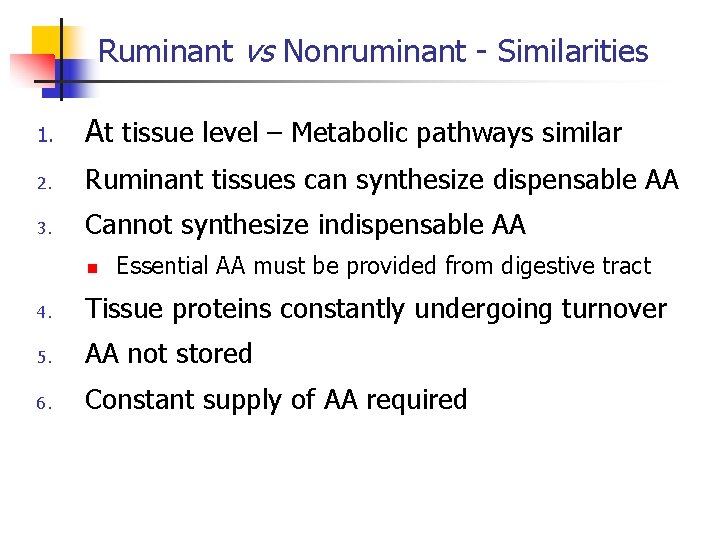
Ruminant vs Nonruminant - Similarities 1. At tissue level – Metabolic pathways similar 2. Ruminant tissues can synthesize dispensable AA 3. Cannot synthesize indispensable AA n Essential AA must be provided from digestive tract 4. Tissue proteins constantly undergoing turnover 5. AA not stored 6. Constant supply of AA required
Ruminant vs Nonruminant - Dissimilarities 1. Microbial population has profound effect on AA reaching S. I. a. AA profile at S. I. different from diet n n Up-grades low quality dietary protein Down-grades high quality dietary protein b. Enables ruminants to use NPN efficiently n Ruminants can be productive without a source of dietary true protein c. Animal can survive on low amounts of dietary protein by recycling N (as urea) back to rumen
Ruminant vs Nonruminant - Dissimilarities 1. Microbial population has profound effect on AA reaching S. I. (cont. ) d. Why we say nitrogen metabolism (vs protein metab. ) n n Microbial intervention NH 3 formation e. Disadvantage: more protein can be destroyed in the rumen than is synthesized Result = Net loss of protein Advantage: can have more protein leaving rumen than is in the diet Result = Net gain of protein

Example: More Protein Leaving Rumen than was in Diet n Weston & Hogan (Australia) first to show this n n Fed sheep 2 diets containing 20% and 8% CP n 20% Lucerne (alfalfa), corn, PNM n 8% Wheaten hay, corn Diets supported identical wool growth Measurement 20% CP 8% CP N fed (gm/day) 13. 8 5. 5 AA-N entering S. I. (gm/day) 8. 8 8. 1 Net loss Net gain N entering S. I. vs diet
Ruminant vs Nonruminant - Dissimilarities 2. In ruminant nutrition – generally not concerned with AA composition of dietary protein a. Type of feed does not affect AA comp. of bacteria and protozoa leaving rumen n AA comp. of MO’s reaching duodenum strikingly similar when measured in labs around the world b. Biological value (BV) of microbial protein ~80%
Matching Available Energy with Rates of Protein Degradation To maximize efficiency of microbial protein synthesis from ammonia, available energy must be present.

Rumen NH 3 Following Protein Ingestion
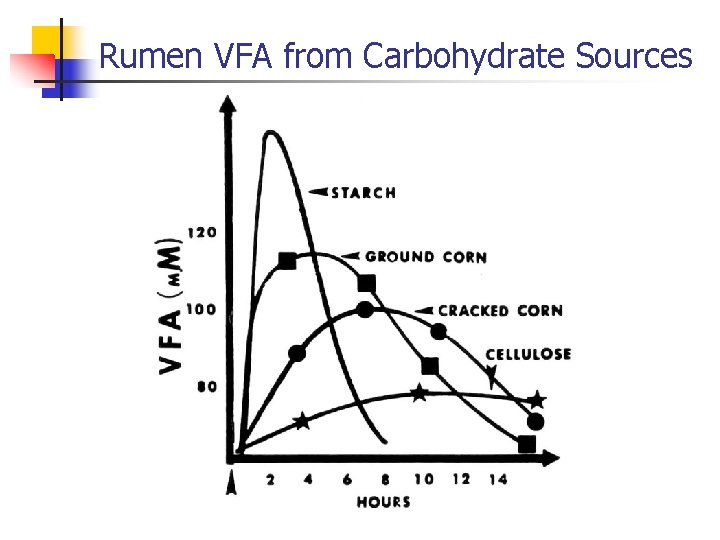
Rumen VFA from Carbohydrate Sources
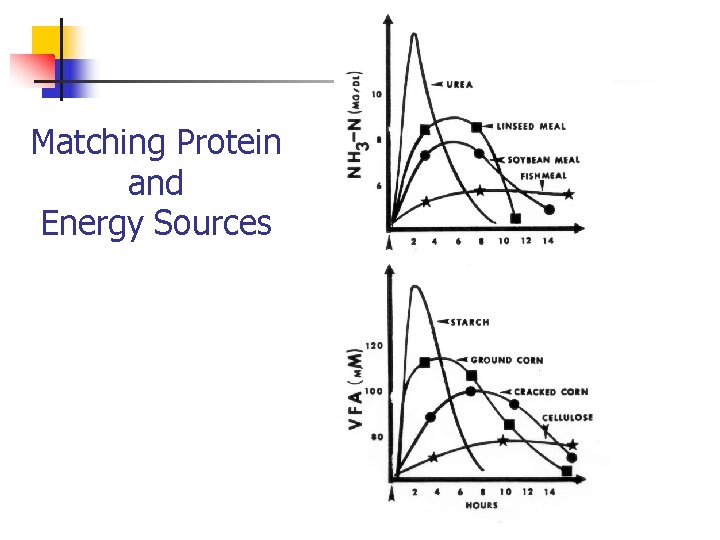
Matching Protein and Energy Sources

Protein Supplements for Beef Cows n Type of feed used for beef cows? n Would urea be utilized? n Why is urea included in range pellets?
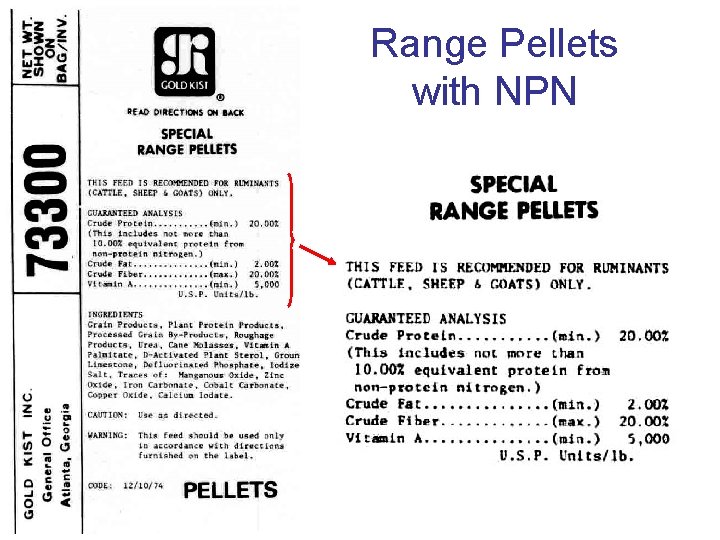
Range Pellets with NPN
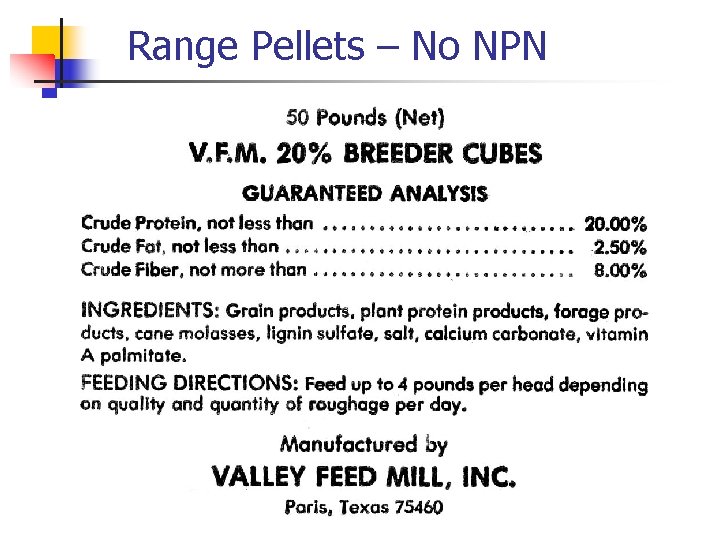
Range Pellets – No NPN
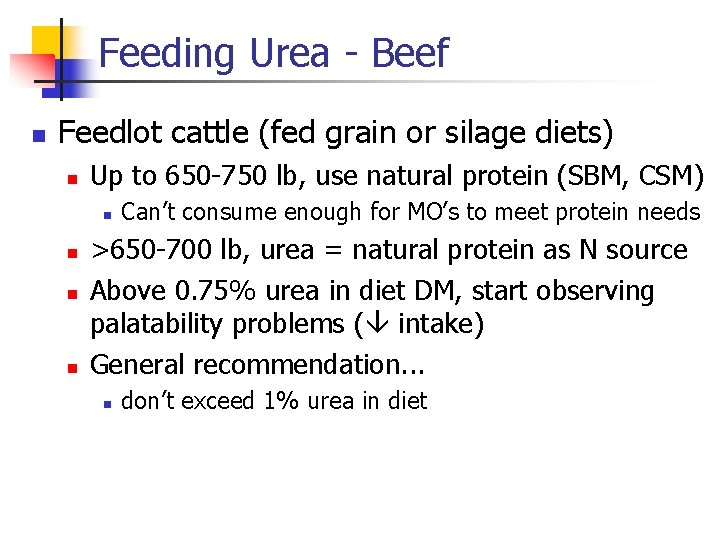
Feeding Urea - Beef n Feedlot cattle (fed grain or silage diets) n Up to 650 -750 lb, use natural protein (SBM, CSM) n n Can’t consume enough for MO’s to meet protein needs >650 -700 lb, urea = natural protein as N source Above 0. 75% urea in diet DM, start observing palatability problems ( intake) General recommendation. . . n don’t exceed 1% urea in diet
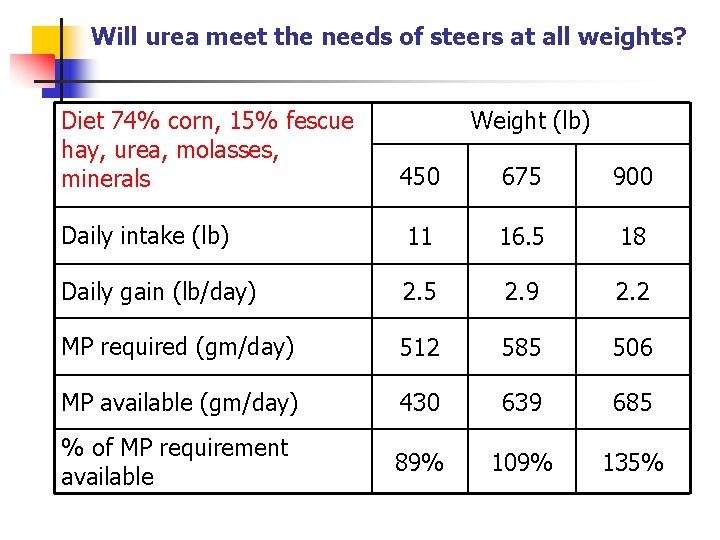
Will urea meet the needs of steers at all weights? Diet 74% corn, 15% fescue hay, urea, molasses, minerals Weight (lb) 450 675 900 Daily intake (lb) 11 16. 5 18 Daily gain (lb/day) 2. 5 2. 9 2. 2 MP required (gm/day) 512 585 506 MP available (gm/day) 430 639 685 % of MP requirement available 89% 109% 135%
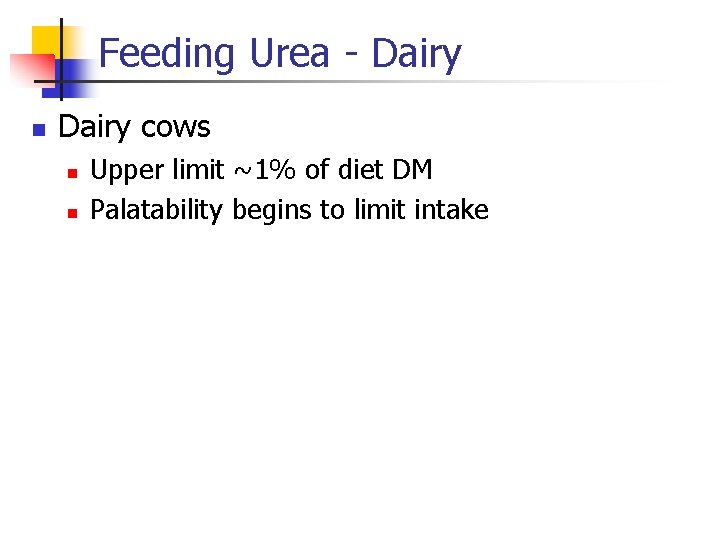
Feeding Urea - Dairy n Dairy cows n n Upper limit ~1% of diet DM Palatability begins to limit intake
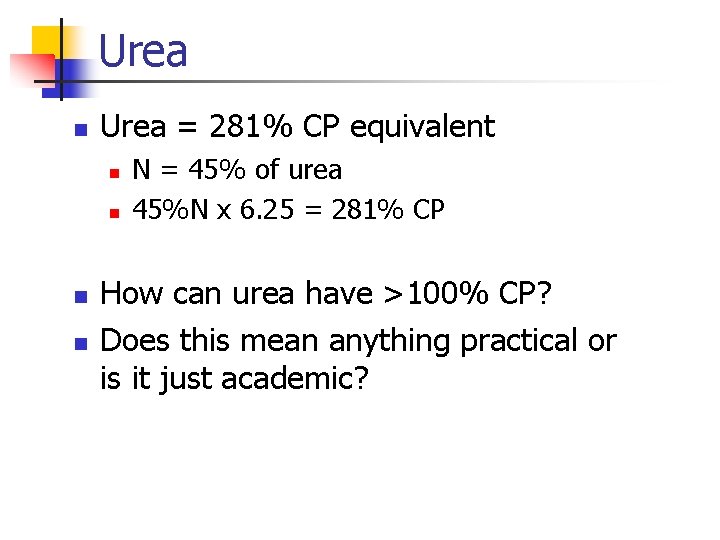
Urea n Urea = 281% CP equivalent n n N = 45% of urea 45%N x 6. 25 = 281% CP How can urea have >100% CP? Does this mean anything practical or is it just academic?
![Urea Toxicity (NH 3 Toxicity) n Mechanism n n n Rumen [NH 3] Rumen](http://slidetodoc.com/presentation_image_h/9f8508293eaa0382f19af77eeff059aa/image-28.jpg "Urea Toxicity (NH 3 Toxicity) n Mechanism n n n Rumen [NH 3] Rumen")
Urea Toxicity (NH 3 Toxicity) n Mechanism n n n Rumen [NH 3] Rumen p. H As p. H , shift from NH 4+ to NH 3 absorbed faster than NH 4+ Liver capacity to convert NH 3 to urea is exceeded NH 3 goes to blood 2 mg NH 3/100 ml plasma is toxic
Urea Toxicity (NH 3 Toxicity) n Signs of toxicity n n n Appear 20 -30 min after urea ingestion Rapid and labored breathing Tremors Incoordination Inability to stand & tetany increasingly apparent
Urea Toxicity (NH 3 Toxicity) n Treatment n Orally dose with 5% acetic acid n n n (~1 gal. for 1, 000 lb cow) Shift equilibrium from NH 3 to NH 4+ rate of absn Drench with cold water n n n rumen temp. which rate of urea hydrolysis Dilutes NH 3 concentration Takes 6 -12 gal. ; not practical when several sick
Urea Toxicity (NH 3 Toxicity) n Prevention n n Mix feeds well Don’t switch rapidly from natural protein to urea Always have feed available Don’t allow hungry animals access to highly palatable, high urea diet, feed, or supplement (including lick tanks) Don’t use urea with low-energy feeds
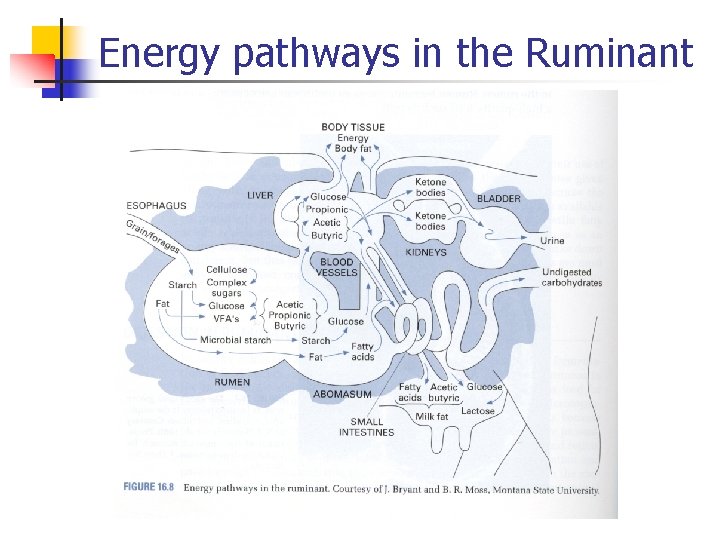
Energy pathways in the Ruminant
- Slides: 32