
Ruminant digestive system and rumen ecology Prof Dr

- Slides: 41
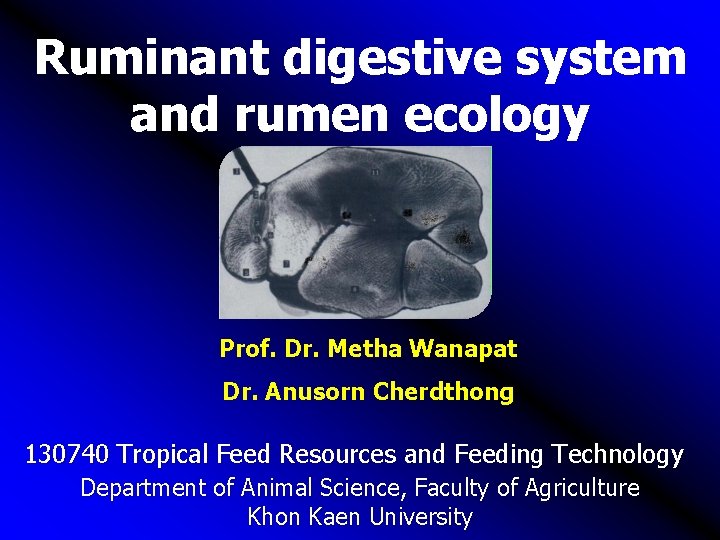
Ruminant digestive system and rumen ecology Prof. Dr. Metha Wanapat Dr. Anusorn Cherdthong 130740 Tropical Feed Resources and Feeding Technology Department of Animal Science, Faculty of Agriculture Khon Kaen University
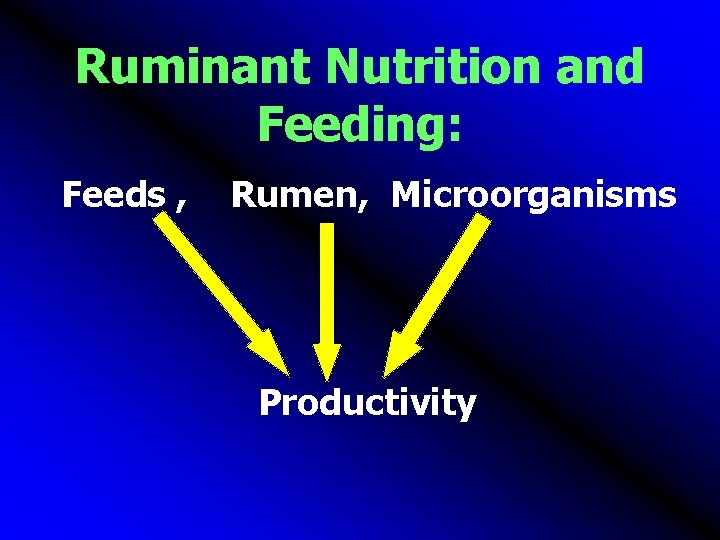
Ruminant Nutrition and Feeding: Feeds , Rumen, Microorganisms Productivity
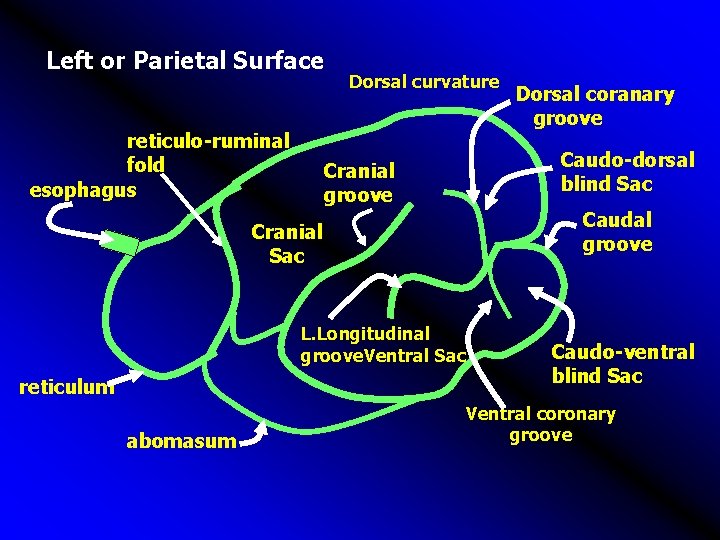
Left or Parietal Surface reticulo-ruminal fold esophagus Dorsal curvature Caudo-dorsal blind Sac Cranial groove Caudal groove Cranial Sac L. Longitudinal groove. Ventral Sac reticulum abomasum Dorsal coranary groove Caudo-ventral blind Sac Ventral coronary groove
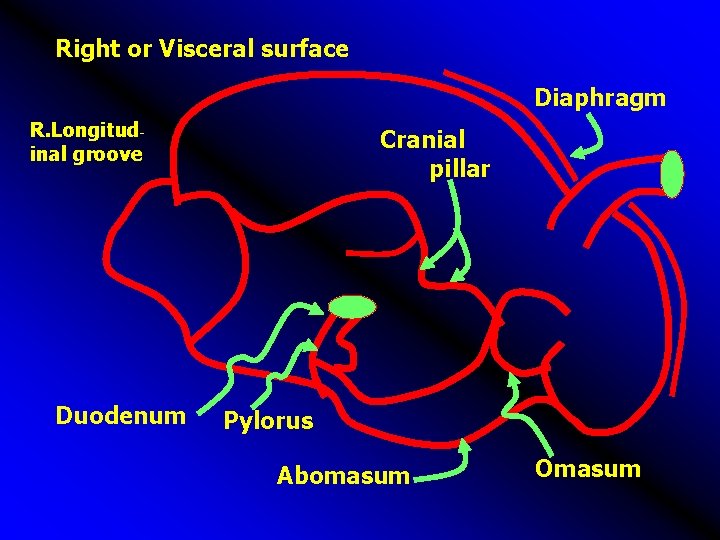
Right or Visceral surface Diaphragm R. Longitudinal groove Duodenum Cranial pillar Pylorus Abomasum Omasum
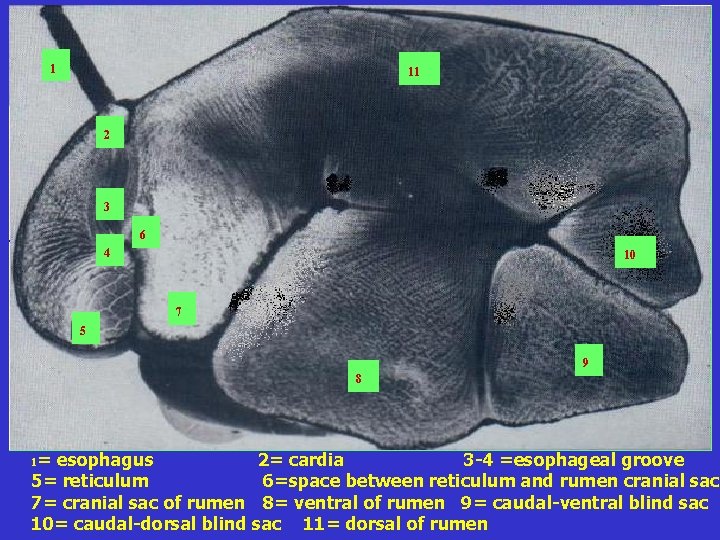
1 11 2 3 4 5 6 10 7 8 9 1= esophagus 2= cardia 3 -4 =esophageal groove 5= reticulum 6=space between reticulum and rumen cranial sac 7= cranial sac of rumen 8= ventral of rumen 9= caudal-ventral blind sac 10= caudal-dorsal blind sac 11= dorsal of rumen
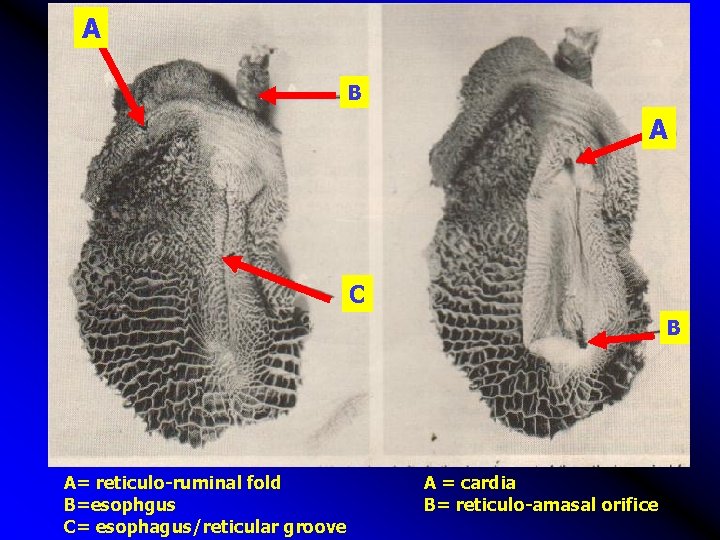
A B A C B A= reticulo-ruminal fold B=esophgus C= esophagus/reticular groove A = cardia B= reticulo-amasal orifice
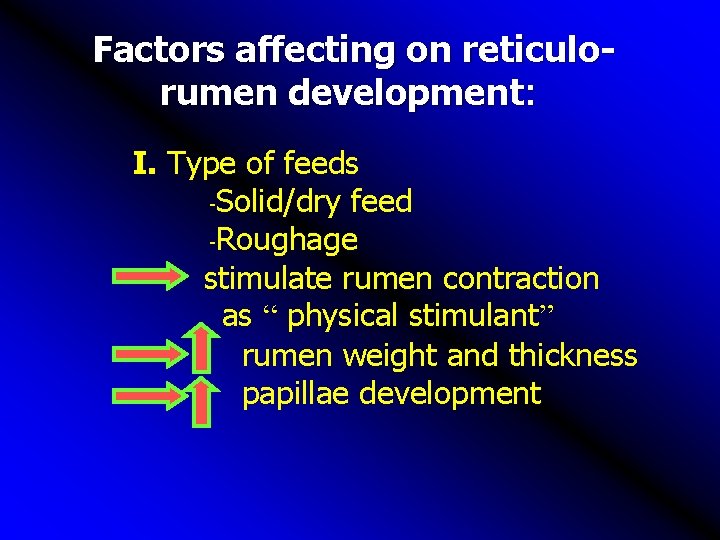
Factors affecting on reticulorumen development: I. Type of feeds -Solid/dry feed -Roughage stimulate rumen contraction as “ physical stimulant” rumen weight and thickness papillae development
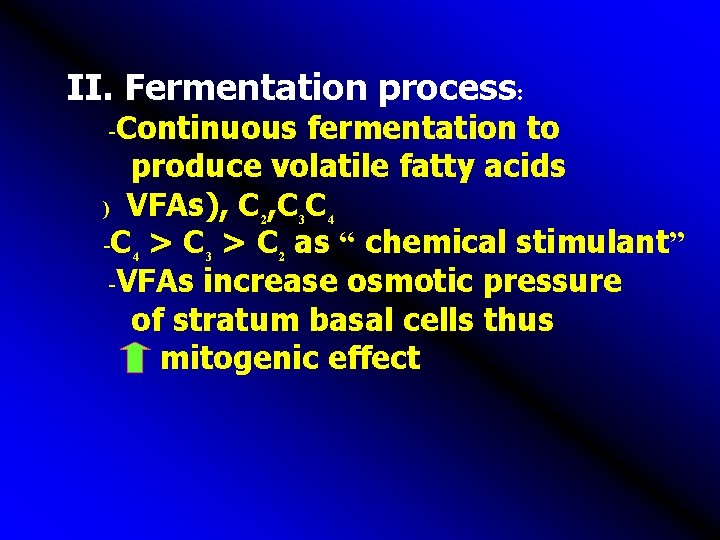
II. Fermentation process: -Continuous fermentation to produce volatile fatty acids ) VFAs), C 2, C 3 C 4 -C 4 > C 3 > C 2 as “ chemical stimulant” -VFAs increase osmotic pressure of stratum basal cells thus mitogenic effect
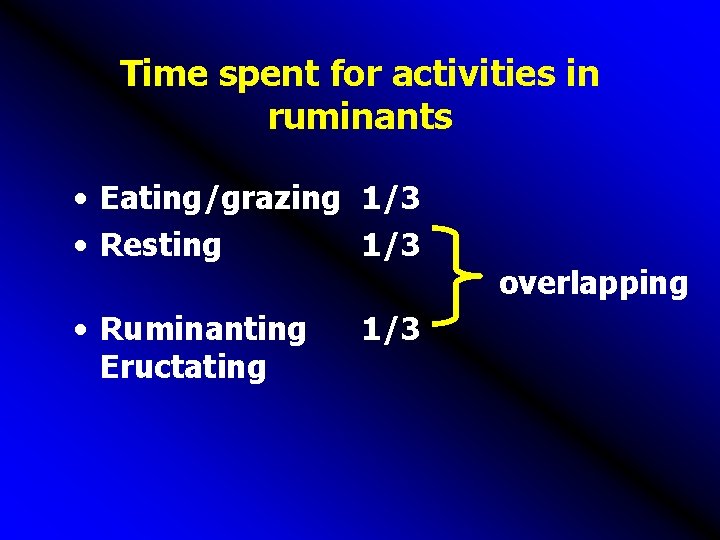
Time spent for activities in ruminants • Eating/grazing 1/3 • Resting 1/3 • Ruminanting Eructating 1/3 overlapping
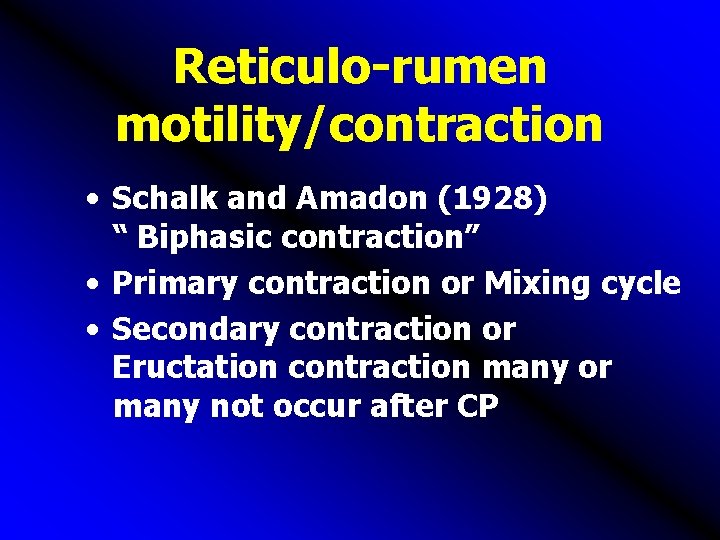
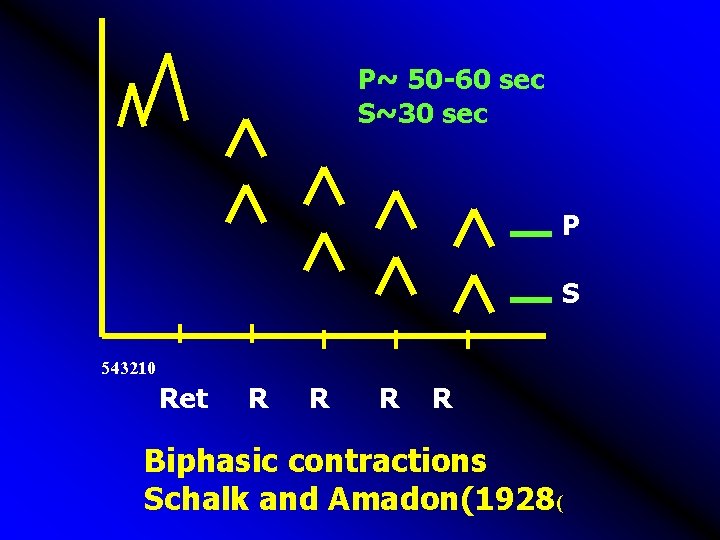
Reticulo-rumen motility/contraction • Schalk and Amadon (1928) “ Biphasic contraction” • Primary contraction or Mixing cycle • Secondary contraction or Eructation contraction many or many not occur after CP
P~ 50 -60 sec S~30 sec P S 543210 Ret R R Biphasic contractions Schalk and Amadon(1928(
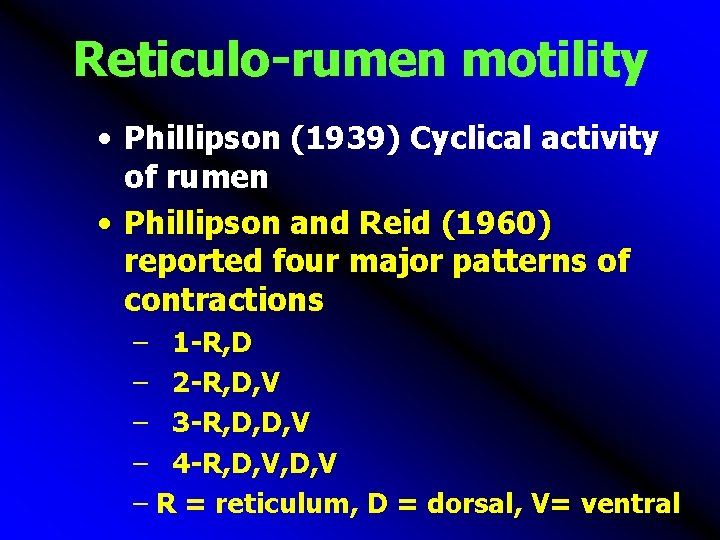
Reticulo-rumen motility • Phillipson (1939) Cyclical activity of rumen • Phillipson and Reid (1960) reported four major patterns of contractions – 1 -R, D – 2 -R, D, V – 3 -R, D, D, V – 4 -R, D, V – R = reticulum, D = dorsal, V= ventral
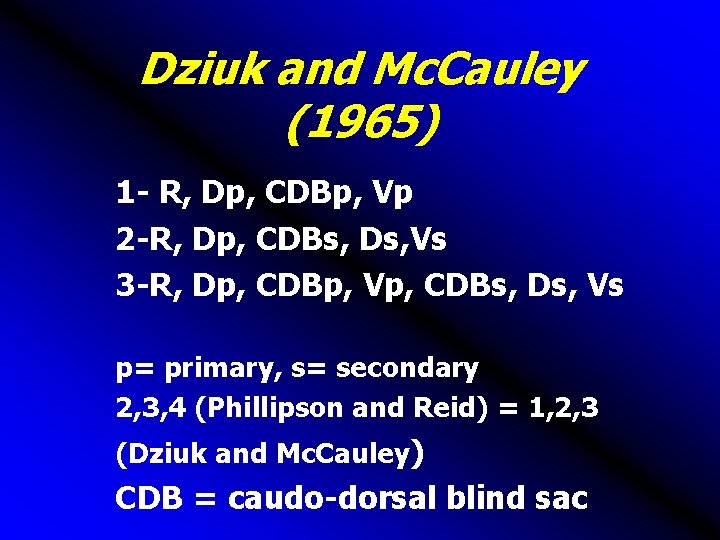
Dziuk and Mc. Cauley (1965) 1 - R, Dp, CDBp, Vp 2 -R, Dp, CDBs, Ds, Vs 3 -R, Dp, CDBp, Vp, CDBs, Ds, Vs p= primary, s= secondary 2, 3, 4 (Phillipson and Reid) = 1, 2, 3 (Dziuk and Mc. Cauley) CDB = caudo-dorsal blind sac
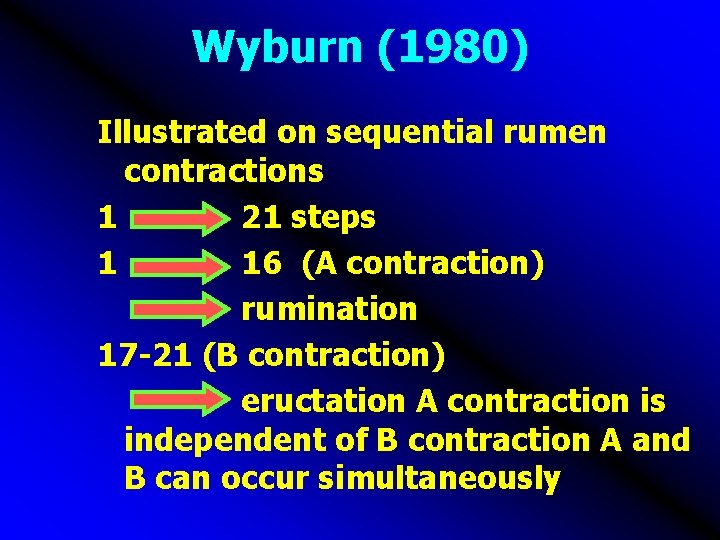
Wyburn (1980) Illustrated on sequential rumen contractions 1 21 steps 1 16 (A contraction) rumination 17 -21 (B contraction) eructation A contraction is independent of B contraction A and B can occur simultaneously
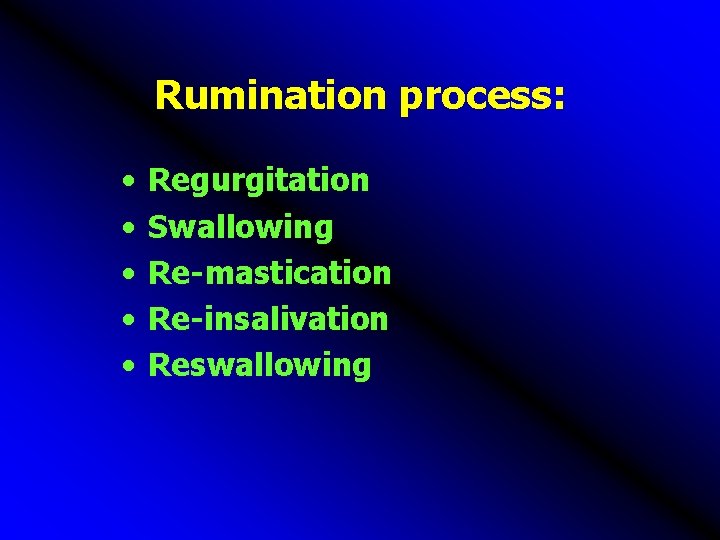
Rumination process: • • • Regurgitation Swallowing Re-mastication Re-insalivation Reswallowing
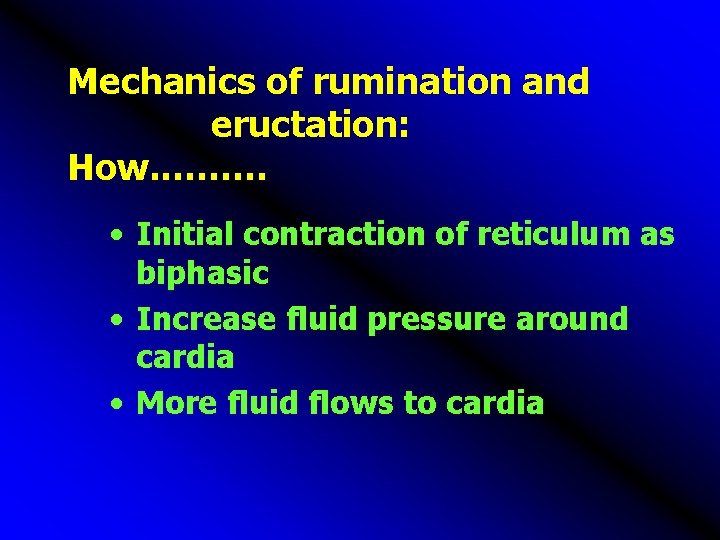
Mechanics of rumination and eructation: How. ……… • Initial contraction of reticulum as biphasic • Increase fluid pressure around cardia • More fluid flows to cardia
Rumination. . …… • Diaphragm sharply contracts creates negative pressure in trachea • Esophageal becomes flat except area connecting to cardia start to enlarge
Rumination. . . …… • Ingesta/digesta in rumen flows back to esophagus • Regurgitation occurs, ingesta moves back to esophagus by antiperistalic wave
Triphasic contraction • TC occurs as an extrareticular contraction and occurs during resting or eating phase , prior to usual biphasic /primary contraction • Thus stimulates rumination to occur regurgitation
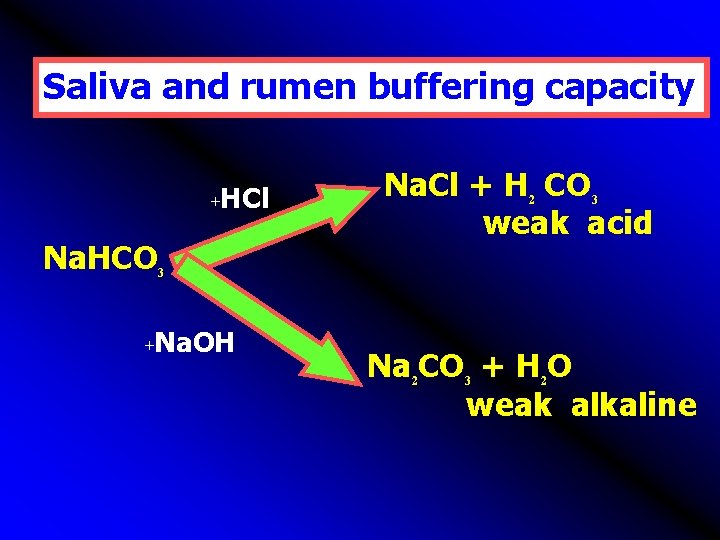
Rumination is essential and useful: • Mastication of particles for finner, mix well for efficient fermentation • Increase salivary secretion thus enhance rumen buffering capacity
Rumination. . …… • Increase rate of passage (RT), decrease rumen retention time (RRT) thus improve DM intake • Maintain rumen microbial population for a balanced rumen/optimal rumen ecology • Enhance volatile fatty acids (VFAs) production
Saliva and rumen buffering capacity +HCl Na. HCO 3 +Na. OH Na. Cl + H 2 CO 3 weak acid Na 2 CO 3 + H 2 O weak alkaline
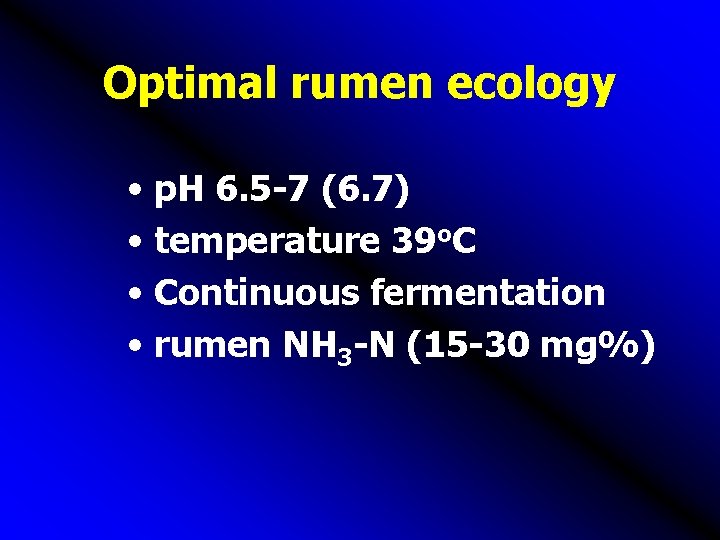
Optimal rumen ecology • p. H 6. 5 -7 (6. 7) • temperature 39 o. C • Continuous fermentation • rumen NH 3 -N (15 -30 mg%)
Mechanics of eructation • E belching/ getting rid of fermentation gases • E occurs during secondary contraction of rumen peak of fermentation > two secondary contractions occur
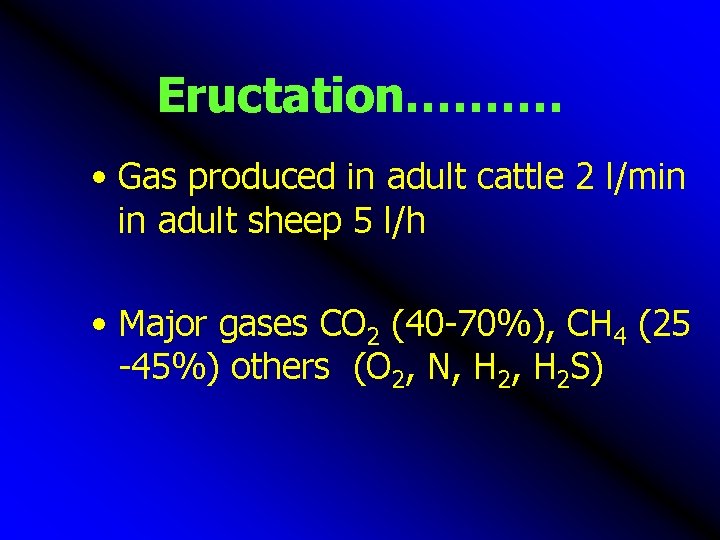
Eructation. ……… • Gas produced in adult cattle 2 l/min in adult sheep 5 l/h • Major gases CO 2 (40 -70%), CH 4 (25 -45%) others (O 2, N, H 2 S)
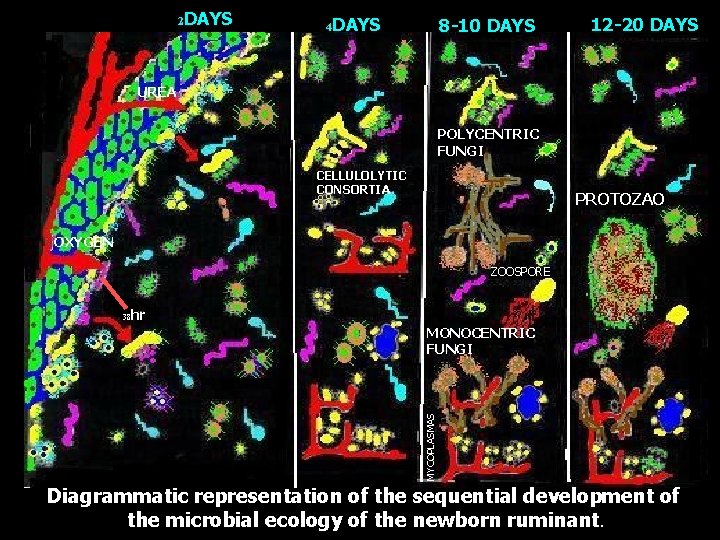
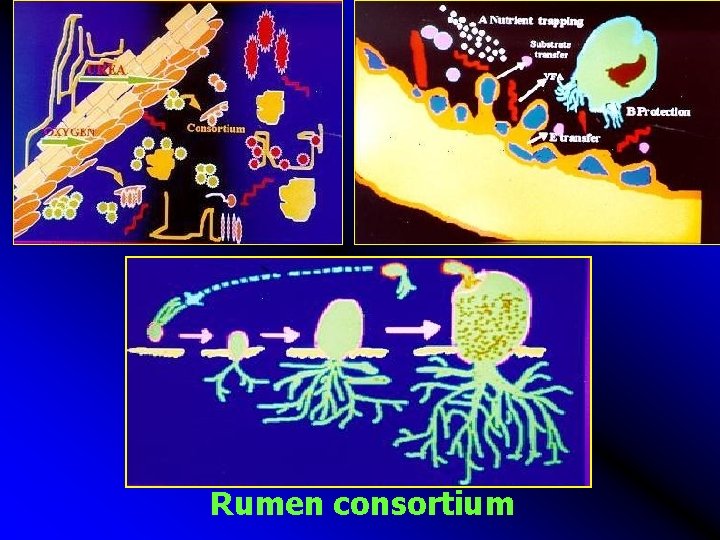
2 DAYS 4 DAYS 8 -10 DAYS 12 -20 DAYS UREA POLYCENTRIC FUNGI CELLULOLYTIC CONSORTIA PROTOZAO OXYGEN ZOOSPORE MONOCENTRIC FUNGI MYCOPLASMAS 38 hr Diagrammatic representation of the sequential development of the microbial ecology of the newborn ruminant.
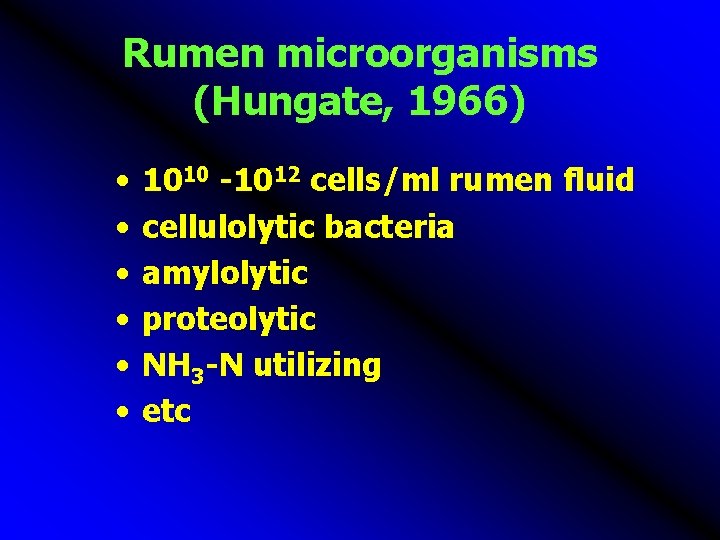
Rumen microorganisms (Hungate, 1966) • • • 1010 -1012 cells/ml rumen fluid cellulolytic bacteria amylolytic proteolytic NH 3 -N utilizing etc
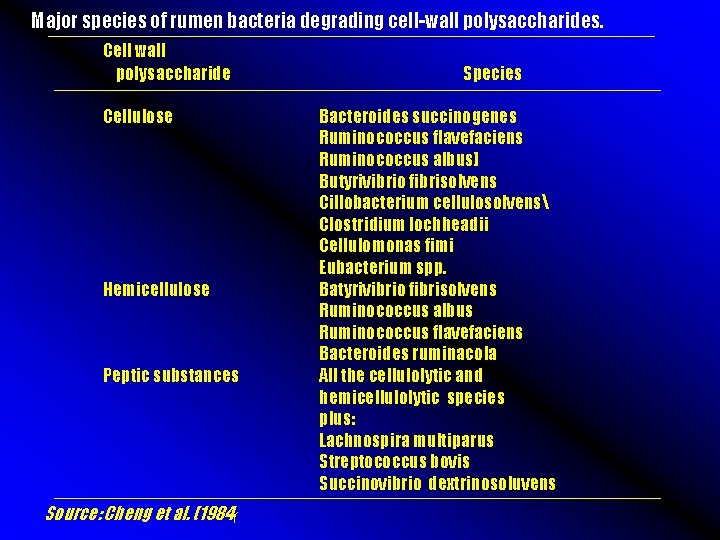
Major species of rumen bacteria degrading cell-wall polysaccharides. Cell wall polysaccharide Cellulose Hemicellulose Peptic substances Source: Cheng et al. (1984( Species Bacteroides succinogenes Ruminococcus flavefaciens Ruminococcus albus] Butyrivibrio fibrisolvens Cillobacterium cellulosolvens Clostridium lochheadii Cellulomonas fimi Eubacterium spp. Batyrivibrio fibrisolvens Ruminococcus albus Ruminococcus flavefaciens Bacteroides ruminacola All the cellulolytic and hemicellulolytic species plus: Lachnospira multiparus Streptococcus bovis Succinovibrio dextrinosoluvens
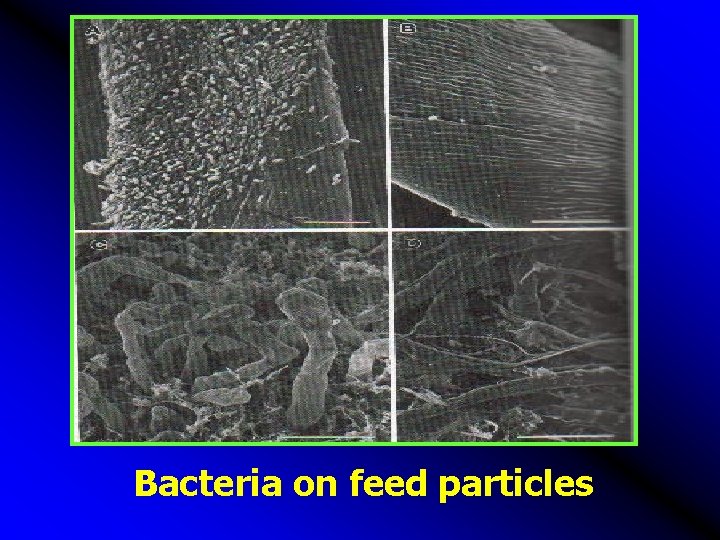
Bacteria on feed particles
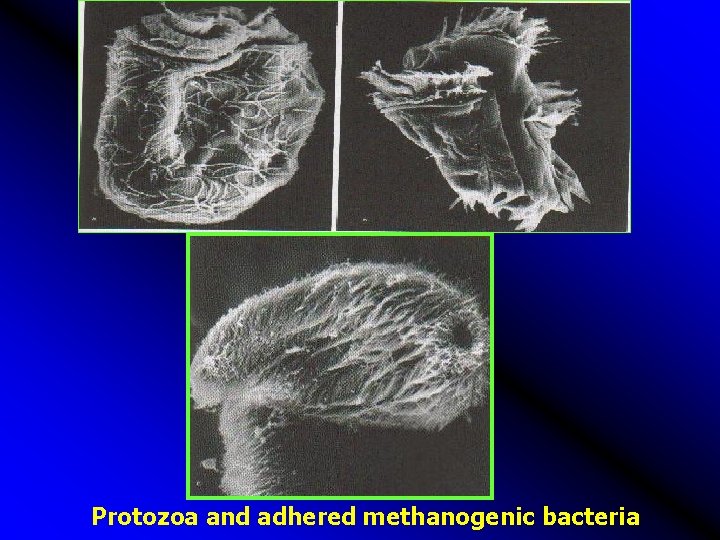
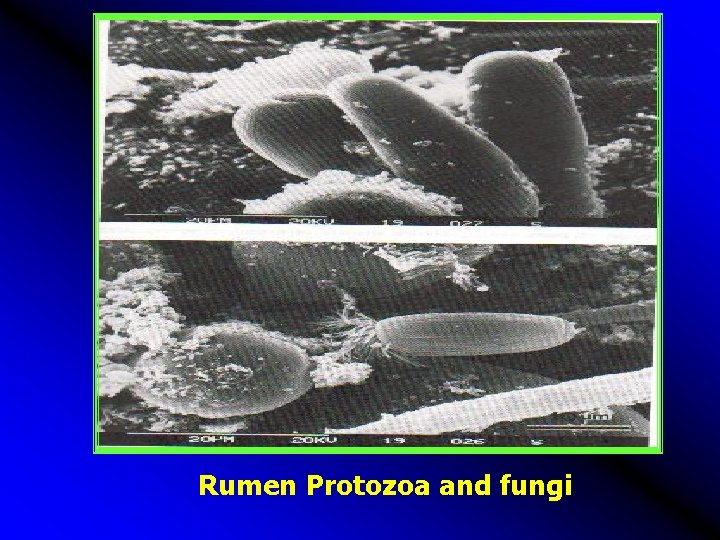
Protozoa • Ciliated protozoa • 104 -106 cells/ml • larger > bacteria 38 micron in length 15 micron in width • moves rapidly
• Holotrich- Subclass – absorbs sugar • Entodinimorph (tuft) – digest starch • stores surplus CHO • Can not use NPN • engulf bacleria 200 -106 cells/h 1% bacteria/min • defaunation
Protozoa and adhered methanogenic bacteria
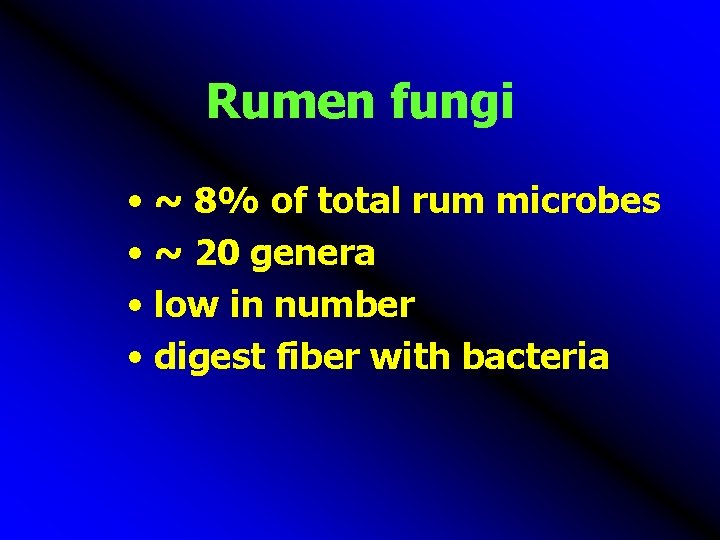
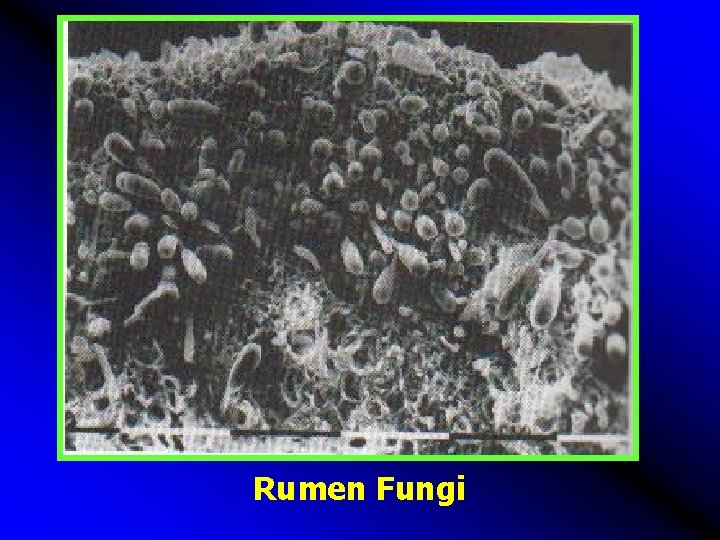
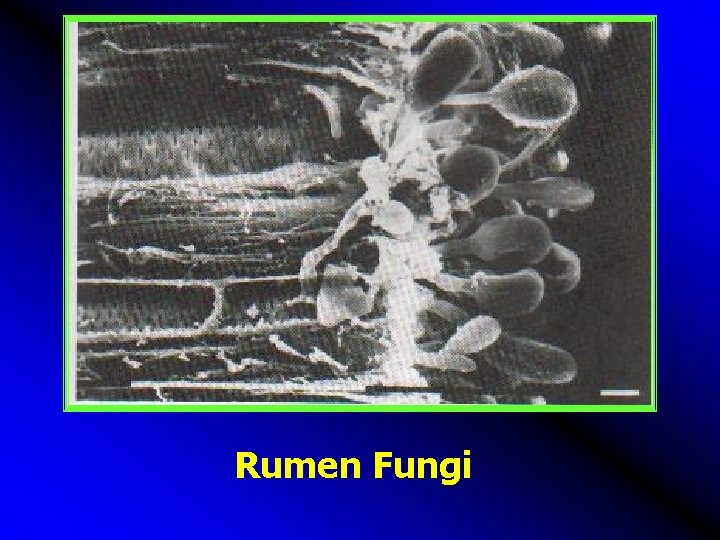
Rumen fungi • ~ 8% of total rum microbes • ~ 20 genera • low in number • digest fiber with bacteria
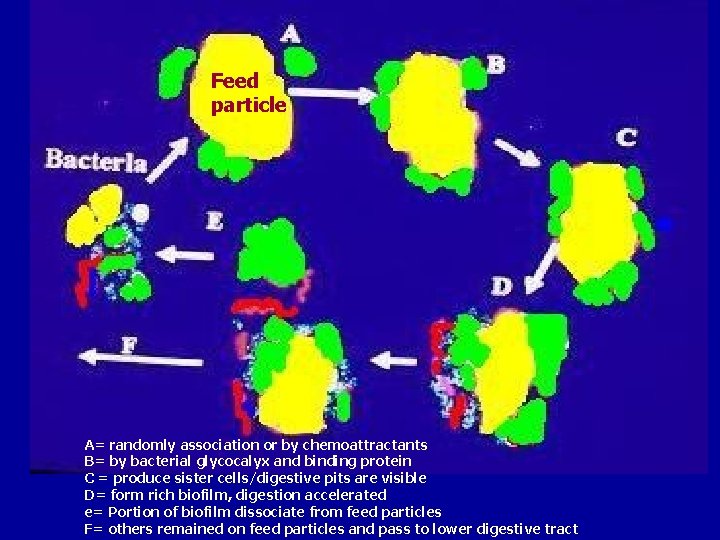
Feed particle A= randomly association or by chemoattractants B= by bacterial glycocalyx and binding protein C = produce sister cells/digestive pits are visible D= form rich biofilm, digestion accelerated e= Portion of biofilm dissociate from feed particles F= others remained on feed particles and pass to lower digestive tract
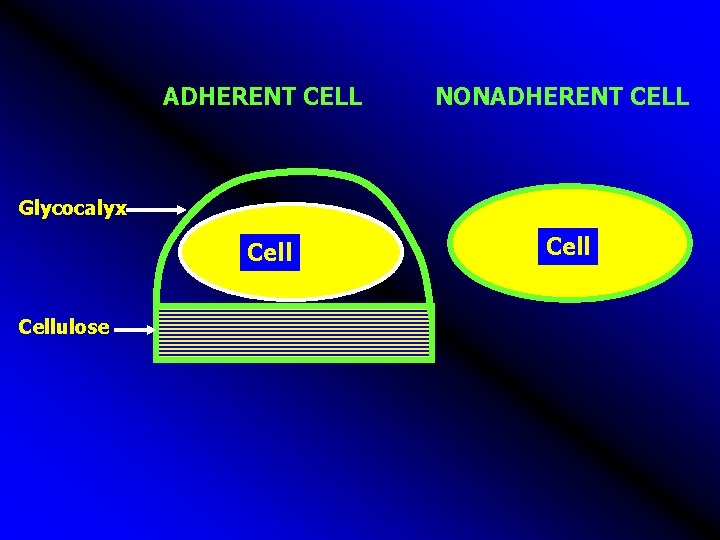
ADHERENT CELL NONADHERENT CELL Glycocalyx Cellulose Cell
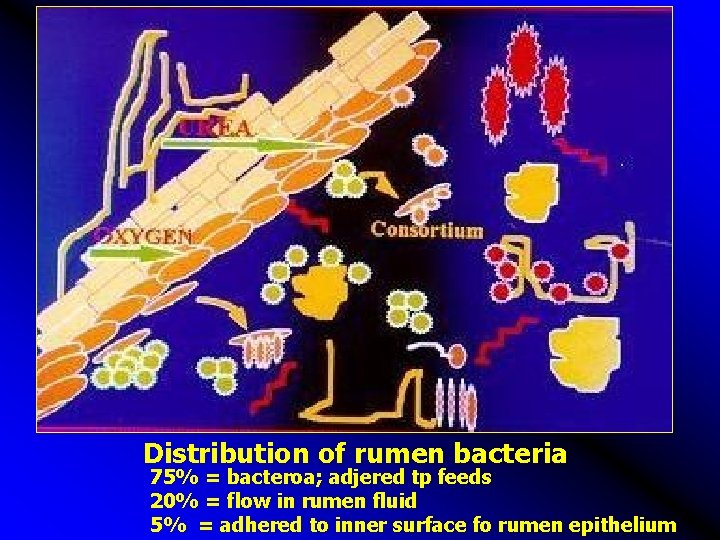
Distribution of rumen bacteria 75% = bacteroa; adjered tp feeds 20% = flow in rumen fluid 5% = adhered to inner surface fo rumen epithelium
Rumen consortium
Rumen Fungi
Rumen Fungi
Rumen Protozoa and fungi
Good luck!!!