
Rules Tasks and Task Strategy US Team Region



- Slides: 17
Rules, Tasks and Task Strategy US Team Region 1 Competition Doug Jacobs
Tasking Philosophy - Safety: Large start/finish circles Start height maximums Start speed limitations Beer can control points MAT/AAT areas Silent starts All aimed at separating gliders 75% speed objective Maximum cockpit hours before rest day Airport landout 25 pt bonus Constructive landout point
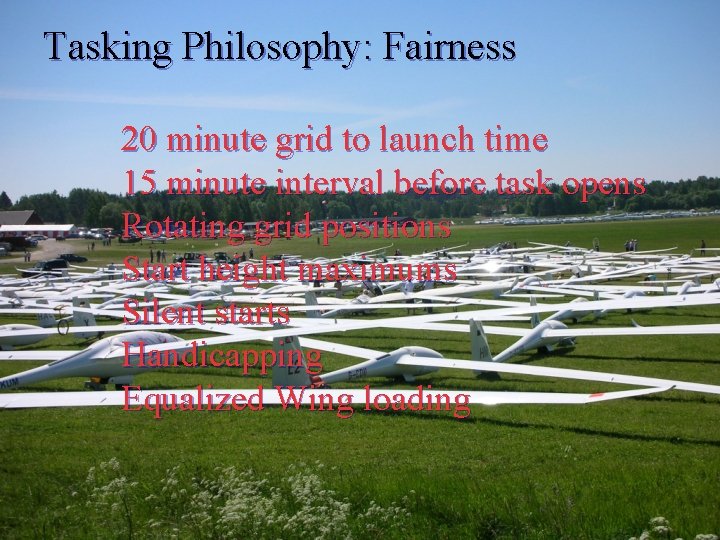
Tasking Philosophy: Fairness 20 minute grid to launch time 15 minute interval before task opens Rotating grid positions Start height maximums Silent starts Handicapping Equalized Wing loading
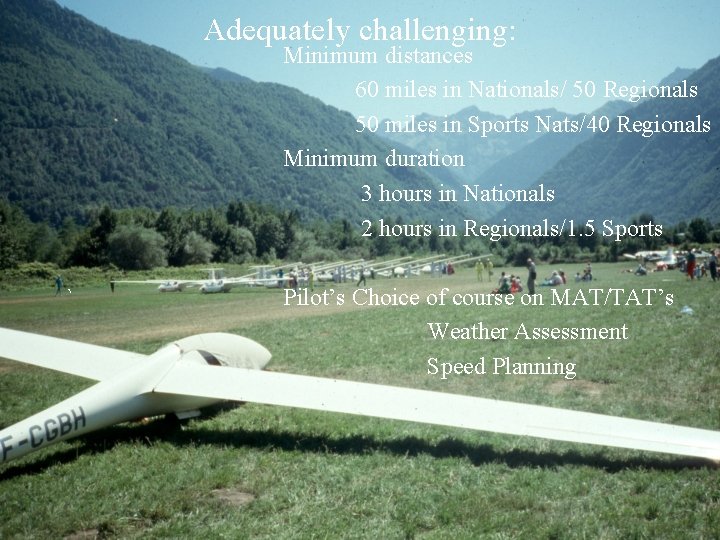
Adequately challenging: Minimum distances 60 miles in Nationals/ 50 Regionals 50 miles in Sports Nats/40 Regionals Minimum duration 3 hours in Nationals 2 hours in Regionals/1. 5 Sports ` Pilot’s Choice of course on MAT/TAT’s Weather Assessment Speed Planning
Comparability of scoring Speed tasks vs. Pilot selected tasks How to score weak vs. strong weather days? How to score landouts vs. completions? Devaluation for “luck” factor Minimum # of pilots completing Minimum distance completed
Read the Rules before every contest!
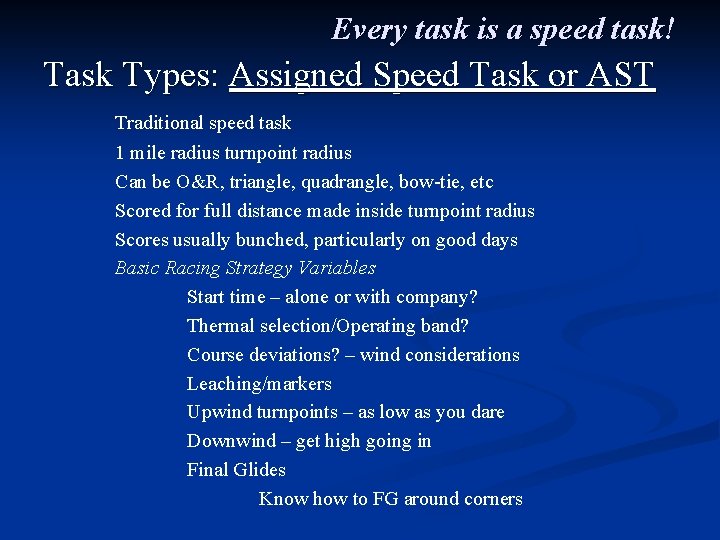
Every task is a speed task! Task Types: Assigned Speed Task or AST Traditional speed task 1 mile radius turnpoint radius Can be O&R, triangle, quadrangle, bow-tie, etc Scored for full distance made inside turnpoint radius Scores usually bunched, particularly on good days Basic Racing Strategy Variables Start time – alone or with company? Thermal selection/Operating band? Course deviations? – wind considerations Leaching/markers Upwind turnpoints – as low as you dare Downwind – get high going in Final Glides Know how to FG around corners
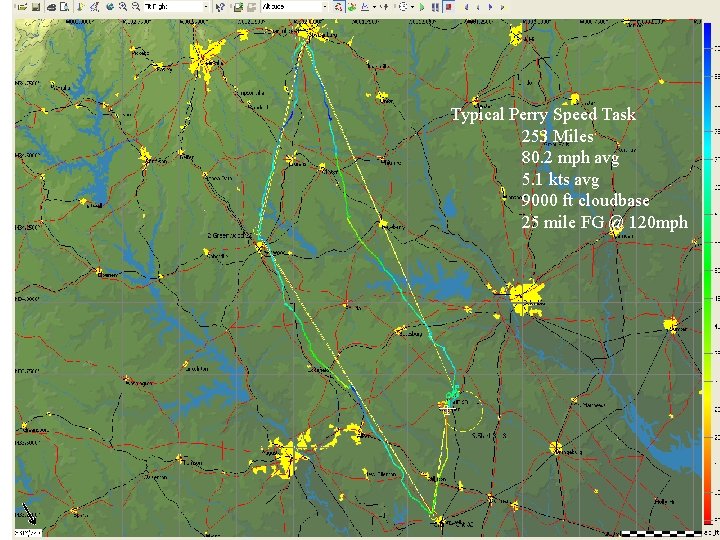
Typical Perry Speed Task 253 Miles 80. 2 mph avg 5. 1 kts avg 9000 ft cloudbase 25 mile FG @ 120 mph
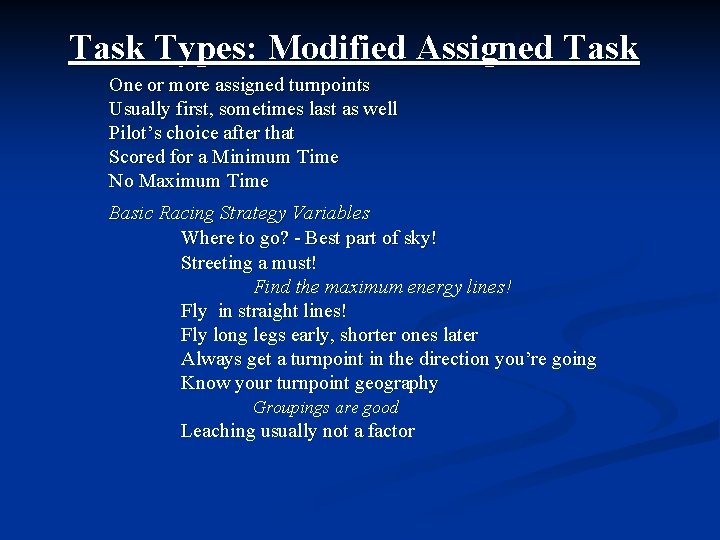
Task Types: Modified Assigned Task One or more assigned turnpoints Usually first, sometimes last as well Pilot’s choice after that Scored for a Minimum Time No Maximum Time Basic Racing Strategy Variables Where to go? - Best part of sky! Streeting a must! Find the maximum energy lines! Fly in straight lines! Fly long legs early, shorter ones later Always get a turnpoint in the direction you’re going Know your turnpoint geography Groupings are good Leaching usually not a factor
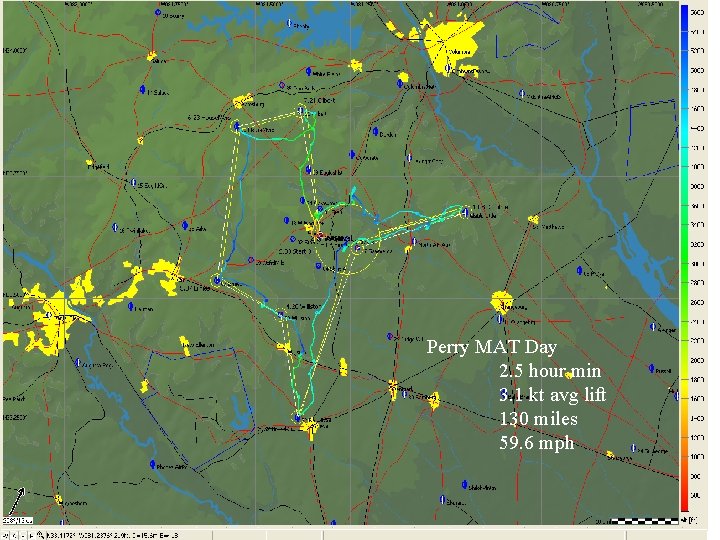
Perry MAT Day 2. 5 hour min 3. 1 kt avg lift 130 miles 59. 6 mph
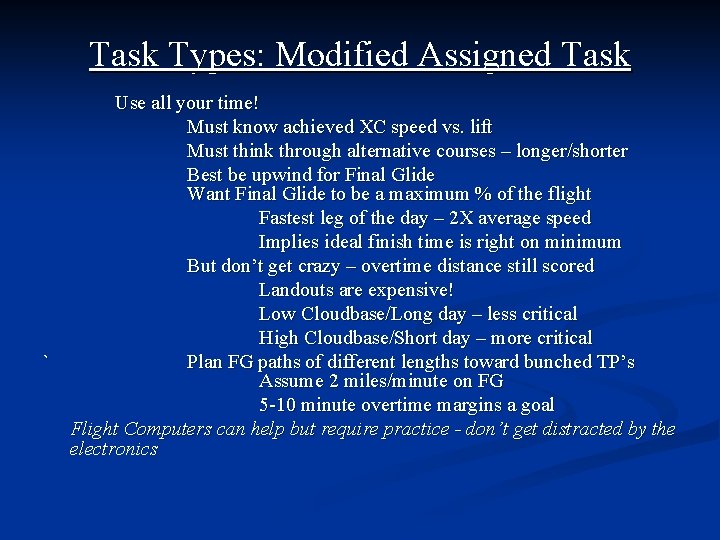
Task Types: Modified Assigned Task Use all your time! Must know achieved XC speed vs. lift Must think through alternative courses – longer/shorter Best be upwind for Final Glide Want Final Glide to be a maximum % of the flight Fastest leg of the day – 2 X average speed Implies ideal finish time is right on minimum But don’t get crazy – overtime distance still scored Landouts are expensive! Low Cloudbase/Long day – less critical High Cloudbase/Short day – more critical ` Plan FG paths of different lengths toward bunched TP’s Assume 2 miles/minute on FG 5 -10 minute overtime margins a goal Flight Computers can help but require practice - don’t get distracted by the electronics
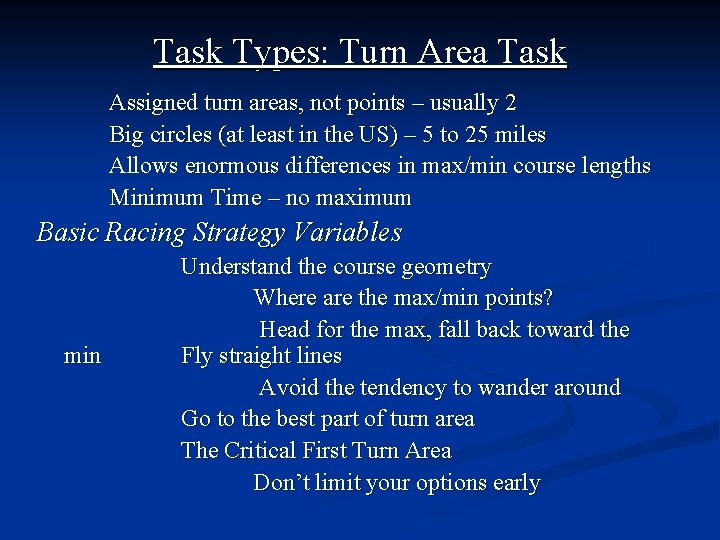
Task Types: Turn Area Task Assigned turn areas, not points – usually 2 Big circles (at least in the US) – 5 to 25 miles Allows enormous differences in max/min course lengths Minimum Time – no maximum Basic Racing Strategy Variables min Understand the course geometry Where are the max/min points? Head for the max, fall back toward the Fly straight lines Avoid the tendency to wander around Go to the best part of turn area The Critical First Turn Area Don’t limit your options early
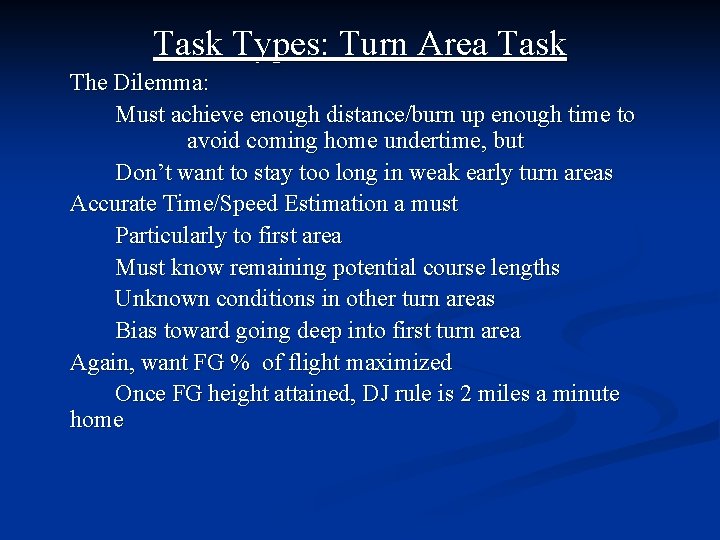
Task Types: Turn Area Task The Dilemma: Must achieve enough distance/burn up enough time to avoid coming home undertime, but Don’t want to stay too long in weak early turn areas Accurate Time/Speed Estimation a must Particularly to first area Must know remaining potential course lengths Unknown conditions in other turn areas Bias toward going deep into first turn area Again, want FG % of flight maximized Once FG height attained, DJ rule is 2 miles a minute home
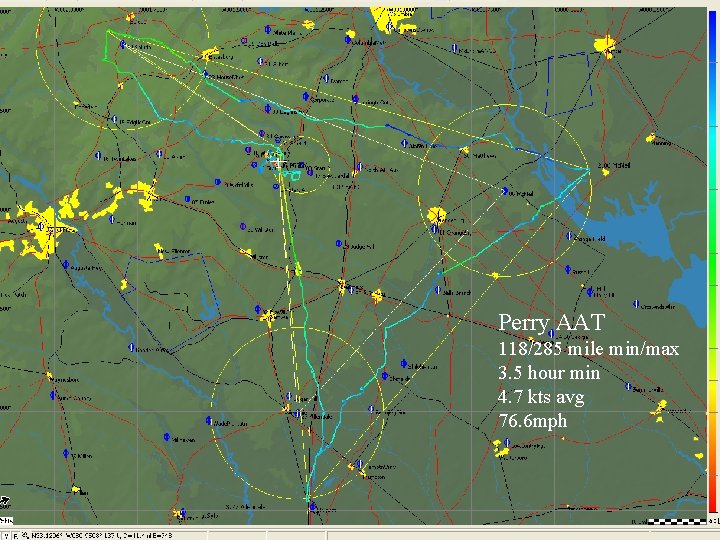
Perry AAT Perry 118/285 mile min/max 3. 5 hour min 4. 7 kts avg 76. 6 mph
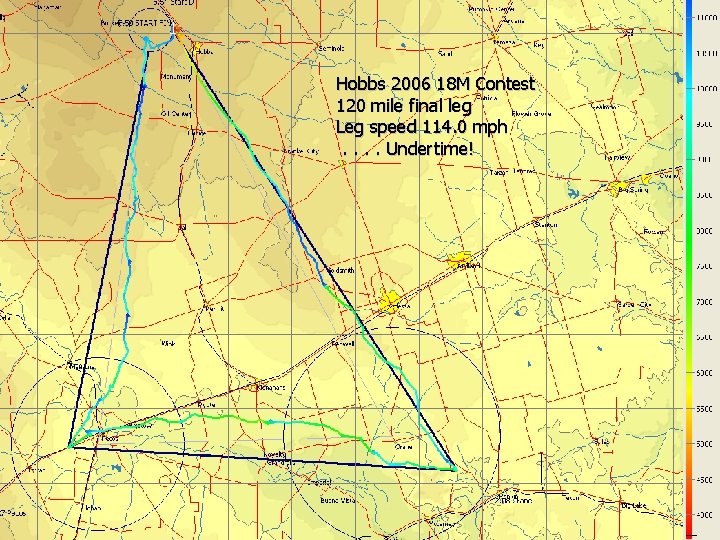
Hobbs 2006 18 M Contest 120 mile final leg Leg speed 114. 0 mph. . Undertime!
Scoring Primary goal is Speed score is proportional, not scaled Every day is 1000 points, unless devalued Devaluations for: Minimum Time Minimum # of Completions Landouts always bad 400 points maximum assuming no devaluation Sports Class is handicapped by glider type Means: High speed consistent days fun but less meaningful Weak weather determines contests AAT’s and MAT’s matter more than AST’s My take? – Go as fast as you can, use all your time, do not land out!
And have fun! The End