
Rules of the Road Chapter 10 Traffic Signs
- Slides: 9
Rules of the Road Chapter 10 Traffic Signs and Pavement Markings
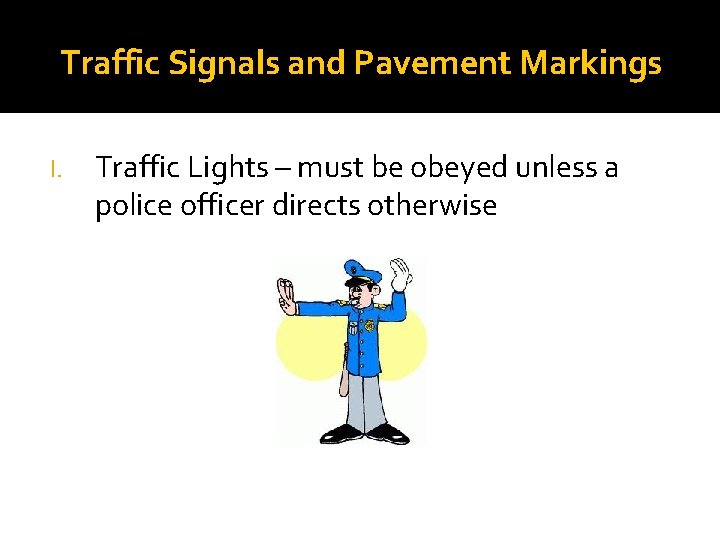
Traffic Signals and Pavement Markings I. Traffic Lights – must be obeyed unless a police officer directs otherwise
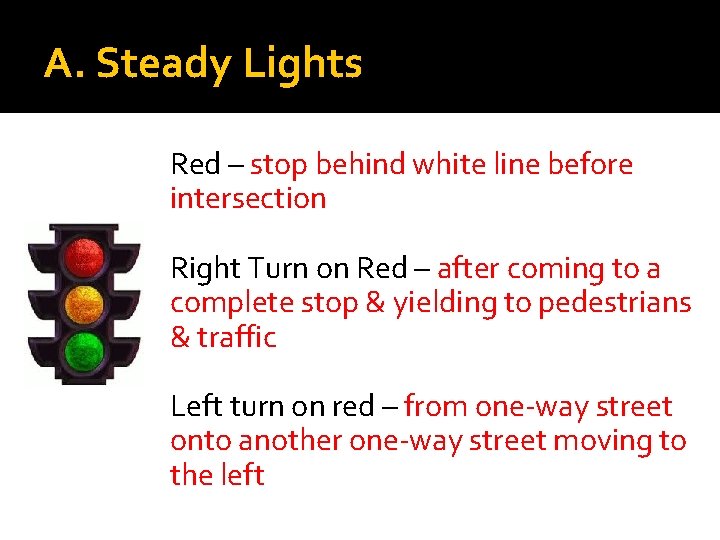
A. Steady Lights Red – stop behind white line before intersection Right Turn on Red – after coming to a complete stop & yielding to pedestrians & traffic Left turn on red – from one-way street onto another one-way street moving to the left
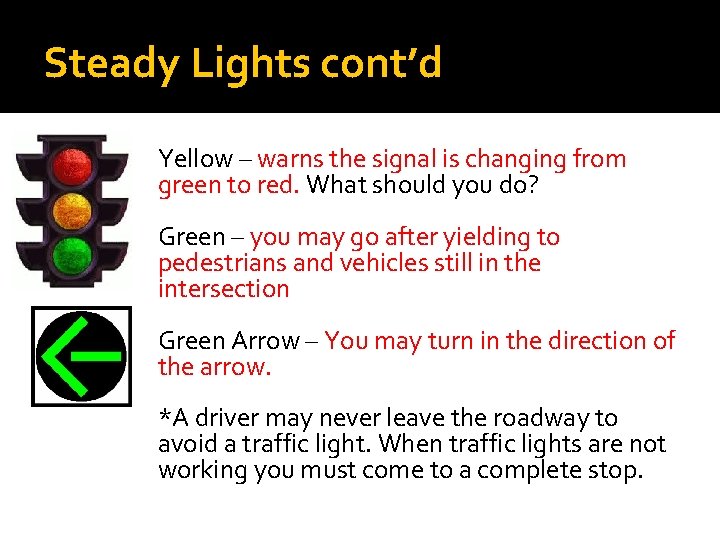
Steady Lights cont’d Yellow – warns the signal is changing from green to red. What should you do? Green – you may go after yielding to pedestrians and vehicles still in the intersection Green Arrow – You may turn in the direction of the arrow. *A driver may never leave the roadway to avoid a traffic light. When traffic lights are not working you must come to a complete stop.
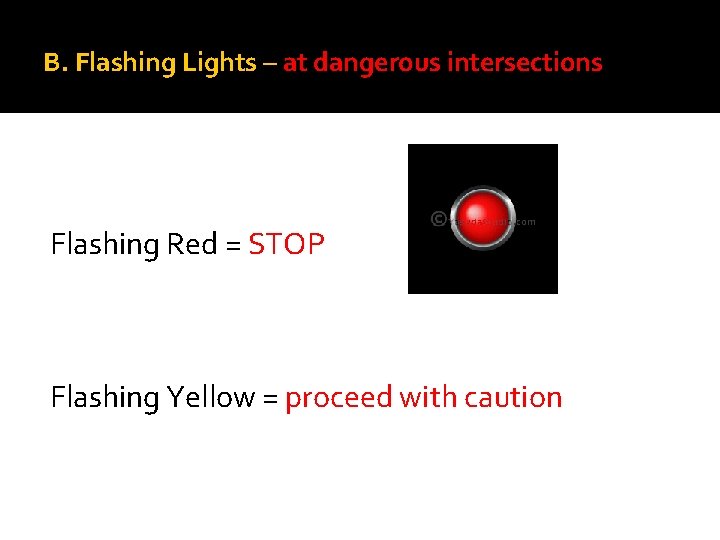
B. Flashing Lights – at dangerous intersections Flashing Red = STOP Flashing Yellow = proceed with caution
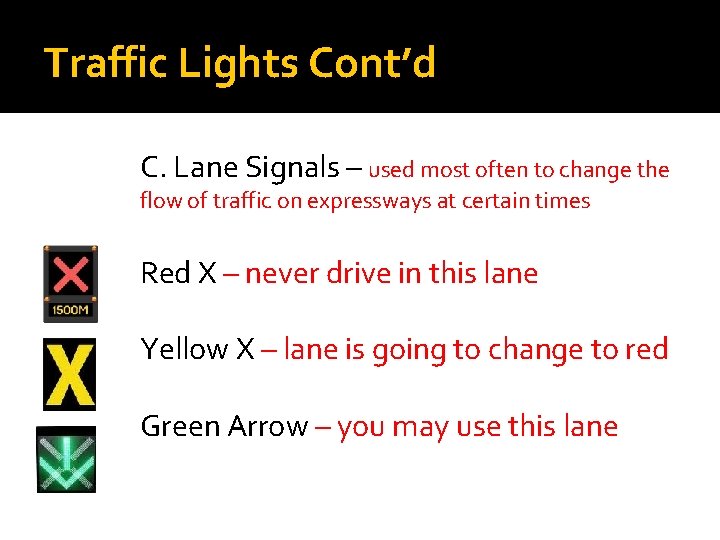
Traffic Lights Cont’d C. Lane Signals – used most often to change the flow of traffic on expressways at certain times Red X – never drive in this lane Yellow X – lane is going to change to red Green Arrow – you may use this lane
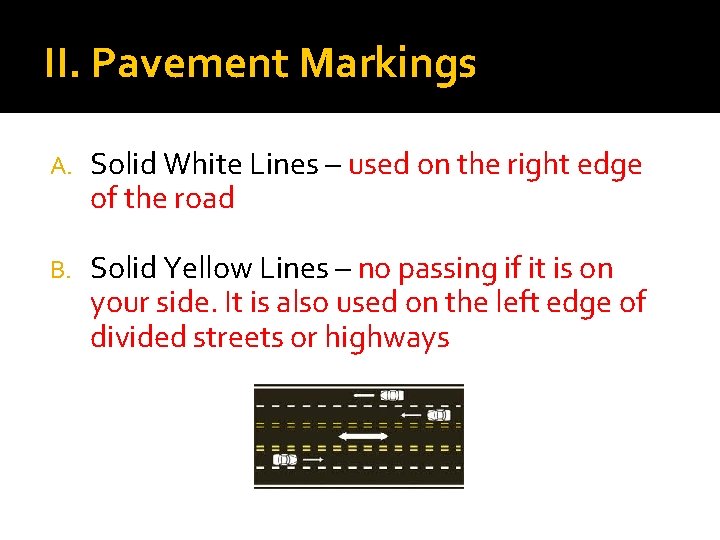
II. Pavement Markings A. Solid White Lines – used on the right edge of the road B. Solid Yellow Lines – no passing if it is on your side. It is also used on the left edge of divided streets or highways
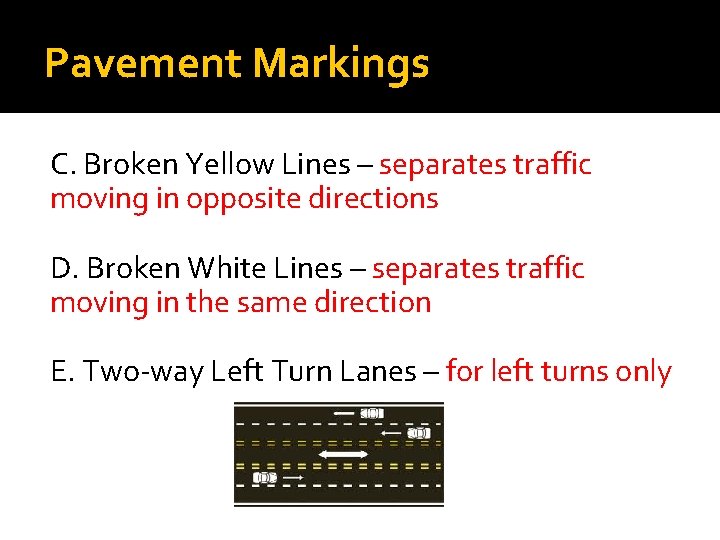
Pavement Markings C. Broken Yellow Lines – separates traffic moving in opposite directions D. Broken White Lines – separates traffic moving in the same direction E. Two-way Left Turn Lanes – for left turns only
Homework Answer chapter 10 Rules of the Road Study Questions. Write out questions and answer in workbook