
RULES OF ORIGIN IN FREE TRADE AGREEMENTS Mikael
- Slides: 27
RULES OF ORIGIN IN FREE TRADE AGREEMENTS Mikael Garellick European Commission
EU textile and clothing sector • Since 1975 the EU has lost 80% of yarn production • Under the WTO agreement, in 2005 quantitative import restrictions were abolished • 1 million jobs lost
EU textile and clothing sector Ø Turnover, number of companies and employment are stabilising Ø Textile producers are finding niche markets Ø Main interests are in high-end clothing and technical textile for automotive applications, medical textile, agro textile and protective clothing
Figures for the EU textile and clothing sector in 2019 € 162 billion in turnover and investments of almost € 5 billion 160. 000 companies (mostly SMEs) and employment of 1. 5 million (more than 70% women) € 61 billion of exports and € 109 billion of imports
EU exports to the world are more important than ever, supporting 36 million jobs across Europe.
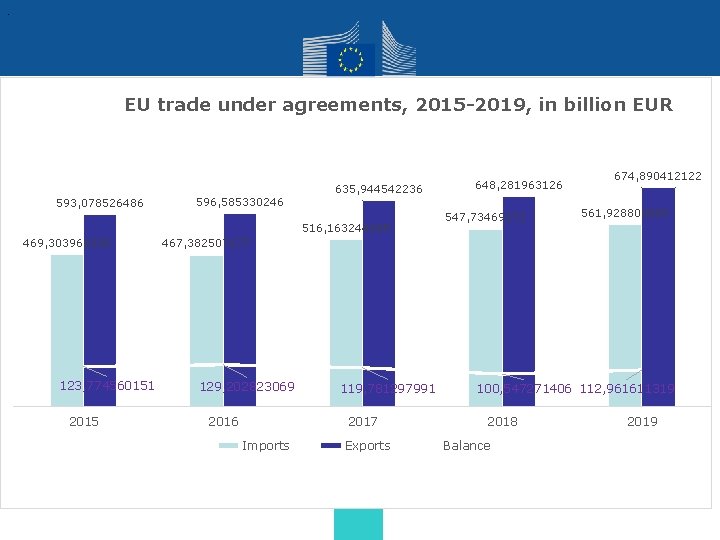
. EU trade under agreements, 2015 -2019, in billion EUR 593, 078526486 596, 585330246 635, 944542236 516, 163244245 469, 303966335 123, 774560151 2015 648, 281963126 547, 73469172 674, 890412122 561, 928800803 467, 382507177 129, 202823069 2016 119, 781297991 2017 Imports Exports 100, 547271406 112, 961611319 2018 Balance 2019
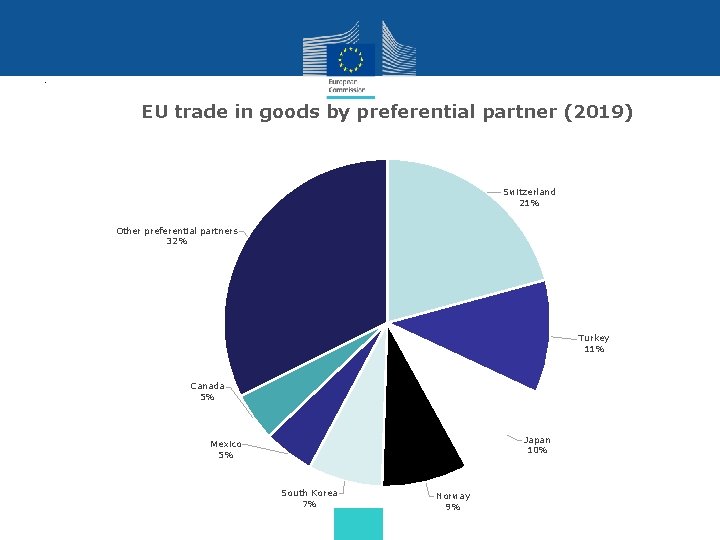
. EU trade in goods by preferential partner (2019) Switzerland 21% Other preferential partners 32% Turkey 11% Canada 5% Japan 10% Mexico 5% South Korea 7% Norway 9%
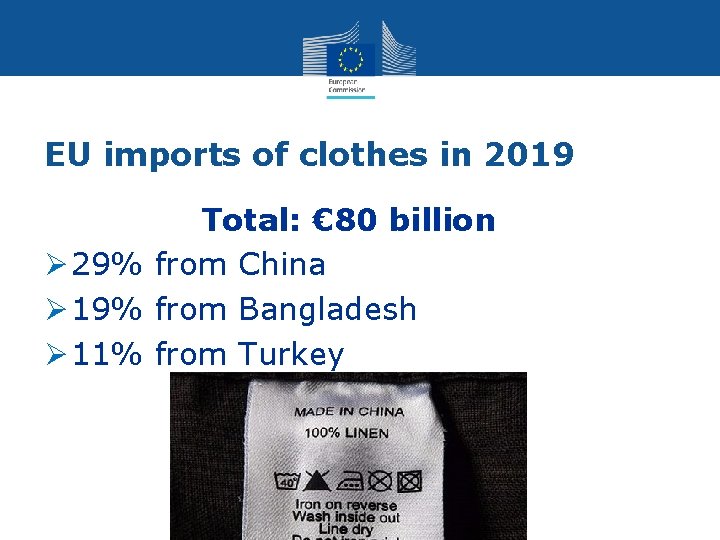
EU imports of clothes in 2019 Total: € 80 billion Ø 29% from China Ø 19% from Bangladesh Ø 11% from Turkey
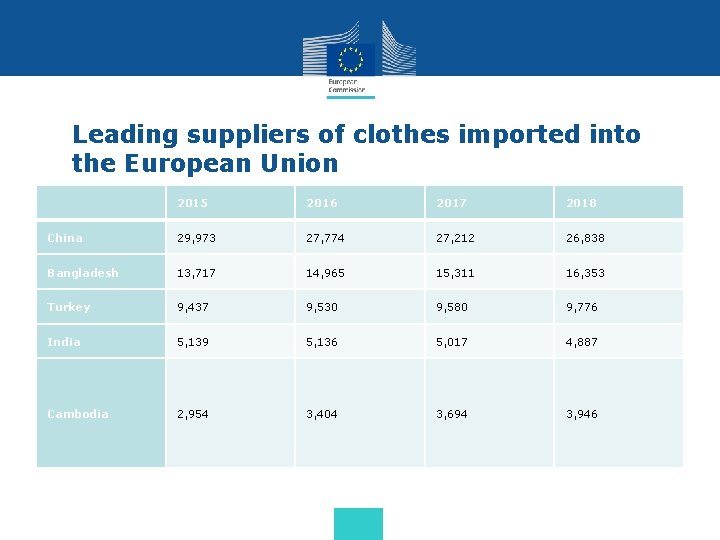
Leading suppliers of clothes imported into the European Union 2015 2016 2017 2018 China 29, 973 27, 774 27, 212 26, 838 Bangladesh 13, 717 14, 965 15, 311 16, 353 Turkey 9, 437 9, 530 9, 580 9, 776 India 5, 139 5, 136 5, 017 4, 887 Cambodia 2, 954 3, 404 3, 694 3, 946
Textile and clothing imports • EU imports from China and from the most competitive trade partners with preferential access make up almost 70% of the total EU imports.
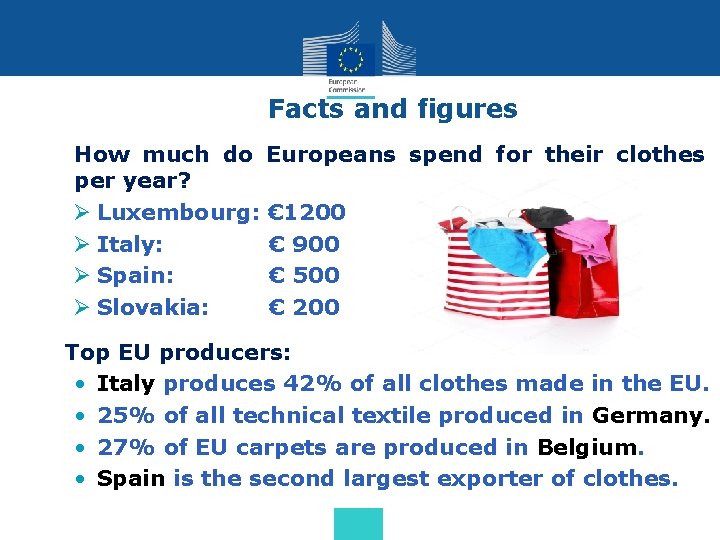
Facts and figures How much do Europeans spend for their clothes per year? Ø Luxembourg: € 1200 Ø Italy: € 900 Ø Spain: € 500 Ø Slovakia: € 200 Top EU producers: • Italy produces 42% of all clothes made in the EU. • 25% of all technical textile produced in Germany. • 27% of EU carpets are produced in Belgium. • Spain is the second largest exporter of clothes.
EU textile and clothing production • Three quarters of the textile and clothing production are concentrated in Italy, France, Germany, Spain and Portugal. • Southern European countries tend to focus on clothing. • Northern European countries produce a larger share of technical textiles.
Architecture of T&C rules of origin q. Sufficient level of processing q. Cumulation q. Tolerance
Textile and clothing Rules of Origin ØRules in our most recent FTAs with Canada, Japan and Mercosur. ØRules to be applied in the Pan. Euro. Med Area covering over 50 countries (EU + our neighbouring countries). ØSame framework rules in all FTAs.
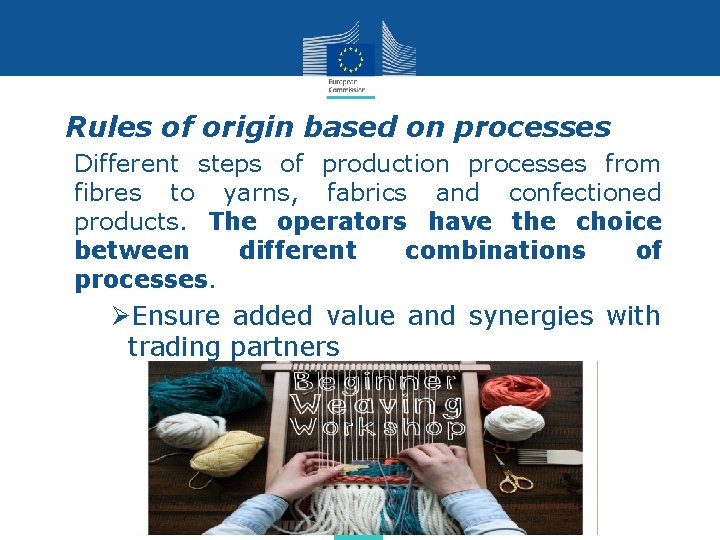
• Rules of origin based on processes Different steps of production processes from fibres to yarns, fabrics and confectioned products. The operators have the choice between different combinations of processes. ØEnsure added value and synergies with trading partners
Printing as standalone operation • Printing represents an important manufacturing process and has been recognised as origin conferring.
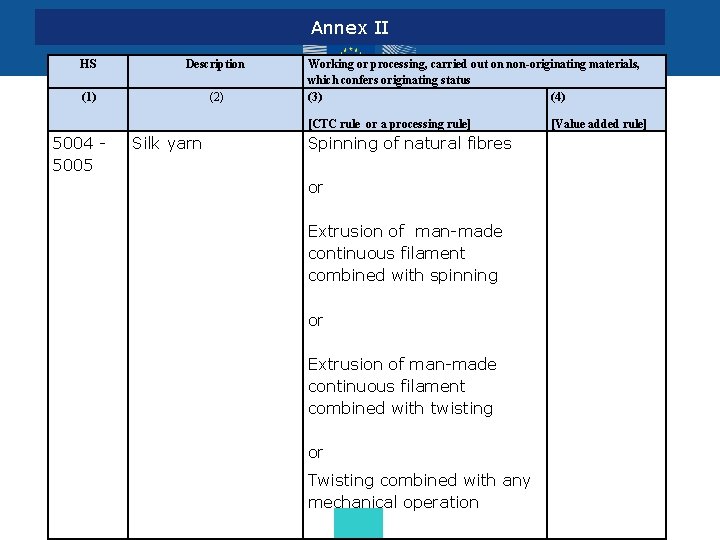
Annex II HS Description (1) (2) Working or processing, carried out on non-originating materials, which confers originating status (3) (4) [CTC rule or a processing rule] 5004 5005 Silk yarn Spinning of natural fibres or Extrusion of man-made continuous filament combined with spinning or Extrusion of man-made continuous filament combined with twisting or Twisting combined with any mechanical operation [Value added rule]
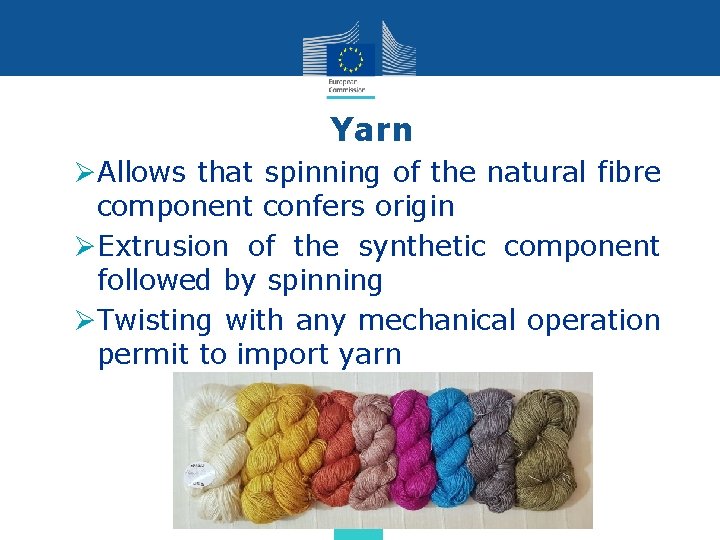
Yarn ØAllows that spinning of the natural fibre component confers origin ØExtrusion of the synthetic component followed by spinning ØTwisting with any mechanical operation permit to import yarn
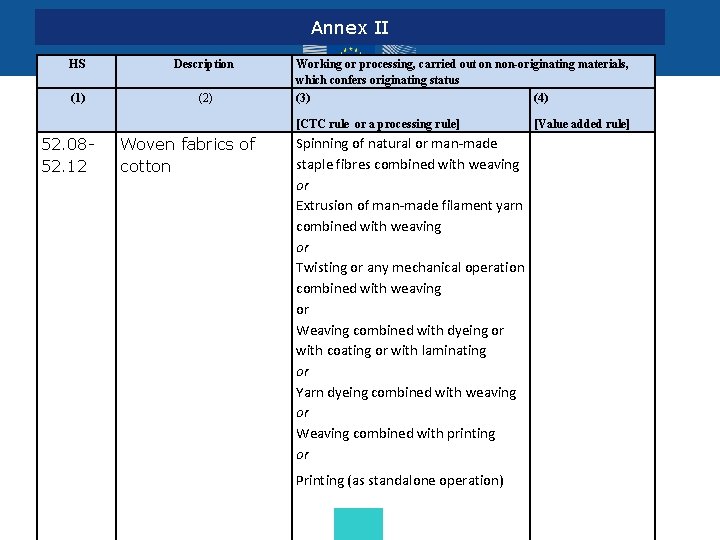
Annex II HS Description (1) (2) Working or processing, carried out on non-originating materials, which confers originating status (3) (4) [CTC rule or a processing rule] 52. 0852. 12 Woven fabrics of cotton Spinning of natural or man-made staple fibres combined with weaving or Extrusion of man-made filament yarn combined with weaving or Twisting or any mechanical operation combined with weaving or Weaving combined with dyeing or with coating or with laminating or Yarn dyeing combined with weaving or Weaving combined with printing or Printing (as standalone operation) [Value added rule]
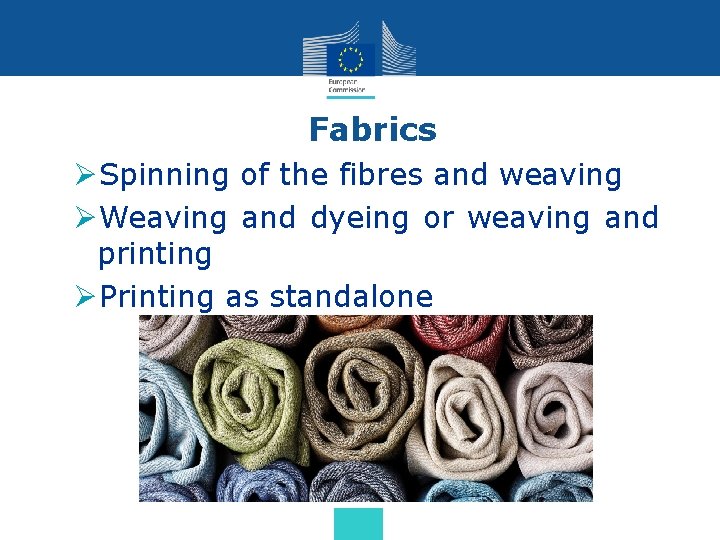
Fabrics ØSpinning of the fibres and weaving ØWeaving and dyeing or weaving and printing ØPrinting as standalone
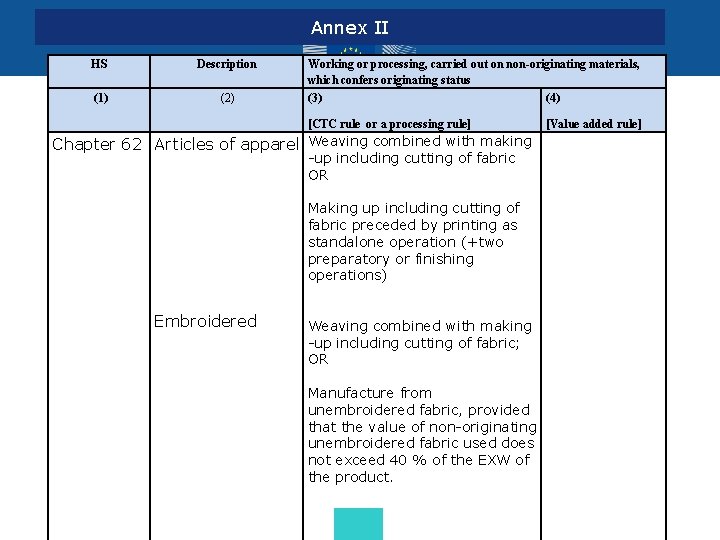
Annex II HS Description (1) (2) Working or processing, carried out on non-originating materials, which confers originating status (3) (4) [CTC rule or a processing rule] Chapter 62 Articles of apparel Weaving combined with making -up including cutting of fabric OR Making up including cutting of fabric preceded by printing as standalone operation (+two preparatory or finishing operations) Embroidered Weaving combined with making -up including cutting of fabric; OR Manufacture from unembroidered fabric, provided that the value of non-originating unembroidered fabric used does not exceed 40 % of the EXW of the product. [Value added rule]
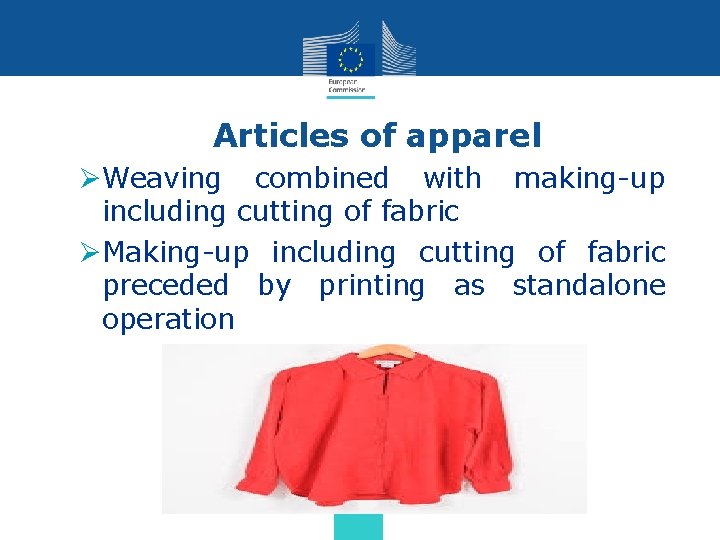
Articles of apparel ØWeaving combined with making-up including cutting of fabric ØMaking-up including cutting of fabric preceded by printing as standalone operation
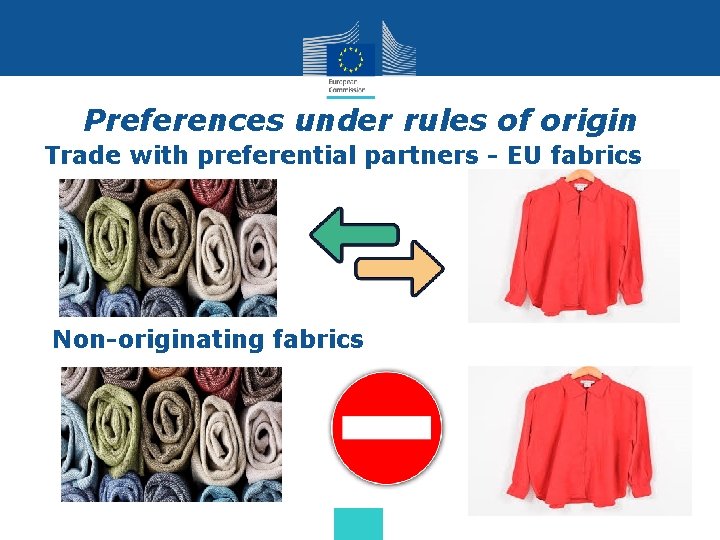
Preferences under rules of origin Trade with preferential partners - EU fabrics Non-originating fabrics
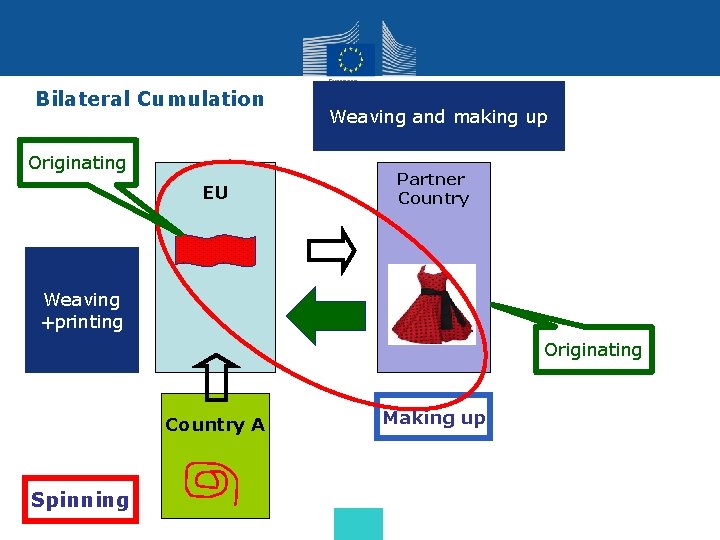
Bilateral Cumulation Originating EU Weaving and making up Partner Country Weaving +printing Originating Country A Spinning Making up
Tolerances • The tolerance rule permits manufacturers to use non-originating materials up to a specific limit: • 1. allows for a tolerance up to 10% in weight of all the basic textile materials used, provided that the product is made from two or more basic textile materials or • 2. non-originating textile materials may be used provided that their value does not exceed 8% of the value of the product.
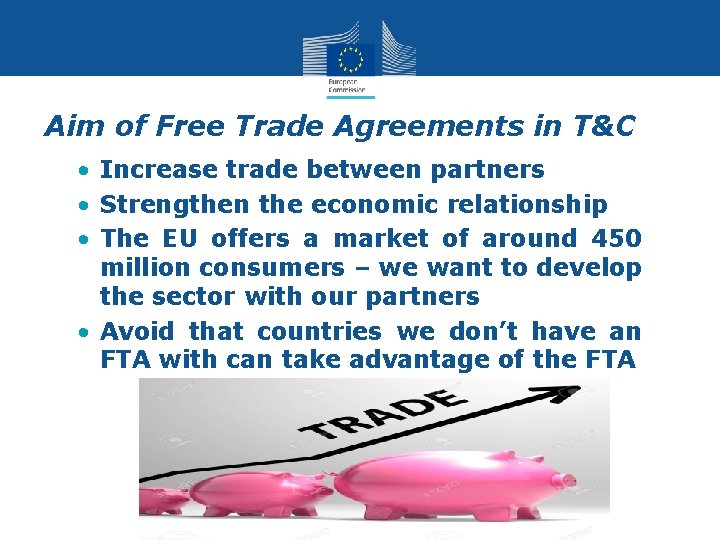
Aim of Free Trade Agreements in T&C • Increase trade between partners • Strengthen the economic relationship • The EU offers a market of around 450 million consumers – we want to develop the sector with our partners • Avoid that countries we don’t have an FTA with can take advantage of the FTA