
Rule Learning Approaches Translate decision trees into rules

- Slides: 50
Rule Learning Approaches • Translate decision trees into rules (C 4. 5) • Sequential (set) covering algorithms – General-to-specific (top-down) (CN 2, FOIL) – Specific-to-general (bottom-up) (GOLEM, CIGOL) 2
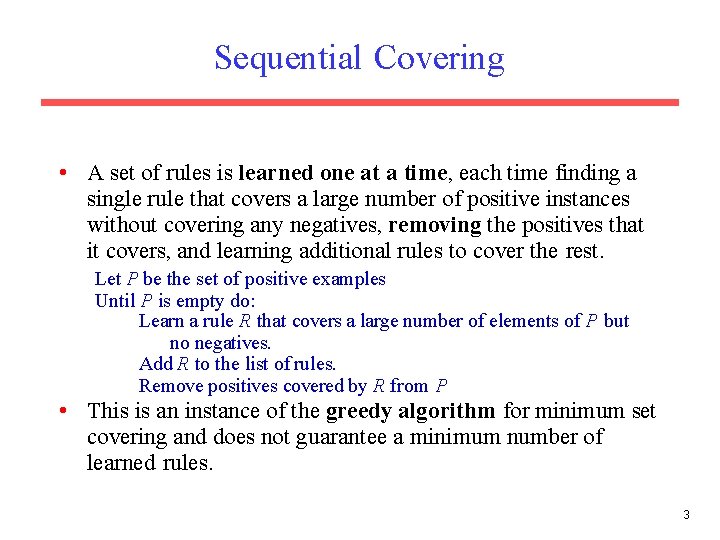
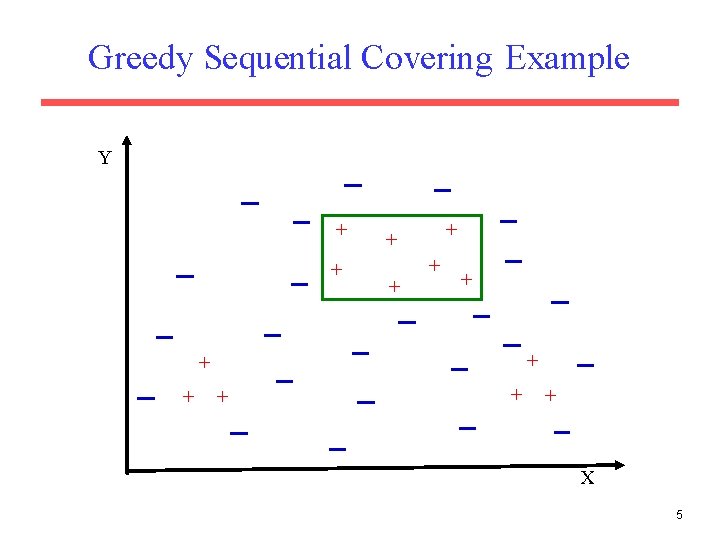
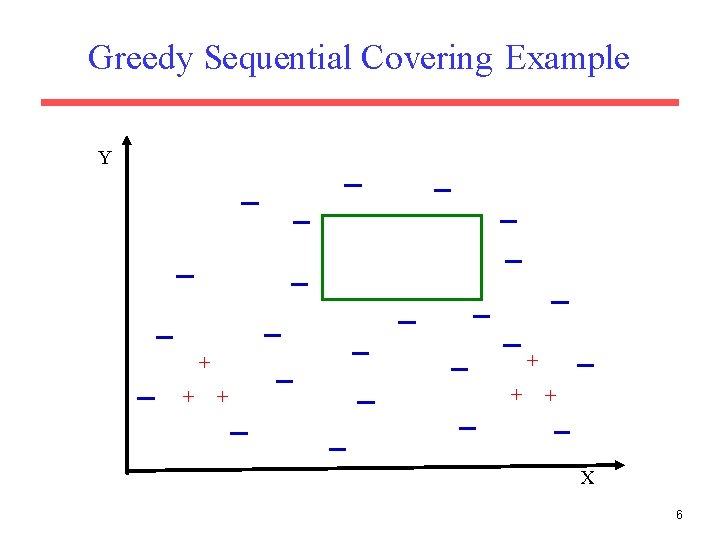
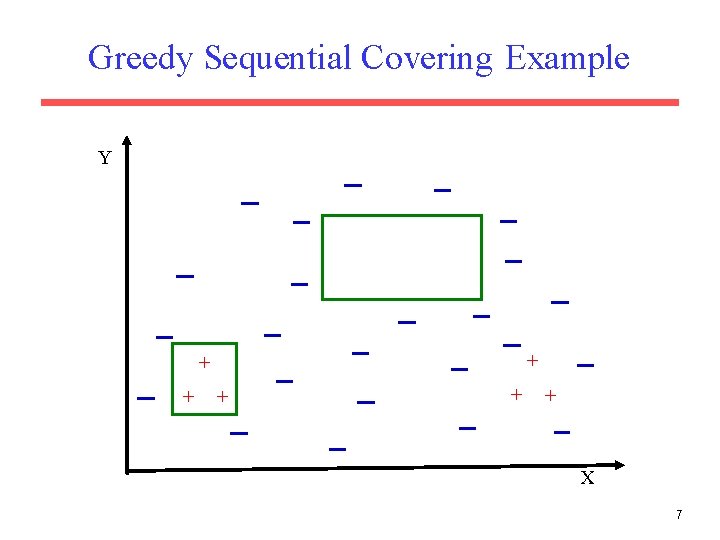
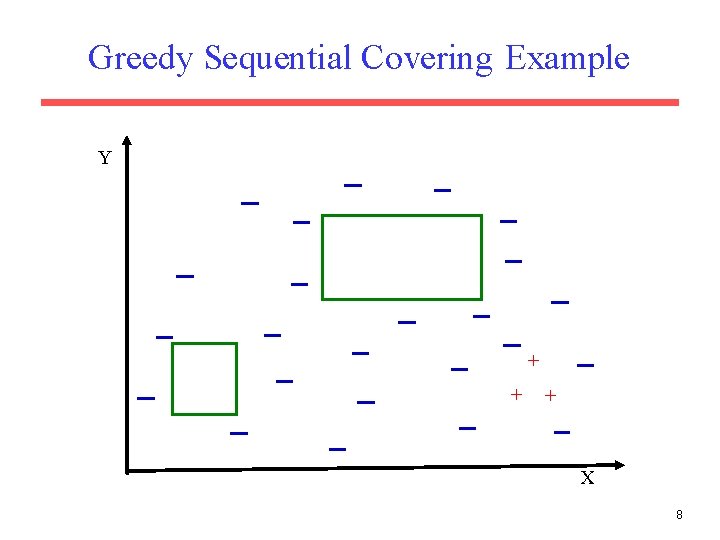
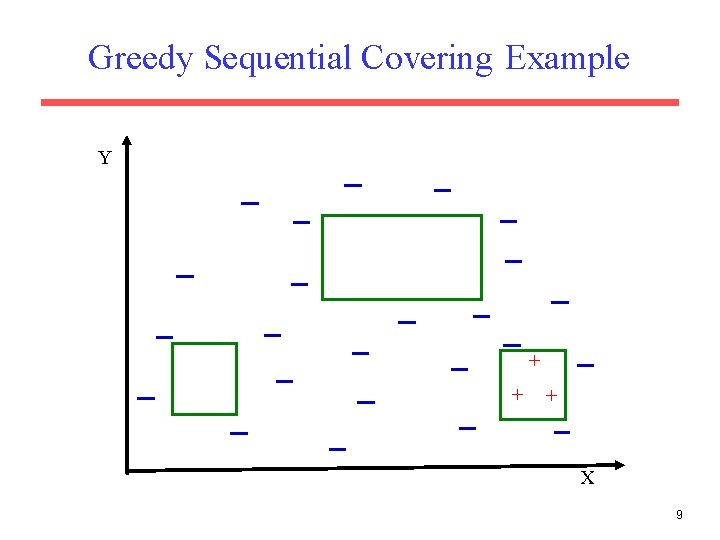
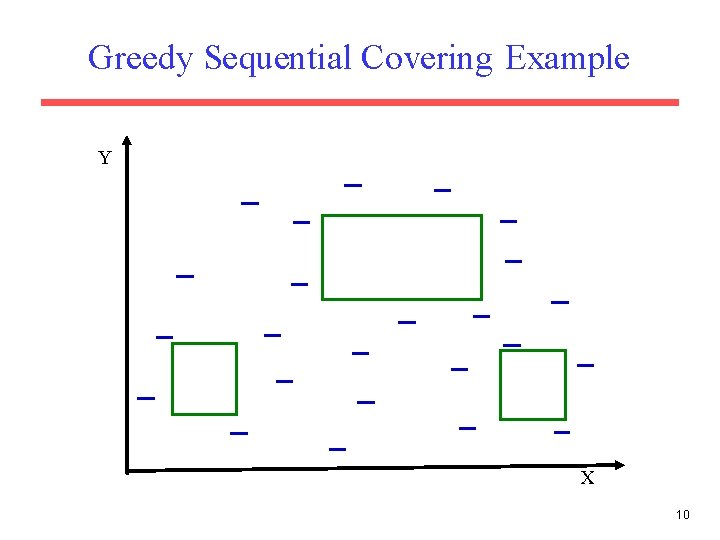
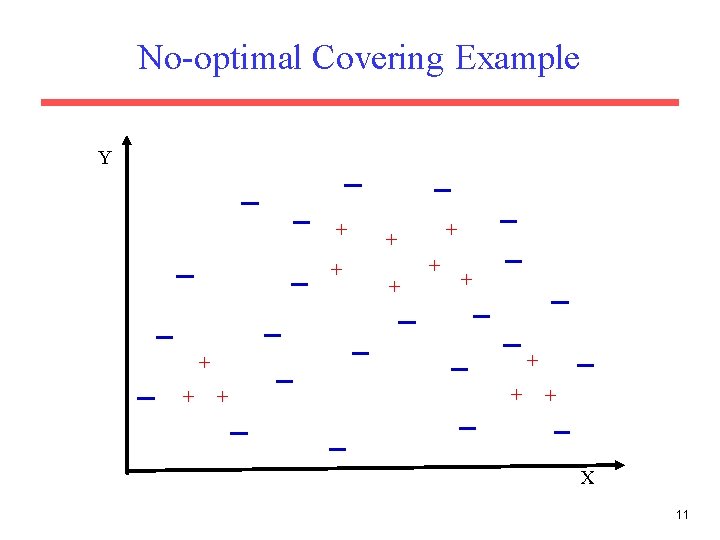
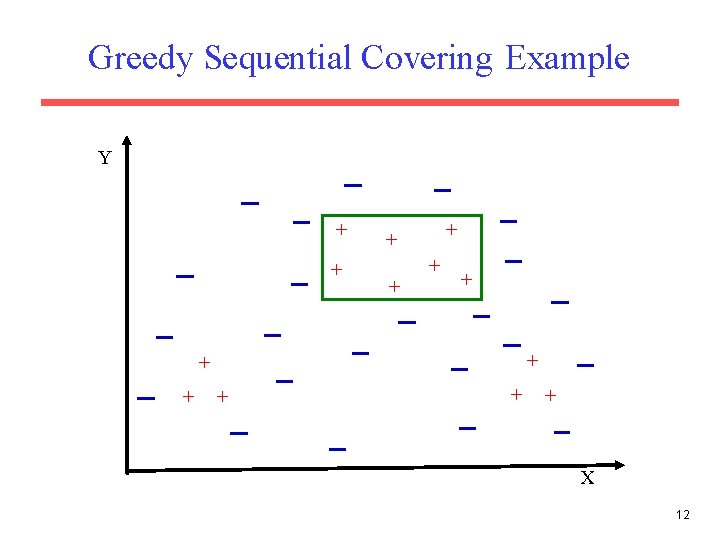
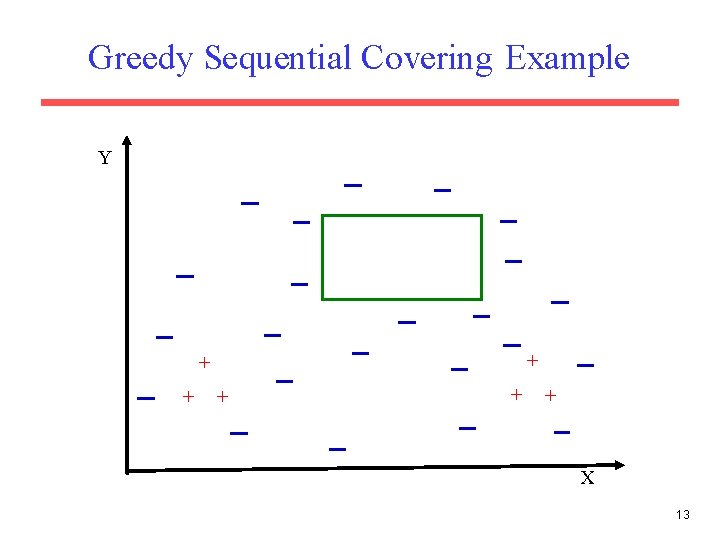
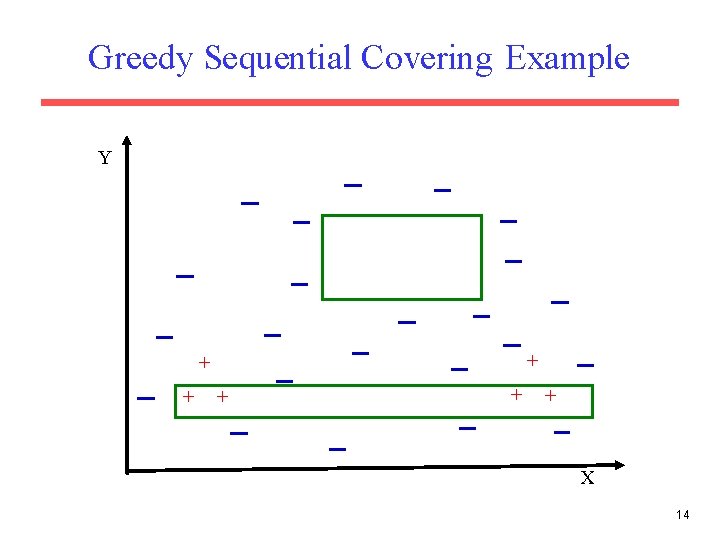
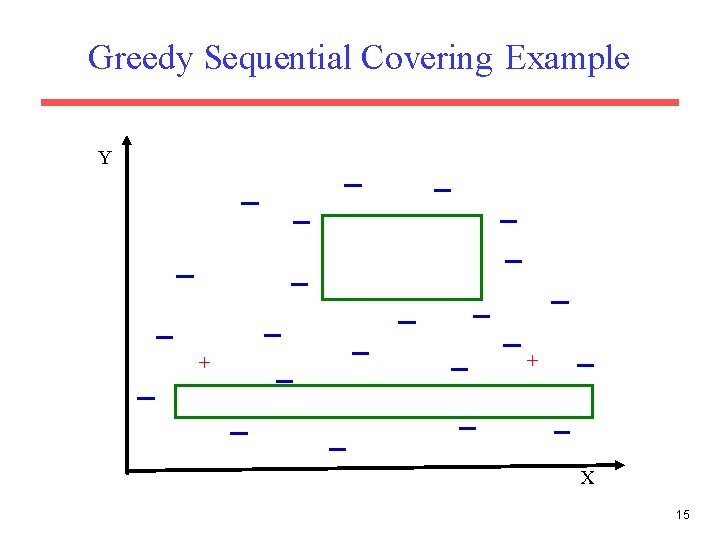
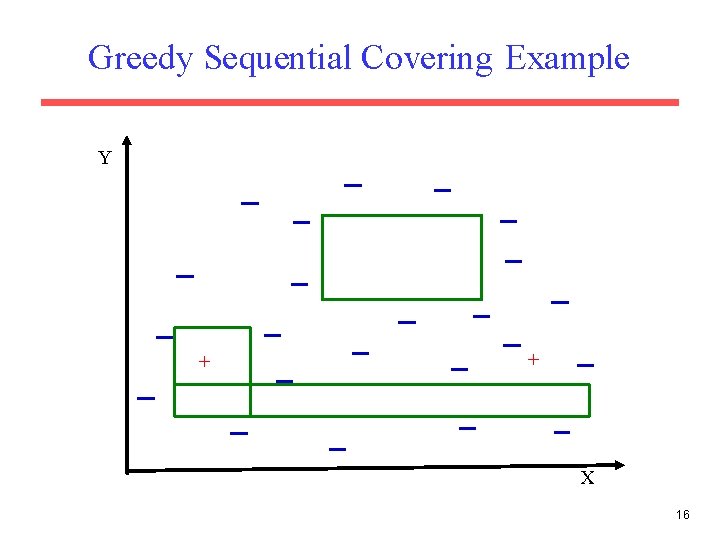
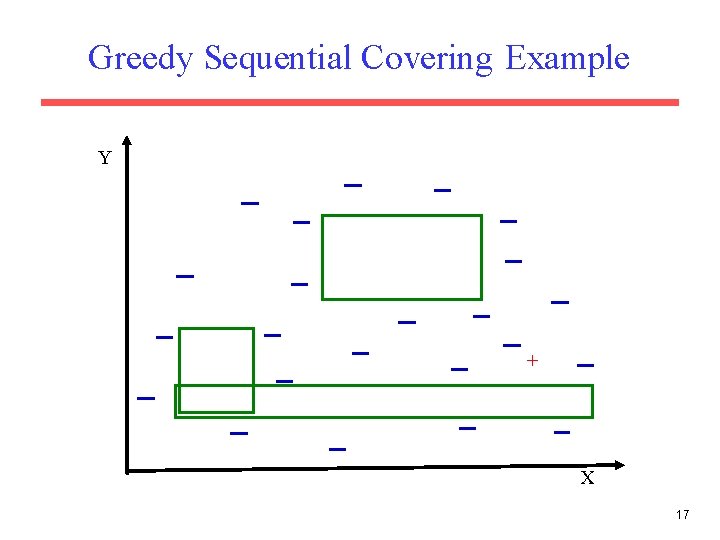
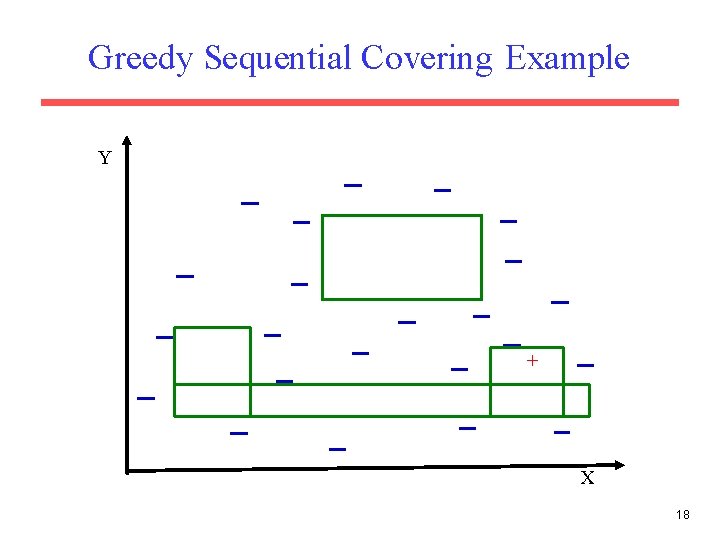
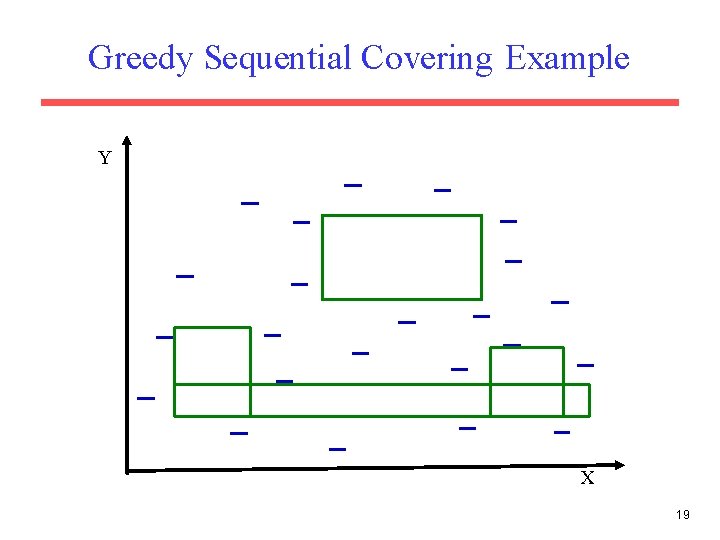
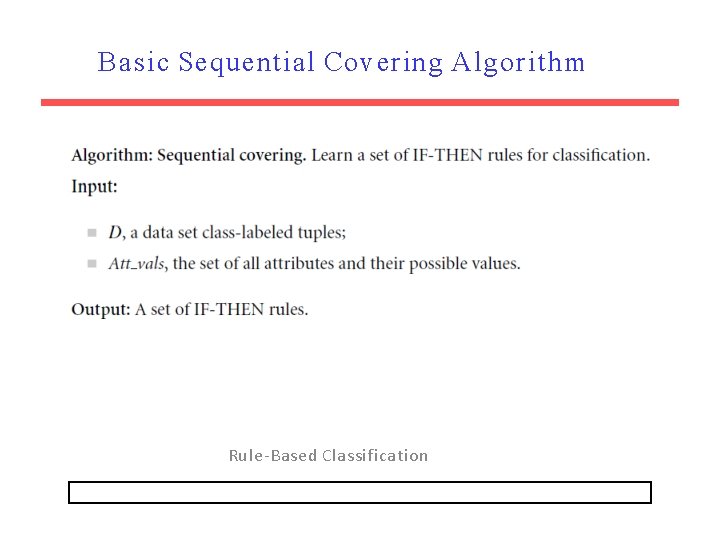
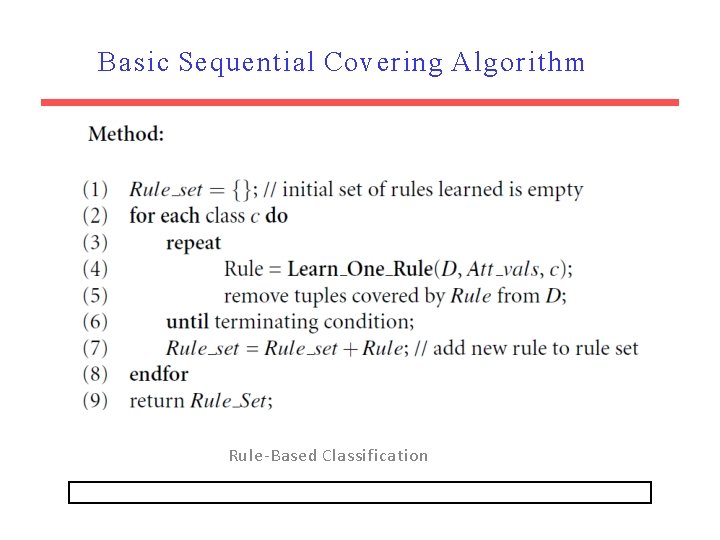
Sequential Covering • A set of rules is learned one at a time, each time finding a single rule that covers a large number of positive instances without covering any negatives, removing the positives that it covers, and learning additional rules to cover the rest. Let P be the set of positive examples Until P is empty do: Learn a rule R that covers a large number of elements of P but no negatives. Add R to the list of rules. Remove positives covered by R from P • This is an instance of the greedy algorithm for minimum set covering and does not guarantee a minimum number of learned rules. 3
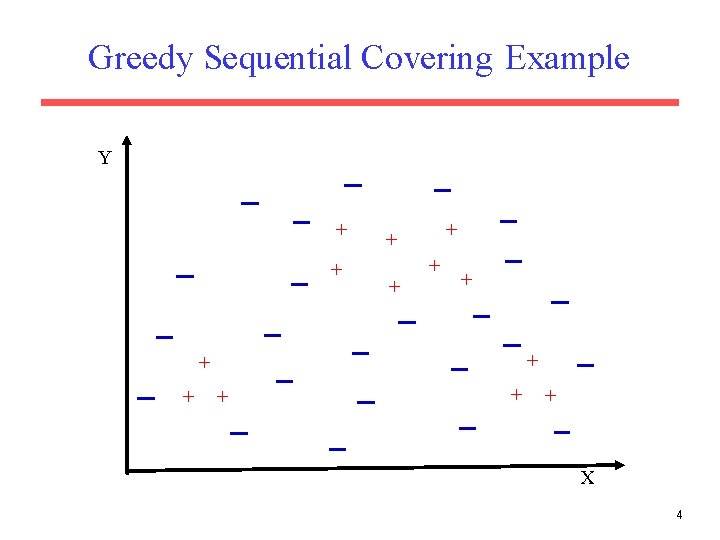
Greedy Sequential Covering Example Y + + + + X 4
Greedy Sequential Covering Example Y + + + + X 5
Greedy Sequential Covering Example Y + + + X 6
Greedy Sequential Covering Example Y + + + X 7
Greedy Sequential Covering Example Y + + + X 8
Greedy Sequential Covering Example Y + + + X 9
Greedy Sequential Covering Example Y X 10
No-optimal Covering Example Y + + + + X 11
Greedy Sequential Covering Example Y + + + + X 12
Greedy Sequential Covering Example Y + + + X 13
Greedy Sequential Covering Example Y + + + X 14
Greedy Sequential Covering Example Y + + X 15
Greedy Sequential Covering Example Y + + X 16
Greedy Sequential Covering Example Y + X 17
Greedy Sequential Covering Example Y + X 18
Greedy Sequential Covering Example Y X 19
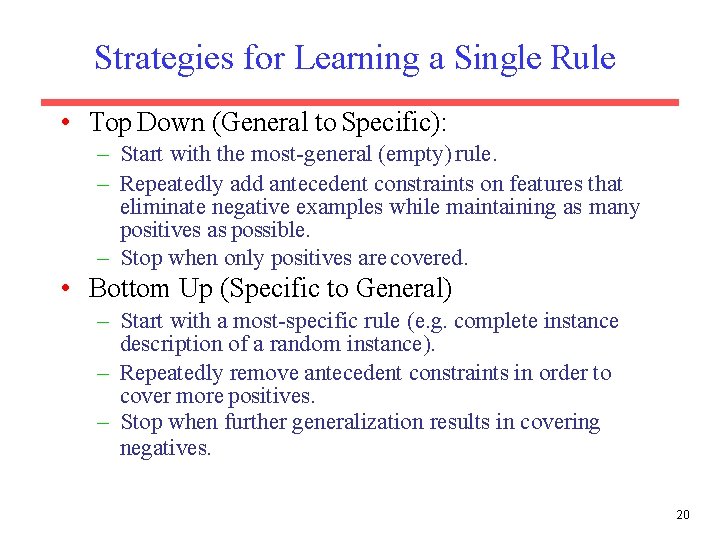
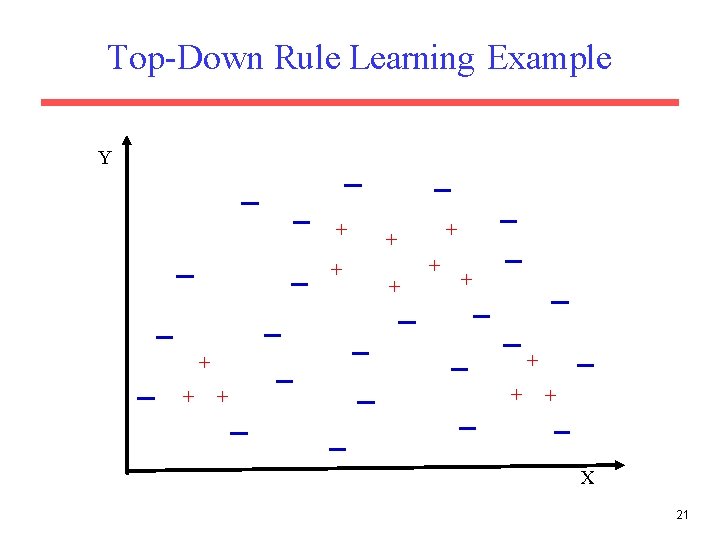
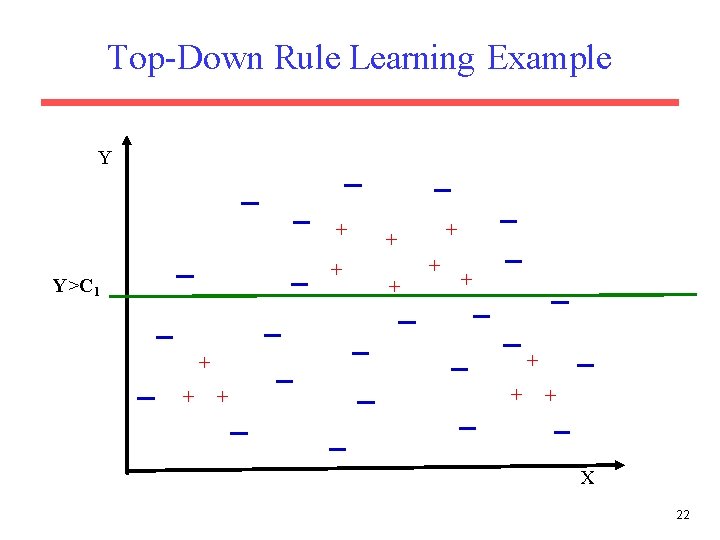
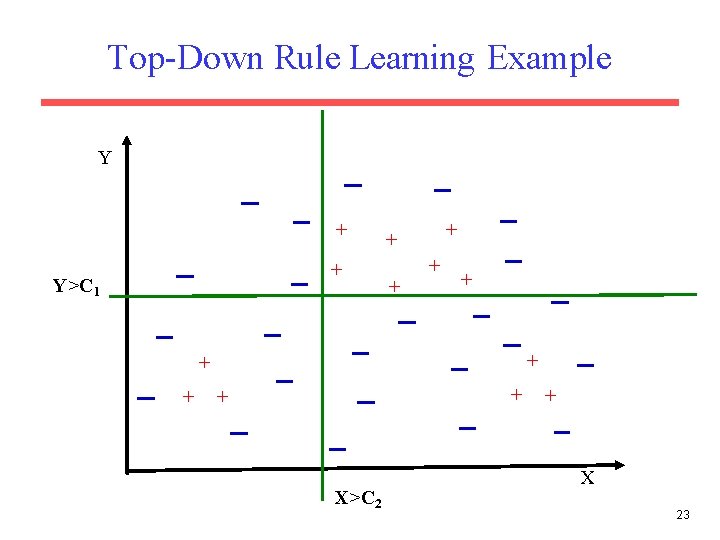
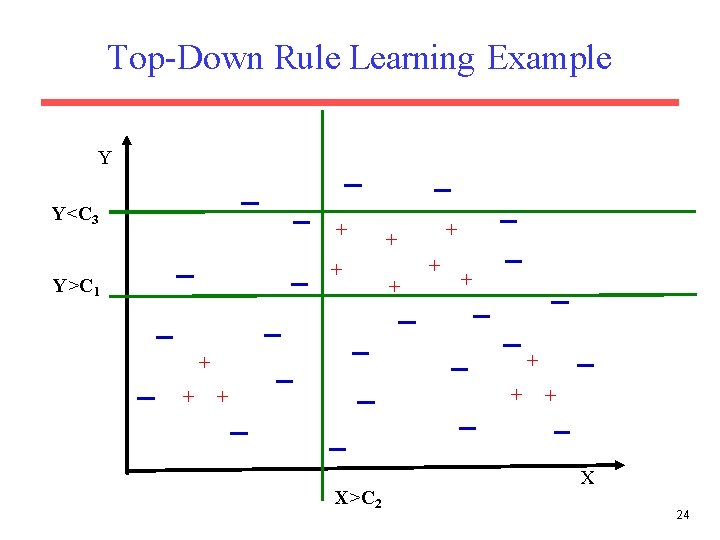
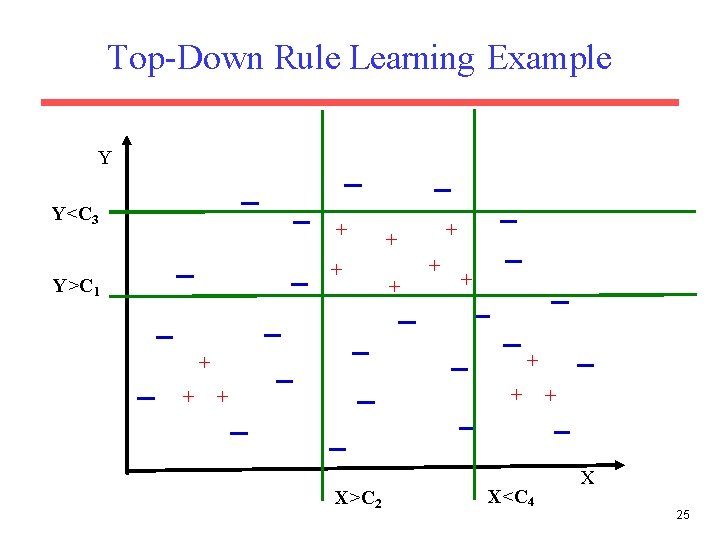
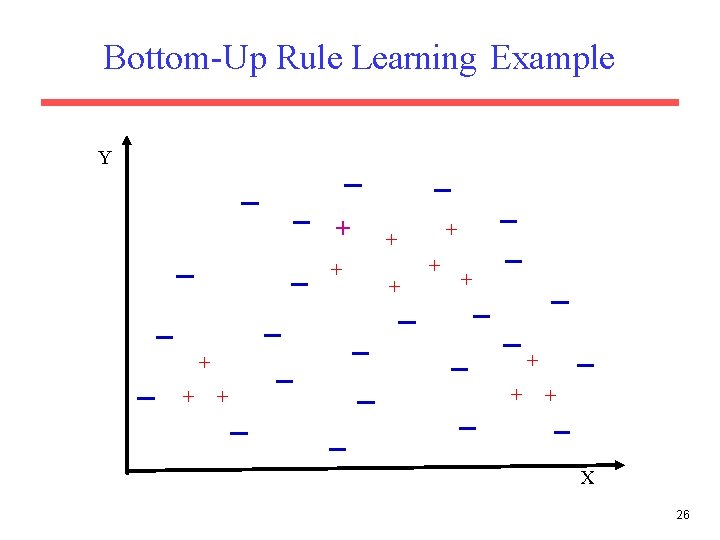
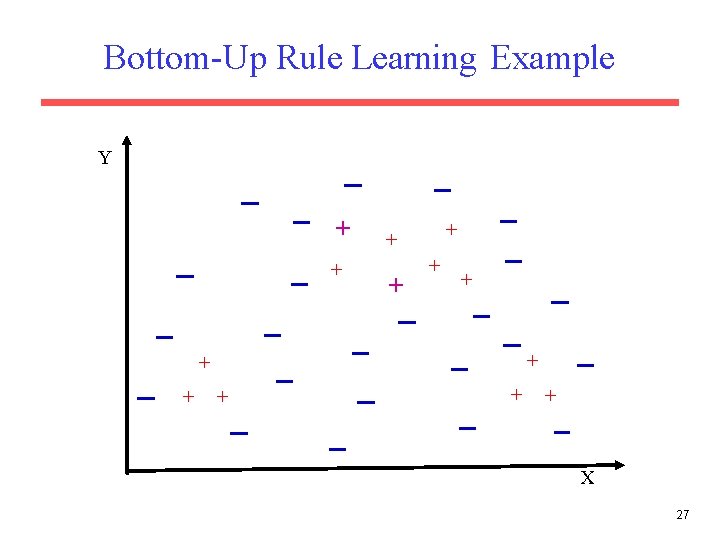
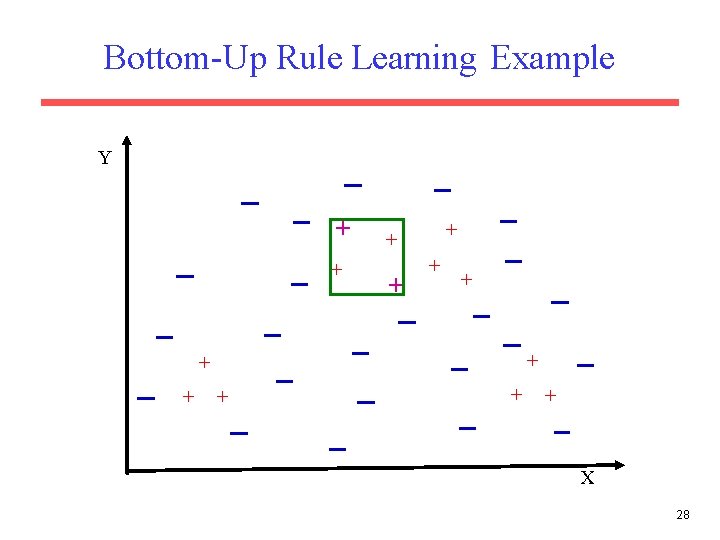
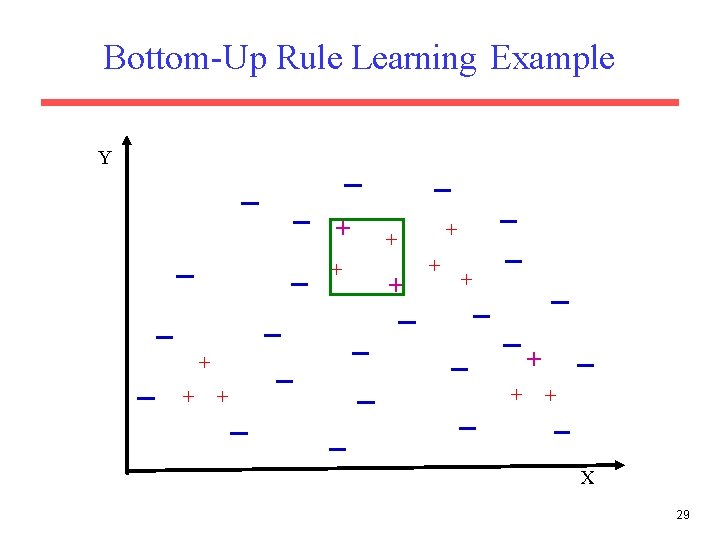
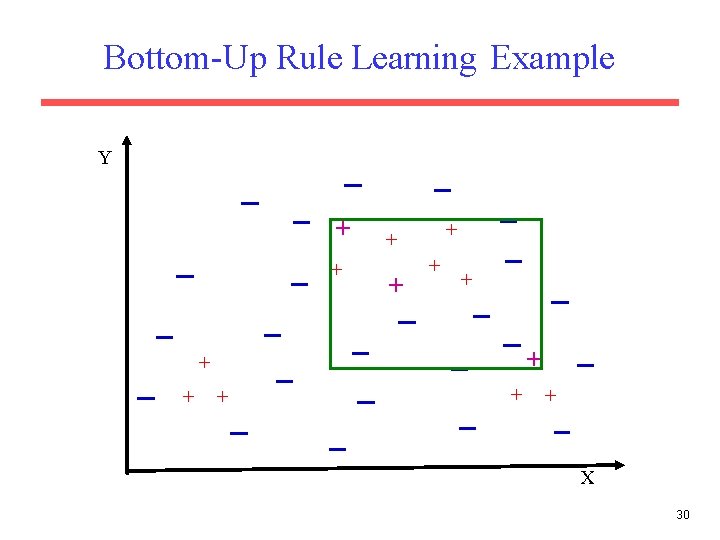
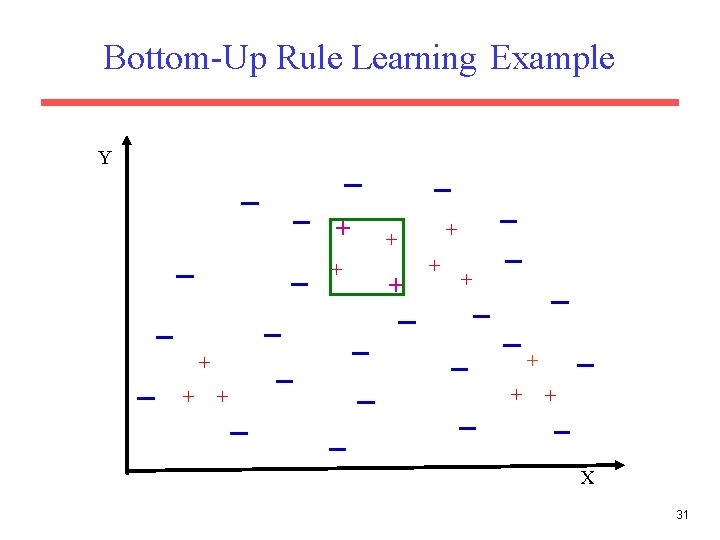
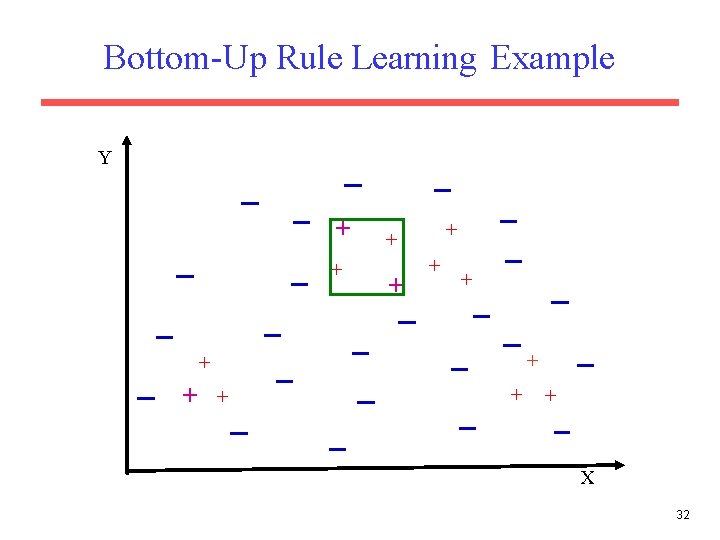
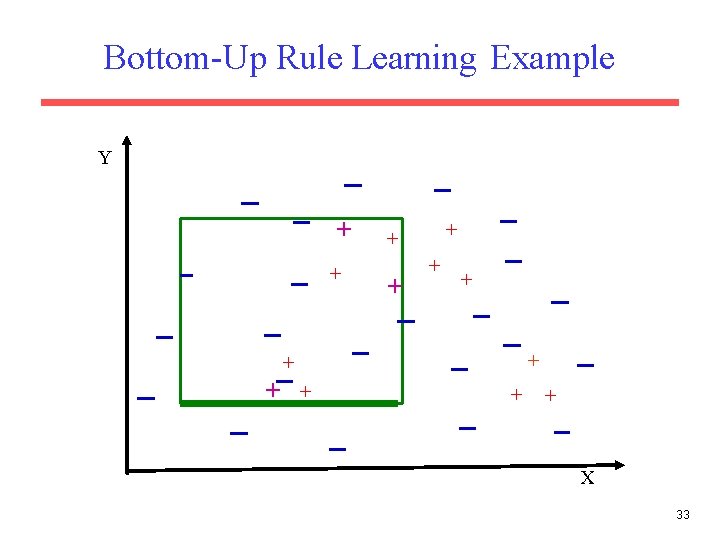
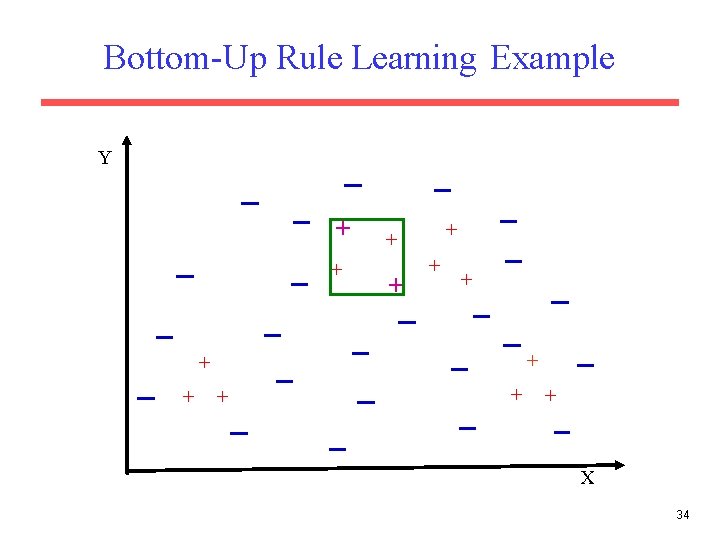
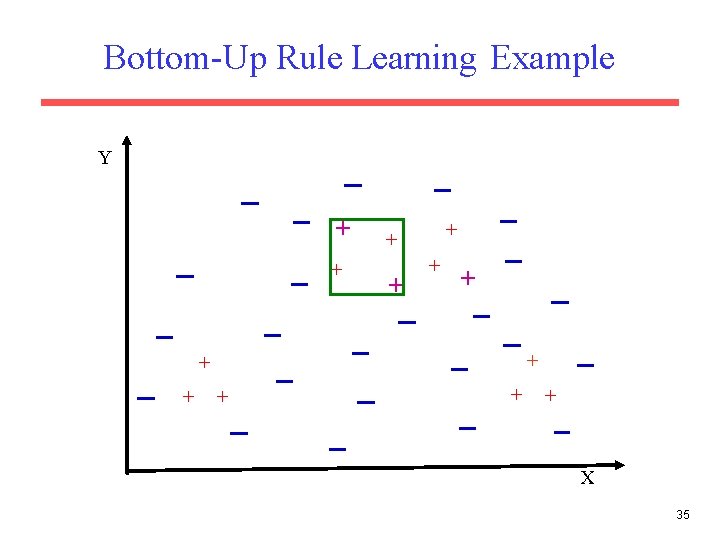
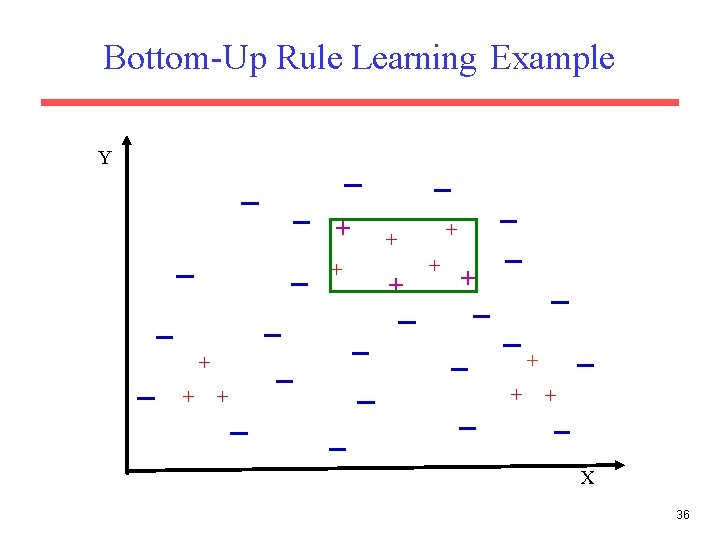
Strategies for Learning a Single Rule • Top Down (General to Specific): – Start with the most-general (empty) rule. – Repeatedly add antecedent constraints on features that eliminate negative examples while maintaining as many positives as possible. – Stop when only positives are covered. • Bottom Up (Specific to General) – Start with a most-specific rule (e. g. complete instance description of a random instance). – Repeatedly remove antecedent constraints in order to cover more positives. – Stop when further generalization results in covering negatives. 20
Top-Down Rule Learning Example Y + + + + X 21
Top-Down Rule Learning Example Y + + Y>C 1 + + + X 22
Top-Down Rule Learning Example Y + + Y>C 1 + + + X>C 2 X 23
Top-Down Rule Learning Example Y Y<C 3 + + Y>C 1 + + + X>C 2 X 24
Top-Down Rule Learning Example Y Y<C 3 + + Y>C 1 + + + X>C 2 X<C 4 X 25
Bottom-Up Rule Learning Example Y + + + + X 26
Bottom-Up Rule Learning Example Y + + + + X 27
Bottom-Up Rule Learning Example Y + + + + X 28
Bottom-Up Rule Learning Example Y + + + + X 29
Bottom-Up Rule Learning Example Y + + + + X 30
Bottom-Up Rule Learning Example Y + + + + X 31
Bottom-Up Rule Learning Example Y + + + + X 32
Bottom-Up Rule Learning Example Y + + + + X 33
Bottom-Up Rule Learning Example Y + + + + X 34
Bottom-Up Rule Learning Example Y + + + + X 35
Bottom-Up Rule Learning Example Y + + + + X 36
Basic Sequential Covering Algorithm Rule-Based Classification
Basic Sequential Covering Algorithm Rule-Based Classification
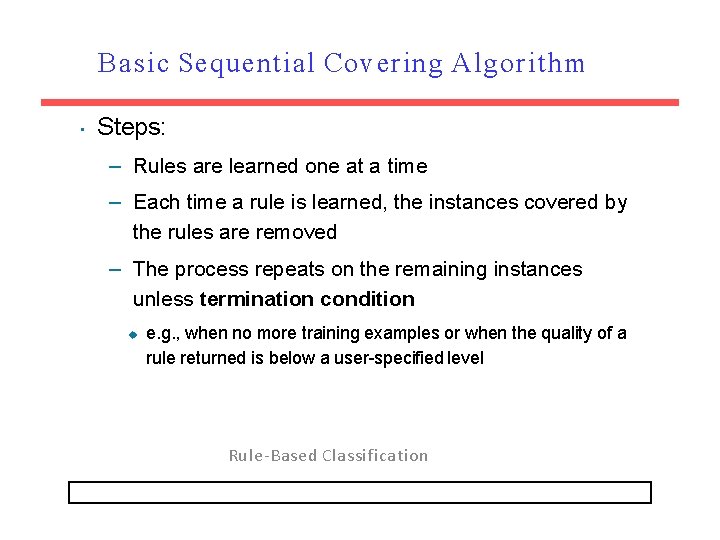
Basic Sequential Covering Algorithm • Steps: – Rules are learned one at a time – Each time a rule is learned, the instances covered by the rules are removed – The process repeats on the remaining instances unless termination condition ◆ e. g. , when no more training examples or when the quality of a rule returned is below a user-specified level Rule-Based Classification
Foil Algorithm (First Order Inductive Learner Algorithm)
FOIL Algorithm • Top-down approach originally applied to first-order logic (Quinlan, 1990). 41
Coverage or Accuracy?
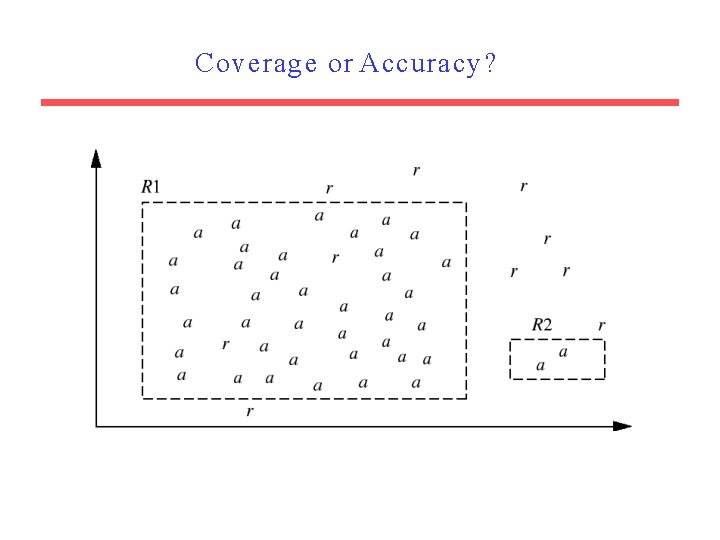
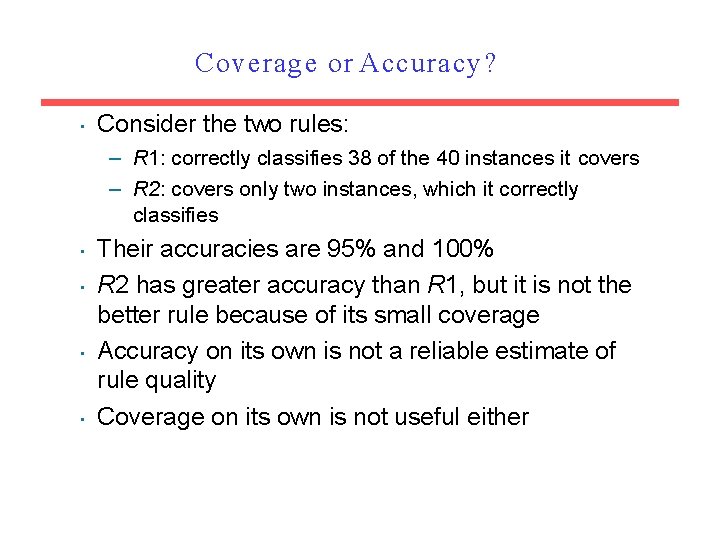
Coverage or Accuracy? • Consider the two rules: – R 1: correctly classifies 38 of the 40 instances it covers – R 2: covers only two instances, which it correctly classifies • • Their accuracies are 95% and 100% R 2 has greater accuracy than R 1, but it is not the better rule because of its small coverage Accuracy on its own is not a reliable estimate of rule quality Coverage on its own is not useful either
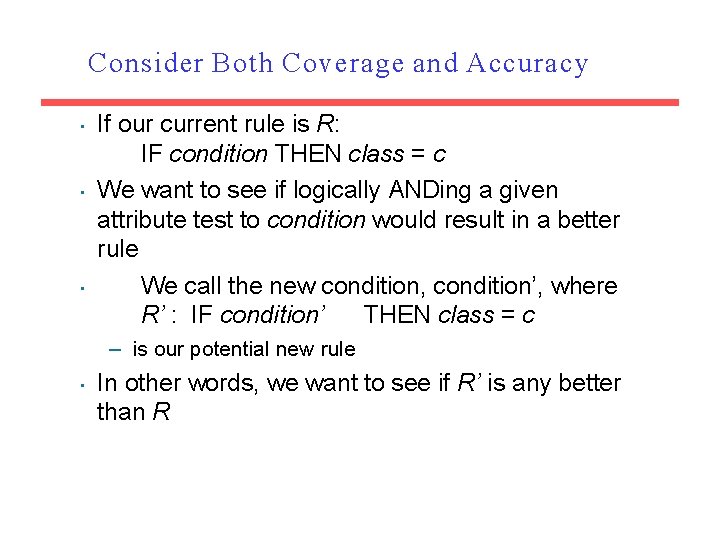
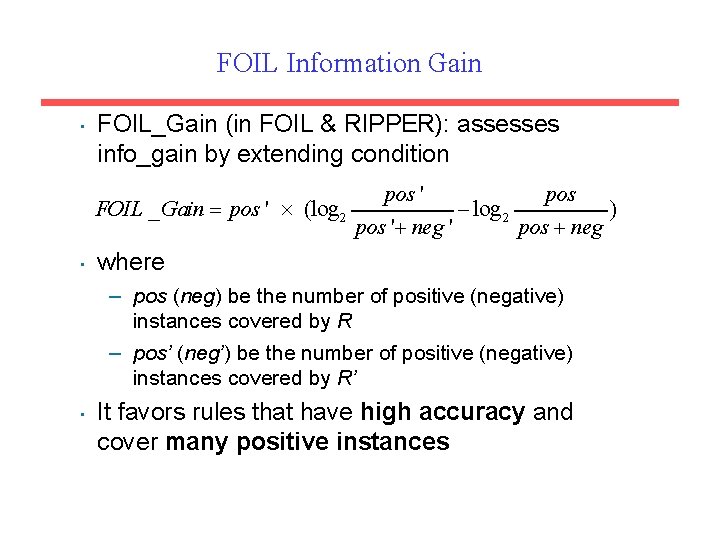
Consider Both Coverage and Accuracy • • • If our current rule is R: IF condition THEN class = c We want to see if logically ANDing a given attribute test to condition would result in a better rule We call the new condition, condition’, where R’ : IF condition’ THEN class = c – is our potential new rule • In other words, we want to see if R’ is any better than R
FOIL Information Gain • FOIL_Gain (in FOIL & RIPPER): assesses info_gain by extending condition FOIL _Gain pos ' (log 2 • pos ' pos log 2 ) pos ' neg ' pos neg where – pos (neg) be the number of positive (negative) instances covered by R – pos’ (neg’) be the number of positive (negative) instances covered by R’ • It favors rules that have high accuracy and cover many positive instances
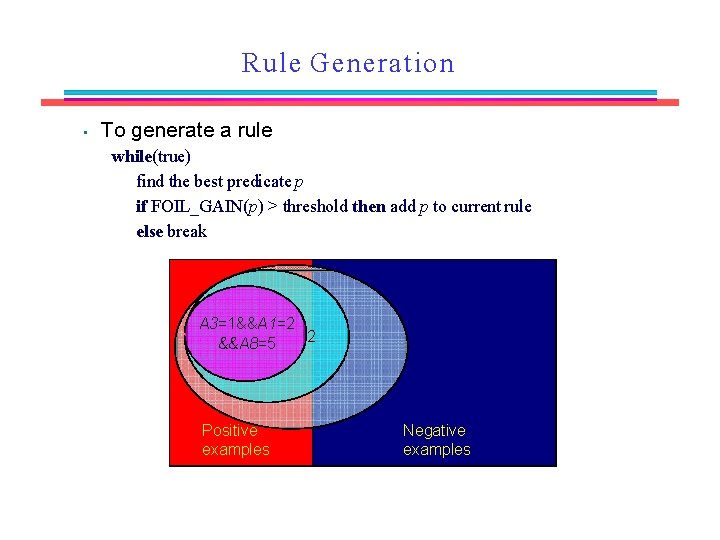
Rule Generation • To generate a rule while(true) find the best predicate p if FOIL_GAIN(p) > threshold then add p to current rule else break A 3=1&&A 1=2 &&A 8=5 A 3=1 Positive examples Negative examples
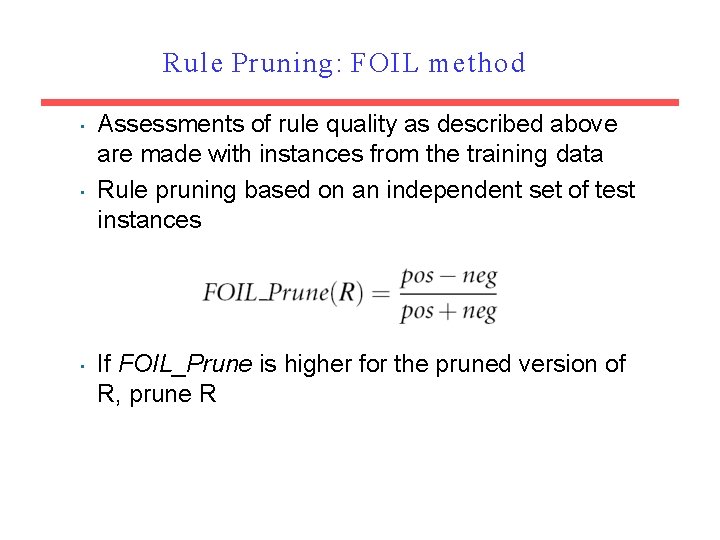
Rule Pruning: FOIL method • • • Assessments of rule quality as described above are made with instances from the training data Rule pruning based on an independent set of test instances If FOIL_Prune is higher for the pruned version of R, prune R
RIPPER Algorithm
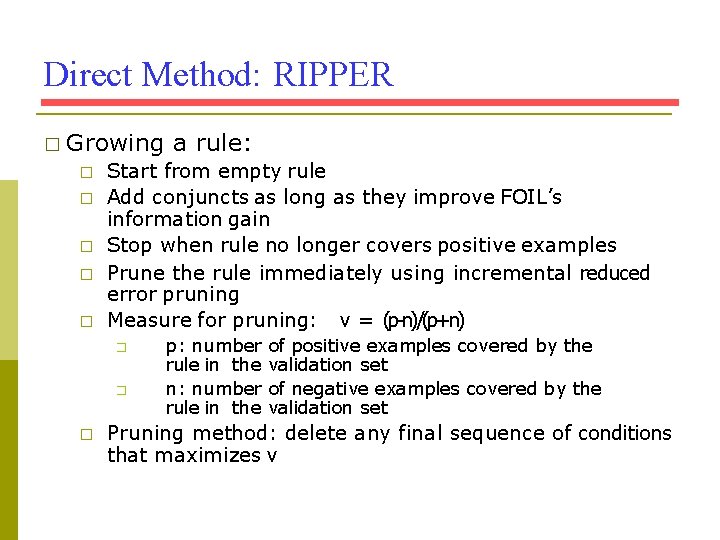
Direct Method: RIPPER � Growing � � � Start from empty rule Add conjuncts as long as they improve FOIL’s information gain Stop when rule no longer covers positive examples Prune the rule immediately using incremental reduced error pruning Measure for pruning: v = (p-n)/(p+n) � � � a rule: p: number rule in the n: number rule in the of positive examples covered by the validation set of negative examples covered by the validation set Pruning method: delete any final sequence of conditions that maximizes v
Thank You