
Rubbish or Recycle An Exploration of Recycling Data
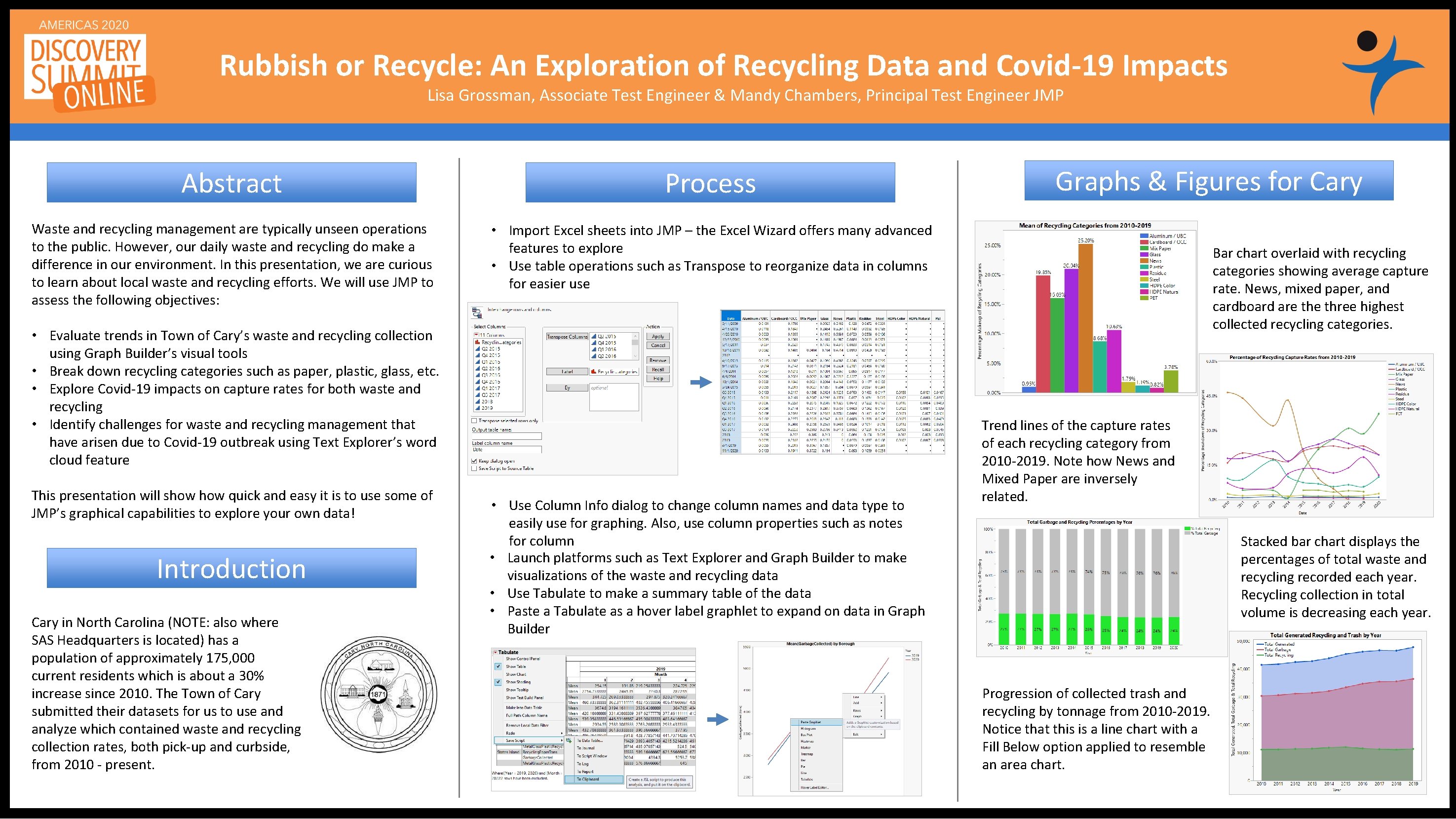
Rubbish or Recycle: An Exploration of Recycling Data and Covid-19 Impacts Lisa Grossman, Associate Test Engineer & Mandy Chambers, Principal Test Engineer JMP Abstract Process Waste and recycling management are typically unseen operations to the public. However, our daily waste and recycling do make a difference in our environment. In this presentation, we are curious to learn about local waste and recycling efforts. We will use JMP to assess the following objectives: • Import Excel sheets into JMP – the Excel Wizard offers many advanced features to explore • Use table operations such as Transpose to reorganize data in columns for easier use • Evaluate trends in Town of Cary’s waste and recycling collection using Graph Builder’s visual tools • Break down recycling categories such as paper, plastic, glass, etc. • Explore Covid-19 impacts on capture rates for both waste and recycling • Identify challenges for waste and recycling management that have arisen due to Covid-19 outbreak using Text Explorer’s word cloud feature This presentation will show quick and easy it is to use some of JMP’s graphical capabilities to explore your own data! Introduction Cary in North Carolina (NOTE: also where SAS Headquarters is located) has a population of approximately 175, 000 current residents which is about a 30% increase since 2010. The Town of Cary submitted their datasets for us to use and analyze which contained waste and recycling collection rates, both pick-up and curbside, from 2010 - present. • Use Column Info dialog to change column names and data type to easily use for graphing. Also, use column properties such as notes for column • Launch platforms such as Text Explorer and Graph Builder to make visualizations of the waste and recycling data • Use Tabulate to make a summary table of the data • Paste a Tabulate as a hover label graphlet to expand on data in Graph Builder Graphs & Figures for Cary Bar chart overlaid with recycling categories showing average capture rate. News, mixed paper, and cardboard are three highest collected recycling categories. Trend lines of the capture rates of each recycling category from 2010 -2019. Note how News and Mixed Paper are inversely related. Stacked bar chart displays the percentages of total waste and recycling recorded each year. Recycling collection in total volume is decreasing each year. Progression of collected trash and recycling by tonnage from 2010 -2019. Notice that this is a line chart with a Fill Below option applied to resemble an area chart.
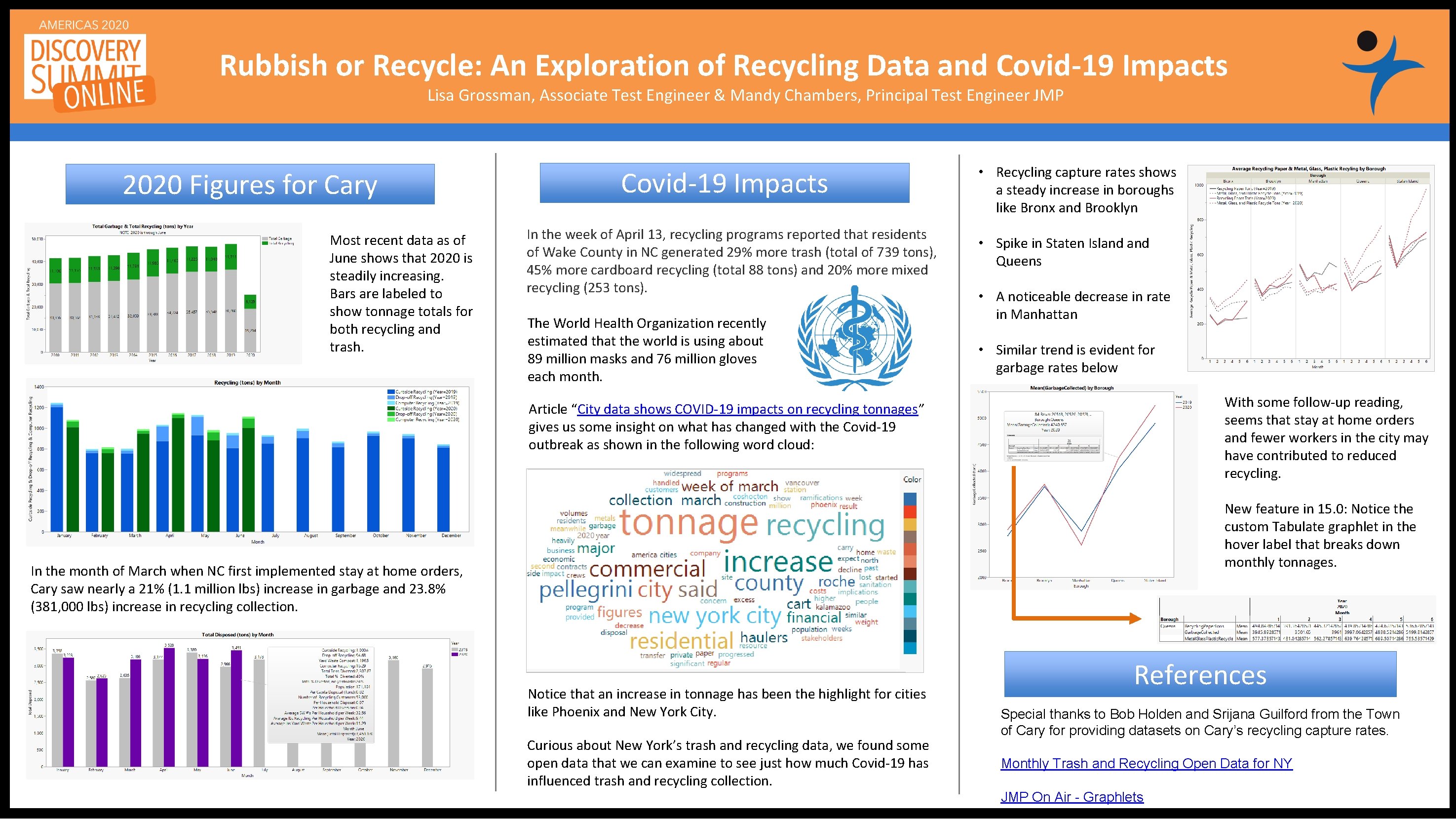
Rubbish or Recycle: An Exploration of Recycling Data and Covid-19 Impacts Lisa Grossman, Associate Test Engineer & Mandy Chambers, Principal Test Engineer JMP 2020 Figures for Cary Most recent data as of June shows that 2020 is steadily increasing. Bars are labeled to show tonnage totals for both recycling and trash. Covid-19 Impacts In the week of April 13, recycling programs reported that residents of Wake County in NC generated 29% more trash (total of 739 tons), 45% more cardboard recycling (total 88 tons) and 20% more mixed recycling (253 tons). The World Health Organization recently estimated that the world is using about 89 million masks and 76 million gloves each month. • Recycling capture rates shows a steady increase in boroughs like Bronx and Brooklyn • Spike in Staten Island Queens • A noticeable decrease in rate in Manhattan • Similar trend is evident for garbage rates below With some follow-up reading, seems that stay at home orders and fewer workers in the city may have contributed to reduced recycling. Article “City data shows COVID-19 impacts on recycling tonnages” gives us some insight on what has changed with the Covid-19 outbreak as shown in the following word cloud: New feature in 15. 0: Notice the custom Tabulate graphlet in the hover label that breaks down monthly tonnages. In the month of March when NC first implemented stay at home orders, Cary saw nearly a 21% (1. 1 million lbs) increase in garbage and 23. 8% (381, 000 lbs) increase in recycling collection. Notice that an increase in tonnage has been the highlight for cities like Phoenix and New York City. Curious about New York’s trash and recycling data, we found some open data that we can examine to see just how much Covid-19 has influenced trash and recycling collection. References Special thanks to Bob Holden and Srijana Guilford from the Town of Cary for providing datasets on Cary’s recycling capture rates. Monthly Trash and Recycling Open Data for NY JMP On Air - Graphlets
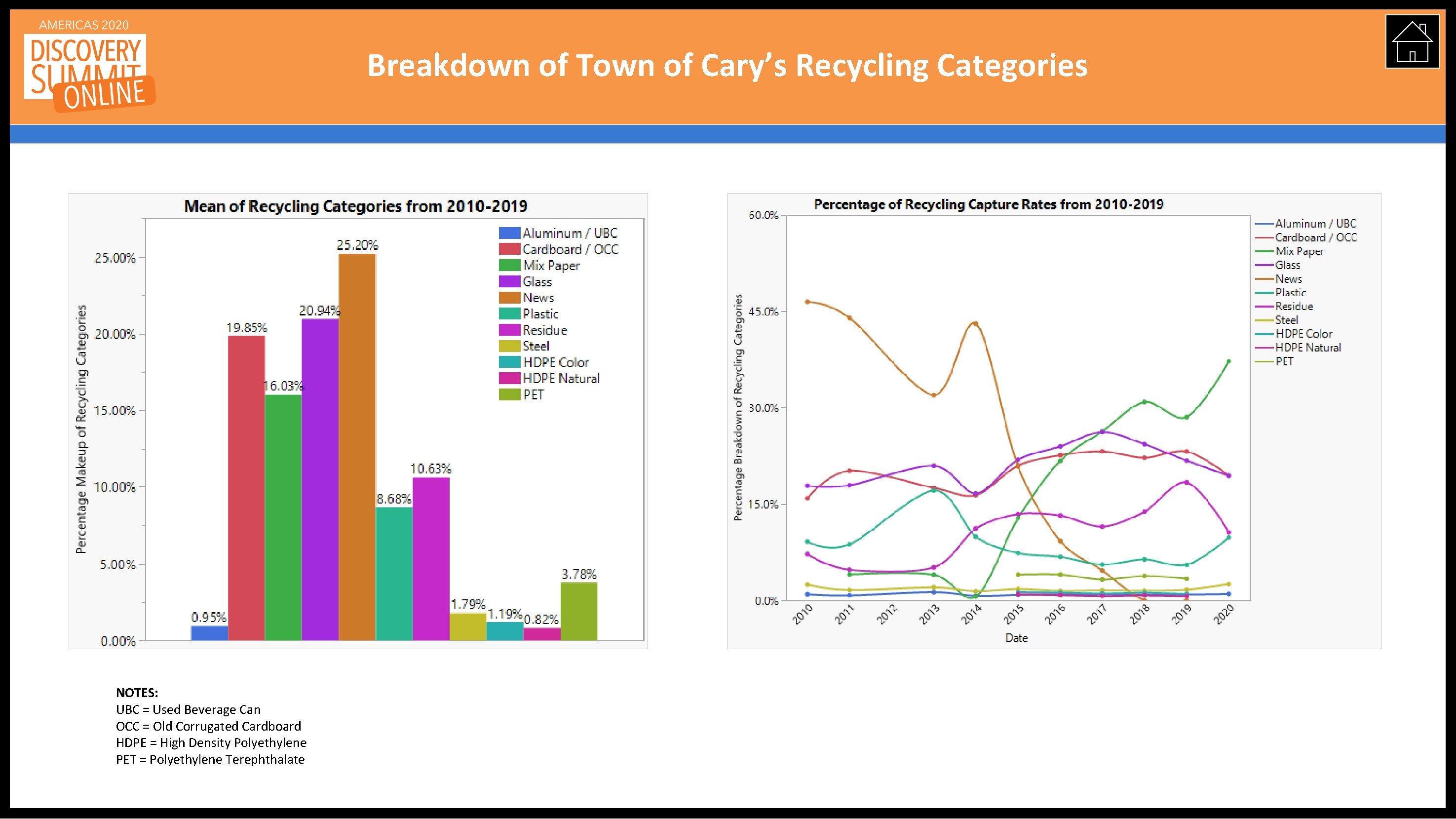
Breakdown of Town of Cary’s Recycling Categories NOTES: UBC = Used Beverage Can OCC = Old Corrugated Cardboard HDPE = High Density Polyethylene PET = Polyethylene Terephthalate
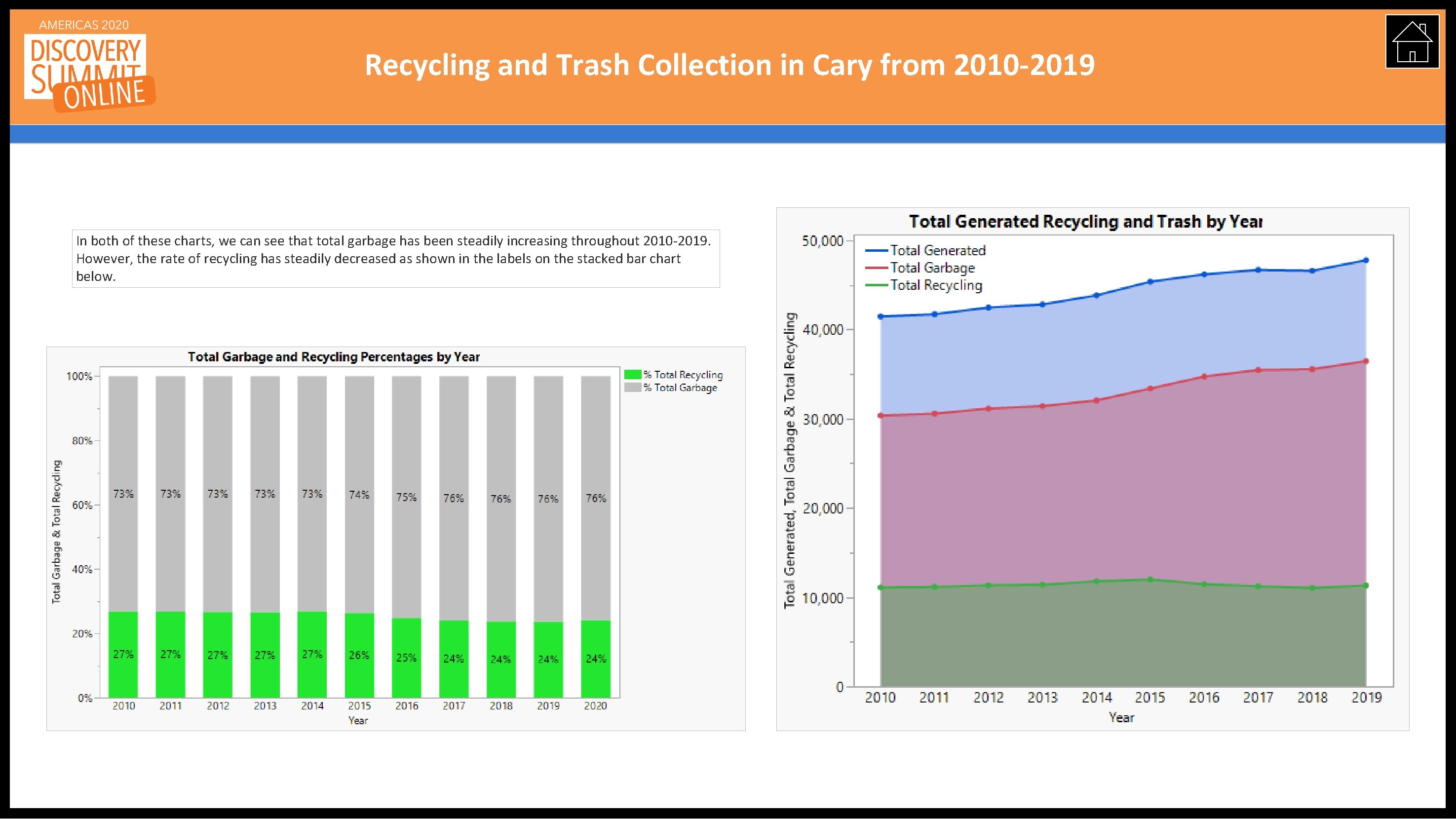
Recycling and Trash Collection in Cary from 2010 -2019 In both of these charts, we can see that total garbage has been steadily increasing throughout 2010 -2019. However, the rate of recycling has steadily decreased as shown in the labels on the stacked bar chart below.
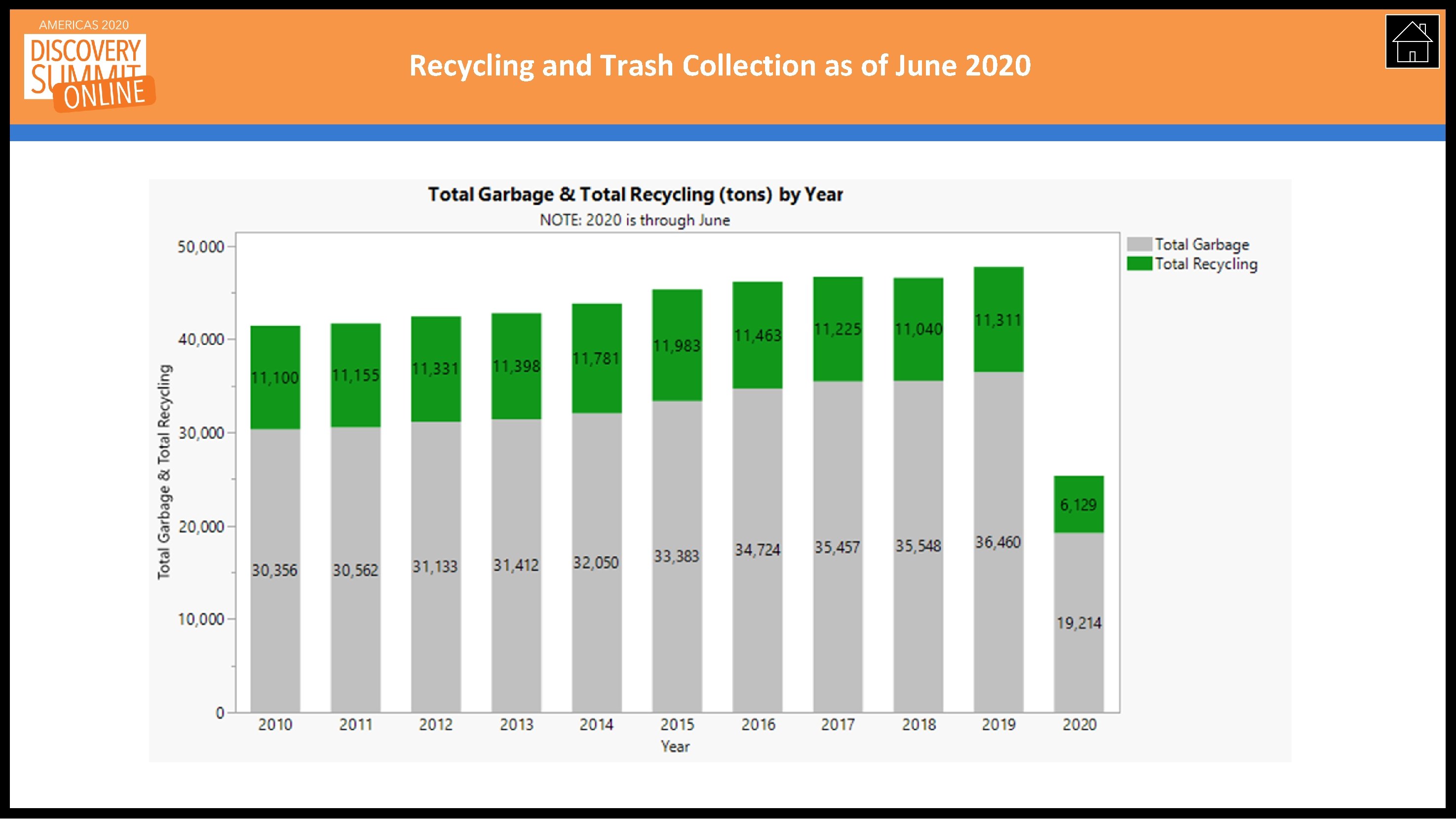
Recycling and Trash Collection as of June 2020
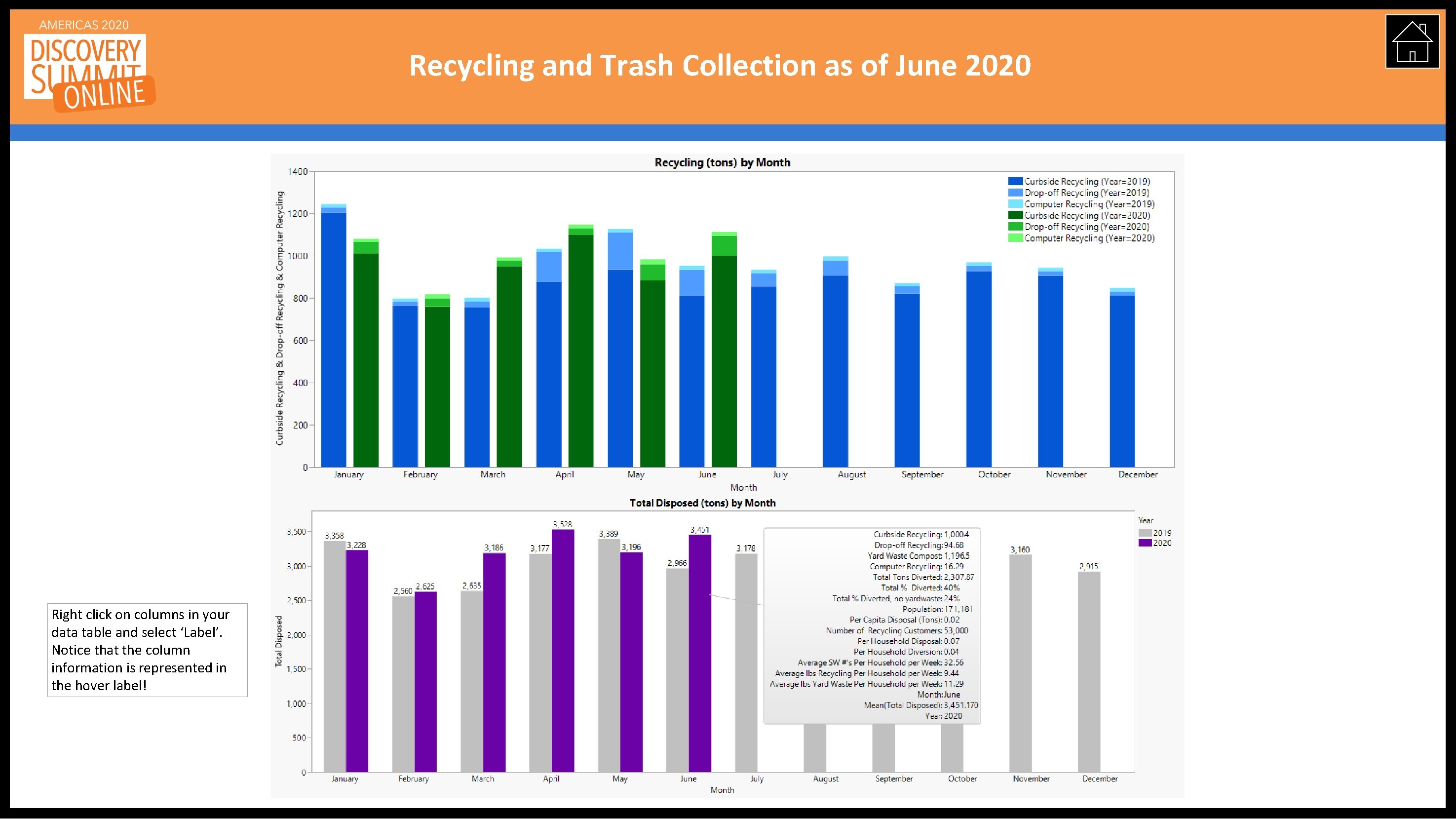
Recycling and Trash Collection as of June 2020 Right click on columns in your data table and select ‘Label’. Notice that the column information is represented in the hover label!
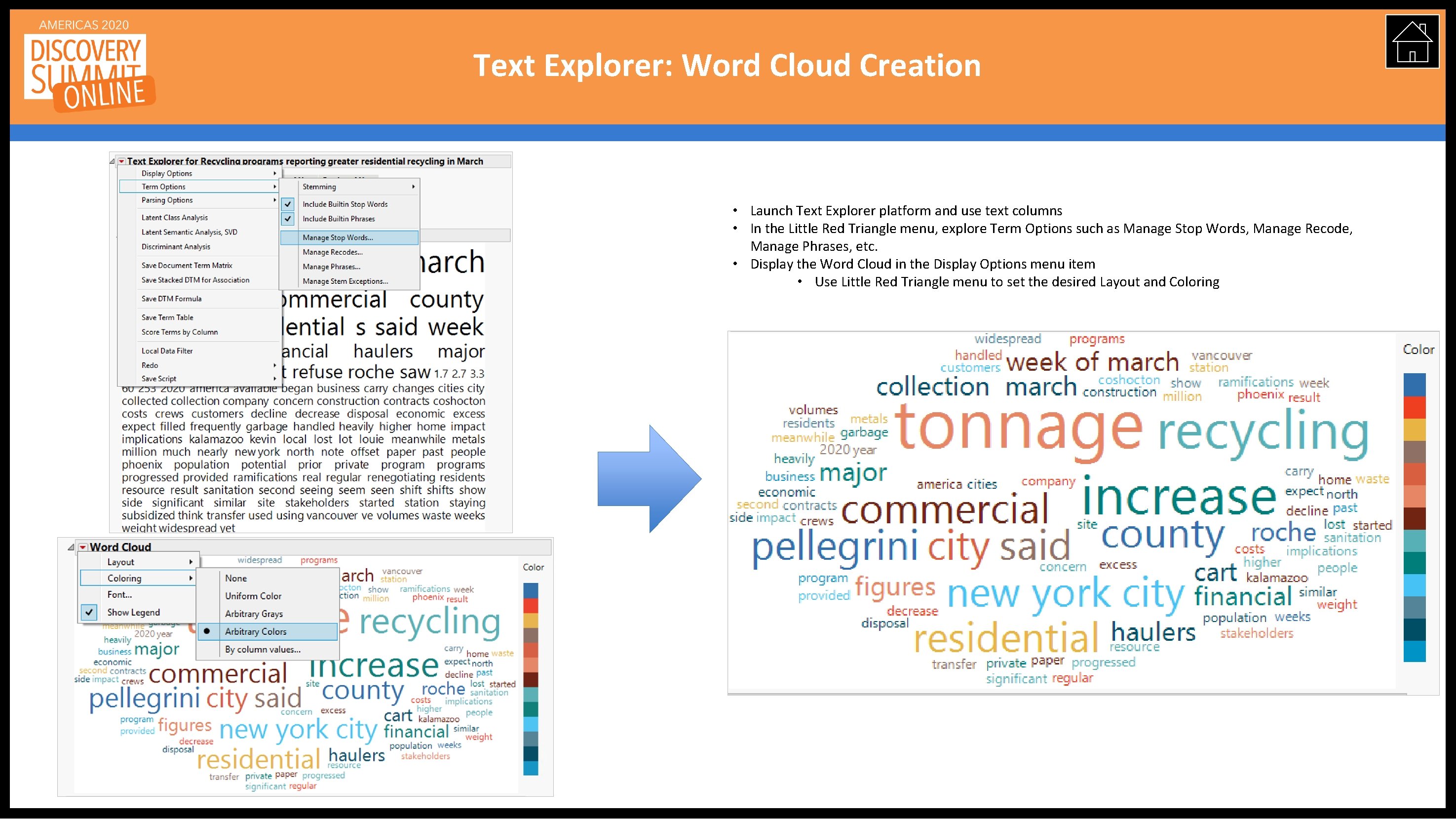
Text Explorer: Word Cloud Creation • Launch Text Explorer platform and use text columns • In the Little Red Triangle menu, explore Term Options such as Manage Stop Words, Manage Recode, Manage Phrases, etc. • Display the Word Cloud in the Display Options menu item • Use Little Red Triangle menu to set the desired Layout and Coloring
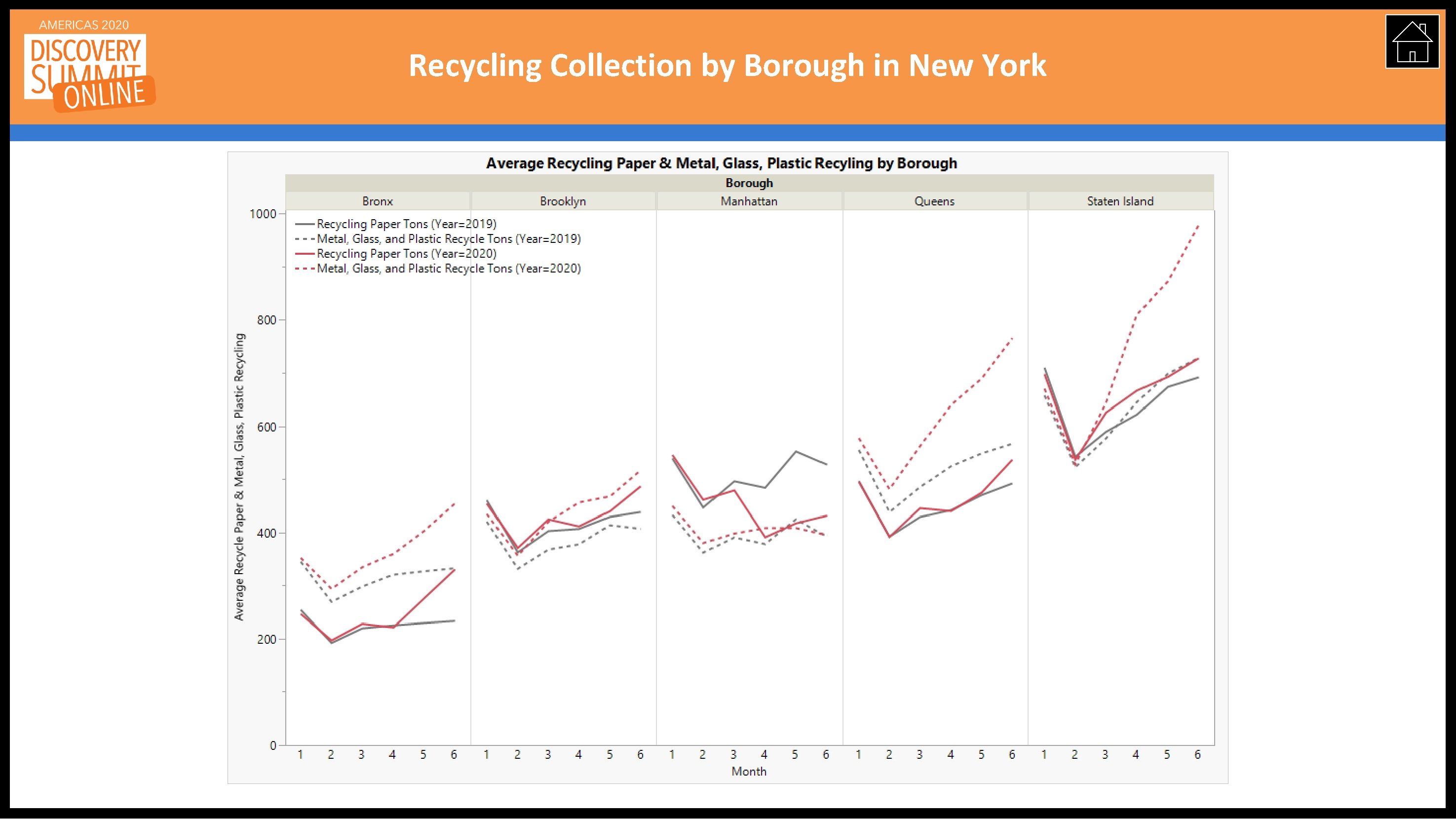
Recycling Collection by Borough in New York
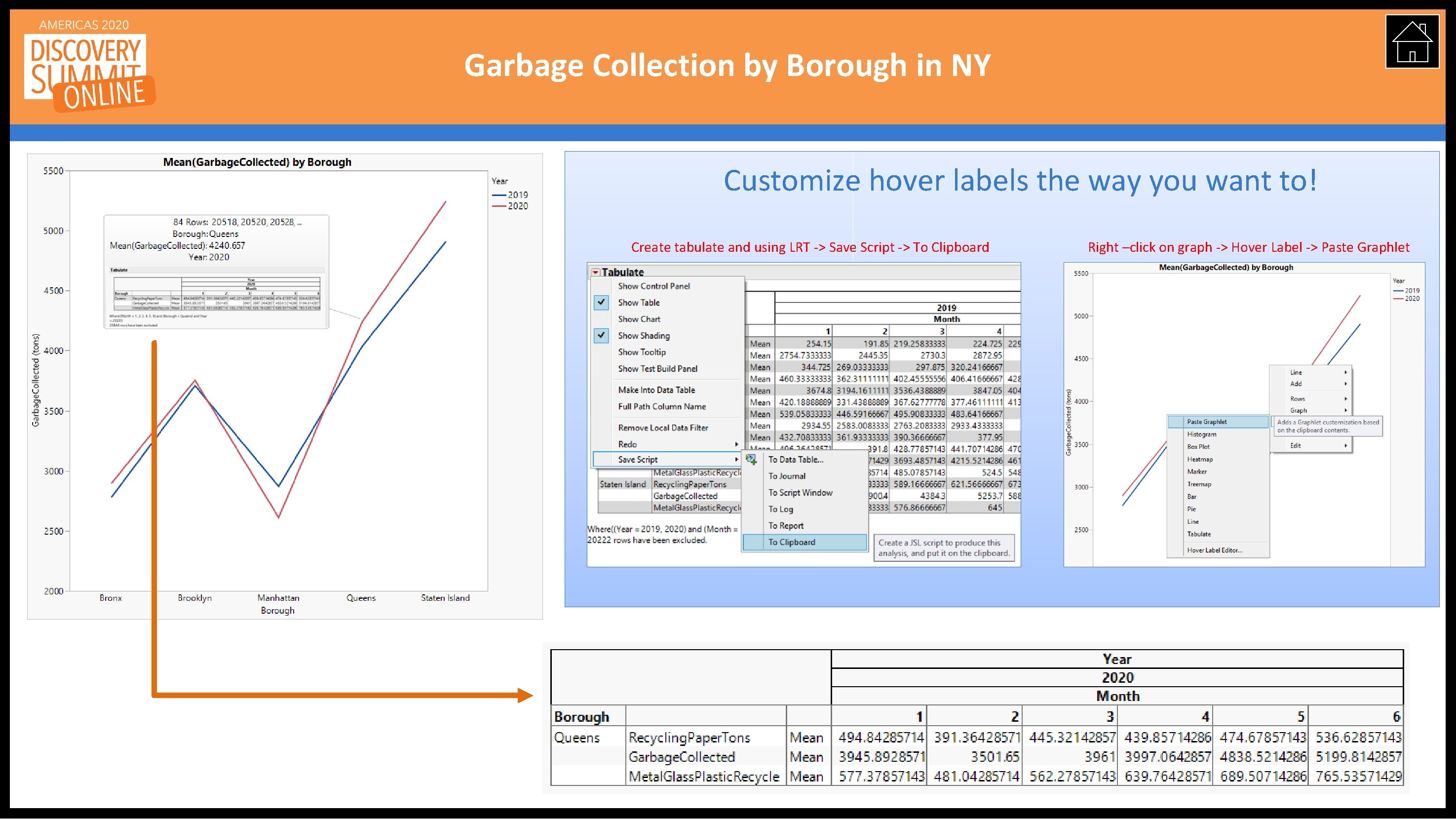
Garbage Collection by Borough in NY Customize hover labels the way you want to! Create tabulate and using LRT -> Save Script -> To Clipboard Right –click on graph -> Hover Label -> Paste Graphlet
- Slides: 9