
RTPCR analysis Genome Regulation Center Kang JiSeon RTPCR


- Slides: 14
RT-PCR analysis Genome Regulation Center Kang Ji-Seon
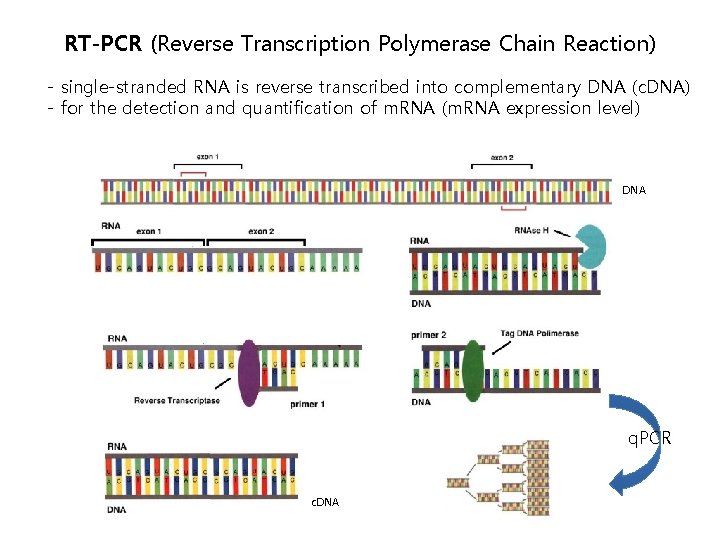
RT-PCR (Reverse Transcription Polymerase Chain Reaction) - single-stranded RNA is reverse transcribed into complementary DNA (c. DNA) - for the detection and quantification of m. RNA (m. RNA expression level) DNA q. PCR c. DNA
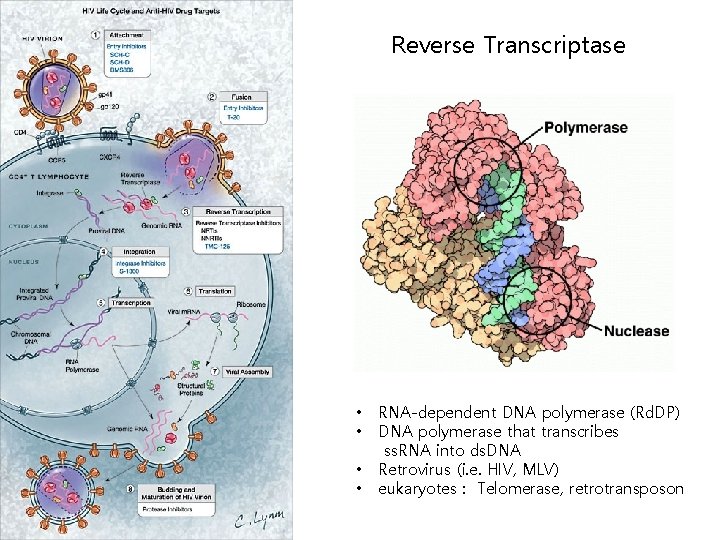
Reverse Transcriptase • • RNA-dependent DNA polymerase (Rd. DP) DNA polymerase that transcribes ss. RNA into ds. DNA Retrovirus (i. e. HIV, MLV) eukaryotes : Telomerase, retrotransposon
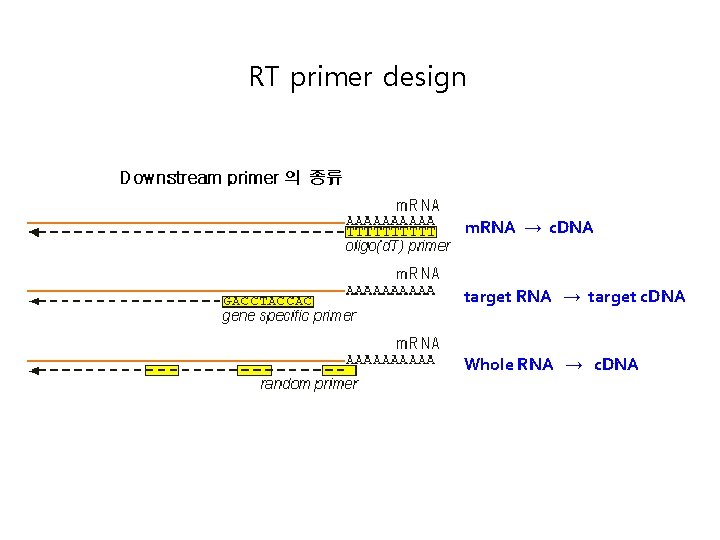
RT primer design m. RNA → c. DNA target RNA → target c. DNA Whole RNA → c. DNA
Genomic DNA contamination PCR product from genomic DNA primer PCR product from m. RNA • • Treat RNase free DNase Select intron containing primer
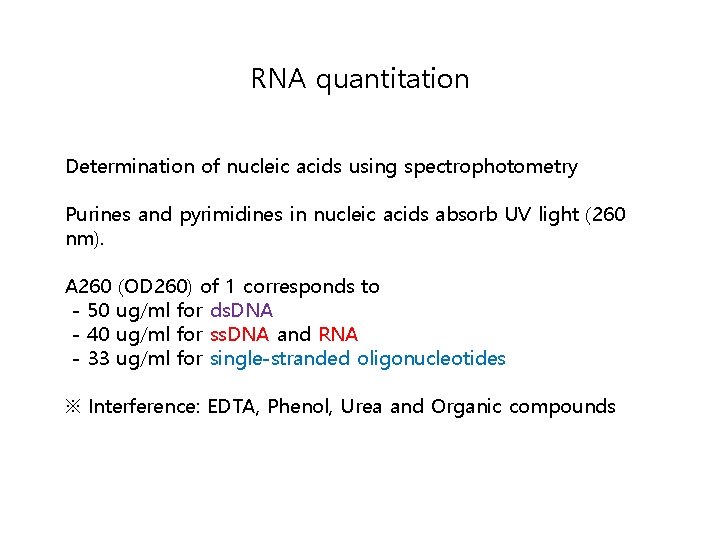
RNA quantitation Determination of nucleic acids using spectrophotometry Purines and pyrimidines in nucleic acids absorb UV light (260 nm). A 260 (OD 260) of 1 corresponds to - 50 ug/ml for ds. DNA - 40 ug/ml for ss. DNA and RNA - 33 ug/ml for single-stranded oligonucleotides ※ Interference: EDTA, Phenol, Urea and Organic compounds
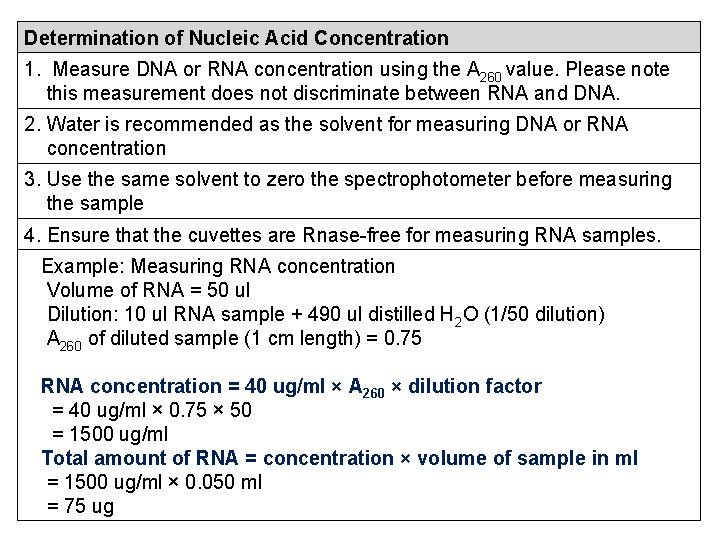
Determination of Nucleic Acid Concentration 1. Measure DNA or RNA concentration using the A 260 value. Please note this measurement does not discriminate between RNA and DNA. 2. Water is recommended as the solvent for measuring DNA or RNA concentration 3. Use the same solvent to zero the spectrophotometer before measuring the sample 4. Ensure that the cuvettes are Rnase-free for measuring RNA samples. Example: Measuring RNA concentration Volume of RNA = 50 ul Dilution: 10 ul RNA sample + 490 ul distilled H 2 O (1/50 dilution) A 260 of diluted sample (1 cm length) = 0. 75 RNA concentration = 40 ug/ml × A 260 × dilution factor = 40 ug/ml × 0. 75 × 50 = 1500 ug/ml Total amount of RNA = concentration × volume of sample in ml = 1500 ug/ml × 0. 050 ml = 75 ug
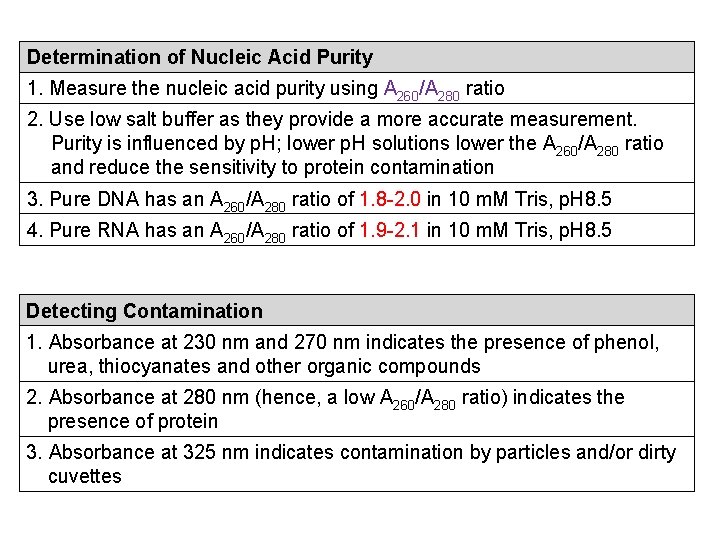
Determination of Nucleic Acid Purity 1. Measure the nucleic acid purity using A 260/A 280 ratio 2. Use low salt buffer as they provide a more accurate measurement. Purity is influenced by p. H; lower p. H solutions lower the A 260/A 280 ratio and reduce the sensitivity to protein contamination 3. Pure DNA has an A 260/A 280 ratio of 1. 8 -2. 0 in 10 m. M Tris, p. H 8. 5 4. Pure RNA has an A 260/A 280 ratio of 1. 9 -2. 1 in 10 m. M Tris, p. H 8. 5 Detecting Contamination 1. Absorbance at 230 nm and 270 nm indicates the presence of phenol, urea, thiocyanates and other organic compounds 2. Absorbance at 280 nm (hence, a low A 260/A 280 ratio) indicates the presence of protein 3. Absorbance at 325 nm indicates contamination by particles and/or dirty cuvettes
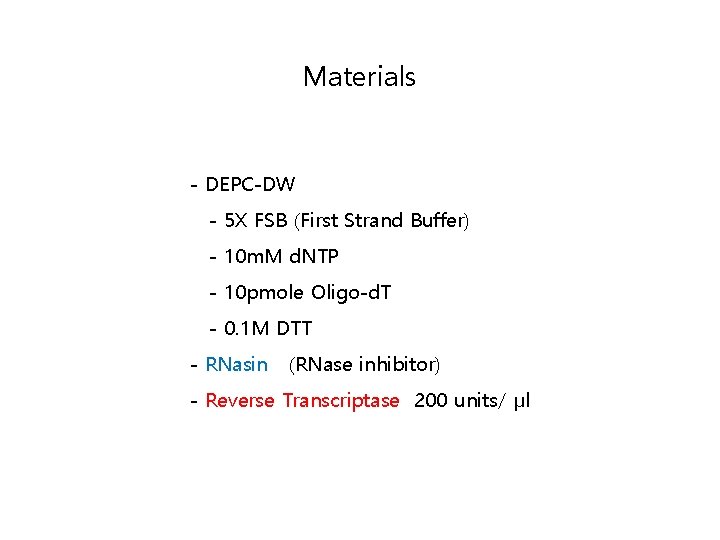
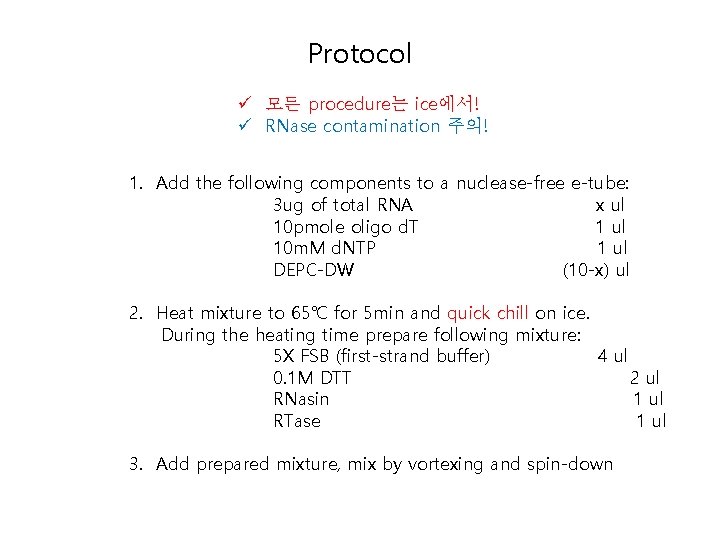
Materials - DEPC-DW - 5 X FSB (First Strand Buffer) - 10 m. M d. NTP - 10 pmole Oligo-d. T - 0. 1 M DTT - RNasin (RNase inhibitor) - Reverse Transcriptase 200 units/ µl
Protocol ü 모든 procedure는 ice에서! ü RNase contamination 주의! 1. Add the following components to a nuclease-free e-tube: 3 ug of total RNA x ul 10 pmole oligo d. T 1 ul 10 m. M d. NTP 1 ul DEPC-DW (10 -x) ul 2. Heat mixture to 65℃ for 5 min and quick chill on ice. During the heating time prepare following mixture: 5 X FSB (first-strand buffer) 4 ul 0. 1 M DTT 2 ul RNasin 1 ul RTase 1 ul 3. Add prepared mixture, mix by vortexing and spin-down
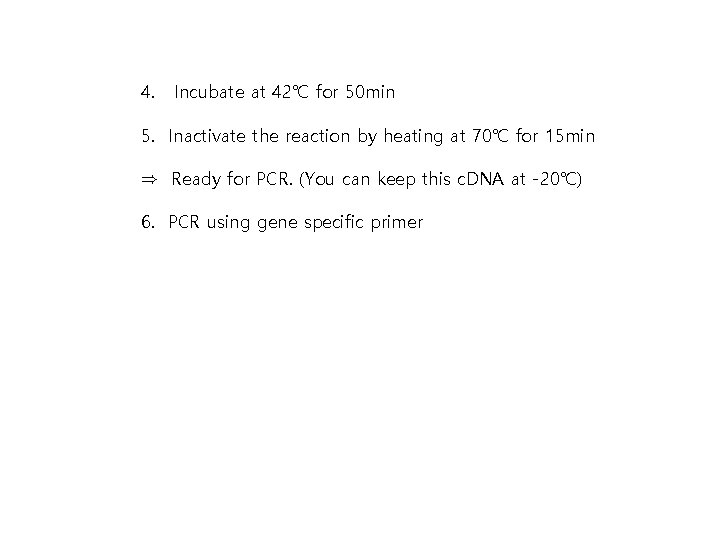
4. Incubate at 42℃ for 50 min 5. Inactivate the reaction by heating at 70℃ for 15 min ⇒ Ready for PCR. (You can keep this c. DNA at -20℃) 6. PCR using gene specific primer
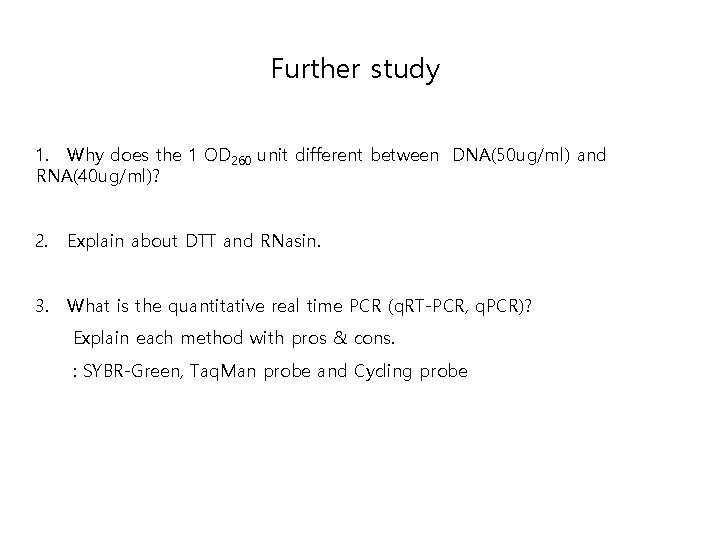
Further study 1. Why does the 1 OD 260 unit different between DNA(50 ug/ml) and RNA(40 ug/ml)? 2. Explain about DTT and RNasin. 3. What is the quantitative real time PCR (q. RT-PCR, q. PCR)? Explain each method with pros & cons. : SYBR-Green, Taq. Man probe and Cycling probe