
RTP TV A Live CME Webcast Series on
RTP TV: A Live CME Webcast Series on Novel Treatments in Oncology Part I – HER 2 -Positive Breast Cancer Thursday, June 21, 2012 7: 30 PM – 8: 30 PM ET

Kimberly L Blackwell, MD Professor of Medicine Director, Breast Cancer Program Duke Cancer Institute Durham, North Carolina Mark D Pegram, MD Director, Breast Oncology Program Co-Director, Experimental Therapeutics Program Professor of Medicine Stanford University Medical Center Stanford, California Neil Love, MD Research To Practice Miami, Florida





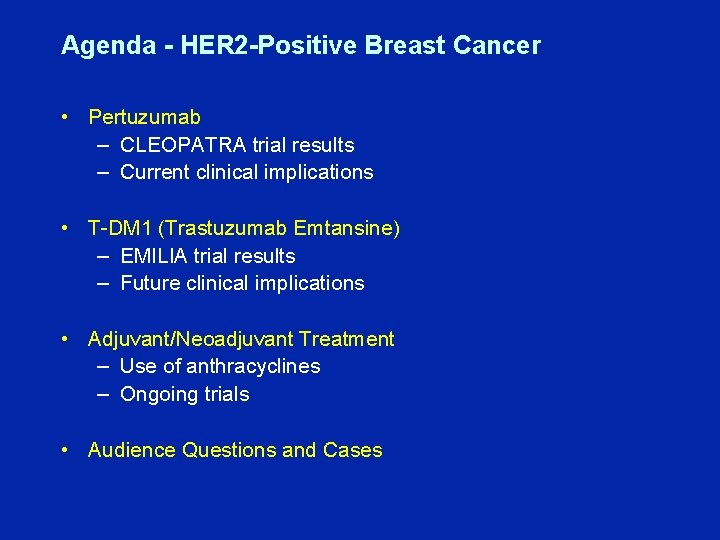
Agenda - HER 2 -Positive Breast Cancer • Pertuzumab – CLEOPATRA trial results – Current clinical implications • T-DM 1 (Trastuzumab Emtansine) – EMILIA trial results – Future clinical implications • Adjuvant/Neoadjuvant Treatment – Use of anthracyclines – Ongoing trials • Audience Questions and Cases

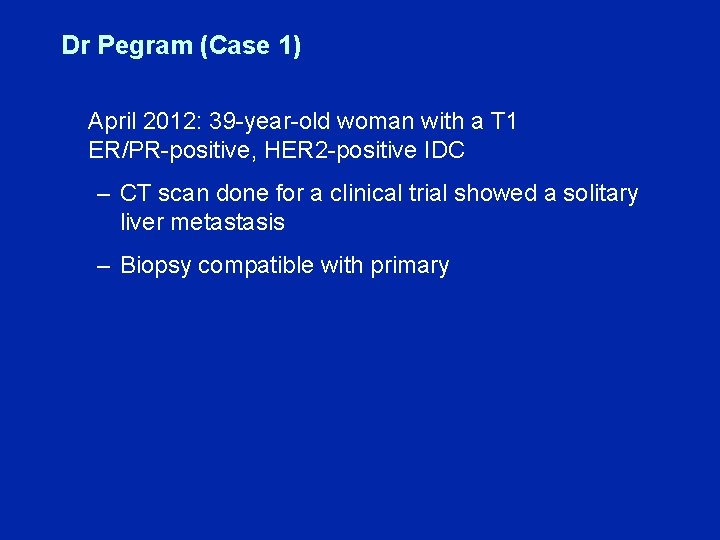
Dr Pegram (Case 1) April 2012: 39 -year-old woman with a T 1 ER/PR-positive, HER 2 -positive IDC – CT scan done for a clinical trial showed a solitary liver metastasis – Biopsy compatible with primary

What would be your immediate treatment strategy?


What initial anti-HER 2 treatment would you recommend?

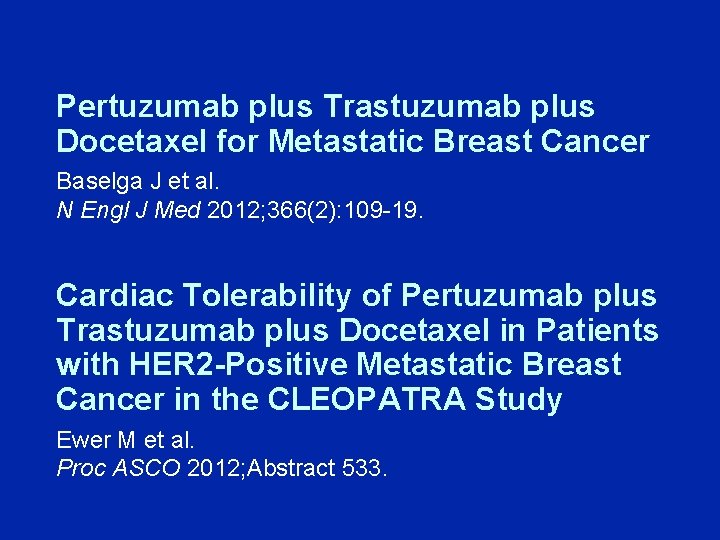
Pertuzumab plus Trastuzumab plus Docetaxel for Metastatic Breast Cancer Baselga J et al. N Engl J Med 2012; 366(2): 109 -19. Cardiac Tolerability of Pertuzumab plus Trastuzumab plus Docetaxel in Patients with HER 2 -Positive Metastatic Breast Cancer in the CLEOPATRA Study Ewer M et al. Proc ASCO 2012; Abstract 533.
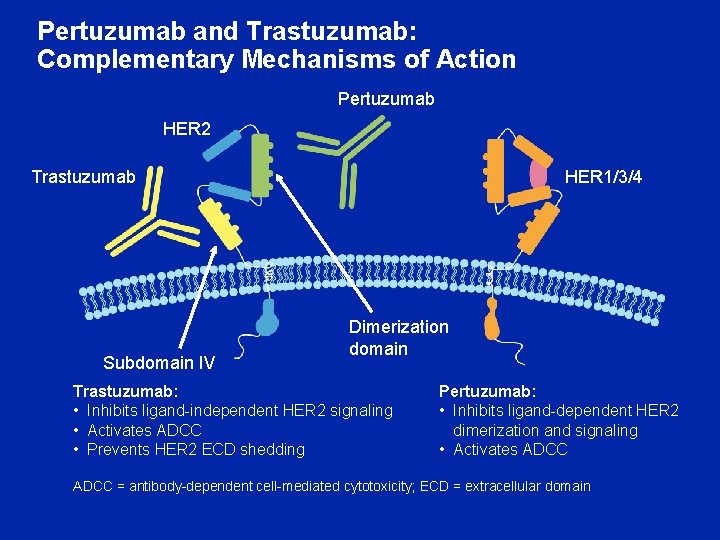
Pertuzumab and Trastuzumab: Complementary Mechanisms of Action Pertuzumab HER 2 Trastuzumab Subdomain IV HER 1/3/4 Dimerization domain Trastuzumab: • Inhibits ligand-independent HER 2 signaling • Activates ADCC • Prevents HER 2 ECD shedding Pertuzumab: • Inhibits ligand-dependent HER 2 dimerization and signaling • Activates ADCC = antibody-dependent cell-mediated cytotoxicity; ECD = extracellular domain
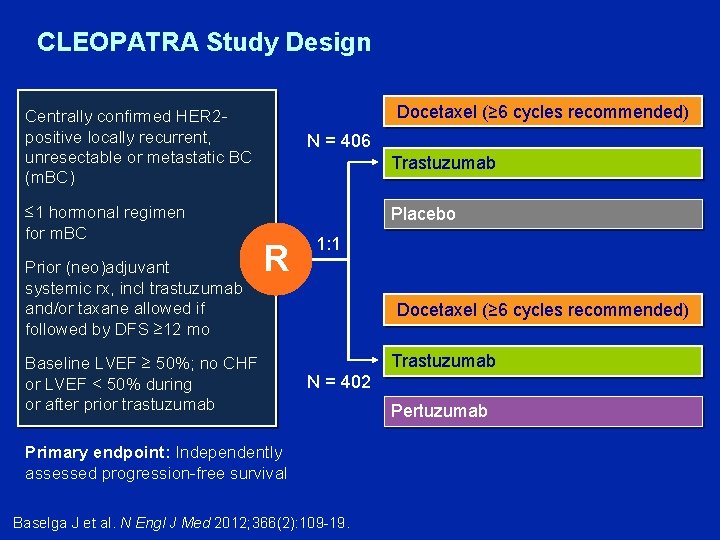
CLEOPATRA Study Design Docetaxel (≥ 6 cycles recommended) Centrally confirmed HER 2 positive locally recurrent, unresectable or metastatic BC (m. BC) ≤ 1 hormonal regimen for m. BC Prior (neo)adjuvant systemic rx, incl trastuzumab and/or taxane allowed if followed by DFS ≥ 12 mo N = 406 Trastuzumab Placebo R Baseline LVEF ≥ 50%; no CHF or LVEF < 50% during or after prior trastuzumab 1: 1 Docetaxel (≥ 6 cycles recommended) Trastuzumab N = 402 Primary endpoint: Independently assessed progression-free survival Baselga J et al. N Engl J Med 2012; 366(2): 109 -19. Pertuzumab
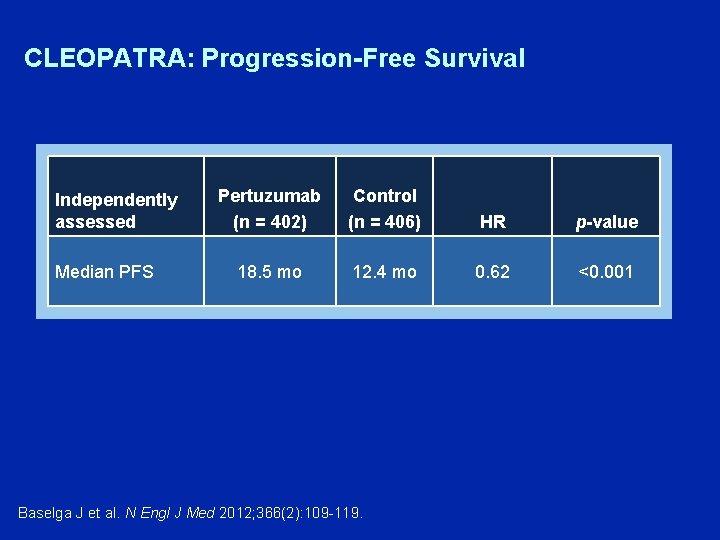
CLEOPATRA: Progression-Free Survival Independently assessed Median PFS Pertuzumab (n = 402) Control (n = 406) HR p-value 18. 5 mo 12. 4 mo 0. 62 <0. 001 Baselga J et al. N Engl J Med 2012; 366(2): 109 -119.
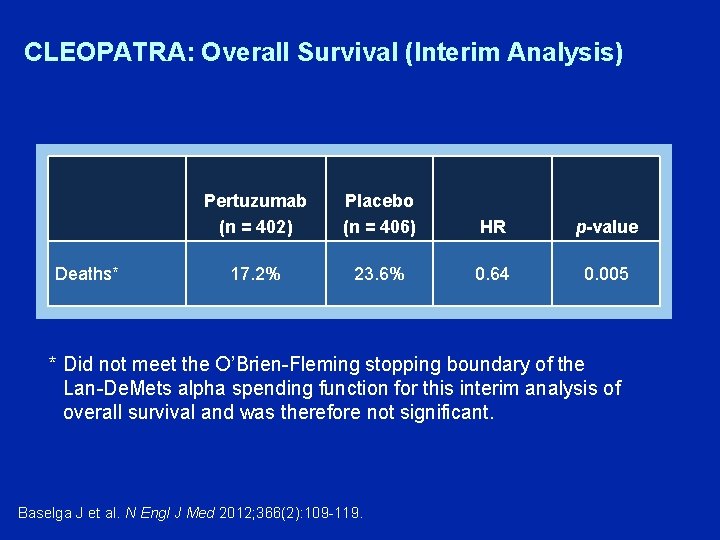
CLEOPATRA: Overall Survival (Interim Analysis) Deaths* Pertuzumab (n = 402) Placebo (n = 406) HR p-value 17. 2% 23. 6% 0. 64 0. 005 * Did not meet the O’Brien-Fleming stopping boundary of the Lan-De. Mets alpha spending function for this interim analysis of overall survival and was therefore not significant. Baselga J et al. N Engl J Med 2012; 366(2): 109 -119.
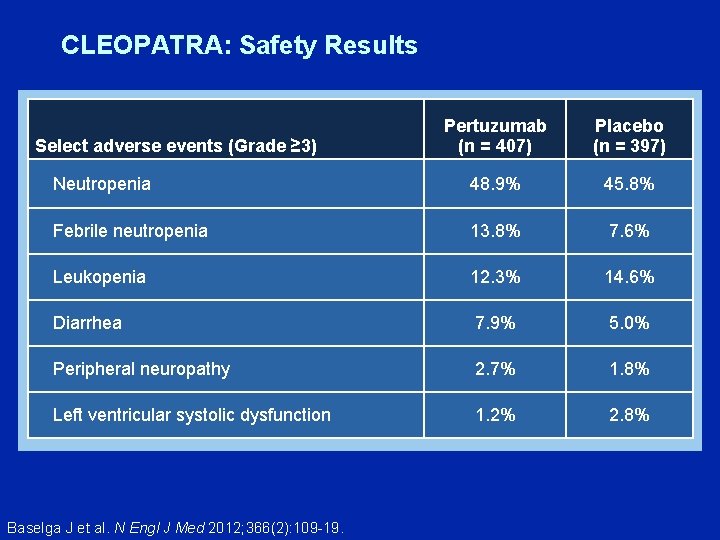
CLEOPATRA: Safety Results Pertuzumab (n = 407) Placebo (n = 397) Neutropenia 48. 9% 45. 8% Febrile neutropenia 13. 8% 7. 6% Leukopenia 12. 3% 14. 6% Diarrhea 7. 9% 5. 0% Peripheral neuropathy 2. 7% 1. 8% Left ventricular systolic dysfunction 1. 2% 2. 8% Select adverse events (Grade ≥ 3) Baselga J et al. N Engl J Med 2012; 366(2): 109 -19.
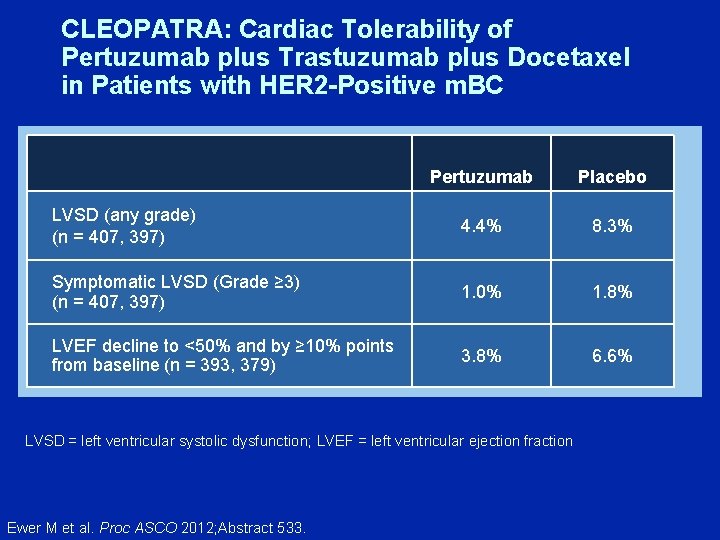
CLEOPATRA: Cardiac Tolerability of Pertuzumab plus Trastuzumab plus Docetaxel in Patients with HER 2 -Positive m. BC Pertuzumab Placebo LVSD (any grade) (n = 407, 397) 4. 4% 8. 3% Symptomatic LVSD (Grade ≥ 3) (n = 407, 397) 1. 0% 1. 8% LVEF decline to <50% and by ≥ 10% points from baseline (n = 393, 379) 3. 8% 6. 6% LVSD = left ventricular systolic dysfunction; LVEF = left ventricular ejection fraction Ewer M et al. Proc ASCO 2012; Abstract 533.
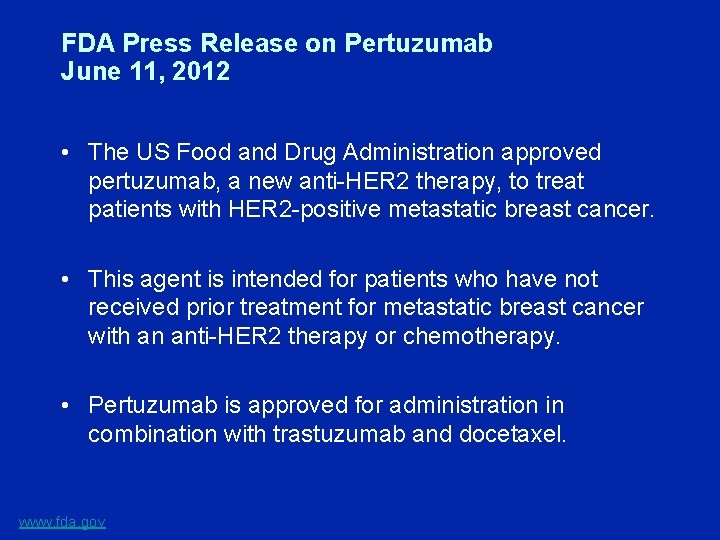
FDA Press Release on Pertuzumab June 11, 2012 • The US Food and Drug Administration approved pertuzumab, a new anti-HER 2 therapy, to treat patients with HER 2 -positive metastatic breast cancer. • This agent is intended for patients who have not received prior treatment for metastatic breast cancer with an anti-HER 2 therapy or chemotherapy. • Pertuzumab is approved for administration in combination with trastuzumab and docetaxel. www. fda. gov
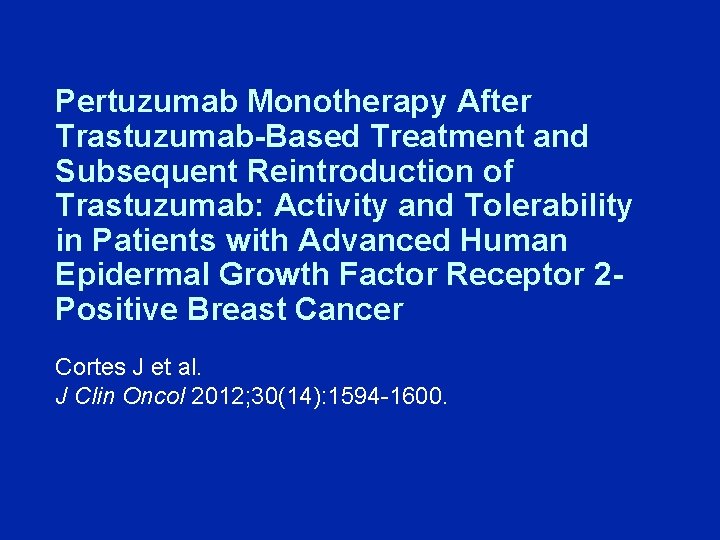
Pertuzumab Monotherapy After Trastuzumab-Based Treatment and Subsequent Reintroduction of Trastuzumab: Activity and Tolerability in Patients with Advanced Human Epidermal Growth Factor Receptor 2 Positive Breast Cancer Cortes J et al. J Clin Oncol 2012; 30(14): 1594 -1600.
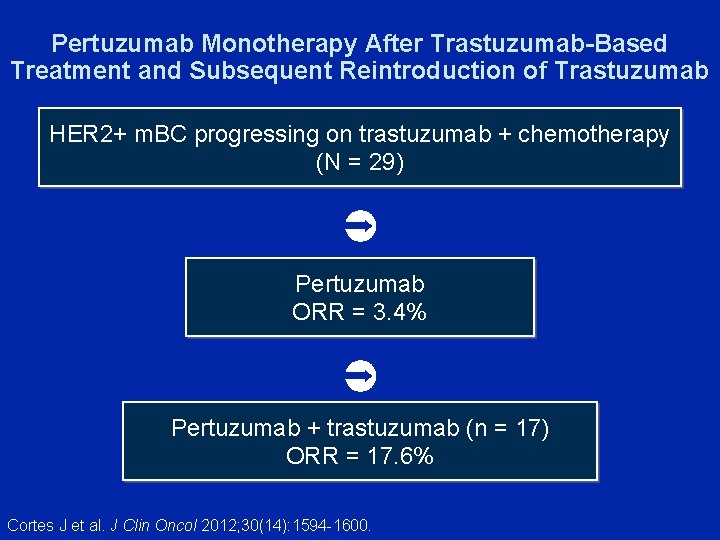
Pertuzumab Monotherapy After Trastuzumab-Based Treatment and Subsequent Reintroduction of Trastuzumab HER 2+ m. BC progressing on trastuzumab + chemotherapy (N = 29) Pertuzumab ORR = 3. 4% Pertuzumab + trastuzumab (n = 17) ORR = 17. 6% Cortes J et al. J Clin Oncol 2012; 30(14): 1594 -1600.
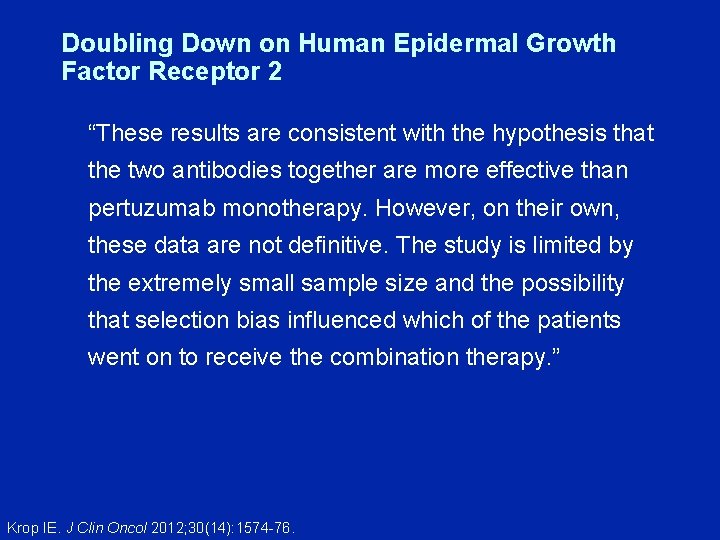
Doubling Down on Human Epidermal Growth Factor Receptor 2 “These results are consistent with the hypothesis that the two antibodies together are more effective than pertuzumab monotherapy. However, on their own, these data are not definitive. The study is limited by the extremely small sample size and the possibility that selection bias influenced which of the patients went on to receive the combination therapy. ” Krop IE. J Clin Oncol 2012; 30(14): 1574 -76.
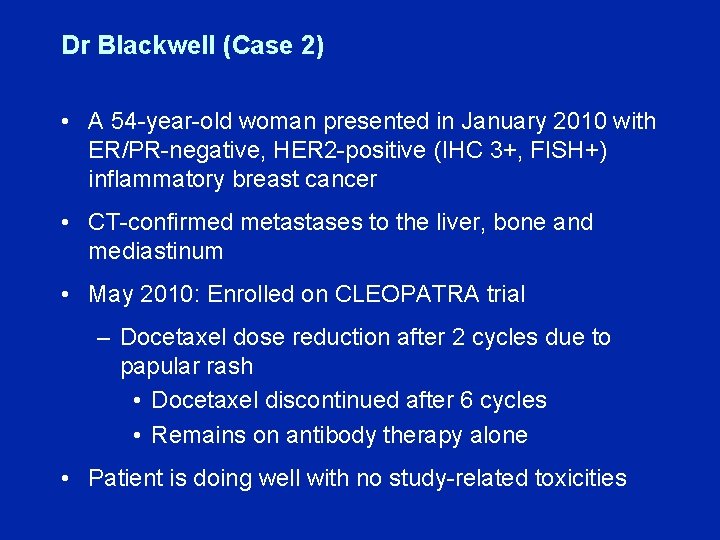
Dr Blackwell (Case 2) • A 54 -year-old woman presented in January 2010 with ER/PR-negative, HER 2 -positive (IHC 3+, FISH+) inflammatory breast cancer • CT-confirmed metastases to the liver, bone and mediastinum • May 2010: Enrolled on CLEOPATRA trial – Docetaxel dose reduction after 2 cycles due to papular rash • Docetaxel discontinued after 6 cycles • Remains on antibody therapy alone • Patient is doing well with no study-related toxicities
Are there currently patients in your practice who have received anti-HER 2 treatment for metastatic breast cancer for whom you would consider pertuzumab?



Consider the last patient in your practice who died of HER 2 -positive metastatic breast cancer. How many lines of systemic treatment did the patient receive?

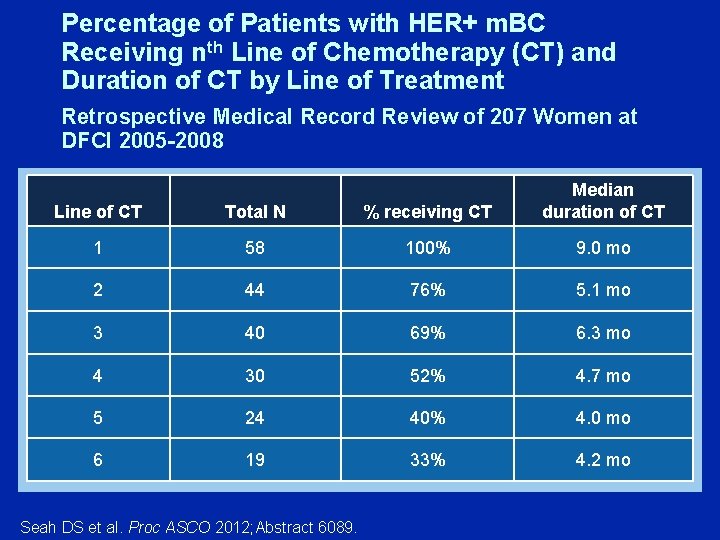
Percentage of Patients with HER+ m. BC Receiving nth Line of Chemotherapy (CT) and Duration of CT by Line of Treatment Retrospective Medical Record Review of 207 Women at DFCI 2005 -2008 Line of CT Total N % receiving CT Median duration of CT 1 58 100% 9. 0 mo 2 44 76% 5. 1 mo 3 40 69% 6. 3 mo 4 30 52% 4. 7 mo 5 24 40% 4. 0 mo 6 19 33% 4. 2 mo Seah DS et al. Proc ASCO 2012; Abstract 6089.
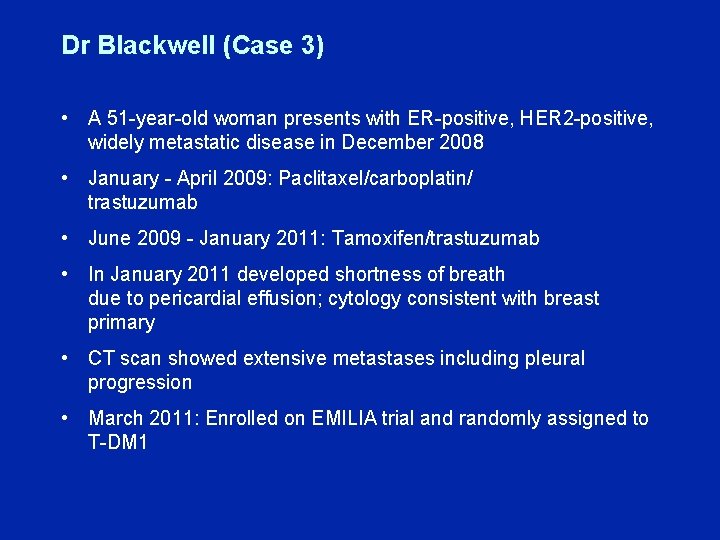
Dr Blackwell (Case 3) • A 51 -year-old woman presents with ER-positive, HER 2 -positive, widely metastatic disease in December 2008 • January - April 2009: Paclitaxel/carboplatin/ trastuzumab • June 2009 - January 2011: Tamoxifen/trastuzumab • In January 2011 developed shortness of breath due to pericardial effusion; cytology consistent with breast primary • CT scan showed extensive metastases including pleural progression • March 2011: Enrolled on EMILIA trial and randomly assigned to T-DM 1
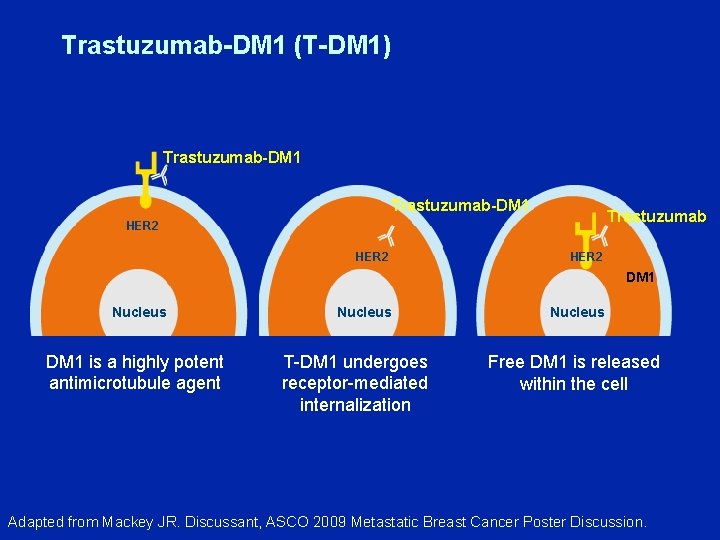
Trastuzumab-DM 1 (T-DM 1) Trastuzumab-DM 1 Trastuzumab HER 2 DM 1 Nucleus DM 1 is a highly potent antimicrotubule agent Nucleus T-DM 1 undergoes receptor-mediated internalization Nucleus Free DM 1 is released within the cell Adapted from Mackey JR. Discussant, ASCO 2009 Metastatic Breast Cancer Poster Discussion.
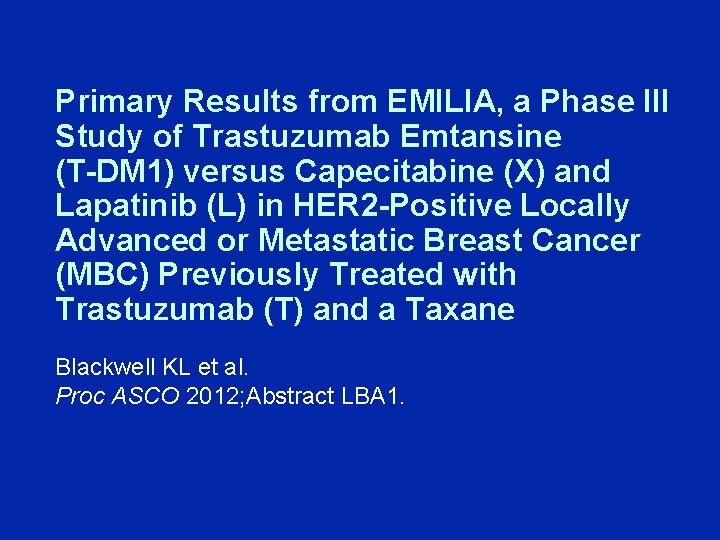
Primary Results from EMILIA, a Phase III Study of Trastuzumab Emtansine (T-DM 1) versus Capecitabine (X) and Lapatinib (L) in HER 2 -Positive Locally Advanced or Metastatic Breast Cancer (MBC) Previously Treated with Trastuzumab (T) and a Taxane Blackwell KL et al. Proc ASCO 2012; Abstract LBA 1.
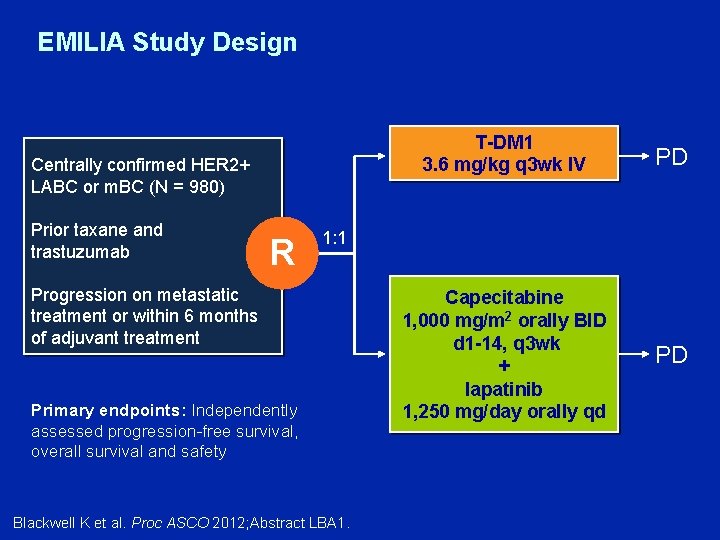
EMILIA Study Design Centrally confirmed HER 2+ LABC or m. BC (N = 980) Prior taxane and trastuzumab R T-DM 1 3. 6 mg/kg q 3 wk IV PD Capecitabine 1, 000 mg/m 2 orally BID d 1 -14, q 3 wk + lapatinib 1, 250 mg/day orally qd PD 1: 1 Progression on metastatic treatment or within 6 months of adjuvant treatment Primary endpoints: Independently assessed progression-free survival, overall survival and safety Blackwell K et al. Proc ASCO 2012; Abstract LBA 1.
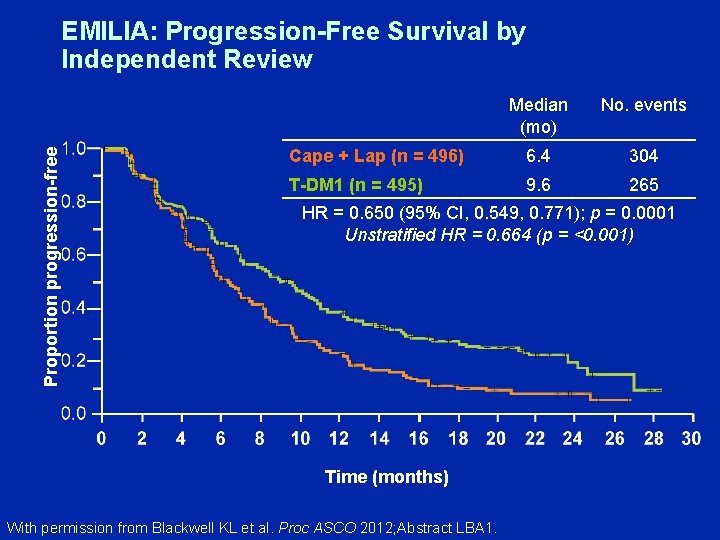
Proportion progression-free EMILIA: Progression-Free Survival by Independent Review Median (mo) No. events Cape + Lap (n = 496) 6. 4 304 T-DM 1 (n = 495) 9. 6 265 HR = 0. 650 (95% CI, 0. 549, 0. 771); p = 0. 0001 Unstratified HR = 0. 664 (p = <0. 001) Time (months) With permission from Blackwell KL et al. Proc ASCO 2012; Abstract LBA 1.
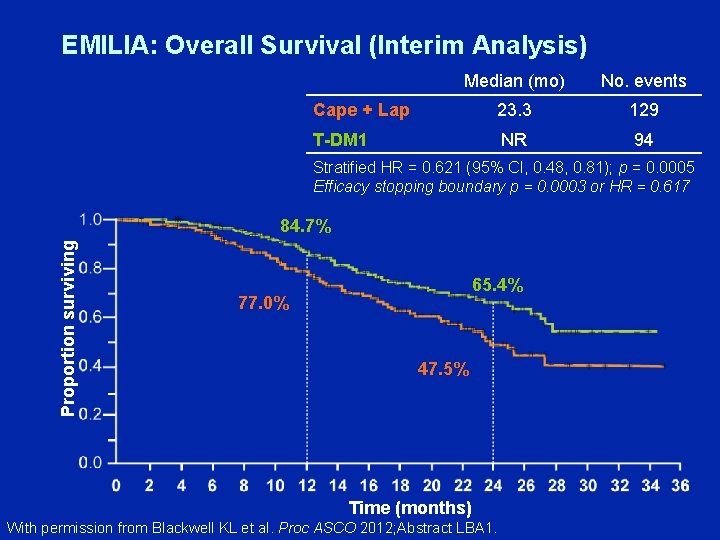
EMILIA: Overall Survival (Interim Analysis) Median (mo) No. events Cape + Lap 23. 3 129 T-DM 1 NR 94 Stratified HR = 0. 621 (95% CI, 0. 48, 0. 81); p = 0. 0005 Efficacy stopping boundary p = 0. 0003 or HR = 0. 617 Proportion surviving 84. 7% 65. 4% 77. 0% 47. 5% Time (months) With permission from Blackwell KL et al. Proc ASCO 2012; Abstract LBA 1.
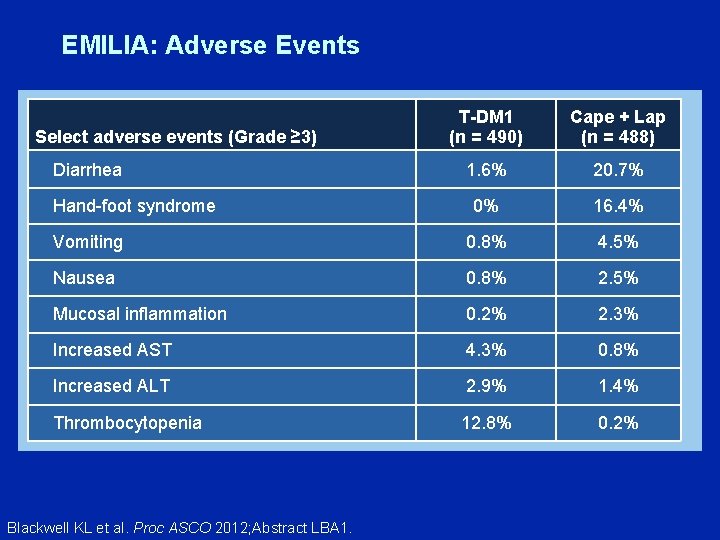
EMILIA: Adverse Events T-DM 1 (n = 490) Cape + Lap (n = 488) 1. 6% 20. 7% 0% 16. 4% Vomiting 0. 8% 4. 5% Nausea 0. 8% 2. 5% Mucosal inflammation 0. 2% 2. 3% Increased AST 4. 3% 0. 8% Increased ALT 2. 9% 1. 4% Thrombocytopenia 12. 8% 0. 2% Select adverse events (Grade ≥ 3) Diarrhea Hand-foot syndrome Blackwell KL et al. Proc ASCO 2012; Abstract LBA 1.
MARIANNE: A Phase III, Randomized Study of Trastuzumab-DM 1 (T-DM 1) with or without Pertuzumab (P) Compared with Trastuzumab (H) plus Taxane for First-Line Treatment of HER 2 -Positive, Progressive, or Recurrent Locally Advanced or Metastatic Breast Cancer (MBC) Ellis PA et al. Proc ASCO 2011; Abstract TPS 102.
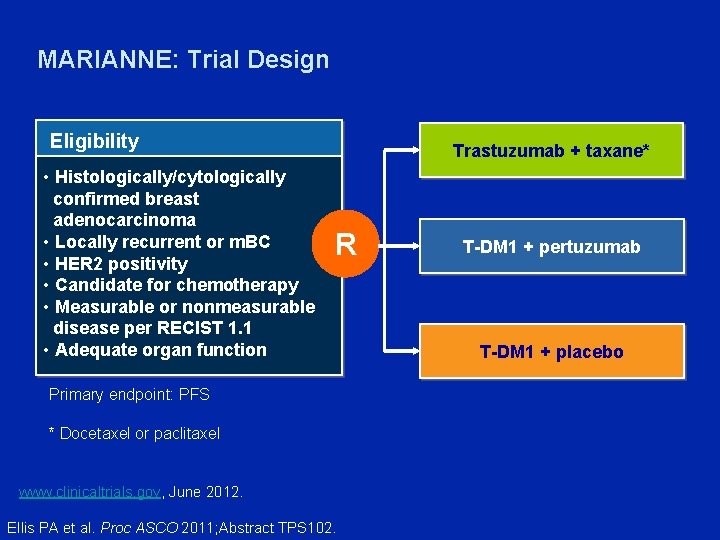
MARIANNE: Trial Design Eligibility • Histologically/cytologically confirmed breast adenocarcinoma • Locally recurrent or m. BC • HER 2 positivity • Candidate for chemotherapy • Measurable or nonmeasurable disease per RECIST 1. 1 • Adequate organ function Trastuzumab + taxane* R Primary endpoint: PFS * Docetaxel or paclitaxel www. clinicaltrials. gov, June 2012. Ellis PA et al. Proc ASCO 2011; Abstract TPS 102. T-DM 1 + pertuzumab T-DM 1 + placebo
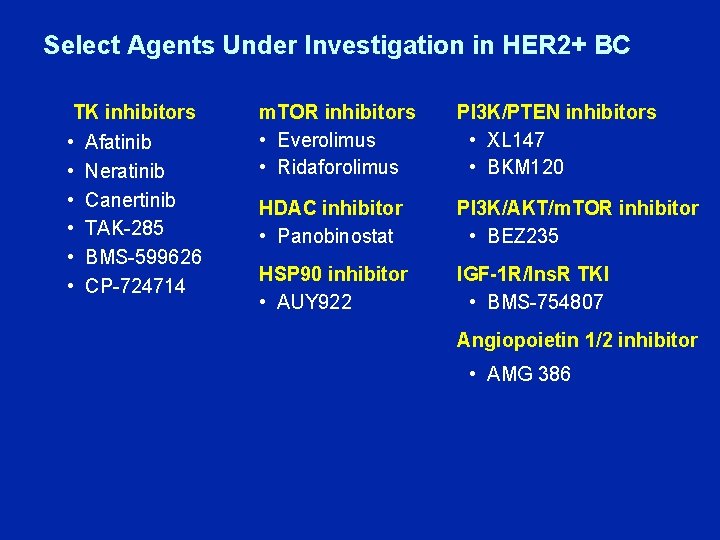
Select Agents Under Investigation in HER 2+ BC TK inhibitors • • • Afatinib Neratinib Canertinib TAK-285 BMS-599626 CP-724714 m. TOR inhibitors • Everolimus • Ridaforolimus PI 3 K/PTEN inhibitors • XL 147 • BKM 120 HDAC inhibitor • Panobinostat PI 3 K/AKT/m. TOR inhibitor • BEZ 235 HSP 90 inhibitor • AUY 922 IGF-1 R/Ins. R TKI • BMS-754807 Angiopoietin 1/2 inhibitor • AMG 386
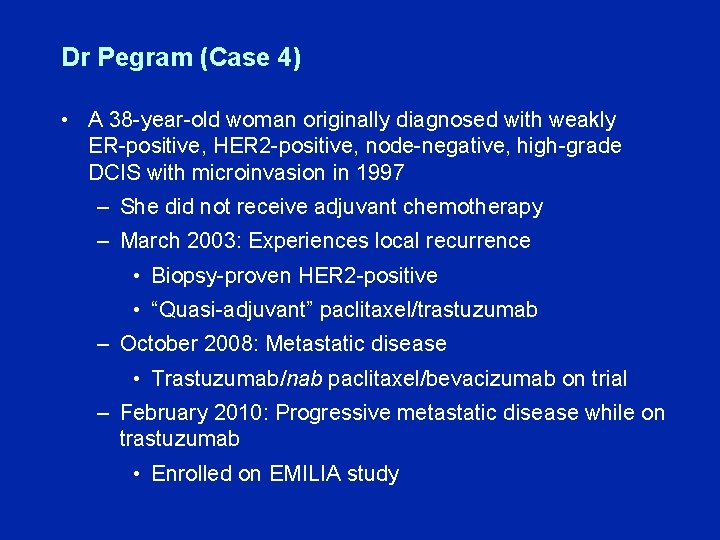
Dr Pegram (Case 4) • A 38 -year-old woman originally diagnosed with weakly ER-positive, HER 2 -positive, node-negative, high-grade DCIS with microinvasion in 1997 – She did not receive adjuvant chemotherapy – March 2003: Experiences local recurrence • Biopsy-proven HER 2 -positive • “Quasi-adjuvant” paclitaxel/trastuzumab – October 2008: Metastatic disease • Trastuzumab/nab paclitaxel/bevacizumab on trial – February 2010: Progressive metastatic disease while on trastuzumab • Enrolled on EMILIA study

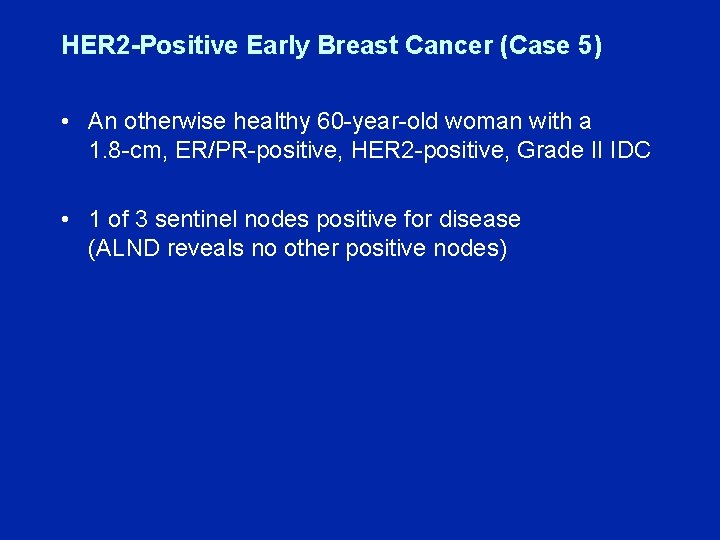
HER 2 -Positive Early Breast Cancer (Case 5) • An otherwise healthy 60 -year-old woman with a 1. 8 -cm, ER/PR-positive, HER 2 -positive, Grade II IDC • 1 of 3 sentinel nodes positive for disease (ALND reveals no other positive nodes)

Which treatment would you likely recommend for this patient in addition to hormonal therapy?
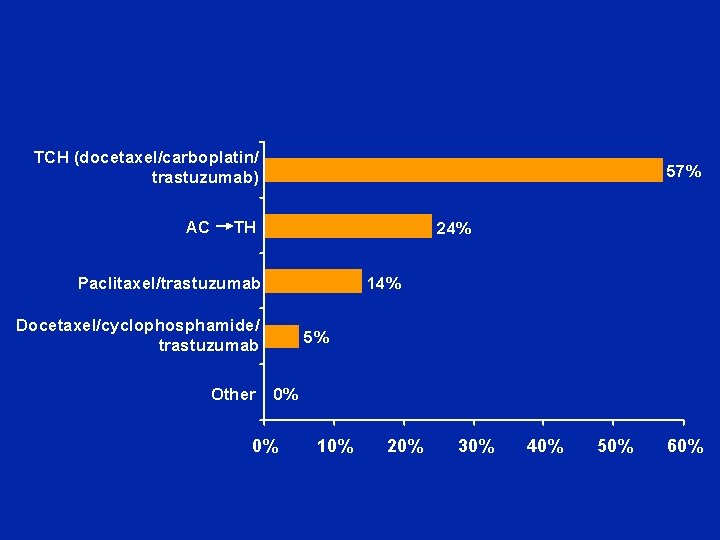
TCH (docetaxel/carboplatin/ trastuzumab) AC 57% TH 24% Paclitaxel/trastuzumab 14% Docetaxel/cyclophosphamide/ trastuzumab Other 5% 0% 0% 10% 20% 30% 40% 50% 60%
Adjuvant Trastuzumab in HER 2 -Positive Breast Cancer Slamon D et al. N Engl J Med 2011; 365(14): 1273 -83.
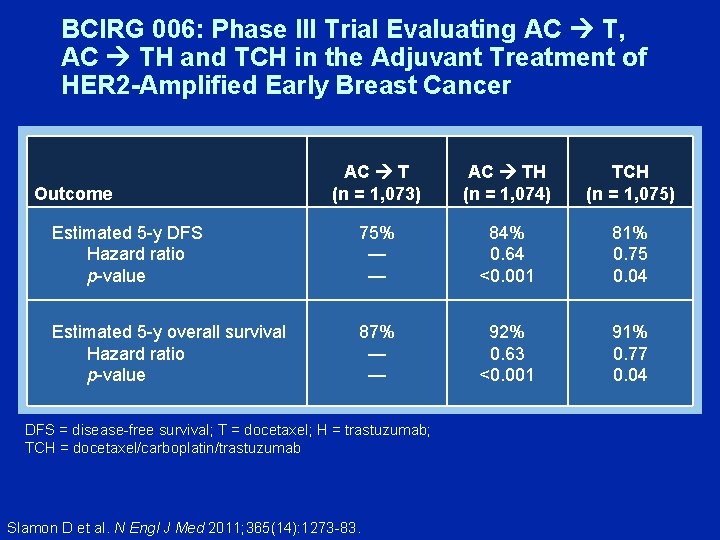
BCIRG 006: Phase III Trial Evaluating AC T, AC TH and TCH in the Adjuvant Treatment of HER 2 -Amplified Early Breast Cancer AC T (n = 1, 073) AC TH (n = 1, 074) TCH (n = 1, 075) Estimated 5 -y DFS Hazard ratio p-value 75% — — 84% 0. 64 <0. 001 81% 0. 75 0. 04 Estimated 5 -y overall survival Hazard ratio p-value 87% — — 92% 0. 63 <0. 001 91% 0. 77 0. 04 Outcome DFS = disease-free survival; T = docetaxel; H = trastuzumab; TCH = docetaxel/carboplatin/trastuzumab Slamon D et al. N Engl J Med 2011; 365(14): 1273 -83.
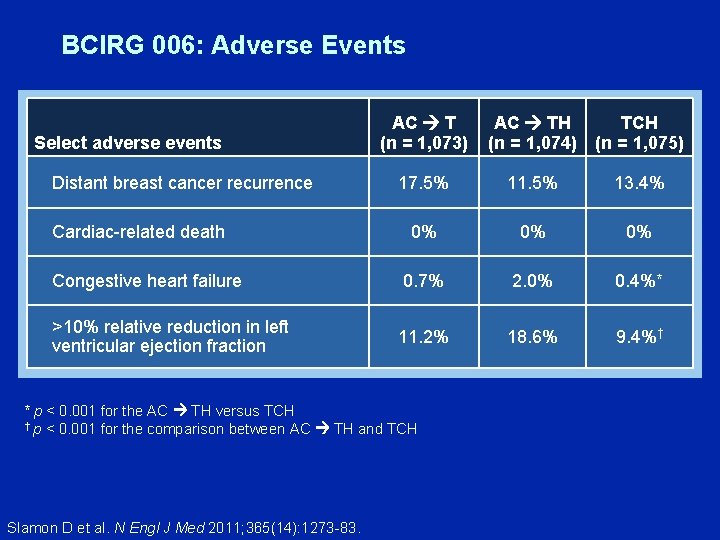
BCIRG 006: Adverse Events AC T (n = 1, 073) AC TH (n = 1, 074) TCH (n = 1, 075) 17. 5% 11. 5% 13. 4% 0% 0% 0% Congestive heart failure 0. 7% 2. 0% 0. 4%* >10% relative reduction in left ventricular ejection fraction 11. 2% 18. 6% 9. 4%† Select adverse events Distant breast cancer recurrence Cardiac-related death * p < 0. 001 for the AC TH versus TCH † p < 0. 001 for the comparison between AC TH and TCH Slamon D et al. N Engl J Med 2011; 365(14): 1273 -83.
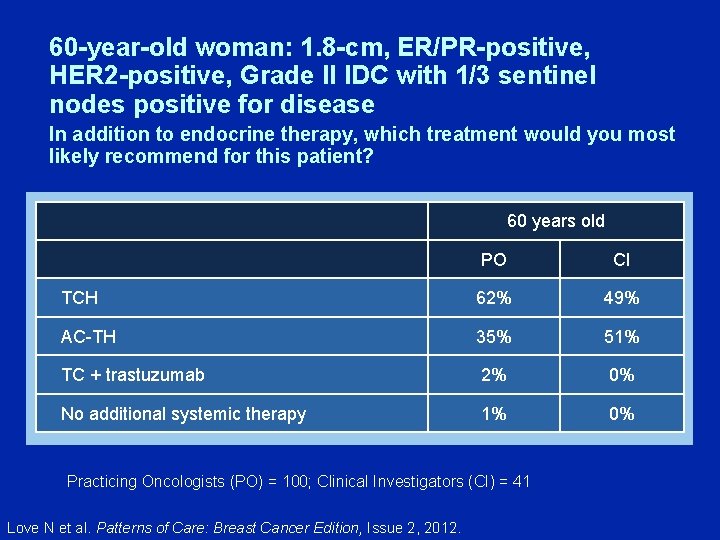
60 -year-old woman: 1. 8 -cm, ER/PR-positive, HER 2 -positive, Grade II IDC with 1/3 sentinel nodes positive for disease In addition to endocrine therapy, which treatment would you most likely recommend for this patient? 60 years old PO CI TCH 62% 49% AC-TH 35% 51% TC + trastuzumab 2% 0% No additional systemic therapy 1% 0% Practicing Oncologists (PO) = 100; Clinical Investigators (CI) = 41 Love N et al. Patterns of Care: Breast Cancer Edition, Issue 2, 2012.
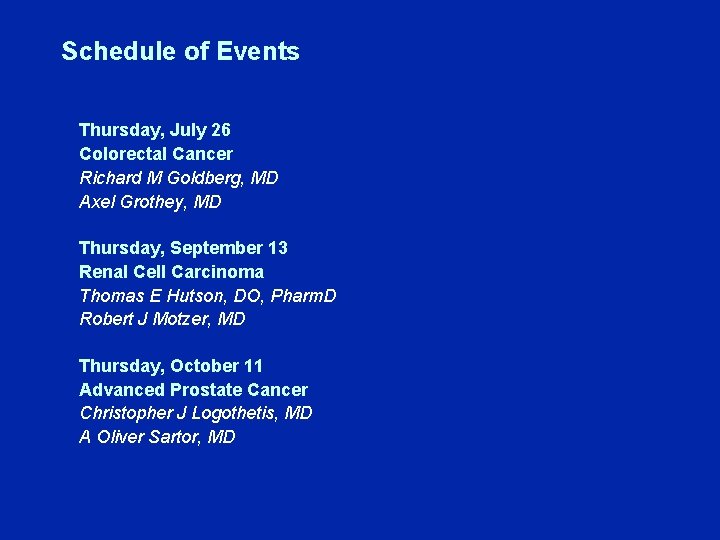
Schedule of Events Thursday, July 26 Colorectal Cancer Richard M Goldberg, MD Axel Grothey, MD Thursday, September 13 Renal Cell Carcinoma Thomas E Hutson, DO, Pharm. D Robert J Motzer, MD Thursday, October 11 Advanced Prostate Cancer Christopher J Logothetis, MD A Oliver Sartor, MD
- Slides: 53