
RSF 1 COMMUNITY PLANNING AND CAPACITY BUILDING 2016
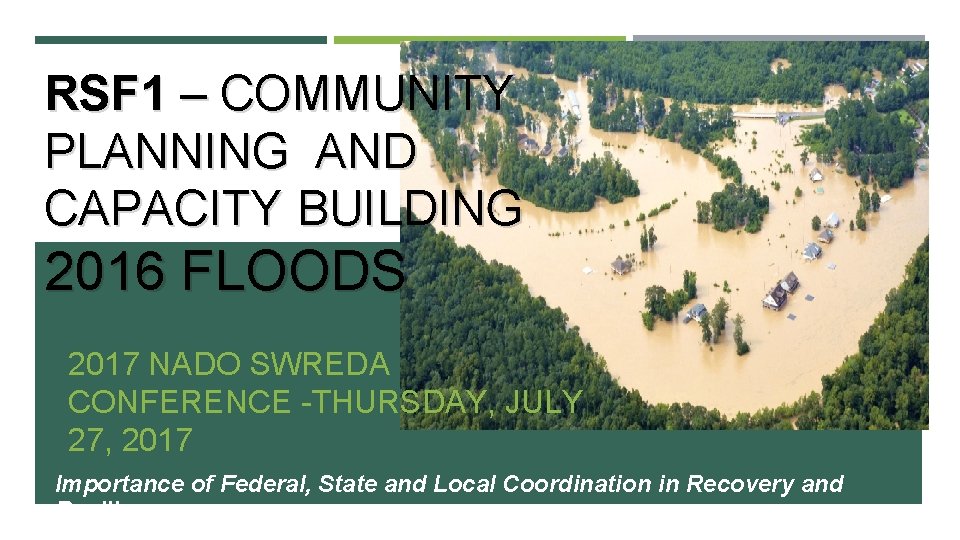
RSF 1 – COMMUNITY PLANNING AND CAPACITY BUILDING 2016 FLOODS 2017 NADO SWREDA CONFERENCE -THURSDAY, JULY 27, 2017 Importance of Federal, State and Local Coordination in Recovery and Resilience
COMMUNITY PLANNING AND CAPACITY BUILDING (CPCB)/RSF 1

RECOVERY CONTINUUM
JOINT COLLABORATION AND PARTNERSHIP v. We have a unique opportunity to work collectively to build capacity and buy down some future risk(s) before the next disaster. v. Use the 2016 flooding events as the basis for building and codifying partnerships to address the extended recovery needs. v. Identify issues that are cross-cutting, because what effects one area/sector will effect others – i. e. Drainage, Housing issues, Data and GIS needs, Funding and Resources, Training and Technical Assistance needs

NATIONAL DISASTER RECOVERY FRAMEWORK The National Disaster Recovery Framework (NDRF) enables effective recovery support to disaster-impacted States and Tribes through a unified and collaborative process. The focus is on how best to restore, redevelop and revitalize the health, social, economic, natural and environmental fabric of the impacted areas and to build resilience. Support from numerous Federal Agencies, Professional Organizations, Non-profits, etc.
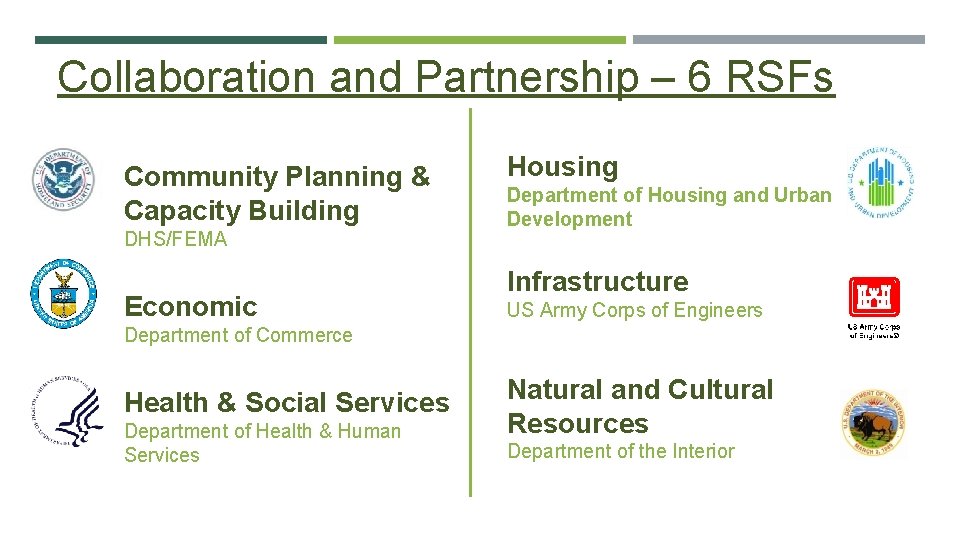
Collaboration and Partnership – 6 RSFs Community Planning & Capacity Building DHS/FEMA Economic Housing Department of Housing and Urban Development Infrastructure US Army Corps of Engineers Department of Commerce Health & Social Services Department of Health & Human Services Natural and Cultural Resources Department of the Interior
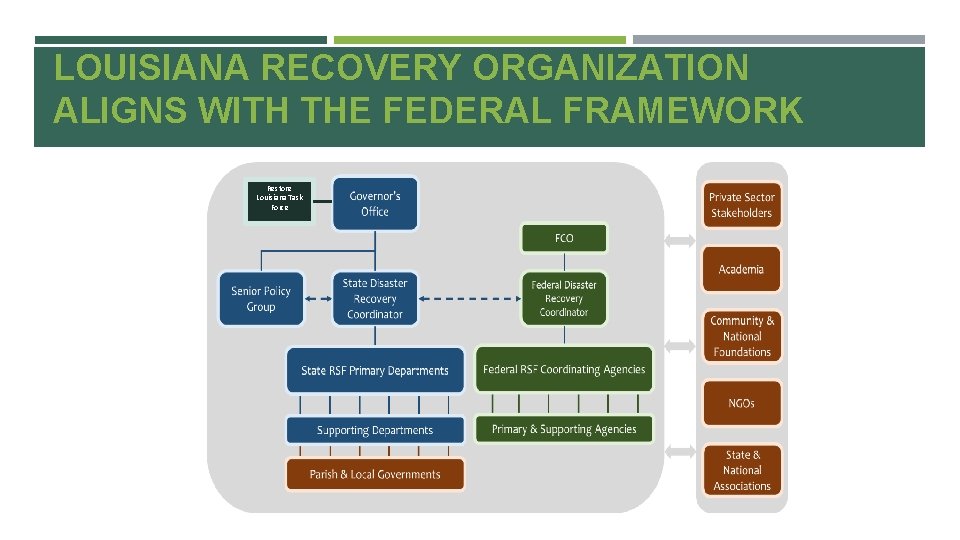
LOUISIANA RECOVERY ORGANIZATION ALIGNS WITH THE FEDERAL FRAMEWORK Restore Louisiana Task Force
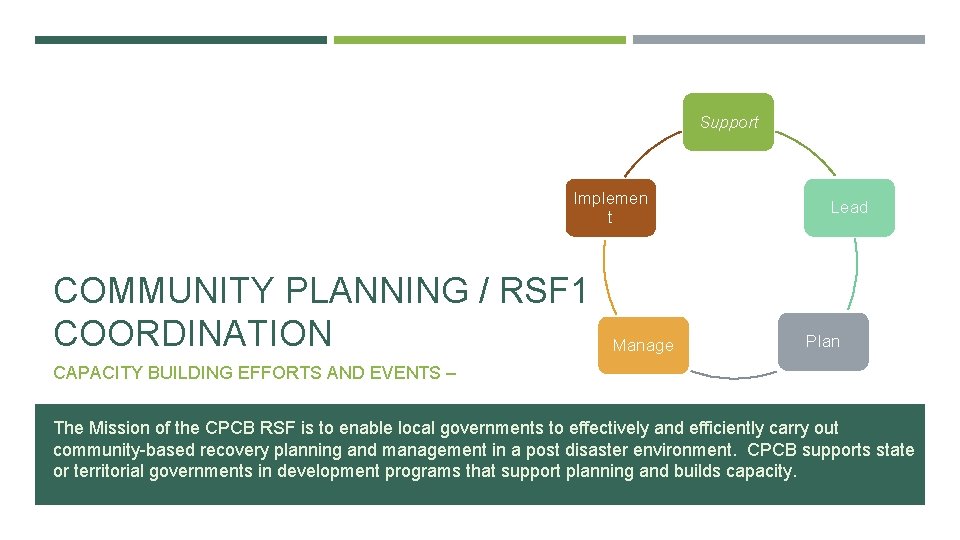
Support Implemen t COMMUNITY PLANNING / RSF 1 COORDINATION Manage Lead Plan CAPACITY BUILDING EFFORTS AND EVENTS – The Mission of the CPCB RSF is to enable local governments to effectively and efficiently carry out community-based recovery planning and management in a post disaster environment. CPCB supports state or territorial governments in development programs that support planning and builds capacity.
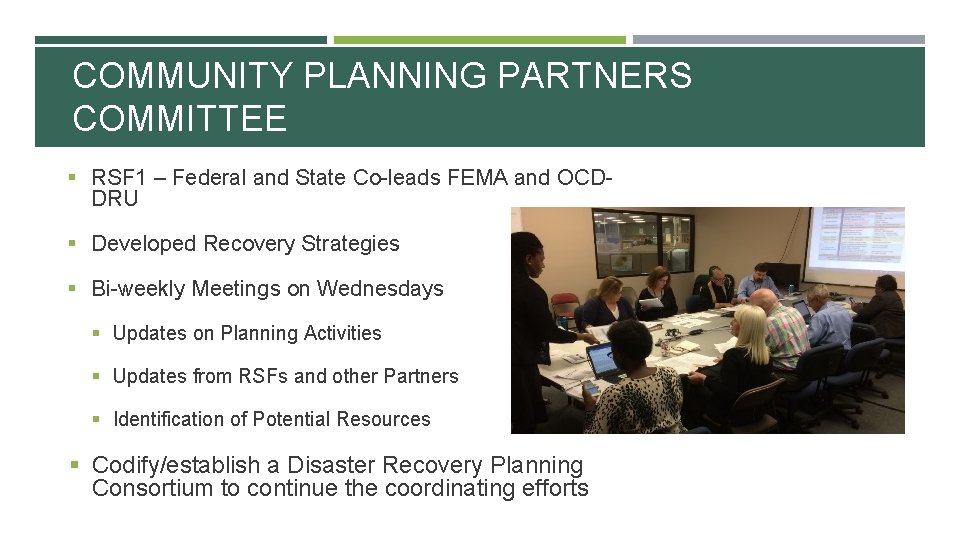
COMMUNITY PLANNING PARTNERS COMMITTEE § RSF 1 – Federal and State Co-leads FEMA and OCD- DRU § Developed Recovery Strategies § Bi-weekly Meetings on Wednesdays § Updates on Planning Activities § Updates from RSFs and other Partners § Identification of Potential Resources § Codify/establish a Disaster Recovery Planning Consortium to continue the coordinating efforts
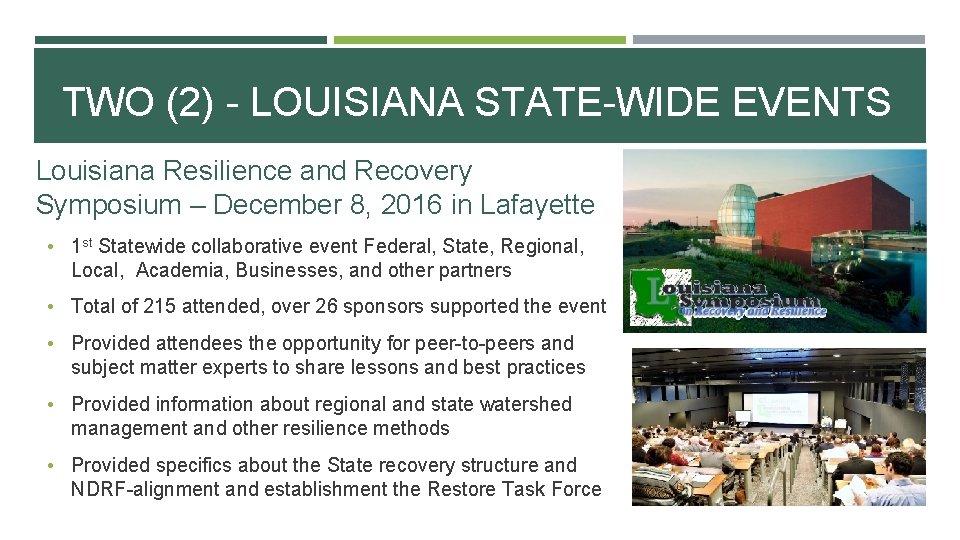
TWO (2) - LOUISIANA STATE-WIDE EVENTS Louisiana Resilience and Recovery Symposium – December 8, 2016 in Lafayette • 1 st Statewide collaborative event Federal, State, Regional, Local, Academia, Businesses, and other partners • Total of 215 attended, over 26 sponsors supported the event • Provided attendees the opportunity for peer-to-peers and subject matter experts to share lessons and best practices • Provided information about regional and state watershed management and other resilience methods • Provided specifics about the State recovery structure and NDRF-alignment and establishment the Restore Task Force
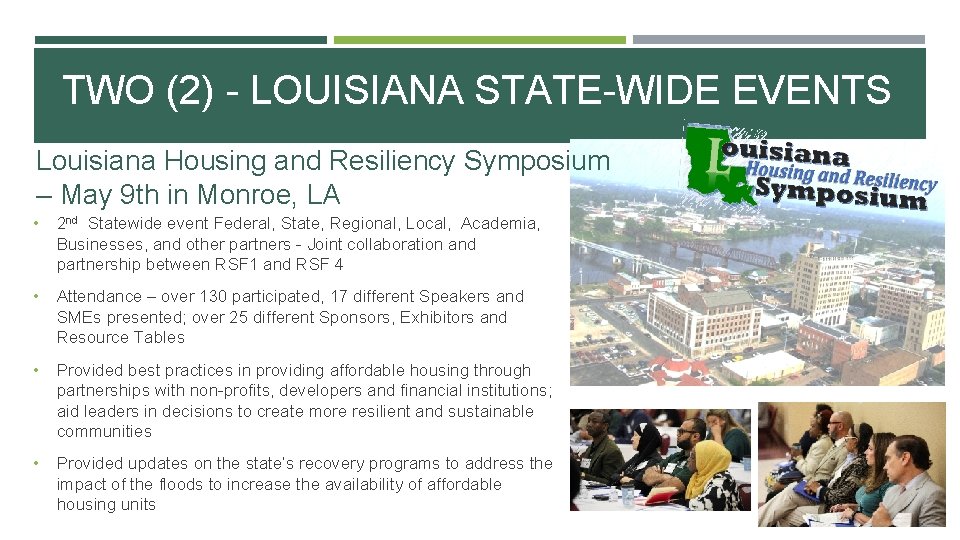
TWO (2) - LOUISIANA STATE-WIDE EVENTS Louisiana Housing and Resiliency Symposium – May 9 th in Monroe, LA • 2 nd Statewide event Federal, State, Regional, Local, Academia, Businesses, and other partners - Joint collaboration and partnership between RSF 1 and RSF 4 • Attendance – over 130 participated, 17 different Speakers and SMEs presented; over 25 different Sponsors, Exhibitors and Resource Tables • Provided best practices in providing affordable housing through partnerships with non-profits, developers and financial institutions; aid leaders in decisions to create more resilient and sustainable communities • Provided updates on the state’s recovery programs to address the impact of the floods to increase the availability of affordable housing units
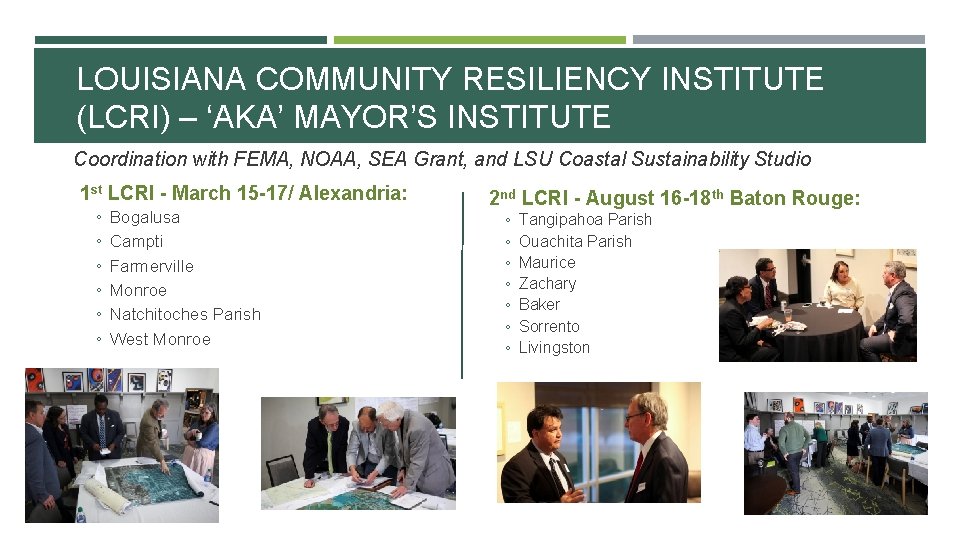
LOUISIANA COMMUNITY RESILIENCY INSTITUTE (LCRI) – ‘AKA’ MAYOR’S INSTITUTE Coordination with FEMA, NOAA, SEA Grant, and LSU Coastal Sustainability Studio 1 st LCRI - March 15 -17/ Alexandria: ◦ ◦ ◦ Bogalusa Campti Farmerville Monroe Natchitoches Parish West Monroe 2 nd LCRI - August 16 -18 th Baton Rouge: ◦ ◦ ◦ ◦ Tangipahoa Parish Ouachita Parish Maurice Zachary Baker Sorrento Livingston
DIRECT PLANNING TECHNICAL ASSISTANCE Participated in joint Outreach Meetings and Listening Sessions in heavily impacted communities: § § § § § Livingston Parish Tangipahoa Parish Denham Springs St. Tammany Parish Ascension Parish Youngsville Maurice Ouachita Parish Caddo and Bossier Parishes East Baton Rough Parish Direct Community Planning Technical Assistance – FEMA-Lead Team Assigned to: § Denham Springs § City of Baker § Tangipahoa Parish Limited Target Technical Assistance an ongoing process § Livingston Parish – Recovery Project Strategy and GIS & Data support § East Baton Rouge Parish – Coordination and Targeted Assistance § City of Central – Data Support and Coordination with ongoing efforts § Northern Parishes and Communities – Coordination & Support
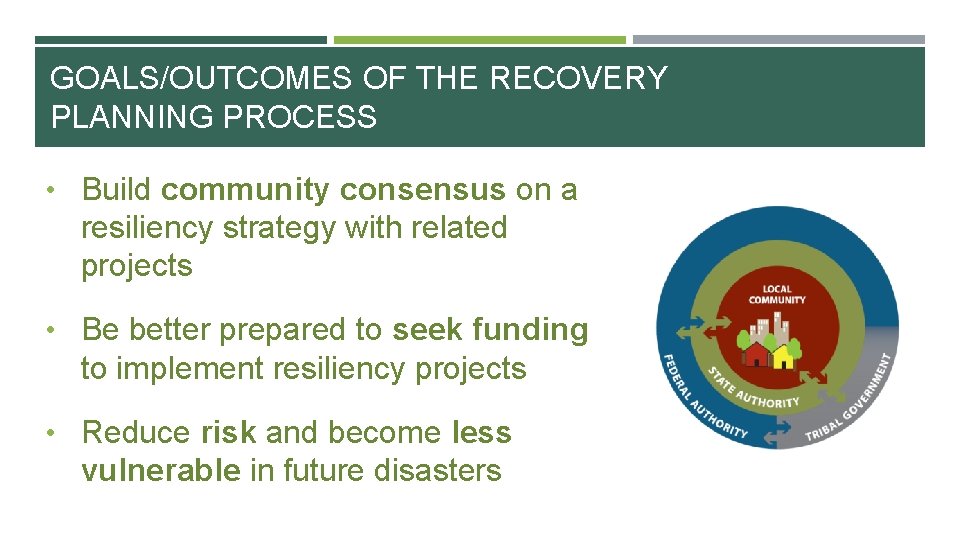
GOALS/OUTCOMES OF THE RECOVERY PLANNING PROCESS • Build community consensus on a resiliency strategy with related projects • Be better prepared to seek funding to implement resiliency projects • Reduce risk and become less vulnerable in future disasters
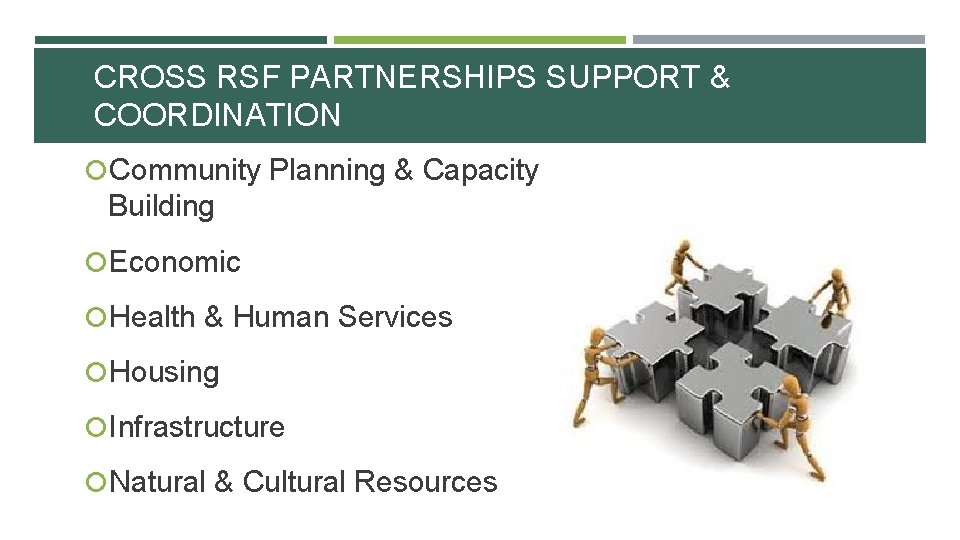
CROSS RSF PARTNERSHIPS SUPPORT & COORDINATION Community Planning & Capacity Building Economic Health & Human Services Housing Infrastructure Natural & Cultural Resources
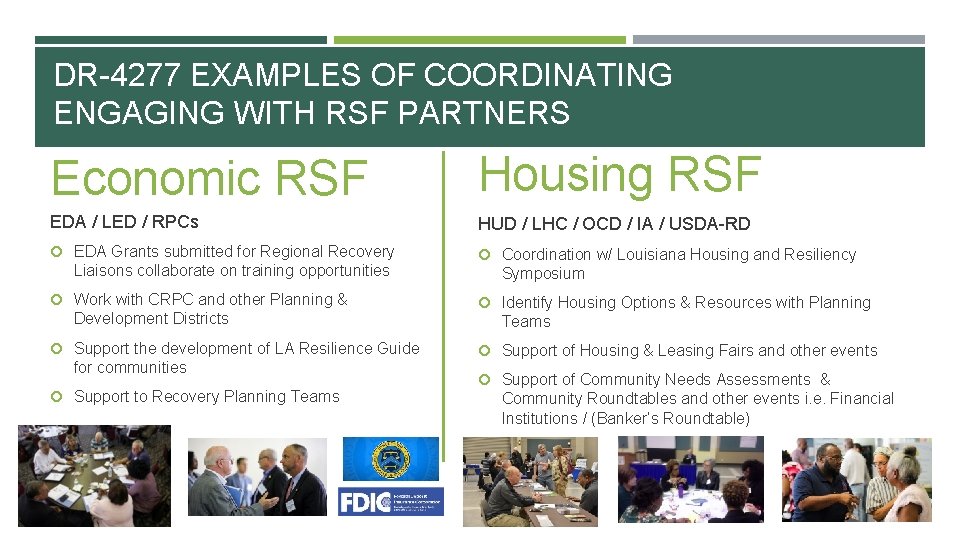
DR-4277 EXAMPLES OF COORDINATING ENGAGING WITH RSF PARTNERS Economic RSF Housing RSF EDA / LED / RPCs HUD / LHC / OCD / IA / USDA-RD EDA Grants submitted for Regional Recovery Coordination w/ Louisiana Housing and Resiliency Liaisons collaborate on training opportunities Work with CRPC and other Planning & Development Districts Support the development of LA Resilience Guide for communities Support to Recovery Planning Teams Symposium Identify Housing Options & Resources with Planning Teams Support of Housing & Leasing Fairs and other events Support of Community Needs Assessments & Community Roundtables and other events i. e. Financial Institutions / (Banker’s Roundtable)
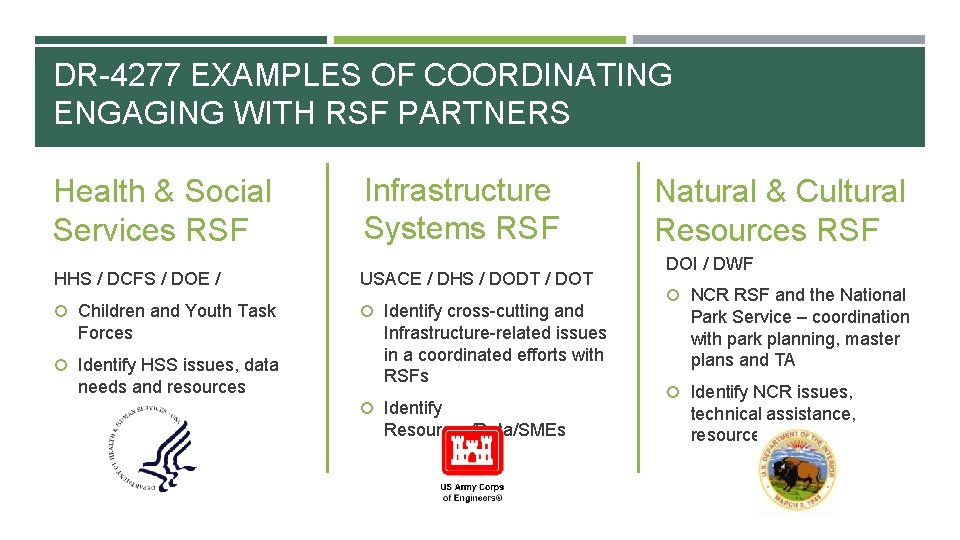
DR-4277 EXAMPLES OF COORDINATING ENGAGING WITH RSF PARTNERS Health & Social Services RSF Infrastructure Systems RSF HHS / DCFS / DOE / USACE / DHS / DODT / DOT Children and Youth Task Identify cross-cutting and Forces Identify HSS issues, data needs and resources Infrastructure-related issues in a coordinated efforts with RSFs Identify Resources/Data/SMEs Natural & Cultural Resources RSF DOI / DWF NCR RSF and the National Park Service – coordination with park planning, master plans and TA Identify NCR issues, technical assistance, resources.
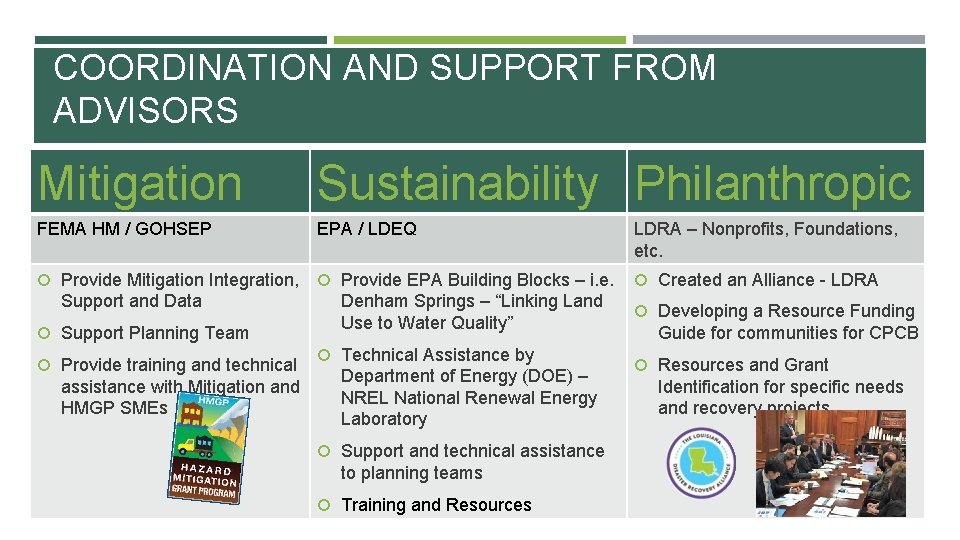
COORDINATION AND SUPPORT FROM ADVISORS Mitigation Sustainability Philanthropic FEMA HM / GOHSEP EPA / LDEQ LDRA – Nonprofits, Foundations, etc. Provide Mitigation Integration, Provide EPA Building Blocks – i. e. Created an Alliance - LDRA Support and Data Support Planning Team Provide training and technical assistance with Mitigation and HMGP SMEs Denham Springs – “Linking Land Use to Water Quality” Technical Assistance by Department of Energy (DOE) – NREL National Renewal Energy Laboratory Support and technical assistance to planning teams Training and Resources Developing a Resource Funding Guide for communities for CPCB Resources and Grant Identification for specific needs and recovery projects
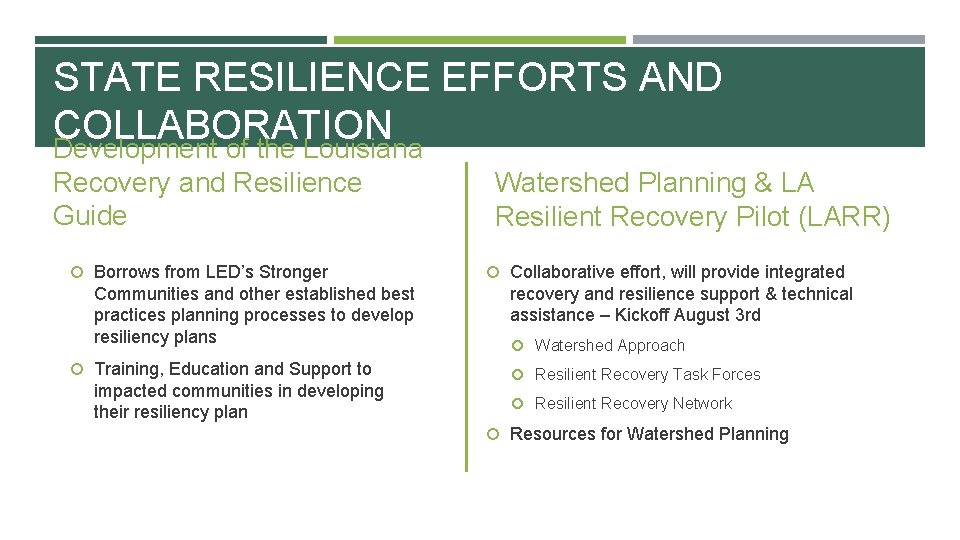
STATE RESILIENCE EFFORTS AND COLLABORATION Development of the Louisiana Recovery and Resilience Guide Borrows from LED’s Stronger Communities and other established best practices planning processes to develop resiliency plans Training, Education and Support to impacted communities in developing their resiliency plan Watershed Planning & LA Resilient Recovery Pilot (LARR) Collaborative effort, will provide integrated recovery and resilience support & technical assistance – Kickoff August 3 rd Watershed Approach Resilient Recovery Task Forces Resilient Recovery Network Resources for Watershed Planning
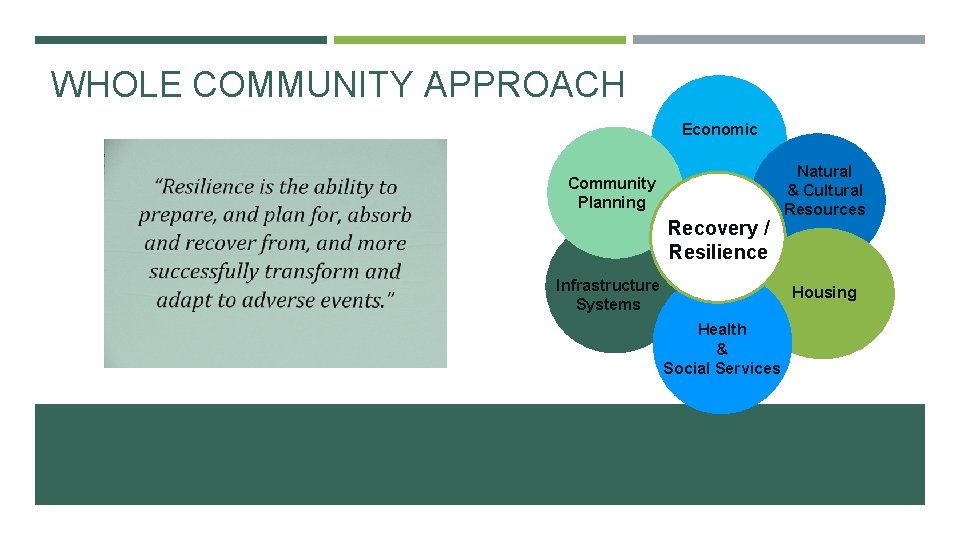
WHOLE COMMUNITY APPROACH Economic Community Planning Recovery / Resilience Infrastructure Systems Natural & Cultural Resources Housing Health & Social Services

QUESTIONS? ? ?
- Slides: 21