
RRT in pediatric Heart Surgery Specific indications 1




- Slides: 38
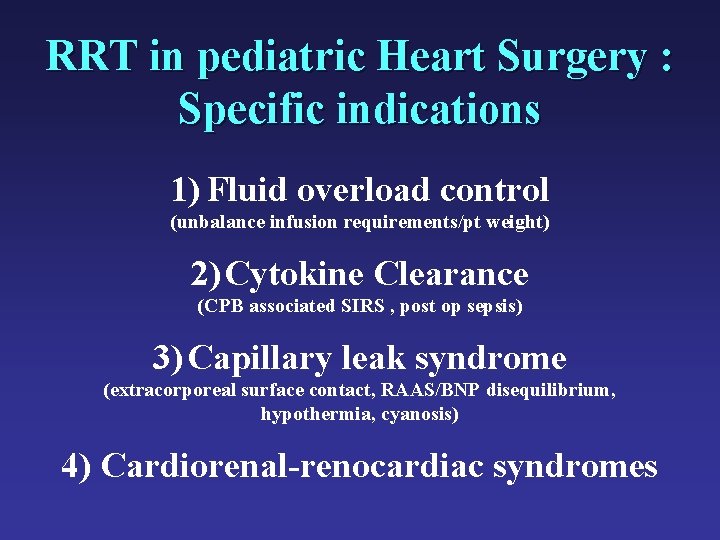
RRT in pediatric Heart Surgery : Specific indications 1) Fluid overload control (unbalance infusion requirements/pt weight) 2) Cytokine Clearance (CPB associated SIRS , post op sepsis) 3) Capillary leak syndrome (extracorporeal surface contact, RAAS/BNP disequilibrium, hypothermia, cyanosis) 4) Cardiorenal-renocardiac syndromes
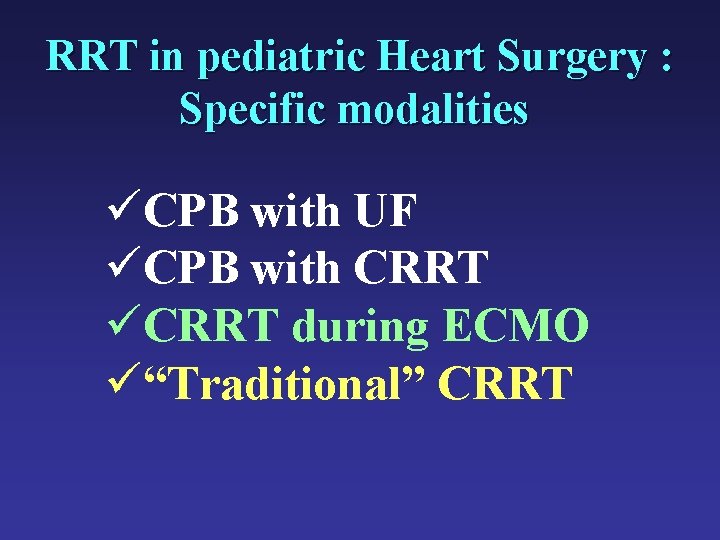
RRT in pediatric Heart Surgery : Specific modalities üCPB with UF üCPB with CRRT üCRRT during ECMO ü“Traditional” CRRT
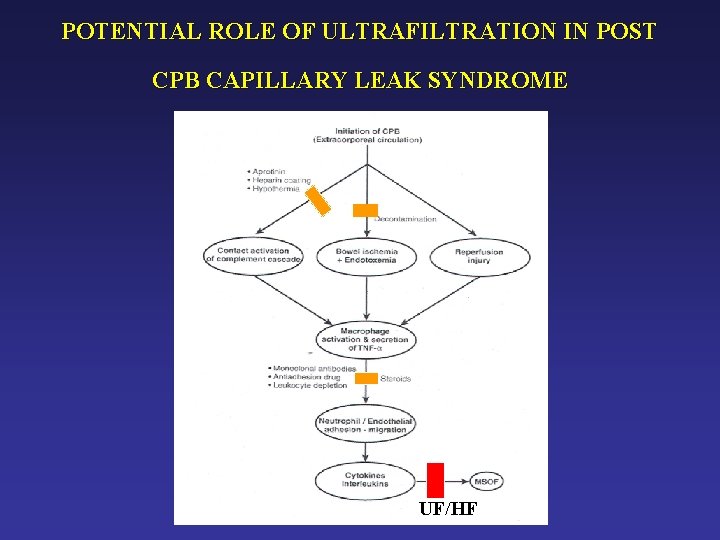
POTENTIAL ROLE OF ULTRAFILTRATION IN POST CPB CAPILLARY LEAK SYNDROME UF/HF
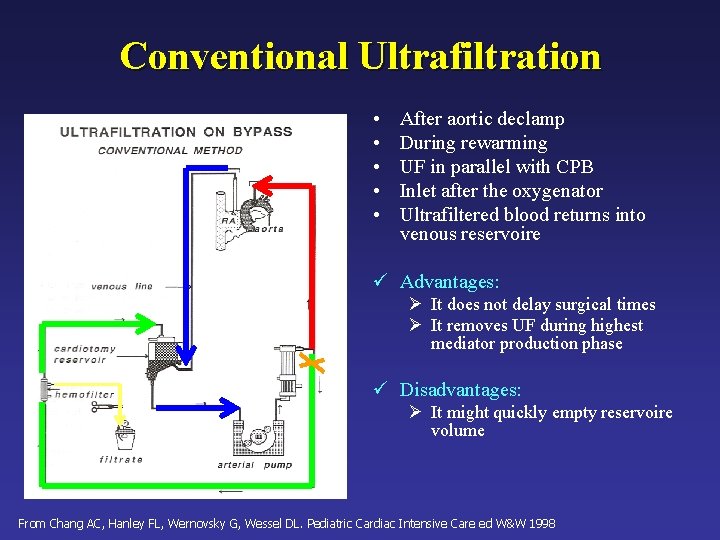
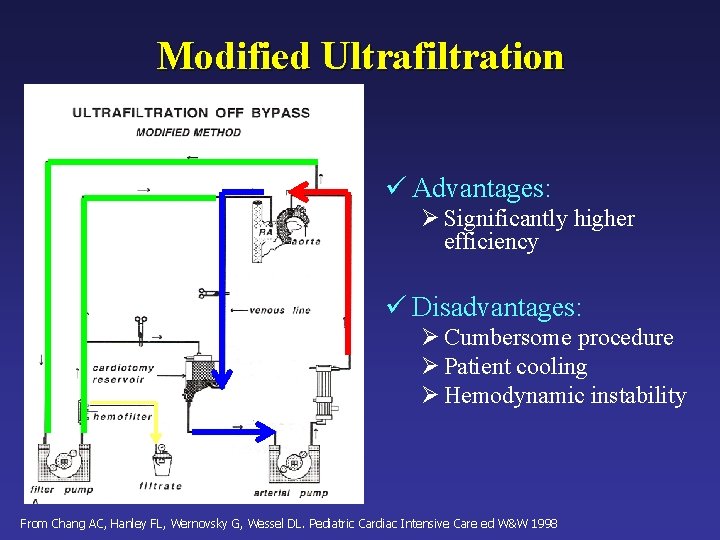
ULTRAFILTRATION During CPB NOMENCLATURE • Conventional Ultrafiltration • Modified Ultrafiltration • High Volume Zero Balanced UF
Conventional Ultrafiltration • • • After aortic declamp During rewarming UF in parallel with CPB Inlet after the oxygenator Ultrafiltered blood returns into venous reservoire ü Advantages: Ø It does not delay surgical times Ø It removes UF during highest mediator production phase ü Disadvantages: Ø It might quickly empty reservoire volume From Chang AC, Hanley FL, Wernovsky G, Wessel DL. Pediatric Cardiac Intensive Care ed W&W 1998
Modified Ultrafiltration ü Advantages: Ø Significantly higher efficiency ü Disadvantages: Ø Cumbersome procedure Ø Patient cooling Ø Hemodynamic instability From Chang AC, Hanley FL, Wernovsky G, Wessel DL. Pediatric Cardiac Intensive Care ed W&W 1998
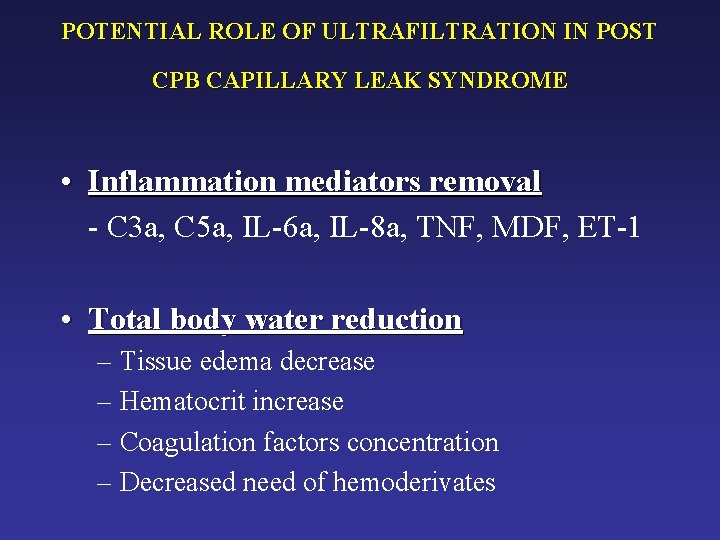
POTENTIAL ROLE OF ULTRAFILTRATION IN POST CPB CAPILLARY LEAK SYNDROME • Inflammation mediators removal - C 3 a, C 5 a, IL-6 a, IL-8 a, TNF, MDF, ET-1 • Total body water reduction – Tissue edema decrease – Hematocrit increase – Coagulation factors concentration – Decreased need of hemoderivates
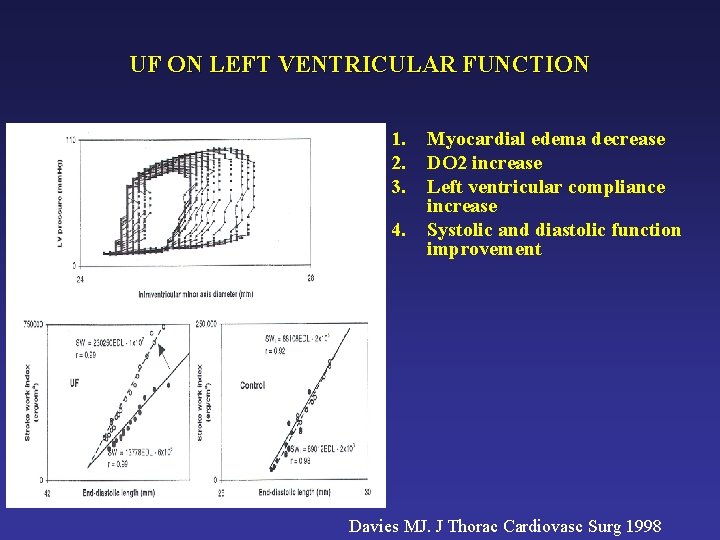
UF ON LEFT VENTRICULAR FUNCTION 1. 2. 3. 4. Myocardial edema decrease DO 2 increase Left ventricular compliance increase Systolic and diastolic function improvement Davies MJ. J Thorac Cardiovasc Surg 1998
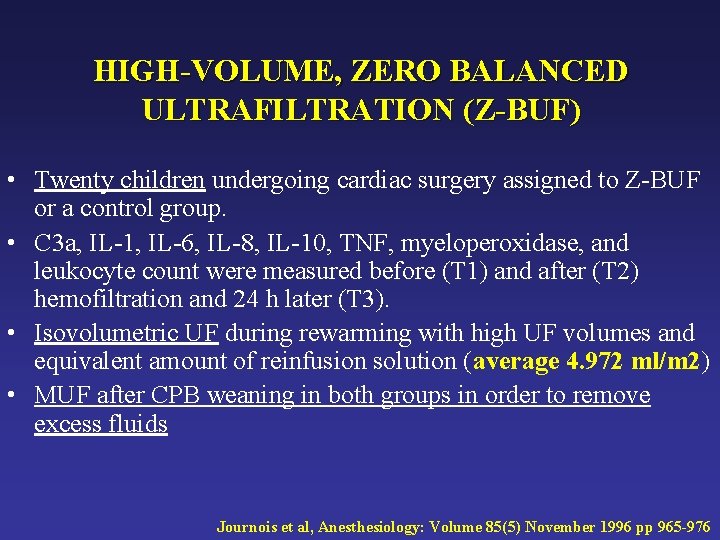
HIGH-VOLUME, ZERO BALANCED ULTRAFILTRATION (Z-BUF) • Twenty children undergoing cardiac surgery assigned to Z-BUF or a control group. • C 3 a, IL-1, IL-6, IL-8, IL-10, TNF, myeloperoxidase, and leukocyte count were measured before (T 1) and after (T 2) hemofiltration and 24 h later (T 3). • Isovolumetric UF during rewarming with high UF volumes and equivalent amount of reinfusion solution (average 4. 972 ml/m 2) • MUF after CPB weaning in both groups in order to remove excess fluids Journois et al, Anesthesiology: Volume 85(5) November 1996 pp 965 -976
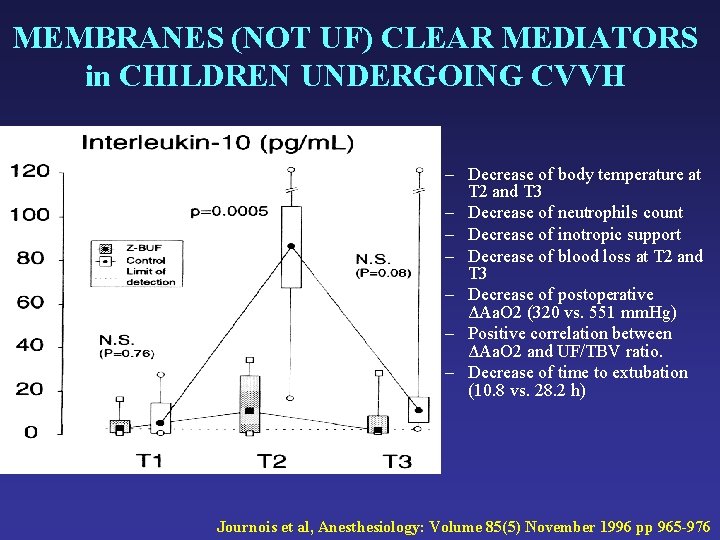
MEMBRANES (NOT UF) CLEAR MEDIATORS in CHILDREN UNDERGOING CVVH – Decrease of body temperature at T 2 and T 3 – Decrease of neutrophils count – Decrease of inotropic support – Decrease of blood loss at T 2 and T 3 – Decrease of postoperative ΔAa. O 2 (320 vs. 551 mm. Hg) – Positive correlation between ΔAa. O 2 and UF/TBV ratio. – Decrease of time to extubation (10. 8 vs. 28. 2 h) Journois et al, Anesthesiology: Volume 85(5) November 1996 pp 965 -976
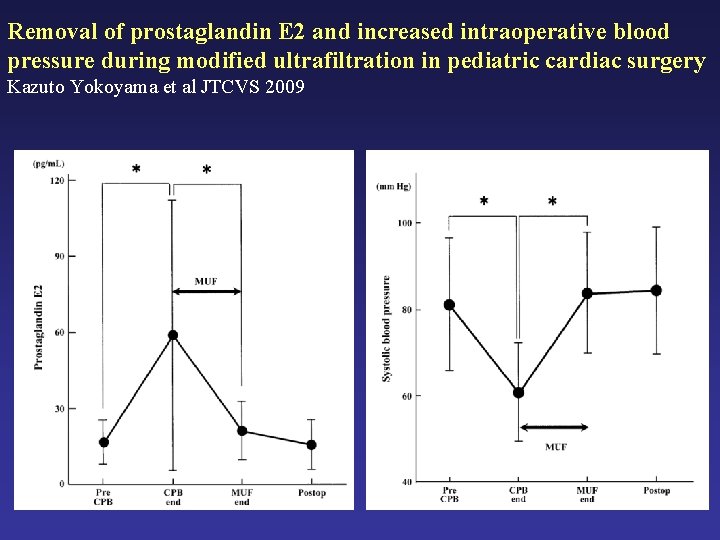
Removal of prostaglandin E 2 and increased intraoperative blood pressure during modified ultrafiltration in pediatric cardiac surgery Kazuto Yokoyama et al JTCVS 2009
Removal of prostaglandin E 2 and increased intraoperative blood pressure during modified ultrafiltration in pediatric cardiac surgery Kazuto Yokoyama et al JTCVS 2009
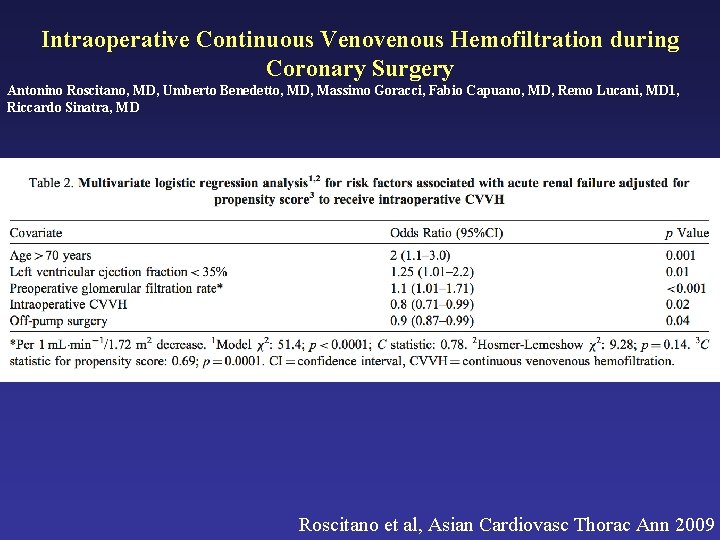
Intraoperative Continuous Venovenous Hemofiltration during Coronary Surgery üCVVH post 35 m. L/kg/h üQb 150 ml/min üNo heparin. üBicarbonate buffer üNet UF rate 500– 1000 m. L/h Roscitano et al, Asian Cardiovasc Thorac Ann 2009
Intraoperative Continuous Venovenous Hemofiltration during Coronary Surgery Antonino Roscitano, MD, Umberto Benedetto, MD, Massimo Goracci, Fabio Capuano, MD, Remo Lucani, MD 1, Riccardo Sinatra, MD Roscitano et al, Asian Cardiovasc Thorac Ann 2009
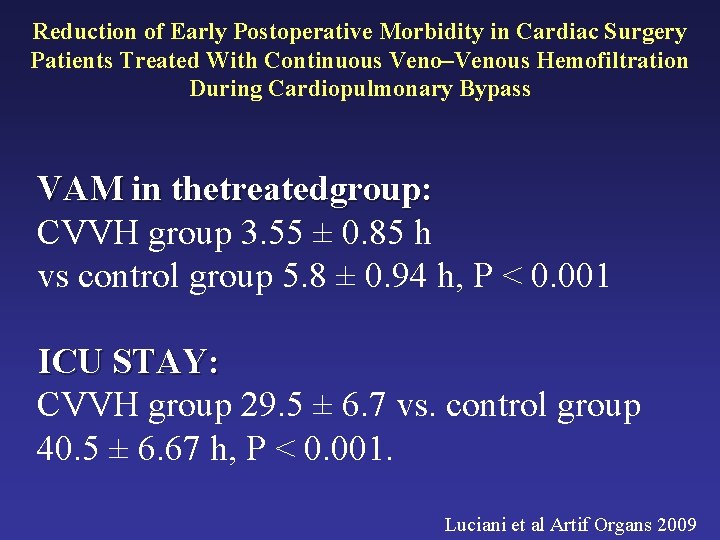
Reduction of Early Postoperative Morbidity in Cardiac Surgery Patients Treated With Continuous Veno–Venous Hemofiltration During Cardiopulmonary Bypass VAM in thetreatedgroup: CVVH group 3. 55 ± 0. 85 h vs control group 5. 8 ± 0. 94 h, P < 0. 001 ICU STAY: CVVH group 29. 5 ± 6. 7 vs. control group 40. 5 ± 6. 67 h, P < 0. 001. Luciani et al Artif Organs 2009
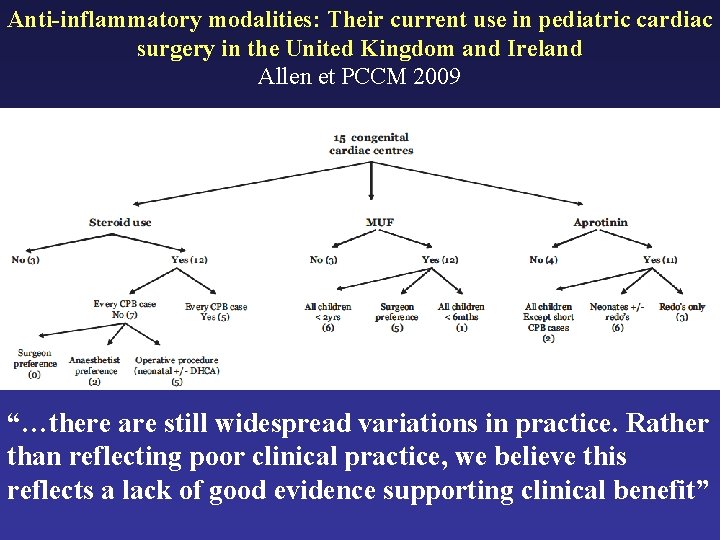
Anti-inflammatory modalities: Their current use in pediatric cardiac surgery in the United Kingdom and Ireland Allen et PCCM 2009 “…there are still widespread variations in practice. Rather than reflecting poor clinical practice, we believe this reflects a lack of good evidence supporting clinical benefit”
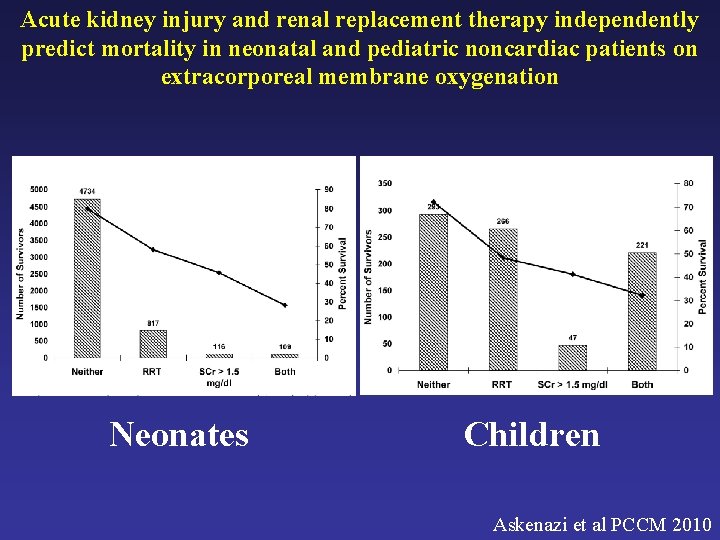
Acute kidney injury and renal replacement therapy independently predict mortality in neonatal and pediatric noncardiac patients on extracorporeal membrane oxygenation Neonates Children Askenazi et al PCCM 2010
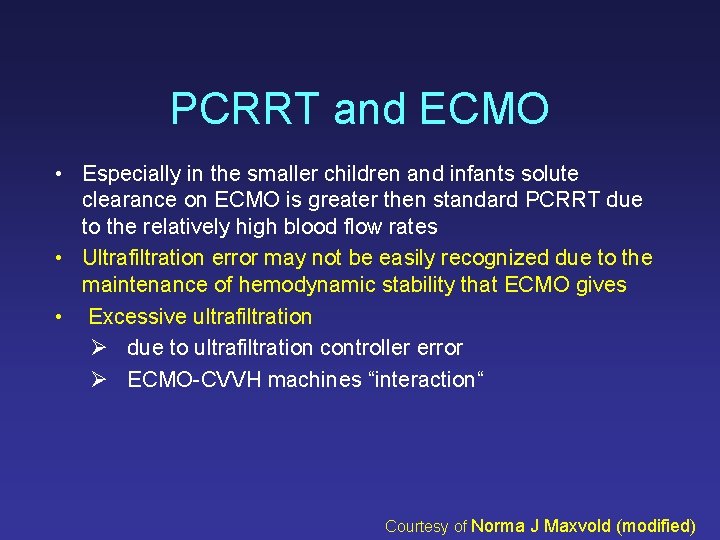
PCRRT and ECMO • Especially in the smaller children and infants solute clearance on ECMO is greater then standard PCRRT due to the relatively high blood flow rates • Ultrafiltration error may not be easily recognized due to the maintenance of hemodynamic stability that ECMO gives • Excessive ultrafiltration Ø due to ultrafiltration controller error Ø ECMO-CVVH machines “interaction“ Courtesy of Norma J Maxvold (modified)
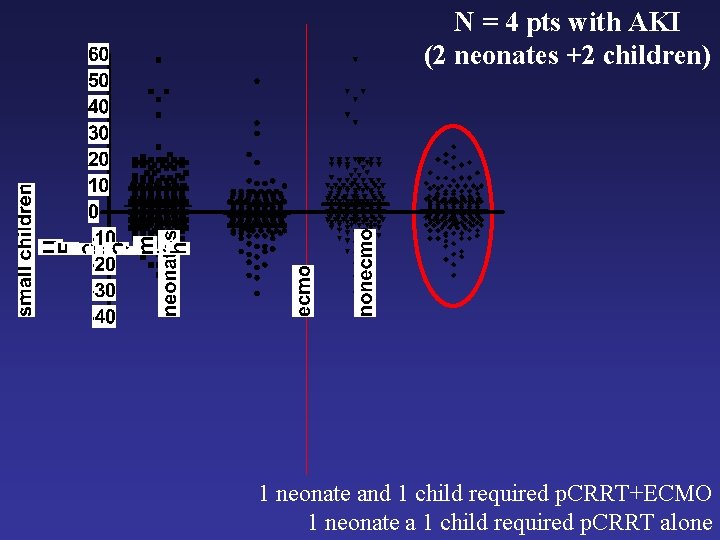
N = 4 pts with AKI (2 neonates +2 children) 1 neonate and 1 child required p. CRRT+ECMO 1 neonate a 1 child required p. CRRT alone
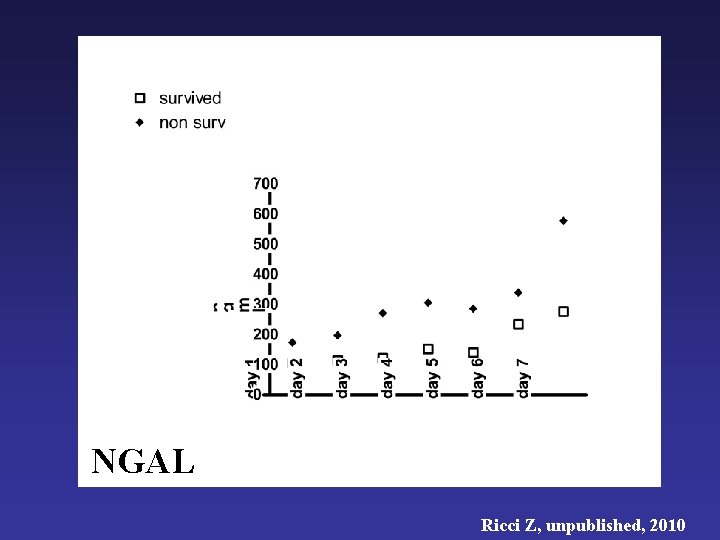
ECMO and NGAL Bambino Gesù experience Urine output creatinine Ricci Z, unpublished, 2010
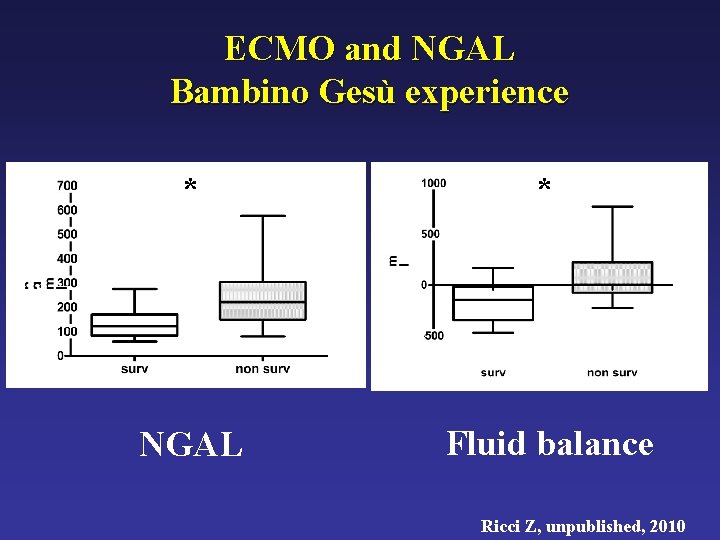
ECMO and NGAL Bambino Gesù experience * * NGAL Fluid balance Ricci Z, unpublished, 2010
NGAL Ricci Z, unpublished, 2010
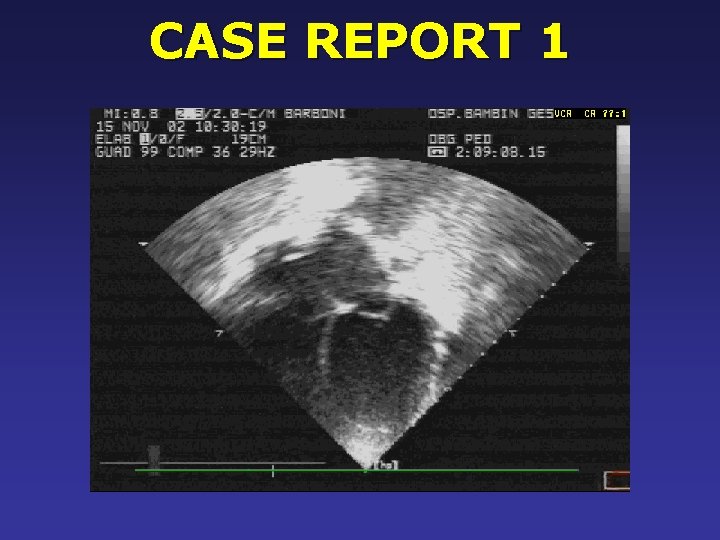
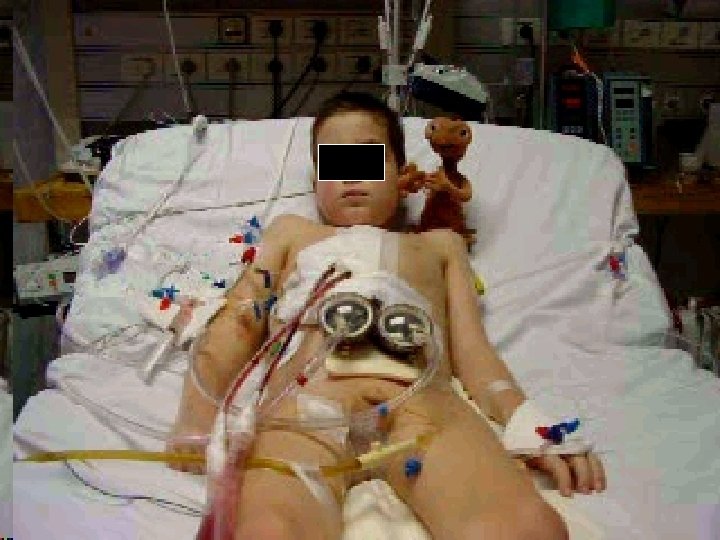
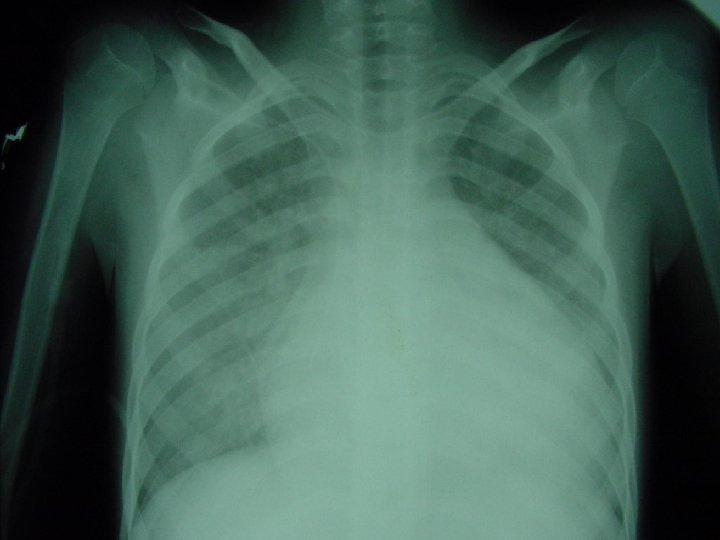
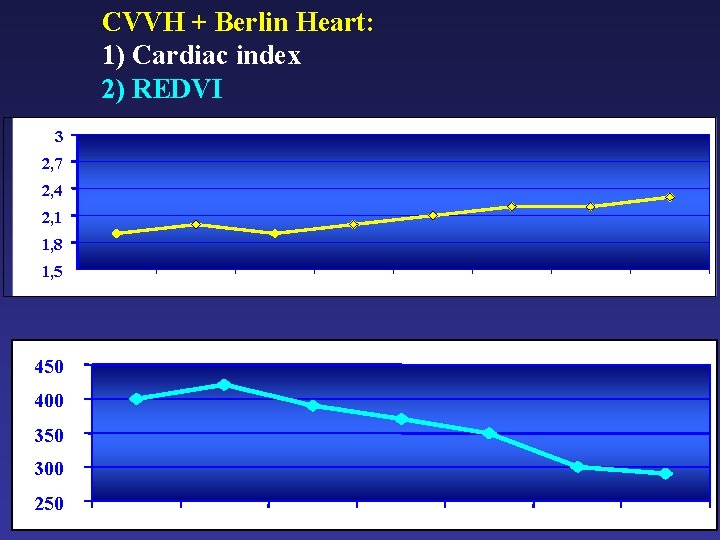
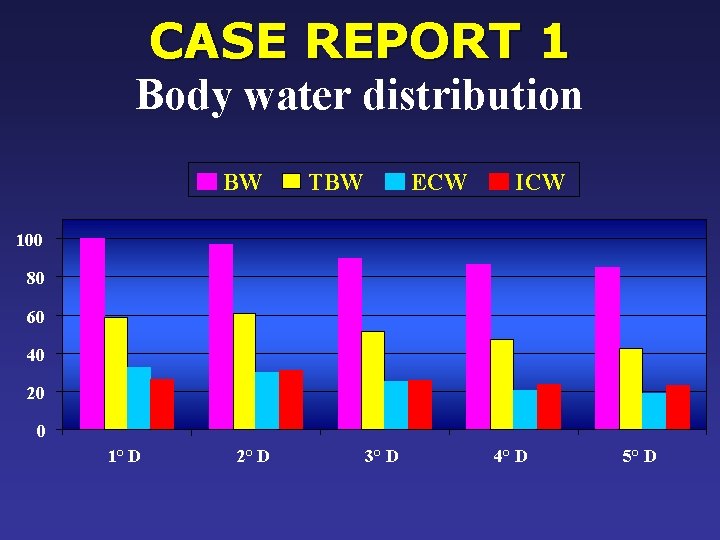
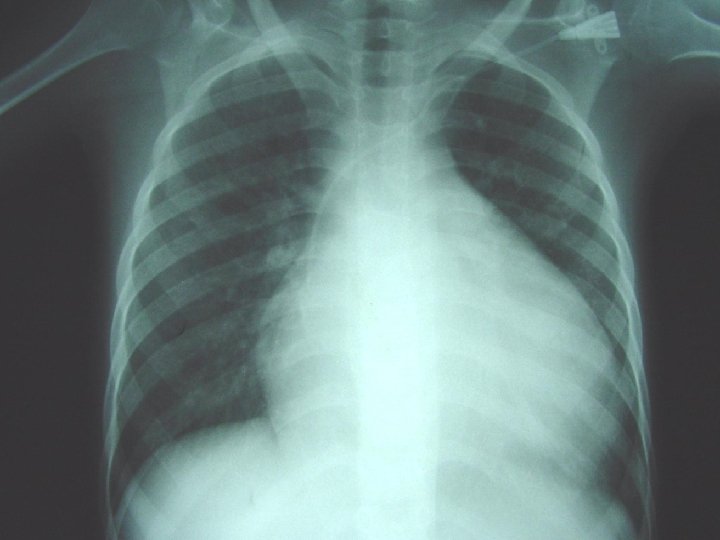
CASE REPORT 1
CVVH + Berlin Heart: 1) Cardiac index 2) REDVI 3 2, 7 2, 4 2, 1 1, 8 1, 5 450 400 350 300 250
CASE REPORT 1 Body water distribution BW TBW ECW ICW 100 80 60 40 20 0 1° D 2° D 3° D 4° D 5° D
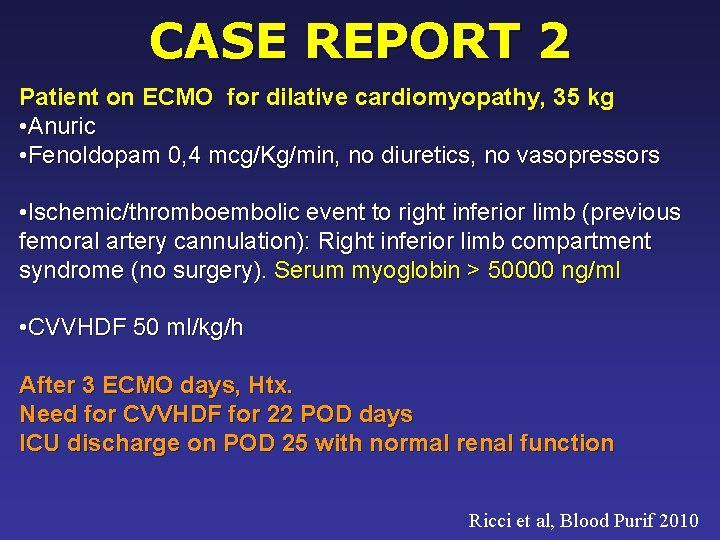
CASE REPORT 2 Patient on ECMO for dilative cardiomyopathy, 35 kg • Anuric • Fenoldopam 0, 4 mcg/Kg/min, no diuretics, no vasopressors • Ischemic/thromboembolic event to right inferior limb (previous femoral artery cannulation): Right inferior limb compartment syndrome (no surgery). Serum myoglobin > 50000 ng/ml • CVVHDF 50 ml/kg/h After 3 ECMO days, Htx. Need for CVVHDF for 22 POD days ICU discharge on POD 25 with normal renal function Ricci et al, Blood Purif 2010
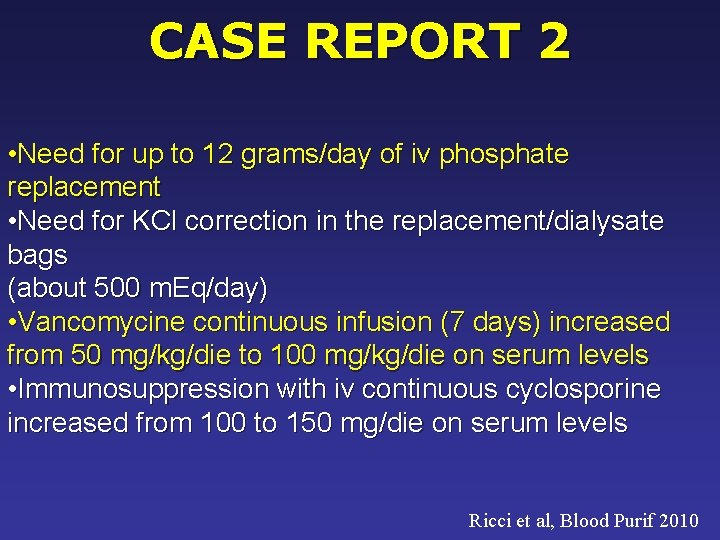
CASE REPORT 2 • Need for up to 12 grams/day of iv phosphate replacement • Need for KCl correction in the replacement/dialysate bags (about 500 m. Eq/day) • Vancomycine continuous infusion (7 days) increased from 50 mg/kg/die to 100 mg/kg/die on serum levels • Immunosuppression with iv continuous cyclosporine increased from 100 to 150 mg/die on serum levels Ricci et al, Blood Purif 2010
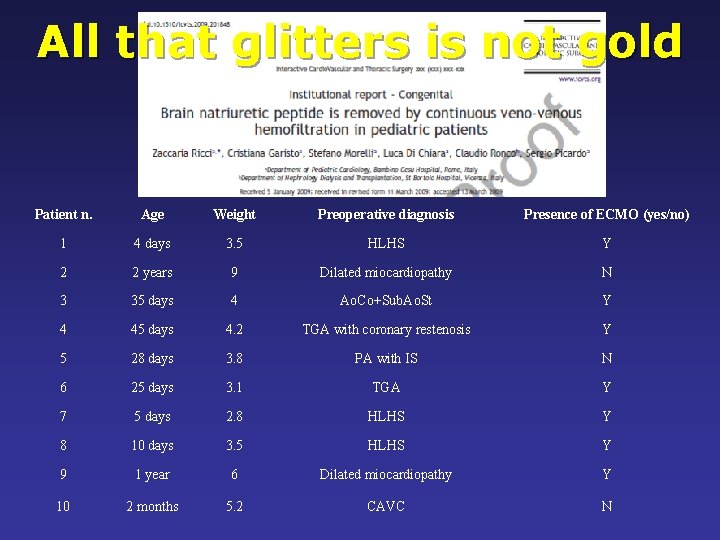
All that glitters is not gold Patient n. Age Weight Preoperative diagnosis Presence of ECMO (yes/no) 1 4 days 3. 5 HLHS Y 2 2 years 9 Dilated miocardiopathy N 3 35 days 4 Ao. Co+Sub. Ao. St Y 4 45 days 4. 2 TGA with coronary restenosis Y 5 28 days 3. 8 PA with IS N 6 25 days 3. 1 TGA Y 7 5 days 2. 8 HLHS Y 8 10 days 3. 5 HLHS Y 9 1 year 6 Dilated miocardiopathy Y 10 2 months 5. 2 CAVC N
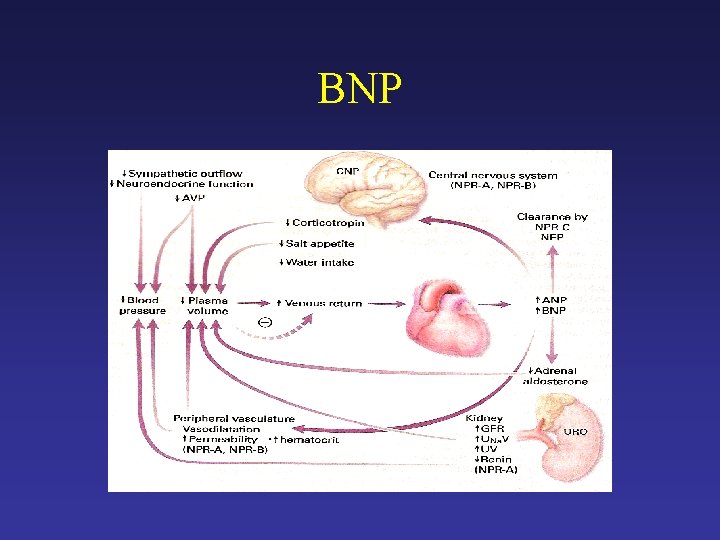
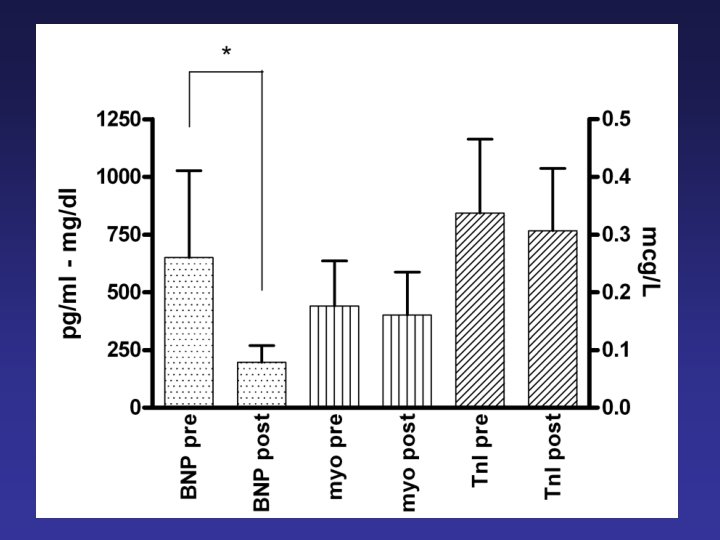
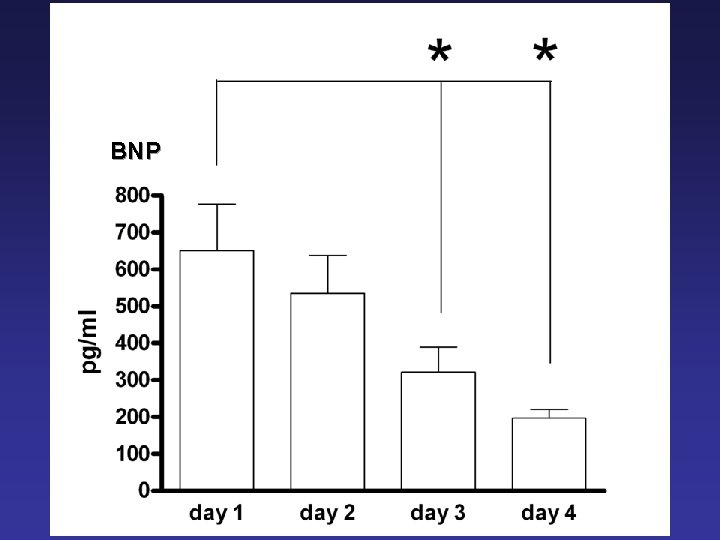
BNP
BNP
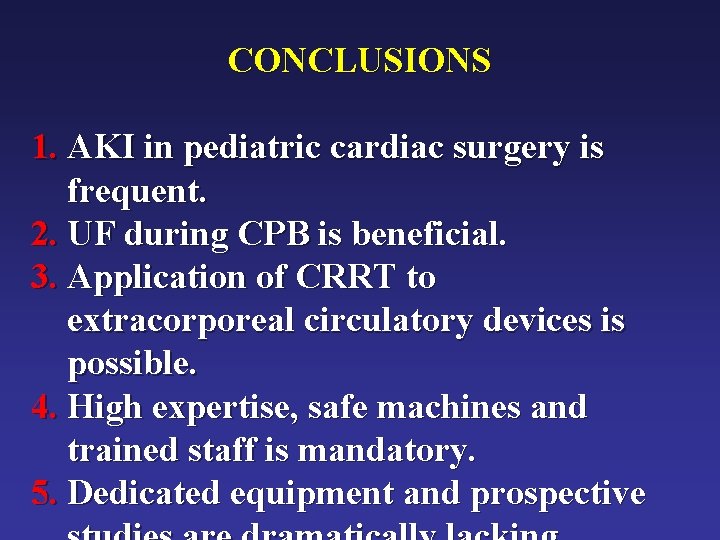
CONCLUSIONS 1. AKI in pediatric cardiac surgery is frequent. 2. UF during CPB is beneficial. 3. Application of CRRT to extracorporeal circulatory devices is possible. 4. High expertise, safe machines and trained staff is mandatory. 5. Dedicated equipment and prospective