
RPC CONSTRUCTION AND TEST AHMED IBRAHIM Resistive Plate
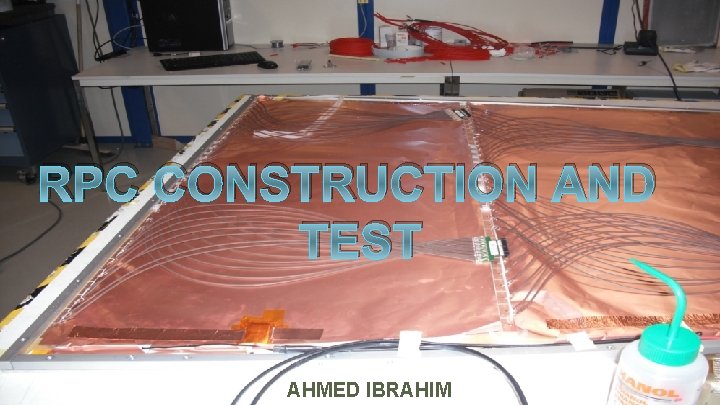
RPC CONSTRUCTION AND TEST AHMED IBRAHIM
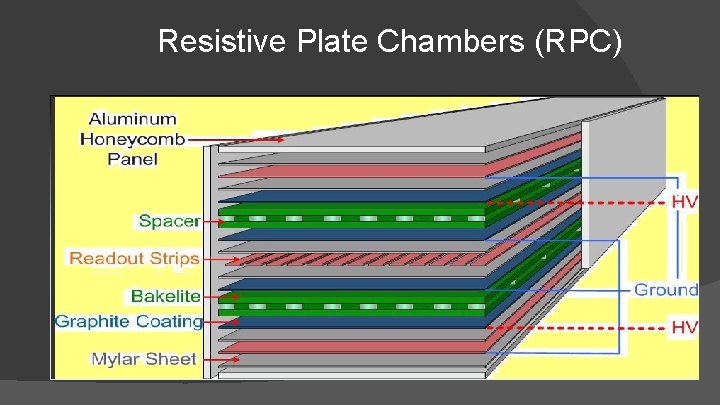
Resistive Plate Chambers (RPC)

Introduction In the CMS experiment, the Resistive Plate Chambers (RPCs) are present in both barrel and in the end cap regions. They play an important role in achieving the various physics objectives including the discovery of Higgs in the CMS/LHC experiment. The gas gaps of the RPCs are produced in Korea, then it being delivered to three RPCs assembly sites; CERN in Switzerland, BARC in India, and Ghent University in Belgium In all sites, Quality Controls (QC) have been defined to assure the reliability of the product in manufacturing process.
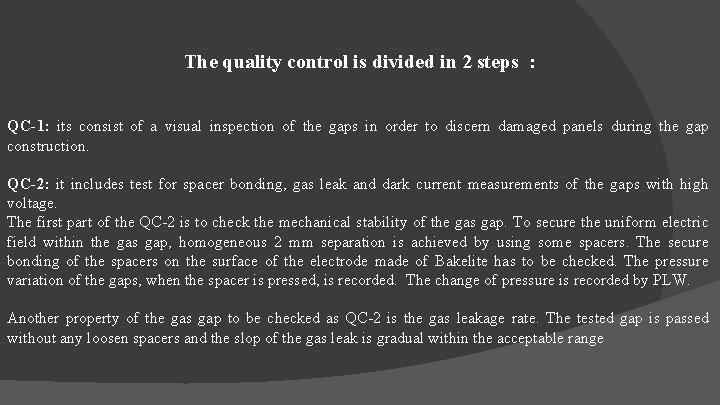
The quality control is divided in 2 steps : QC-1: its consist of a visual inspection of the gaps in order to discern damaged panels during the gap construction. QC-2: it includes test for spacer bonding, gas leak and dark current measurements of the gaps with high voltage. The first part of the QC-2 is to check the mechanical stability of the gas gap. To secure the uniform electric field within the gas gap, homogeneous 2 mm separation is achieved by using some spacers. The secure bonding of the spacers on the surface of the electrode made of Bakelite has to be checked. The pressure variation of the gaps, when the spacer is pressed, is recorded. The change of pressure is recorded by PLW. Another property of the gas gap to be checked as QC-2 is the gas leakage rate. The tested gap is passed without any loosen spacers and the slop of the gas leak is gradual within the acceptable range
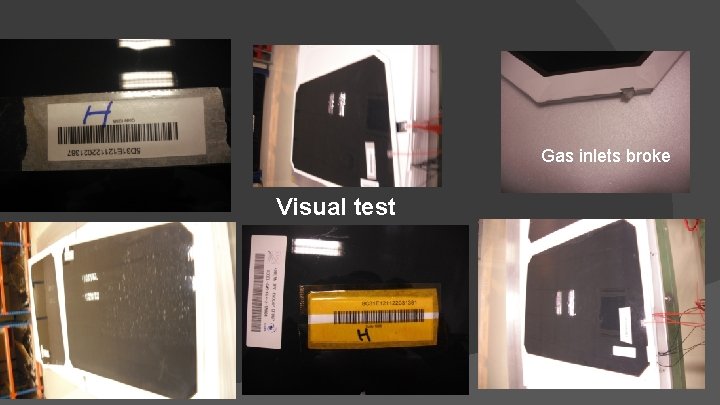
Gas inlets broke Visual test
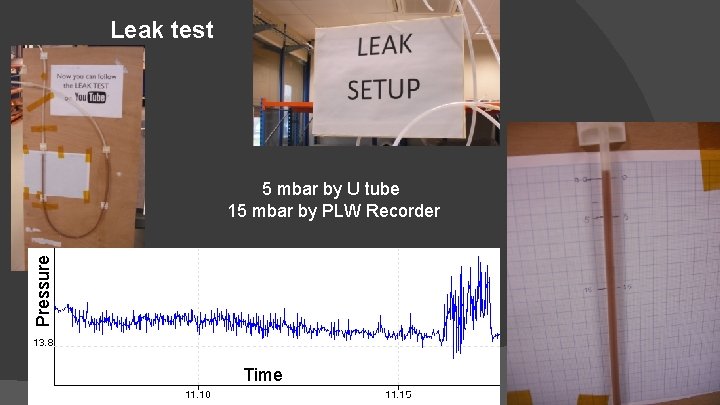
Leak test Pressure 5 mbar by U tube 15 mbar by PLW Recorder Time
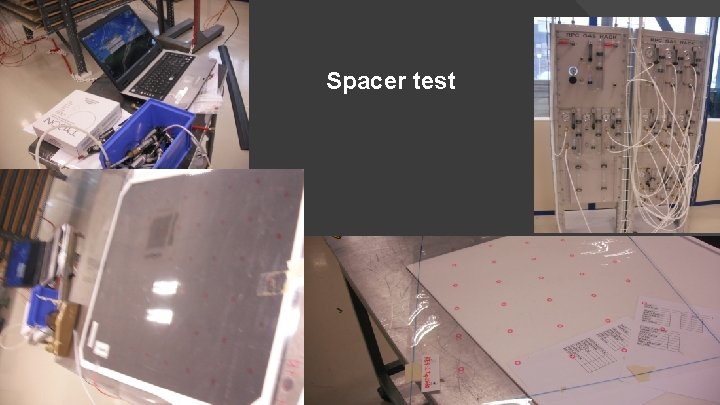
Spacer test
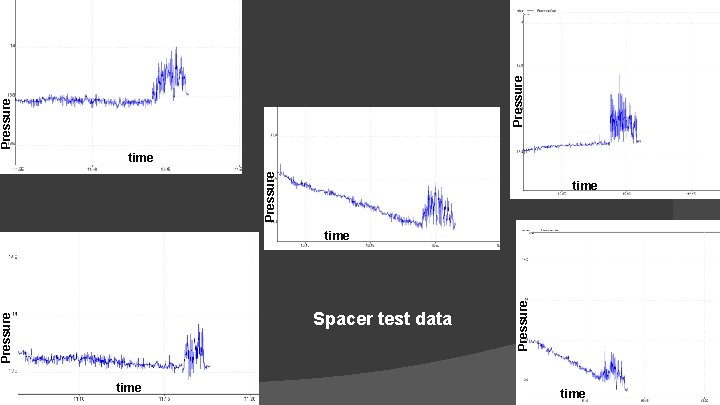
Pressure Spacer test data time Pressure time Pressure
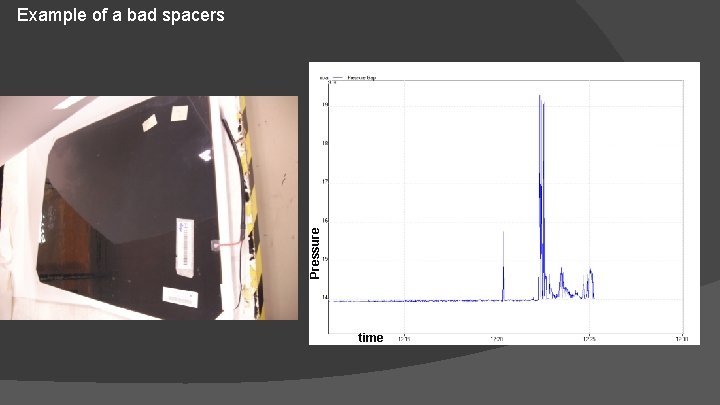
Pressure Example of a bad spacers time
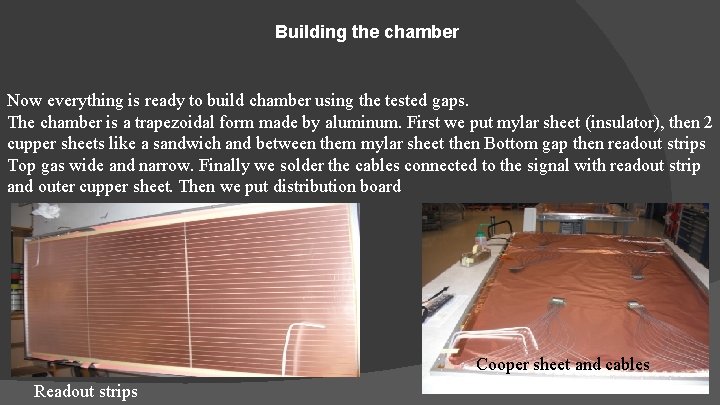
Building the chamber Now everything is ready to build chamber using the tested gaps. The chamber is a trapezoidal form made by aluminum. First we put mylar sheet (insulator), then 2 cupper sheets like a sandwich and between them mylar sheet then Bottom gap then readout strips Top gas wide and narrow. Finally we solder the cables connected to the signal with readout strip and outer cupper sheet. Then we put distribution board Cooper sheet and cables Readout strips
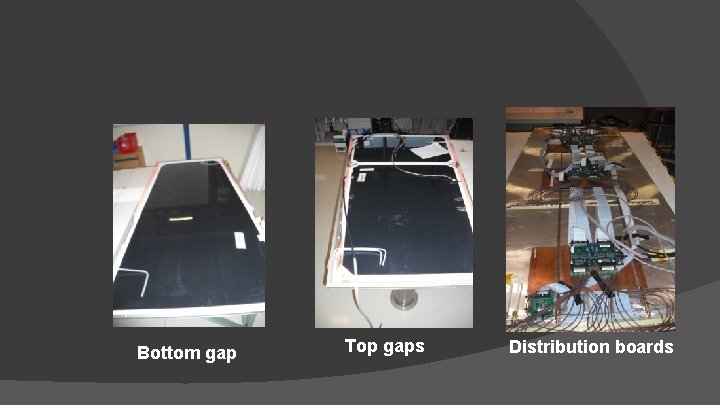
Bottom gap Top gaps Distribution boards
Chamber Test The testing area for RPC (cosmic stand) is located in 904 QC 3 laboratory at CERN It consists of metallic towers where chambers can be placed horizontally and read out in coincidence with the passage of triggering muons. A maximum of ten chambers can be tested simultaneously. Temperature in the halls is kept constant by air-conditioning systems. The experimental set-up for one cosmic ray muon test stand consists of a muon trigger system that is provided by a set of 10 scintillators located 5 of them on the top and other 5 in bottom of the test tower. A summary of the chamber performance(dark current, efficiency, noise rate, cluster size etc) is stored into the RPC Production Database together with all the information about the environmental conditions. Data for each chamber are accessible through a web interface.
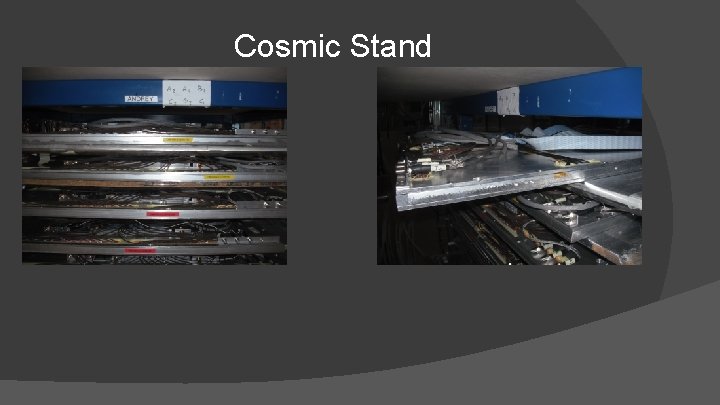
Cosmic Stand
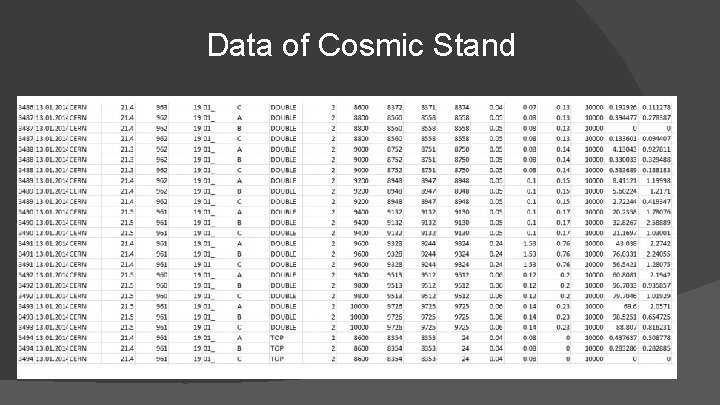
Data of Cosmic Stand
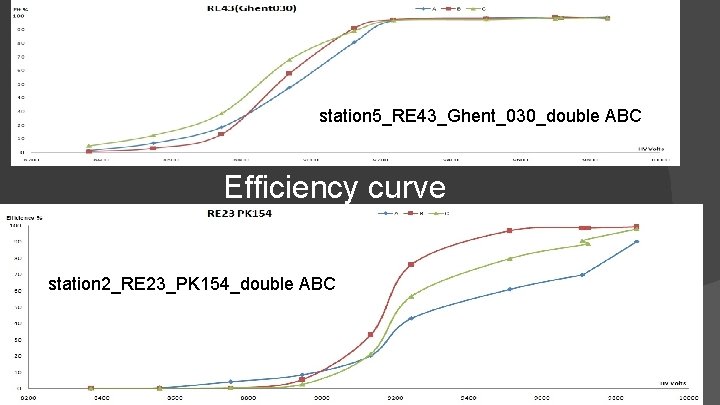
DOUBLE A station 5_RE 43_Ghent_030_double ABC Efficiency curve station 2_RE 23_PK 154_double ABC
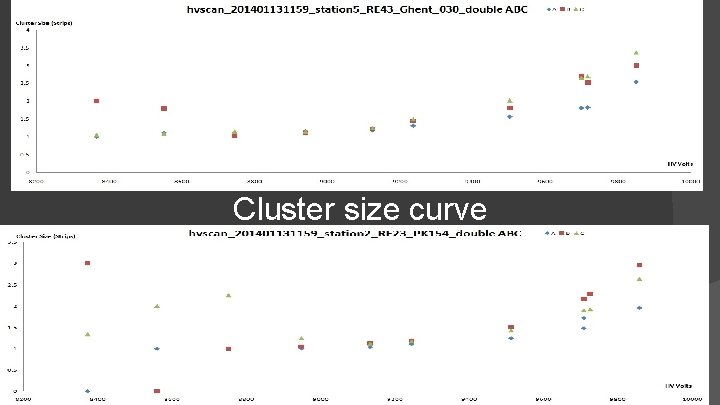
Cluster size curve

THANK YOU
- Slides: 17