
Royal Powers and Conflict Europe 1500 and 1600s











- Slides: 41
Royal Powers and Conflict
Europe • 1500 and 1600’s philosophy of rule by ABSOLUTISM • Form of gov’t with unlimited power • Held by 1 person or a group • Divine Right-King or Queen rule derived absolute or complete authority to govern directly from God and God was responsible for his/her actions
Spain • Philip II (Hapsburgs) • Ruled from 1556 -1589 • Most powerful monarch in all of Spanish History • Devout Catholic-went to great efforts to end Protestantism • Son of Charles V(HRE) and Isabella of Portugal
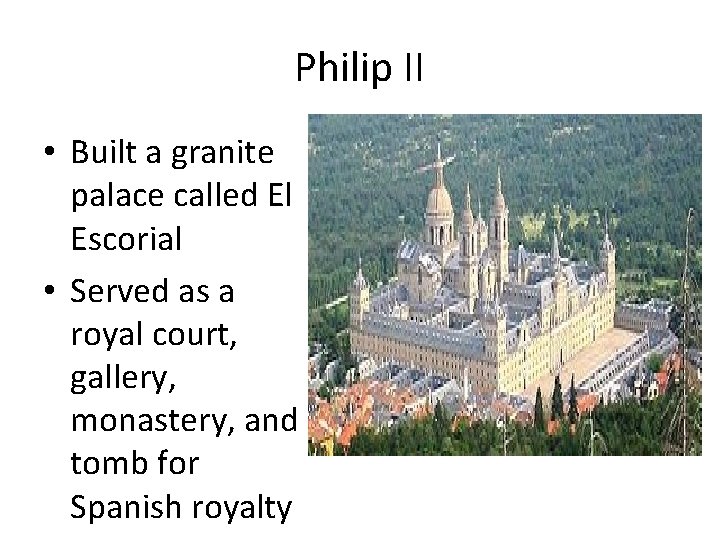
Philip II • Built a granite palace called El Escorial • Served as a royal court, gallery, monastery, and tomb for Spanish royalty
Philip II • Known as the “Prudent King” • Was cautious, hardworking, and suspicious of others • Spent most of his time reading and responding to hundreds of documents • He made all decisions and signed all papers
Unrest in Spain • 1469 - Ferdinand of Aragon and Isabella of Castile unite Spain-but no central gov’t (separate laws) • Phillip II-continues this but makes Castile the dominant gov’t • By 1500’s Castile has: Largest Territory, Largest Population, Greatest Wealth
Castile • Castile becomes the center of Spain and the Empire • Madrid is located in Castile—becomes capital • Seville-Castilian city controlled trade and the overseas empire • 1590’s Aragon revolts--defeated
Religious Policies • Concerned w/large populations of religious minorities – Protestants – Morranos-Jews who converted to Christianity – Moriscos-Muslims who converted to Christianity Phillip II supported the Inquisition efforts to -eliminate heresies -He attended many of the Public Sentencing's (Autos da fe) followed by execution (Protestantism never took hold in Spain because of the Inquisition)
• 1567—Philip II imposes Catholicism on the Netherlands – Dutch rebel – Conflict is bloody, long, and complex 1581—Dutch declare their independence—fighting continues --English support the Dutch --English begin to raid Spanish ships (Privateers)
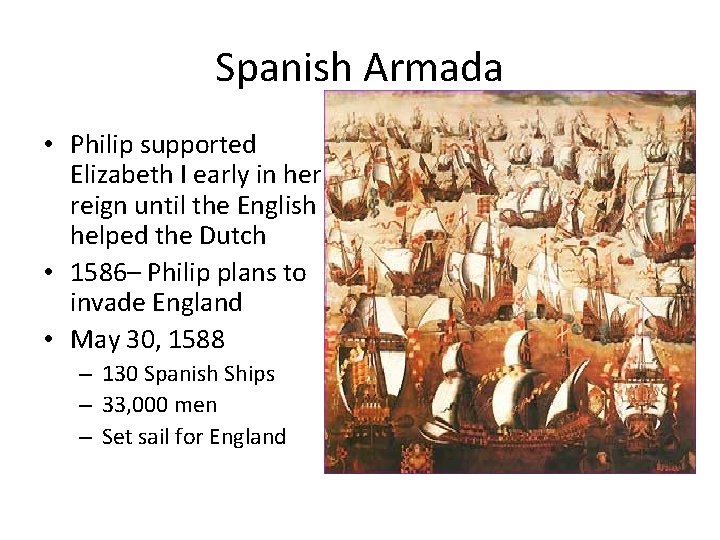
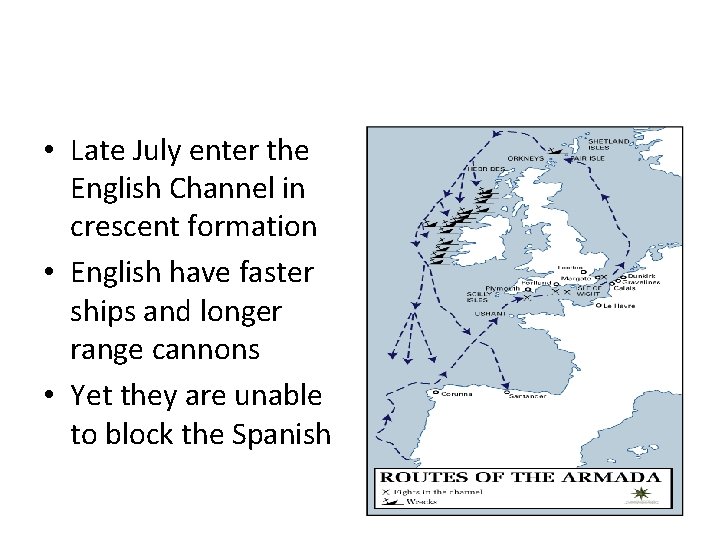
Spanish Armada • Philip supported Elizabeth I early in her reign until the English helped the Dutch • 1586– Philip plans to invade England • May 30, 1588 – 130 Spanish Ships – 33, 000 men – Set sail for England
• Late July enter the English Channel in crescent formation • English have faster ships and longer range cannons • Yet they are unable to block the Spanish
A Stormy Sea Saves the English • • 40 Spanish ships sink in the Irish Sea They were circling Great Britain 15, 000 soldiers were killed Spain is defeated
Last of the Spanish Hapsburgs • Defeat of the Armada—Beginning of decline • Costly war drained the treasury—had to borrow from foreign banks • Spanish economy suffered—inflation—sharp rise in prices w/ an increase in currency • Industry and agriculture decreased
Philip III and Philip IV • • • Son and Grandson Lacked intelligence and interest in politics Gov’t nobles ran the affairs of State Mismanagement and corruption Built extravagant homes--Royals
Decline of Spain War w/ Dutch renewed under Philip IV Conflicts w/ Germany Overburdened and taxed citizens Rebellion by citizens—Portugal a part of Spain since 1580 rebels—struggle until 1668 for Independence • Philip IV son—Charles II is the last Spanish Hapsburg • •
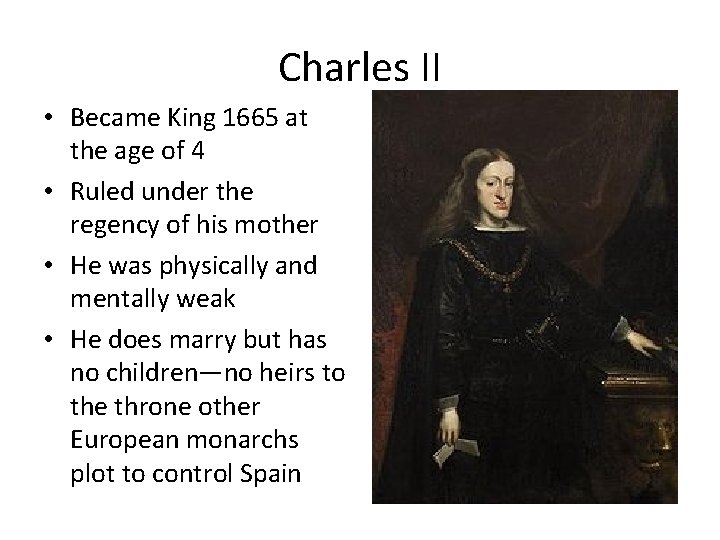
Charles II • Became King 1665 at the age of 4 • Ruled under the regency of his mother • He was physically and mentally weak • He does marry but has no children—no heirs to the throne other European monarchs plot to control Spain
England Tudor Dynasty 1485 -1603
The Tudors • Bring unity to the country • Henry VII – 1 st Tudor-War of the Roses – Help rebuild commercial prosperity – Encouraged foreign trade – Improved the method of tax collection – Avoided war through diplomacy – Used marriage to increase English strength in Europe
Henry VIII • • • Most powerful of all Tudor monarchs Fought wars in Europe Made England a great Naval power In pursuit of a make heir—married 6 x’s Broke from Catholicism w/Parliaments approval
Edward VI • • Son of Henry VIII 9 yrs old when he took the crown Was sickly Dies in 1552 at the age of 15
Mary I Daughter of Henry VIII Catholic English people support her claim to the throne Reestablishes Catholic policies married Philip II of Spain in 1554 • Kills 300 Protestants—burned at the stake— heresy (Bloody Mary) • •
• Went to war with France—English lose its final foothold in France (Port Calais) • English fear Spain will control them • She dies childless • Throne then goes to
Elizabeth I
• Daughter of Henry VIII • Becomes Queen in 1558—Age of 25 • Highly educated and shrewd—forceful personality sharp tongue and asserted her iron will • Often fought with Parliament • Subjects were loyal to her—believed her honest and good
• Great cultural period during her reign— Shakespeare • Never married—saw that a “foreign prince” like Philip II was bad for England • And an English prince would cause jealousy among the English nobility • Did not want to share power
Court and Government • • • Elizabeth was assisted by a Council of Nobles They drafted proclamations Handled foreign affairs Administration of justice Regulation of PX’s and wages
Parliament • Did not have the power to initiate legislation • Could plead, argue and hold approval • Had influence especially to tax laws
Justice of the Peace • Enforced the Queen’s law—where unpaid respected community members • Most belonged to rural land owning classes • Collected taxes • Kept Gov’t informed of local problems
Social and Economic Policy • Elizabeth believed in the importance of social rank • Rank – Queen and court – Prominent nobles and great landed families – Gentry: lesser nobles, merchants, lawyers, and clergy – Yeomen: farmers, small landholders, laborers
The Statute of Apprentices of 1563 • Declared work to be a moral duty • Required to live and work where they were born • Controlled the movement of labor, wages and regulated apprenticeships
The Poor Laws of 1597 & 1601 • Made local areas responsible for the homeless and unemployed • Means to raise money for charities • Provide work for vagabonds
Elizabeth I Inherited a monarchy that was badly in debt She spent lavishly on court ceremonies But was known as a “pinchpenny” She sold official royal land, offices and licenses, monopolies, and the rights to collect customs • She was forced to turn to Parliament for taxes due to inflation and wars • When she ended her reign—England remained badly in debt • •
Foreign Policy • By Elizabeth’s time, England had lost all of its possessions on the European Continent • France was too powerful to defeat • For security relied on the English Channel for protection • Built and maintained a strong Navy • Feared an alliance between Spain & France used diplomats to protect their interests
Balance of Power • Work to maintain equal power throughout Europe • One nation becomes too powerful then a third nation can balance it • E. g. . England & Spain feared France— cooperated w/each other to balance France – Keep France out of the Netherlands – Later England supported the Dutch vs. Spain
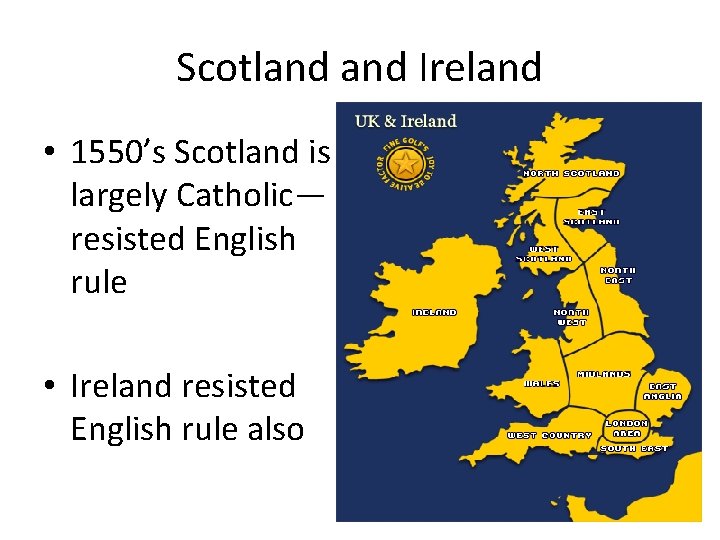
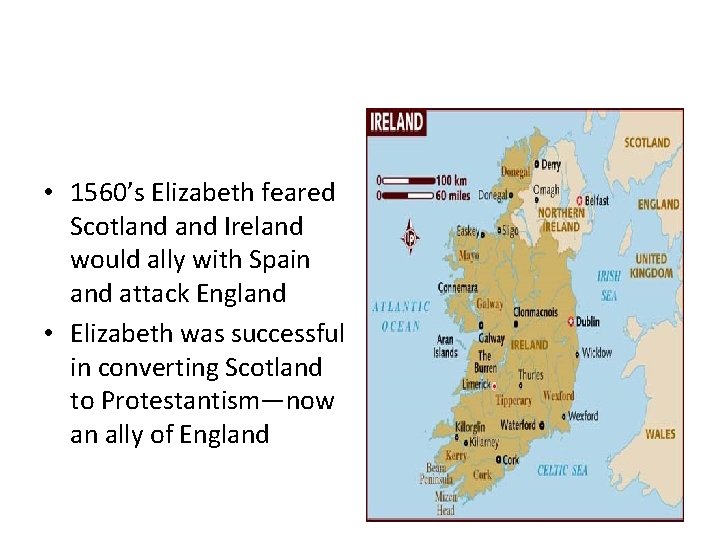
Scotland Ireland • 1550’s Scotland is largely Catholic— resisted English rule • Ireland resisted English rule also
• 1560’s Elizabeth feared Scotland Ireland would ally with Spain and attack England • Elizabeth was successful in converting Scotland to Protestantism—now an ally of England
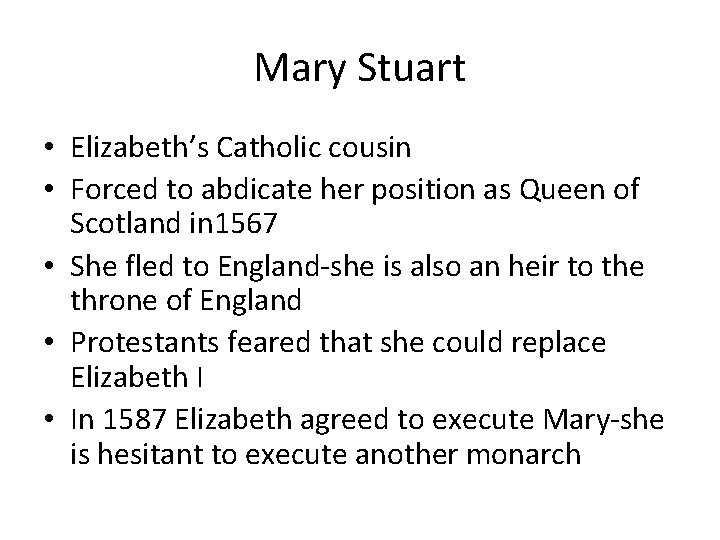
Mary Queen of Scots Death Mask Madam Trousseaus Wax Museum
Mary Stuart • Elizabeth’s Catholic cousin • Forced to abdicate her position as Queen of Scotland in 1567 • She fled to England-she is also an heir to the throne of England • Protestants feared that she could replace Elizabeth I • In 1587 Elizabeth agreed to execute Mary-she is hesitant to execute another monarch
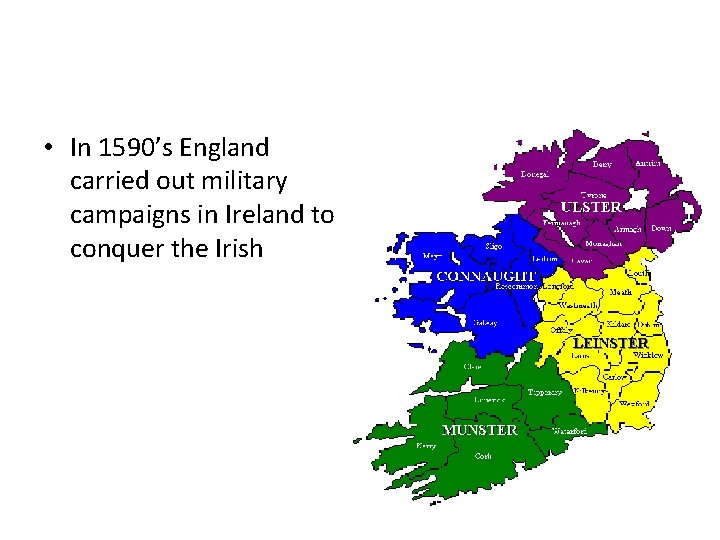
• In 1590’s England carried out military campaigns in Ireland to conquer the Irish
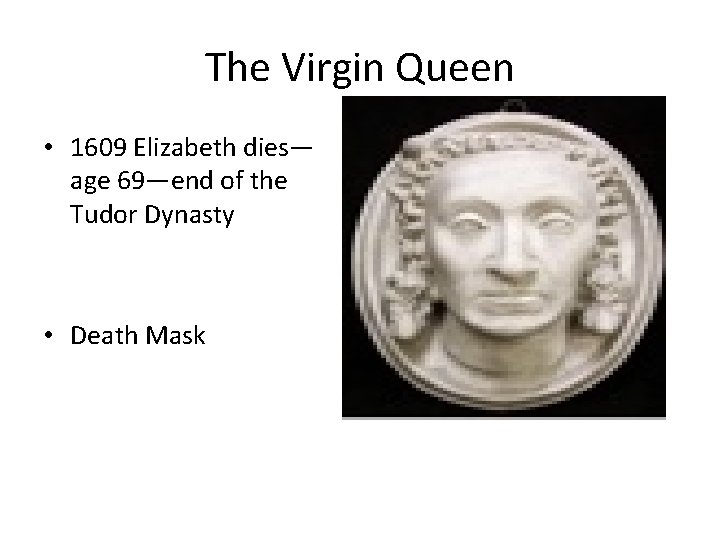
The Virgin Queen • 1609 Elizabeth dies— age 69—end of the Tudor Dynasty • Death Mask
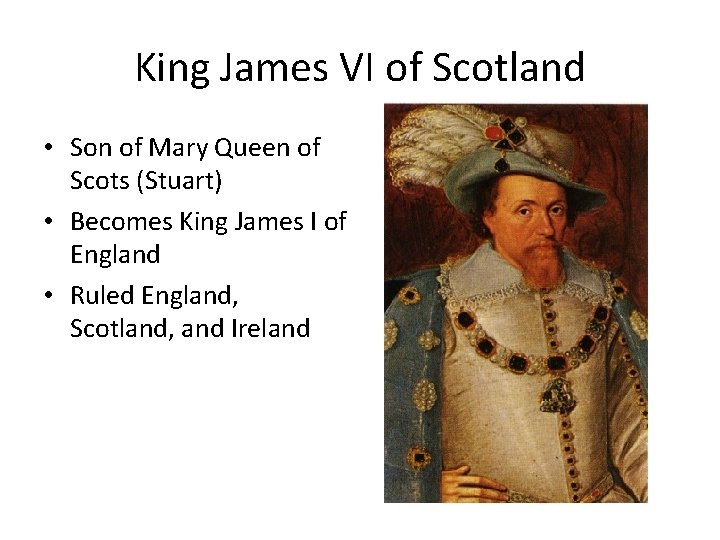
King James VI of Scotland • Son of Mary Queen of Scots (Stuart) • Becomes King James I of England • Ruled England, Scotland, and Ireland