
Routine Radiological Environmental Monitoring Ronald Warren Ecological Environmental

- Slides: 27
Routine Radiological Environmental Monitoring Ronald Warren Ecological & Environmental Monitoring National Security Technologies, LLC Community Environmental Monitoring Program Workshop July 26, 2011
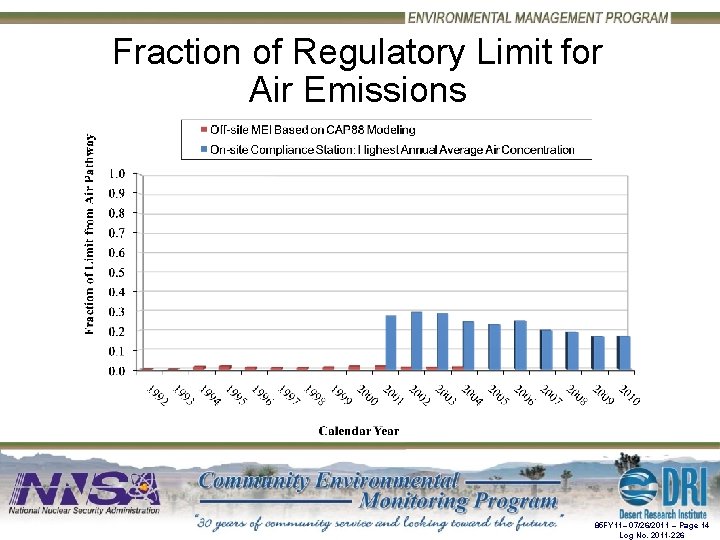
Overview • Routine Radiological Environmental Monitoring Plan (RREMP) overview • Operations evaluations against regulatory limits • Evaluation that indicated soil re-suspension less than National Emissions Standards for Hazardous Air Pollutants (NESHAPs) • Standards vs. RREMP results • NESHAPs standards vs. results • Compliance is demonstrated at the on-site locations, so the off-site dose is much less 85 FY 11– 07/26/2011 – Page 2 Page. No. 2 Title Log 2011 -226
Routine R Radiological R Environmental E Monitoring M Plan P • Identifies requirements for radiological monitoring at Nevada Site Office facilities, primarily the Nevada National Security Site (NNSS) • Focuses on – the need to ensure that the public and the environment are protected, – that compliance with the letter and the spirit of the law is achieved, and – that good land stewardship is practiced. • Uses a decision based approach to identify the data that must be collected and provides Quality Assurance, Analysis, and Sampling Plans which ensure that defensible data is generated. 85 FY 11– 07/26/2011 – Page 3 Page. No. 3 Title Log 2011 -226
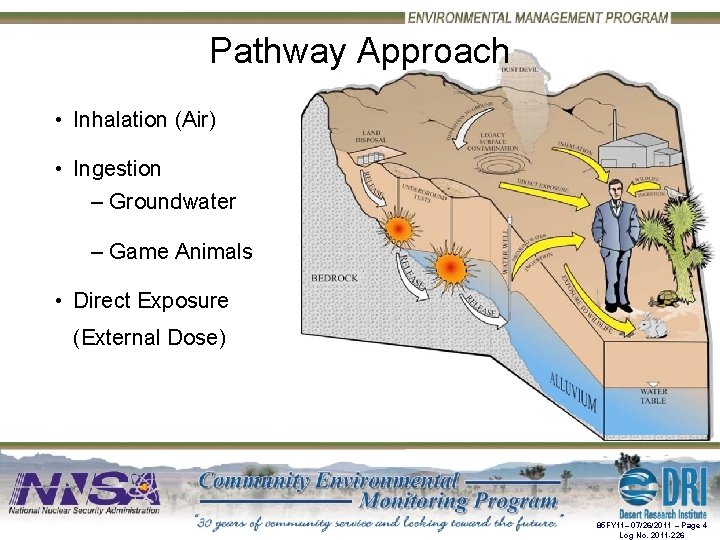
Pathway Approach • Inhalation (Air) • Ingestion – Groundwater – Game Animals • Direct Exposure (External Dose) 85 FY 11– 07/26/2011 – Page 4 Page. No. 4 Title Log 2011 -226
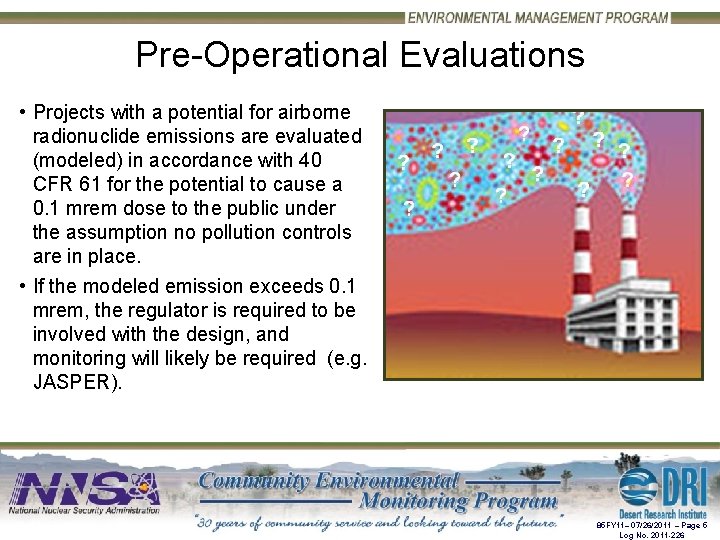
Pre-Operational Evaluations • Projects with a potential for airborne radionuclide emissions are evaluated (modeled) in accordance with 40 CFR 61 for the potential to cause a 0. 1 mrem dose to the public under the assumption no pollution controls are in place. • If the modeled emission exceeds 0. 1 mrem, the regulator is required to be involved with the design, and monitoring will likely be required (e. g. JASPER). 85 FY 11– 07/26/2011 – Page 5 Page. No. 5 Title Log 2011 -226
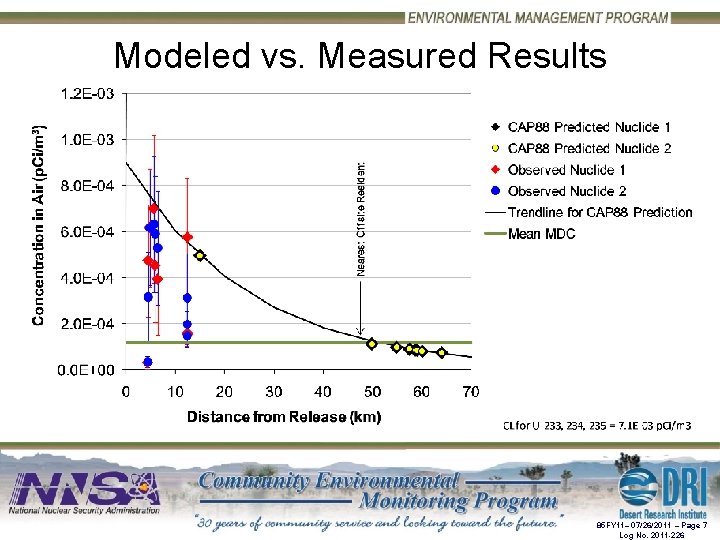
Modeling of Potential Off-site Dose • For potential emissions (before a new potential emission source is created to determine off-site dose) • To estimate dose from actual emissions because concentrations of radionuclides from most emissions are so low they cannot be measured even relatively near the emission source. How do we know modeled results are valid (conservative)? 85 FY 11– 07/26/2011 – Page 6 Page. No. 6 Title Log 2011 -226
Modeled vs. Measured Results 85 FY 11– 07/26/2011 – Page 7 Page. No. 7 Title Log 2011 -226
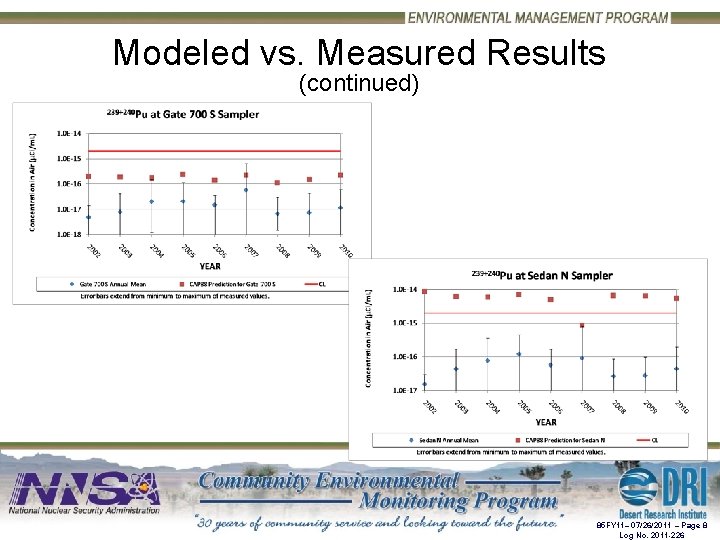
Modeled vs. Measured Results (continued) 85 FY 11– 07/26/2011 – Page 8 Page. No. 8 Title Log 2011 -226
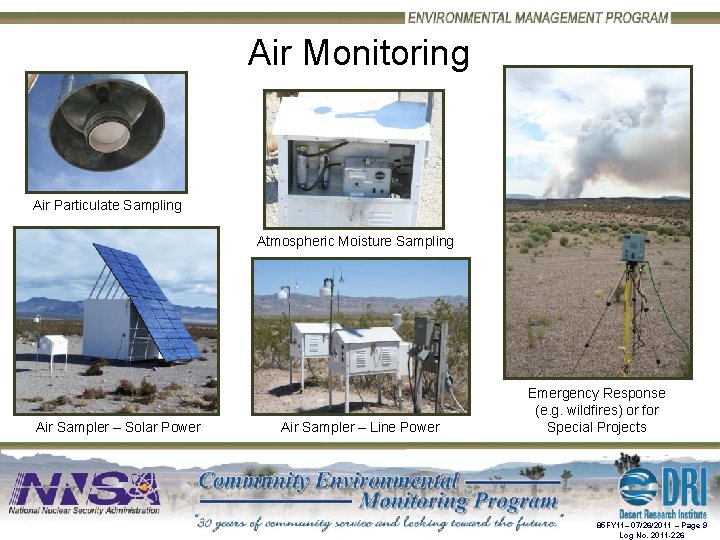
Air Monitoring Air Particulate Sampling Atmospheric Moisture Sampling Air Sampler – Solar Power Air Sampler – Line Power Emergency Response (e. g. wildfires) or for Special Projects 85 FY 11– 07/26/2011 – Page 9 Page. No. 9 Title Log 2011 -226
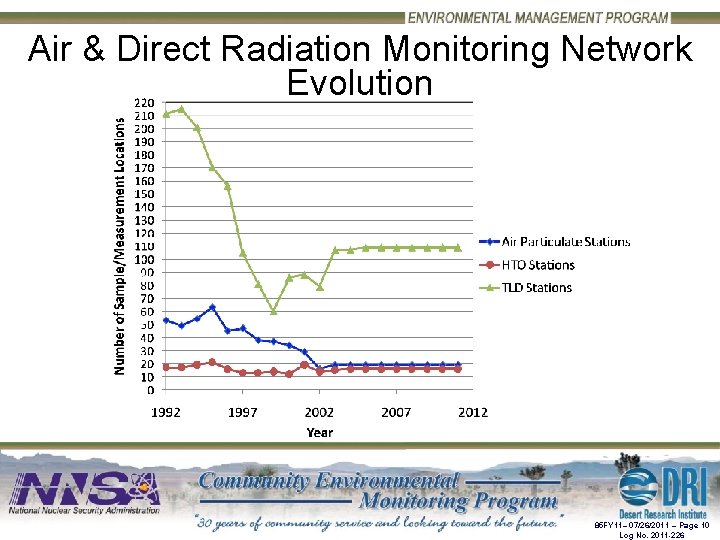
Air & Direct Radiation Monitoring Network Evolution 85 FY 11– 07/26/2011 – Page 10 Page. No. 10 Title Log 2011 -226
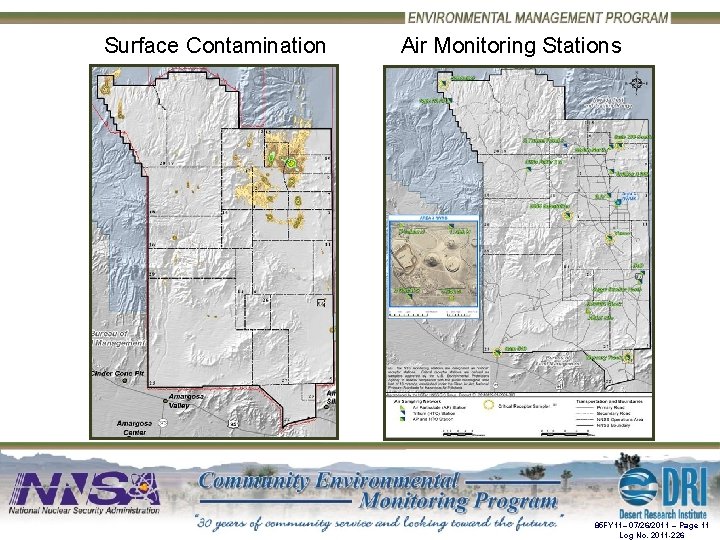
Surface Contamination Air Monitoring Stations 85 FY 11– 07/26/2011 – Page 11 Page. No. 11 Title Log 2011 -226
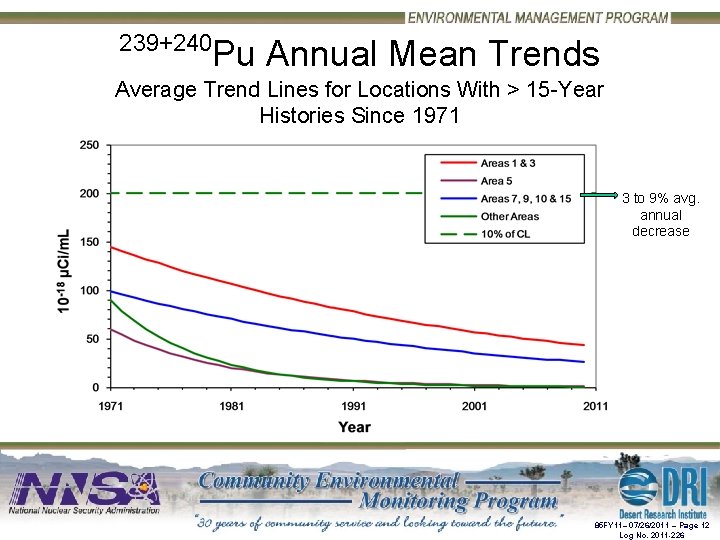
239+240 Pu Annual Mean Trends Average Trend Lines for Locations With > 15 -Year Histories Since 1971 3 to 9% avg. annual decrease 85 FY 11– 07/26/2011 – Page 12 Page. No. 12 Title Log 2011 -226
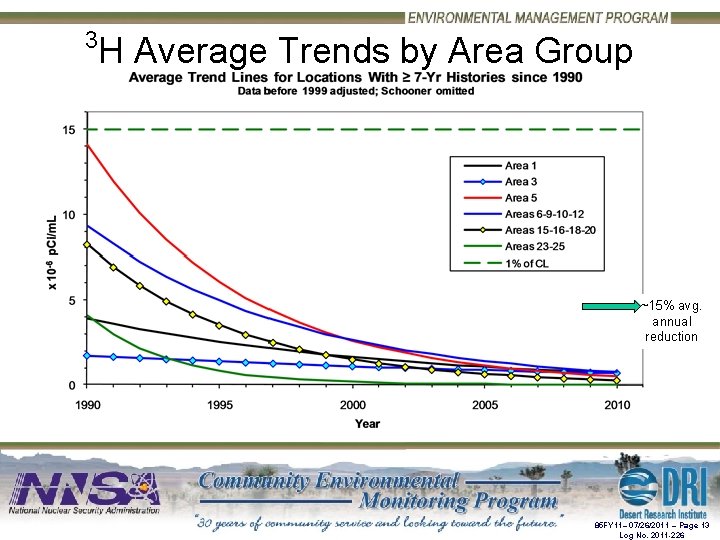
3 H Average Trends by Area Group ~15% avg. annual reduction 85 FY 11– 07/26/2011 – Page 13 Page. No. 13 Title Log 2011 -226
Fraction of Regulatory Limit for Air Emissions 85 FY 11– 07/26/2011 – Page 14 Page. No. 14 Title Log 2011 -226
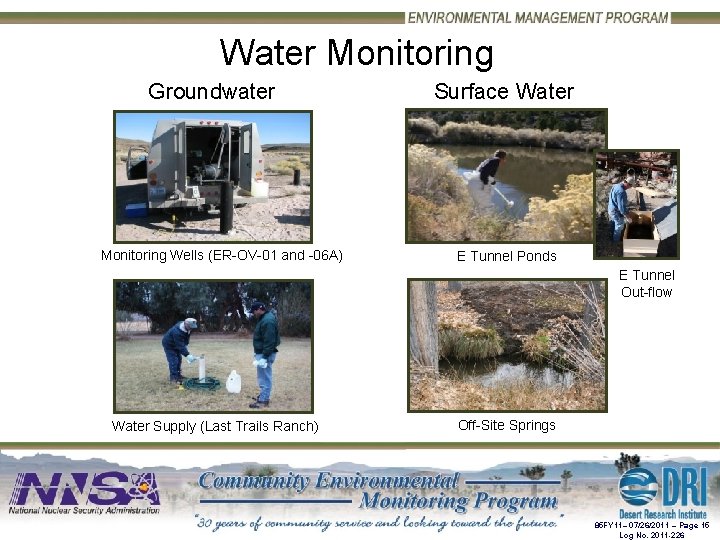
Water Monitoring Groundwater Monitoring Wells (ER-OV-01 and -06 A) Surface Water E Tunnel Ponds E Tunnel Out-flow Water Supply (Last Trails Ranch) Off-Site Springs 85 FY 11– 07/26/2011 – Page 15 Page. No. 15 Title Log 2011 -226
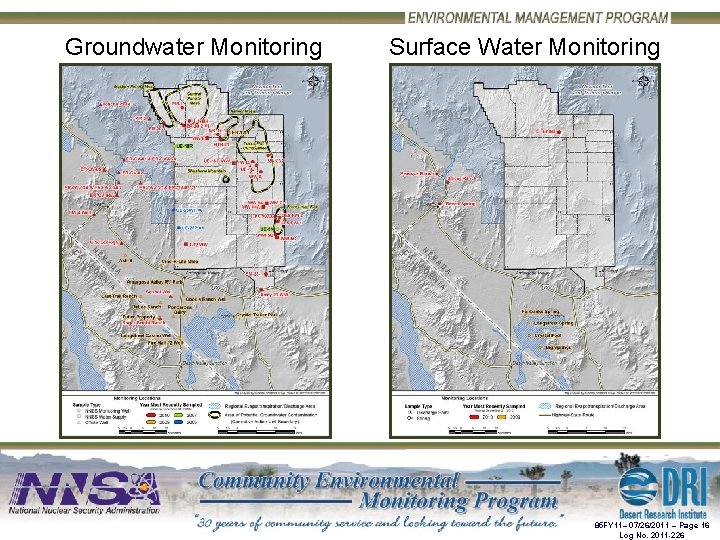
Groundwater Monitoring Surface Water Monitoring 85 FY 11– 07/26/2011 – Page 16 Page. No. 16 Title Log 2011 -226
Tritium in Onsite Monitoring Wells with Histories of Elevated Concentrations 85 FY 11– 07/26/2011 – Page 17 Page. No. 17 Title Log 2011 -226
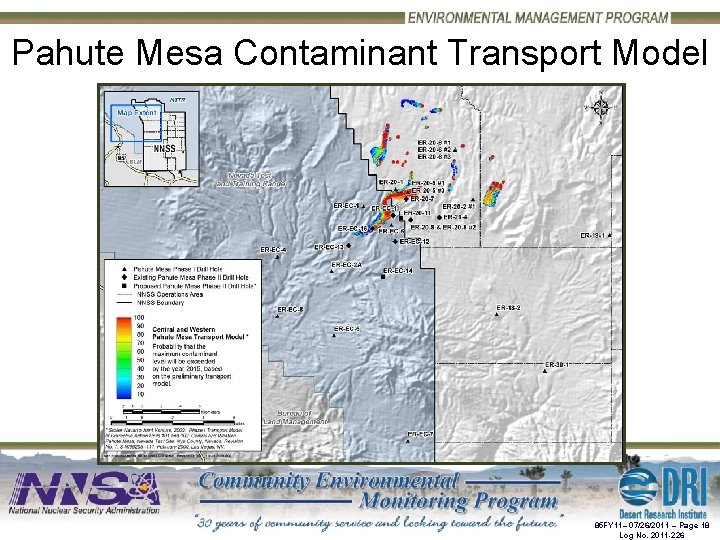
Pahute Mesa Contaminant Transport Model 85 FY 11– 07/26/2011 – Page 18 Page. No. 18 Title Log 2011 -226
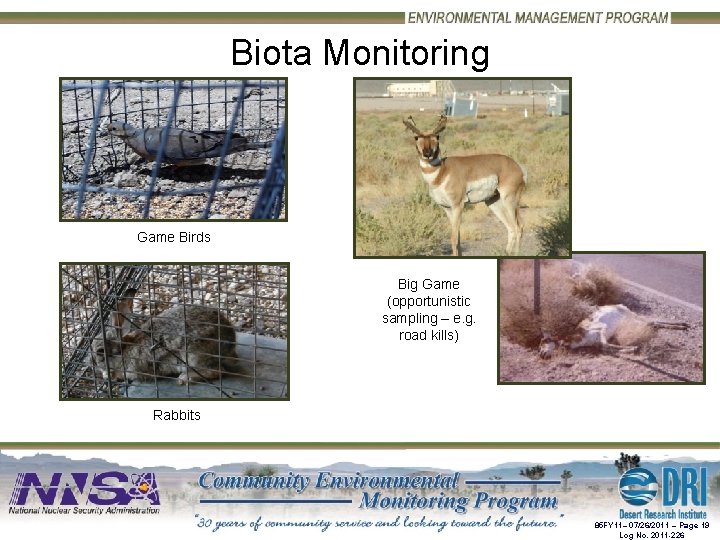
Biota Monitoring Game Birds Big Game (opportunistic sampling – e. g. road kills) Rabbits 85 FY 11– 07/26/2011 – Page 19 Page. No. 19 Title Log 2011 -226
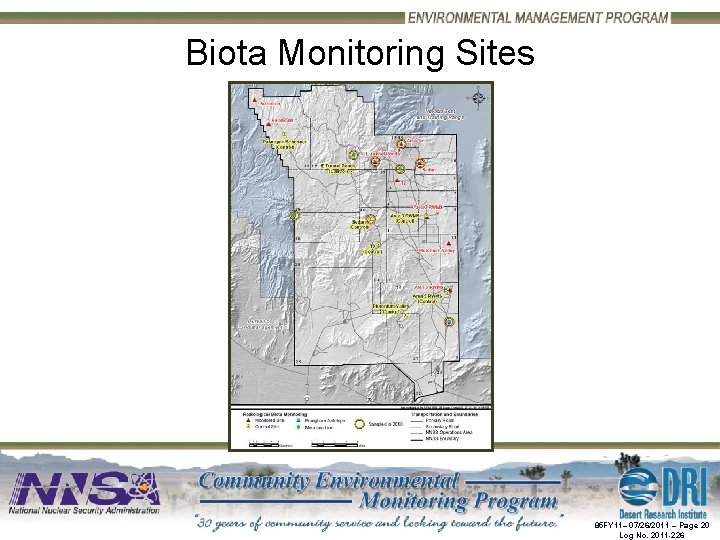
Biota Monitoring Sites 85 FY 11– 07/26/2011 – Page 20 Page. No. 20 Title Log 2011 -226
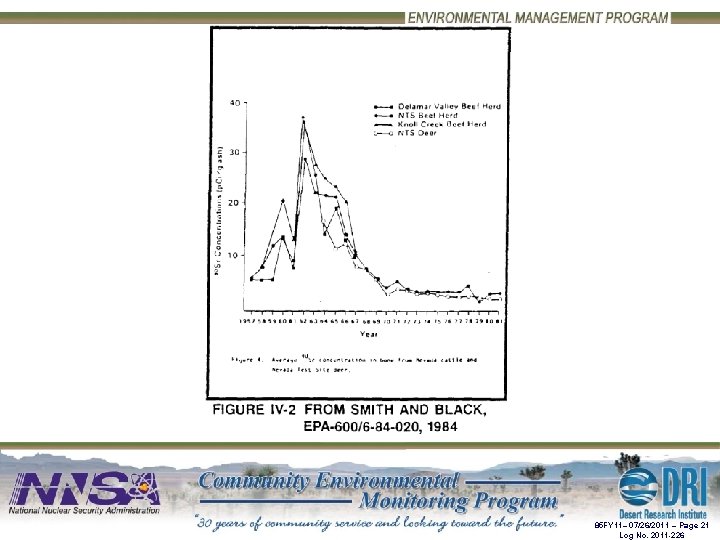
85 FY 11– 07/26/2011 – Page 21 Page. No. 21 Title Log 2011 -226
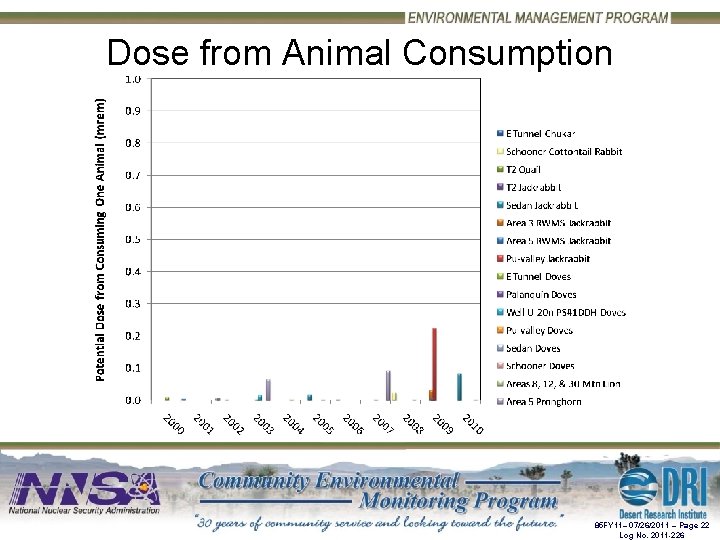
Dose from Animal Consumption 85 FY 11– 07/26/2011 – Page 22 Page. No. 22 Title Log 2011 -226
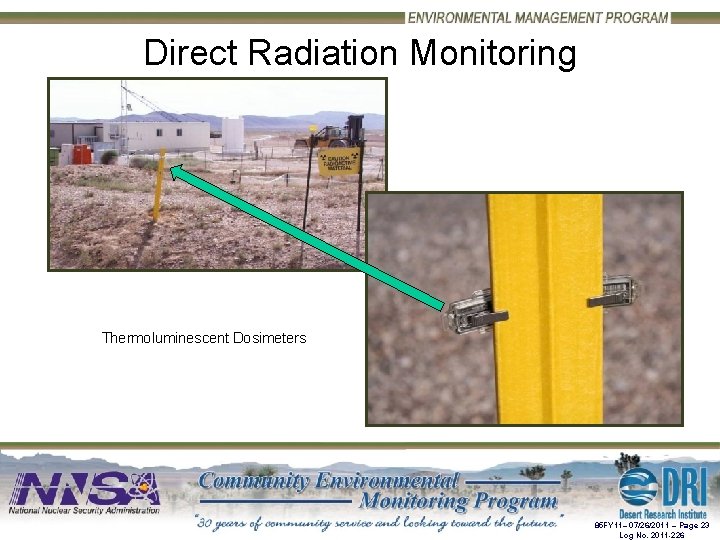
Direct Radiation Monitoring Thermoluminescent Dosimeters 85 FY 11– 07/26/2011 – Page 23 Page. No. 23 Title Log 2011 -226
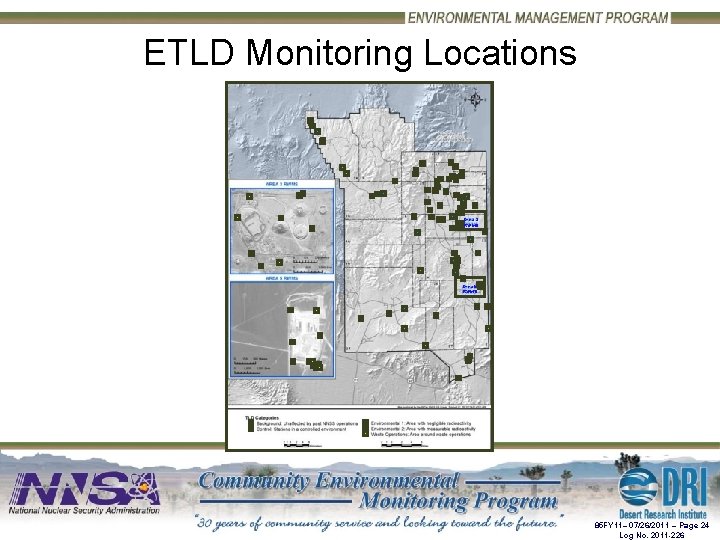
ETLD Monitoring Locations Area 3 RWMS Area 5 RWMS 85 FY 11– 07/26/2011 – Page 24 Page. No. 24 Title Log 2011 -226
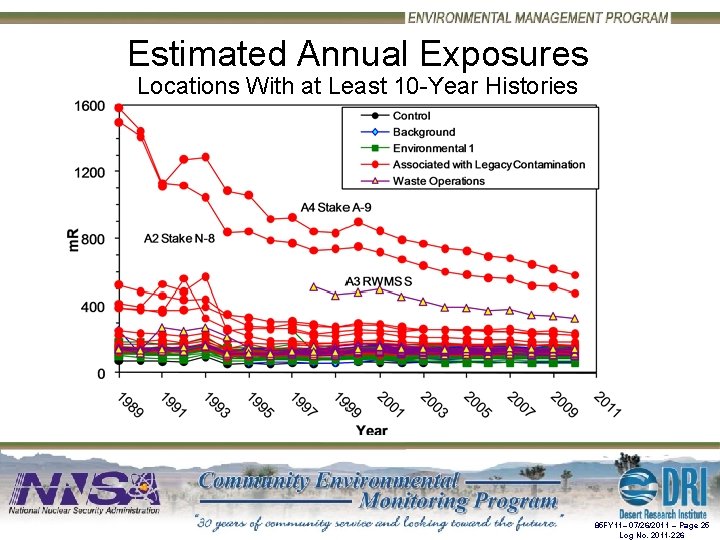
Estimated Annual Exposures Locations With at Least 10 -Year Histories 85 FY 11– 07/26/2011 – Page 25 Page. No. 25 Title Log 2011 -226
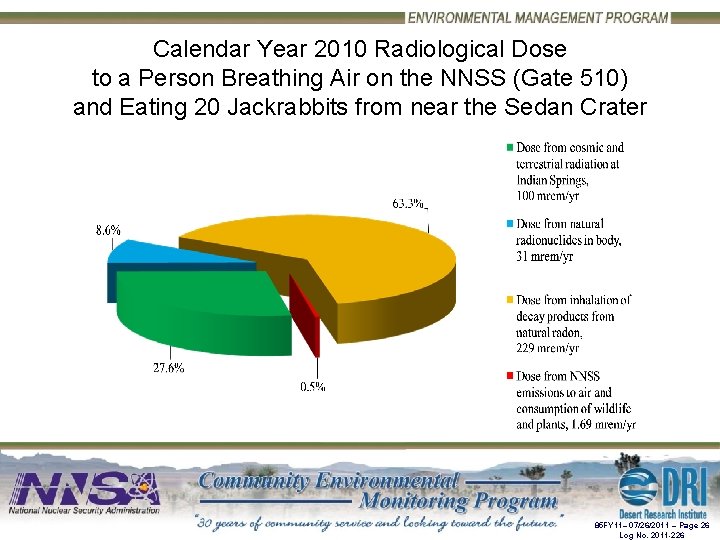
Calendar Year 2010 Radiological Dose to a Person Breathing Air on the NNSS (Gate 510) and Eating 20 Jackrabbits from near the Sedan Crater 85 FY 11– 07/26/2011 – Page 26 Page. No. 26 Title Log 2011 -226
Conclusions • Concentrations of radionuclides from legacy contamination show decreasing trends primarily due to immobilization, dilution, and physical decay. • On-site operations involving radioactive materials are evaluated for air emissions. • Current pathways for radionuclides to off-site public are air and game animals (no current pathway for groundwater or direct radiation). • Concentrations of radionuclides measured in air at on-site compliance stations and in water at on and off-site environmental monitoring locations are much less than limits for exposure to the public. 85 FY 11– 07/26/2011 – Page 27 Page. No. 27 Title Log 2011 -226