
ROUTINE HEALTH INFORMATION SYSTEMS A Curriculum on Basic
ROUTINE HEALTH INFORMATION SYSTEMS A Curriculum on Basic Concepts and Practice MODULE 9: RHIS Performance Assessment SESSION 1: Introduction to Frameworks for Assessing RHIS The complete RHIS curriculum is available here: https: //www. measureevaluation. org/our-work/ routine-health-information-systems/rhis-curriculum 1
Learning Objectives and Topics Covered Objectives Participants will be able to: § Review RHIS standards § Define RHIS performance § Define factors influencing RHIS performance § Explain the framework for assessing RHIS Topics Covered § Domains of RHIS standards § Determinants of RHIS performance § Introduction to the frameworks for assessing RHIS performance 2
Group Exercise: Underlying Problems and Causes 1. Choose three bottlenecks that you face in the current RHIS. 2. For each problem, identify the root causes contributing to it. Be specific. Example § Problem: Data are not being transmitted on schedule. § Causes: Staff do not have sufficient information, materials, forms, or training to complete the forms, or forms don’t collect the data that are needed. There is no incentive to submit information on time. 3
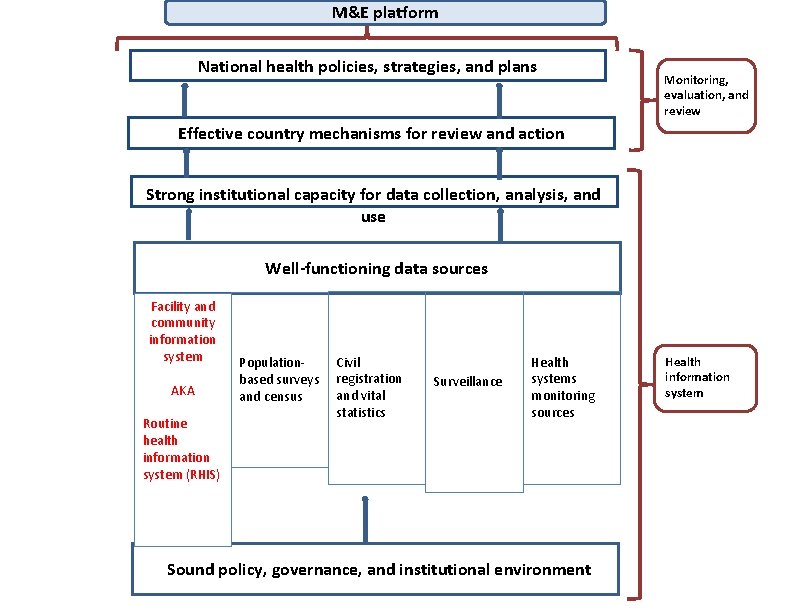
M&E platform National health policies, strategies, and plans Monitoring, evaluation, and review Effective country mechanisms for review and action Strong institutional capacity for data collection, analysis, and use Well-functioning data sources Facility and community information system AKA Routine health information system (RHIS) Populationbased surveys and census Civil registration and vital statistics Surveillance Health systems monitoring sources Sound policy, governance, and institutional environment Health information system
Defining RHIS Performance RHIS performance means both the production of high-quality information and the use of such information for decision making. 5
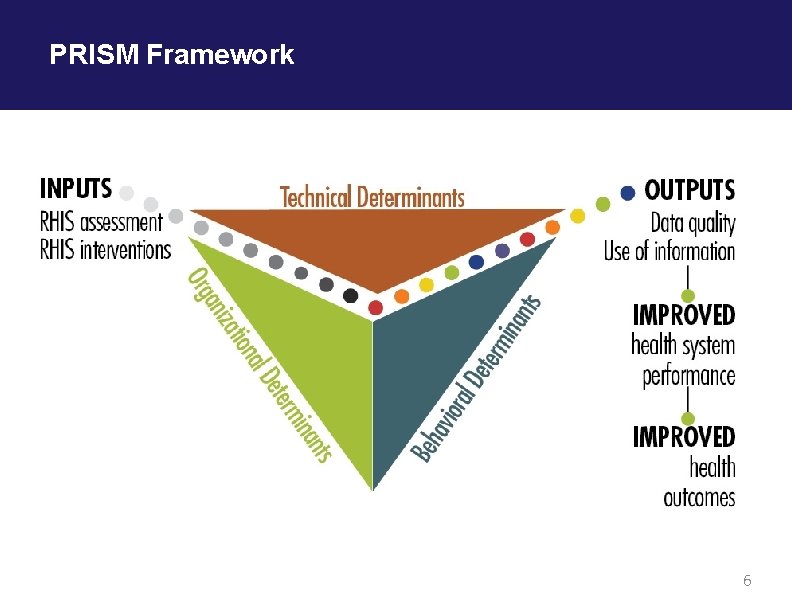
PRISM Framework 6
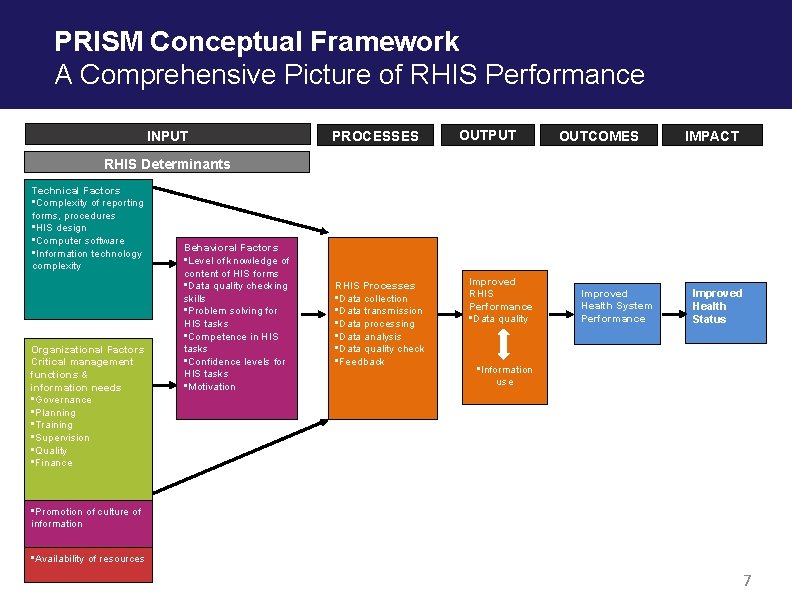
PRISM Conceptual Framework A Comprehensive Picture of RHIS Performance INPUT PROCESSES OUTPUT OUTCOMES IMPACT RHIS Determinants Technical Factors • Complexity of reporting forms, procedures • HIS design • Computer software • Information technology complexity Organizational Factors Critical management functions & information needs • Governance • Planning • Training • Supervision • Quality • Finance Behavioral Factors • Level of knowledge of content of HIS forms • Data quality checking skills • Problem solving for HIS tasks • Competence in HIS tasks • Confidence levels for HIS tasks • Motivation RHIS Processes • Data collection • Data transmission • Data processing • Data analysis • Data quality check • Feedback Improved RHIS Performance • Data quality Improved Health System Performance Improved Health Status • Information use • Promotion of culture of information • Availability of resources 7
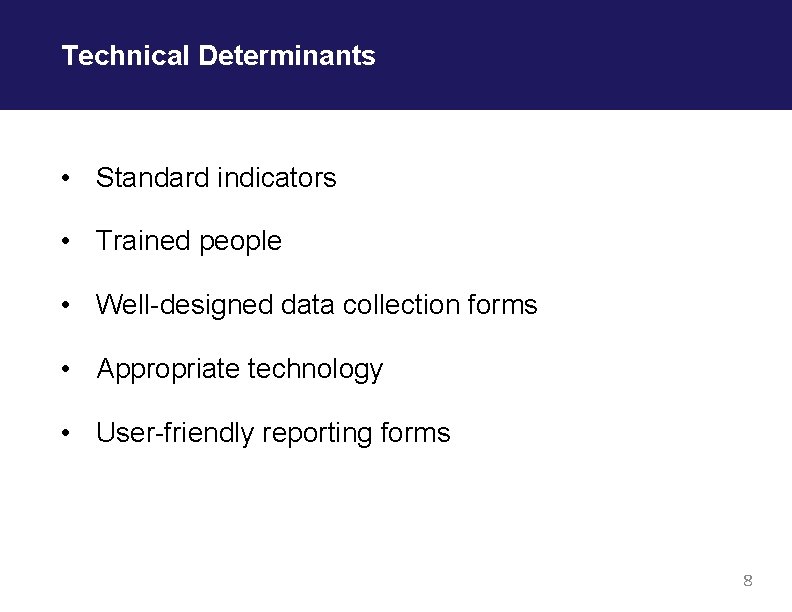
Technical Determinants • Standard indicators • Trained people • Well-designed data collection forms • Appropriate technology • User-friendly reporting forms 8
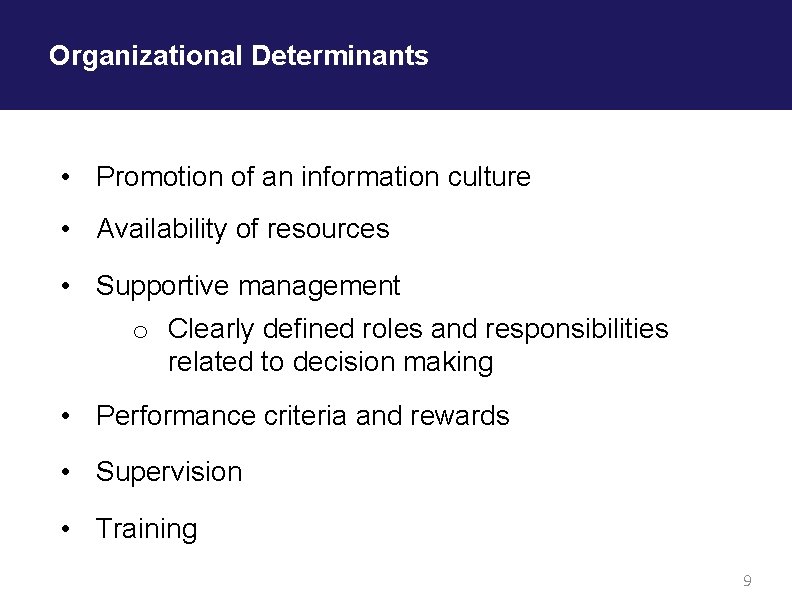
Organizational Determinants • Promotion of an information culture • Availability of resources • Supportive management o Clearly defined roles and responsibilities related to decision making • Performance criteria and rewards • Supervision • Training 9
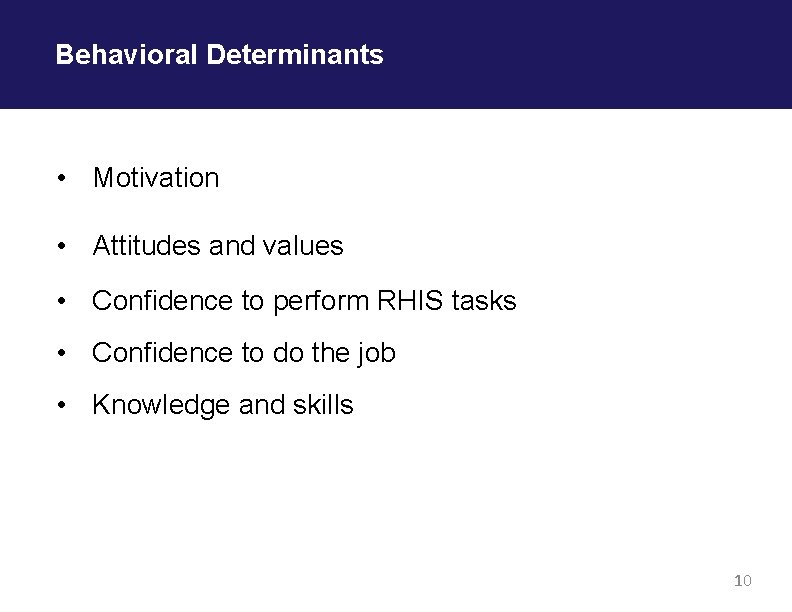
Behavioral Determinants • Motivation • Attitudes and values • Confidence to perform RHIS tasks • Confidence to do the job • Knowledge and skills 10
Categorizing Problem Causes by Type of Determinants Group exercise • Look at the causes of problems you listed in the previous exercise • Label each cause by type of determinant o Technical o Organizational o Behavioral You have 10 minutes. 11
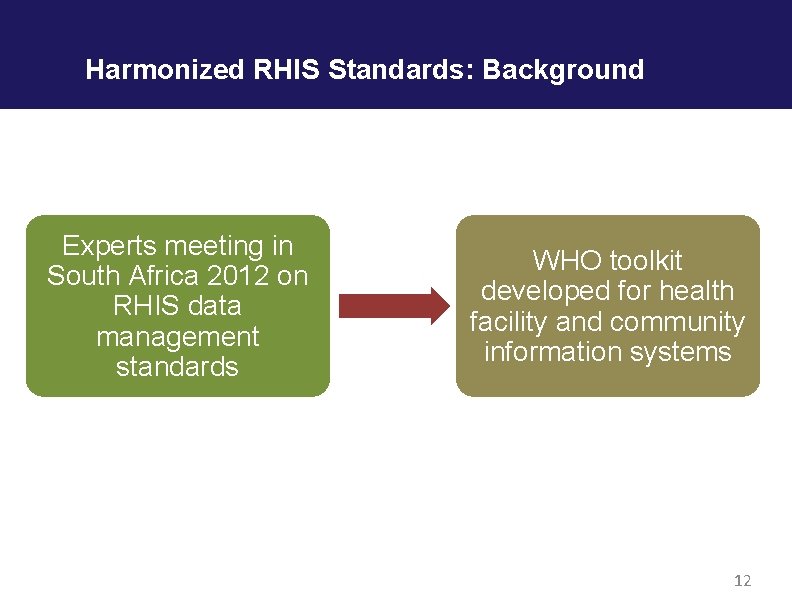
Harmonized RHIS Standards: Background Experts meeting in South Africa 2012 on RHIS data management standards WHO toolkit developed for health facility and community information systems 12
Harmonized RHIS Standards • RHIS standards defined across four domains • Management & Governance • Data & Decision Support Needs • Data Collection and Processing • Data Analysis, Dissemination, & Use • Tool for assessing adherence to RHIS standards o Rapid Assessment Tool (RAT): see Session 2 13
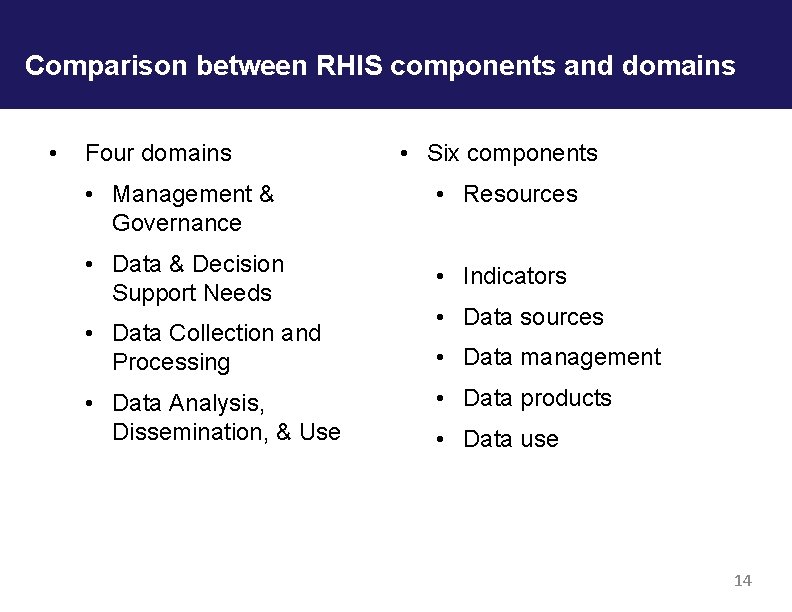
Comparison between RHIS components and domains • Four domains • Six components • Management & Governance • Resources • Data & Decision Support Needs • Indicators • Data Collection and Processing • Data management • Data Analysis, Dissemination, & Use • Data sources • Data products • Data use 14
Applying RHIS Assessment Frameworks The RHIS Assessment Frameworks and Tools will lead to comprehensive RHIS strengthening (see Module 10): • Assessing RHIS performance and determinants • Developing RHIS strategies and interventions • RHIS design and reform process • Optimizing HR for RHIS • Mobilizing additional resources 15

This presentation was produced with the support of the United States Agency for International Development (USAID) under the terms of MEASURE Evaluation cooperative agreement AIDOAA-L-14 -00004. MEASURE Evaluation is implemented by the Carolina Population Center, University of North Carolina at Chapel Hill in partnership with ICF International; John Snow, Inc. ; Management Sciences for Health; Palladium; and Tulane University. The views expressed in this presentation do not necessarily reflect the views of USAID or the United States government. 16
- Slides: 16