
Roundworms Phylum Nematoda 1 Nematodes roundworms 2 Nemata

- Slides: 27
Roundworms
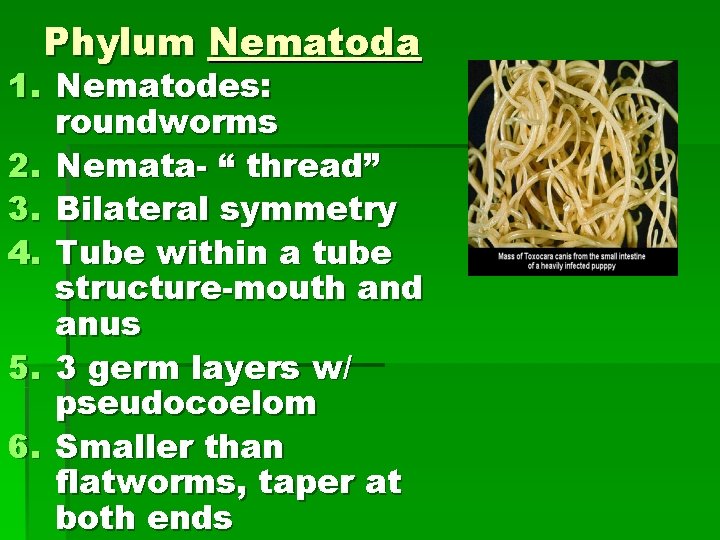
Phylum Nematoda 1. Nematodes: roundworms 2. Nemata- “ thread” 3. Bilateral symmetry 4. Tube within a tube structure-mouth and anus 5. 3 germ layers w/ pseudocoelom 6. Smaller than flatworms, taper at both ends
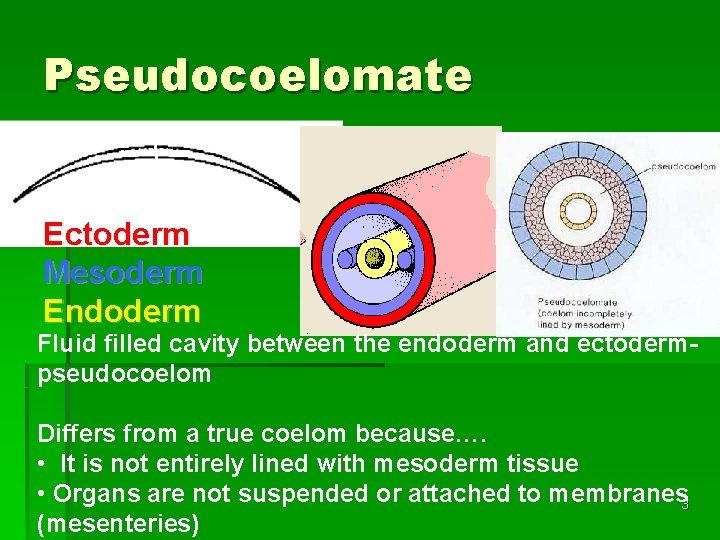
Pseudocoelomate Ectoderm Mesoderm Endoderm Fluid filled cavity between the endoderm and ectodermpseudocoelom Differs from a true coelom because…. • It is not entirely lined with mesoderm tissue • Organs are not suspended or attached to membranes 3 (mesenteries)
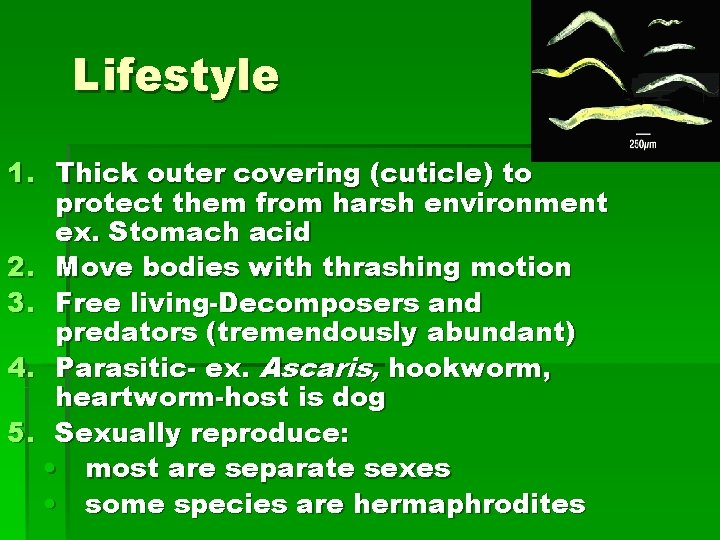
Lifestyle 1. Thick outer covering (cuticle) to protect them from harsh environment ex. Stomach acid 2. Move bodies with thrashing motion 3. Free living-Decomposers and predators (tremendously abundant) 4. Parasitic- ex. Ascaris, hookworm, heartworm-host is dog 5. Sexually reproduce: • most are separate sexes • some species are hermaphrodites
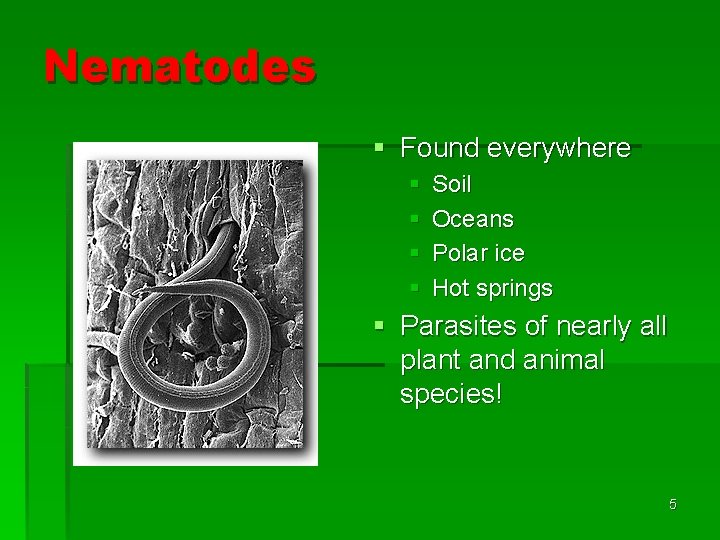
Nematodes § Found everywhere § § Soil Oceans Polar ice Hot springs § Parasites of nearly all plant and animal species! 5
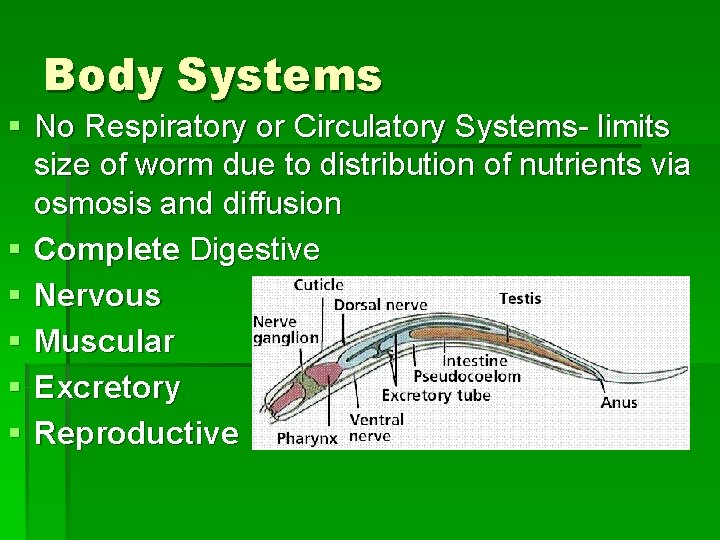
Body Systems § No Respiratory or Circulatory Systems- limits size of worm due to distribution of nutrients via osmosis and diffusion § Complete Digestive § Nervous § Muscular § Excretory § Reproductive
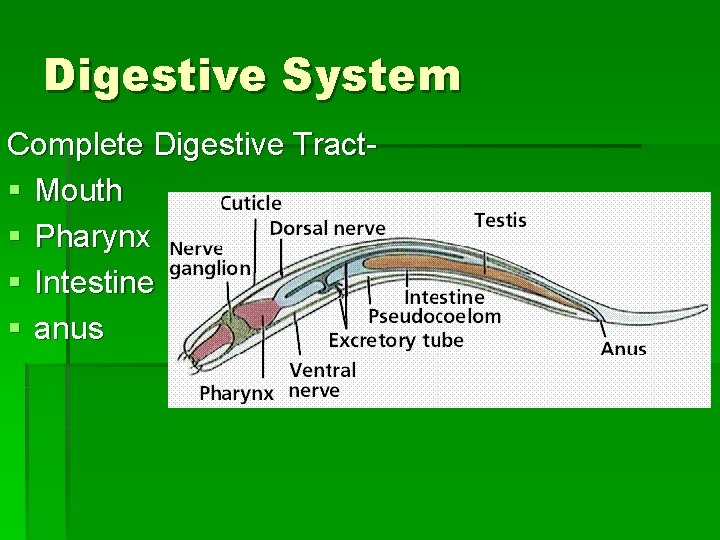
Digestive System Complete Digestive Tract§ Mouth § Pharynx § Intestine § anus
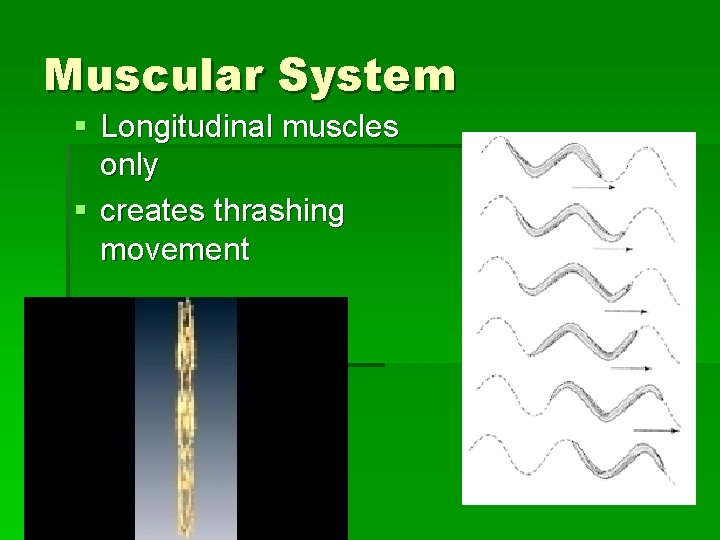
Muscular System § Longitudinal muscles only § creates thrashing movement
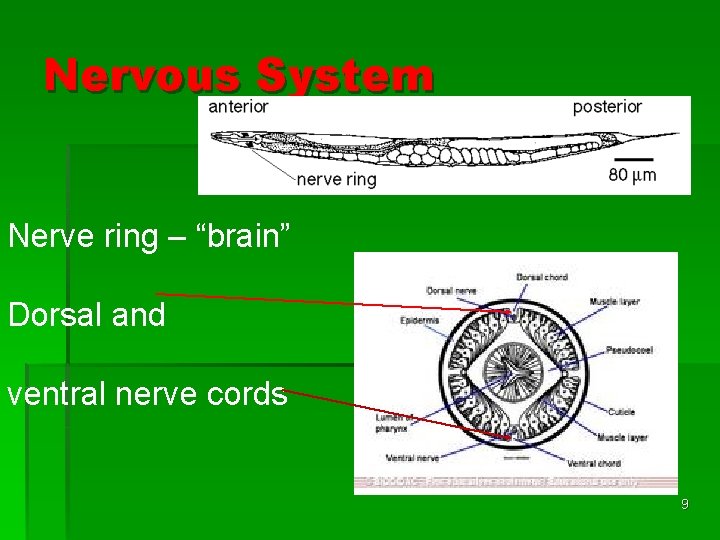
Nervous System Nerve ring – “brain” Dorsal and ventral nerve cords 9
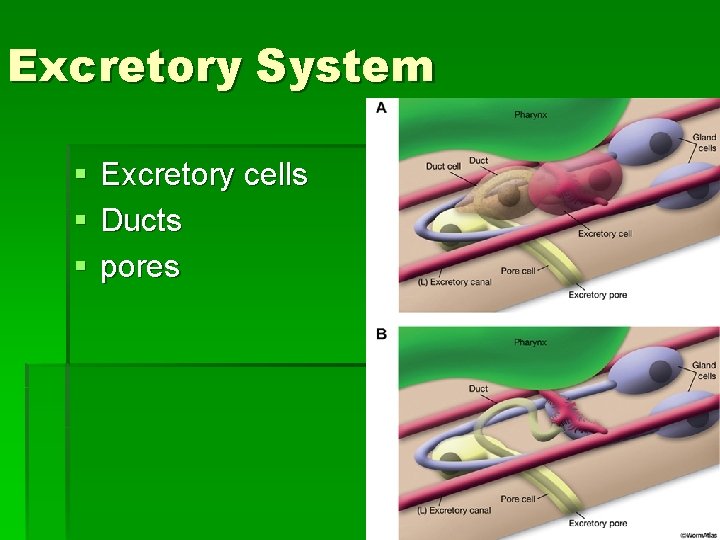
Excretory System § § § Excretory cells Ducts pores
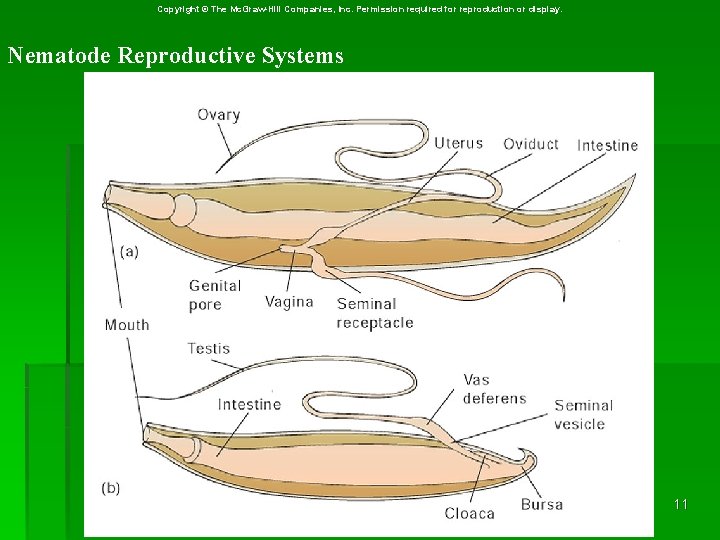
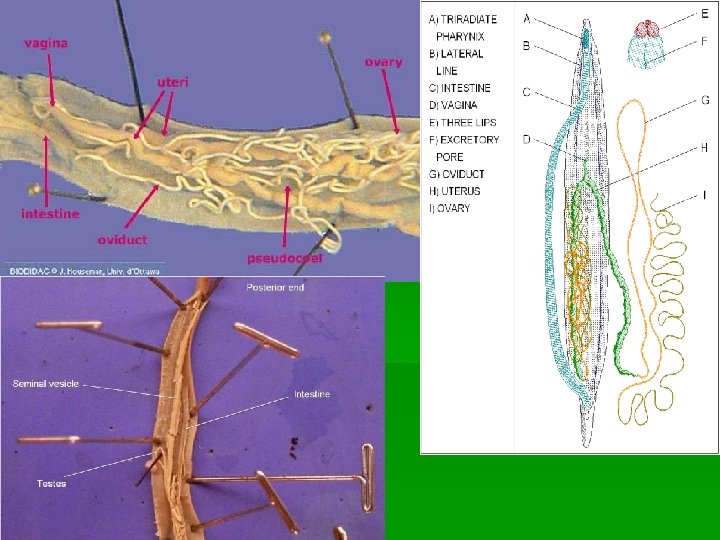
Copyright © The Mc. Graw-Hill Companies, Inc. Permission required for reproduction or display. Nematode Reproductive Systems 11
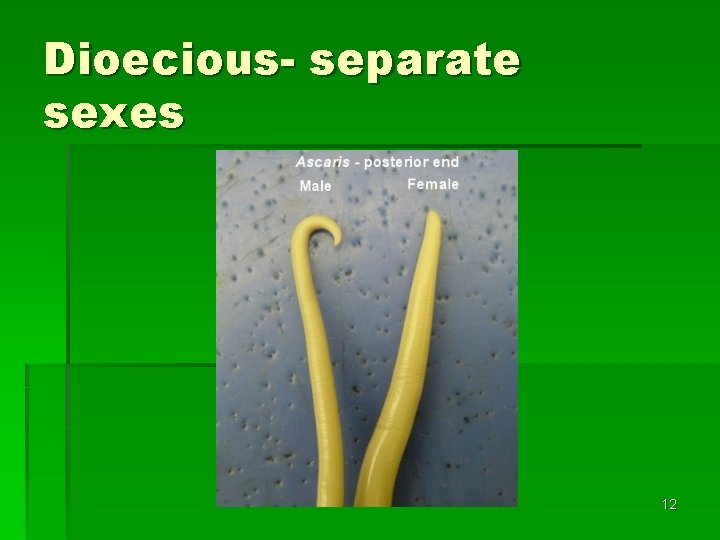
Dioecious- separate sexes 12
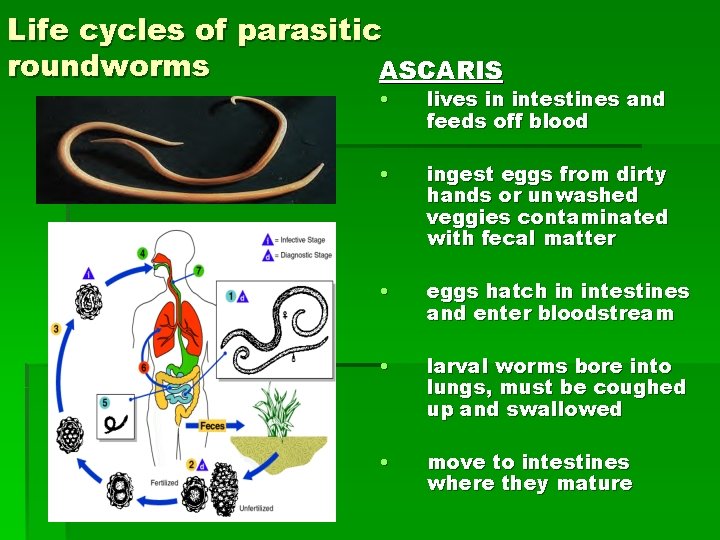
Life cycles of parasitic roundworms ASCARIS • lives in intestines and feeds off blood • ingest eggs from dirty hands or unwashed veggies contaminated with fecal matter • eggs hatch in intestines and enter bloodstream • larval worms bore into lungs, must be coughed up and swallowed • move to intestines where they mature
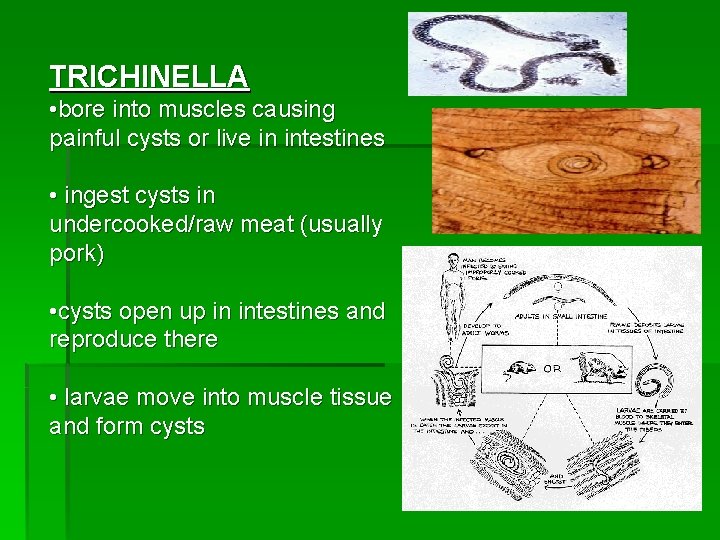
TRICHINELLA • bore into muscles causing painful cysts or live in intestines • ingest cysts in undercooked/raw meat (usually pork) • cysts open up in intestines and reproduce there • larvae move into muscle tissue and form cysts
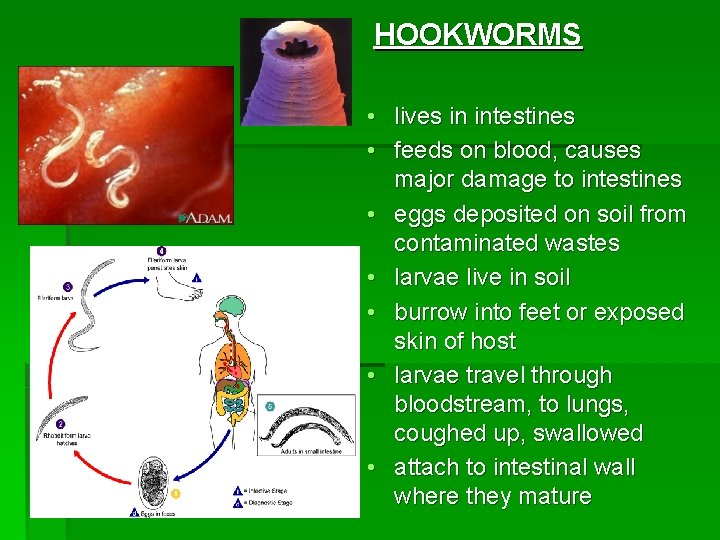
HOOKWORMS • lives in intestines • feeds on blood, causes major damage to intestines • eggs deposited on soil from contaminated wastes • larvae live in soil • burrow into feet or exposed skin of host • larvae travel through bloodstream, to lungs, coughed up, swallowed • attach to intestinal wall where they mature
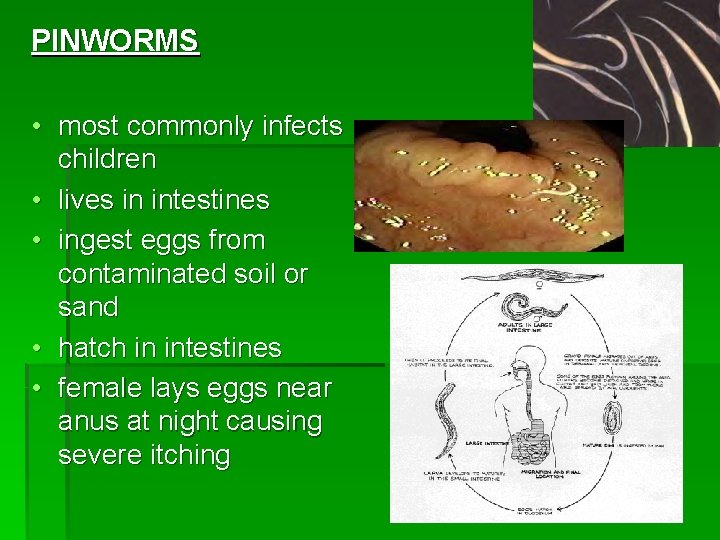
PINWORMS • most commonly infects children • lives in intestines • ingest eggs from contaminated soil or sand • hatch in intestines • female lays eggs near anus at night causing severe itching
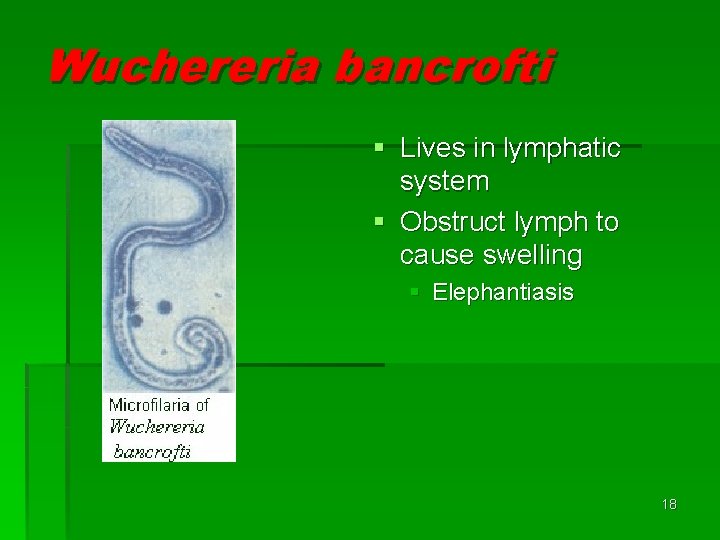
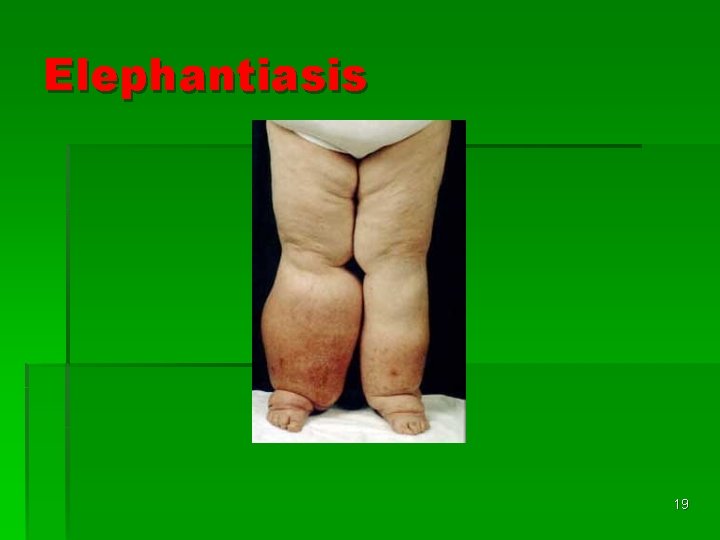
Wuchereria bancrofti § Lives in lymphatic system § Obstruct lymph to cause swelling § Elephantiasis 18
Elephantiasis 19
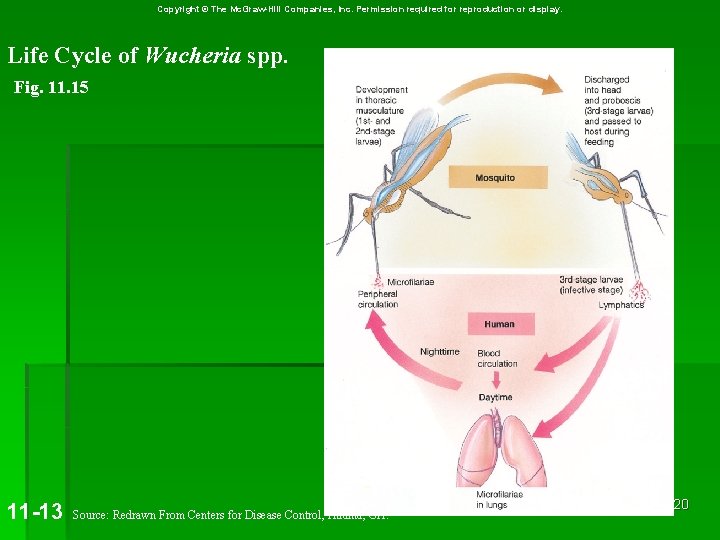
Copyright © The Mc. Graw-Hill Companies, Inc. Permission required for reproduction or display. Life Cycle of Wucheria spp. Fig. 11. 15 11 -13 Source: Redrawn From Centers for Disease Control, Atlanta, GA. 20
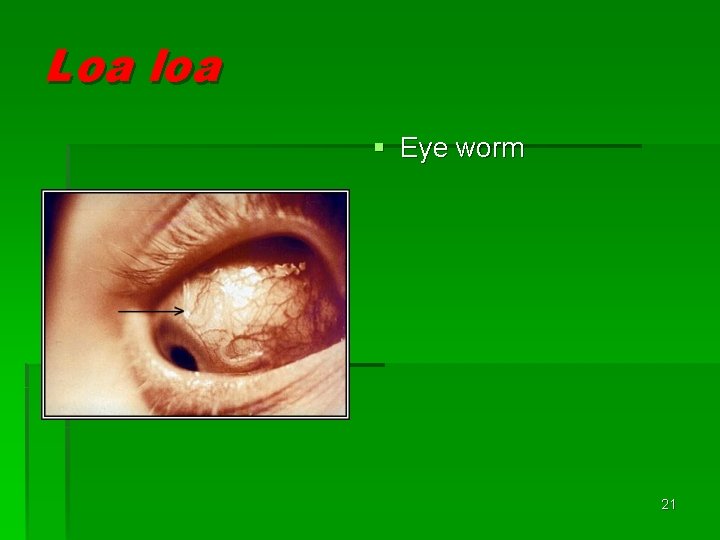
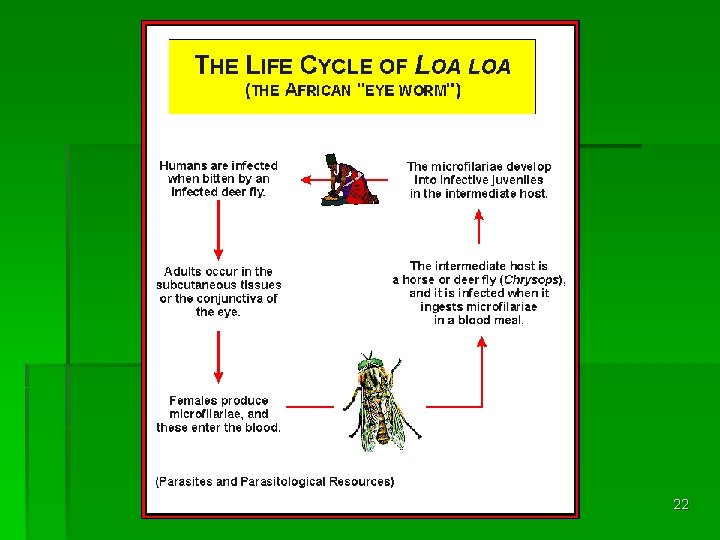
Loa loa § Eye worm 21
22
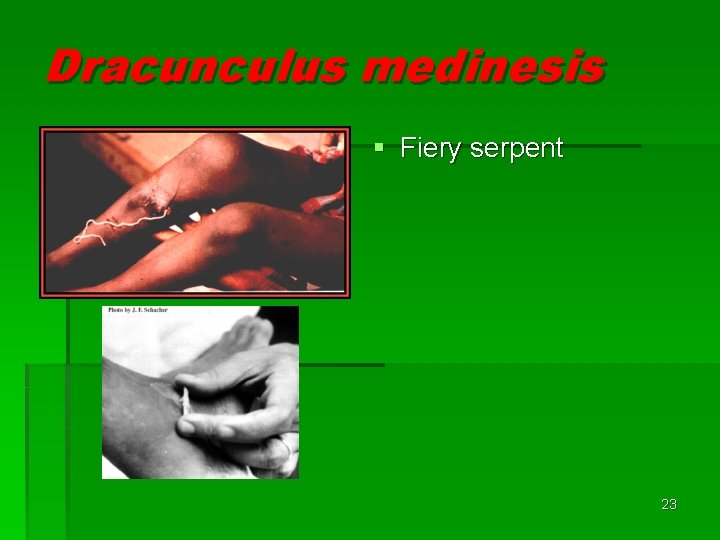
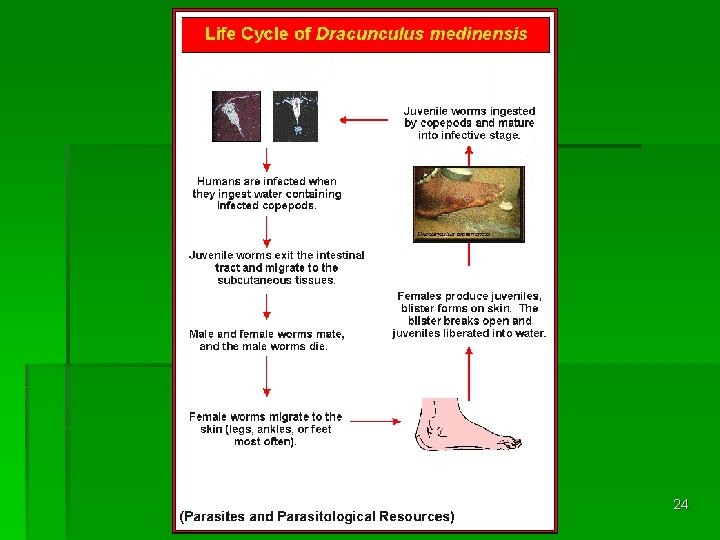
Dracunculus medinesis § Fiery serpent 23
24
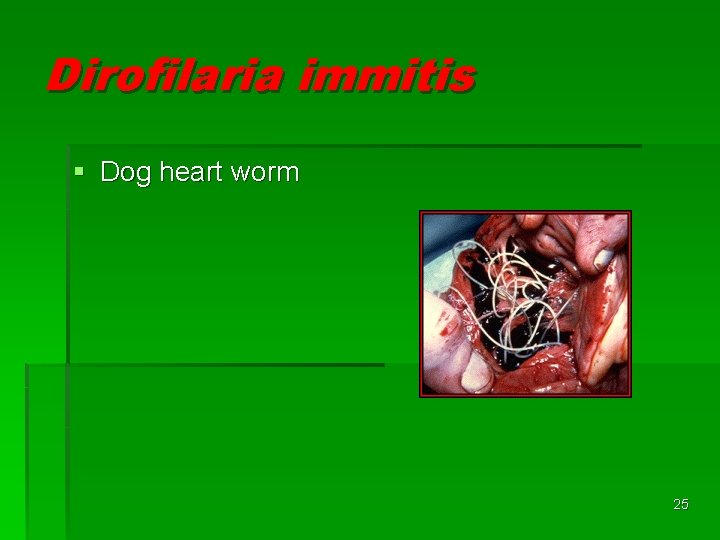
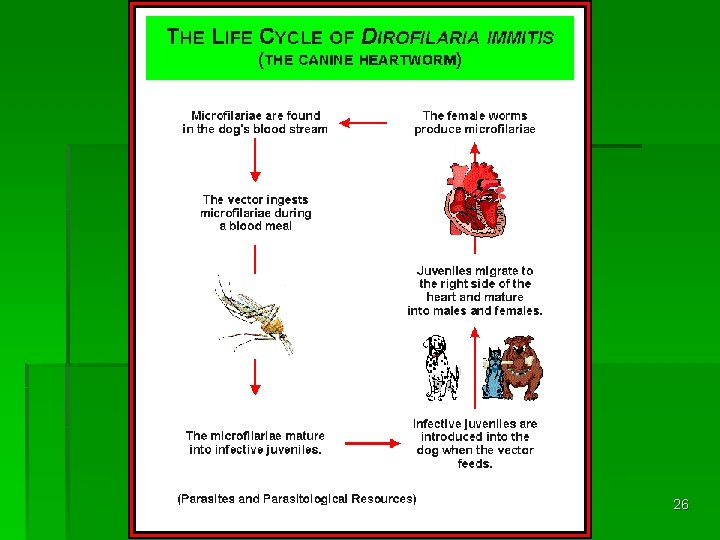
Dirofilaria immitis § Dog heart worm 25
26
The End 27