
ROUNDUP GLYPHOSATE environmental exposure toxicity and mechanisms of





- Slides: 32
ROUNDUP - GLYPHOSATE environmental exposure, toxicity and mechanisms of action Innovation Lectures (INNOLEC) Masaryk University, May 2012
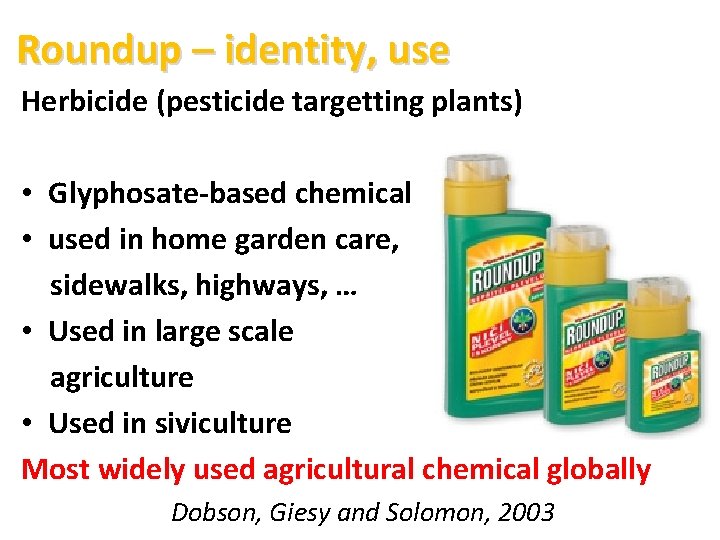
Roundup – identity, use Herbicide (pesticide targetting plants) • Glyphosate-based chemical • used in home garden care, sidewalks, highways, … • Used in large scale agriculture • Used in siviculture Most widely used agricultural chemical globally Dobson, Giesy and Solomon, 2003
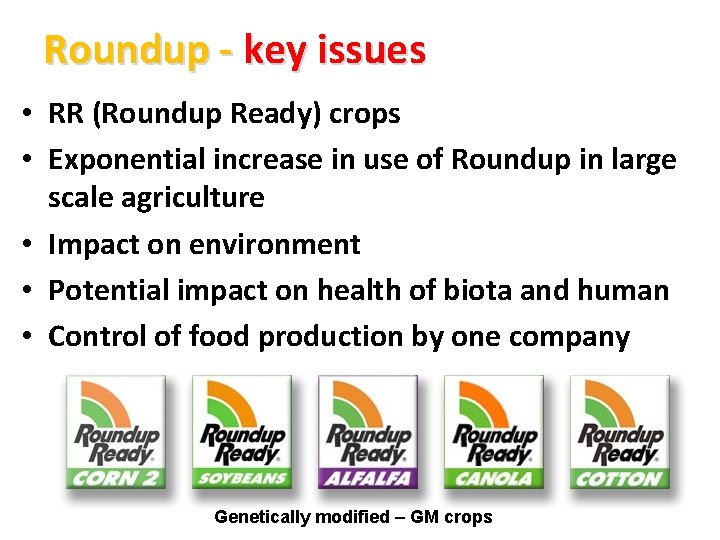
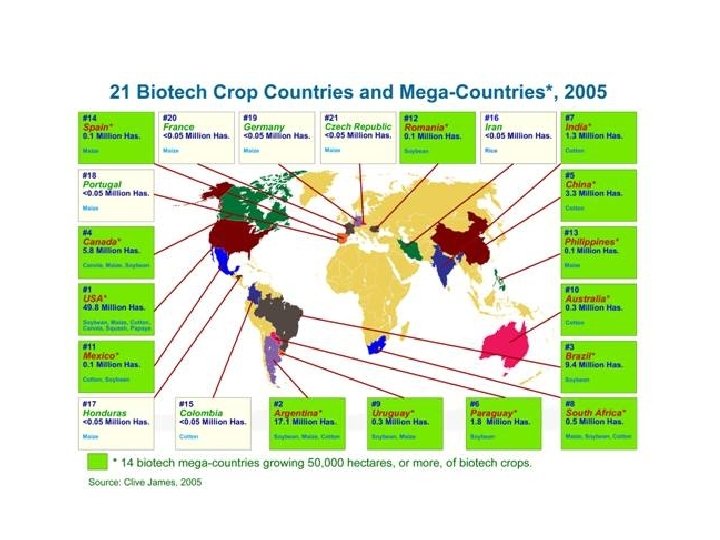
Roundup - key issues • RR (Roundup Ready) crops • Exponential increase in use of Roundup in large scale agriculture • Impact on environment • Potential impact on health of biota and human • Control of food production by one company Genetically modified – GM crops
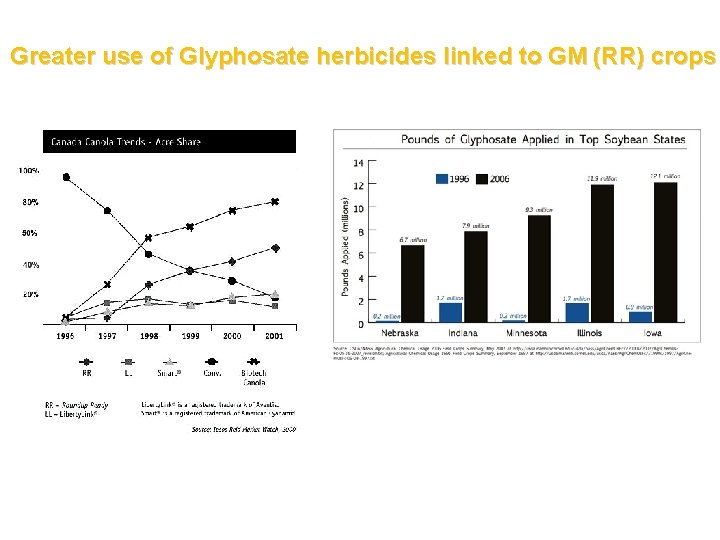
Greater use of Glyphosate herbicides linked to GM (RR) crops
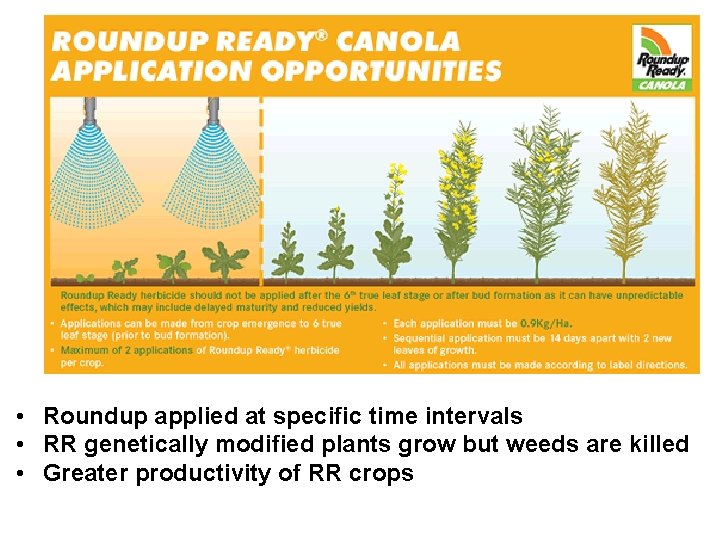
• Roundup applied at specific time intervals • RR genetically modified plants grow but weeds are killed • Greater productivity of RR crops
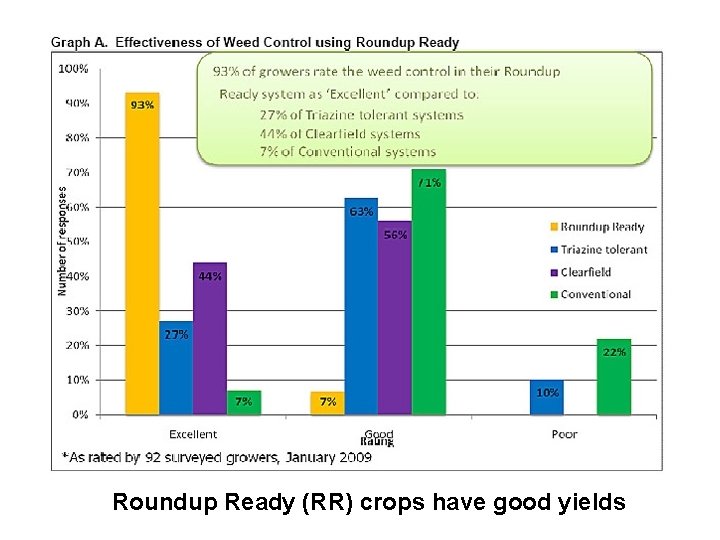
Roundup Ready (RR) crops have good yields
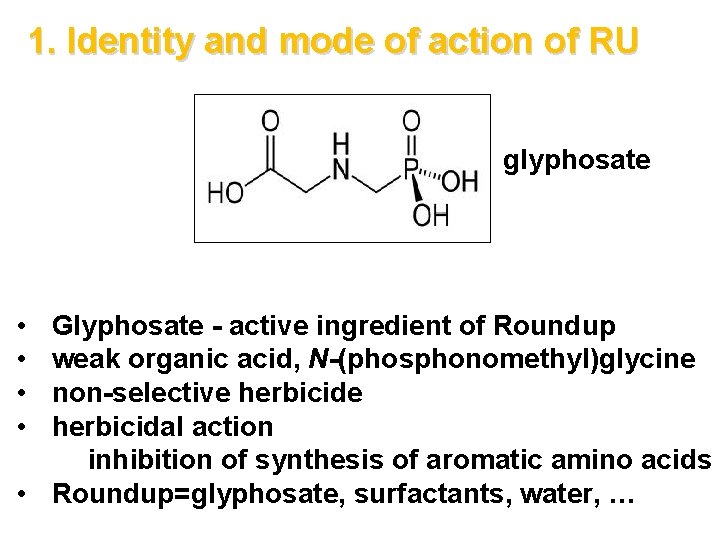
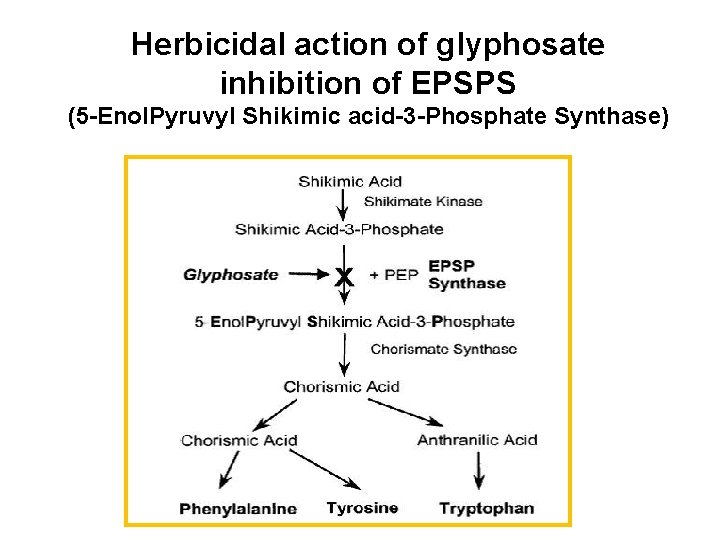
1. Identity and mode of action of RU glyphosate • • Glyphosate - active ingredient of Roundup weak organic acid, N-(phosphonomethyl)glycine non-selective herbicidal action inhibition of synthesis of aromatic amino acids • Roundup=glyphosate, surfactants, water, …
Herbicidal action of glyphosate inhibition of EPSPS (5 -Enol. Pyruvyl Shikimic acid-3 -Phosphate Synthase)
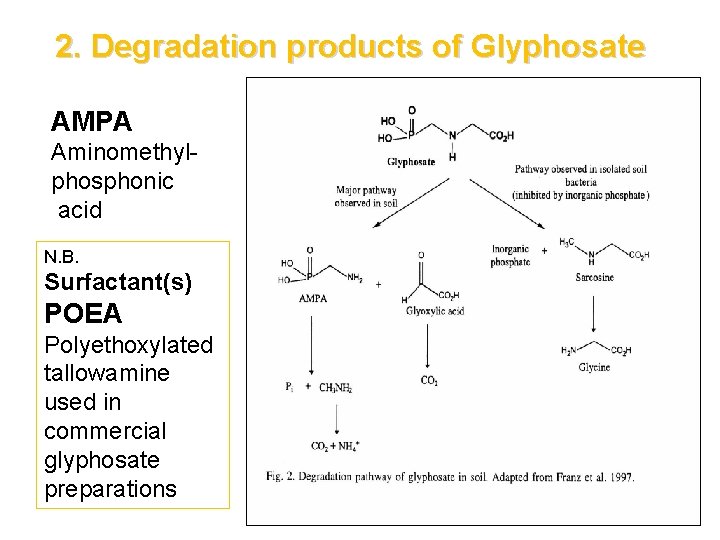
2. Degradation products of Glyphosate AMPA Aminomethylphosphonic acid N. B. Surfactant(s) POEA Polyethoxylated tallowamine used in commercial glyphosate preparations
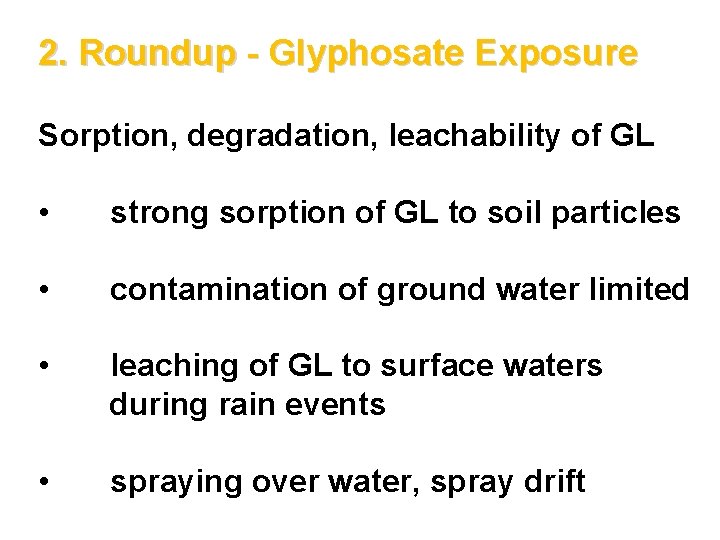
2. Roundup - Glyphosate Exposure Sorption, degradation, leachability of GL • strong sorption of GL to soil particles • contamination of ground water limited • leaching of GL to surface waters during rain events • spraying over water, spray drift
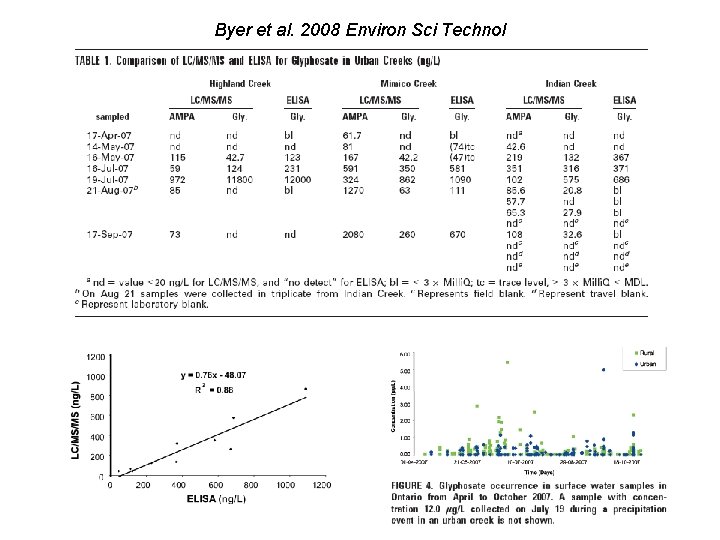
Byer et al. 2008 Environ Sci Technol
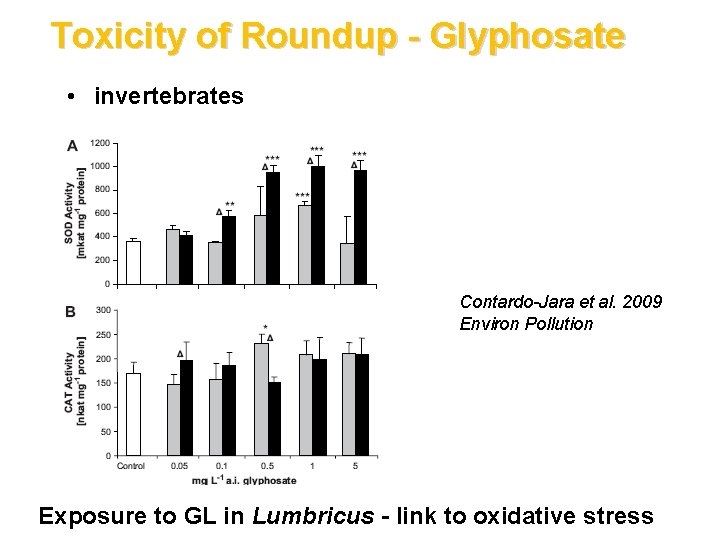
Toxicity of Roundup - Glyphosate • invertebrates Contardo-Jara et al. 2009 Environ Pollution Exposure to GL in Lumbricus - link to oxidative stress
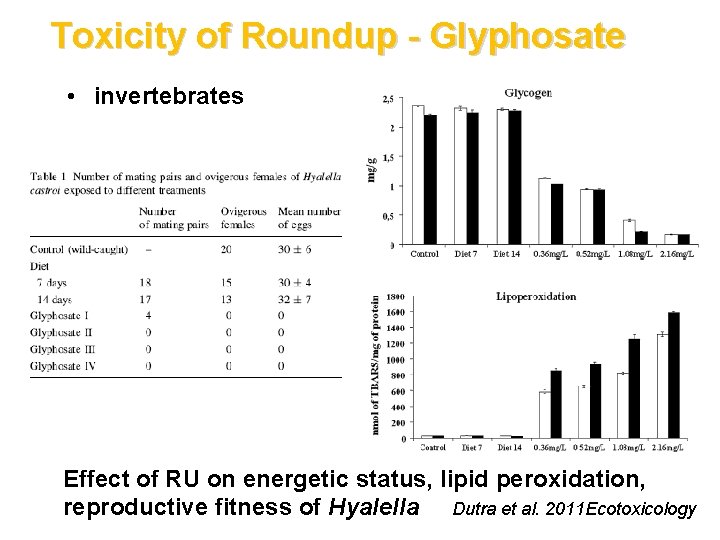
Toxicity of Roundup - Glyphosate • invertebrates Effect of RU on energetic status, lipid peroxidation, reproductive fitness of Hyalella Dutra et al. 2011 Ecotoxicology
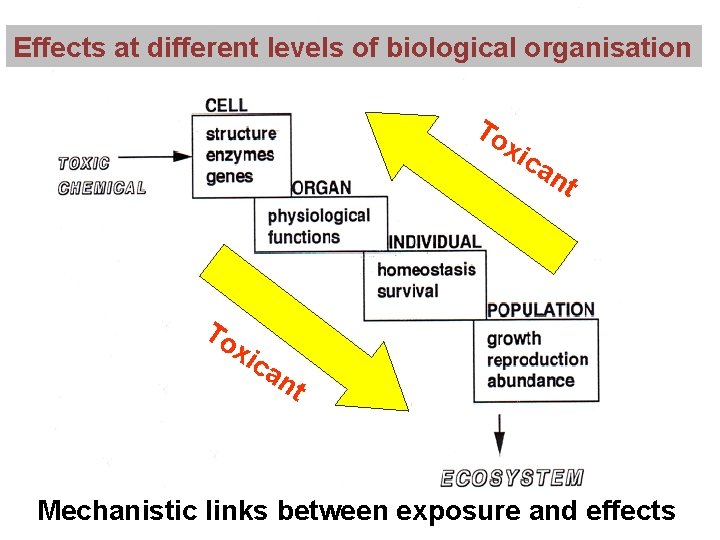
Effects at different levels of biological organisation To xic a nt To x ica nt Mechanistic links between exposure and effects
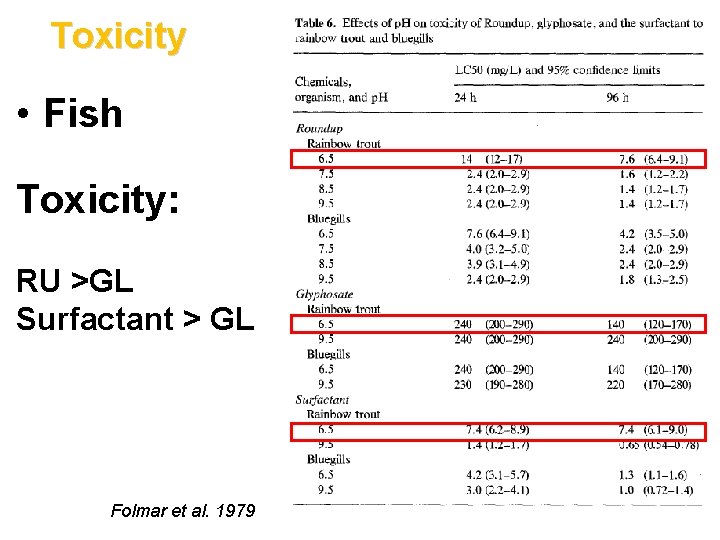
Toxicity • Fish Toxicity: RU >GL Surfactant > GL Folmar et al. 1979
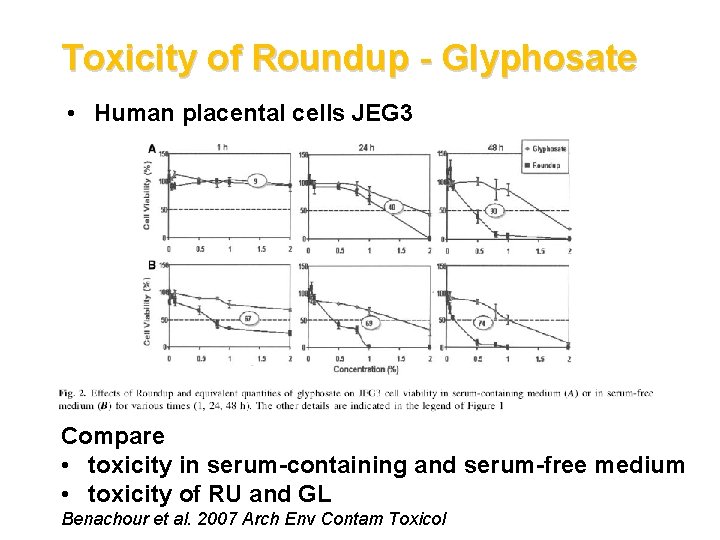
Toxicity of Roundup - Glyphosate • Human placental cells JEG 3 Compare • toxicity in serum-containing and serum-free medium • toxicity of RU and GL Benachour et al. 2007 Arch Env Contam Toxicol
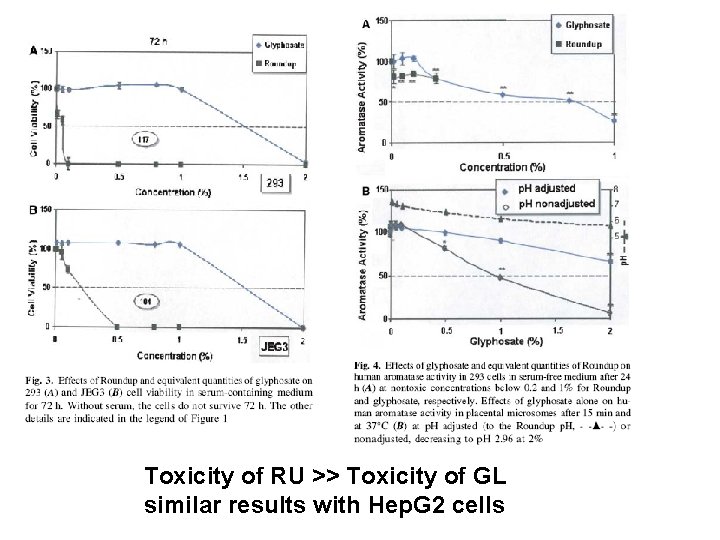
Toxicity of RU >> Toxicity of GL similar results with Hep. G 2 cells
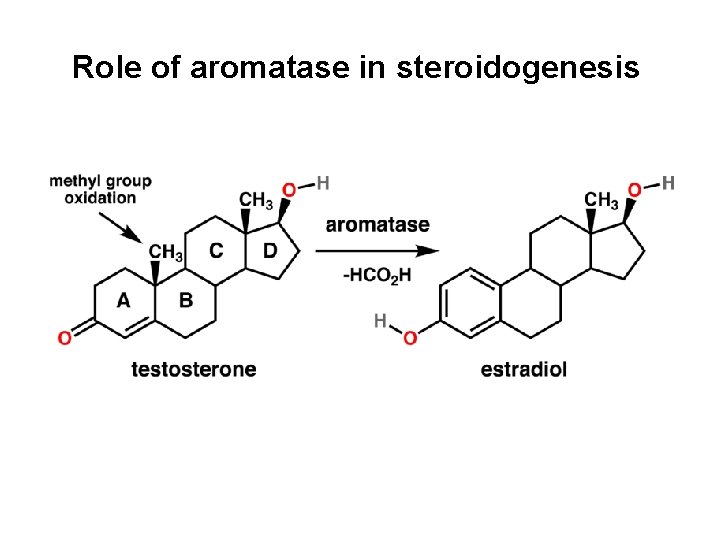
Role of aromatase in steroidogenesis
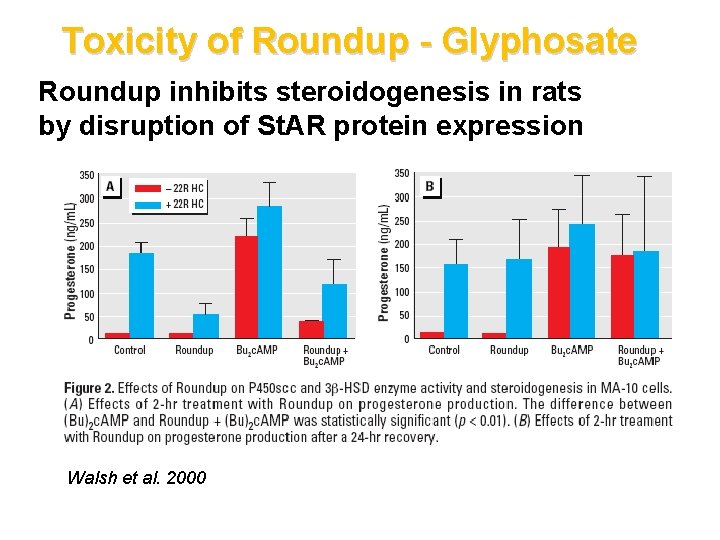
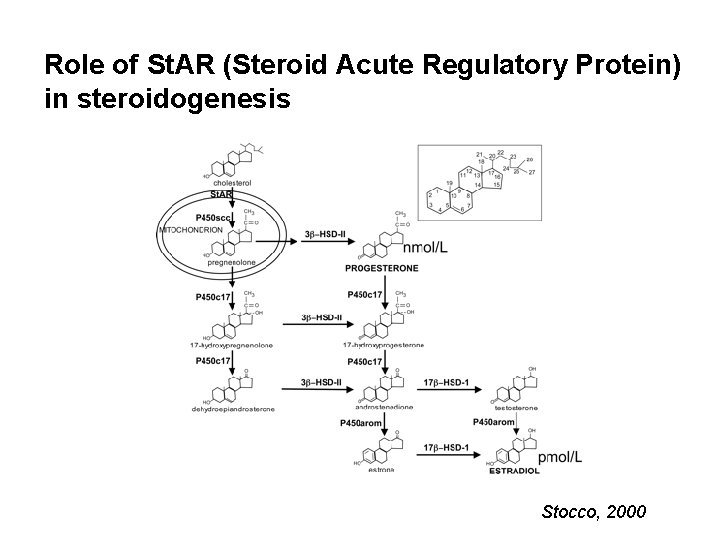
Toxicity of Roundup - Glyphosate Roundup inhibits steroidogenesis in rats by disruption of St. AR protein expression Walsh et al. 2000
Role of St. AR (Steroid Acute Regulatory Protein) in steroidogenesis Stocco, 2000
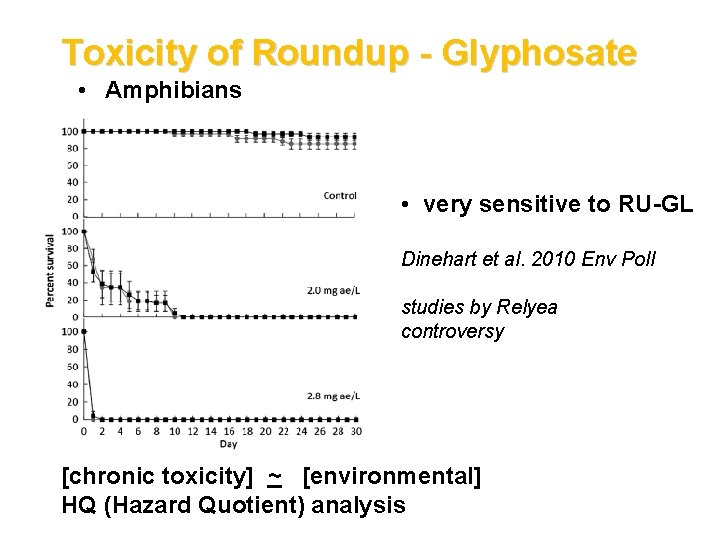
Toxicity of Roundup - Glyphosate • Amphibians • very sensitive to RU-GL Dinehart et al. 2010 Env Poll studies by Relyea controversy [chronic toxicity] ~ [environmental] HQ (Hazard Quotient) analysis
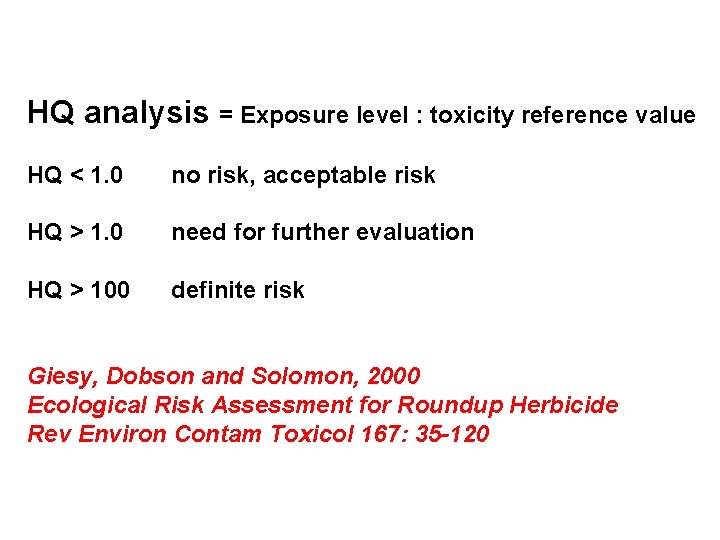
HQ analysis = Exposure level : toxicity reference value HQ < 1. 0 no risk, acceptable risk HQ > 1. 0 need for further evaluation HQ > 100 definite risk Giesy, Dobson and Solomon, 2000 Ecological Risk Assessment for Roundup Herbicide Rev Environ Contam Toxicol 167: 35 -120
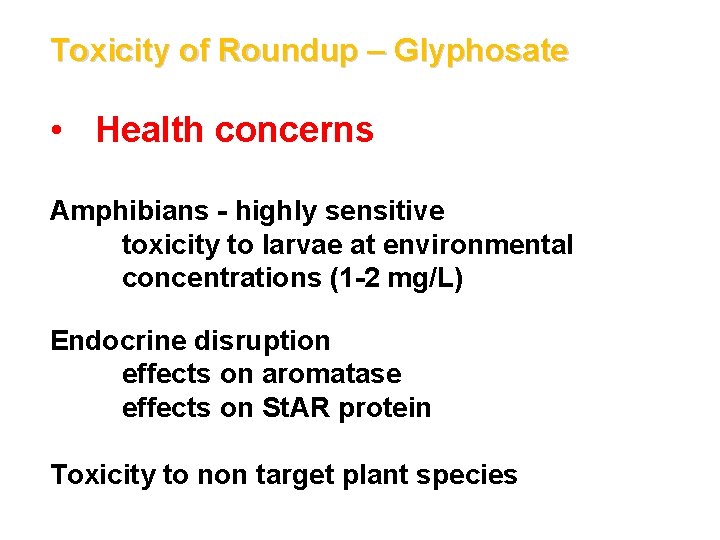
Toxicity of Roundup – Glyphosate • Health concerns Amphibians - highly sensitive toxicity to larvae at environmental concentrations (1 -2 mg/L) Endocrine disruption effects on aromatase effects on St. AR protein Toxicity to non target plant species
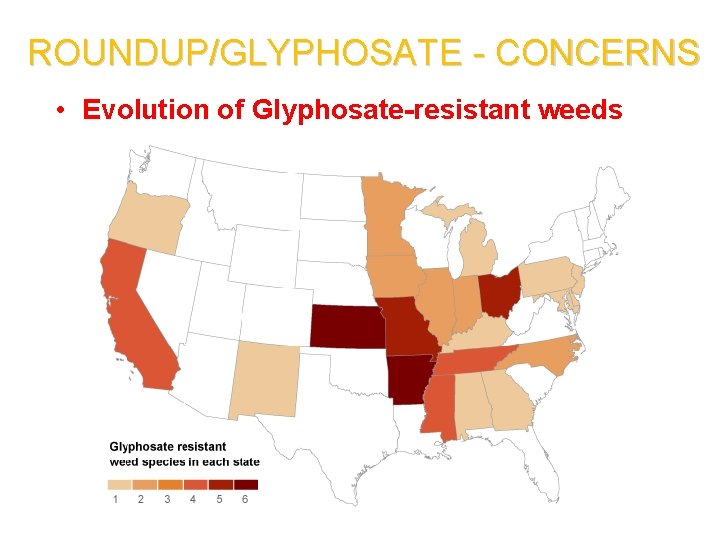
ROUNDUP/GLYPHOSATE - CONCERNS • Evolution of Glyphosate-resistant weeds
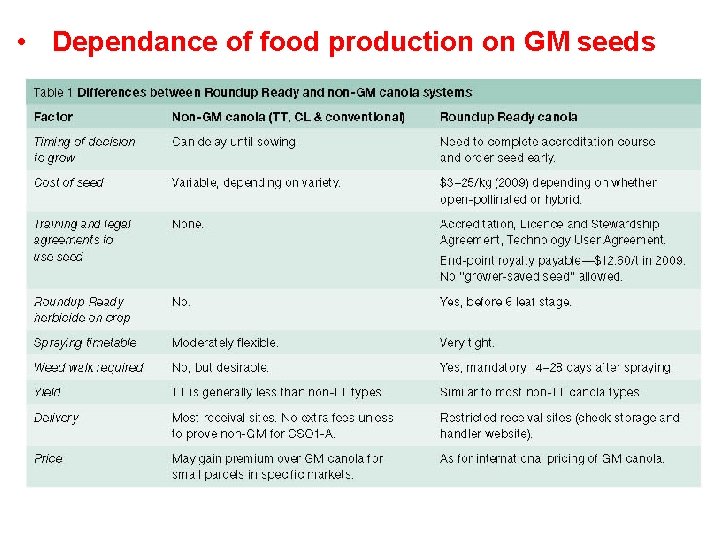
• Dependance of food production on GM seeds
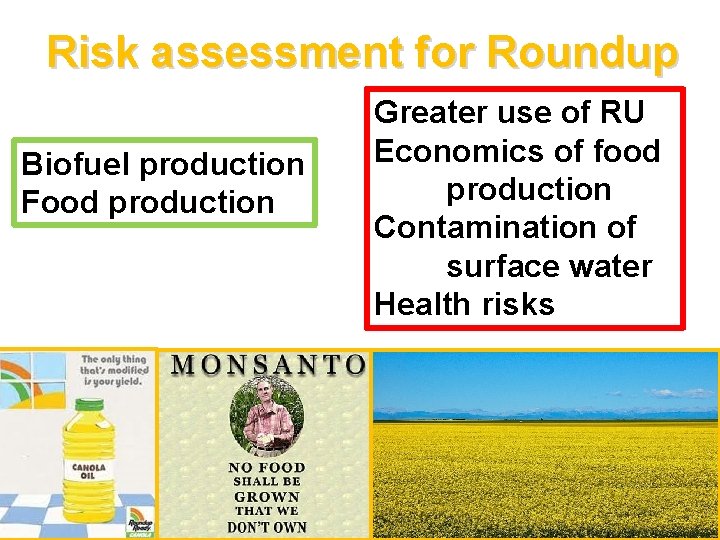
Risk assessment for Roundup Biofuel production Food production Greater use of RU Economics of food production Contamination of surface water Health risks
Waterton National Park – Alberta, Canada