
Rotator Cuff Repair Indications Patient Selection Outcomes James

- Slides: 43
Rotator Cuff Repair Indications, Patient Selection, Outcomes James C. Vailas, M. D. New Hampshire Orthopaedic Center September 14, 2013 New Hampshire Musculoskeletal Institute 20 th Annual Symposium
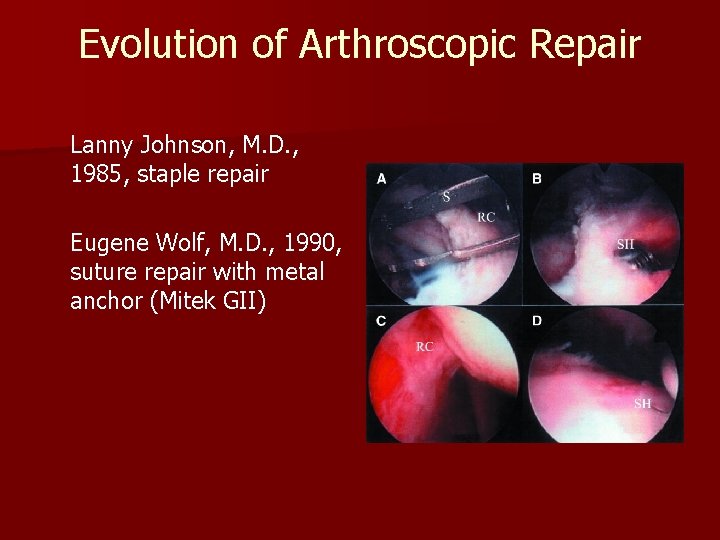
Evolution of Arthroscopic Repair Lanny Johnson, M. D. , 1985, staple repair Eugene Wolf, M. D. , 1990, suture repair with metal anchor (Mitek GII)
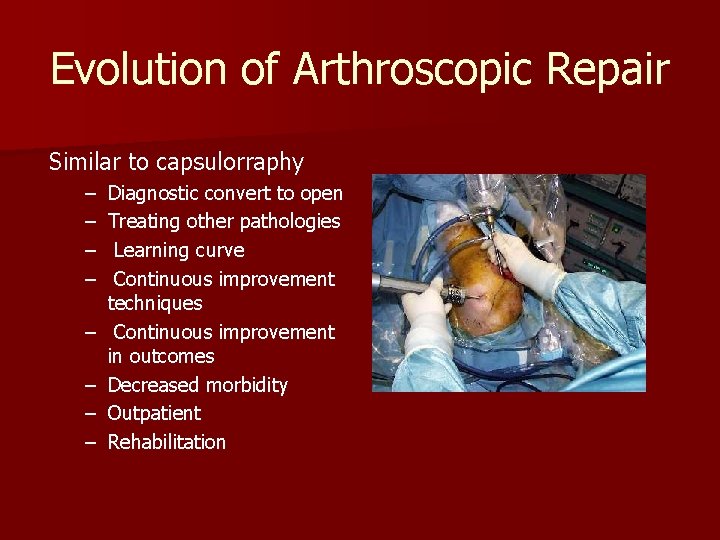
Evolution of Arthroscopic Repair Similar to capsulorraphy – – – – Diagnostic convert to open Treating other pathologies Learning curve Continuous improvement techniques Continuous improvement in outcomes Decreased morbidity Outpatient Rehabilitation
TRENDS OF REPAIRS n 141% increase 1996 -2006 – Arthroscopic increased 600% open 34% – Repairs done ASCs quadrupled Colvin et al, JBJS Am, Feb. 2012 n Acromioplasties decreased 10% – Mauro et al, JBJS Am, Aug. 2012 2004 -09
Rotator Cuff Repair n Anatomy – Gross and Arthroscopic Pathological anatomy n Surgical Indications for Repair n – Patient Selection n n Arthroscopy Set-up Surgical Procedures / Techniques Rehabilitation Clinical Outcomes
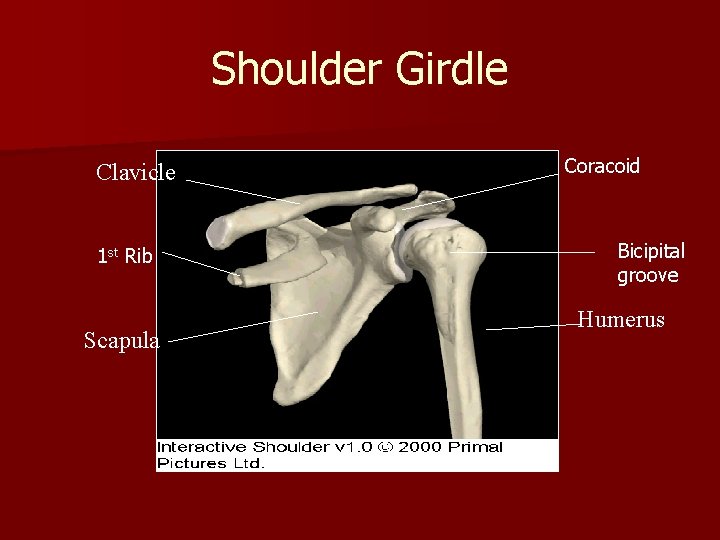
Shoulder Girdle Clavicle 1 st Rib Scapula Coracoid Bicipital groove Humerus
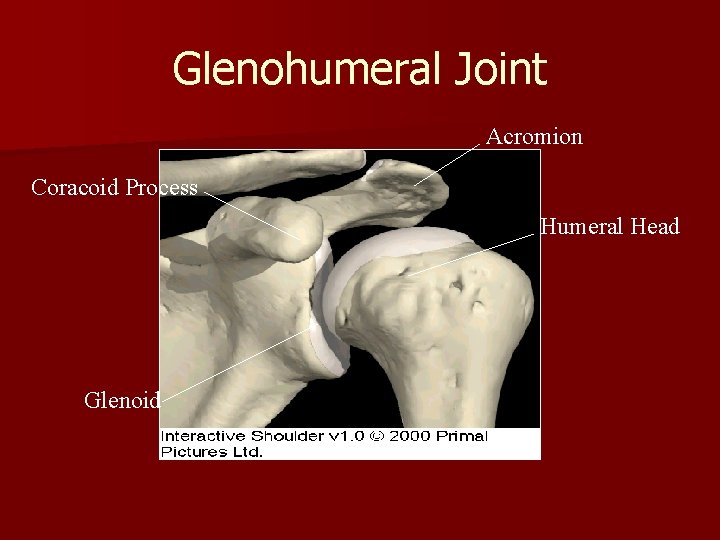
Glenohumeral Joint Acromion Coracoid Process Humeral Head Glenoid
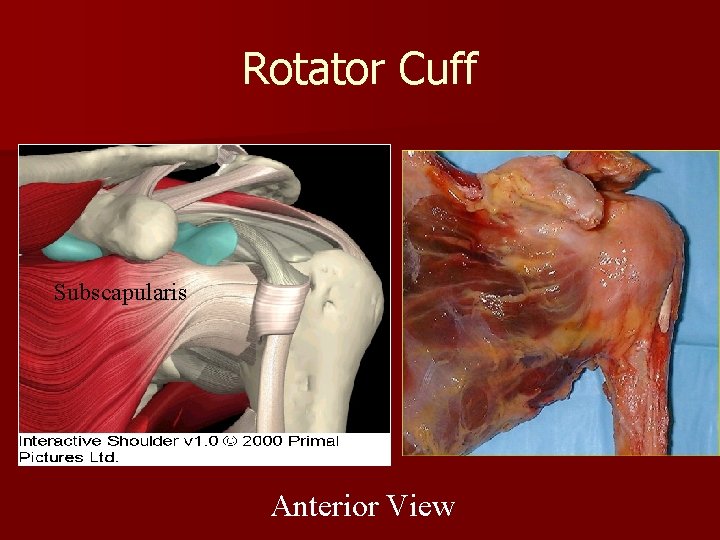
Rotator Cuff Subscapularis Anterior View
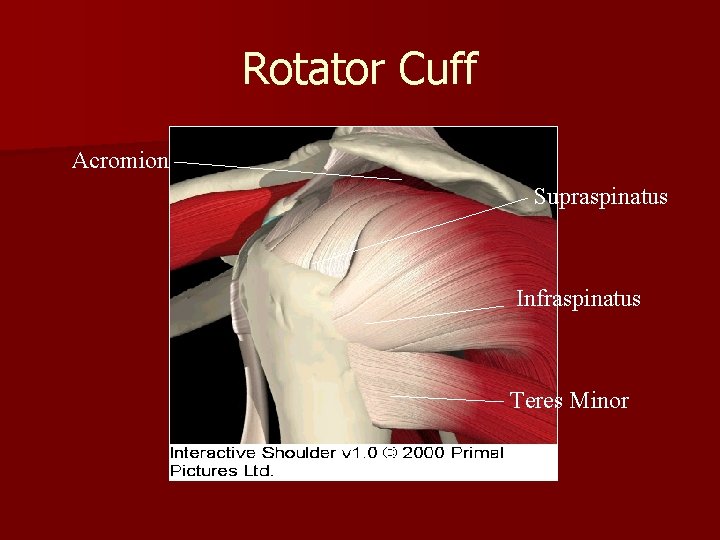
Rotator Cuff Acromion Supraspinatus Infraspinatus Teres Minor
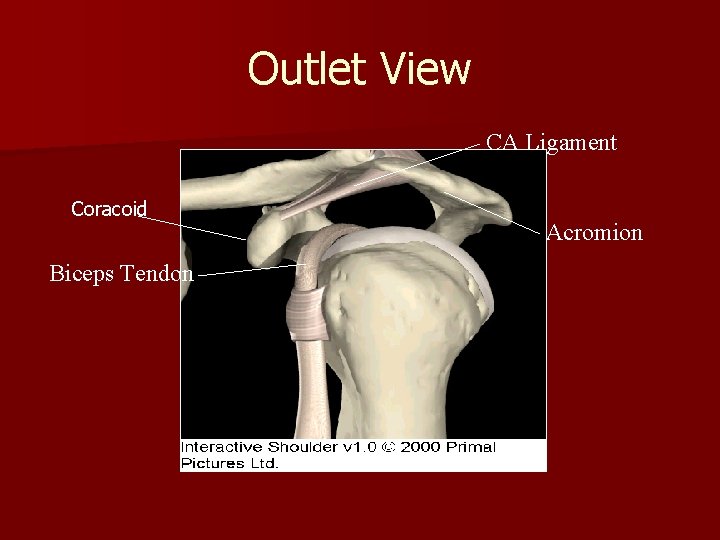
Outlet View CA Ligament Coracoid Biceps Tendon Acromion
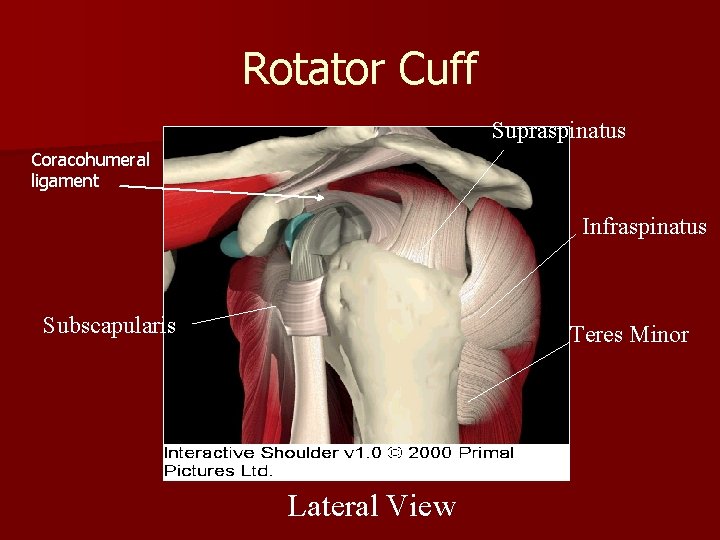
Rotator Cuff Supraspinatus Coracohumeral ligament Infraspinatus Subscapularis Teres Minor Lateral View
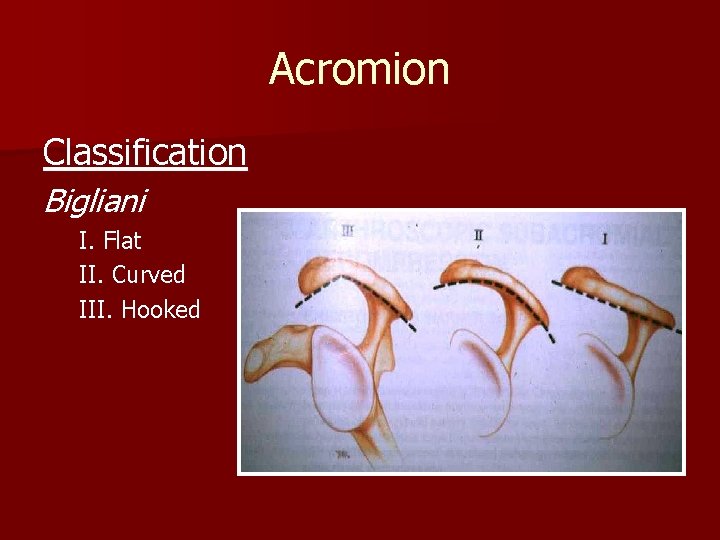
Acromion Classification Bigliani I. Flat II. Curved III. Hooked
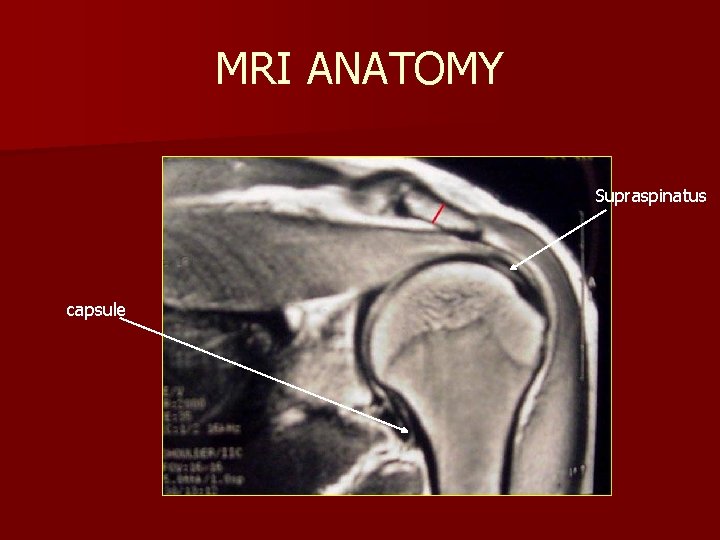
MRI ANATOMY Supraspinatus capsule
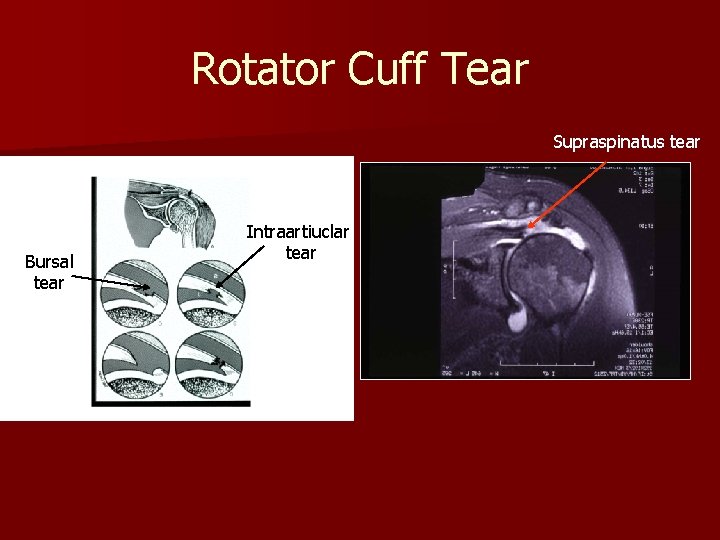
Rotator Cuff Tear Supraspinatus tear Bursal tear Intraartiuclar tear
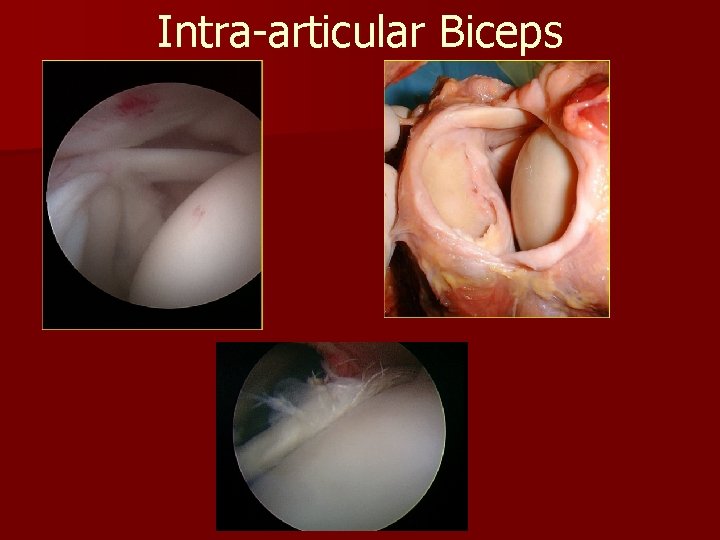
Intra-articular Biceps
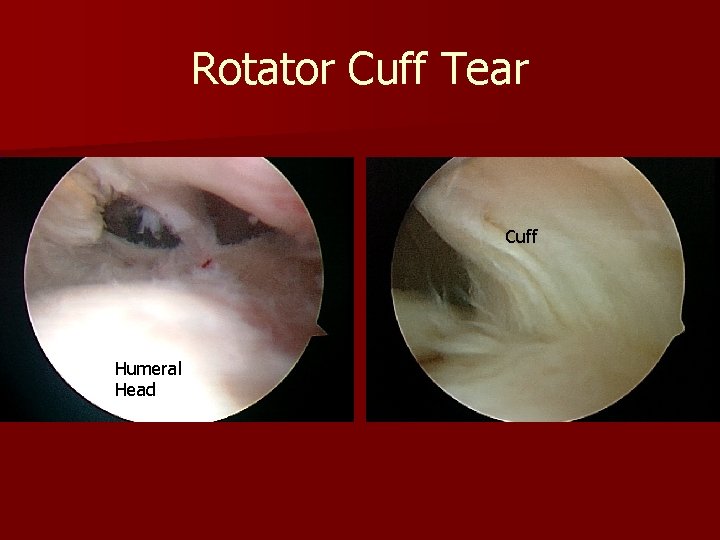
Rotator Cuff Tear Cuff Humeral Head
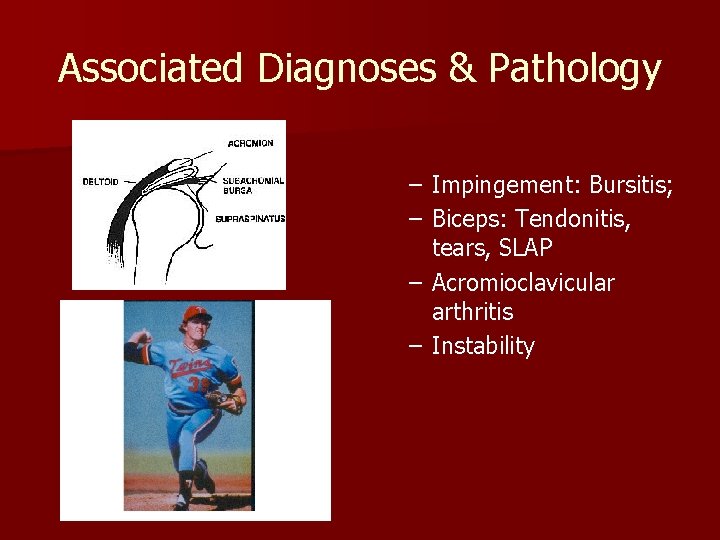
Associated Diagnoses & Pathology – Impingement: Bursitis; – Biceps: Tendonitis, tears, SLAP – Acromioclavicular arthritis – Instability
Surgical Indications Patient Selection n Symptoms - History – True shoulder pain § Lateral acromial and arm, not forearm – Duration >3 mos. – night pain – functional disability with ADLs – Failed rehab
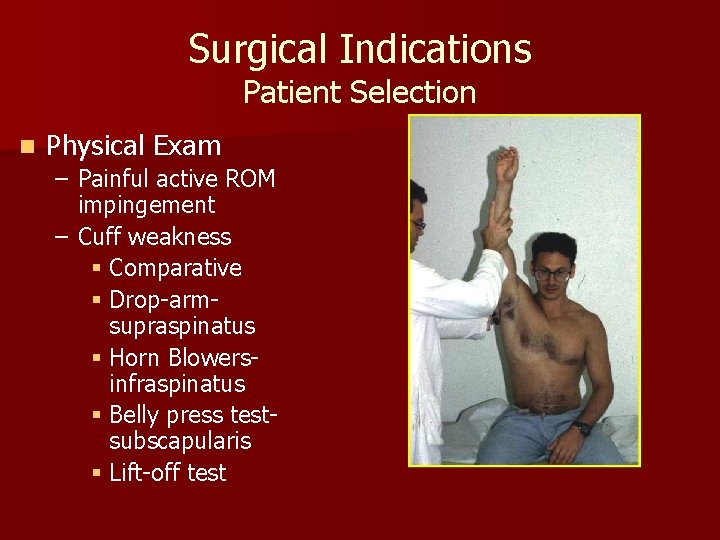
Surgical Indications Patient Selection n Physical Exam – Painful active ROM impingement – Cuff weakness § Comparative § Drop-armsupraspinatus § Horn Blowersinfraspinatus § Belly press testsubscapularis § Lift-off test
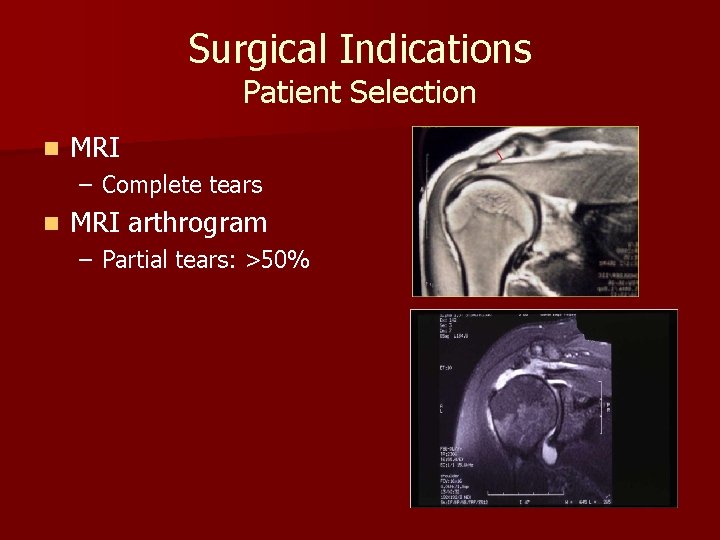
Surgical Indications Patient Selection n MRI – Complete tears n MRI arthrogram – Partial tears: >50%
Surgical Relative Contra-indications n Age: >65 y. o. n Fatty atrophy of muscle (Goutallier 4) n Arthritis n Large tears, high demands n Massive tears (2 tendons retracted) n Adhesive capsulitis
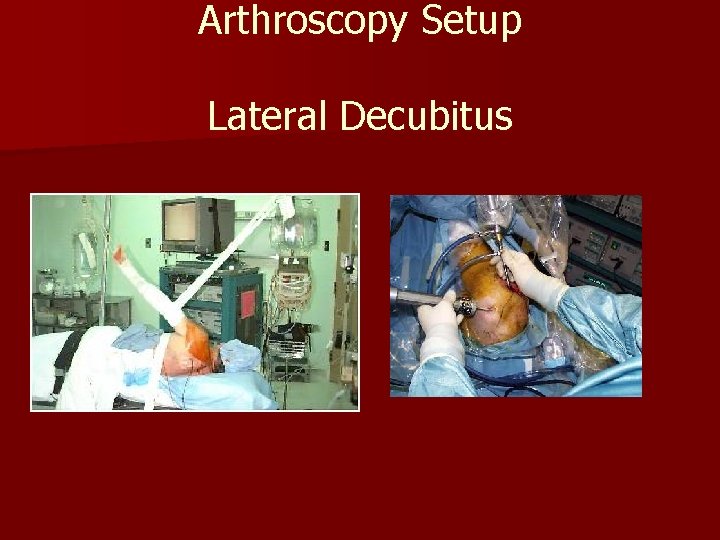
Arthroscopy Setup Lateral Decubitus
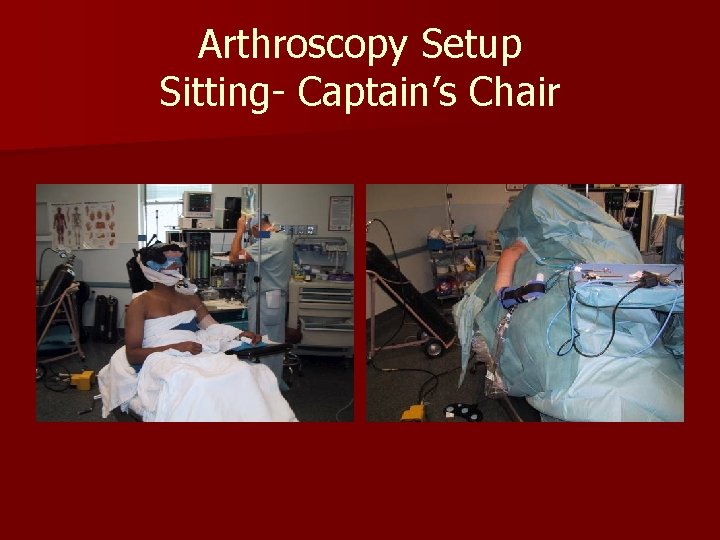
Arthroscopy Setup Sitting- Captain’s Chair
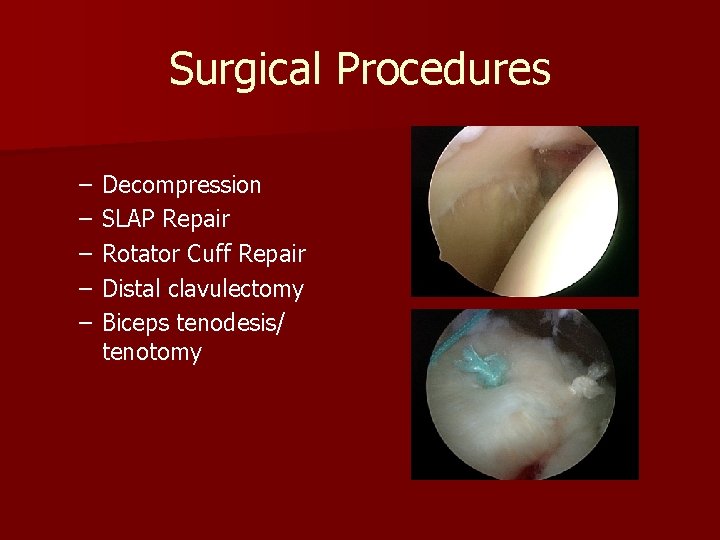
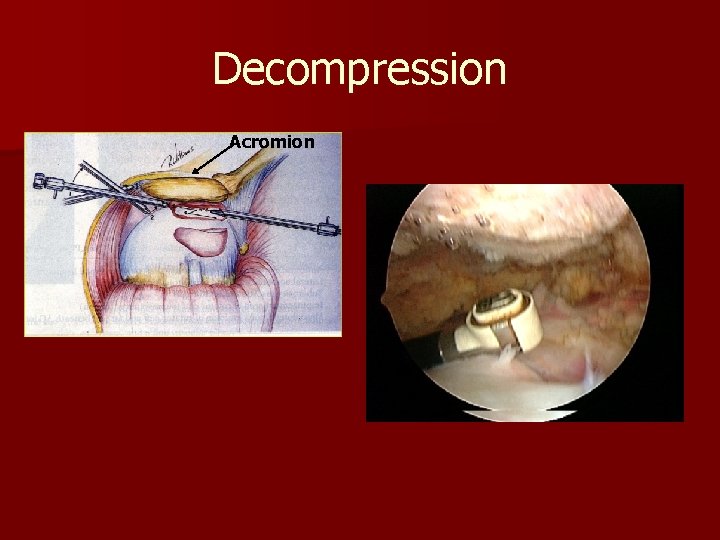
Surgical Procedures – – – Decompression SLAP Repair Rotator Cuff Repair Distal clavulectomy Biceps tenodesis/ tenotomy
Decompression Acromion
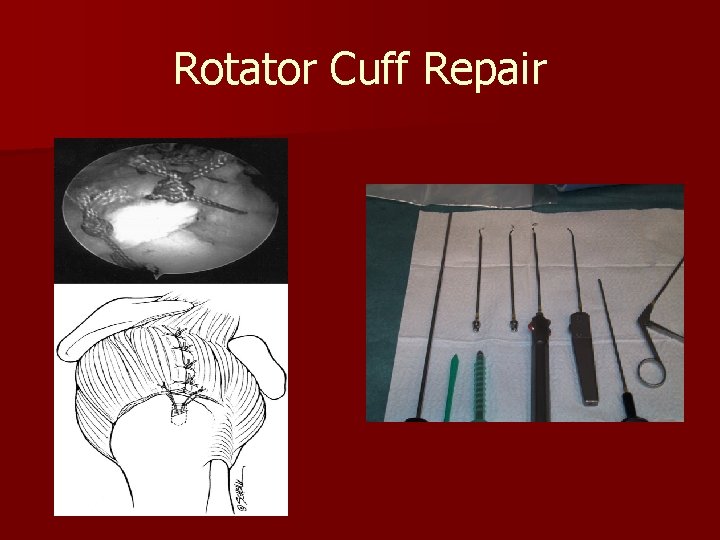
Rotator Cuff Repair
Preop Preparation -Inflammation & pain § Pre-emptive meds – COX 2 NSAID 48 hrs – Acetaminophen: 1 grm. – Motion: balance flexibility – Patient education & expectations § Immobilization § ADL’s § Return to work/sport § Long-term symptoms & function
Surgical Technique Cuff Preparation n Portal Position n Bursectomyvisualization n Tear Patterncrescent, laminated, L, partial n Tendon Debridement n Mobilization / Releases
Surgical Technique n Trans-tendon n Single row anchors n Double row anchors – Crossbridging n Augments Massive tears n Platelet Rich Plasma
Rehabilitation n Debate – Early Passive motion necessary? § Kim et al, Level I PRC study, 105 pts no motion vs passive first four wks -ASES, SST, cuff integrity- no difference ……is likely safe, it is also not inherently necessary AJSM 2012 April
Rehabilitation n Debate Early aggressive vs. limited passive motion – Lee et al, Level II RC, 64 pts motion increased 3 mos. ; same 1 yr trend for increase tears Arthroscopy 2012 Jan
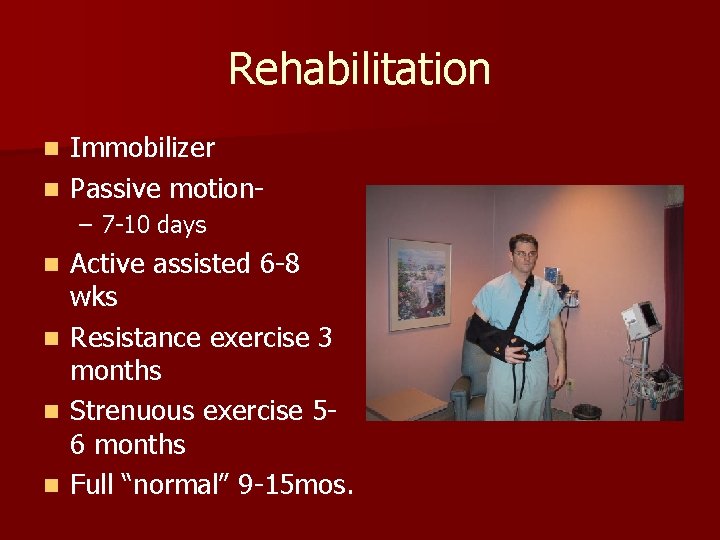
Rehabilitation Immobilizer n Passive motionn – 7 -10 days Active assisted 6 -8 wks n Resistance exercise 3 months n Strenuous exercise 56 months n Full “normal” 9 -15 mos. n
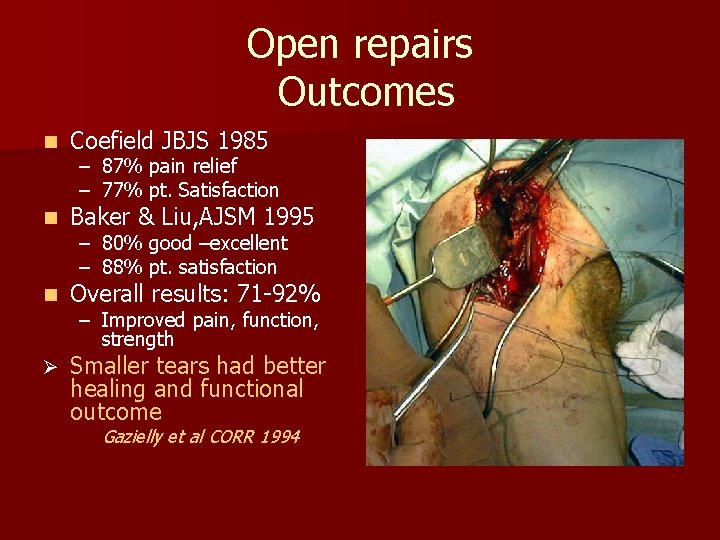
Open repairs Outcomes n Coefield JBJS 1985 n Baker & Liu, AJSM 1995 n Overall results: 71 -92% Ø Smaller tears had better healing and functional outcome – 87% pain relief – 77% pt. Satisfaction – 80% good –excellent – 88% pt. satisfaction – Improved pain, function, strength Gazielly et al CORR 1994
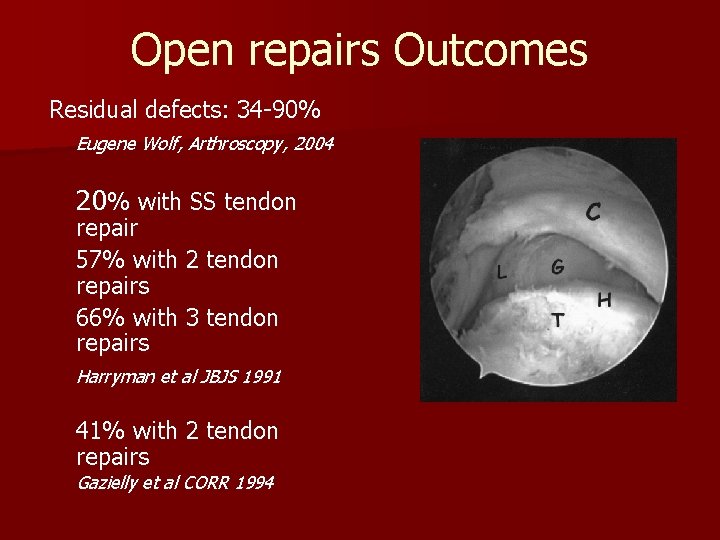
Open repairs Outcomes Residual defects: 34 -90% Eugene Wolf, Arthroscopy, 2004 20% with SS tendon repair 57% with 2 tendon repairs 66% with 3 tendon repairs Harryman et al JBJS 1991 41% with 2 tendon repairs Gazielly et al CORR 1994
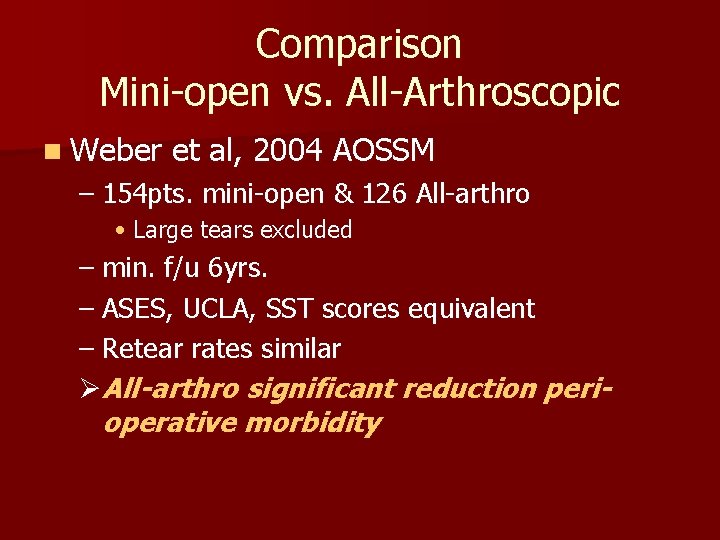
Comparison Mini-open vs. All-Arthroscopic n Weber et al, 2004 AOSSM – 154 pts. mini-open & 126 All-arthro • Large tears excluded – min. f/u 6 yrs. – ASES, UCLA, SST scores equivalent – Retear rates similar ØAll-arthro significant reduction perioperative morbidity
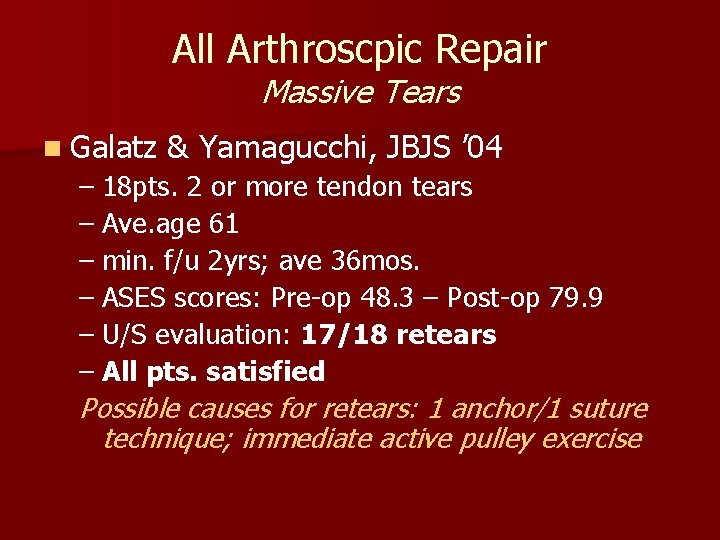
All Arthroscpic Repair Massive Tears n Galatz & Yamagucchi, JBJS ’ 04 – 18 pts. 2 or more tendon tears – Ave. age 61 – min. f/u 2 yrs; ave 36 mos. – ASES scores: Pre-op 48. 3 – Post-op 79. 9 – U/S evaluation: 17/18 retears – All pts. satisfied Possible causes for retears: 1 anchor/1 suture technique; immediate active pulley exercise
All Arthroscopic Repairs n >90% Satisfaction long term 10 yrs – 6 -8% continued pain and/or weakness Intrinsic factors: A-C jt, G-H jt OA; labrum, biceps, deltoid, impingement, adhesive capsulitis, instability Extrinsic factors: cervical spine, suprascapular nerve Millet PJ et al, JSES 2011
All Arthroscopic Repairs n Literature review 6 -24 mos f/u – 60 -90% healed by imaging – Significant difference in strength/function healed vs. un-healed Not all repairs that fail to heal are symptomatic Slabaugh et al, Arthroscopy 2010
Outcomes Summary All repair techniques n Patient satisfaction high n Pain relief high n Despite structural failures, outcomes better n Larger the tear the poorer outcome n Better cuff integrity, better functional outcome
Current Challenges – Younger, active pt. with large tear – Better tendon healing – Modifying rehabilitation appropriate for biology of healing – Decrease cost of instruments and anchors – Establish easier techniques
All Arthroscopic Advantage Visualizing and magnifying cuff tear n Multiple angles to tear n Treating associated pathology n Short term recovery n § Pain and ROM n Large tears – Avoiding deltoid morbidity – Better mobilization n Historical progression of orthopaedic surgery
All-arthroscopic Rotator Cuff Repairs Surgeon Specific Technique Poorly done arthroscopic repair is worse than a well-done mini-open repair.
Thank You!