
Rotation Generating Torque Lab Rat Scientific 2018 Force
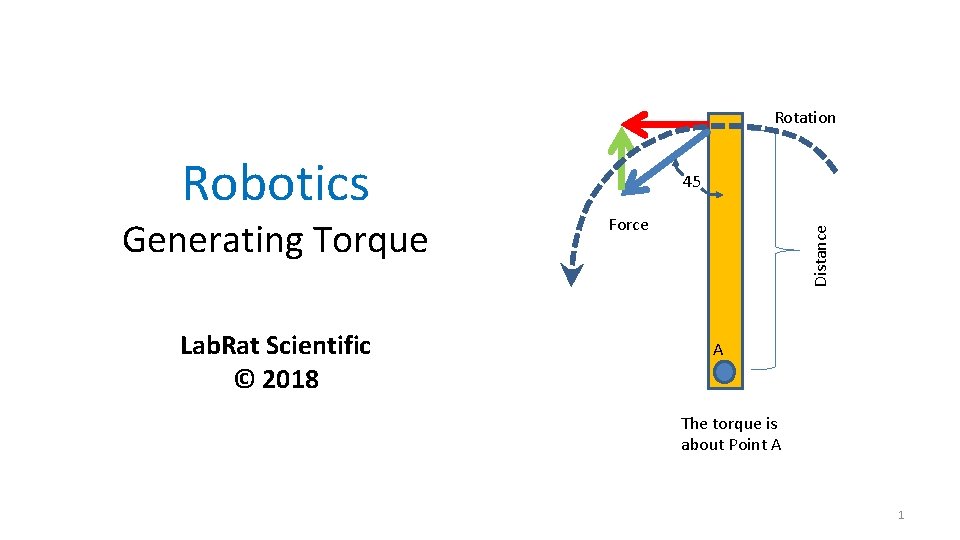
Rotation Generating Torque Lab. Rat Scientific © 2018 Force Distance Robotics 45 A The torque is about Point A 1
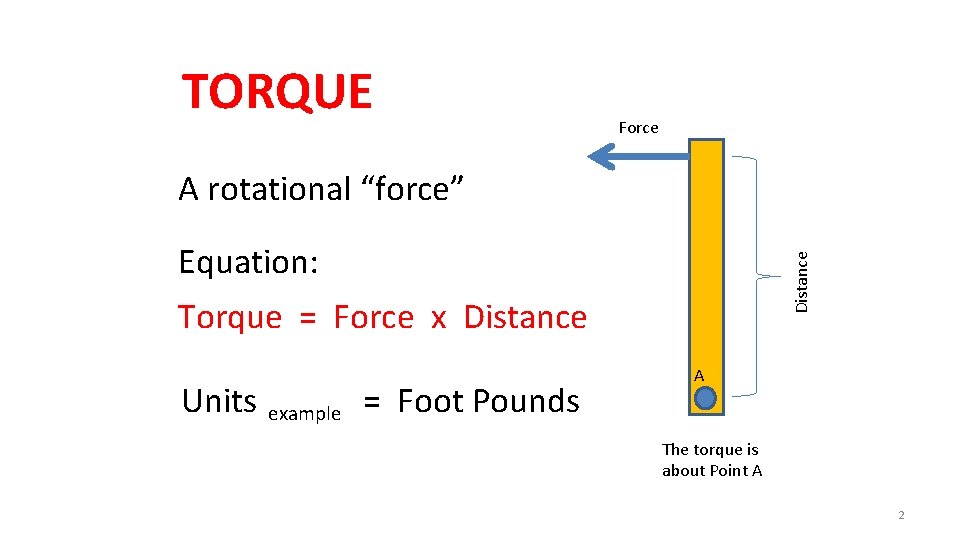
TORQUE Force A rotational “force” Distance Equation: Torque = Force x Distance Units example = Foot Pounds A The torque is about Point A 2
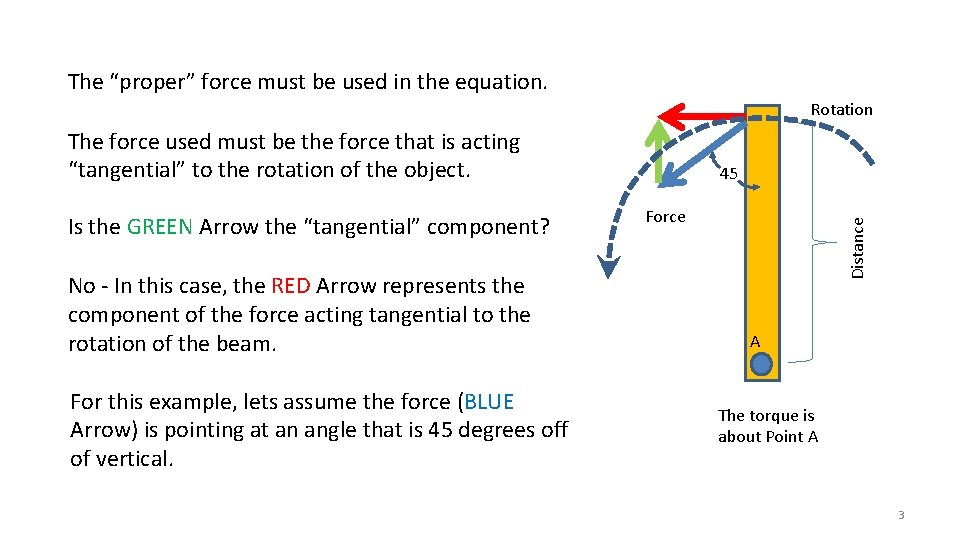
The “proper” force must be used in the equation. Rotation The force used must be the force that is acting “tangential” to the rotation of the object. No - In this case, the RED Arrow represents the component of the force acting tangential to the rotation of the beam. For this example, lets assume the force (BLUE Arrow) is pointing at an angle that is 45 degrees off of vertical. Force Distance Is the GREEN Arrow the “tangential” component? 45 A The torque is about Point A 3

This becomes a Trigonometry Problem Trigonometry is the “math” of dealing with triangles. A very important concept in engineering. We need to know the “internal” angles of the triangle… Is it possible to determine the internal angles of this triangle? First, we are working with force components, so engineers want to work with “right triangles”. This means that one angle is going to be 90 degrees. 90 45 45 45 Because engineers like to work in an “orthogonal” manner, This angle is also 90 degrees… So we can calculate this internal angle to be 45 deg (90 – 45 = 45)… Trigonometry says the sum of the internal angles of a triangle is 180 degrees. Thus, the final missing angle is 45 deg (180 – 90 – 45 = 45). 4
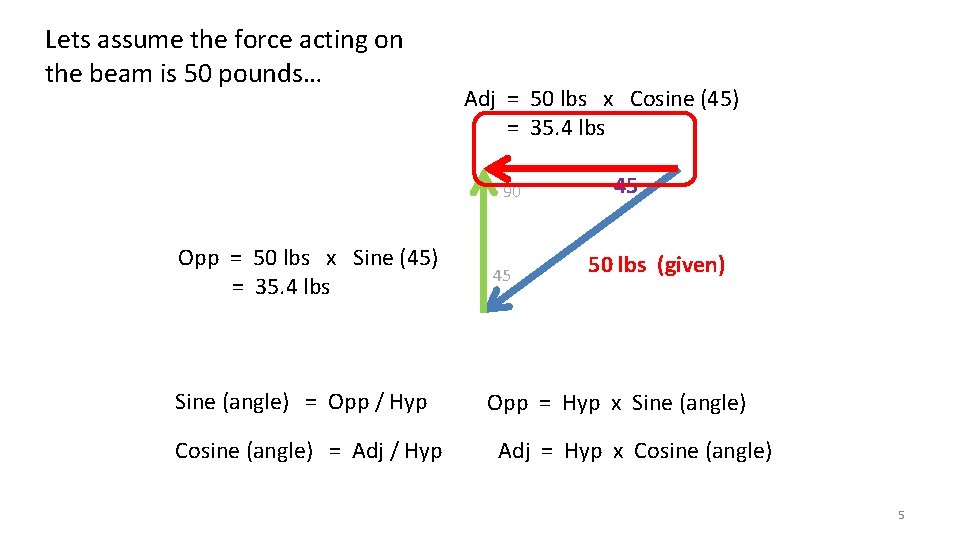
Lets assume the force acting on the beam is 50 pounds… Adj = 50 lbs x Cosine (45) = 35. 4 lbs 90 Opp = 50 lbs x Sine (45) = 35. 4 lbs Sine (angle) = Opp / Hyp Cosine (angle) = Adj / Hyp 45 45 50 lbs (given) Opp = Hyp x Sine (angle) Adj = Hyp x Cosine (angle) 5
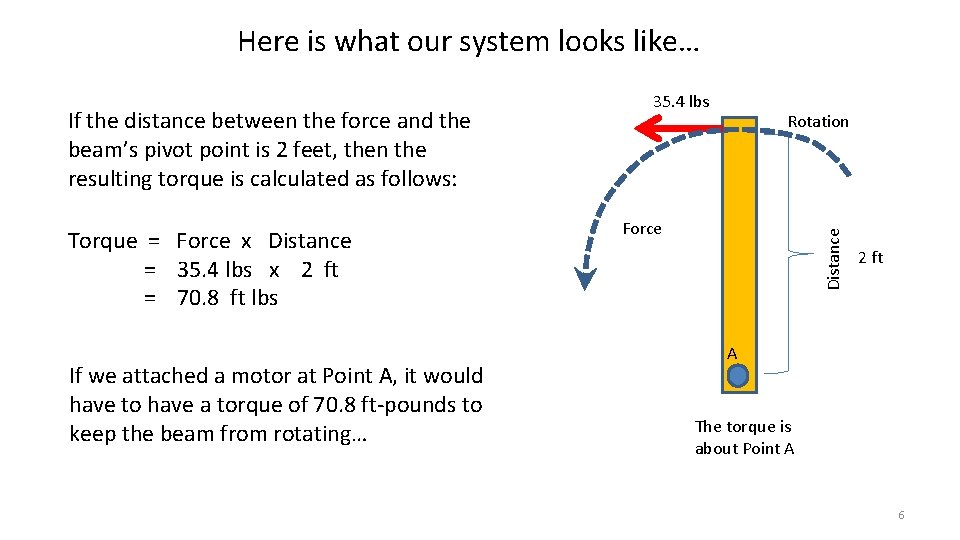
Here is what our system looks like… Torque = Force x Distance = 35. 4 lbs x 2 ft = 70. 8 ft lbs If we attached a motor at Point A, it would have to have a torque of 70. 8 ft-pounds to keep the beam from rotating… Rotation Force Distance If the distance between the force and the beam’s pivot point is 2 feet, then the resulting torque is calculated as follows: 35. 4 lbs 2 ft A The torque is about Point A 6
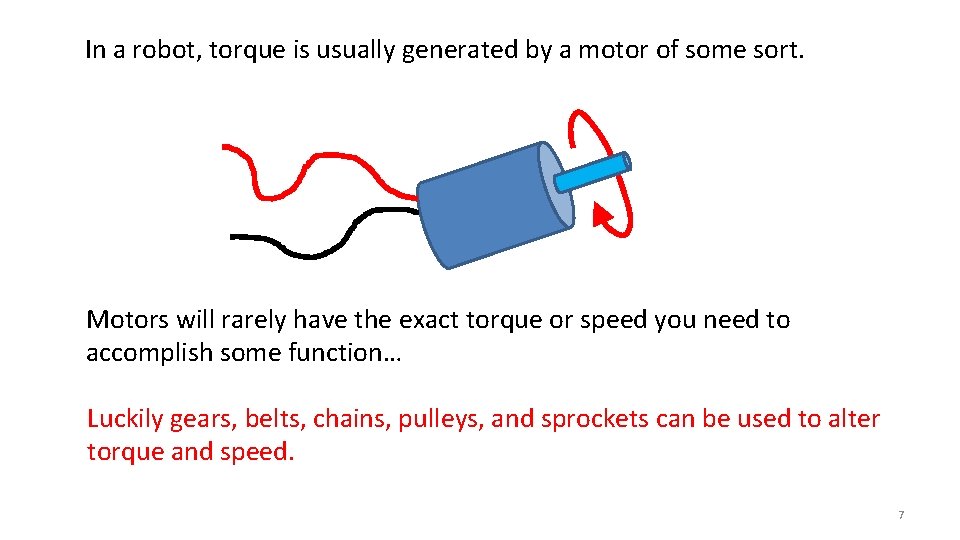
In a robot, torque is usually generated by a motor of some sort. Motors will rarely have the exact torque or speed you need to accomplish some function… Luckily gears, belts, chains, pulleys, and sprockets can be used to alter torque and speed. 7
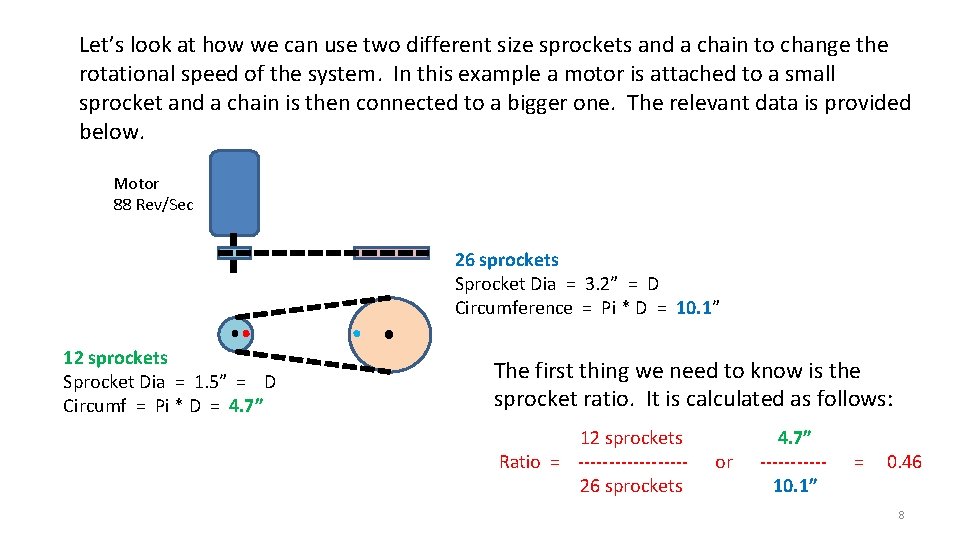
Let’s look at how we can use two different size sprockets and a chain to change the rotational speed of the system. In this example a motor is attached to a small sprocket and a chain is then connected to a bigger one. The relevant data is provided below. Motor 88 Rev/Sec 26 sprockets Sprocket Dia = 3. 2” = D Circumference = Pi * D = 10. 1” 12 sprockets Sprocket Dia = 1. 5” = D Circumf = Pi * D = 4. 7” The first thing we need to know is the sprocket ratio. It is calculated as follows: 12 sprockets Ratio = ---------26 sprockets or 4. 7” -----10. 1” = 0. 46 8
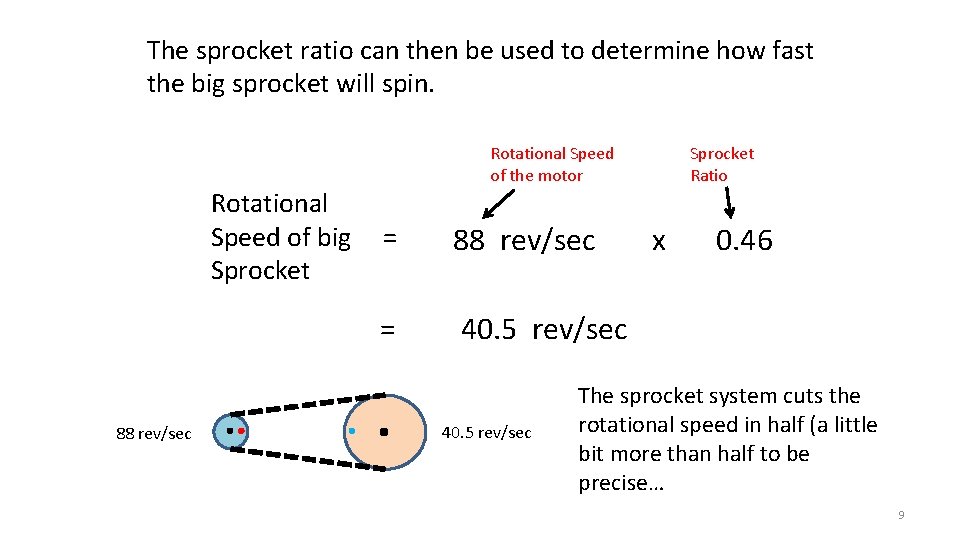
The sprocket ratio can then be used to determine how fast the big sprocket will spin. Rotational Speed of big Sprocket 88 rev/sec Rotational Speed of the motor = 88 rev/sec = 40. 5 rev/sec Sprocket Ratio x 0. 46 The sprocket system cuts the rotational speed in half (a little bit more than half to be precise… 9
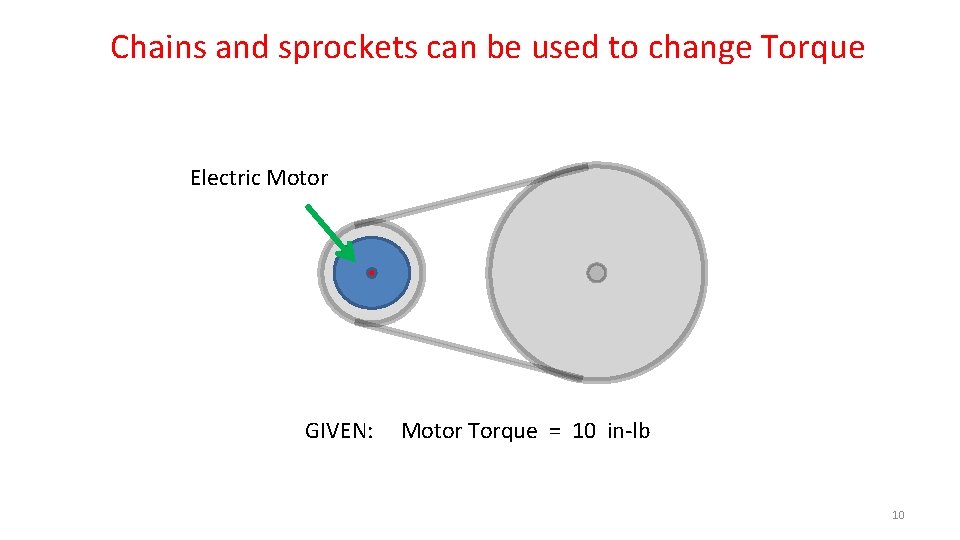
Chains and sprockets can be used to change Torque Electric Motor GIVEN: Motor Torque = 10 in-lb 10
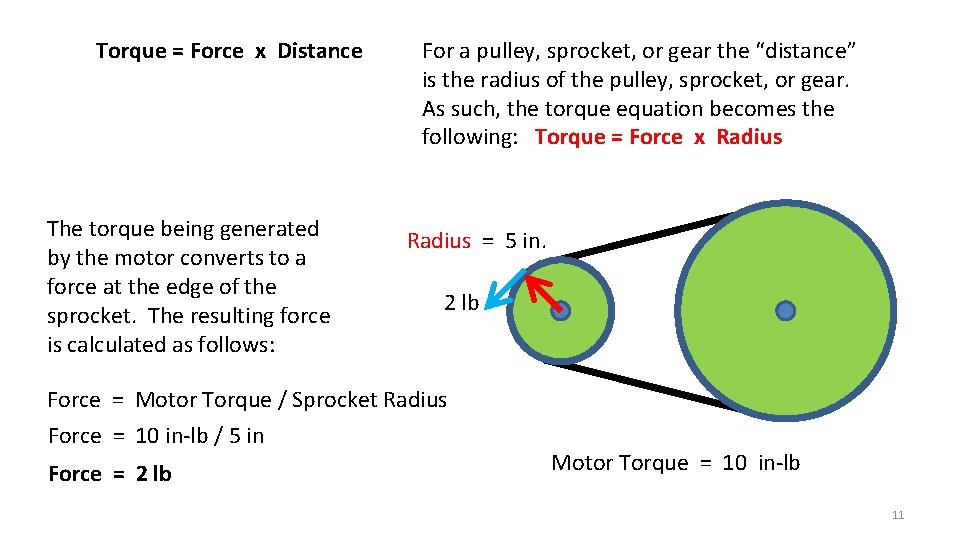
Torque = Force x Distance The torque being generated by the motor converts to a force at the edge of the sprocket. The resulting force is calculated as follows: For a pulley, sprocket, or gear the “distance” is the radius of the pulley, sprocket, or gear. As such, the torque equation becomes the following: Torque = Force x Radius = 5 in. 2 lb Force = Motor Torque / Sprocket Radius Force = 10 in-lb / 5 in Force = 2 lb Motor Torque = 10 in-lb 11
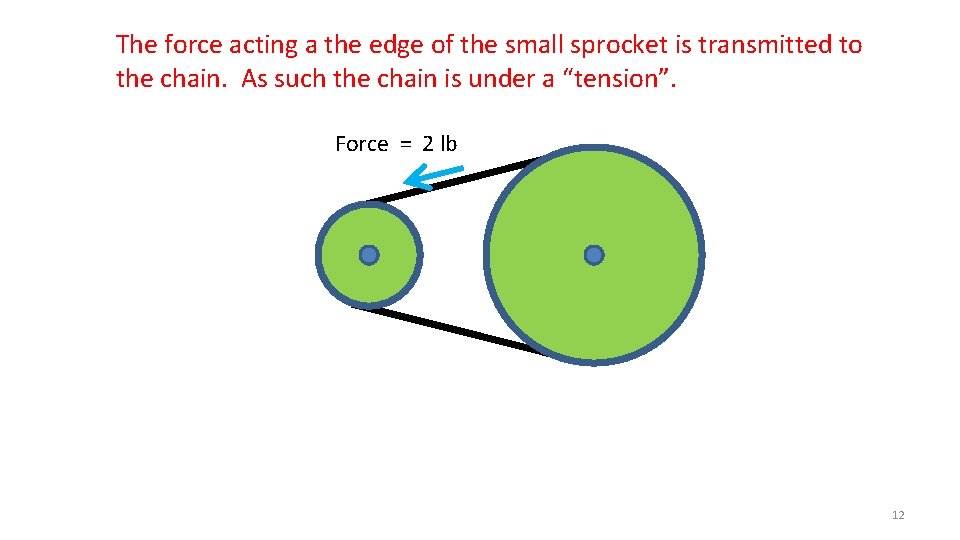
The force acting a the edge of the small sprocket is transmitted to the chain. As such the chain is under a “tension”. Force = 2 lb 12
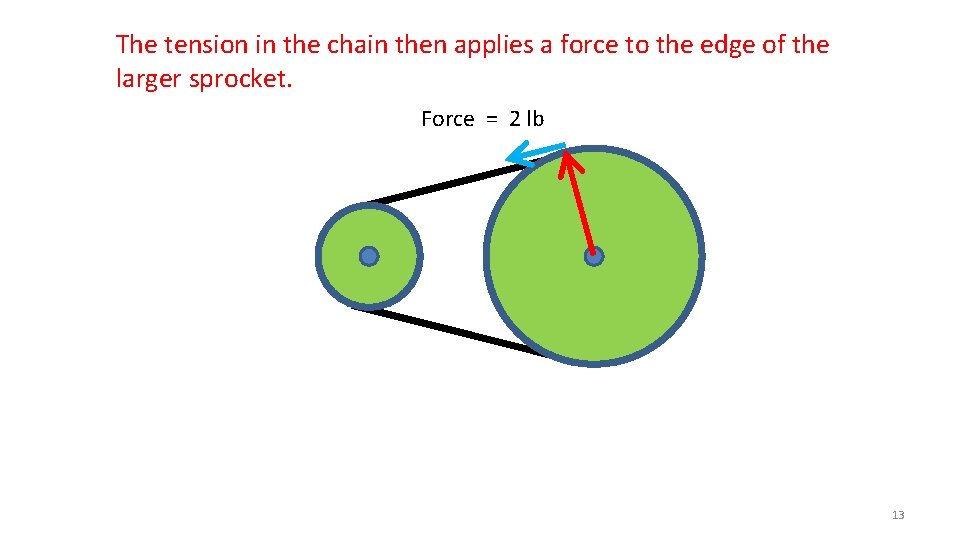
The tension in the chain then applies a force to the edge of the larger sprocket. Force = 2 lb 13
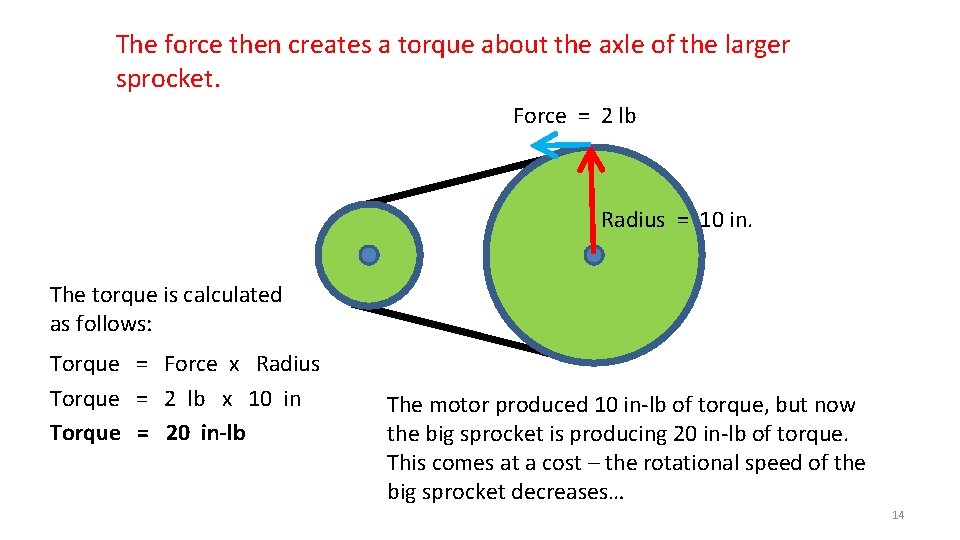
The force then creates a torque about the axle of the larger sprocket. Force = 2 lb Radius = 10 in. The torque is calculated as follows: Torque = Force x Radius Torque = 2 lb x 10 in Torque = 20 in-lb The motor produced 10 in-lb of torque, but now the big sprocket is producing 20 in-lb of torque. This comes at a cost – the rotational speed of the big sprocket decreases… 14
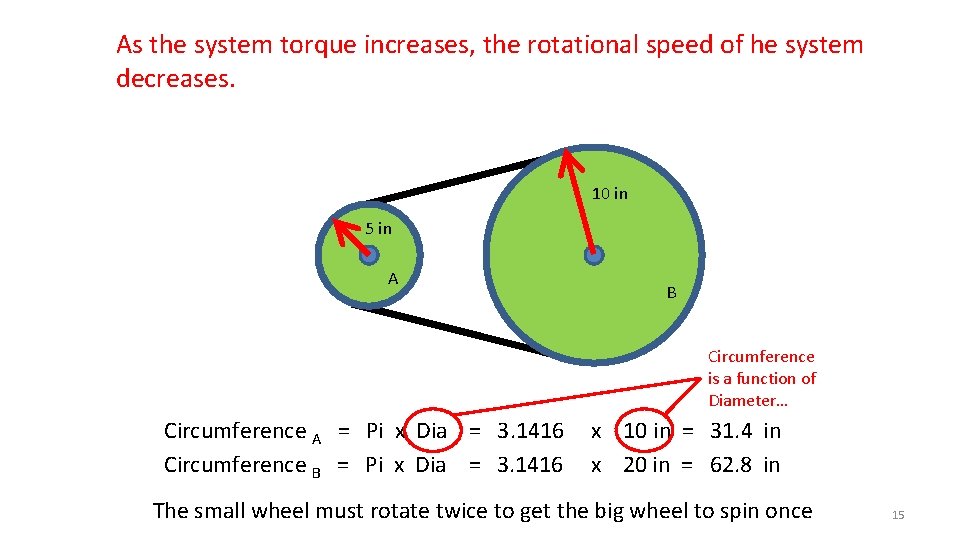
As the system torque increases, the rotational speed of he system decreases. 10 in 5 in A B Circumference is a function of Diameter… Circumference A = Pi x Dia = 3. 1416 Circumference B = Pi x Dia = 3. 1416 x 10 in = 31. 4 in x 20 in = 62. 8 in The small wheel must rotate twice to get the big wheel to spin once 15
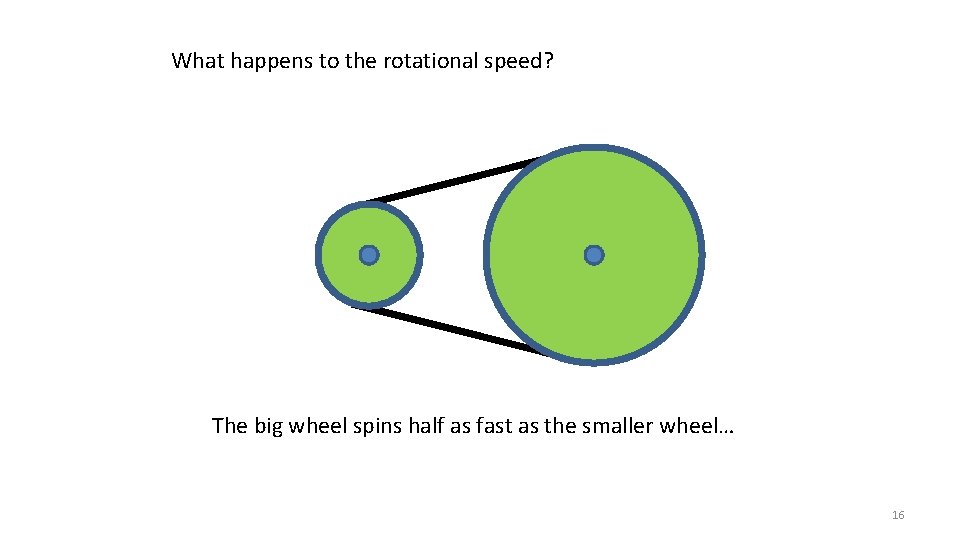
What happens to the rotational speed? The big wheel spins half as fast as the smaller wheel… 16
Power = Torque x Rotational Speed In our example, if the TORQUE is doubled and the ROTATIONAL SPEED is halved, what happens to the POWER? The POWER remains constant… 17
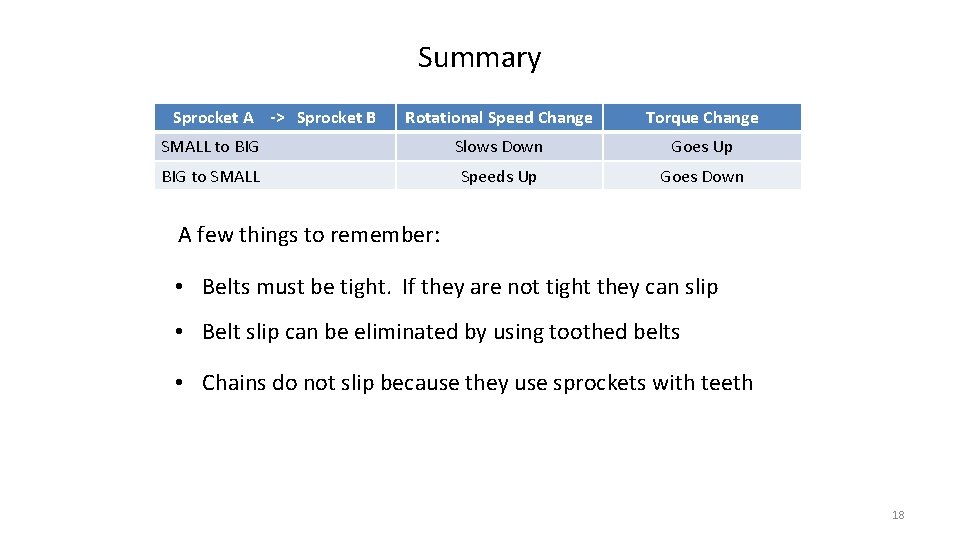
Summary Sprocket A -> Sprocket B Rotational Speed Change Torque Change SMALL to BIG Slows Down Goes Up BIG to SMALL Speeds Up Goes Down A few things to remember: • Belts must be tight. If they are not tight they can slip • Belt slip can be eliminated by using toothed belts • Chains do not slip because they use sprockets with teeth 18
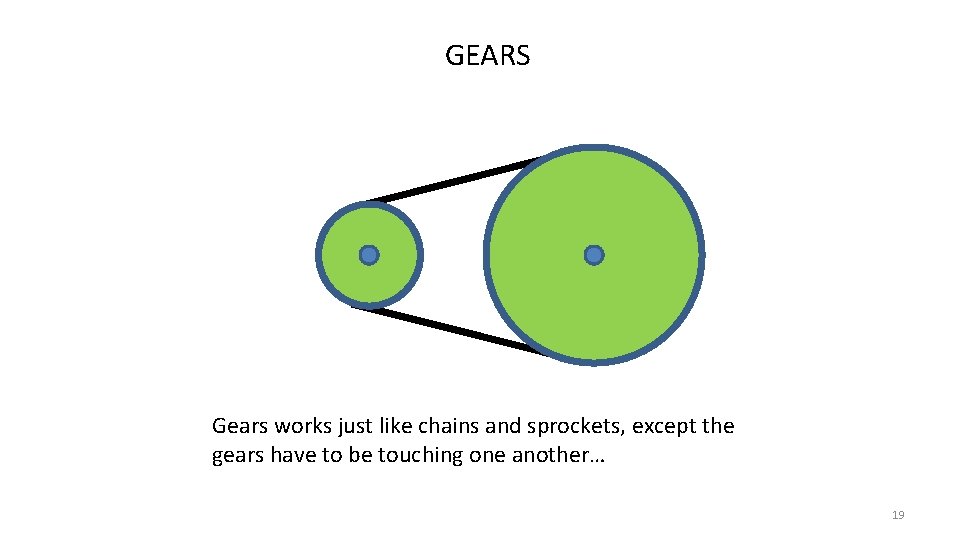
GEARS Gears works just like chains and sprockets, except the gears have to be touching one another… 19
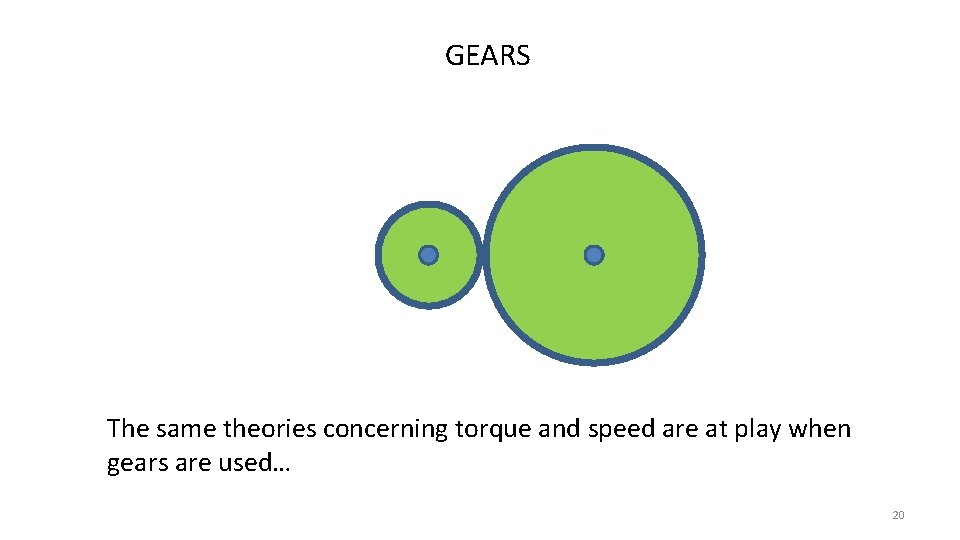
GEARS The same theories concerning torque and speed are at play when gears are used… 20
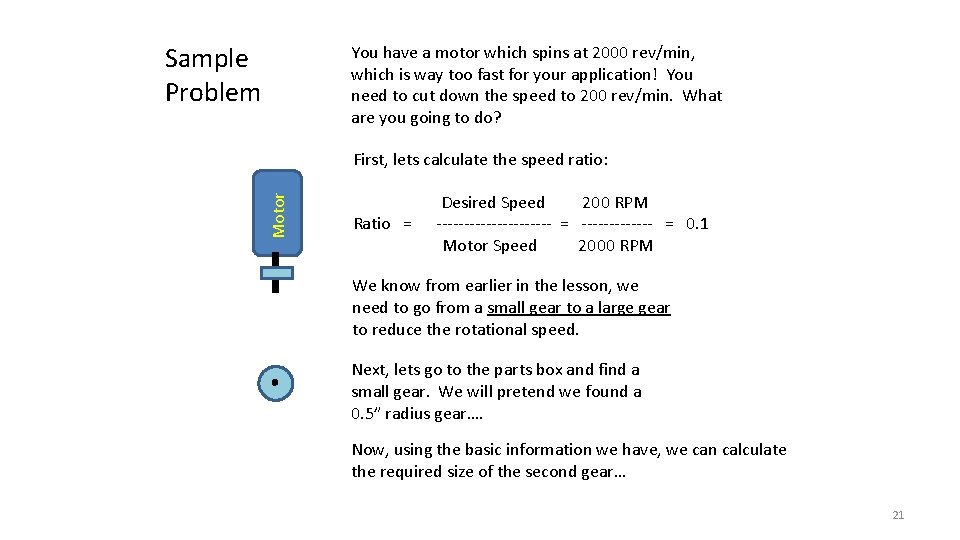
Sample Problem You have a motor which spins at 2000 rev/min, which is way too fast for your application! You need to cut down the speed to 200 rev/min. What are you going to do? Motor First, lets calculate the speed ratio: Ratio = Desired Speed 200 RPM ----------- = 0. 1 Motor Speed 2000 RPM We know from earlier in the lesson, we need to go from a small gear to a large gear to reduce the rotational speed. Next, lets go to the parts box and find a small gear. We will pretend we found a 0. 5” radius gear…. Now, using the basic information we have, we can calculate the required size of the second gear… 21
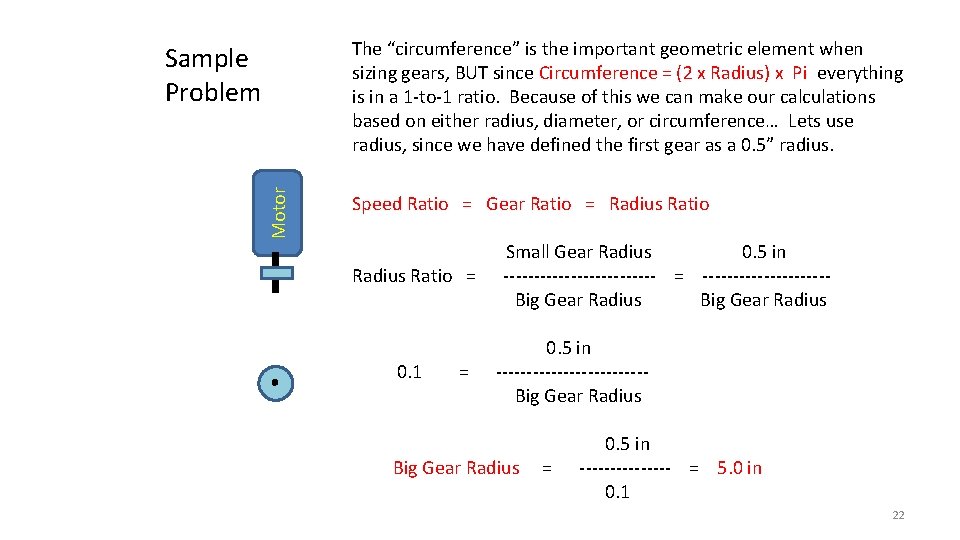
The “circumference” is the important geometric element when sizing gears, BUT since Circumference = (2 x Radius) x Pi everything is in a 1 -to-1 ratio. Because of this we can make our calculations based on either radius, diameter, or circumference… Lets use radius, since we have defined the first gear as a 0. 5” radius. Motor Sample Problem Speed Ratio = Gear Ratio = Radius Ratio = 0. 1 = Small Gear Radius 0. 5 in ------------- = ----------Big Gear Radius 0. 5 in ------------Big Gear Radius = 0. 5 in -------- = 5. 0 in 0. 1 22
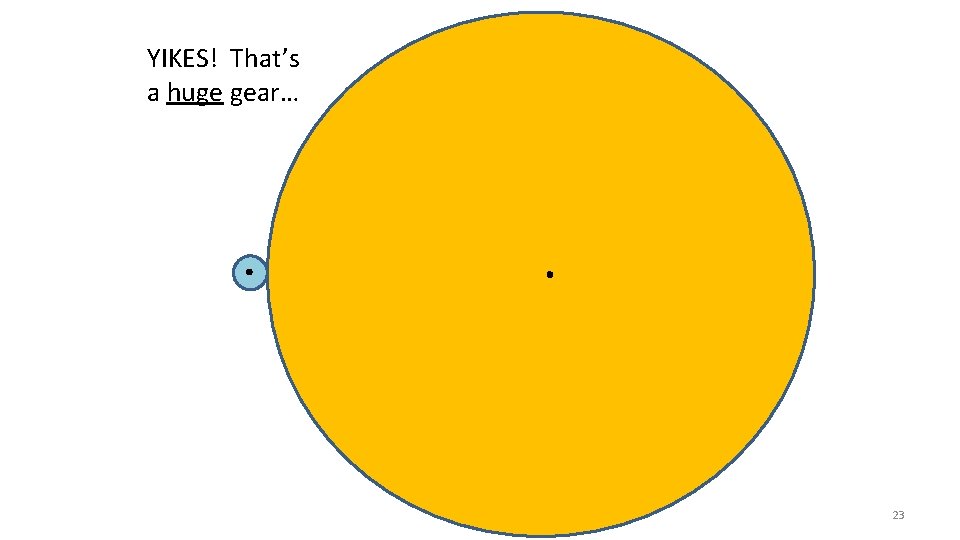
YIKES! That’s a huge gear… 23
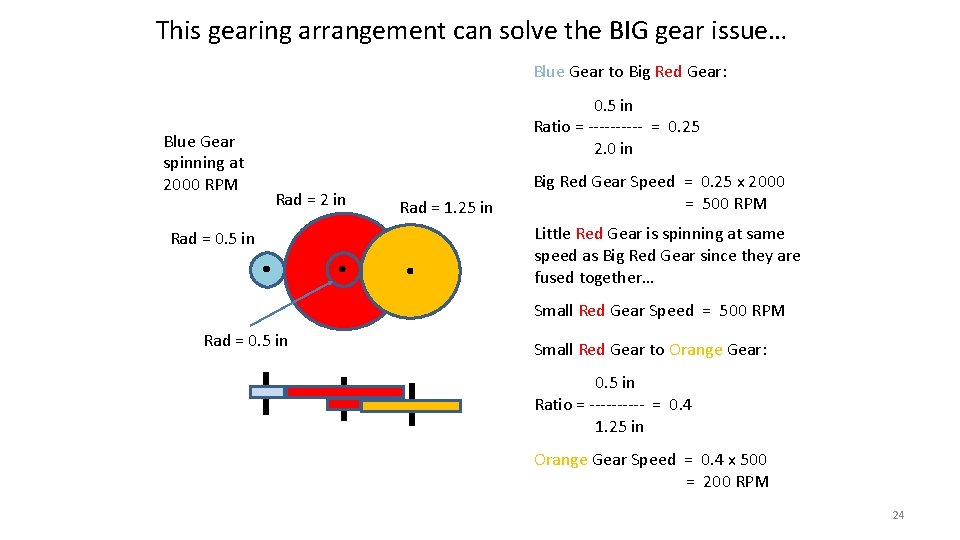
This gearing arrangement can solve the BIG gear issue… Blue Gear to Big Red Gear: Blue Gear spinning at 2000 RPM 0. 5 in Ratio = ----- = 0. 25 2. 0 in Rad = 2 in Rad = 0. 5 in Rad = 1. 25 in Big Red Gear Speed = 0. 25 x 2000 = 500 RPM Little Red Gear is spinning at same speed as Big Red Gear since they are fused together… Small Red Gear Speed = 500 RPM Rad = 0. 5 in Small Red Gear to Orange Gear: 0. 5 in Ratio = ----- = 0. 4 1. 25 in Orange Gear Speed = 0. 4 x 500 = 200 RPM 24
- Slides: 24