
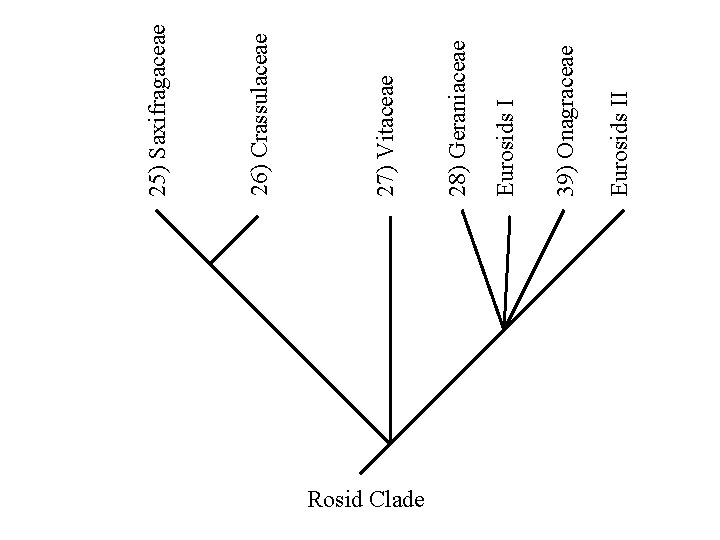
Rosid Clade Eurosids II 39 Onagraceae Eurosids I




- Slides: 22
Rosid Clade Eurosids II 39) Onagraceae Eurosids I 28) Geraniaceae 27) Vitaceae 26) Crassulaceae 25) Saxifragaceae
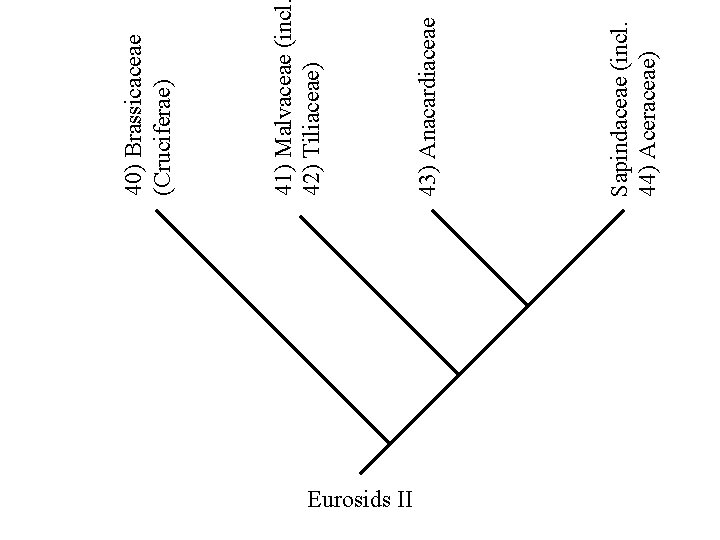
Eurosids II Sapindaceae (incl. 44) Aceraceae) 43) Anacardiaceae 41) Malvaceae (incl 42) Tiliaceae) 40) Brassicaceae (Cruciferae)
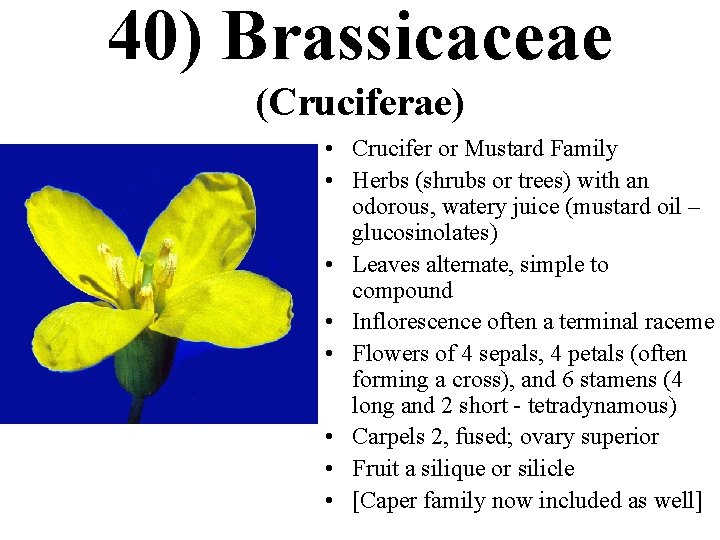
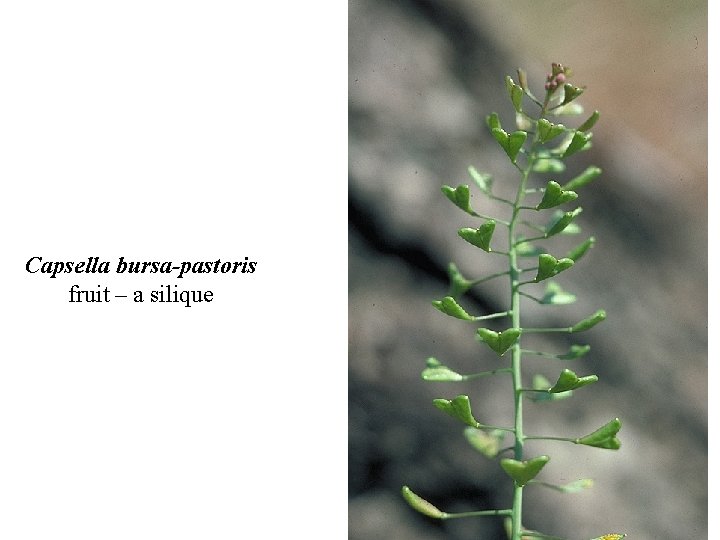
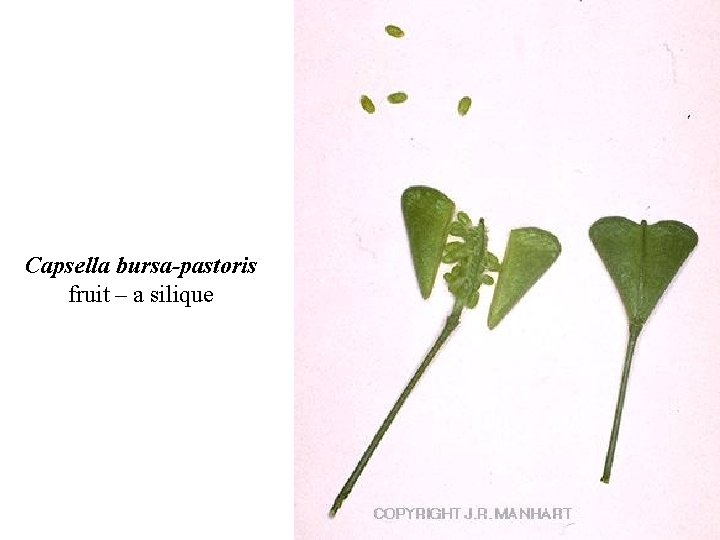
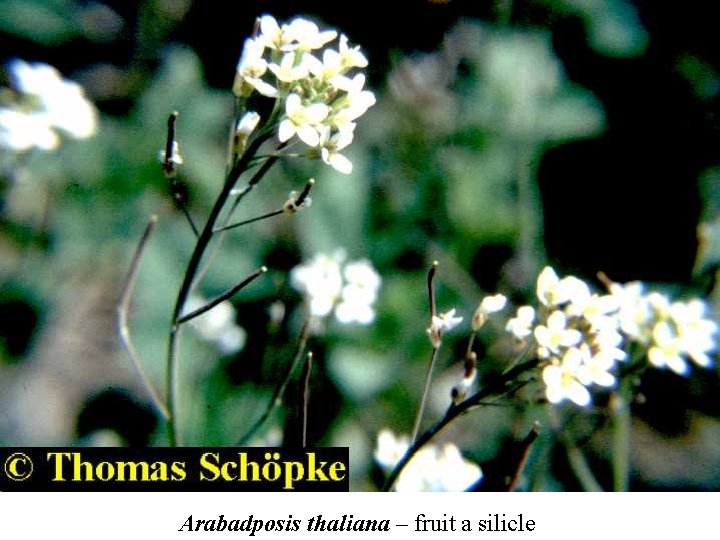
40) Brassicaceae (Cruciferae) • Crucifer or Mustard Family • Herbs (shrubs or trees) with an odorous, watery juice (mustard oil – glucosinolates) • Leaves alternate, simple to compound • Inflorescence often a terminal raceme • Flowers of 4 sepals, 4 petals (often forming a cross), and 6 stamens (4 long and 2 short - tetradynamous) • Carpels 2, fused; ovary superior • Fruit a silique or silicle • [Caper family now included as well]
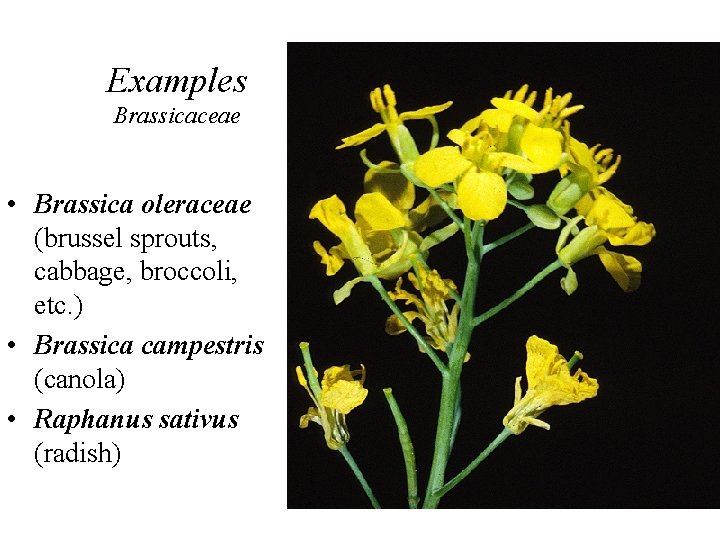
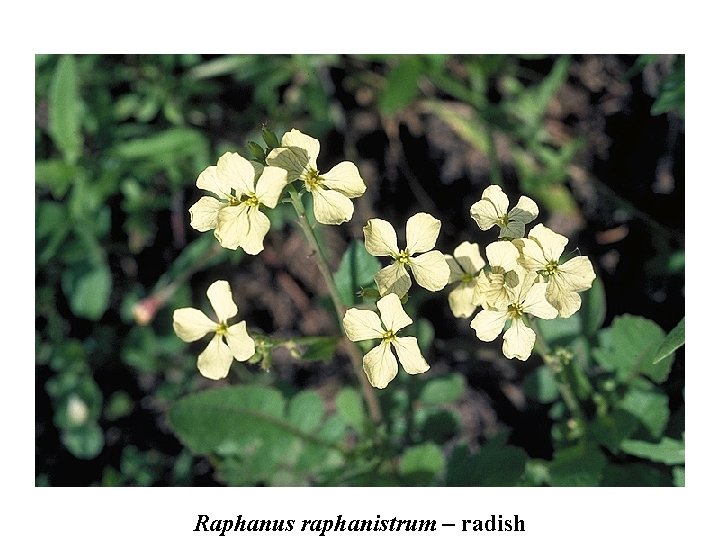
Examples Brassicaceae • Brassica oleraceae (brussel sprouts, cabbage, broccoli, etc. ) • Brassica campestris (canola) • Raphanus sativus (radish)
Capsella bursa-pastoris fruit – a silique
Capsella bursa-pastoris fruit – a silique
Arabadposis thaliana – fruit a silicle
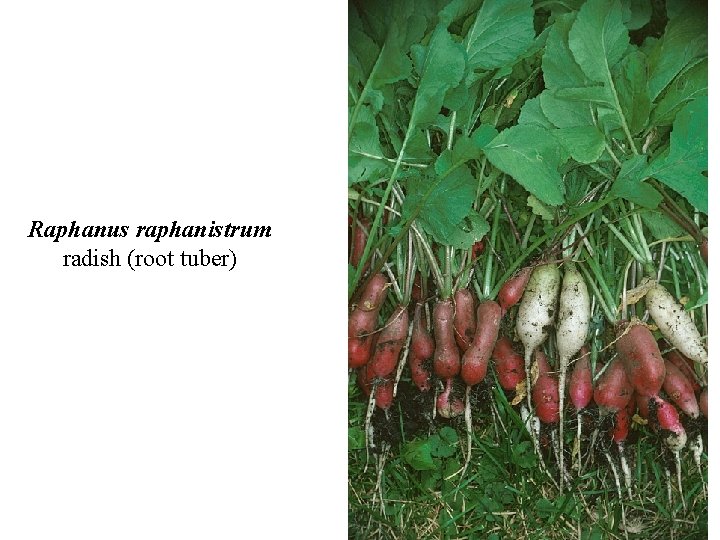
Raphanus raphanistrum – radish
Raphanus raphanistrum radish (root tuber)
Brassica oleracea – young inflorescences (broccoli)
Thysanocarpus amplectens flowers and fruits
41) Malvaceae • Herbs, shrubs, trees, or lianas, often covered with stellate or peltate hairs • Leaves alternate, simple, often palmately lobed and veined, stipules present, entire to serrate (the teeth malvoid) • Flowers often associated with bract that forms an epicalyx • Sepals 5, often fused; petals 5, usually free • Stamens numerous, monadelphous (filaments fused into a tube around the
Examples Malvaceae • Althea rosea (hollyhock) shown • Hibiscus esculentus (Okra) • Gossypium (cotton) • Malva (marshmallow)
Gossypium spp.
Hybiscus rosa
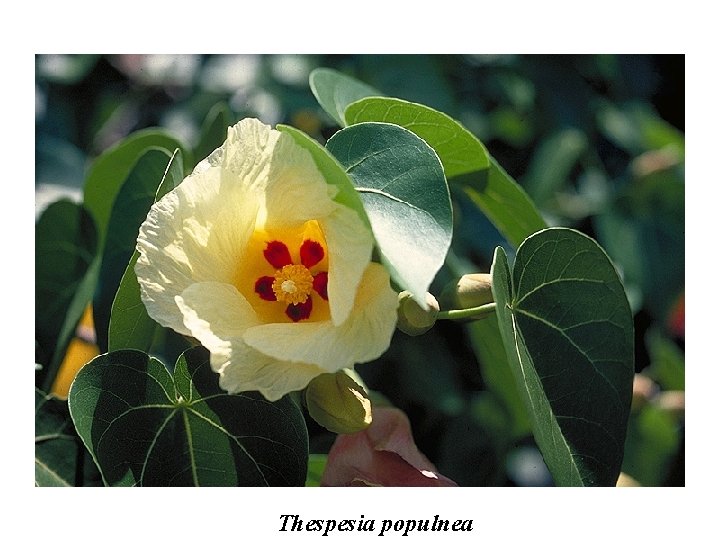
Thespesia populnea
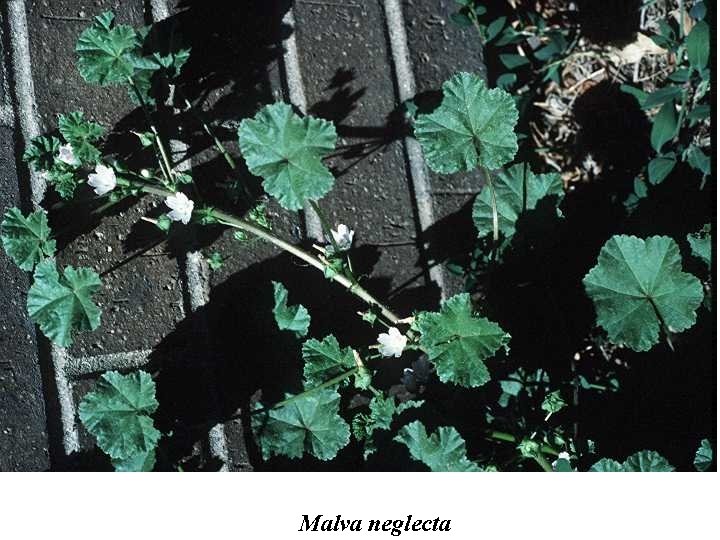
Malva neglecta
Spheralcea spp.
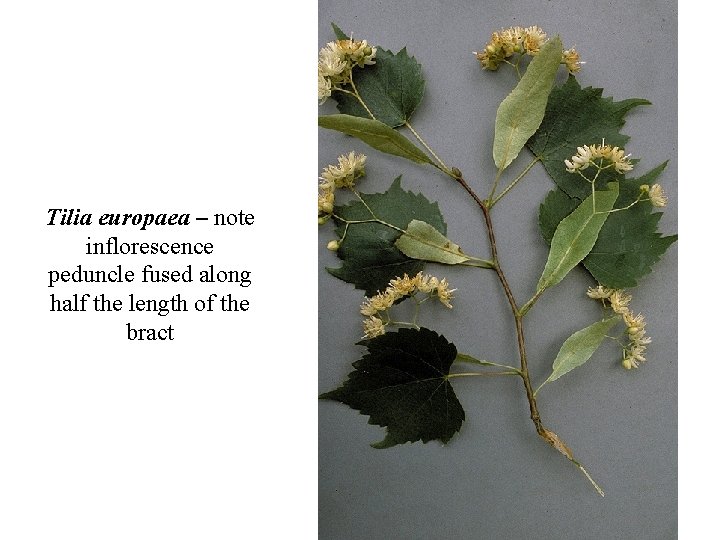
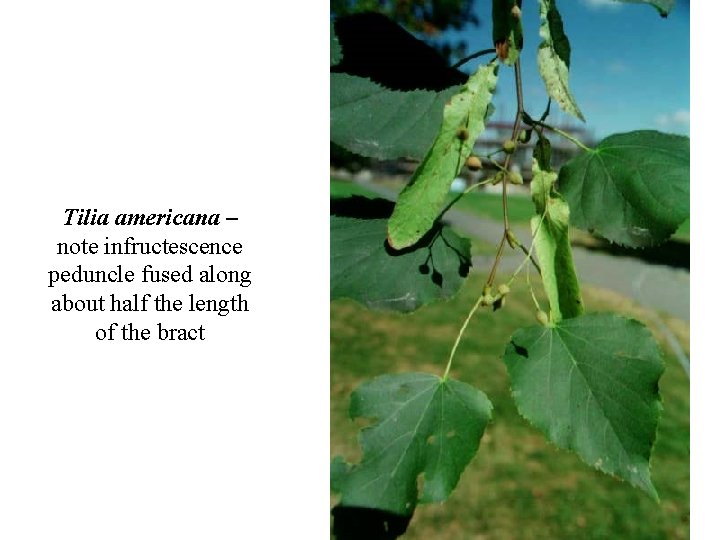
42) Tiliaceae (now included in the Malvaceae) • • • Linden or Basswood Family Trees Leaves alternate Flowers in cymes in Tilia Stem of inflorescence adnate to a large, membranous bract, which persists in fruit
Examples Tiliaceae • Tilia americana (basswood)
Tilia europaea – note inflorescence peduncle fused along half the length of the bract
Tilia americana – note infructescence peduncle fused along about half the length of the bract