
Roots Stems and Leaves Outside Structure External Leaf

- Slides: 24
Roots, Stems and Leaves Outside Structure
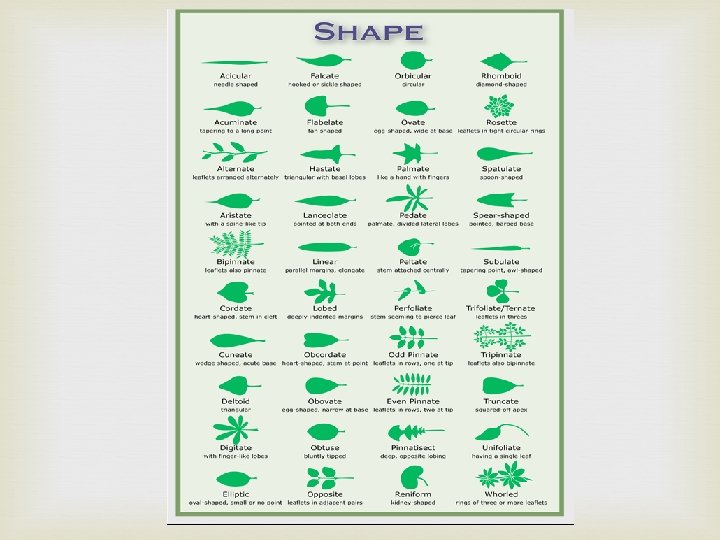
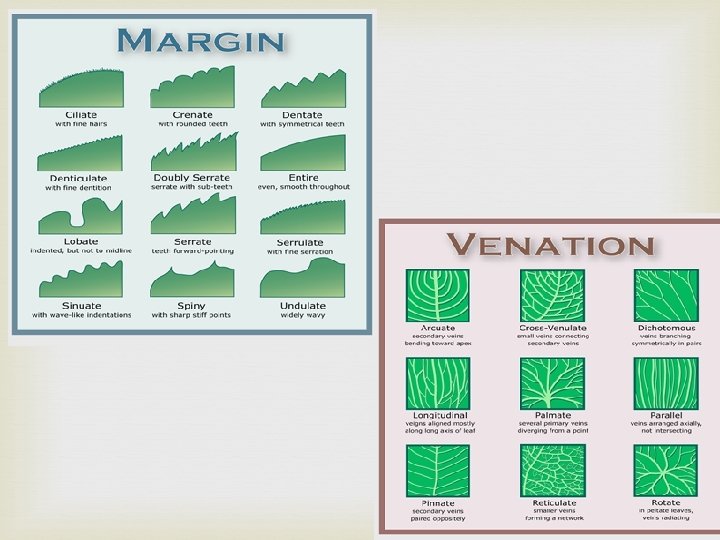
External Leaf Structure Each leaf has a characteristic shape. This includes the entire ‘picture’ of the leaf. The edge of the leaf is called the margin. Most leaves also have visible veins. You can use the shape, margin and vein pattern of a leaf to identify plants.
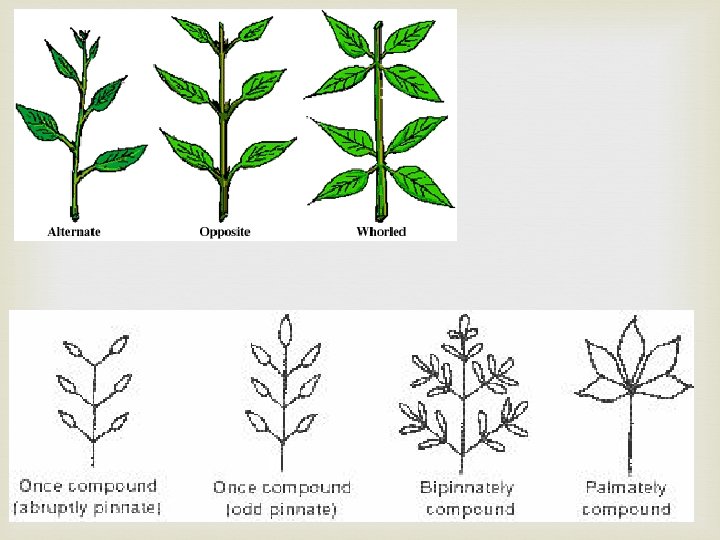
Leaves The arrangement of leaves on the stem can also help to identify plant types. A leaf is connected to the stem by the petiole, or the leaf stalk.
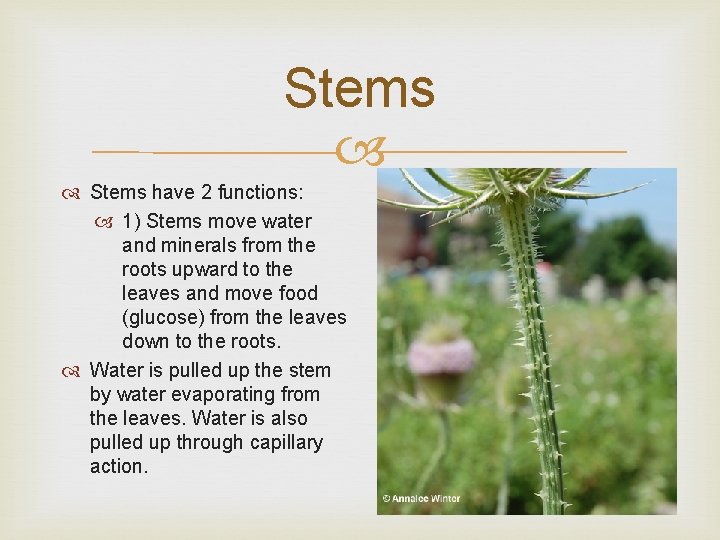
Stems have 2 functions: 1) Stems move water and minerals from the roots upward to the leaves and move food (glucose) from the leaves down to the roots. Water is pulled up the stem by water evaporating from the leaves. Water is also pulled up through capillary action.
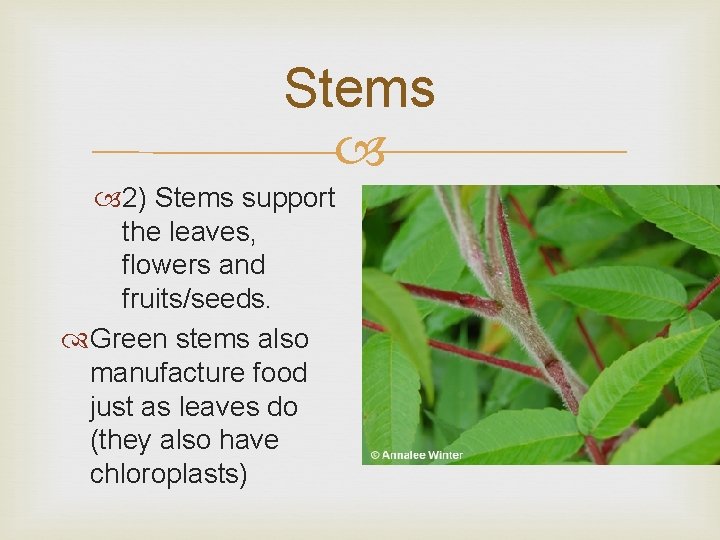
Stems 2) Stems support the leaves, flowers and fruits/seeds. Green stems also manufacture food just as leaves do (they also have chloroplasts)
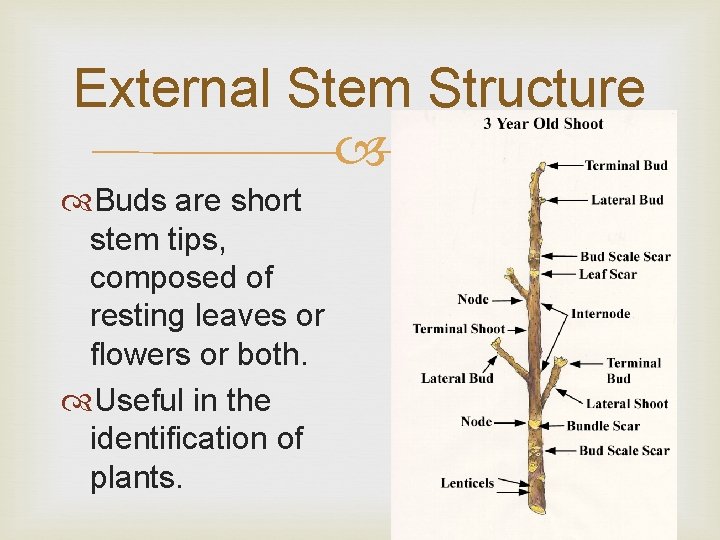
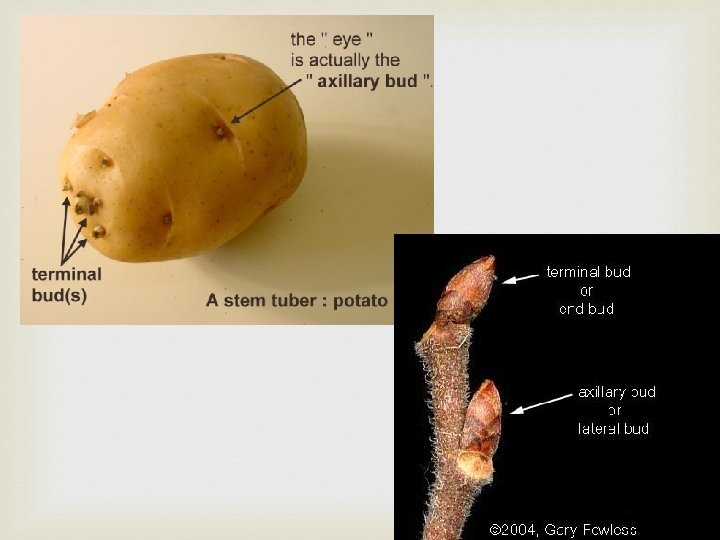
External Stem Structure Buds are short stem tips, composed of resting leaves or flowers or both. Useful in the identification of plants.
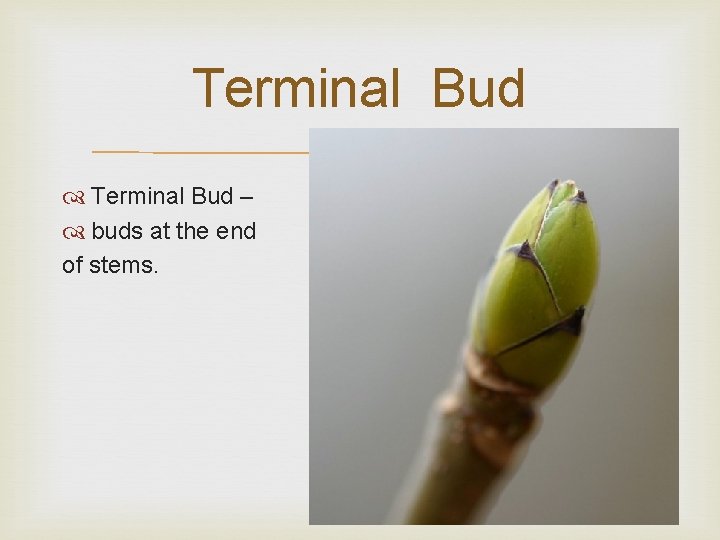
Terminal Bud – buds at the end of stems.
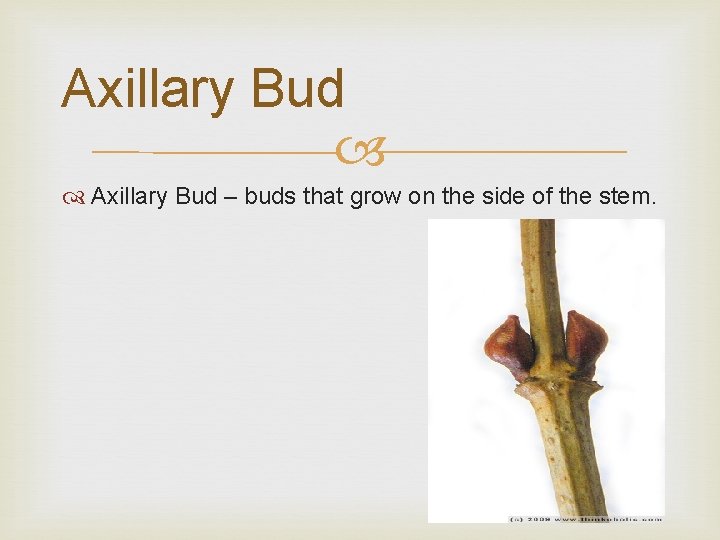
Axillary Bud – buds that grow on the side of the stem.
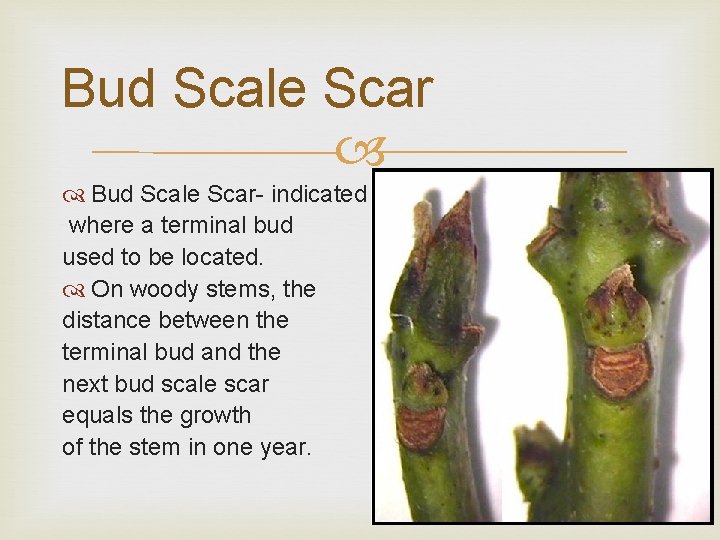
Bud Scale Scar- indicated where a terminal bud used to be located. On woody stems, the distance between the terminal bud and the next bud scale scar equals the growth of the stem in one year.
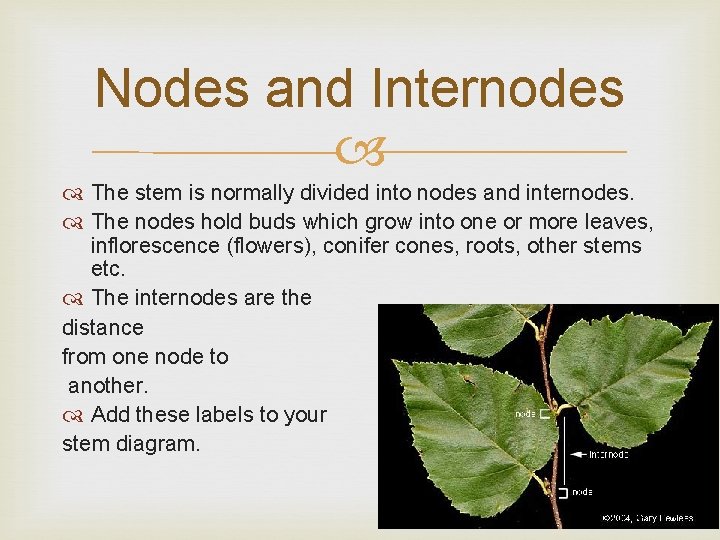
Nodes and Internodes The stem is normally divided into nodes and internodes. The nodes hold buds which grow into one or more leaves, inflorescence (flowers), conifer cones, roots, other stems etc. The internodes are the distance from one node to another. Add these labels to your stem diagram.
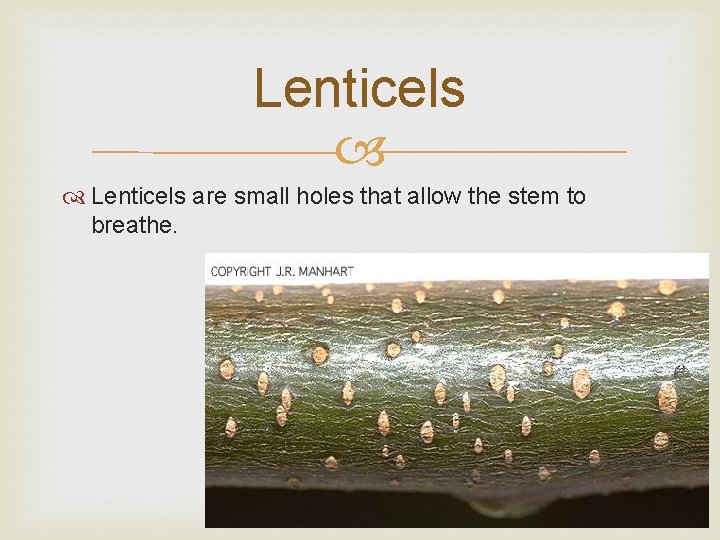
Lenticels are small holes that allow the stem to breathe.
Twig Self Test http: //www. biog 11051106. org/demos/105/unit 4/twigtest. html
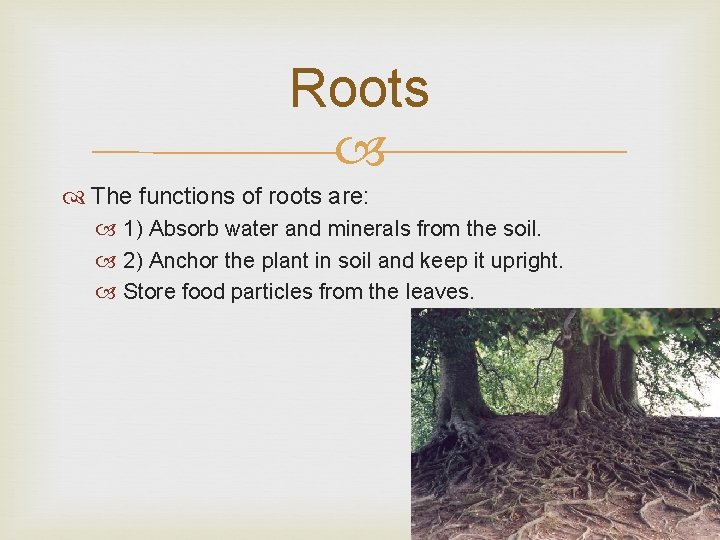
Roots The functions of roots are: 1) Absorb water and minerals from the soil. 2) Anchor the plant in soil and keep it upright. Store food particles from the leaves.
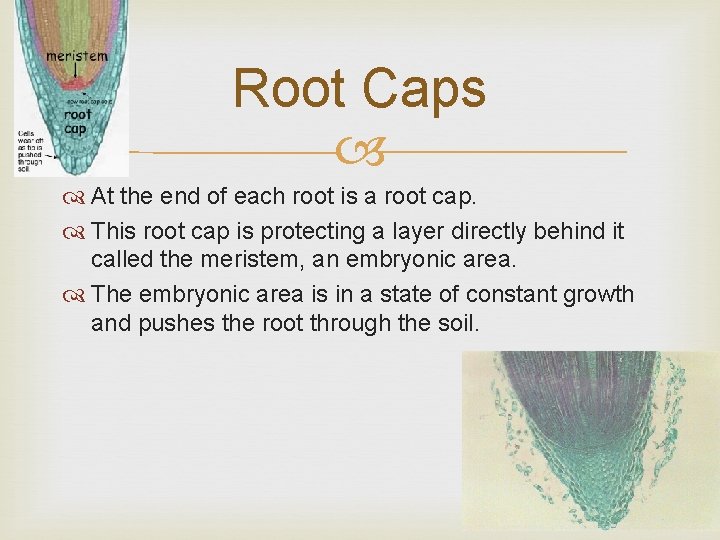
Root Caps At the end of each root is a root cap. This root cap is protecting a layer directly behind it called the meristem, an embryonic area. The embryonic area is in a state of constant growth and pushes the root through the soil.
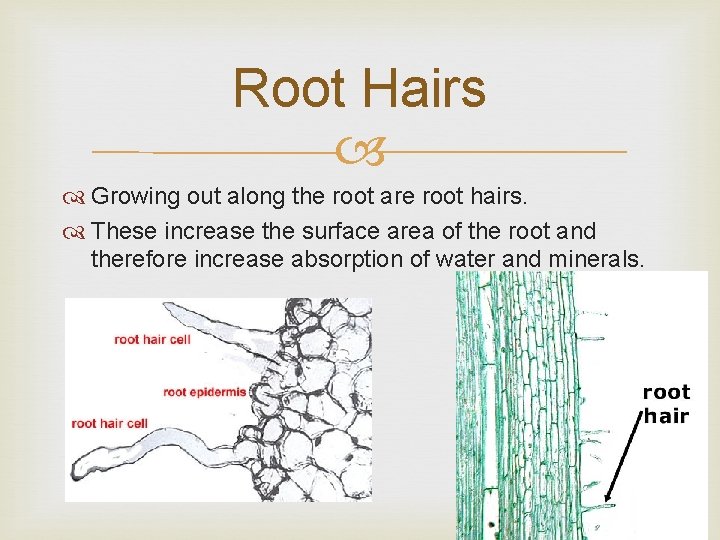
Root Hairs Growing out along the root are root hairs. These increase the surface area of the root and therefore increase absorption of water and minerals.
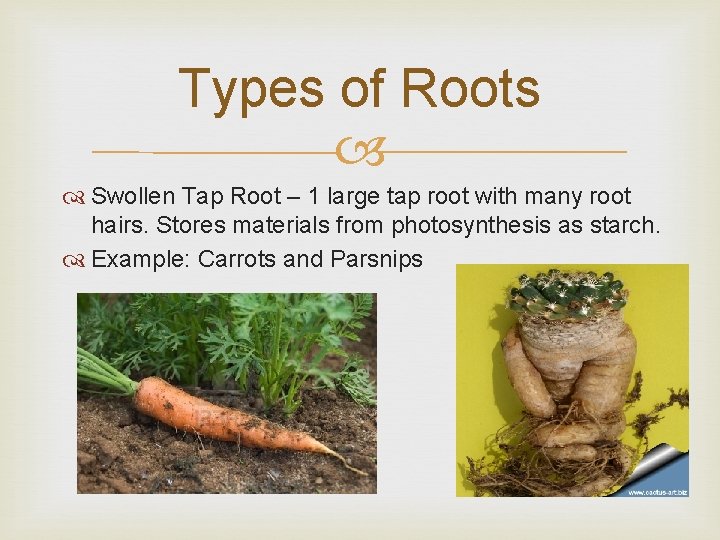
Types of Roots Swollen Tap Root – 1 large tap root with many root hairs. Stores materials from photosynthesis as starch. Example: Carrots and Parsnips
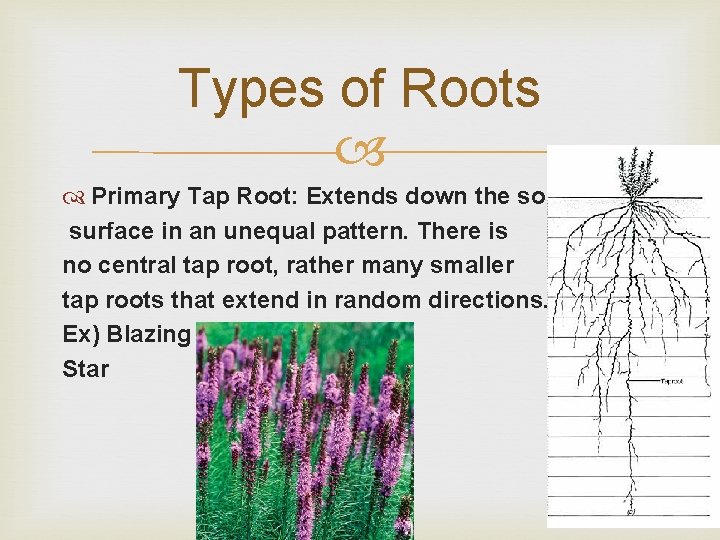
Types of Roots Primary Tap Root: Extends down the soil surface in an unequal pattern. There is no central tap root, rather many smaller tap roots that extend in random directions. Ex) Blazing Star
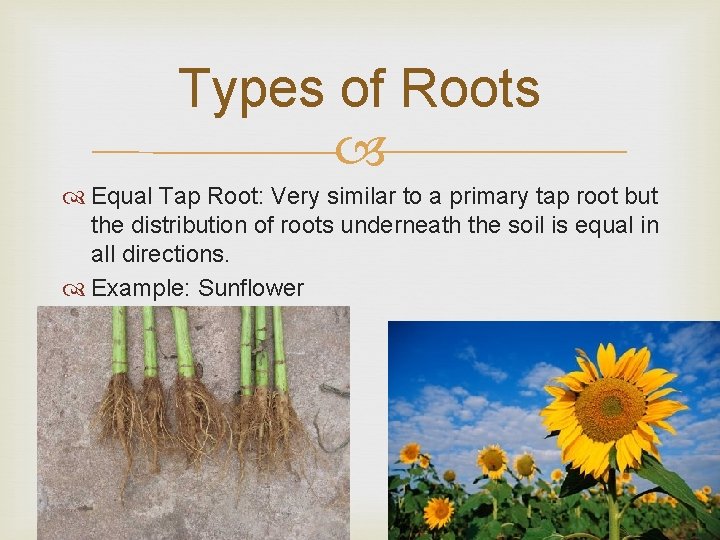
Types of Roots Equal Tap Root: Very similar to a primary tap root but the distribution of roots underneath the soil is equal in all directions. Example: Sunflower
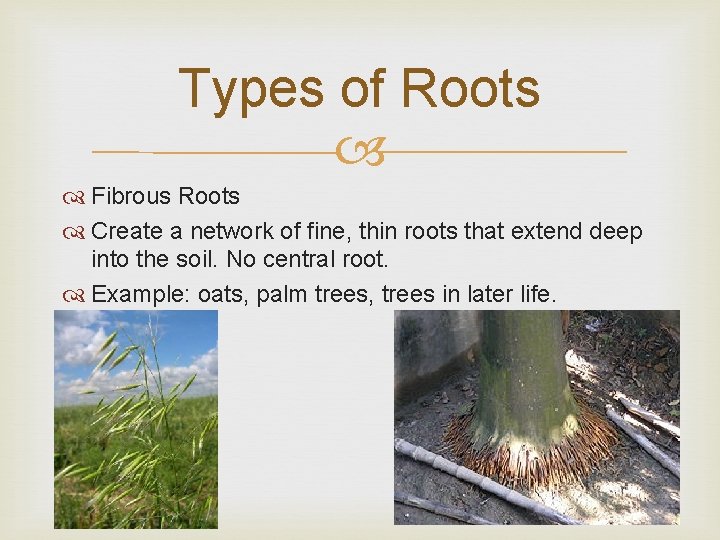
Types of Roots Fibrous Roots Create a network of fine, thin roots that extend deep into the soil. No central root. Example: oats, palm trees, trees in later life.