
RootForm Endosseous Implants Erik Simpanen BME 281 Tuesday
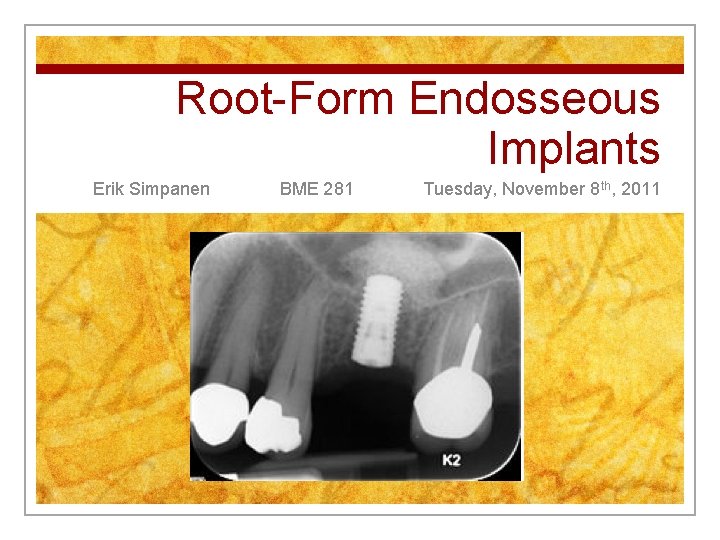
Root-Form Endosseous Implants Erik Simpanen BME 281 Tuesday, November 8 th, 2011
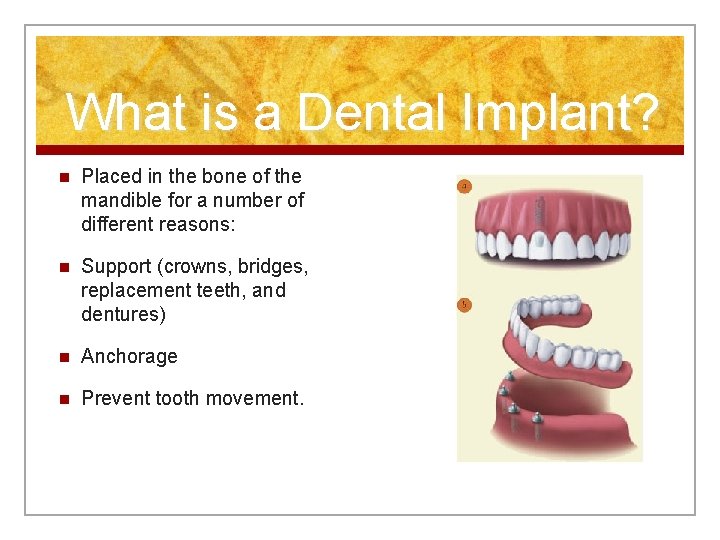
What is a Dental Implant? n Placed in the bone of the mandible for a number of different reasons: n Support (crowns, bridges, replacement teeth, and dentures) n Anchorage n Prevent tooth movement.
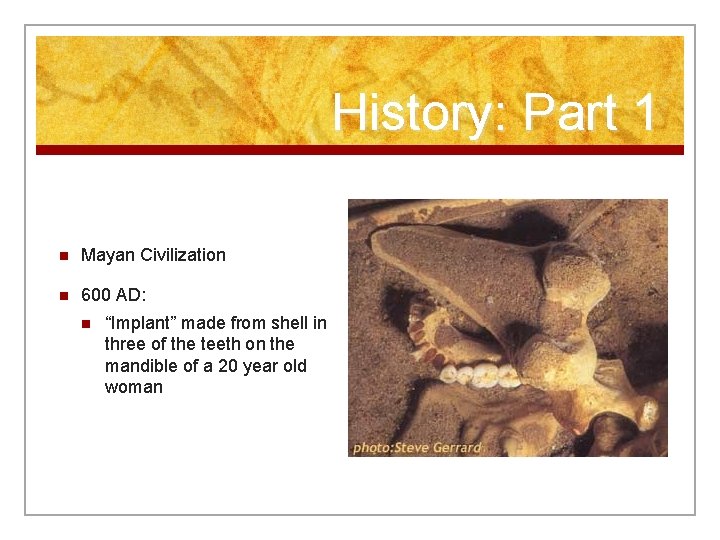
History: Part 1 n Mayan Civilization n 600 AD: n “Implant” made from shell in three of the teeth on the mandible of a 20 year old woman
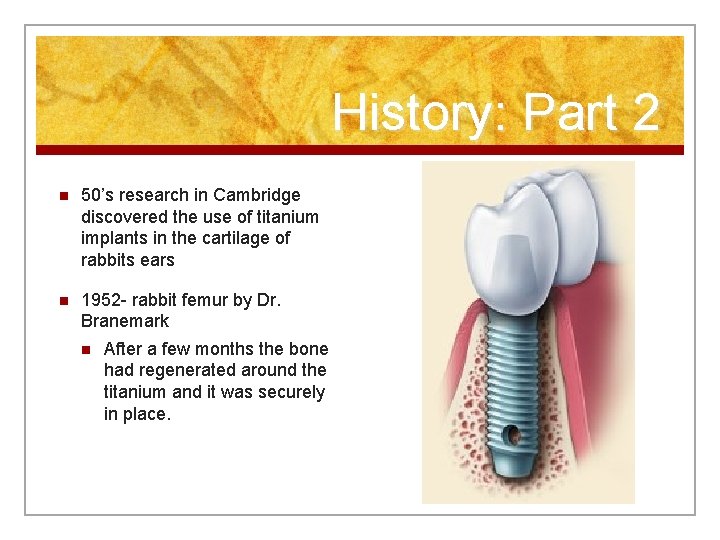
History: Part 2 n 50’s research in Cambridge discovered the use of titanium implants in the cartilage of rabbits ears n 1952 - rabbit femur by Dr. Branemark n After a few months the bone had regenerated around the titanium and it was securely in place.
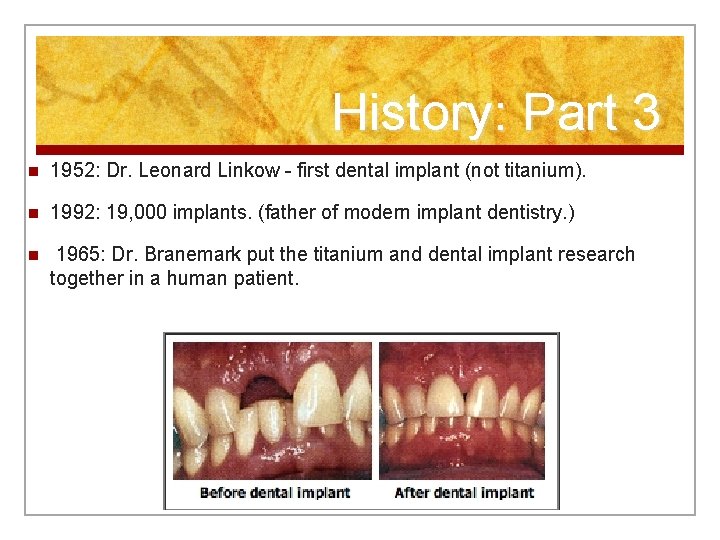
History: Part 3 n 1952: Dr. Leonard Linkow - first dental implant (not titanium). n 1992: 19, 000 implants. (father of modern implant dentistry. ) n 1965: Dr. Branemark put the titanium and dental implant research together in a human patient.
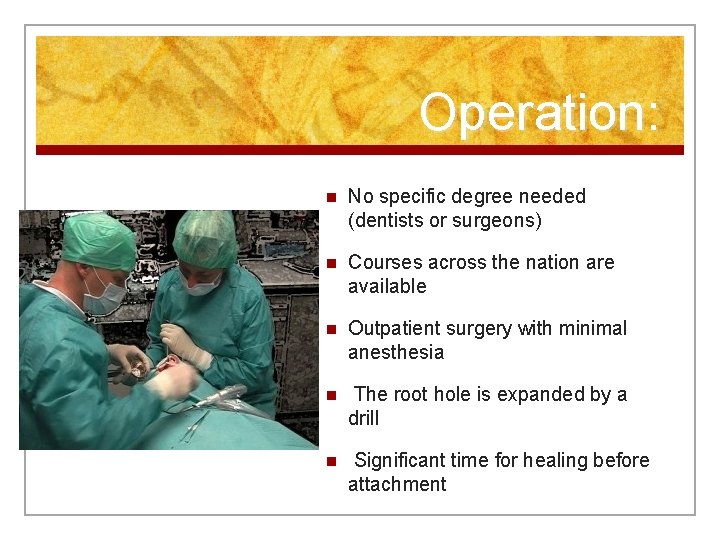
Operation: n No specific degree needed (dentists or surgeons) n Courses across the nation are available n Outpatient surgery with minimal anesthesia n The root hole is expanded by a drill n Significant time for healing before attachment
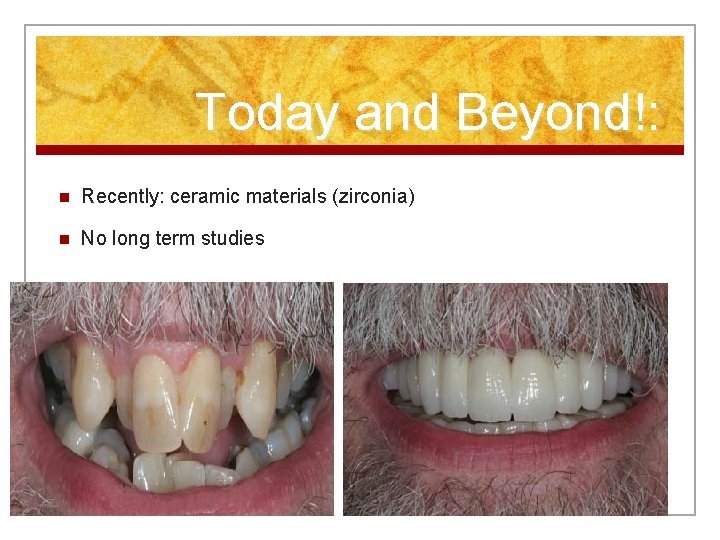
Today and Beyond!: n Recently: ceramic materials (zirconia) n No long term studies
Sources n 1) Albrektsson, T. , G. Zarb, P. Worthington, and A. R. Eriksson. "The Long Term Efficacy of Currently Used Dental Implants: A Review and Criteria Proposed for Success. " JOMI 1. 1 (1986). Print. n 2) http: //en. wikipedia. org/wiki/Dental_implant n 3) American Acadomy of peridontology, 2011, n n n (http: //www. perio. org/consumer/2 m. htm) 4) American Assocition of Oral and Maxillofacial Surgeons, 2008, (http: //www. aaoms. org/dental_implants. php)
Questions? ? ?
- Slides: 9