
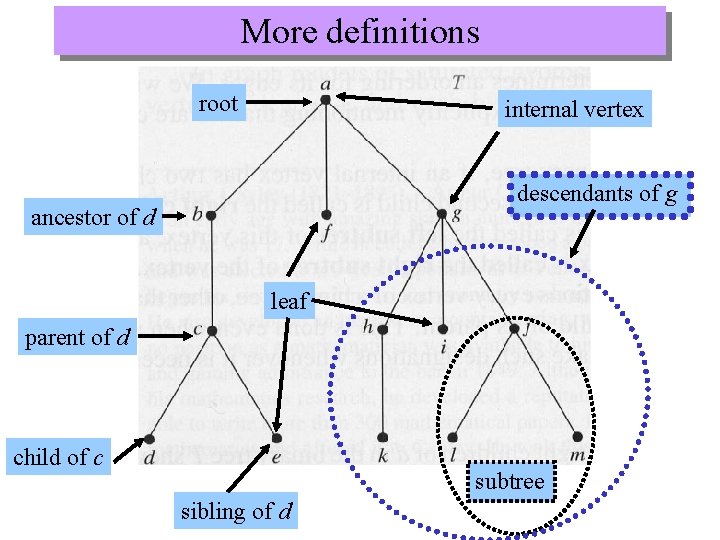
Rooted Trees More definitions root internal vertex descendants
- Slides: 10
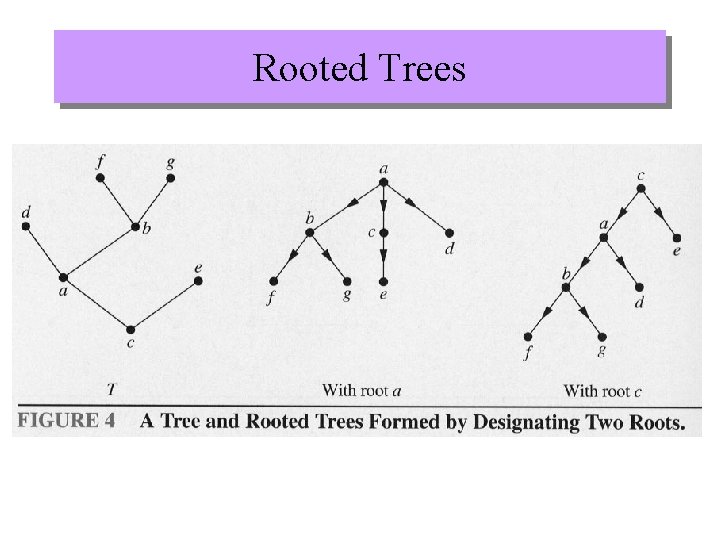
Rooted Trees
More definitions root internal vertex descendants of g ancestor of d leaf parent of d child of c subtree sibling of d
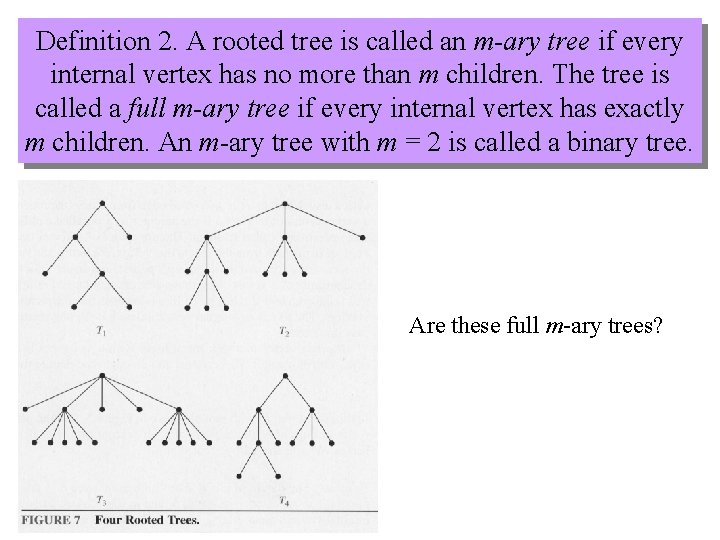
Definition 2. A rooted tree is called an m-ary tree if every internal vertex has no more than m children. The tree is called a full m-ary tree if every internal vertex has exactly m children. An m-ary tree with m = 2 is called a binary tree. Are these full m-ary trees?
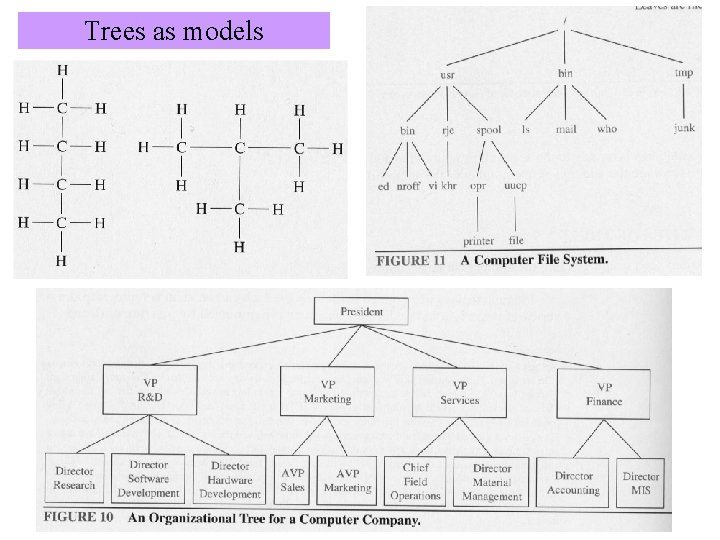
Trees as models
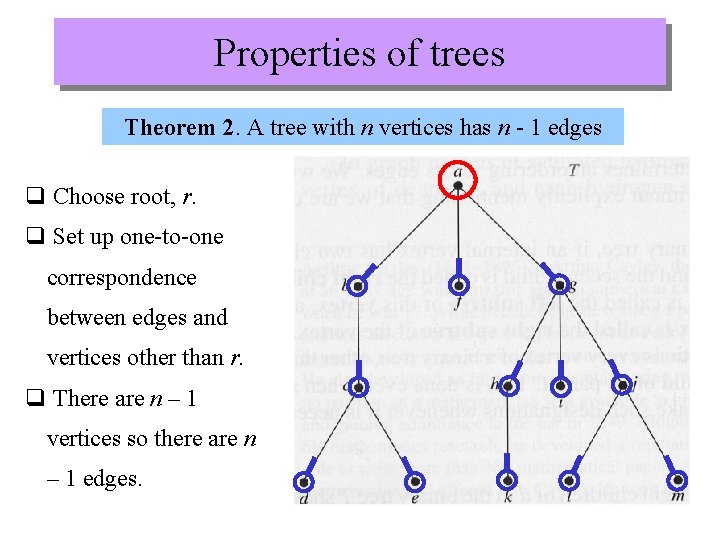
Properties of trees Theorem 2. A tree with n vertices has n - 1 edges q Choose root, r. q Set up one-to-one correspondence between edges and vertices other than r. q There are n – 1 vertices so there are n – 1 edges.
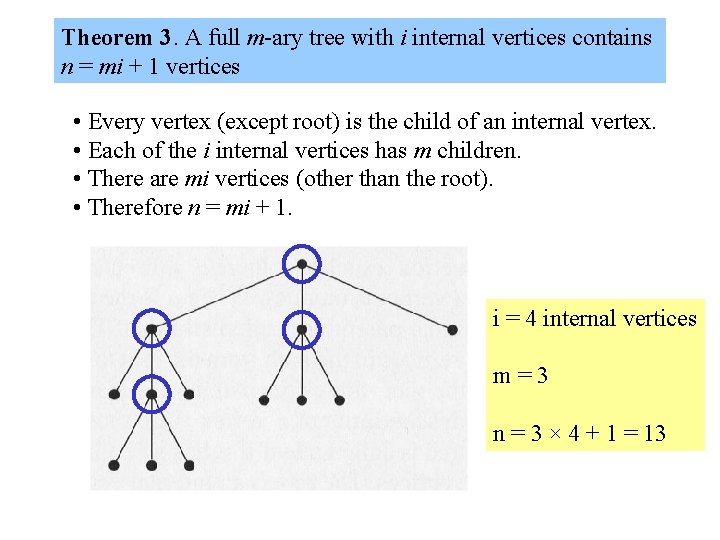
Theorem 3. A full m-ary tree with i internal vertices contains n = mi + 1 vertices • Every vertex (except root) is the child of an internal vertex. • Each of the i internal vertices has m children. • There are mi vertices (other than the root). • Therefore n = mi + 1. i = 4 internal vertices m=3 n = 3 × 4 + 1 = 13
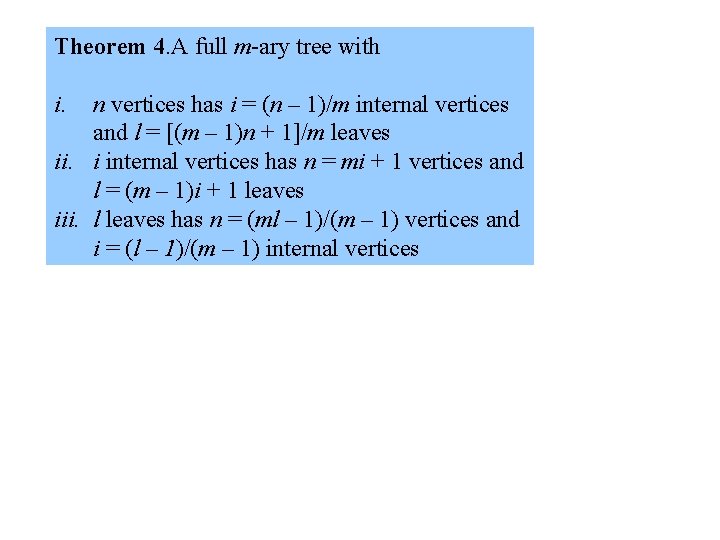
Theorem 4. A full m-ary tree with i. n vertices has i = (n – 1)/m internal vertices and l = [(m – 1)n + 1]/m leaves ii. i internal vertices has n = mi + 1 vertices and l = (m – 1)i + 1 leaves iii. l leaves has n = (ml – 1)/(m – 1) vertices and i = (l – 1)/(m – 1) internal vertices
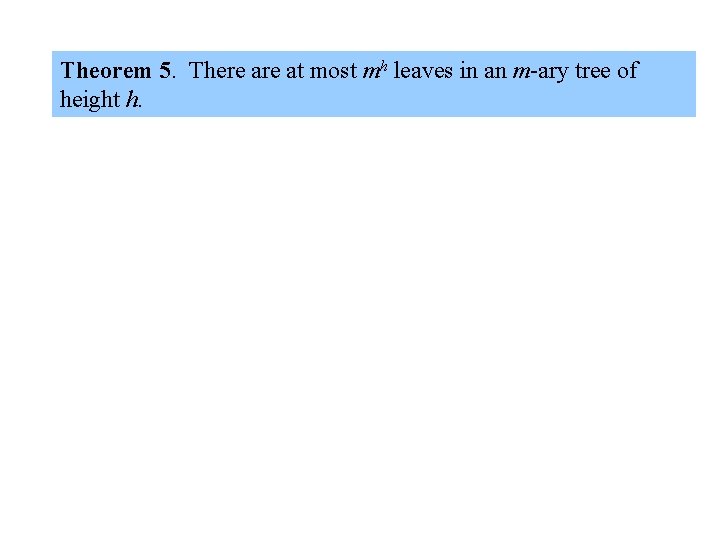
Theorem 5. There at most mh leaves in an m-ary tree of height h.
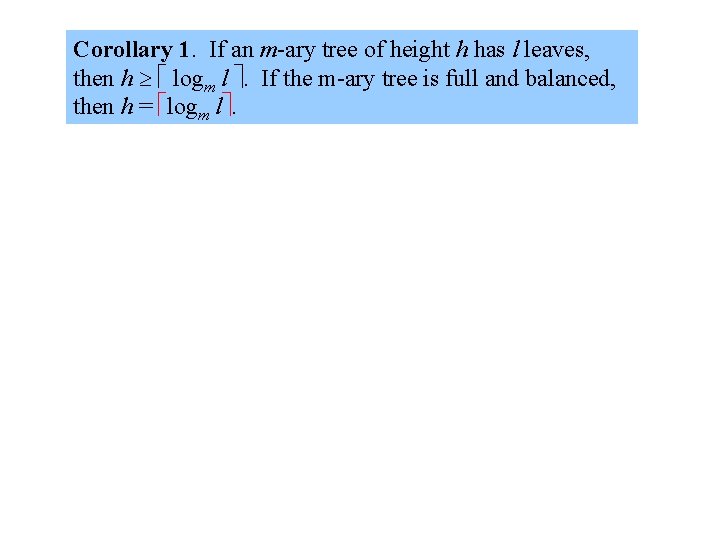
Corollary 1. If an m-ary tree of height h has l leaves, then h logm l . If the m-ary tree is full and balanced, then h = logm l.
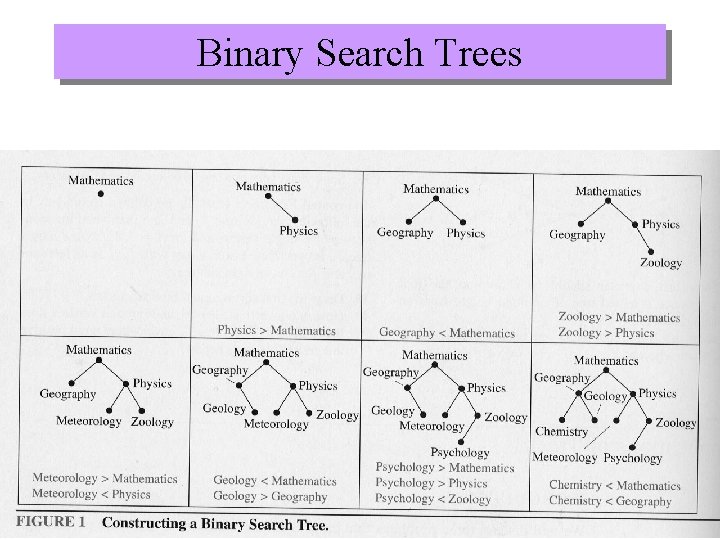
Binary Search Trees