
Roosevelt and America Move to War American History
- Slides: 34
Roosevelt and America Move to War American History
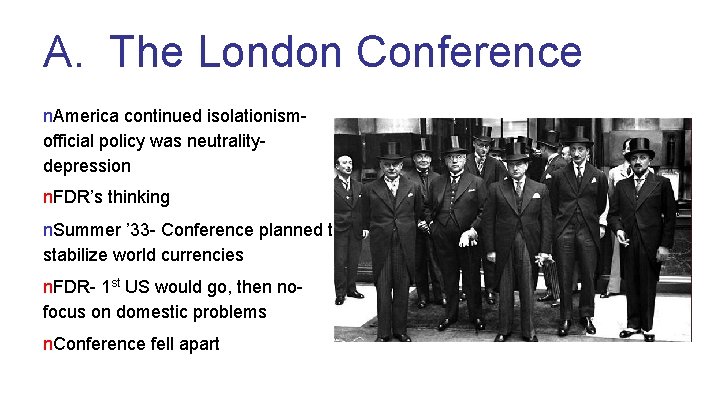
A. The London Conference n. America continued isolationismofficial policy was neutralitydepression n. FDR’s thinking n. Summer ’ 33 - Conference planned to stabilize world currencies n. FDR- 1 st US would go, then nofocus on domestic problems n. Conference fell apart
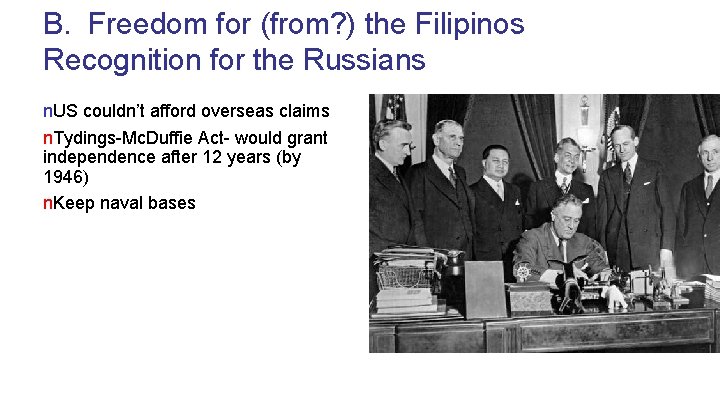
B. Freedom for (from? ) the Filipinos Recognition for the Russians n. US couldn’t afford overseas claims n. Tydings-Mc. Duffie Act- would grant independence after 12 years (by 1946) n. Keep naval bases
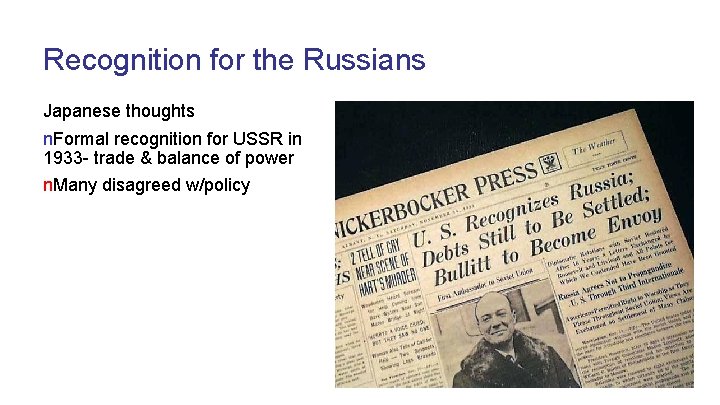
Recognition for the Russians Japanese thoughts n. Formal recognition for USSR in 1933 - trade & balance of power n. Many disagreed w/policy
C. Becoming a Good Neighbor n. Depression made America less willing to create empire in Latin America n. Fewer American $ to protect there n. FDR wished to line up support against European & Asian threats to protect western hemisphere n. Endorsed nonintervention (no force) -opposite of his distant cousin
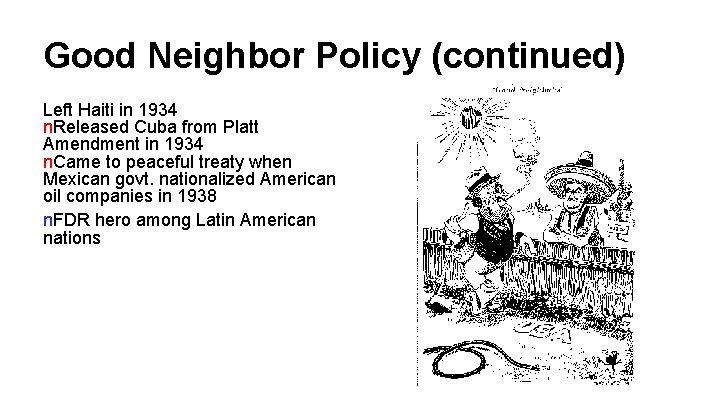
Good Neighbor Policy (continued) Left Haiti in 1934 n. Released Cuba from Platt Amendment in 1934 n. Came to peaceful treaty when Mexican govt. nationalized American oil companies in 1938 n. FDR hero among Latin American nations
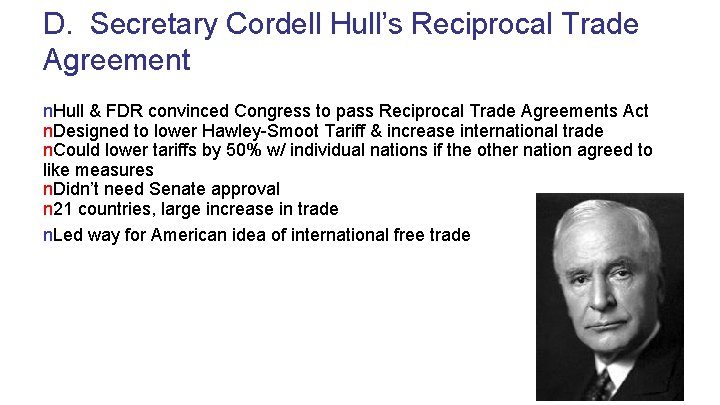
D. Secretary Cordell Hull’s Reciprocal Trade Agreement n. Hull & FDR convinced Congress to pass Reciprocal Trade Agreements Act n. Designed to lower Hawley-Smoot Tariff & increase international trade n. Could lower tariffs by 50% w/ individual nations if the other nation agreed to like measures n. Didn’t need Senate approval n 21 countries, large increase in trade n. Led way for American idea of international free trade
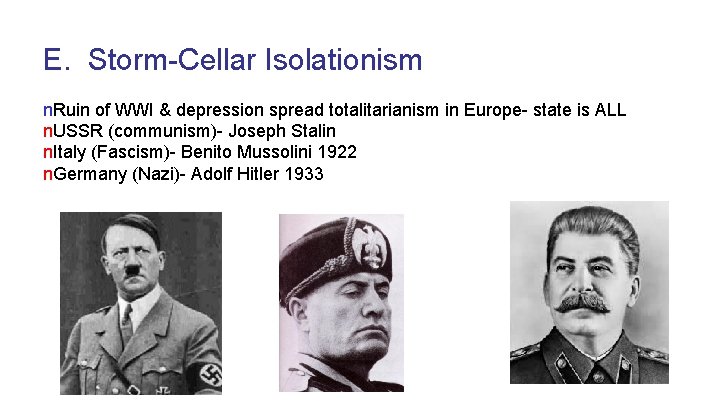
E. Storm-Cellar Isolationism n. Ruin of WWI & depression spread totalitarianism in Europe- state is ALL n. USSR (communism)- Joseph Stalin n. Italy (Fascism)- Benito Mussolini 1922 n. Germany (Nazi)- Adolf Hitler 1933
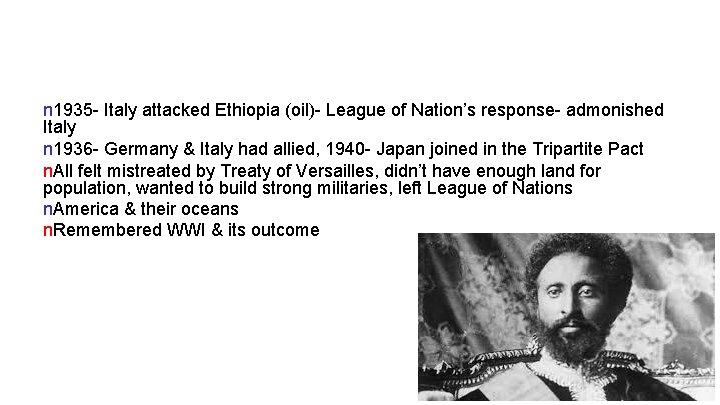
n 1935 - Italy attacked Ethiopia (oil)- League of Nation’s response- admonished Italy n 1936 - Germany & Italy had allied, 1940 - Japan joined in the Tripartite Pact n. All felt mistreated by Treaty of Versailles, didn’t have enough land for population, wanted to build strong militaries, left League of Nations n. America & their oceans n. Remembered WWI & its outcome
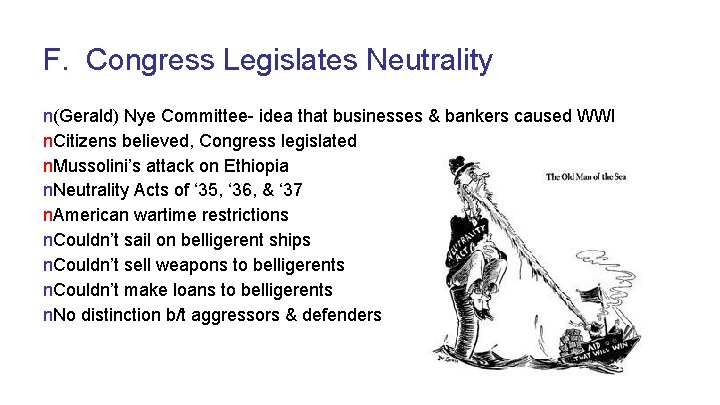
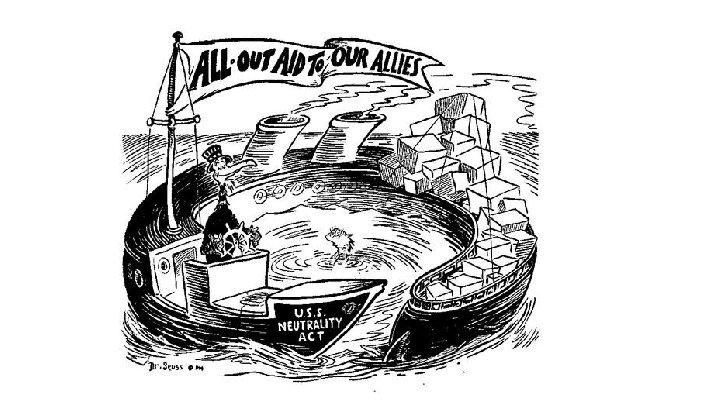
F. Congress Legislates Neutrality n(Gerald) Nye Committee- idea that businesses & bankers caused WWI n. Citizens believed, Congress legislated n. Mussolini’s attack on Ethiopia n. Neutrality Acts of ‘ 35, ‘ 36, & ‘ 37 n. American wartime restrictions n. Couldn’t sail on belligerent ships n. Couldn’t sell weapons to belligerents n. Couldn’t make loans to belligerents n. No distinction b/t aggressors & defenders
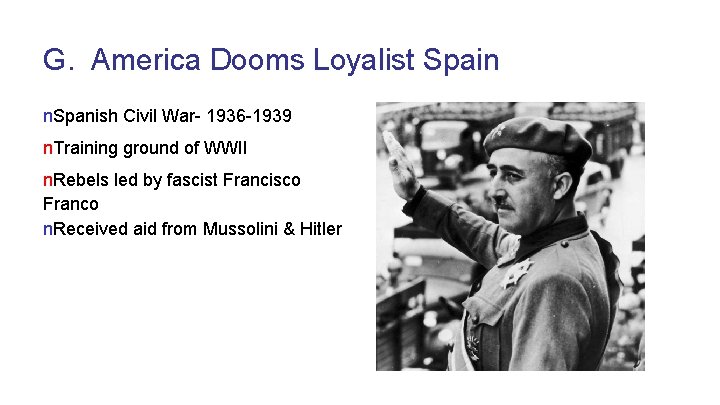
G. America Dooms Loyalist Spain n. Spanish Civil War- 1936 -1939 n. Training ground of WWII n. Rebels led by fascist Francisco Franco n. Received aid from Mussolini & Hitler
n. Loyalists (royal govt. in power) n. Received aid from USSR n. Made US NOT send aid- doomed Spain to dictatorship n. Took Congress until 1938 to begin preparing for war
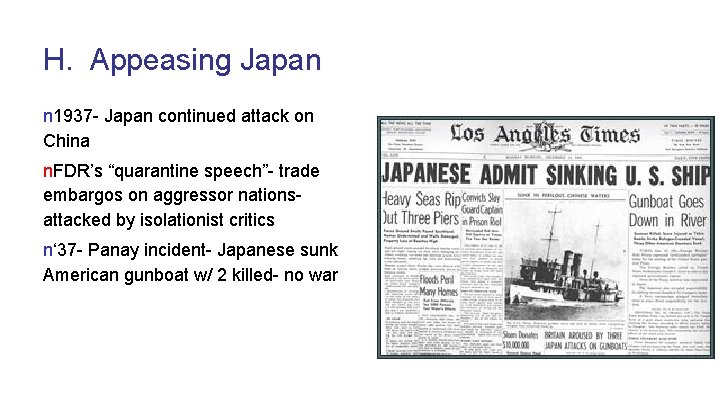
H. Appeasing Japan n 1937 - Japan continued attack on China n. FDR’s “quarantine speech”- trade embargos on aggressor nationsattacked by isolationist critics n‘ 37 - Panay incident- Japanese sunk American gunboat w/ 2 killed- no war
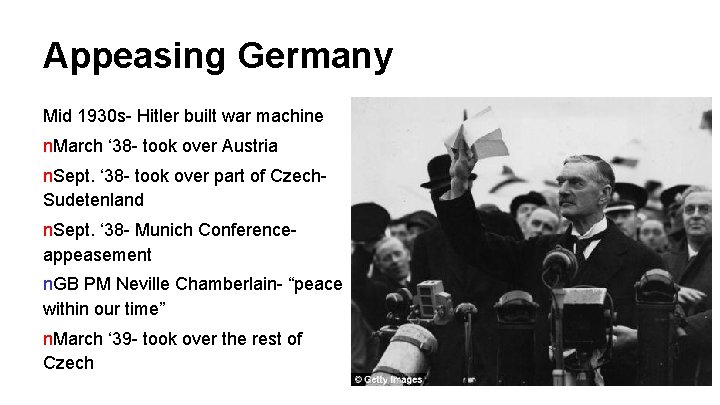
Appeasing Germany Mid 1930 s- Hitler built war machine n. March ‘ 38 - took over Austria n. Sept. ‘ 38 - took over part of Czech. Sudetenland n. Sept. ‘ 38 - Munich Conferenceappeasement n. GB PM Neville Chamberlain- “peace within our time” n. March ‘ 39 - took over the rest of Czech
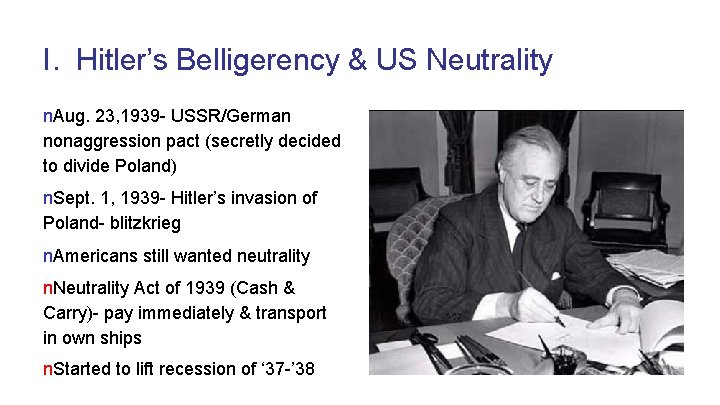
I. Hitler’s Belligerency & US Neutrality n. Aug. 23, 1939 - USSR/German nonaggression pact (secretly decided to divide Poland) n. Sept. 1, 1939 - Hitler’s invasion of Poland- blitzkrieg n. Americans still wanted neutrality n. Neutrality Act of 1939 (Cash & Carry)- pay immediately & transport in own ships n. Started to lift recession of ‘ 37 -’ 38
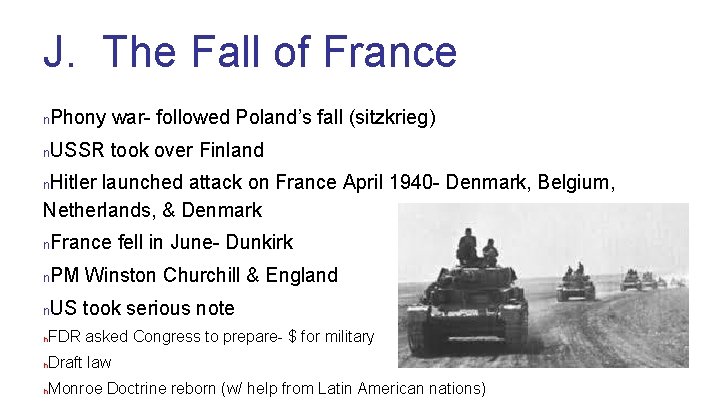
J. The Fall of France Phony war- followed Poland’s fall (sitzkrieg) n USSR took over Finland n Hitler launched attack on France April 1940 - Denmark, Belgium, Netherlands, & Denmark n France fell in June- Dunkirk n PM Winston Churchill & England n US took serious note n FDR asked Congress to prepare- $ for military n Draft law n Monroe Doctrine reborn (w/ help from Latin American nations) n
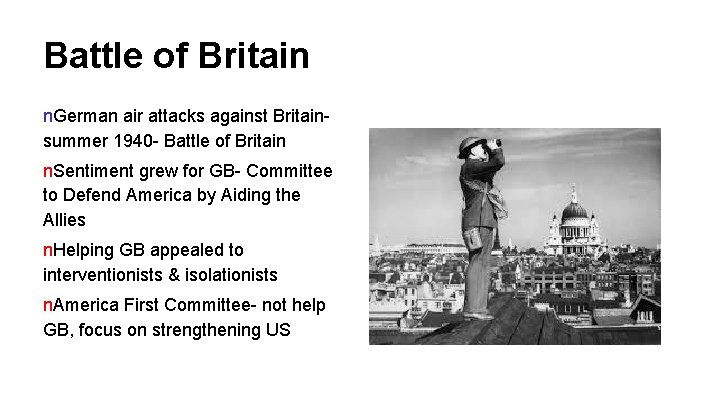
Battle of Britain n. German air attacks against Britainsummer 1940 - Battle of Britain n. Sentiment grew for GB- Committee to Defend America by Aiding the Allies n. Helping GB appealed to interventionists & isolationists n. America First Committee- not help GB, focus on strengthening US
Destroyers for Bases n. Bases for Battleships deal n 50 old ships to GB in exchange for 8 defensive base sites in Western Hem. n. Done w/out Congressional approval n. Some outraged, but most Americans okay w/ this- trying to stay out of war- violation of Neutrality Acts
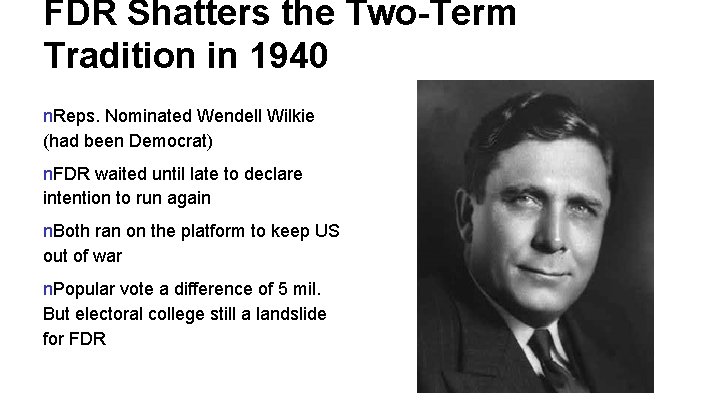
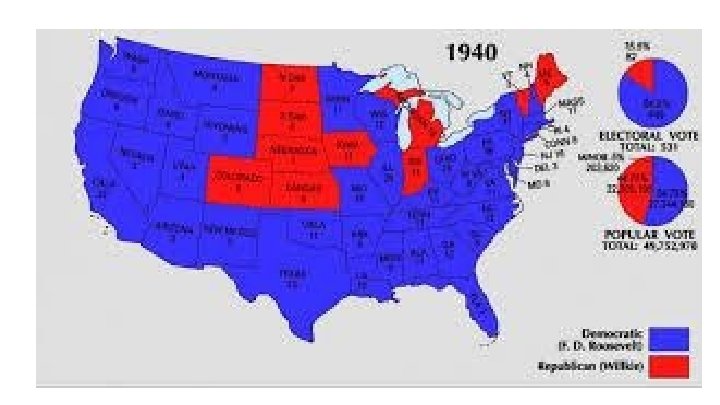
FDR Shatters the Two-Term Tradition in 1940 n. Reps. Nominated Wendell Wilkie (had been Democrat) n. FDR waited until late to declare intention to run again n. Both ran on the platform to keep US out of war n. Popular vote a difference of 5 mil. But electoral college still a landslide for FDR
Congress Passes Lend-Lease n. FDR proposed Lend-Lease n. Allies could borrow or lease weapons, when fighting was over they could be returned (neighbor’s house on fire) n. Critics said we wouldn’t want used weapons back n. Send guns, not sons- billions, not bodies
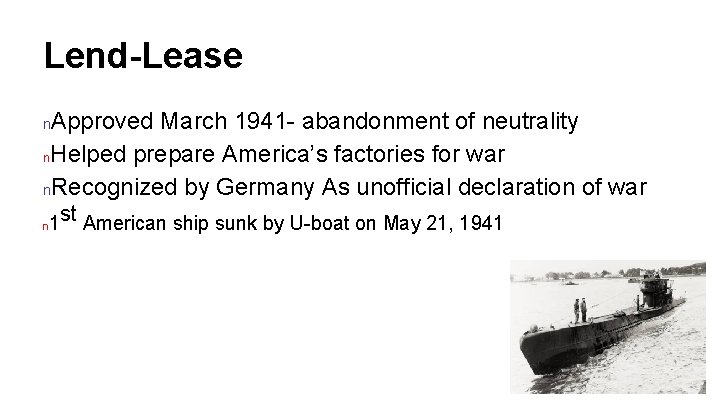
Lend-Lease Approved March 1941 - abandonment of neutrality n. Helped prepare America’s factories for war n. Recognized by Germany As unofficial declaration of war n n 1 st American ship sunk by U-boat on May 21, 1941
End of Nazi-Soviet Pact Hitler attacked Soviets June 1941 - double cross n n Allies hoped the 2 would kill each other FDR decided to offer help to Stalin (lendlease)- fear of Soviet collapse - Churchill - “If Hitler invaded hell…” n
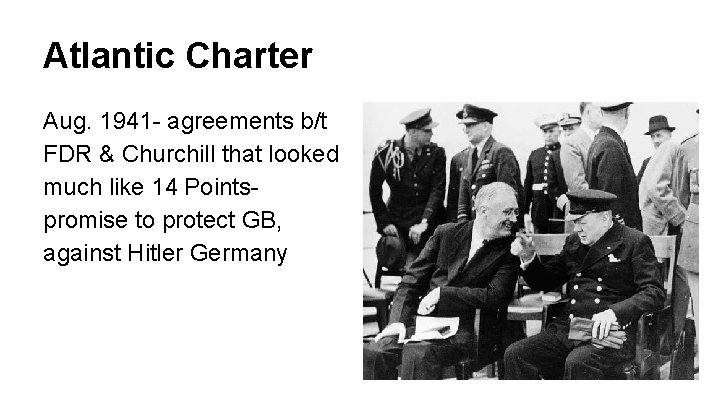
Atlantic Charter Aug. 1941 - agreements b/t FDR & Churchill that looked much like 14 Pointspromise to protect GB, against Hitler Germany
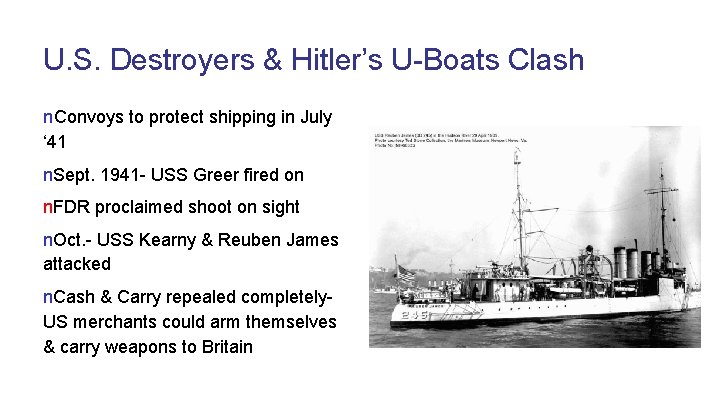
U. S. Destroyers & Hitler’s U-Boats Clash n. Convoys to protect shipping in July ‘ 41 n. Sept. 1941 - USS Greer fired on n. FDR proclaimed shoot on sight n. Oct. - USS Kearny & Reuben James attacked n. Cash & Carry repealed completely. US merchants could arm themselves & carry weapons to Britain
US enters the War FDR by now looking for a way in n n Came in Pacific, not Atlantic Japan needed resources for its war machine- couldn’t rely on US n n US imposed embargo on Japan
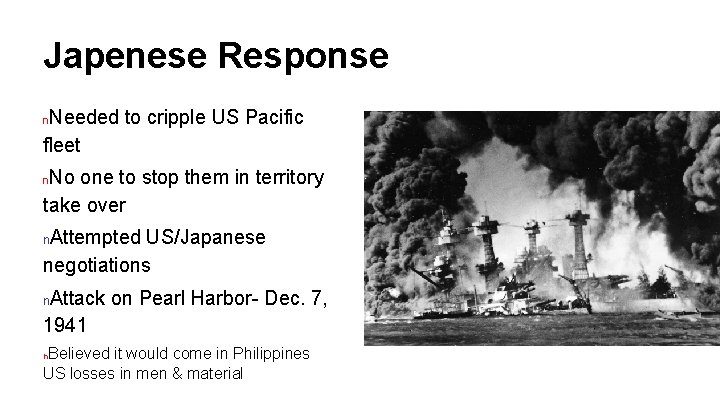
Japenese Response Needed to cripple US Pacific fleet n No one to stop them in territory take over n Attempted US/Japanese negotiations n Attack on Pearl Harbor- Dec. 7, 1941 n Believed it would come in Philippines US losses in men & material n
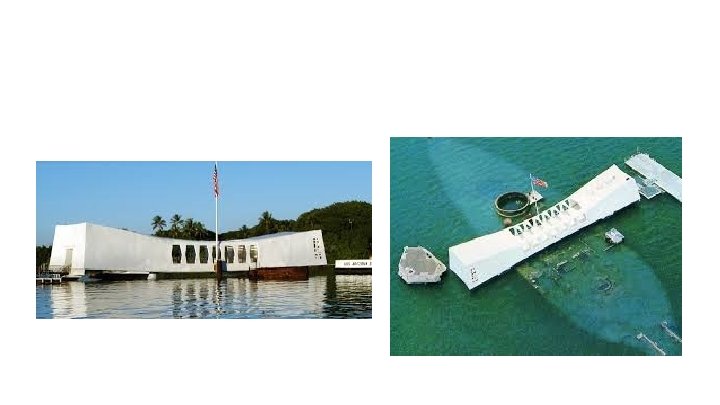
Bystander to Belligerent Damaged American fleet, but aroused US anger n n US declared war on Japan- Dec. 8, 1941 n Germany declared war on US Dec. 11
Did we bring ourselves into the war? -some claim that US isolationism emboldened dictators -Could FDR and Hull have been more flexible?
Revisionists -late 40 s - Charles Beard - FDR intended embargo to force Japan into war -50 s and 60 s - why was Pearl Harbor unprepared?
At Dawn We Slept (1981) Gordon Prange - definitive study of Pearl Harbor -could have been better prepared -no evidence of “secret plot” -well planned attack by Japanese
John Toland - Infamy: Pearl Harbor and Its Aftermath (1982) -Claimed that FDR knew about Pearl Harbor attack but intentionally allowed it to happen -no evidence