
Roof styles Origins Bischoff 2012 Parts of a
Roof styles Origins- Bischoff 2012
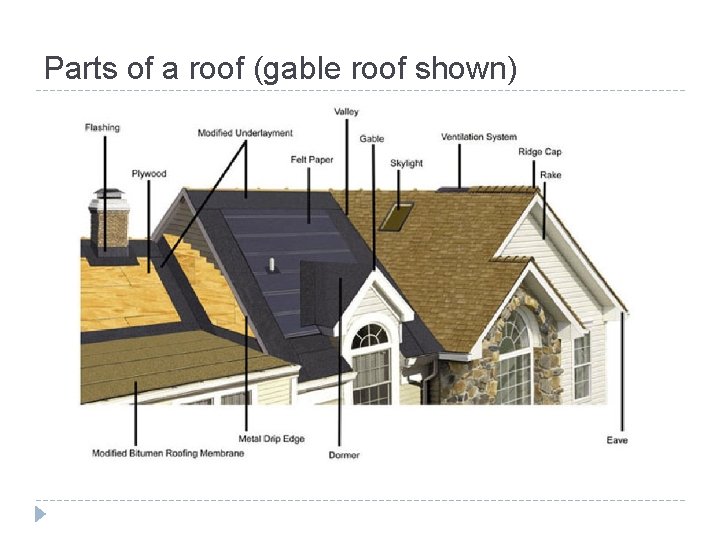
Parts of a roof (gable roof shown)

Rafter layout (gable roof shown) � Common rafters are used in most roof applications � Each roof style is going to have different rafter layouts

Rafter layout � Cutting individual rafters requires you know a few different dimensions � Rise and run (pitch)
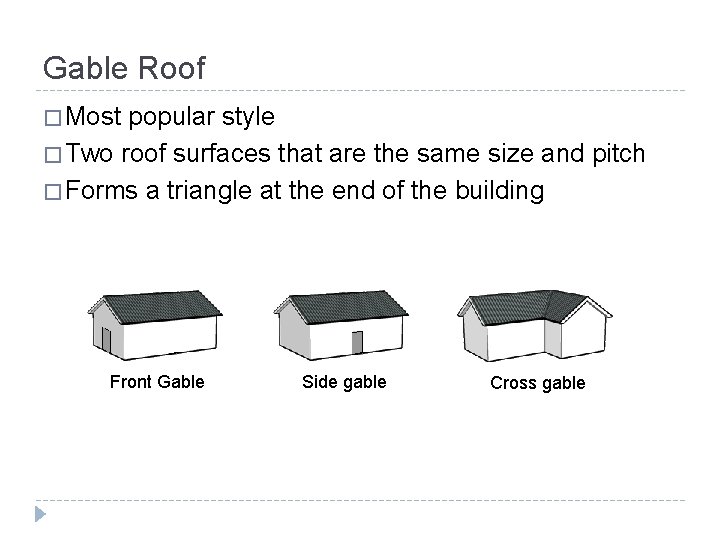
Gable Roof � Most popular style � Two roof surfaces that are the same size and pitch � Forms a triangle at the end of the building Front Gable Side gable Cross gable
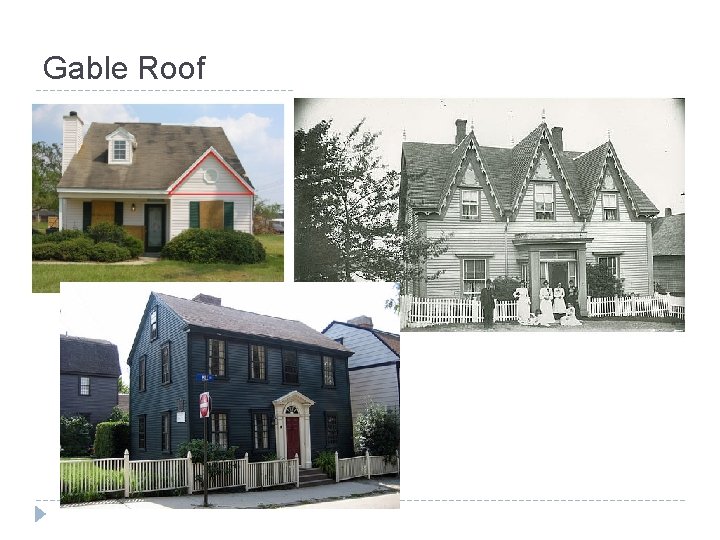
Gable Roof
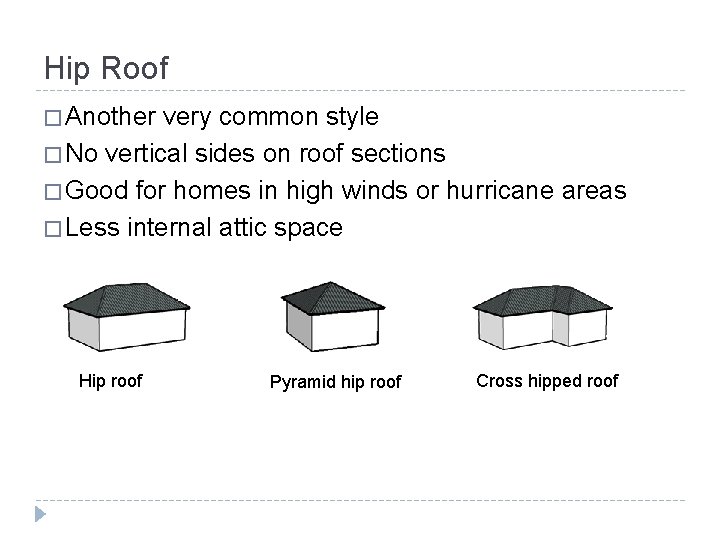
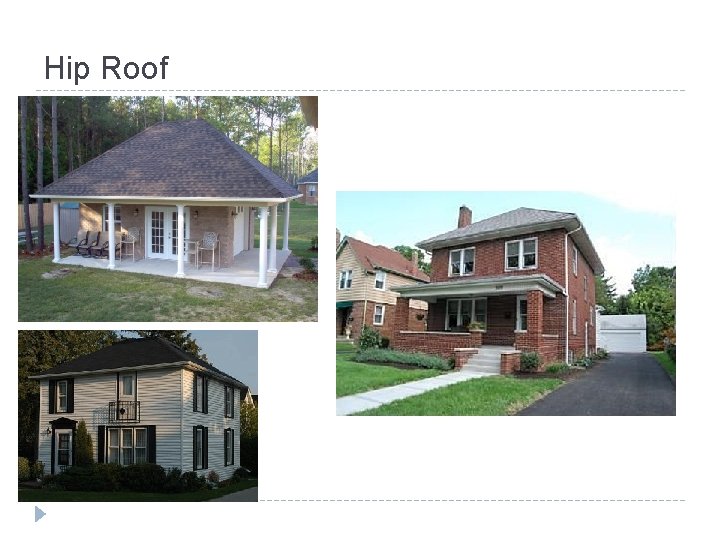
Hip Roof � Another very common style � No vertical sides on roof sections � Good for homes in high winds or hurricane areas � Less internal attic space Hip roof Pyramid hip roof Cross hipped roof
Hip Roof
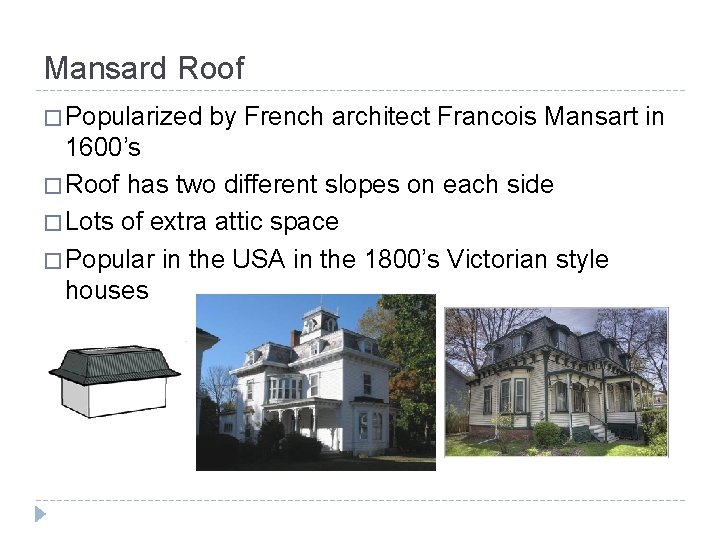
Mansard Roof � Popularized by French architect Francois Mansart in 1600’s � Roof has two different slopes on each side � Lots of extra attic space � Popular in the USA in the 1800’s Victorian style houses
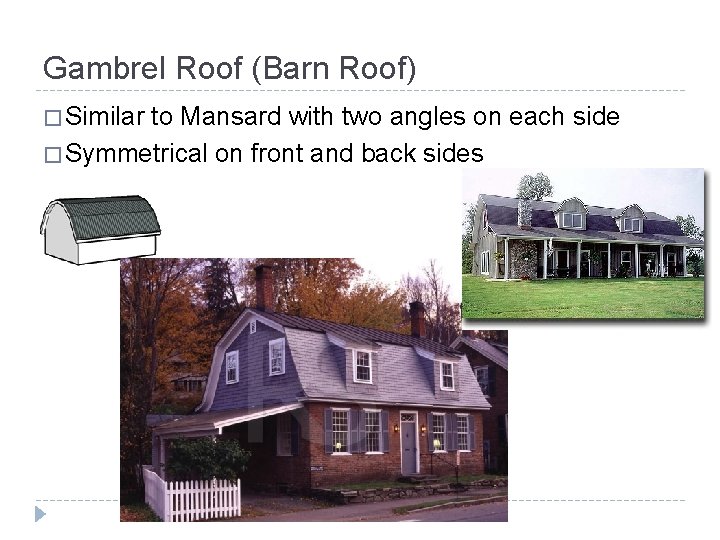
Gambrel Roof (Barn Roof) � Similar to Mansard with two angles on each side � Symmetrical on front and back sides
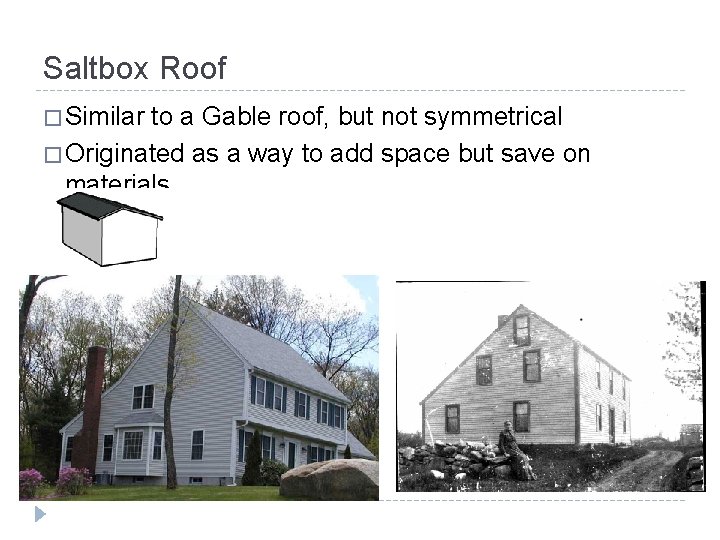
Saltbox Roof � Similar to a Gable roof, but not symmetrical � Originated as a way to add space but save on materials
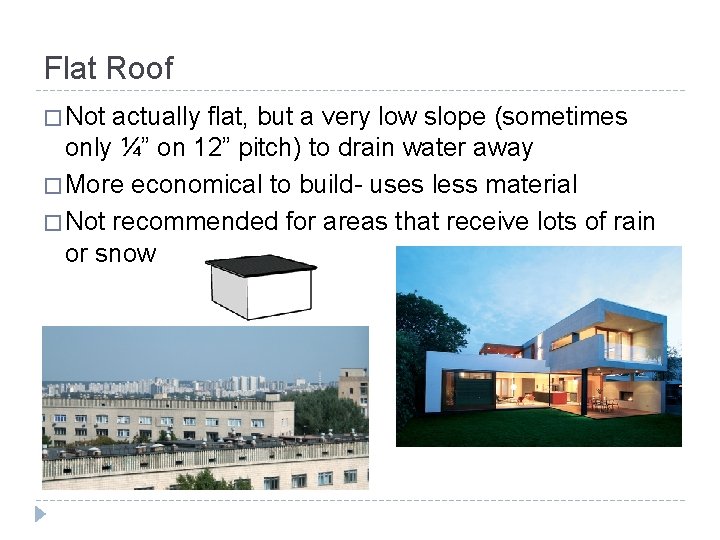
Flat Roof � Not actually flat, but a very low slope (sometimes only ¼” on 12” pitch) to drain water away � More economical to build- uses less material � Not recommended for areas that receive lots of rain or snow
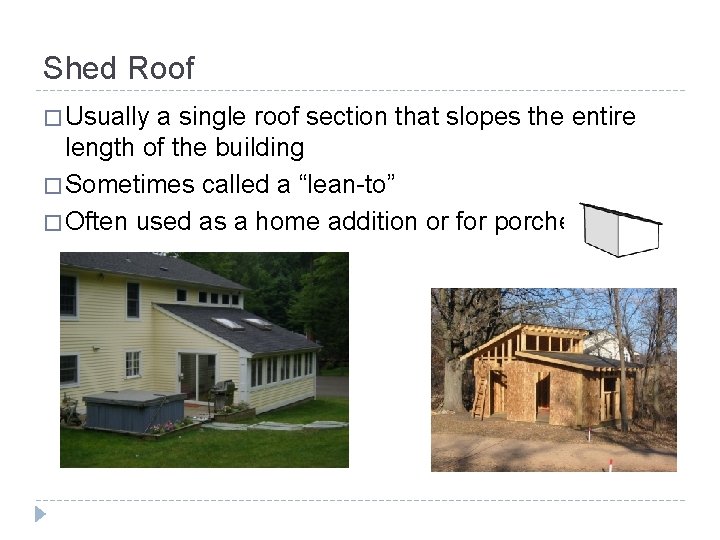
Shed Roof � Usually a single roof section that slopes the entire length of the building � Sometimes called a “lean-to” � Often used as a home addition or for porches
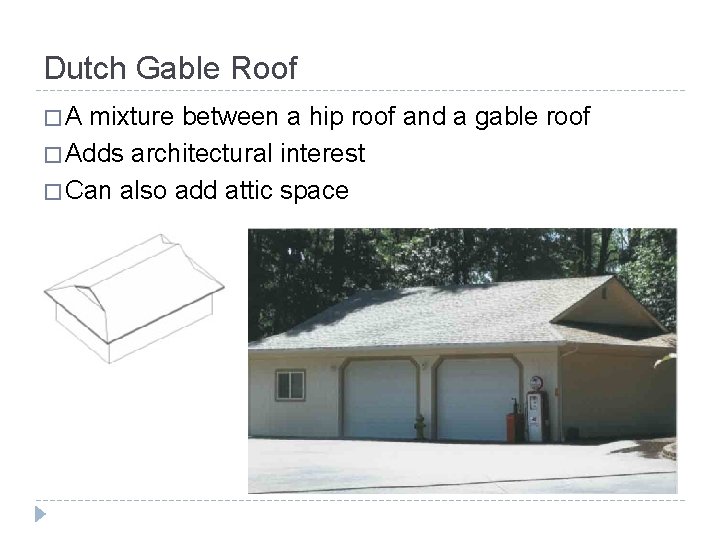
Dutch Gable Roof �A mixture between a hip roof and a gable roof � Adds architectural interest � Can also add attic space
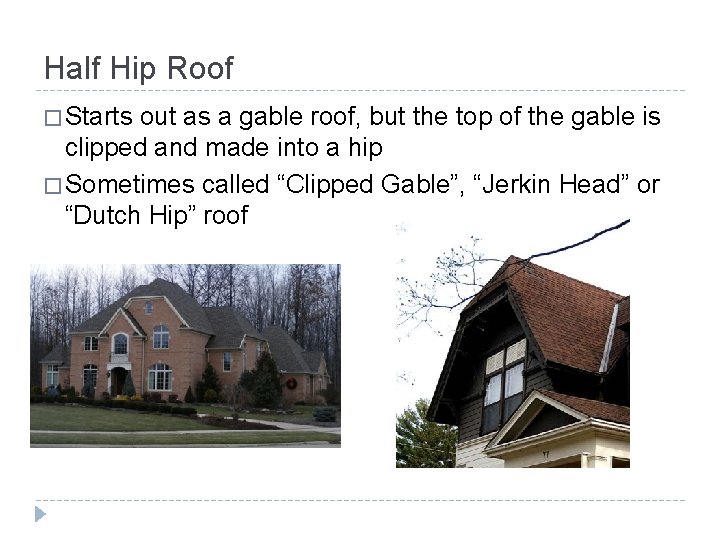
Half Hip Roof � Starts out as a gable roof, but the top of the gable is clipped and made into a hip � Sometimes called “Clipped Gable”, “Jerkin Head” or “Dutch Hip” roof
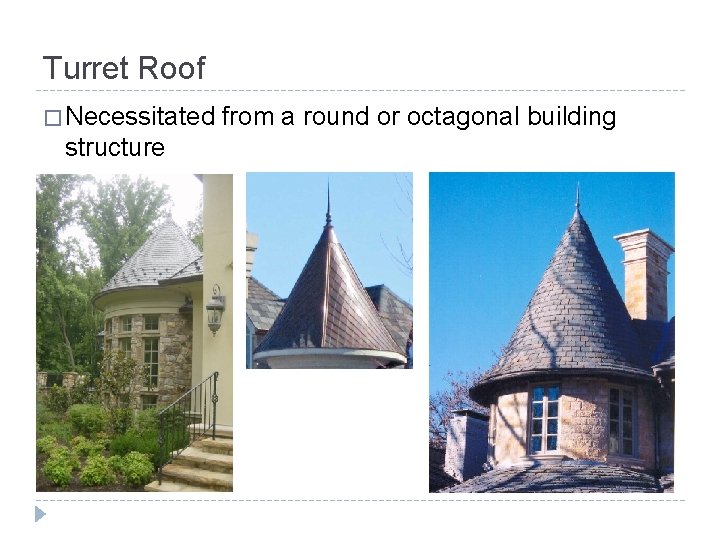
Turret Roof � Necessitated structure from a round or octagonal building
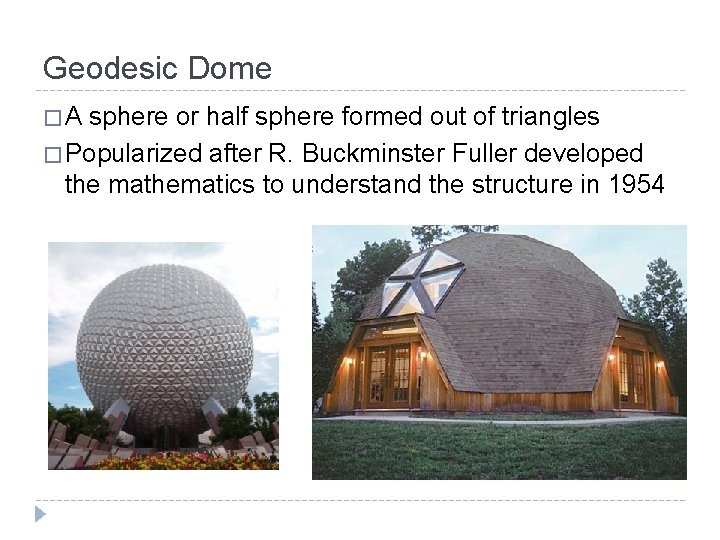
Geodesic Dome �A sphere or half sphere formed out of triangles � Popularized after R. Buckminster Fuller developed the mathematics to understand the structure in 1954
- Slides: 17