
Rome Christianity Chapter 11 From Republic to Empire
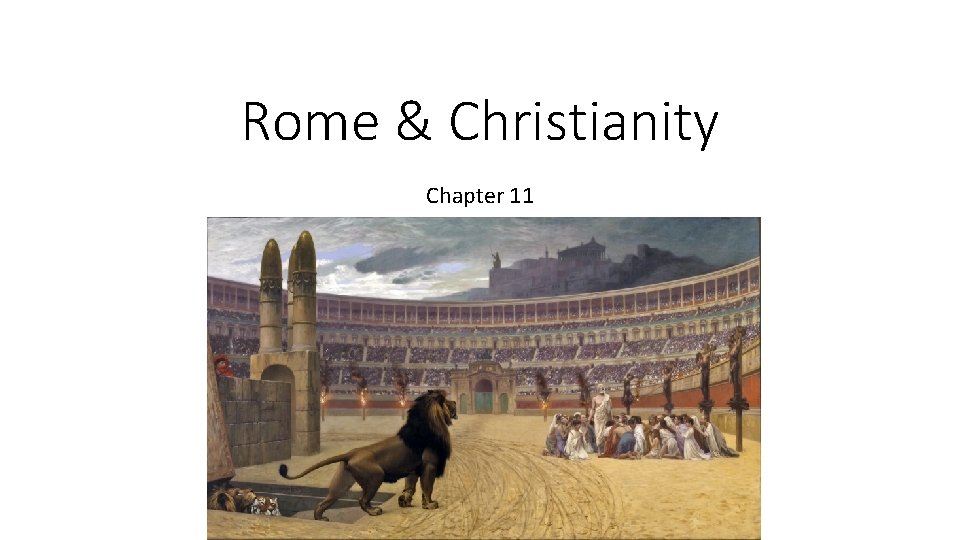
Rome & Christianity Chapter 11
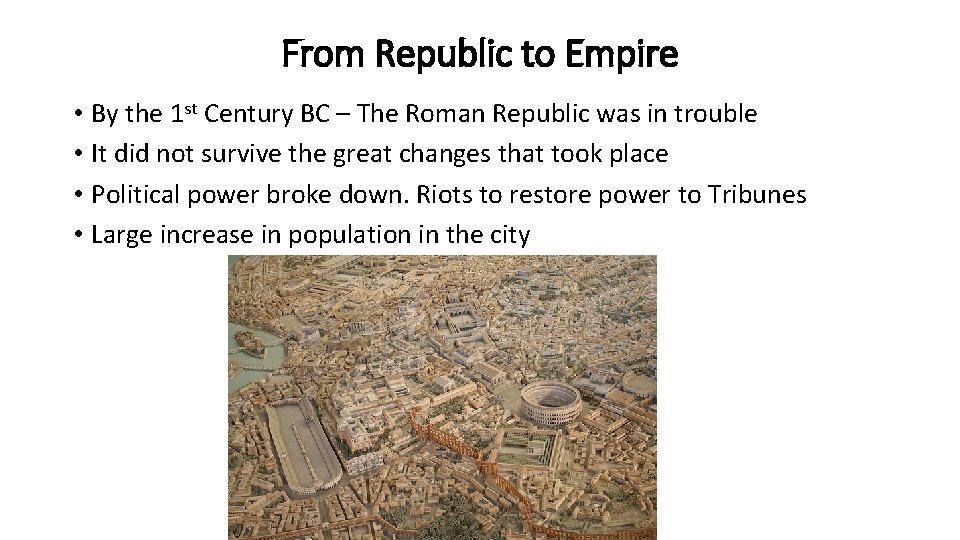
From Republic to Empire • By the 1 st Century BC – The Roman Republic was in trouble • It did not survive the great changes that took place • Political power broke down. Riots to restore power to Tribunes • Large increase in population in the city
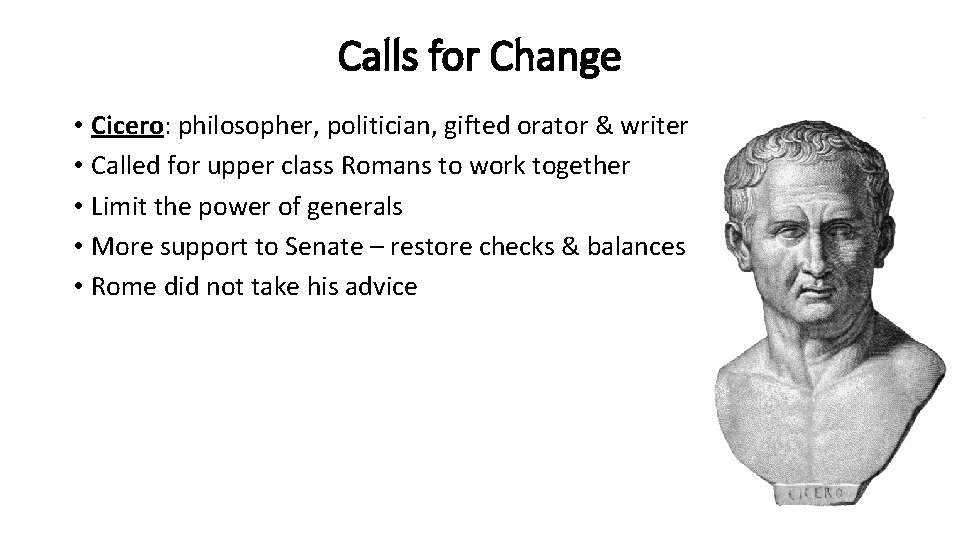
Calls for Change • Cicero: philosopher, politician, gifted orator & writer • Called for upper class Romans to work together • Limit the power of generals • More support to Senate – restore checks & balances • Rome did not take his advice
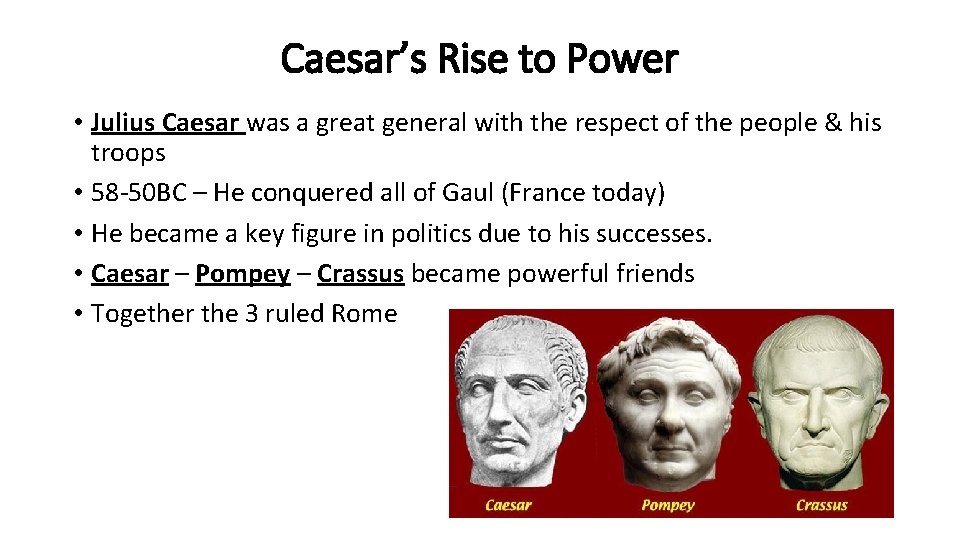
Caesar’s Rise to Power • Julius Caesar was a great general with the respect of the people & his troops • 58 -50 BC – He conquered all of Gaul (France today) • He became a key figure in politics due to his successes. • Caesar – Pompey – Crassus became powerful friends • Together the 3 ruled Rome
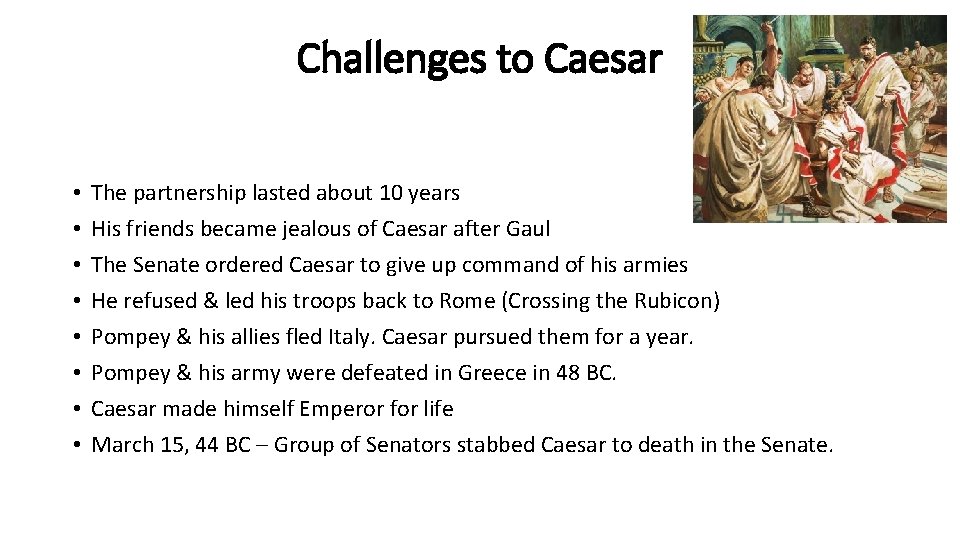
Challenges to Caesar • • The partnership lasted about 10 years His friends became jealous of Caesar after Gaul The Senate ordered Caesar to give up command of his armies He refused & led his troops back to Rome (Crossing the Rubicon) Pompey & his allies fled Italy. Caesar pursued them for a year. Pompey & his army were defeated in Greece in 48 BC. Caesar made himself Emperor for life March 15, 44 BC – Group of Senators stabbed Caesar to death in the Senate.
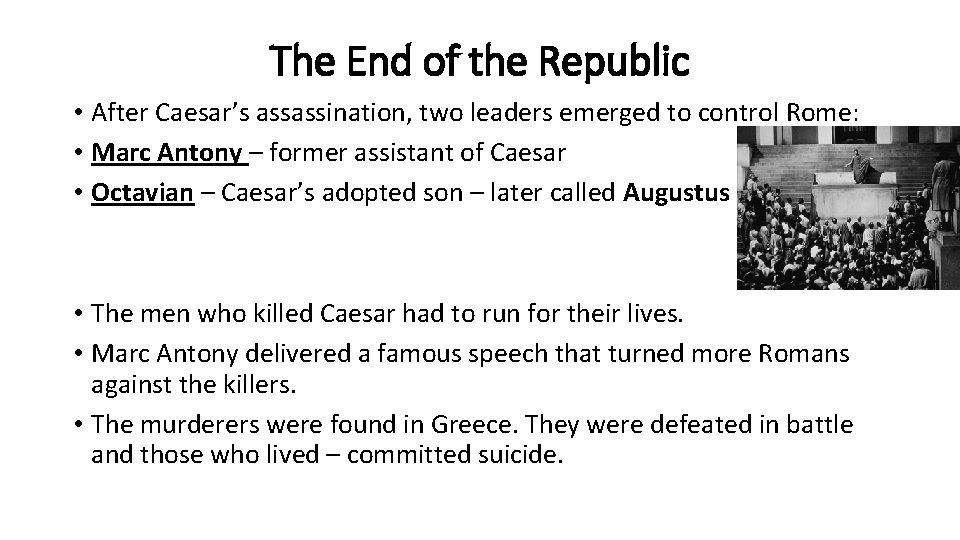
The End of the Republic • After Caesar’s assassination, two leaders emerged to control Rome: • Marc Antony – former assistant of Caesar • Octavian – Caesar’s adopted son – later called Augustus • The men who killed Caesar had to run for their lives. • Marc Antony delivered a famous speech that turned more Romans against the killers. • The murderers were found in Greece. They were defeated in battle and those who lived – committed suicide.
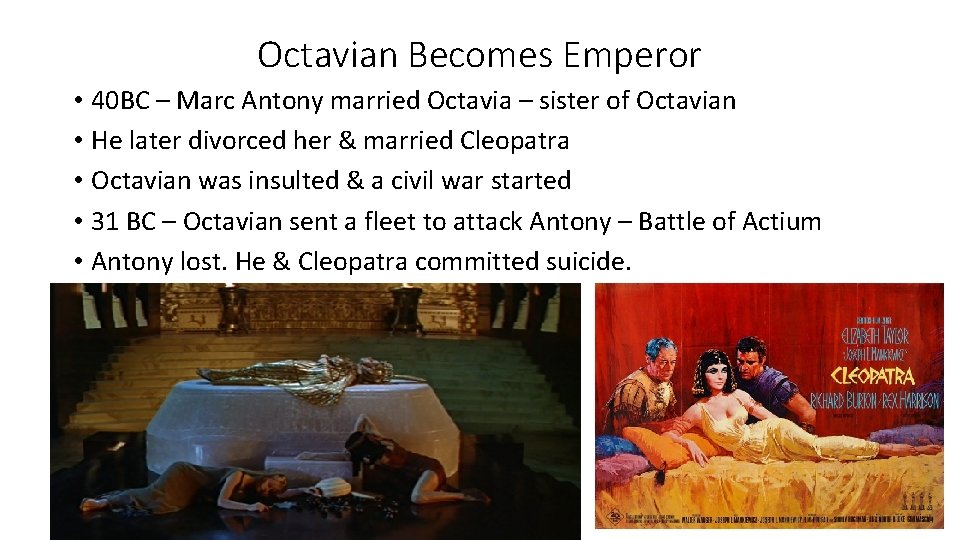
Octavian Becomes Emperor • 40 BC – Marc Antony married Octavia – sister of Octavian • He later divorced her & married Cleopatra • Octavian was insulted & a civil war started • 31 BC – Octavian sent a fleet to attack Antony – Battle of Actium • Antony lost. He & Cleopatra committed suicide.
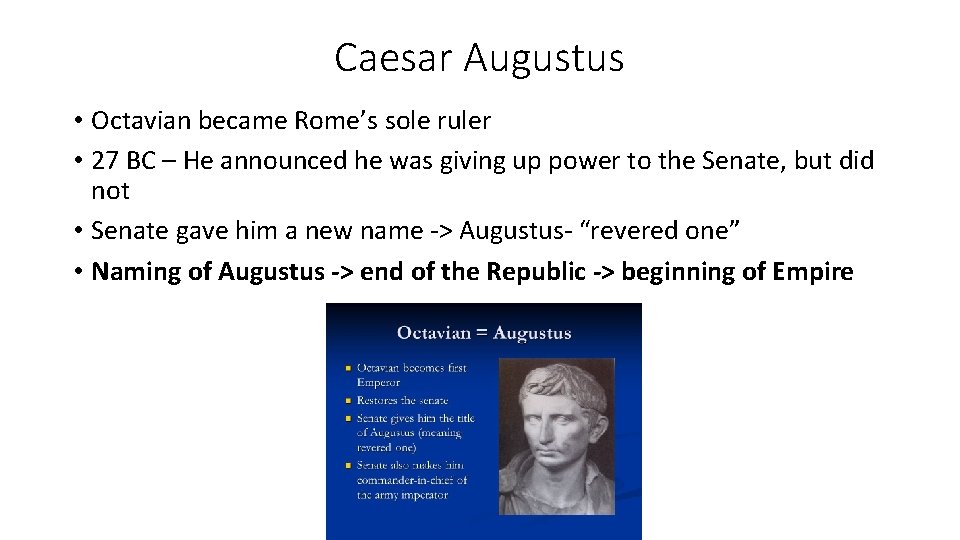
Caesar Augustus • Octavian became Rome’s sole ruler • 27 BC – He announced he was giving up power to the Senate, but did not • Senate gave him a new name -> Augustus- “revered one” • Naming of Augustus -> end of the Republic -> beginning of Empire
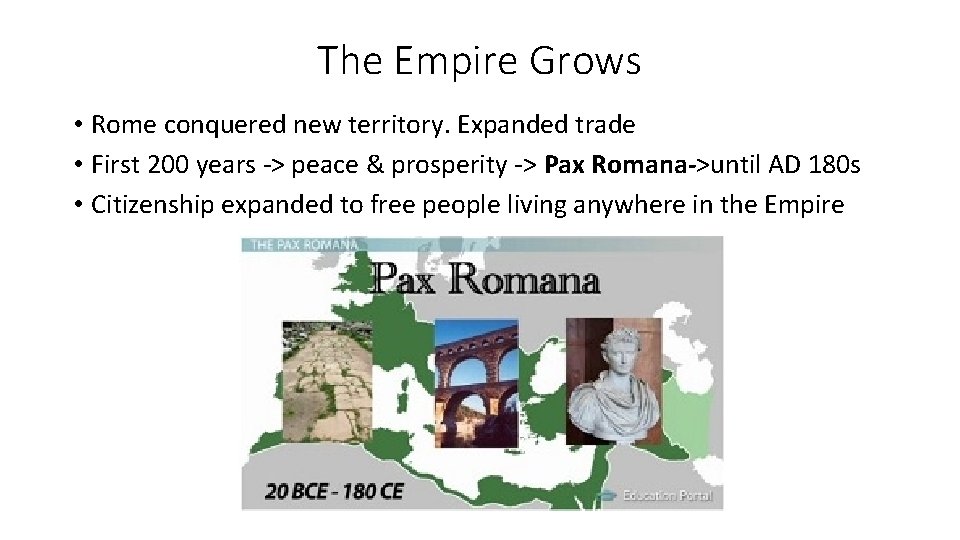
The Empire Grows • Rome conquered new territory. Expanded trade • First 200 years -> peace & prosperity -> Pax Romana->until AD 180 s • Citizenship expanded to free people living anywhere in the Empire
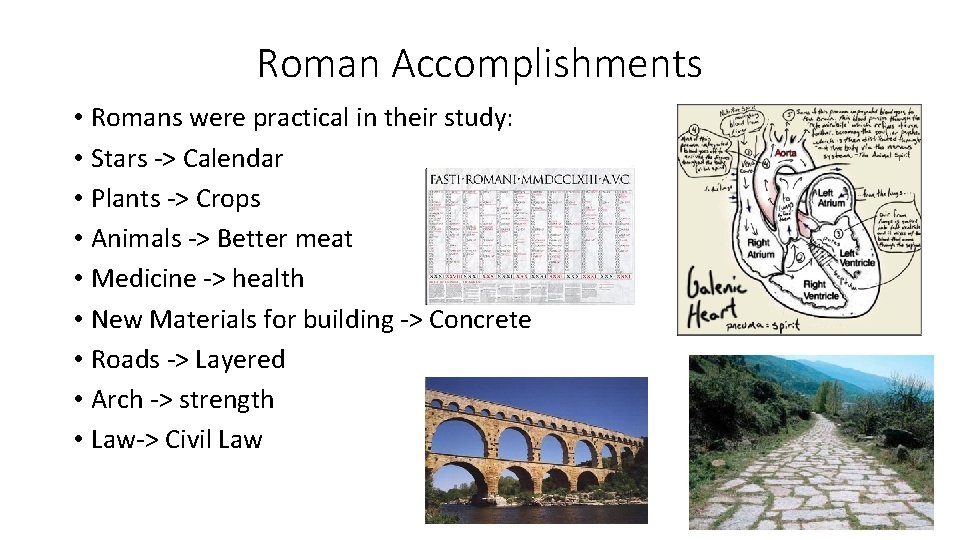
Roman Accomplishments • Romans were practical in their study: • Stars -> Calendar • Plants -> Crops • Animals -> Better meat • Medicine -> health • New Materials for building -> Concrete • Roads -> Layered • Arch -> strength • Law-> Civil Law
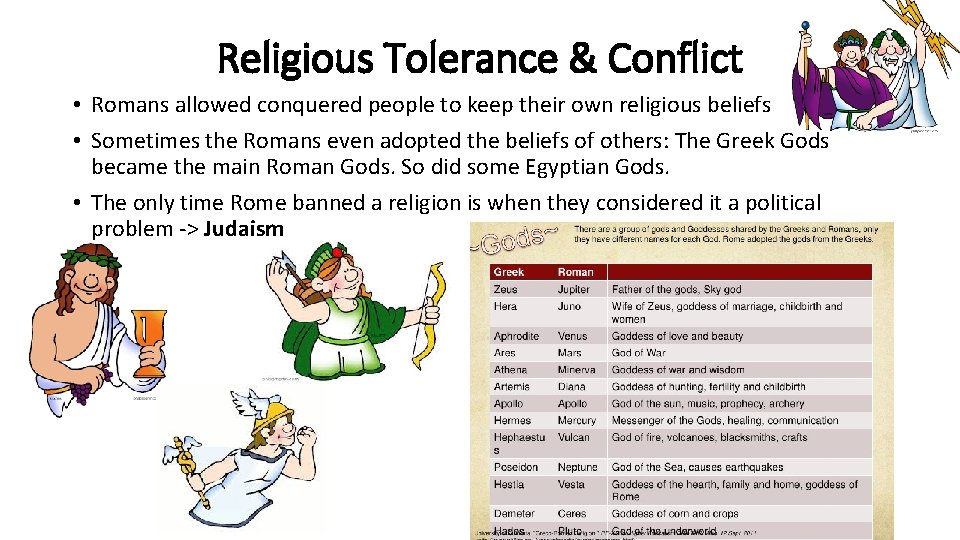
Religious Tolerance & Conflict • Romans allowed conquered people to keep their own religious beliefs • Sometimes the Romans even adopted the beliefs of others: The Greek Gods became the main Roman Gods. So did some Egyptian Gods. • The only time Rome banned a religion is when they considered it a political problem -> Judaism
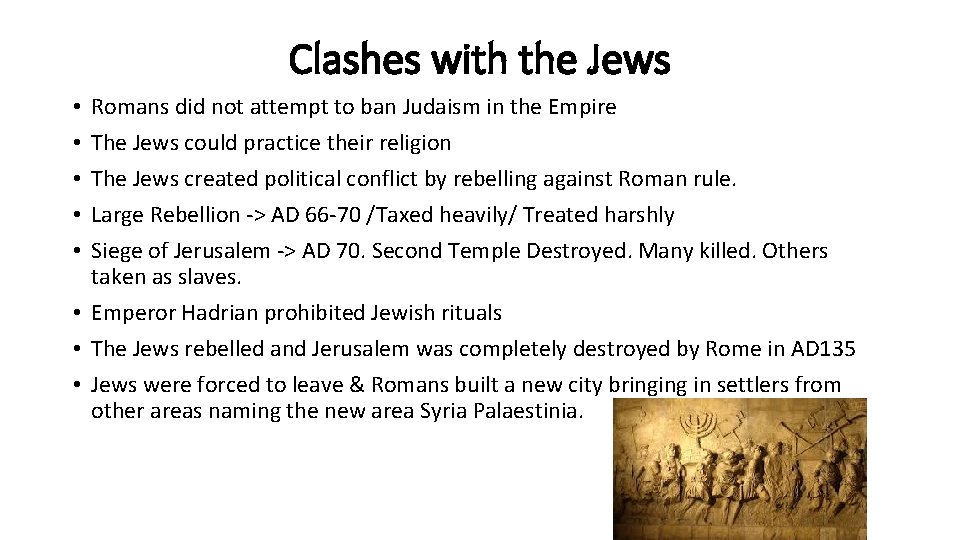
Clashes with the Jews Romans did not attempt to ban Judaism in the Empire The Jews could practice their religion The Jews created political conflict by rebelling against Roman rule. Large Rebellion -> AD 66 -70 /Taxed heavily/ Treated harshly Siege of Jerusalem -> AD 70. Second Temple Destroyed. Many killed. Others taken as slaves. • Emperor Hadrian prohibited Jewish rituals • The Jews rebelled and Jerusalem was completely destroyed by Rome in AD 135 • Jews were forced to leave & Romans built a new city bringing in settlers from other areas naming the new area Syria Palaestinia. • • •
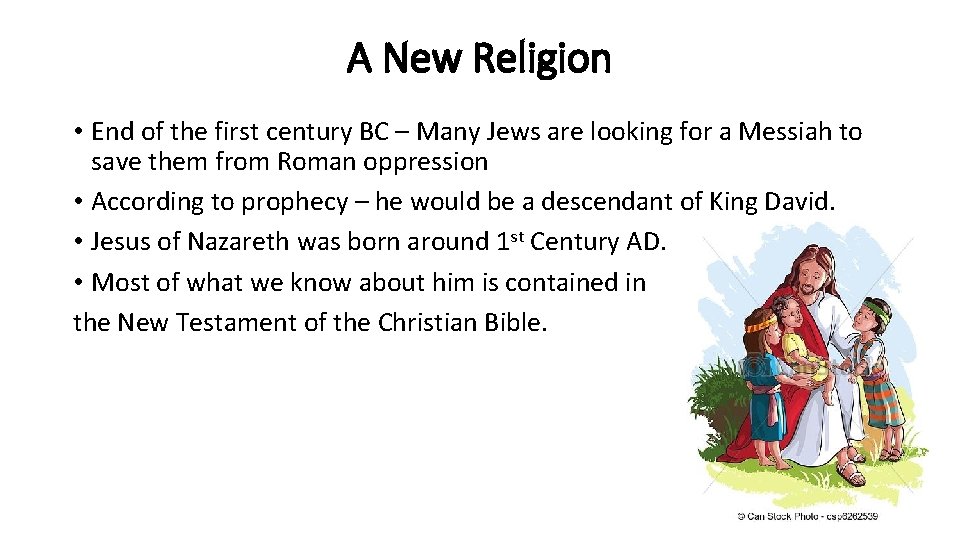
A New Religion • End of the first century BC – Many Jews are looking for a Messiah to save them from Roman oppression • According to prophecy – he would be a descendant of King David. • Jesus of Nazareth was born around 1 st Century AD. • Most of what we know about him is contained in the New Testament of the Christian Bible.
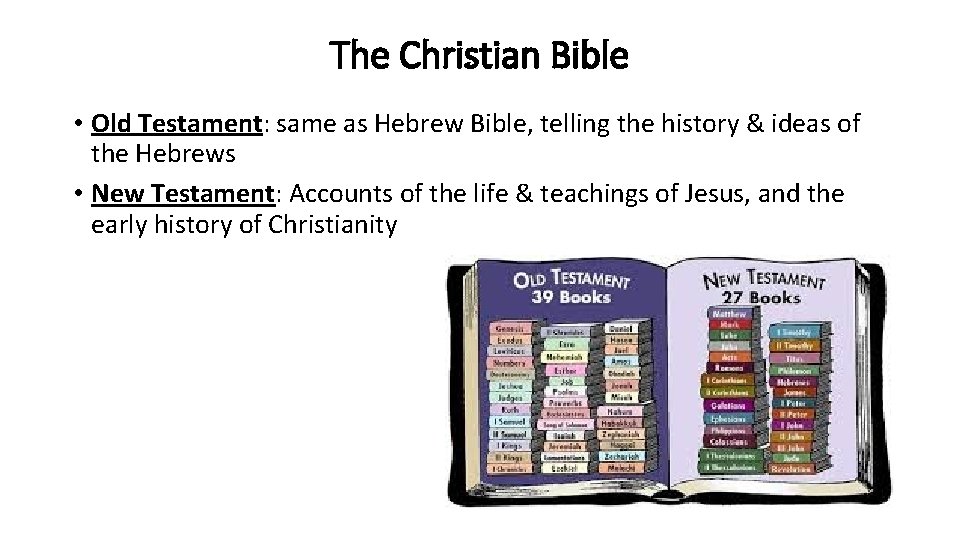
The Christian Bible • Old Testament: same as Hebrew Bible, telling the history & ideas of the Hebrews • New Testament: Accounts of the life & teachings of Jesus, and the early history of Christianity
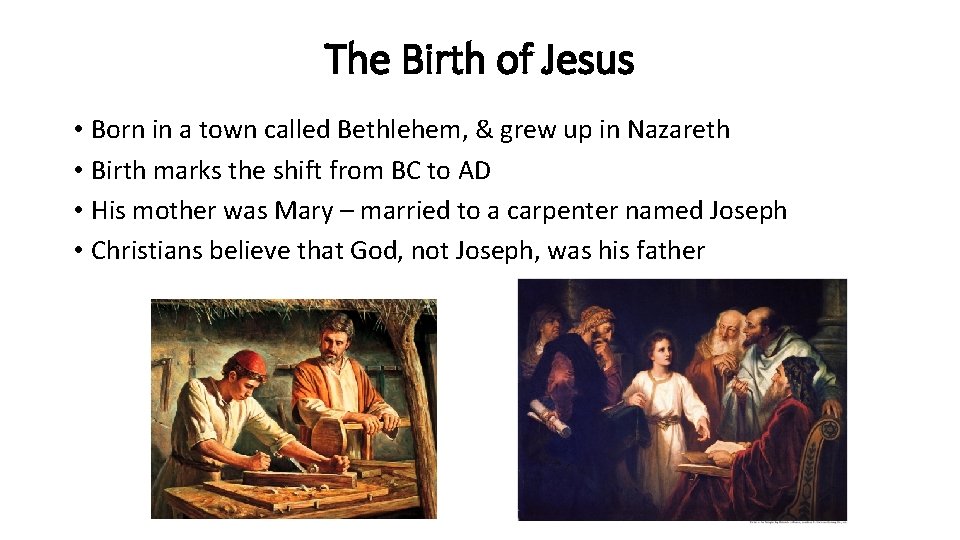
The Birth of Jesus • Born in a town called Bethlehem, & grew up in Nazareth • Birth marks the shift from BC to AD • His mother was Mary – married to a carpenter named Joseph • Christians believe that God, not Joseph, was his father
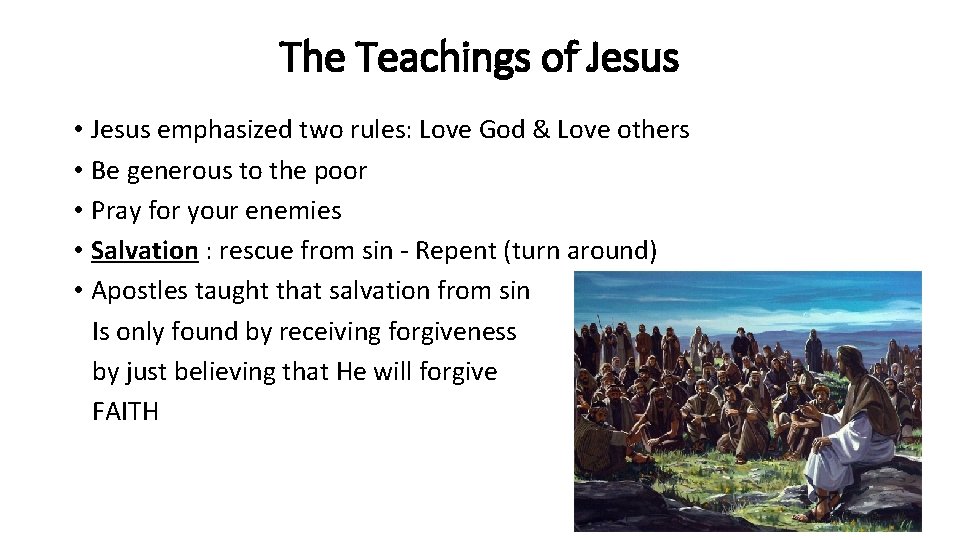
The Teachings of Jesus • Jesus emphasized two rules: Love God & Love others • Be generous to the poor • Pray for your enemies • Salvation : rescue from sin - Repent (turn around) • Apostles taught that salvation from sin Is only found by receiving forgiveness by just believing that He will forgive FAITH
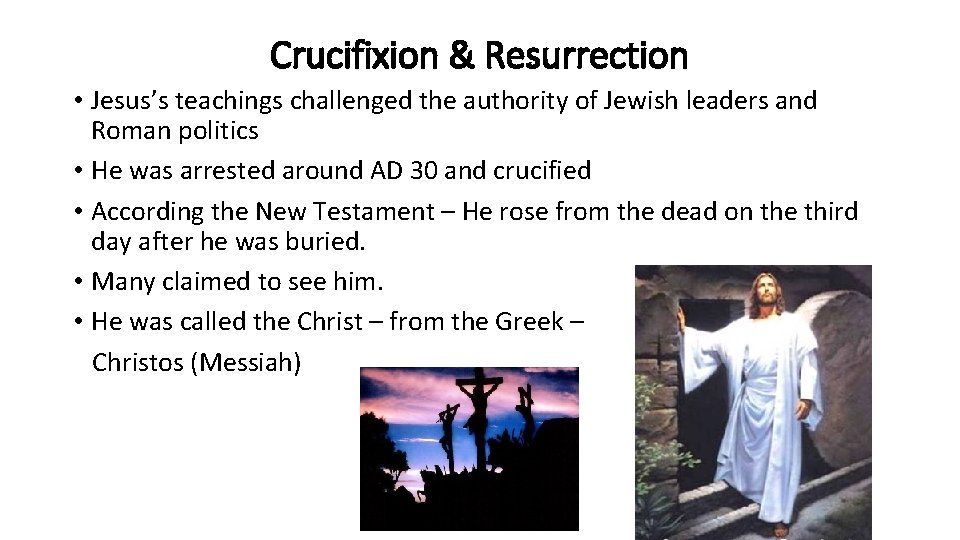
Crucifixion & Resurrection • Jesus’s teachings challenged the authority of Jewish leaders and Roman politics • He was arrested around AD 30 and crucified • According the New Testament – He rose from the dead on the third day after he was buried. • Many claimed to see him. • He was called the Christ – from the Greek – Christos (Messiah)
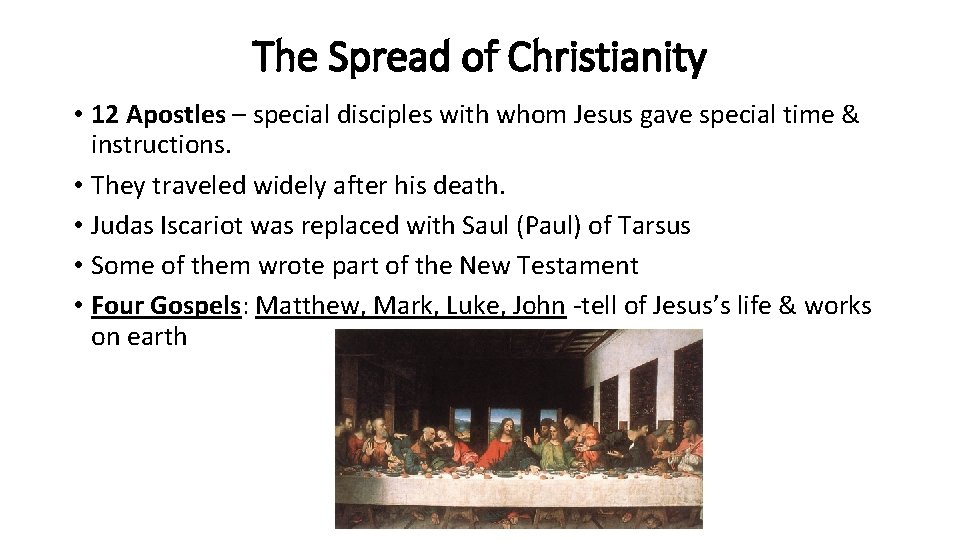
The Spread of Christianity • 12 Apostles – special disciples with whom Jesus gave special time & instructions. • They traveled widely after his death. • Judas Iscariot was replaced with Saul (Paul) of Tarsus • Some of them wrote part of the New Testament • Four Gospels: Matthew, Mark, Luke, John -tell of Jesus’s life & works on earth
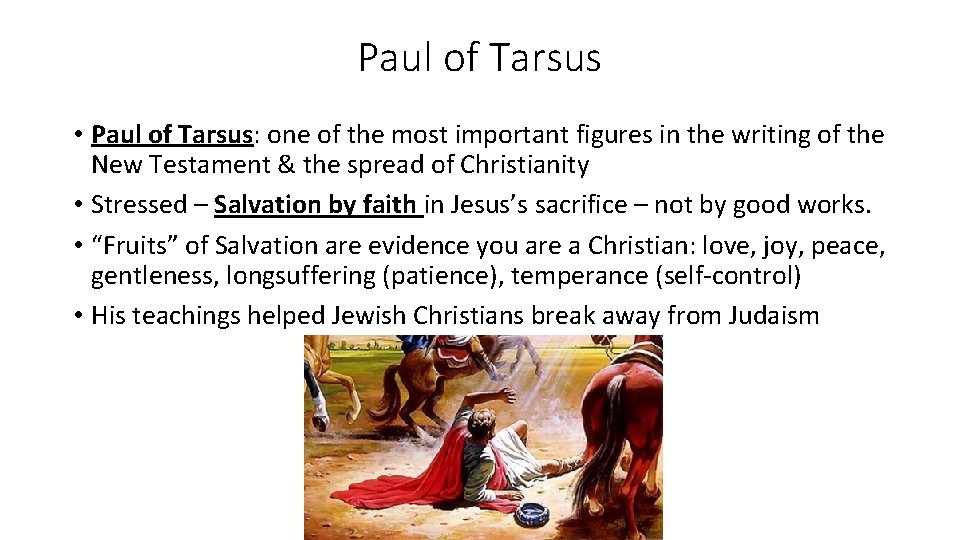
Paul of Tarsus • Paul of Tarsus: one of the most important figures in the writing of the New Testament & the spread of Christianity • Stressed – Salvation by faith in Jesus’s sacrifice – not by good works. • “Fruits” of Salvation are evidence you are a Christian: love, joy, peace, gentleness, longsuffering (patience), temperance (self-control) • His teachings helped Jewish Christians break away from Judaism
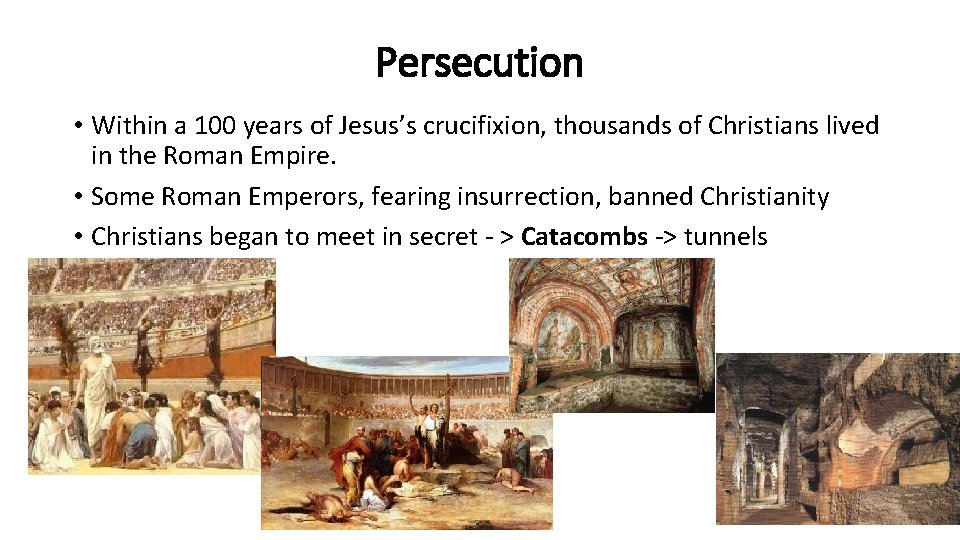
Persecution • Within a 100 years of Jesus’s crucifixion, thousands of Christians lived in the Roman Empire. • Some Roman Emperors, fearing insurrection, banned Christianity • Christians began to meet in secret - > Catacombs -> tunnels
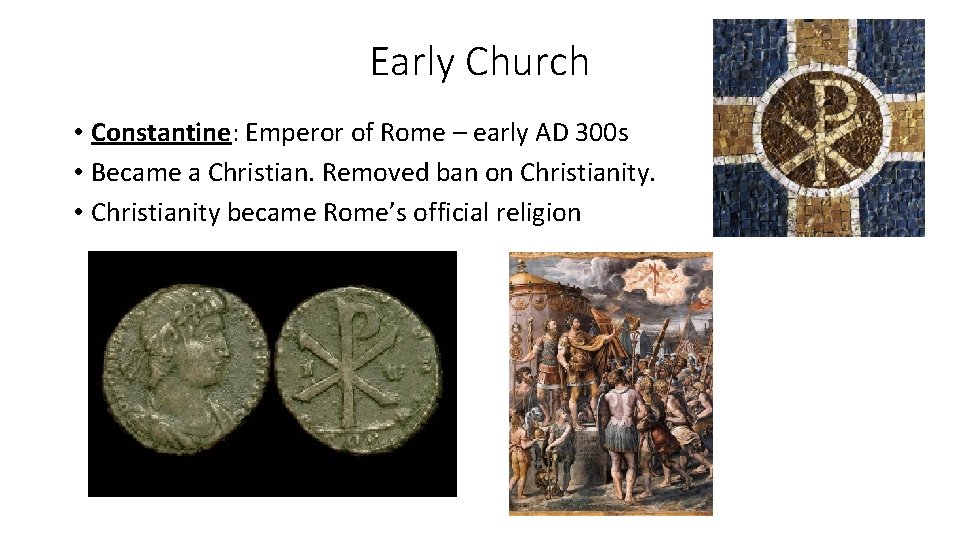
Early Church • Constantine: Emperor of Rome – early AD 300 s • Became a Christian. Removed ban on Christianity. • Christianity became Rome’s official religion
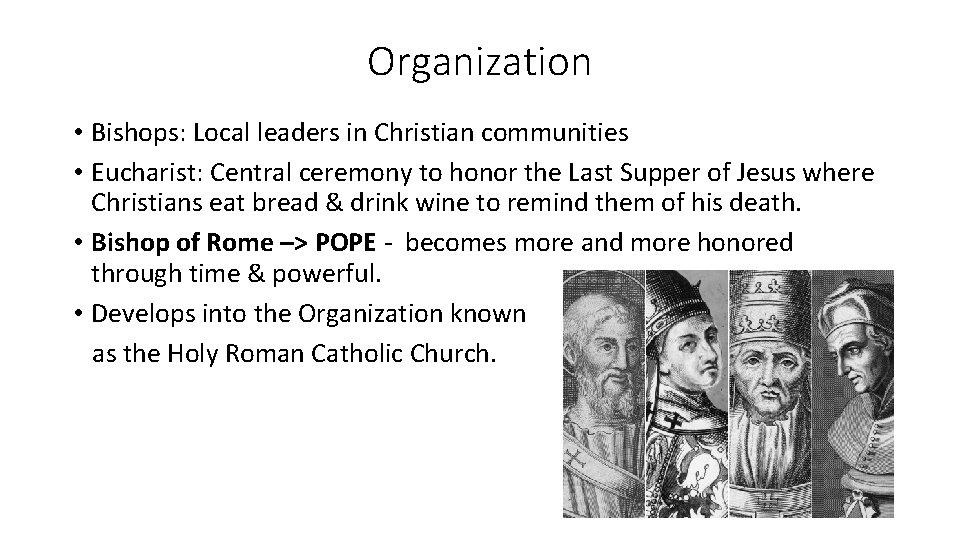
Organization • Bishops: Local leaders in Christian communities • Eucharist: Central ceremony to honor the Last Supper of Jesus where Christians eat bread & drink wine to remind them of his death. • Bishop of Rome –> POPE - becomes more and more honored through time & powerful. • Develops into the Organization known as the Holy Roman Catholic Church.
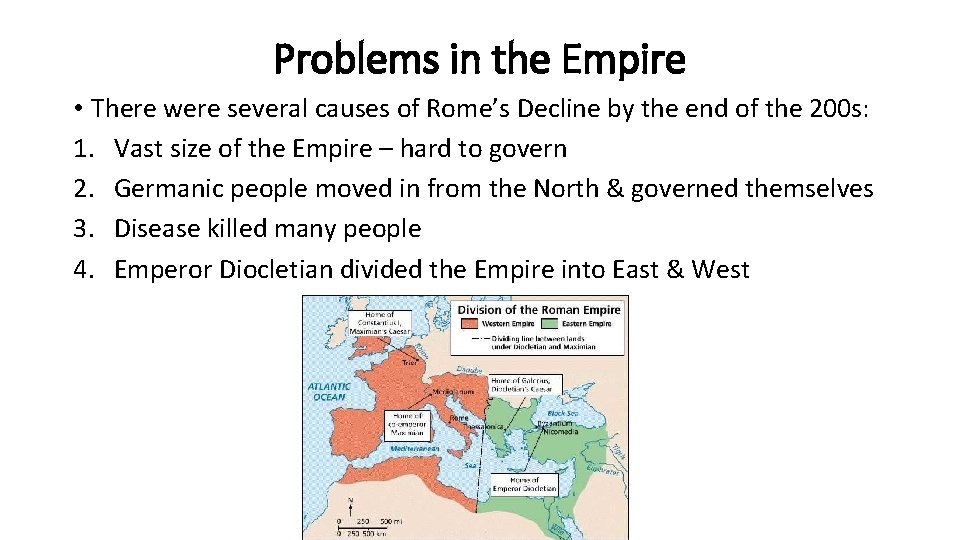
Problems in the Empire • There were several causes of Rome’s Decline by the end of the 200 s: 1. Vast size of the Empire – hard to govern 2. Germanic people moved in from the North & governed themselves 3. Disease killed many people 4. Emperor Diocletian divided the Empire into East & West
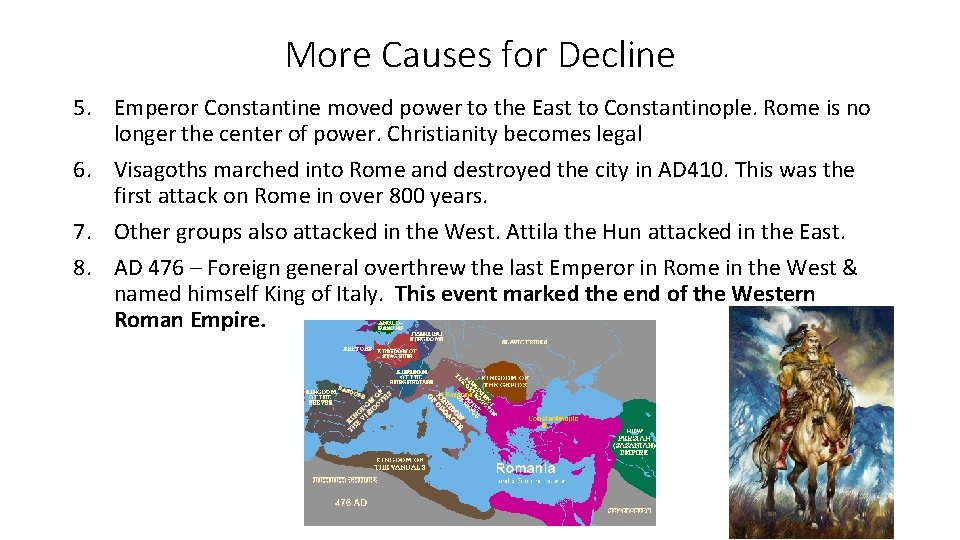
More Causes for Decline 5. Emperor Constantine moved power to the East to Constantinople. Rome is no longer the center of power. Christianity becomes legal 6. Visagoths marched into Rome and destroyed the city in AD 410. This was the first attack on Rome in over 800 years. 7. Other groups also attacked in the West. Attila the Hun attacked in the East. 8. AD 476 – Foreign general overthrew the last Emperor in Rome in the West & named himself King of Italy. This event marked the end of the Western Roman Empire.
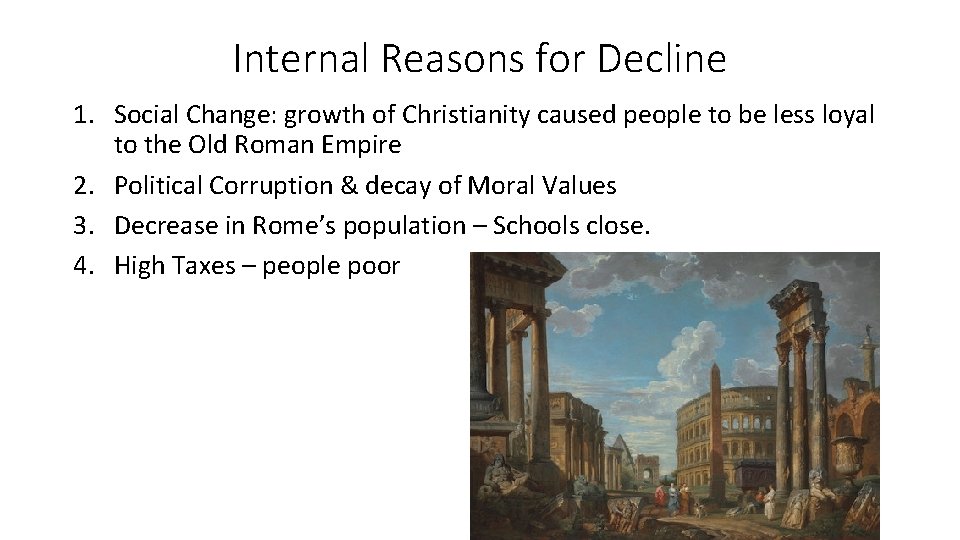
Internal Reasons for Decline 1. Social Change: growth of Christianity caused people to be less loyal to the Old Roman Empire 2. Political Corruption & decay of Moral Values 3. Decrease in Rome’s population – Schools close. 4. High Taxes – people poor
Essential Question • What factors led to the fall of the Western Roman Empire? Create a Word Web around “Fall of the Western Roman Empire”
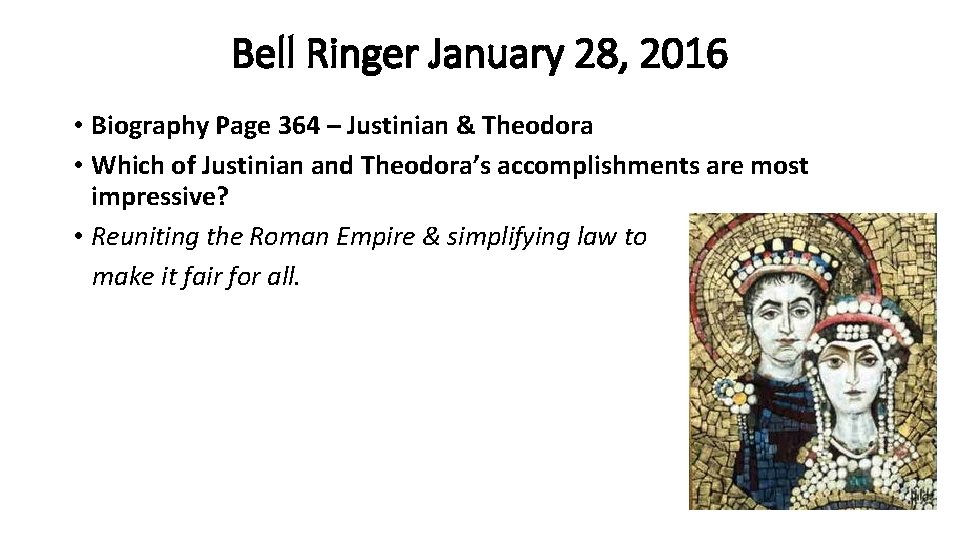
Bell Ringer January 28, 2016 • Biography Page 364 – Justinian & Theodora • Which of Justinian and Theodora’s accomplishments are most impressive? • Reuniting the Roman Empire & simplifying law to make it fair for all.
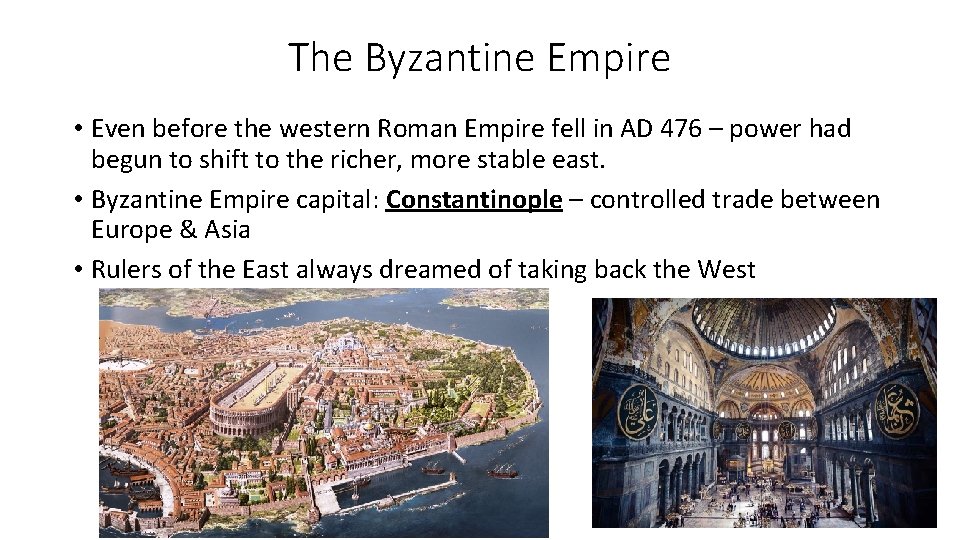
The Byzantine Empire • Even before the western Roman Empire fell in AD 476 – power had begun to shift to the richer, more stable east. • Byzantine Empire capital: Constantinople – controlled trade between Europe & Asia • Rulers of the East always dreamed of taking back the West
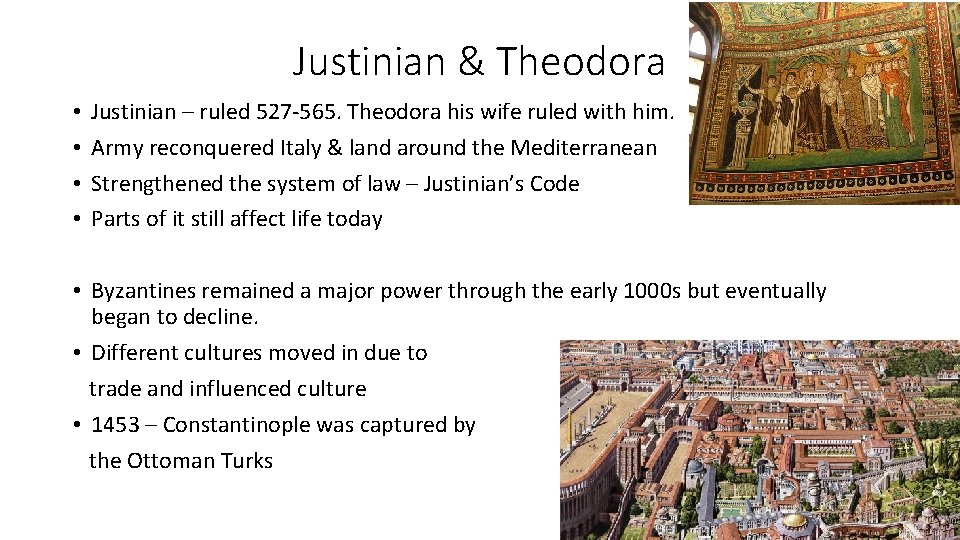
Justinian & Theodora • • Justinian – ruled 527 -565. Theodora his wife ruled with him. Army reconquered Italy & land around the Mediterranean Strengthened the system of law – Justinian’s Code Parts of it still affect life today • Byzantines remained a major power through the early 1000 s but eventually began to decline. • Different cultures moved in due to trade and influenced culture • 1453 – Constantinople was captured by the Ottoman Turks

Culture & Achievements • • Christianity was the central power in Byzantine Empire There were differences between the East & the West East: Priest could marry. West: They could not marry East: Spoke Greek West: Spoke Latin • • • East – Eastern Orthodox Church West: Roman Catholic ART: Mosaics – religious themed. Tiles with Gold to glitter. Hagia Sophia – Church built by Justinian.
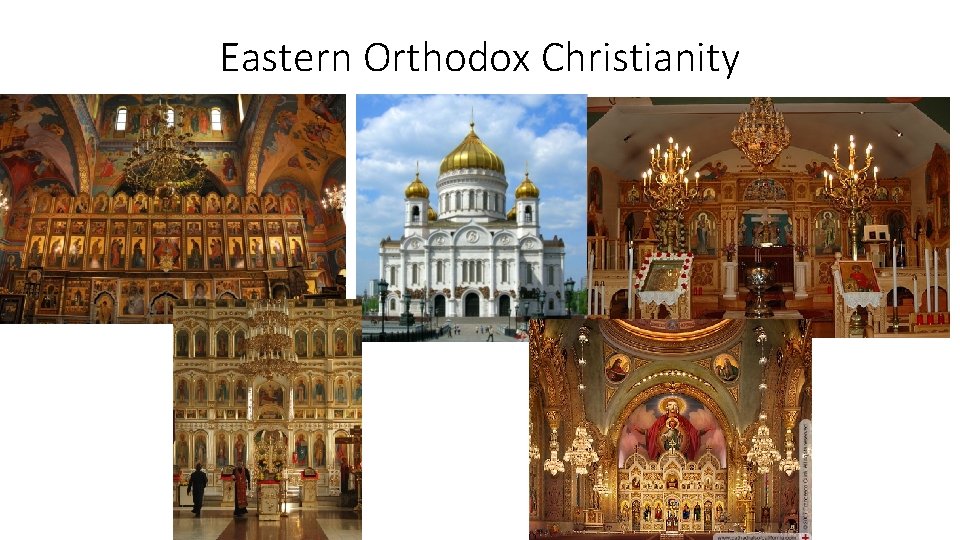
Eastern Orthodox Christianity
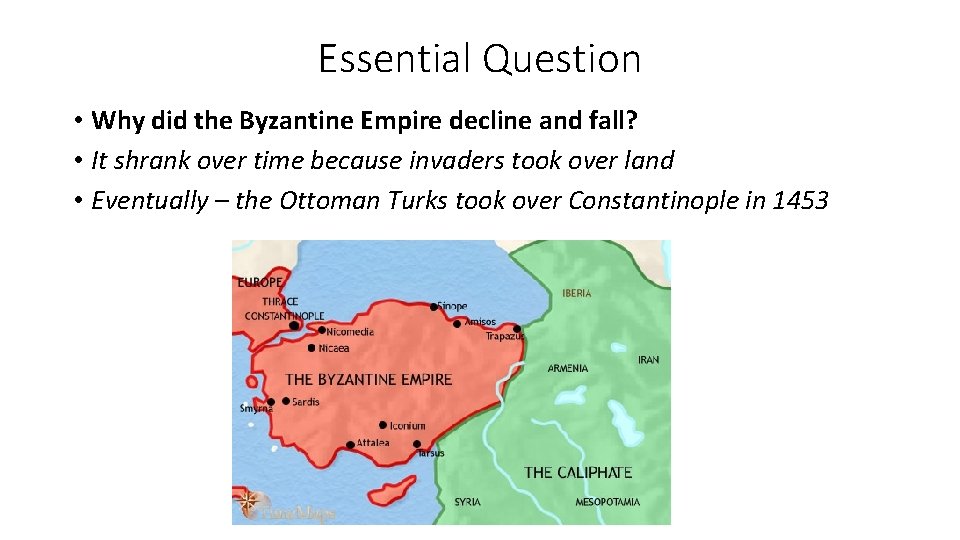
Essential Question • Why did the Byzantine Empire decline and fall? • It shrank over time because invaders took over land • Eventually – the Ottoman Turks took over Constantinople in 1453
Chapter 11 – Rome & Christianity Review 1. Who went after Julius Caesar’s killers after his death? • Octavian 2. How did the Romans make travel easier for their armies? • By building roads 3. What language spread through the Roman Empire due to Rome doing business in this language? • Latin 4. What did Rome do to the Jews, hoping they would abandon their religion? • Banned certain Jewish rituals
5. How did Jesus spread his ideas? • By traveling and teaching 6. Name a few reasons that Rome fell • Disease, Taxes, Corruption 7. Why did the Romans take such interest in science & engineering? • To improve life, practically 8. Why did the Jews rebel against Roman rule? • The Romans were polytheistic & had occupied the Jews’ homeland of Judea
9. Why did Rome sometimes have a shortage of farmers? • Military Battles 10. By the end of the AD 100 s, what did Roman Emperors do because the Empire had become too big to govern? • Gave up land they had conquered 11. How did the Romans try to prevent the Goths from attacking Rome? • By paying them to not attack 12. In AD 532, who helped the Emperor Justinian put an end to uprising? • Theodora
13. What is the historical date for Jesus’s birth & his death & Resurrection? • No one knows for sure 14. Who conquered all of Gaul between 58 – 50 BC? • Julius Caesar 15. What effect did arches have on Roman architecture? • Made them strong & lasting 16. Who does the New Testament teach is the Savior of the World? • Jesus
17. Constantinople was the capital of • Eastern Empire 18. What language was spoken in the Byzantine Empire? • Greek 19. What title did Caesar give himself? • Emperor of Rome 20. Did the Romans allow conquered people to keep their religion? • Yes
21. Christianity first spread among what people? • Jews 22. What did believing in the resurrection of Jesus prove to Christians? • That he was the Messiah 23. By the end of AD 100 s – where did the threats to the Roman Empire come from? • Inside and outside the Empire
• Orator: Public Speaker • Provinces: outlying areas of Roman land • Messiah: God’s chosen one – (Hebrew) • Martyr: Person who dies for religious beliefs • Corruption: The decay of people’s values • Civil Law: legal system based on written code • Ovid: Roman Poet • Christianity: 1 st Century religion began in Judea • Disciple: one who follows the teachings of another • Persecution: Punishment due to one’s beliefs
- Slides: 39