
Rome as a Republic Chapter 11 Section 2
Rome as a Republic Chapter 11, Section 2
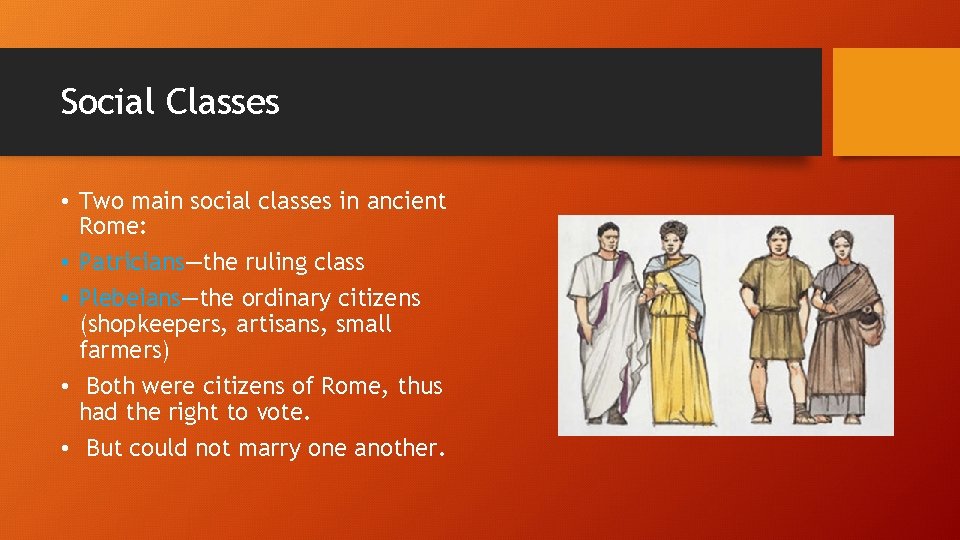
Social Classes • Two main social classes in ancient Rome: • Patricians—the ruling class • Plebeians—the ordinary citizens (shopkeepers, artisans, small farmers) • Both were citizens of Rome, thus had the right to vote. • But could not marry one another.
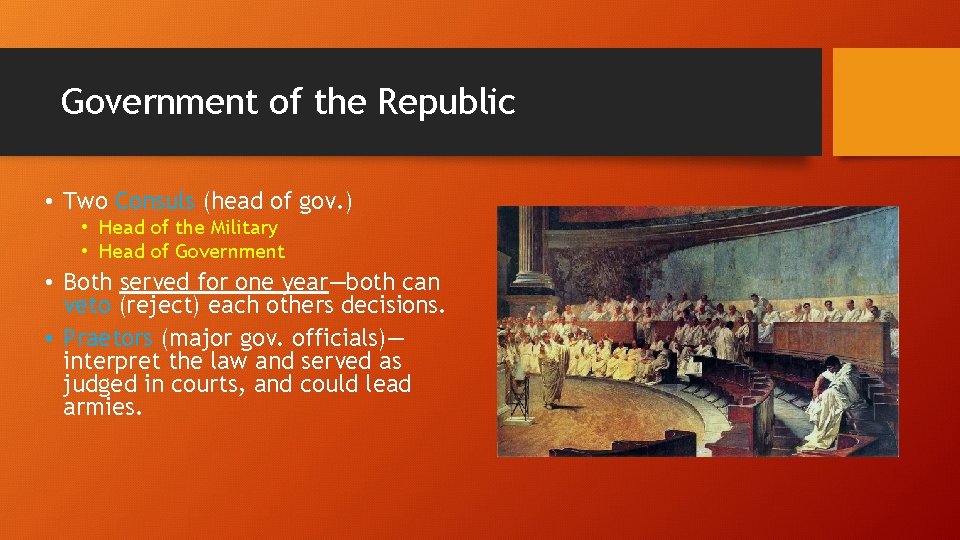
Government of the Republic • Two Consuls (head of gov. ) • Head of the Military • Head of Government • Both served for one year—both can veto (reject) each others decisions. • Praetors (major gov. officials)— interpret the law and served as judged in courts, and could lead armies.

Rome’s Legislative Body • Senate (300 male citizens—served for life) • Made laws • Advised counsels • Planned buildings (temples, roads, etc. ) • Assembly of Centuries • Made laws • Elected consuls • Both are controlled by patricians

Conflict Between Classes • Plebeians were upset because they have no power in government • By 494 BC, many went on strike and even formed their own gov. • Patricians fearing the collapse of the Republic • Agreed to share power with Plebeians • Council of Plebs • Elected officials called tribunes—elected officials who protected the rights of ordinary citizens • Veto gov. decisions • By 287 BC, was able to pass laws, marriage between plebeians and patricians was possible • All male citizens were now consider equal • Women had little political rights • Rome was still not democratic, but more representative.
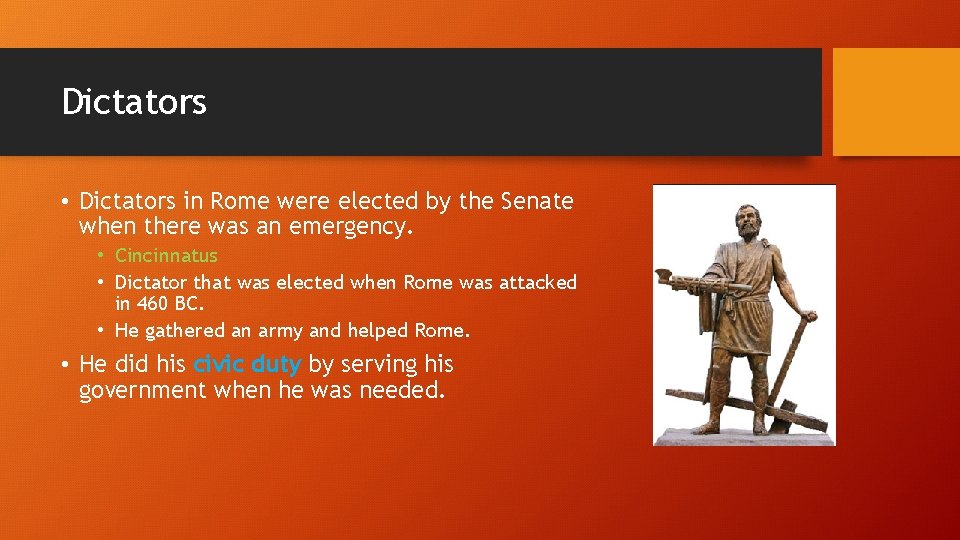
Dictators • Dictators in Rome were elected by the Senate when there was an emergency. • Cincinnatus • Dictator that was elected when Rome was attacked in 460 BC. • He gathered an army and helped Rome. • He did his civic duty by serving his government when he was needed.
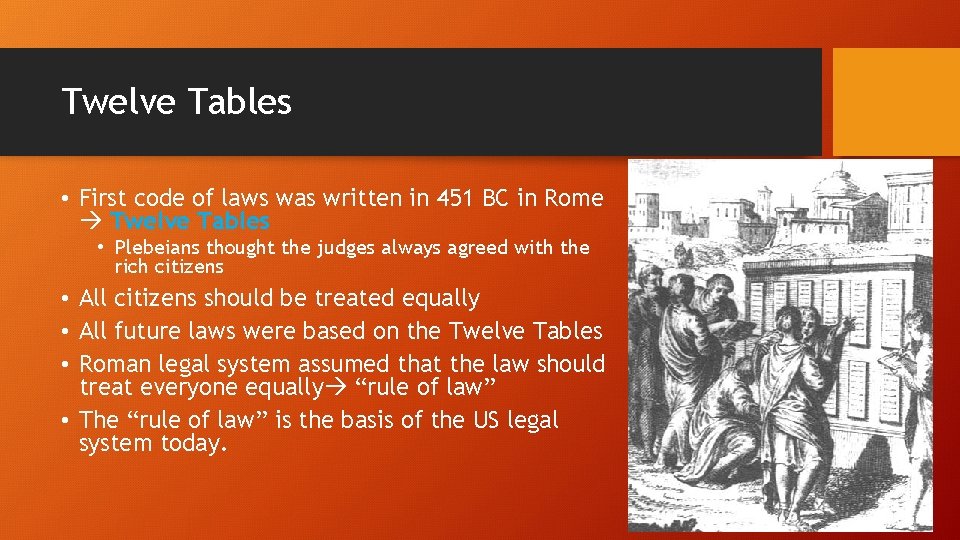
Twelve Tables • First code of laws was written in 451 BC in Rome Twelve Tables • Plebeians thought the judges always agreed with the rich citizens • All citizens should be treated equally • All future laws were based on the Twelve Tables • Roman legal system assumed that the law should treat everyone equally “rule of law” • The “rule of law” is the basis of the US legal system today.
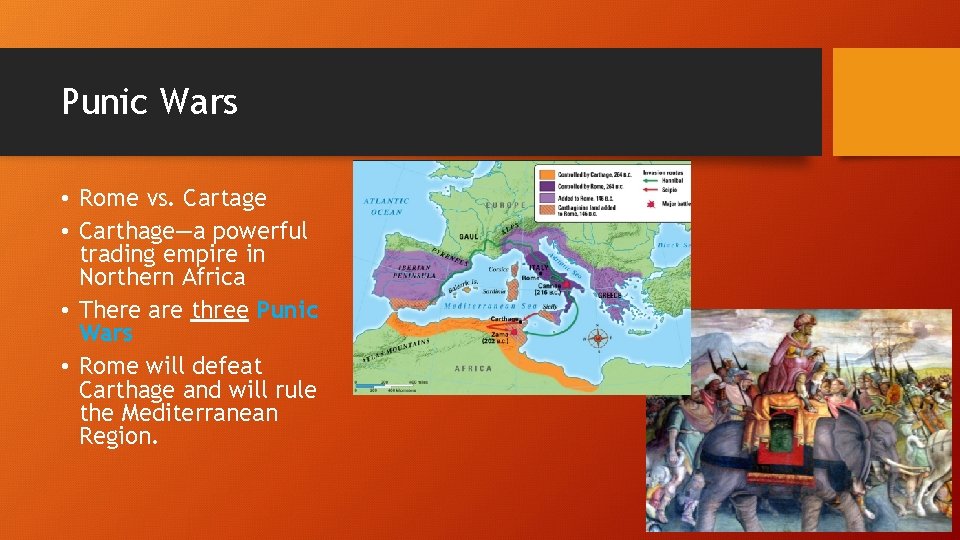
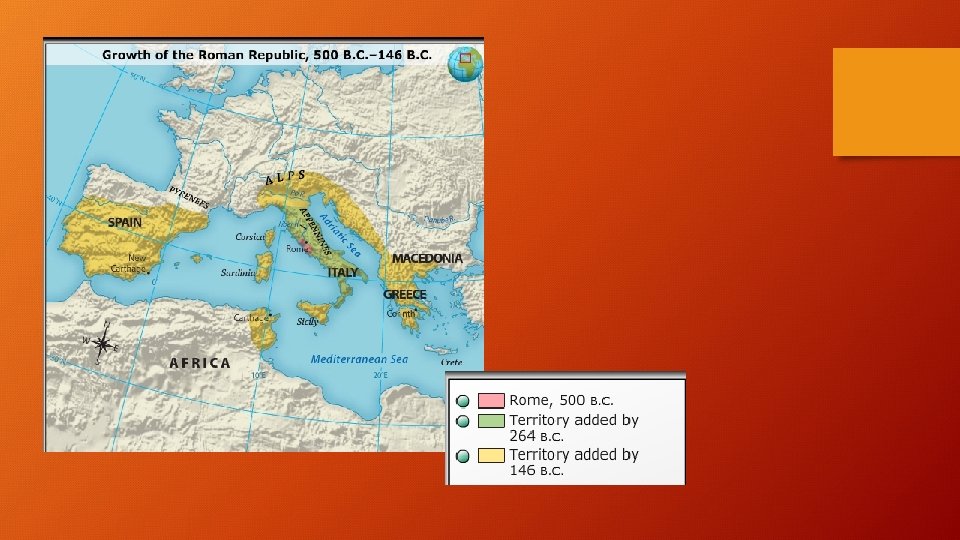
Punic Wars • Rome vs. Cartage • Carthage—a powerful trading empire in Northern Africa • There are three Punic Wars • Rome will defeat Carthage and will rule the Mediterranean Region.
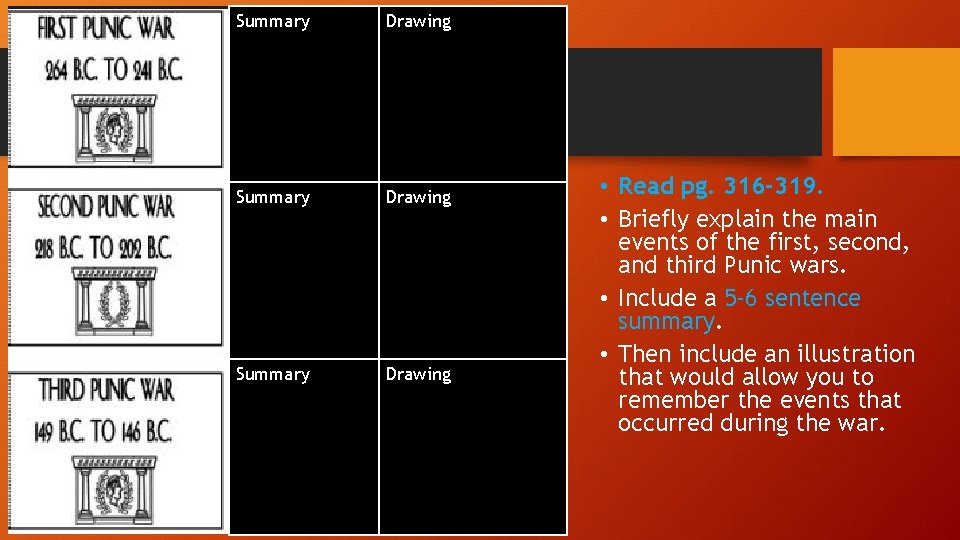
Summary Drawing • Read pg. 316 -319. • Briefly explain the main events of the first, second, and third Punic wars. • Include a 5 -6 sentence summary. • Then include an illustration that would allow you to remember the events that occurred during the war.
- Slides: 10