
Rome 509 BCE 476 CE Geography of Rome
Rome 509 BCE- 476 CE
Geography of Rome The Alps in the north provided protection l Easy access to North Africa, Palestine, Greece, and the Iberian Peninsula (spain and portugal) l Easy access to the rest of the world l
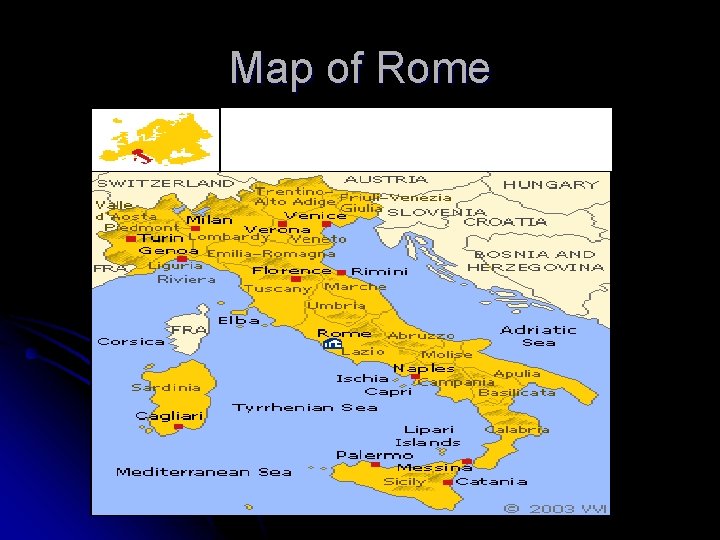
Map of Rome
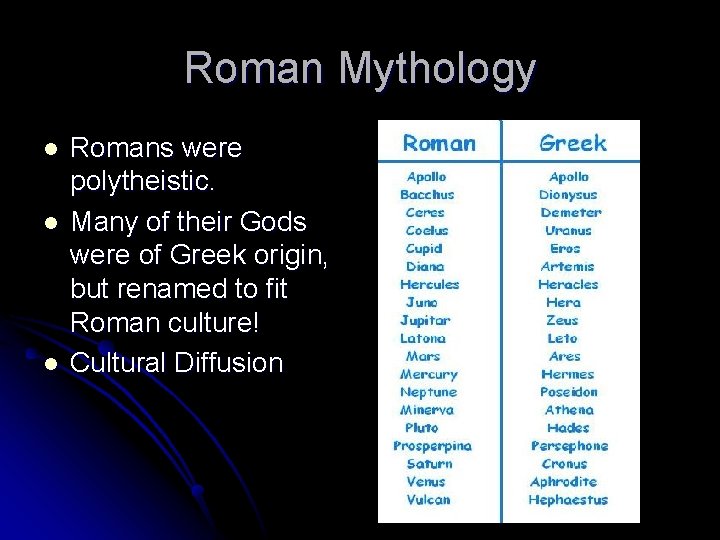
Roman Mythology l l l Romans were polytheistic. Many of their Gods were of Greek origin, but renamed to fit Roman culture! Cultural Diffusion
Roman Republic 753 -31 B. C. E. Rome- most powerful city-state in Italy l Rome conquers all of Italy. l Patricians (land-owning nobles) l Plebeians (all other free men) l Slaves Governing body made up of two groups: 1)The Senate (patricians) 2) The Assembly (patricians and plebians) l
Social Structure Cont’d Two Consuls were annually elected by the assembly. Had Veto power over Assembly. l In a Republic, people have representatives, so they don’t vote on every issue. l
Questions l How did the Roman Republic compare to direct democracy in Greece? l What modern countries government do you think is modeled after the Roman Republic?
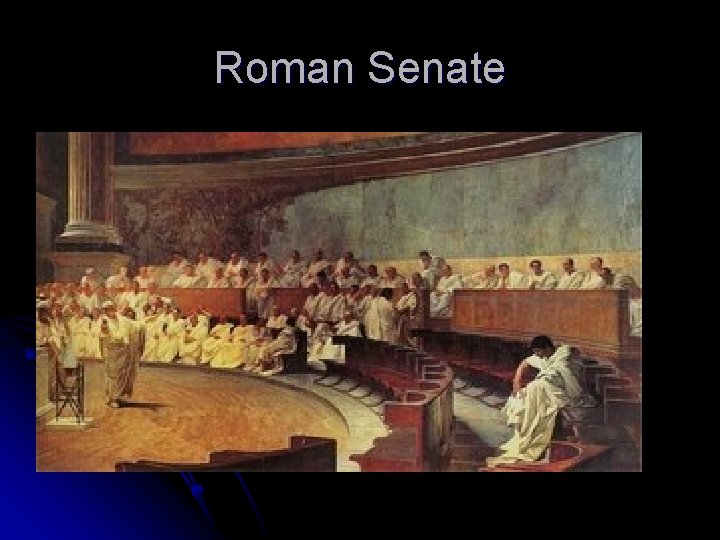
Roman Senate
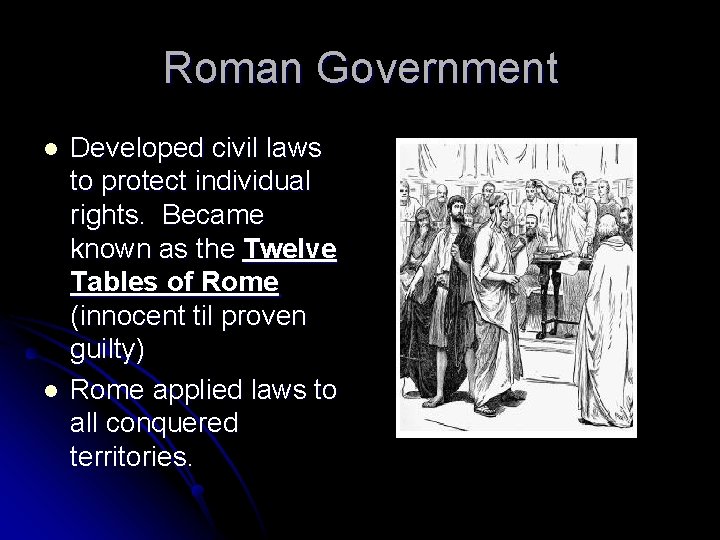
Roman Government l l Developed civil laws to protect individual rights. Became known as the Twelve Tables of Rome (innocent til proven guilty) Rome applied laws to all conquered territories.
Roman Social Structure l l l Centered on Eldest Male in Family Roman women could own property, and help run estate Women considered inferior to men (same as Greece) l l Slaves comprised one -third of population! Most slaves came from conquered territories.
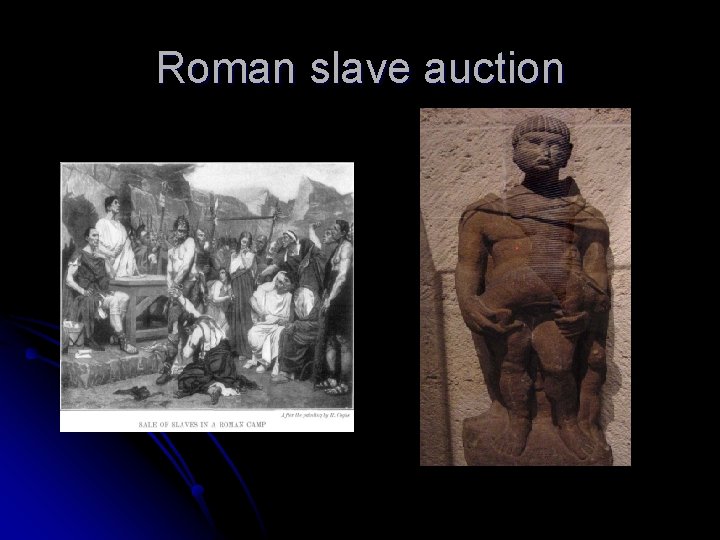
Roman slave auction
Punic Wars Carthage (North Africa) vs Rome l Causes- Control of Territory and Mediterranean sea. l Rome burnt Carthage to the ground. l Effects- Rome expands throughout the Mediterranean! l
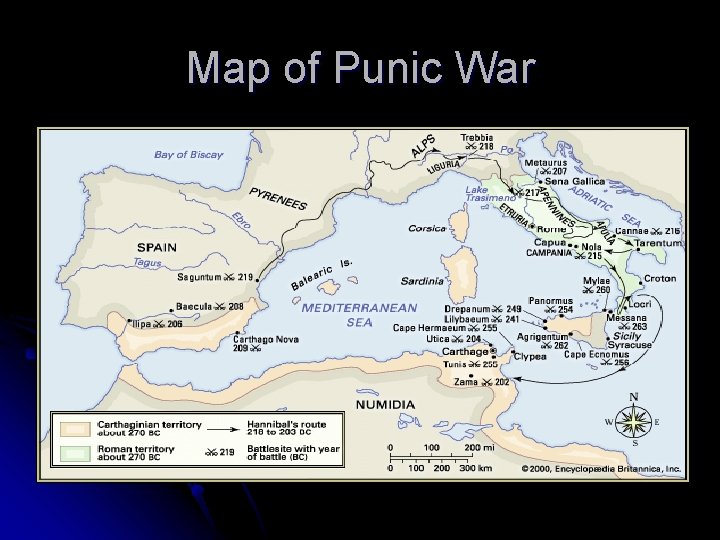
Map of Punic War
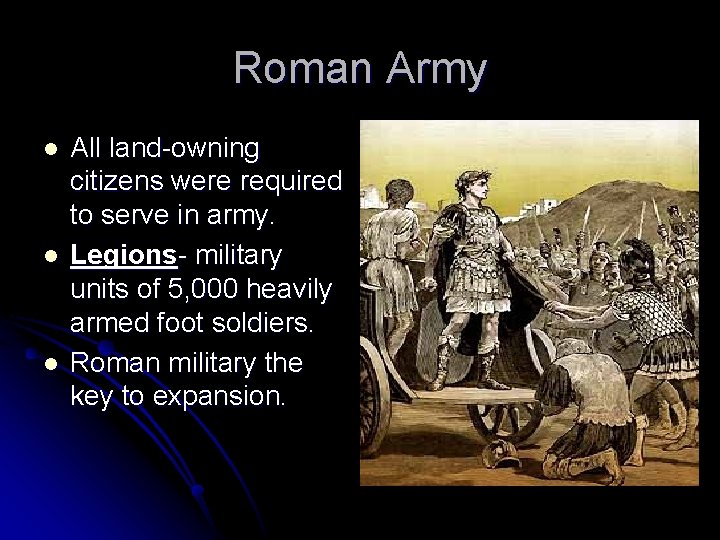
Roman Army l l l All land-owning citizens were required to serve in army. Legions- military units of 5, 000 heavily armed foot soldiers. Roman military the key to expansion.
Continued Expansion Rome captures Greece l Julius Cesar defeats the Gauls (French) to the North l Rome defeats Spaniards to the West l l To maintain their empire, Rome built roads, aqueducts, and a navy.
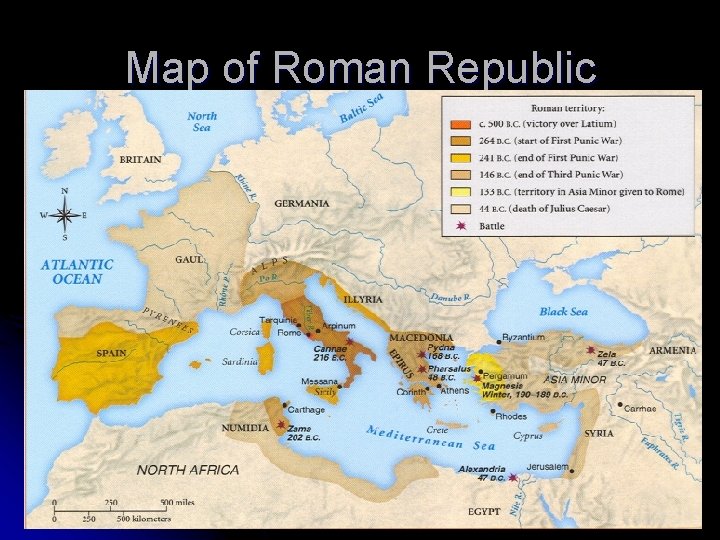
Map of Roman Republic
Collapse of Roman Republic l l l Overcrowding of cities, and not enough jobs for plebeians. Latifundia- small farmers lost their land, and were replaced by large estates. Roman currency devalued Political fighting-power of senate weakened RESULT- 1 st Triumvirate (Pompey, Crassus, and Julius Caesar)
Julius Caesar l 1 st Trimuvirate (Pompey, Crassus and Caesar) l l Caesar pushes Pompey and Crassus out of power Appoints himself emperor for life! Expands Rome! Assassinated by senate!
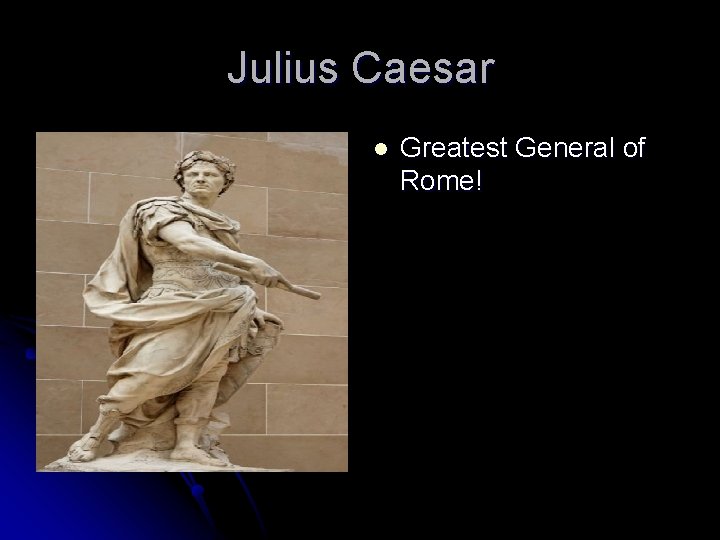
Julius Caesar l Greatest General of Rome!
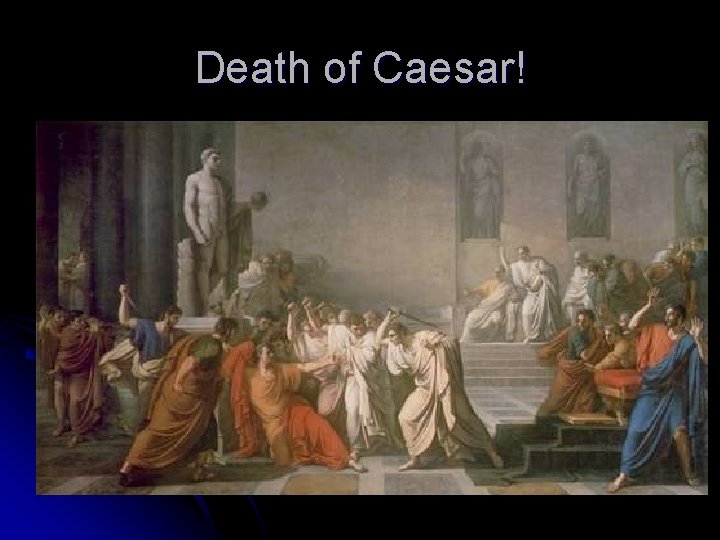
Death of Caesar!
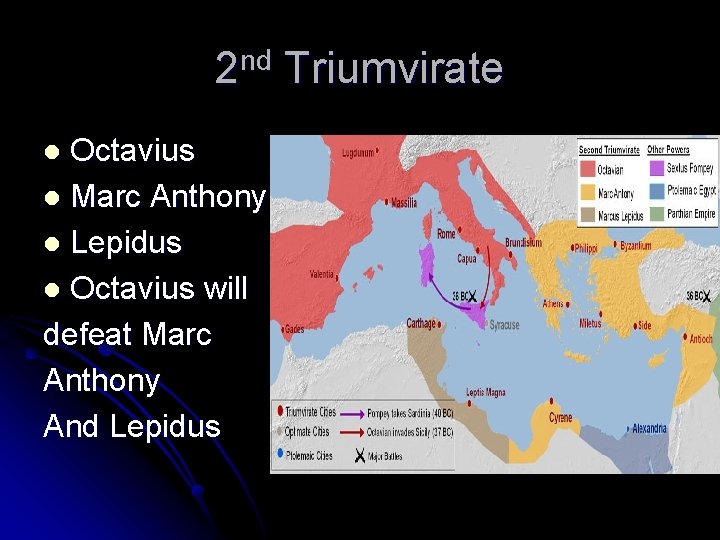
2 nd Triumvirate Octavius l Marc Anthony l Lepidus l Octavius will defeat Marc Anthony And Lepidus l
Octavius Seizes Power Takes name- Augustus Caesar l SIGNALS THE END OF ROMAN REPUBLIC l BEGINS ROMAN EMPIRE l Augustus- complete power (Emperor)! l
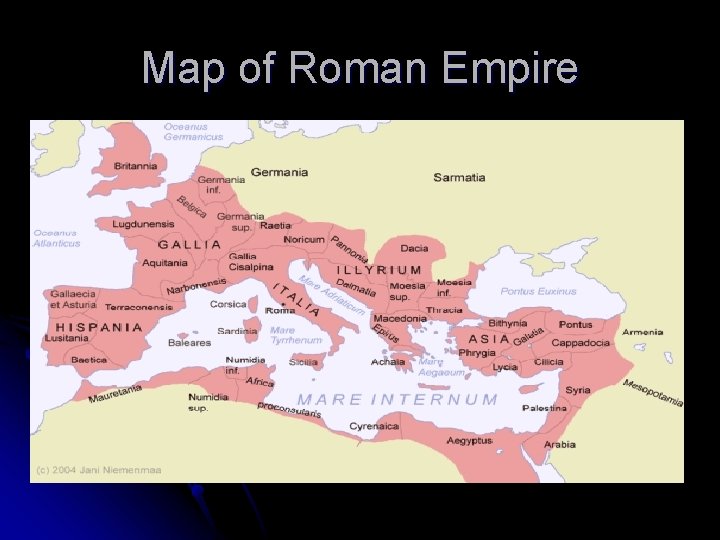
Map of Roman Empire
Rome under Augustus Rome becomes Capital of Western World l Augustus established- Rule of law (peace), common coins, civil service (take a test to work in the government) l Pax Romana- The “Golden Age” of the Roman Empire; a period of peace and prosperity. l Growth of Arts and sciences l
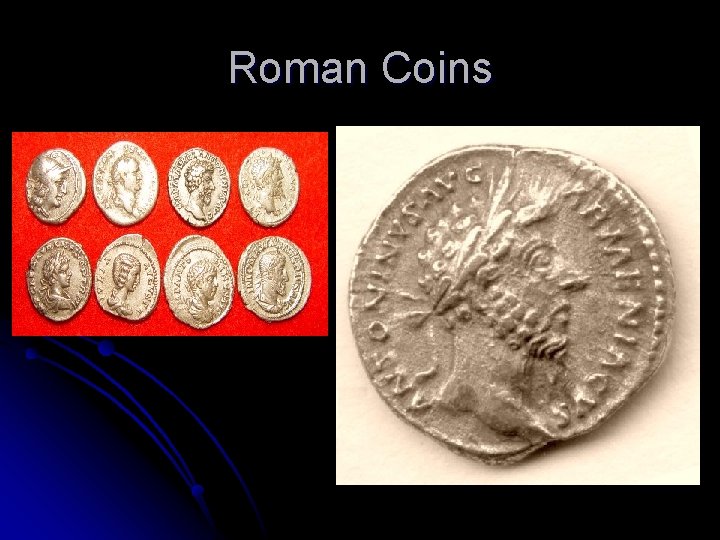
Roman Coins
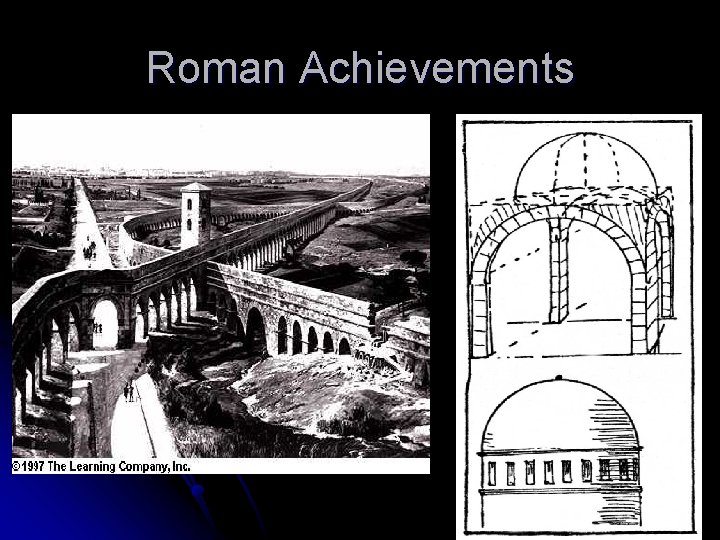
Pax Romana Continued l l l l Literature- Virgils (Aeneid) Architecture (Pantheon, Coliseum, Forum) Science (Ptolemy) Built Roads connecting the empire Built Aqueducts to bring water into towns Trade increased throughout the Empire. Imported Silk from China, and spices from India Compare Golden Age of Athens with Pax Romana of Rome.
Romanization Spread of Latin Language and Roman way of life spread throughout Western European and Mediterranean l The Roman Empire granted citizenship and privileges to people living outside of Italy- Led to a Commonwealth of Peoples l Hellenistic culture still important in Eastern Mediterranean l
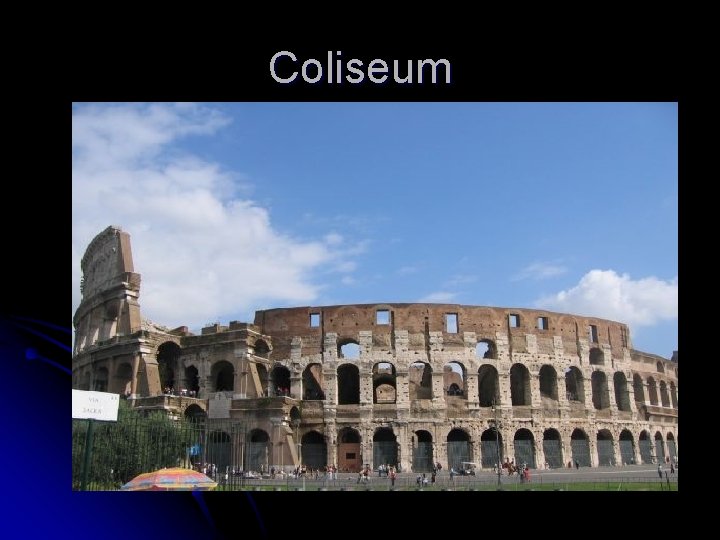
Coliseum
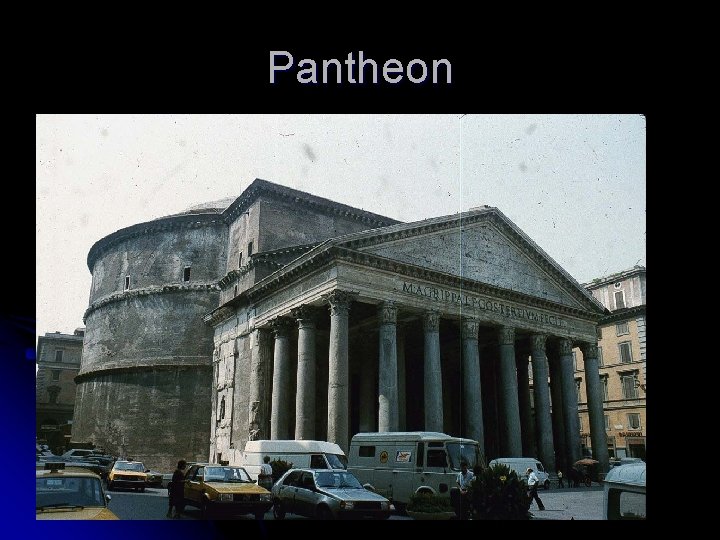
Pantheon
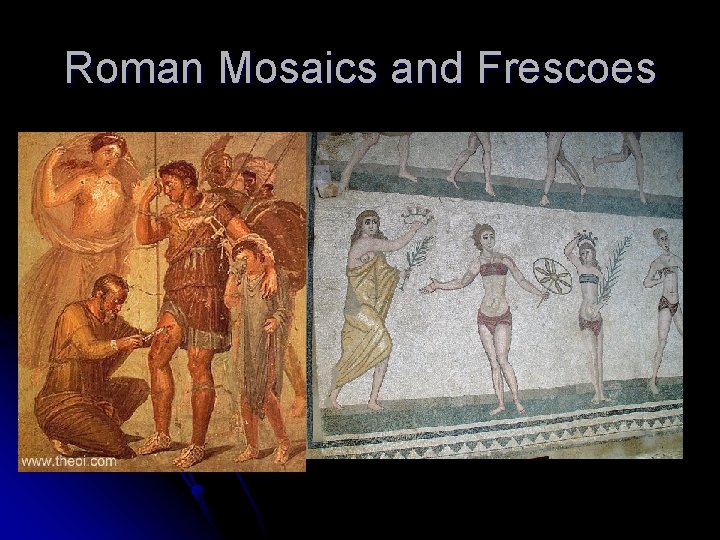
Roman Mosaics and Frescoes
Religious Diversity l l l Development of Christianity! Paul of Tarsus Christianity grew out of Judaism! Originally the empire practiced tolerance, until Jews resisted Roman control Romans see Judaism and Christianity as threat to empire and paganism. Why? ? Christians and Jews did not believe in the “divine power” of the Roman Emperors Persecuted Jews and Christians, yet Christianity still spread.
Constantine and Edict of Milan Emperor Constantine converted to Christianity (he thought he saw God during a battle!), and ended the persecution of Christians. l Edict of Milan- Christianity becomes official religion of empire. l
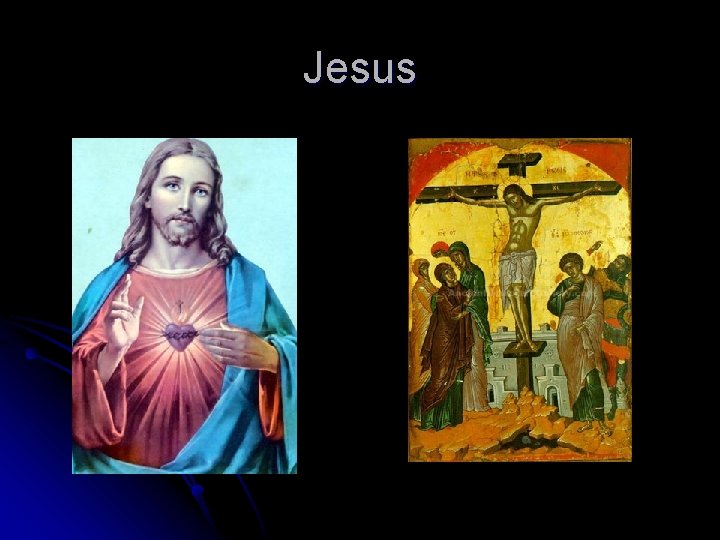
Jesus
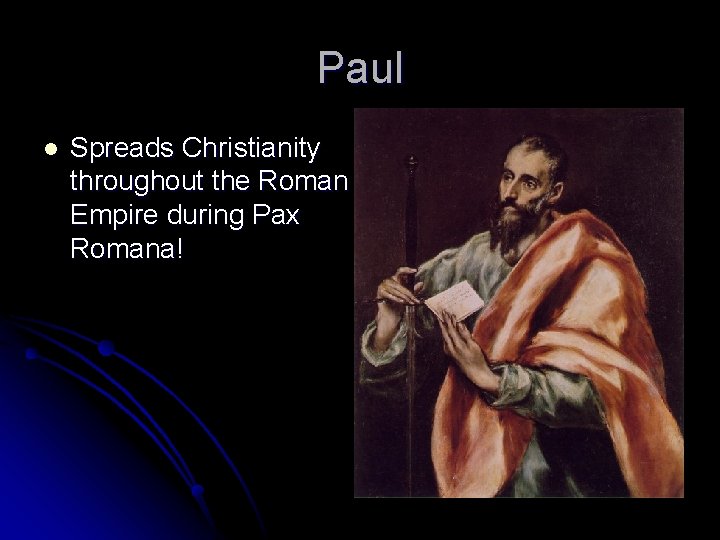
Paul l Spreads Christianity throughout the Roman Empire during Pax Romana!
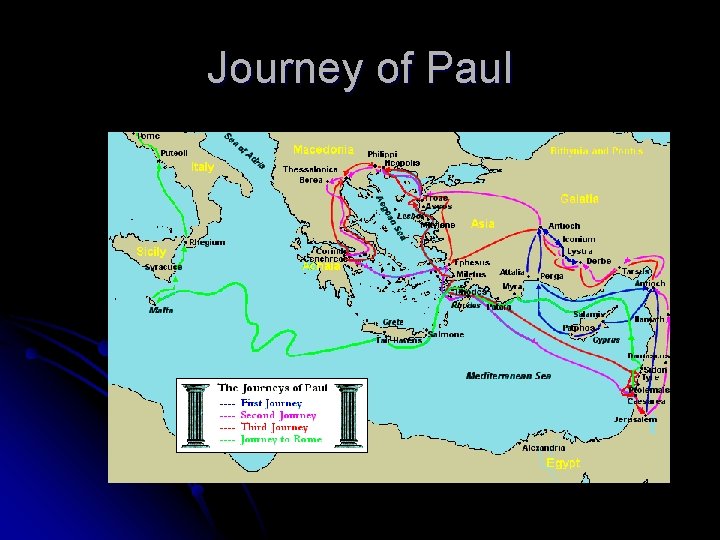
Journey of Paul
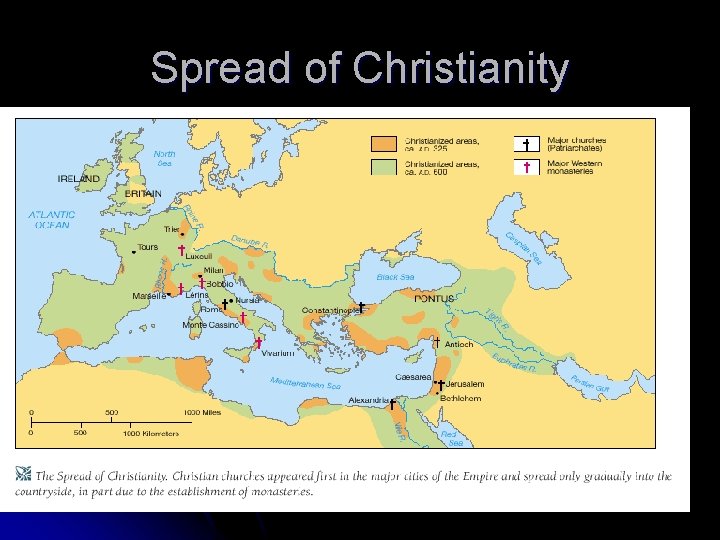
Spread of Christianity
Collapse of Western Roman Empire Size of empire was to big to manage well l Weak, Corrupt, and poor leaders l After death of Constantine, empire divided in two ( East and West) l Western Roman Empire Collapses in 476 C. E. l
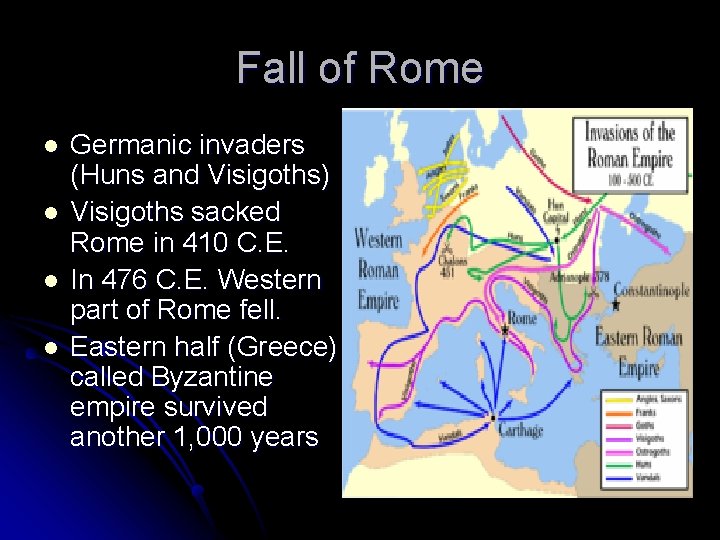
Fall of Rome l l Germanic invaders (Huns and Visigoths) Visigoths sacked Rome in 410 C. E. In 476 C. E. Western part of Rome fell. Eastern half (Greece) called Byzantine empire survived another 1, 000 years
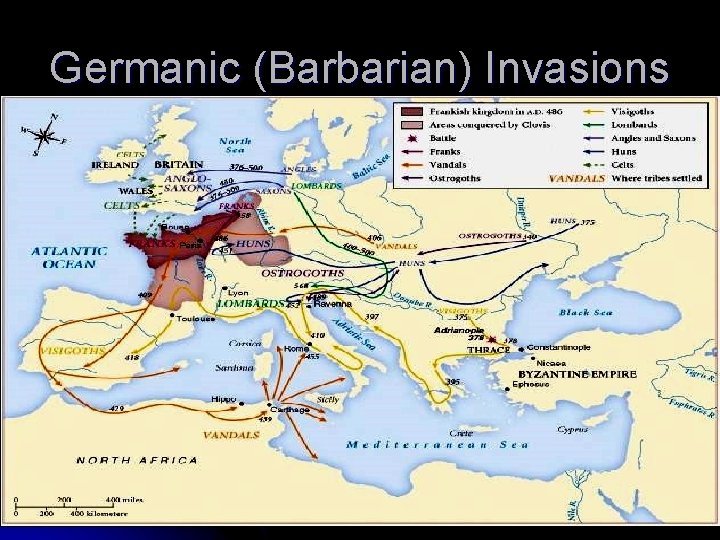
Germanic (Barbarian) Invasions
Consequences of the Fall of the Roman Empire l l Western Europe falls into Chaos and Disunity! Western Europe enters into a “Dark Age” l Dark Age- Lack of Education, Art, Science, and literature.
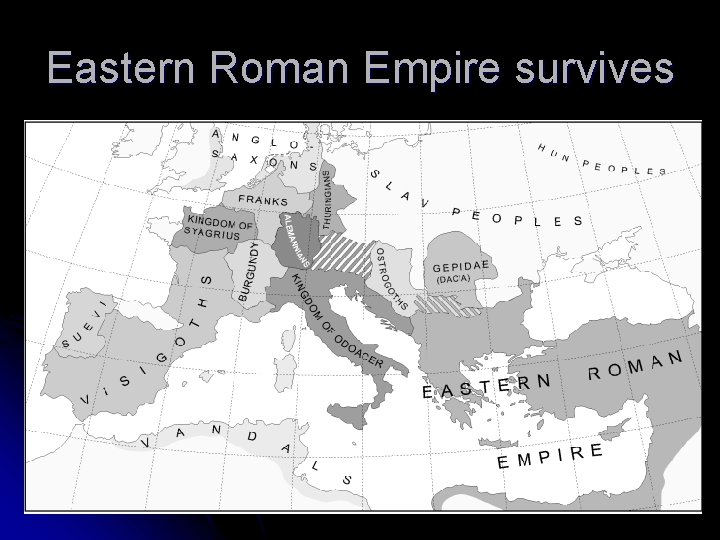
Eastern Roman Empire survives
Roman Achievements Arch and Dome (architecture) l Aqueducts & Roads (engineering) l Common Coins l Civil Service (take a test!) l Republic as a form of government l Law code- 12 Tables of Rome (most important) l
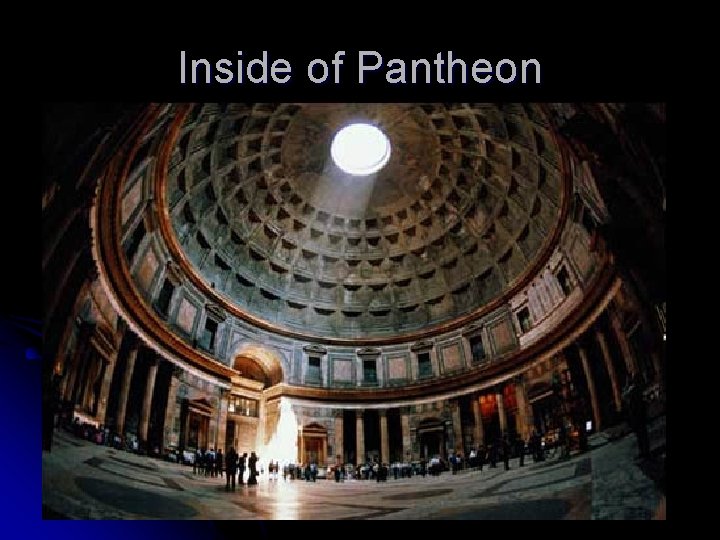
Inside of Pantheon
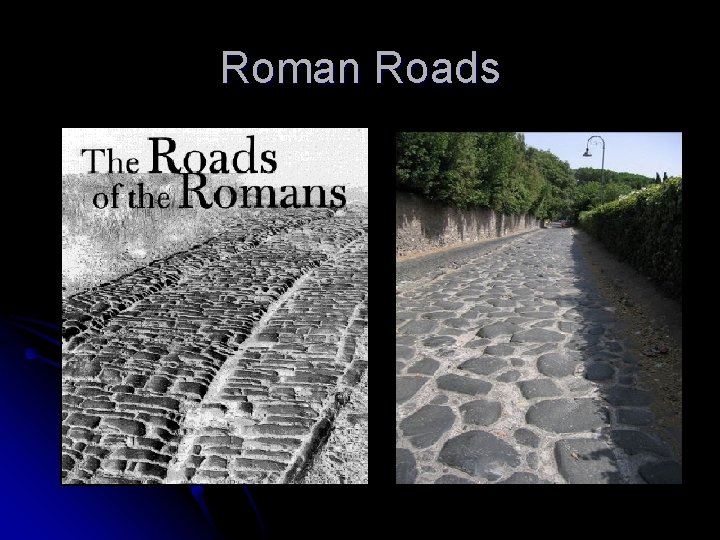
Roman Roads
Roman Achievements
- Slides: 45