
Romanticism Emotion and Experimentationthe Flowering of Romanticism 1798
- Slides: 27
Romanticism Emotion and Experimentation…the Flowering of Romanticism 1798 -1832
The Romantic Period Images and Music of the Romantic Period: http: //www. youtube. com/watch? v=7 z. ADECq. E 9 BE Historical Perspective: http: //www. youtube. com/watch? v=BAw 0 M 0 x 3 ly. A BBC Documentary – Romantic Period/Industialism and Literature to Return back to Nature http: //www. youtube. com/watch? v=zf. Gugap. N 0 hs
Romantic Period in British Literature …a time of nature-inspired poetry, political questioning, and individualism.
The Beginning William Wordsworth copublished a “new kind” of poetry with friend Samuel Taylor Coleridge. “Lyrical Ballads” (1798) - the beginning of the Romantic Period.
Historic Connections German literary movement Sturm und Drang suffering main character –martyr, a rebel, –an iconoclast going against society.
ROMANTICS question authority and values question anything that infringes on personal liberty
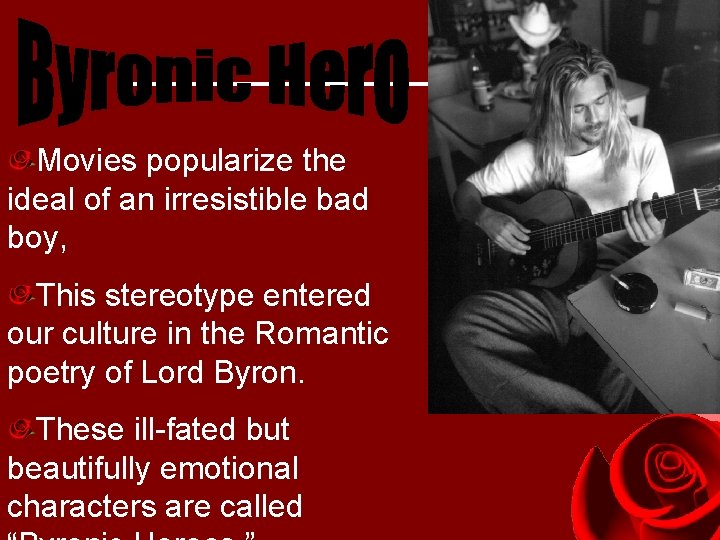
Movies popularize the ideal of an irresistible bad boy, This stereotype entered our culture in the Romantic poetry of Lord Byron. These ill-fated but beautifully emotional characters are called
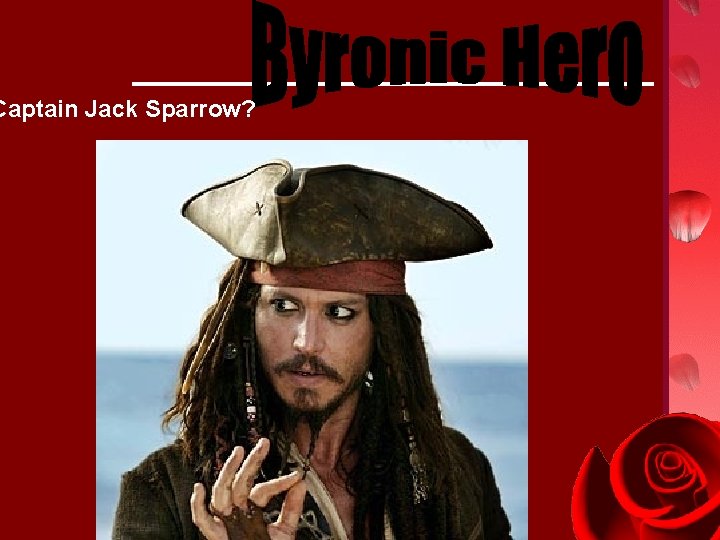
Captain Jack Sparrow?
ORDINARY = EXTRAORDINARY The ability to describe ordinary events as extraordinary is characteristic of Romantic literature.
EMOTIONS RULE The Romantics… valued individual experience, trusted in emotions rejected the social ‘us’ and embraces the ‘me’! let Intuitions, feelings, and emotions rule. believed man’s heart was a more valuable guide than his head.
THE BIG 8 ROMANTICS WILLIAM BLAKE WILLIAM WORDSWORTH SAMUEL TAYLOR COLERIDGE JANE AUSTEN LORD BYRON PERCY BYSSHE SHELLEY JOHN KEATS MARY WOLLSTONECRAFT SHELLEY
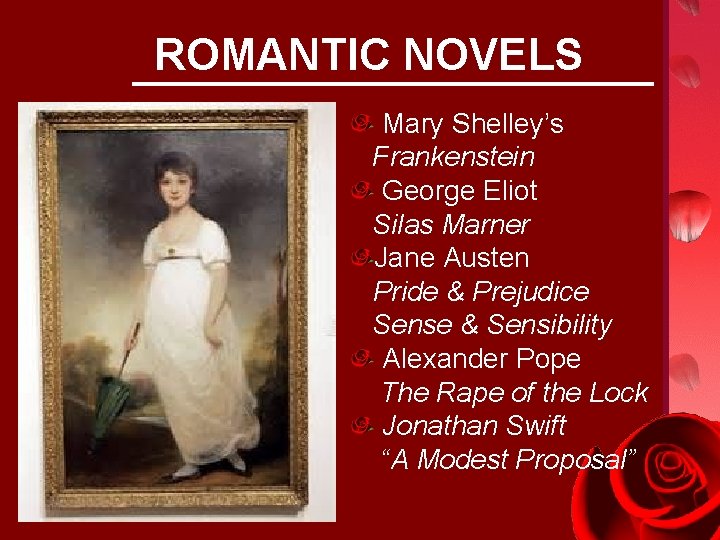
ROMANTIC NOVELS Mary Shelley’s Frankenstein George Eliot Silas Marner Jane Austen Pride & Prejudice Sense & Sensibility Alexander Pope The Rape of the Lock Jonathan Swift “A Modest Proposal”
Romanticism: 12 Characteristics Sensibility Primitivism Love of Nature Sympathetic Interest in Past Mysticism Individualism Idealization of Rural Life Enthusiasm for Wild/Irregular/Grotesque Unrestrained Imagination Enthusiasm for “Uncivilized” or Natural Human Rights Emotional Psychology in Fiction
Characteristic #1 Sensibility Awareness Consciousness raising
Characteristic #2: Primitivism The belief that man continues to corrupt nature of man Primitive = sense of goodness, Purity, Connection to God
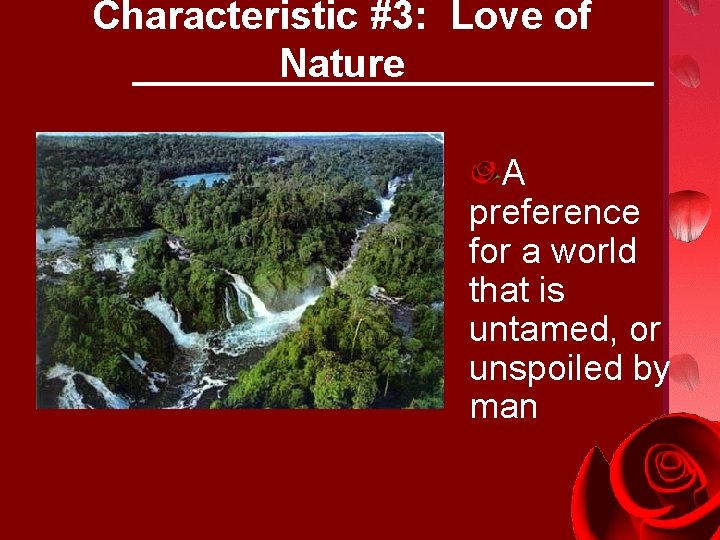
Characteristic #3: Love of Nature A preference for a world that is untamed, or unspoiled by man
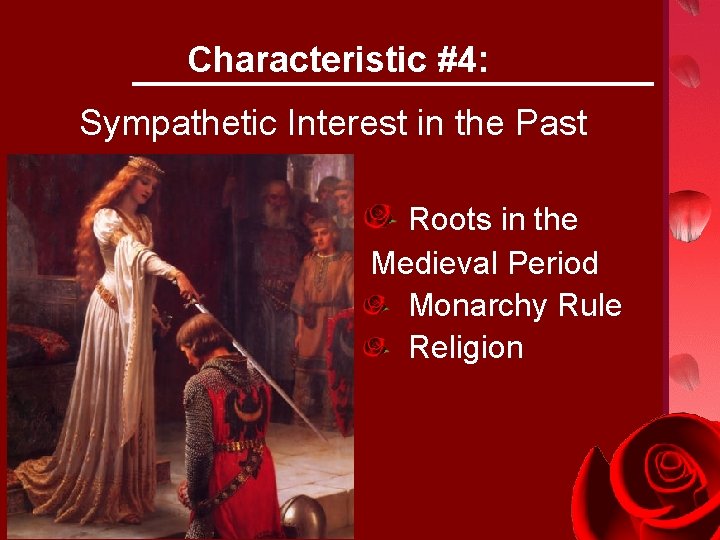
Characteristic #4: Sympathetic Interest in the Past Roots in the Medieval Period Monarchy Rule Religion
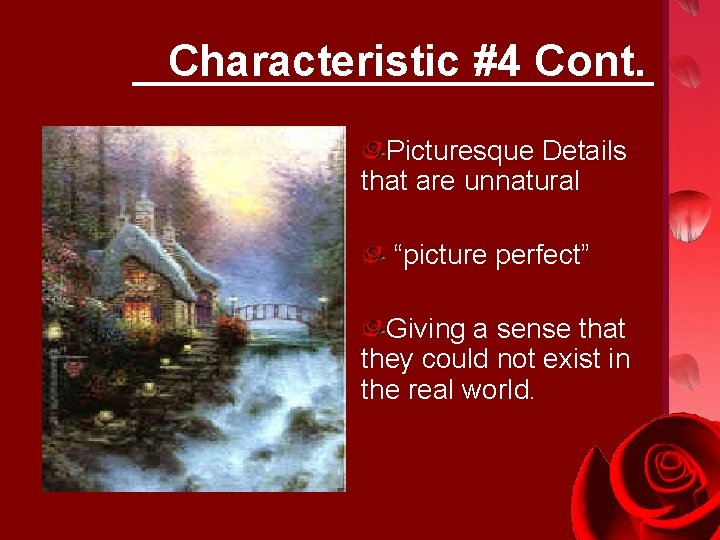
Characteristic #4 Cont. Picturesque Details that are unnatural “picture perfect” Giving a sense that they could not exist in the real world.
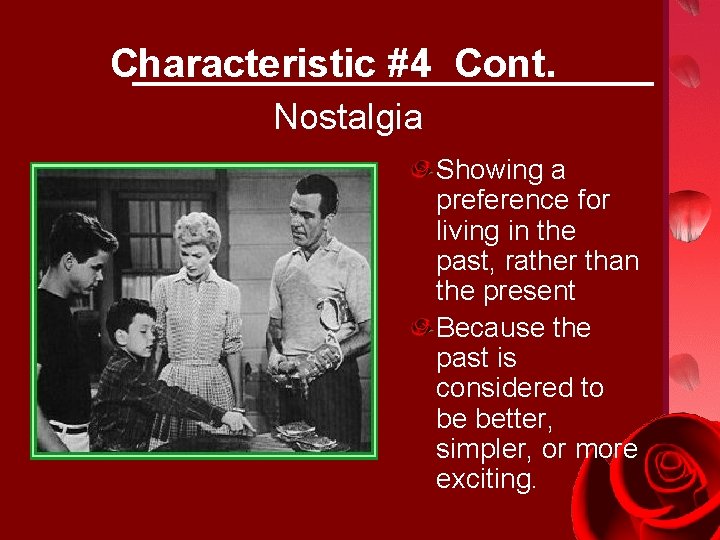
Characteristic #4 Cont. Nostalgia Showing a preference for living in the past, rather than the present Because the past is considered to be better, simpler, or more exciting.
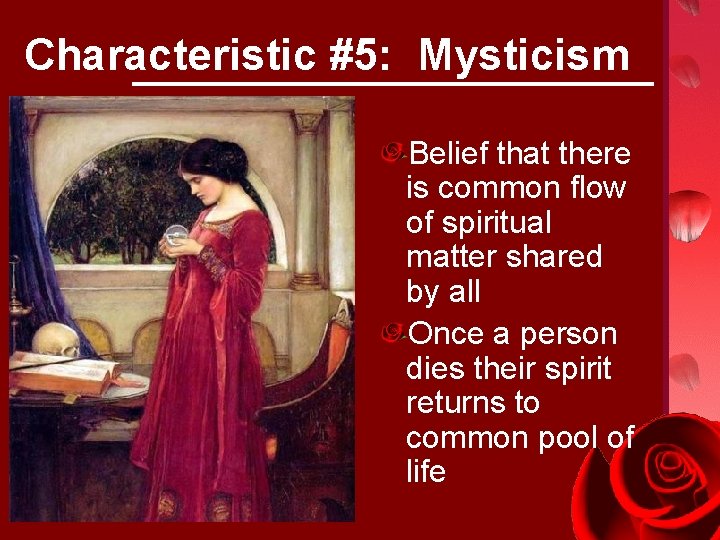
Characteristic #5: Mysticism Belief that there is common flow of spiritual matter shared by all Once a person dies their spirit returns to common pool of life
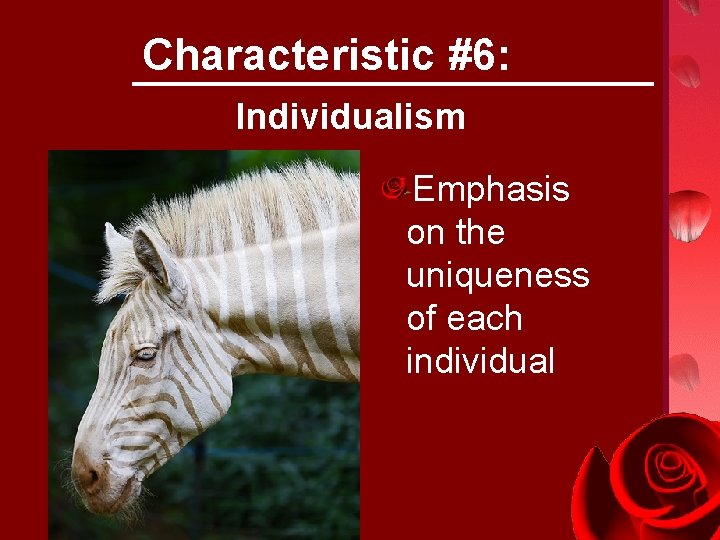
Characteristic #6: Individualism Emphasis on the uniqueness of each individual
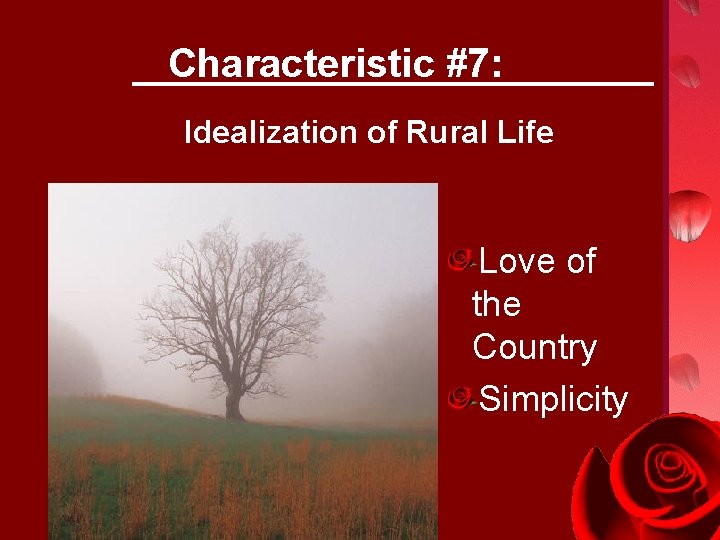
Characteristic #7: Idealization of Rural Life Love of the Country Simplicity
Characteristic # 8: Enthusiasm for the wild, irregular, or grotesque in nature & art Wild and untamed Unexplainable
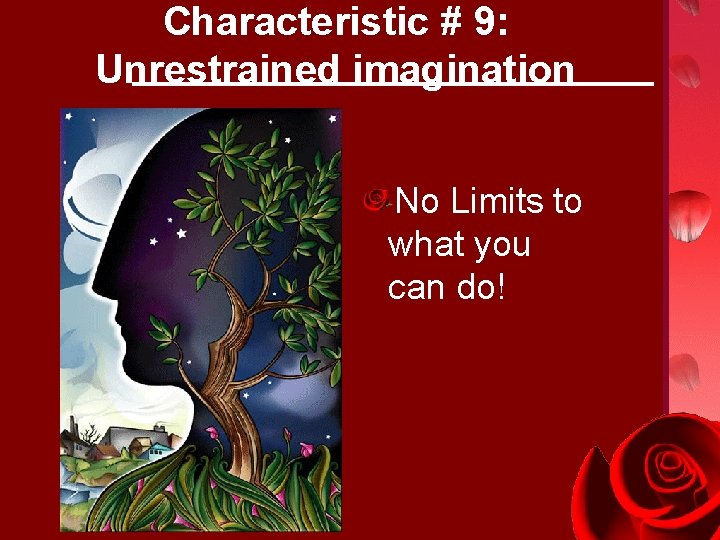
Characteristic # 9: Unrestrained imagination No Limits to what you can do!
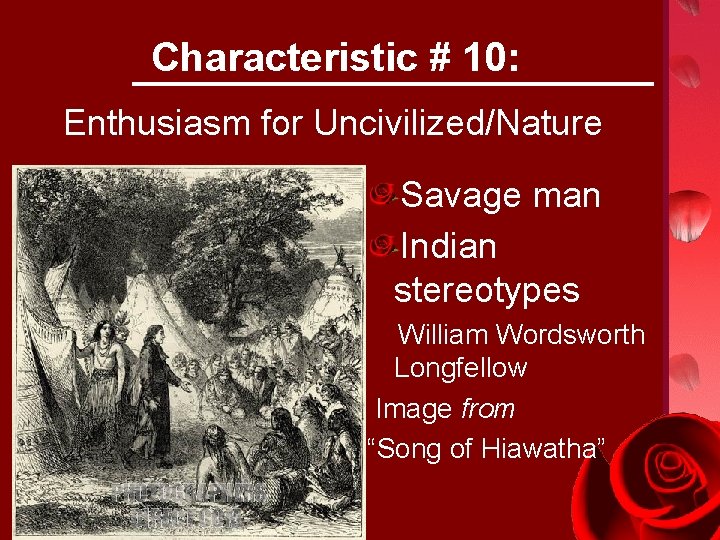
Characteristic # 10: Enthusiasm for Uncivilized/Nature Savage man Indian stereotypes William Wordsworth Longfellow Image from “Song of Hiawatha”
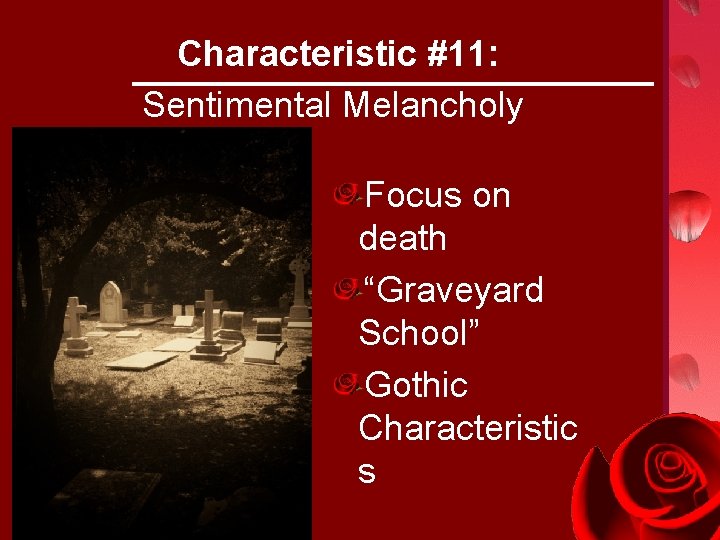
Characteristic #11: Sentimental Melancholy Focus on death “Graveyard School” Gothic Characteristic s
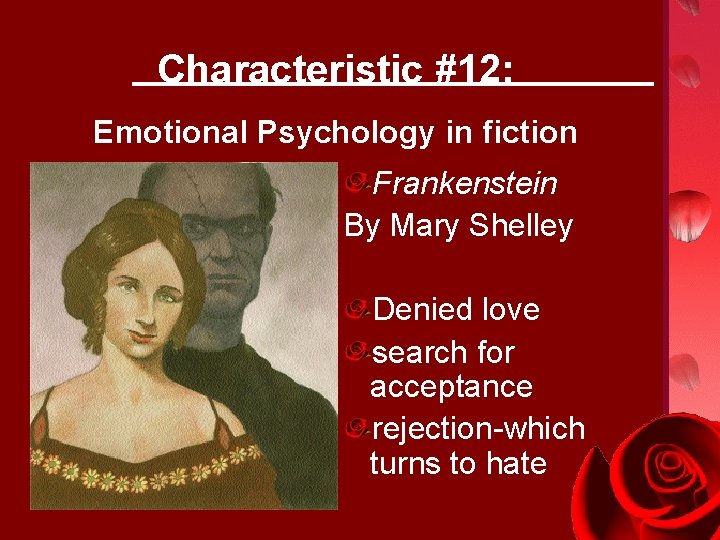
Characteristic #12: Emotional Psychology in fiction Frankenstein By Mary Shelley Denied love search for acceptance rejection-which turns to hate