
Romanticism and the Gothic Romanticism 1750 1870 A
- Slides: 14
Romanticism and the Gothic
Romanticism 1750 -1870 • A movement that flourished in literature, philosophy, music and art in Western culture during the majority of the 19 th century. • This movement does NOT relate to love or relationships. • Developed as a reaction against the rationalism within The Age of Reason
Romanticism- Overview • Feeling and Imagination is more important than reason and fact. • Romanticism attempts to show life as we might imagine it to be, or think it should be. (fanciful) • Romanticism favors the picturesque, the emotional, the exotic and the mysterious.
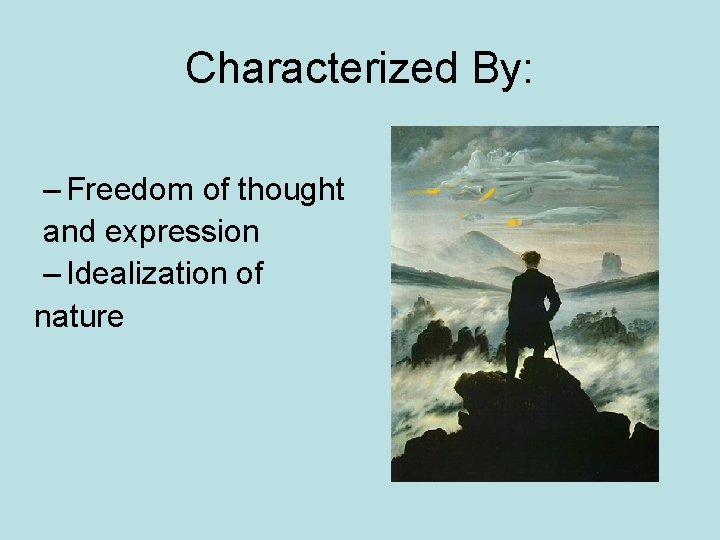
Characterized By: – Freedom of thought and expression – Idealization of nature
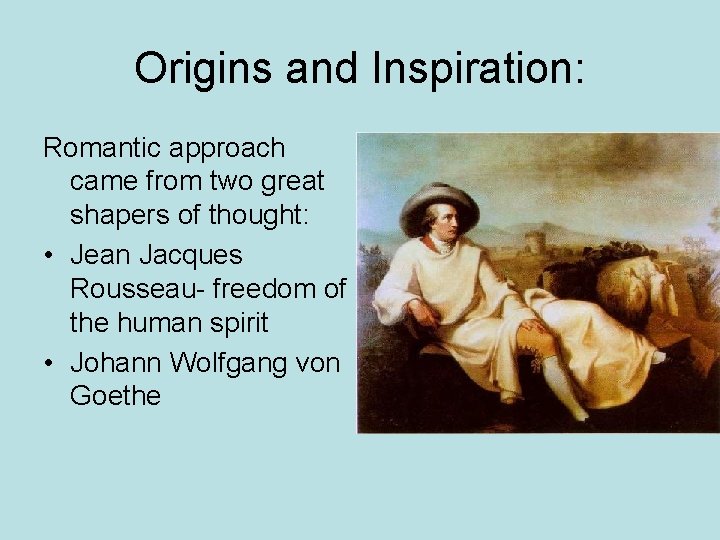
Origins and Inspiration: Romantic approach came from two great shapers of thought: • Jean Jacques Rousseau- freedom of the human spirit • Johann Wolfgang von Goethe
Romantic Style: • • Imagination was praised over reason Emotions over logic Intuition over science Literature that emphasized content over form • Complex, fast-moving plots • Allowed mixed genres (tragicomedy, and the mingling of the grotesque and sublime)
American Romanticism. Basic Concepts • • • Based out of limitations of reason Glorifies the individual spirit Grounded in human emotions Nature= Inspiration vs. fear of God Fascination with the supernatural Captures energy and character of new country • Individual = Hope
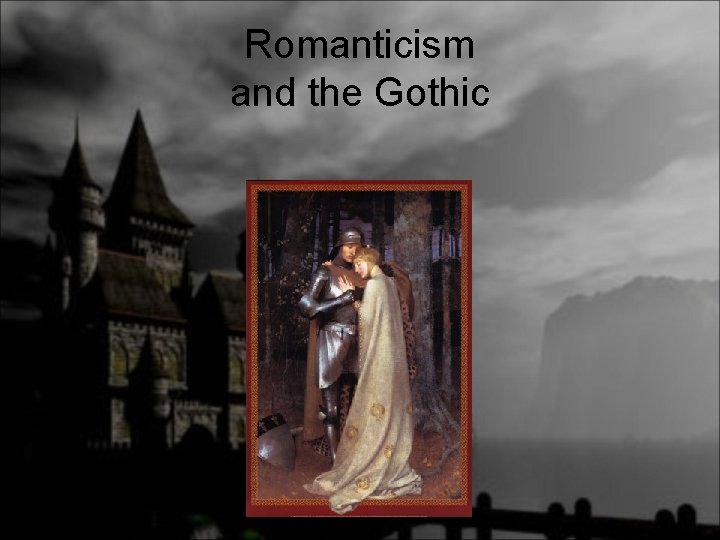
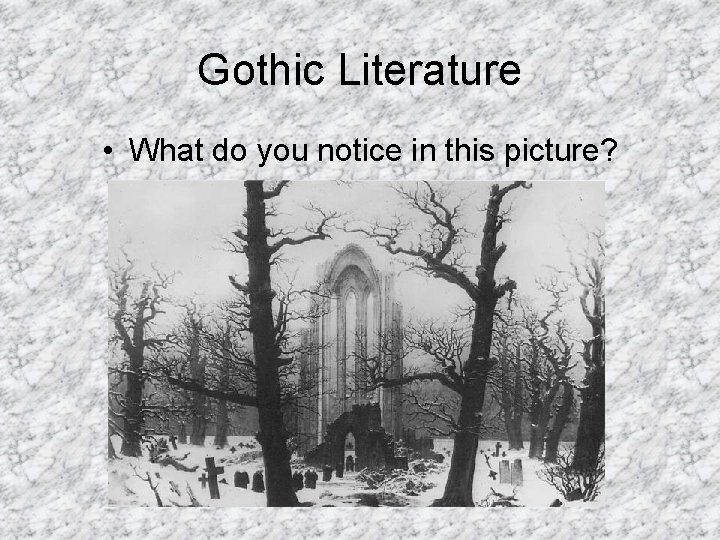
Gothic Literature • What do you notice in this picture?
Gothic- “The Dark Side of Individualism” • A term that describes the use in fiction of grotesque, gloomy settings (often castles) and mysterious, violent and supernatural occurrences to create suspense and awe. • A subsection of Romanticism. • Individual = potential evil
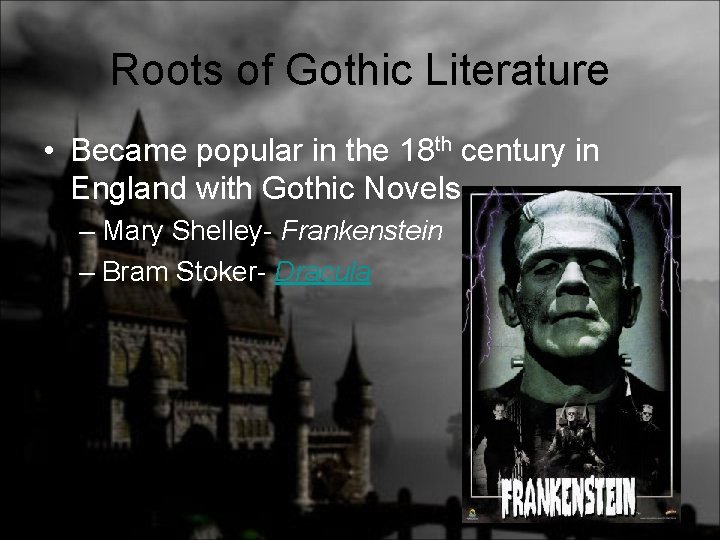
Roots of Gothic Literature • Became popular in the 18 th century in England with Gothic Novels – Mary Shelley- Frankenstein – Bram Stoker- Dracula
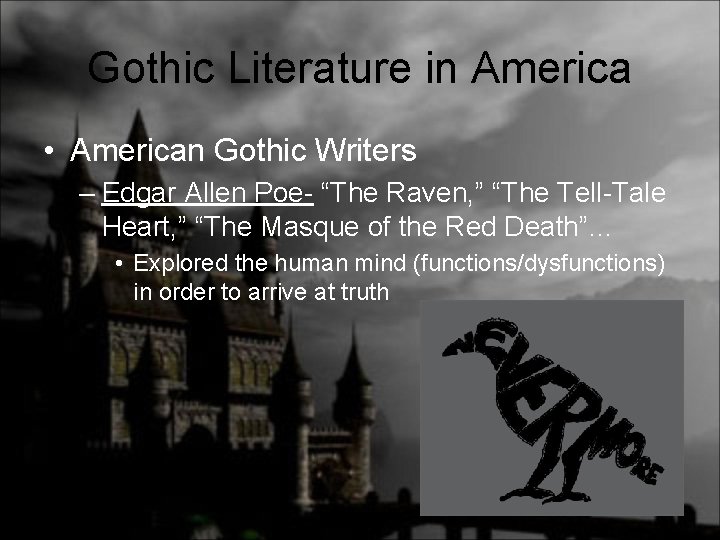
Gothic Literature in America • American Gothic Writers – Edgar Allen Poe- “The Raven, ” “The Tell-Tale Heart, ” “The Masque of the Red Death”… • Explored the human mind (functions/dysfunctions) in order to arrive at truth
Gothic Writers continued • Nathaniel Hawthorne-The House of the Seven Gables, “Dr. Heidegger’s Experiment” – Unlike Poe, Hawthorne examined conditions of the human heart- fear, greed, vanity, mistrust, betrayal
Contemporary Revival of the Gothic? • 20 th century- Southern America – William Faulkner – Flannery O’Connor – Truman Capote • Current Gothic Writers? – Stephen King – Anne Rice
Exit Questions • 1. List two basic concepts of the Romantic time period in American literature. • 2. The Romantic literature was in reaction to what? • 3. List two elements of Gothic literature.