
ROMANTICISM AND GOTHIC LITERATURE ROMANTICISM At its peak
- Slides: 17
ROMANTICISM AND GOTHIC LITERATURE
ROMANTICISM At its peak from 1800 -1850. Partly a reaction to the Industrial Revolution, it was also a reaction against the Age of Enlightenment and a reaction against the scientific rationalization of nature.
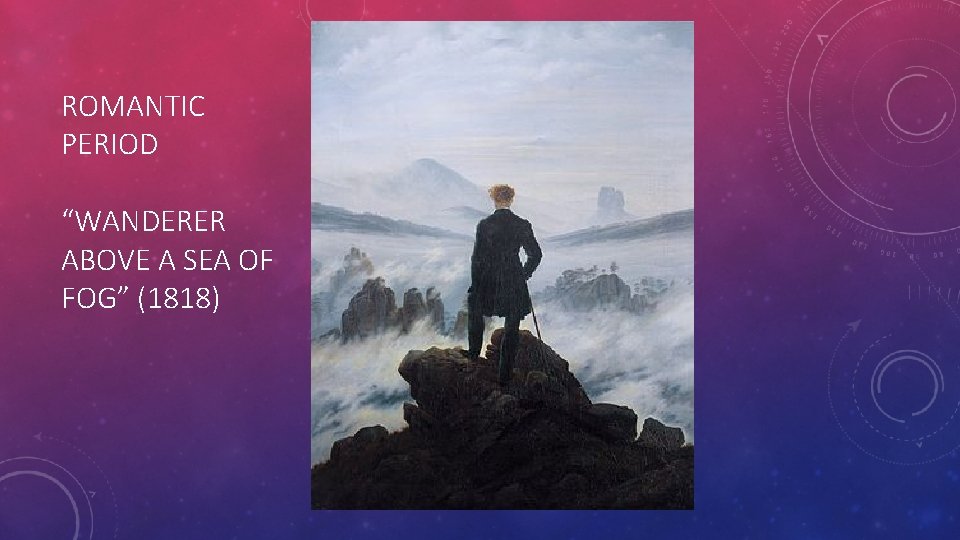
ROMANTIC PERIOD “WANDERER ABOVE A SEA OF FOG” (1818)
• Romanticism has very little to do with things popularly thought of as “romantic, ” although love may occasionally be the subject of Romantic art. • It is an international artistic and philosophical movement that redefined the fundamental ways in which people in Western Culture thought about themselves and about their world
QUALITIES OF ROMANTICISM • Sources of inspiration: examination of inner feelings, emotions; imagination • Attitudes and interests: idealistic; interested in the mysterious and supernatural; tended toward excess and spontaneity • Social concerns: desired radical change; favored democracy; concerned with common people; concerned with the individual; felt that nature should be untamed
CONCEPT OF ART AND LITERATURE IN ROMANTICISM • Literature and art was seen as the overflow of powerful feelings; the essence of art and literature was the mind, emotions, and imagination of the artist. Nature was seen to reflect the artist’s interior world.
THE SUPERNATURAL AND STRANGE • Much Romantic art explores the realm of mystery, magic, folktales and fairy tales. It often incorporates material from folklore and superstition and is often interested in distant or faraway places.
THE STRANGE (CON’T) • Related to this was a renewed interest in the middle ages and the past as beautiful, exotic, mysterious, bygone era. • There was also great interest in unusual modes of experience, such as visionary states of consciousness, dreams, drug-induced states and visions; madness, etc.
INDIVIDUALISM • Human beings were seen as essentially noble & good (though corrupted by society) • There was a great belief in democratic ideals, concern for human liberty, and an outcry against various forms of tyranny
THE CHILD • Romantics featured children in literature and poetry because they believed that because children were innocent, they were closer to nature. • The child, some Romantic poets believed, had access to a unique worldview, because a child has not yet been influenced and shaped (ruined) by society
THE GOTHIC NOVEL: HISTORICAL CONTEXT • The words Goth and Gothic describe Germanic tribes that sacked Rome and also ravaged the rest of Europe in the third, fourth, and fifth centuries. • By the 1700 s in England, Gothic had become synonymous with the Middle Ages, a period seen as chaotic, unenlightened, and superstitious
HORACE WALPOLE • Walpole wrote what is considered the first gothic novel: The Castle of Otranto (very melodramatic) • Published in 1764 • Inspired by his home and a nightmare he’d had
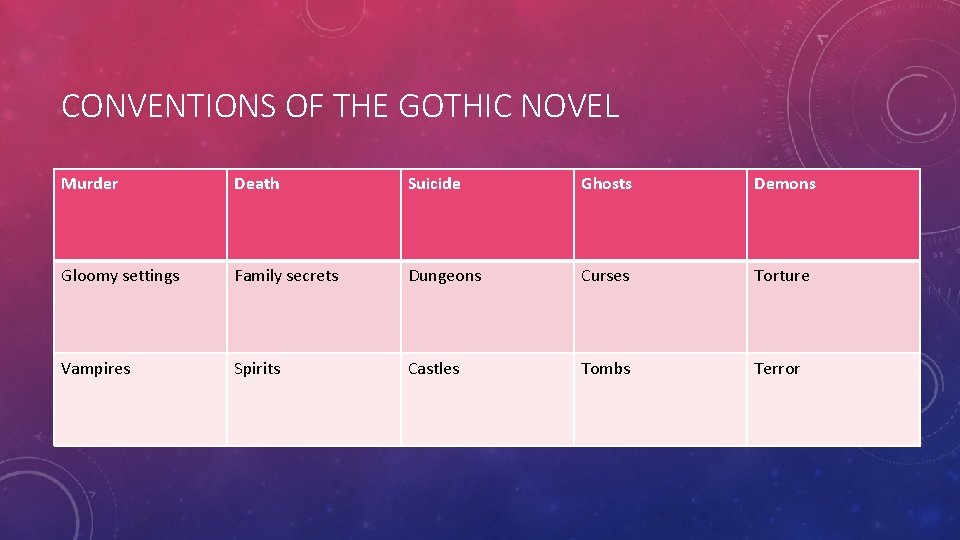
CONVENTIONS OF THE GOTHIC NOVEL Murder Death Suicide Ghosts Demons Gloomy settings Family secrets Dungeons Curses Torture Vampires Spirits Castles Tombs Terror
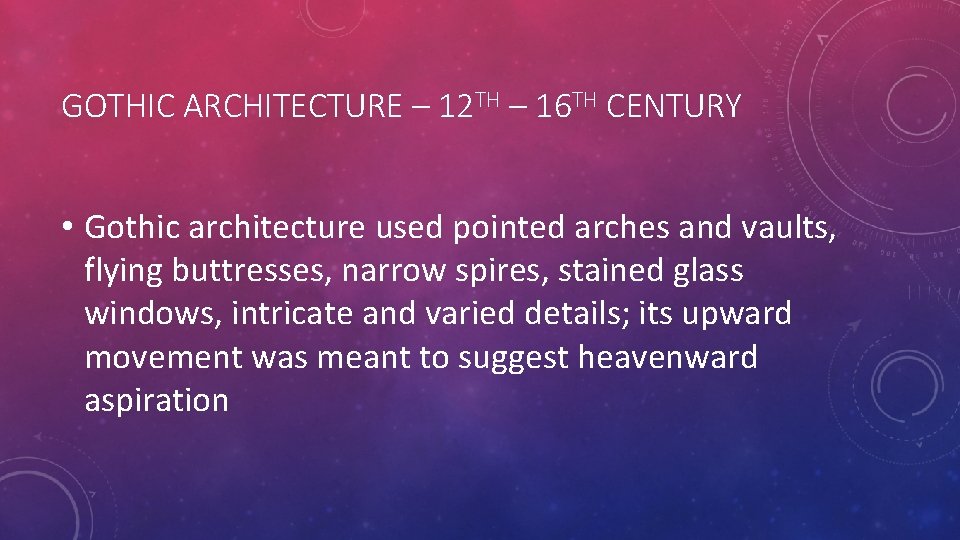
GOTHIC ARCHITECTURE – 12 TH – 16 TH CENTURY • Gothic architecture used pointed arches and vaults, flying buttresses, narrow spires, stained glass windows, intricate and varied details; its upward movement was meant to suggest heavenward aspiration
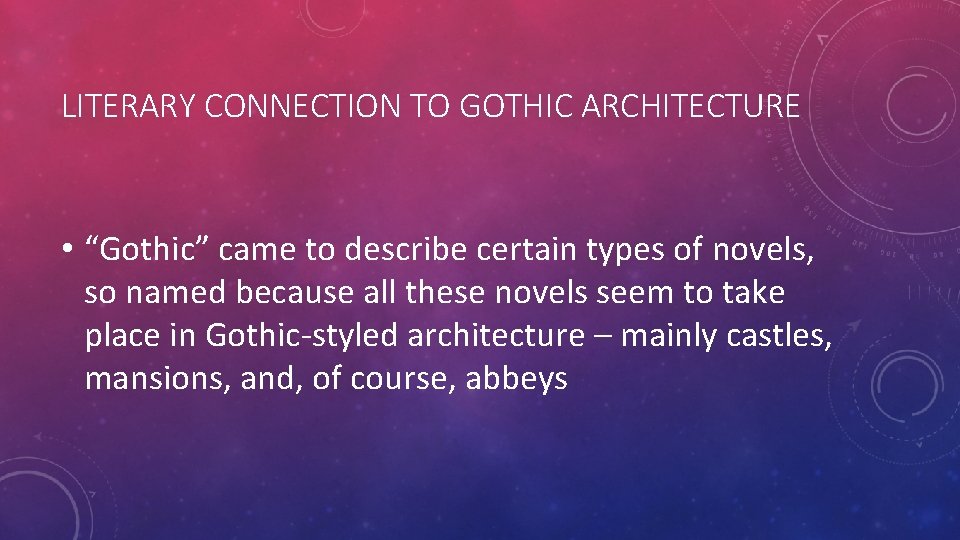
LITERARY CONNECTION TO GOTHIC ARCHITECTURE • “Gothic” came to describe certain types of novels, so named because all these novels seem to take place in Gothic-styled architecture – mainly castles, mansions, and, of course, abbeys
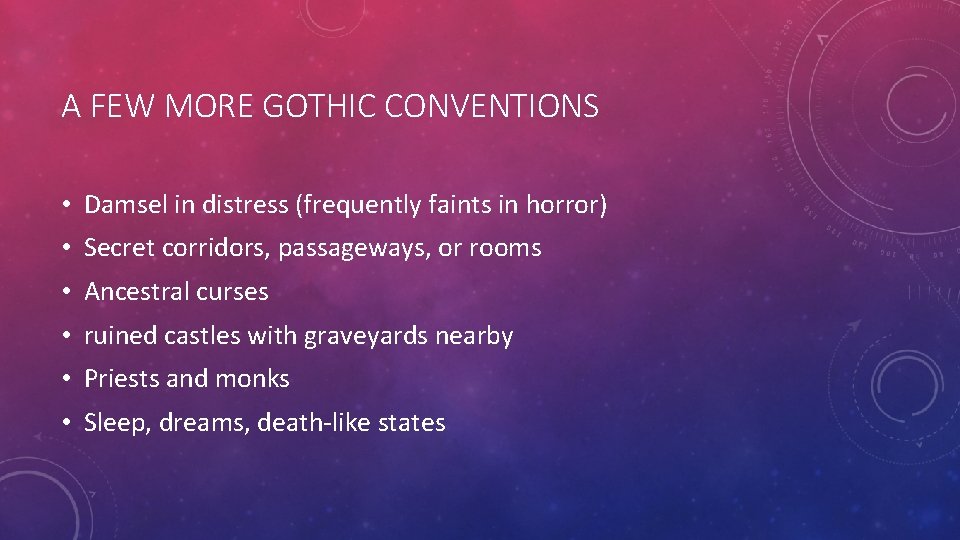
A FEW MORE GOTHIC CONVENTIONS • Damsel in distress (frequently faints in horror) • Secret corridors, passageways, or rooms • Ancestral curses • ruined castles with graveyards nearby • Priests and monks • Sleep, dreams, death-like states
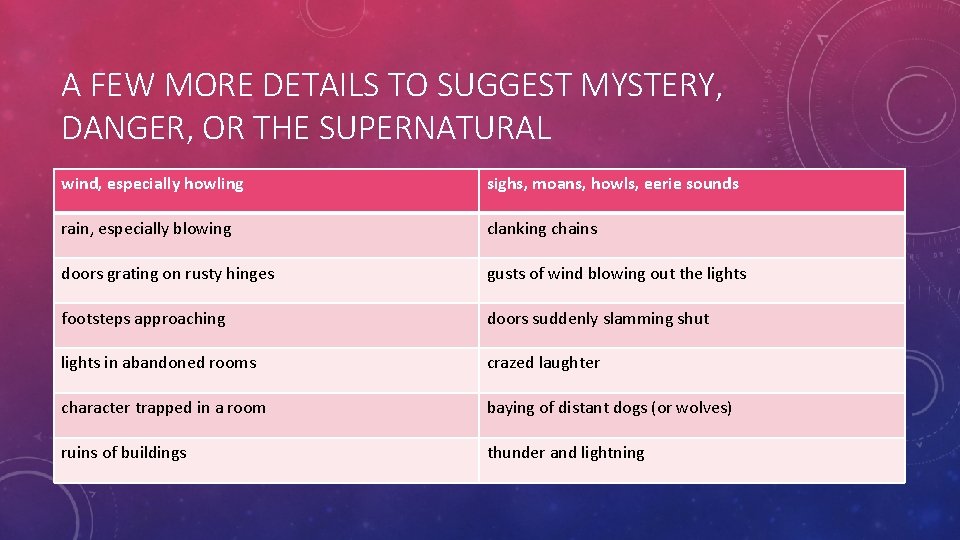
A FEW MORE DETAILS TO SUGGEST MYSTERY, DANGER, OR THE SUPERNATURAL wind, especially howling sighs, moans, howls, eerie sounds rain, especially blowing clanking chains doors grating on rusty hinges gusts of wind blowing out the lights footsteps approaching doors suddenly slamming shut lights in abandoned rooms crazed laughter character trapped in a room baying of distant dogs (or wolves) ruins of buildings thunder and lightning