
Romanticism 1800s Neoclassicism 1700s Revival of art ancient
- Slides: 45
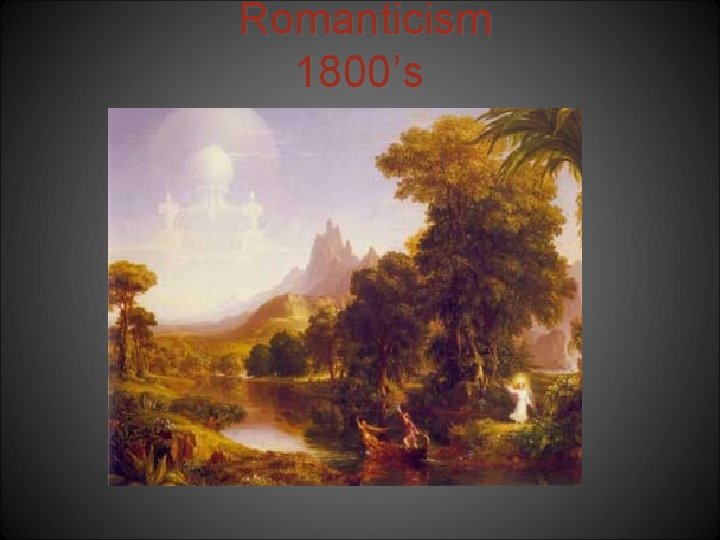
Romanticism 1800’s
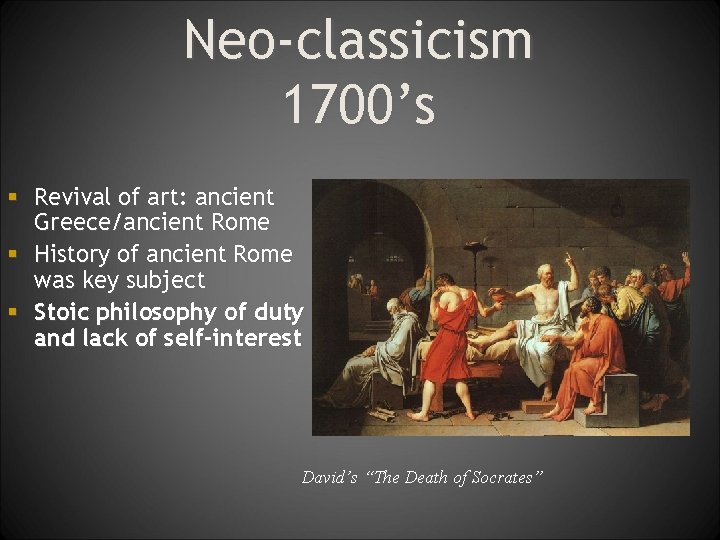
Neo-classicism 1700’s § Revival of art: ancient Greece/ancient Rome § History of ancient Rome was key subject § Stoic philosophy of duty and lack of self-interest David’s “The Death of Socrates”
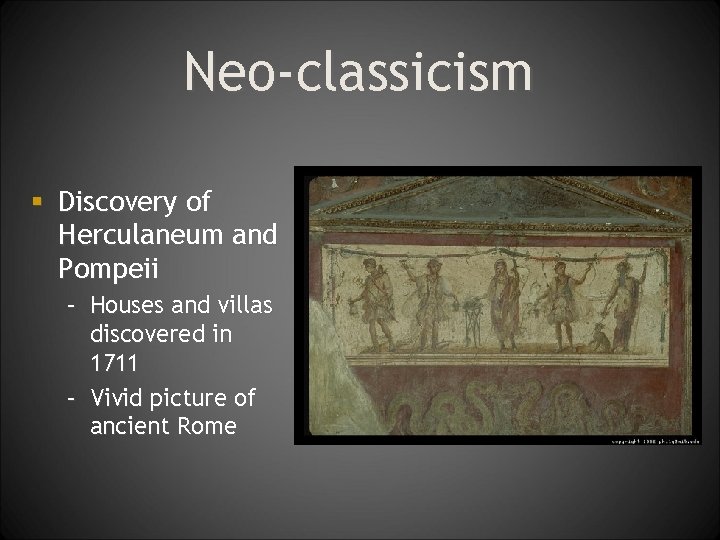
Neo-classicism § Discovery of Herculaneum and Pompeii – Houses and villas discovered in 1711 – Vivid picture of ancient Rome
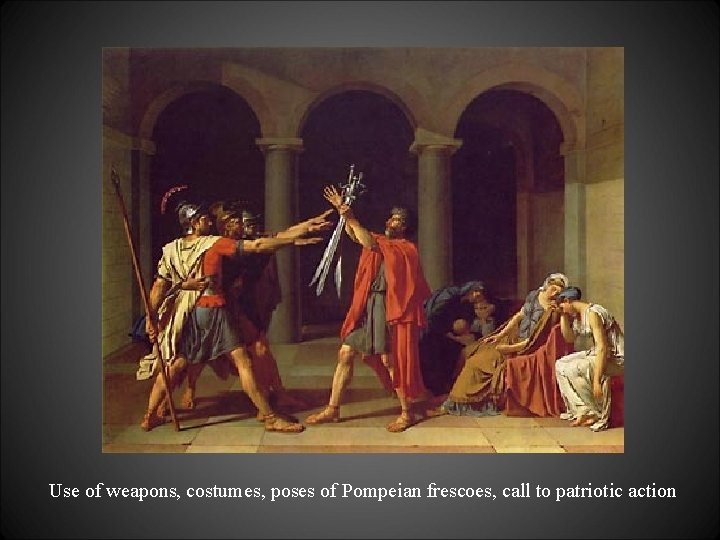
Use of weapons, costumes, poses of Pompeian frescoes, call to patriotic action
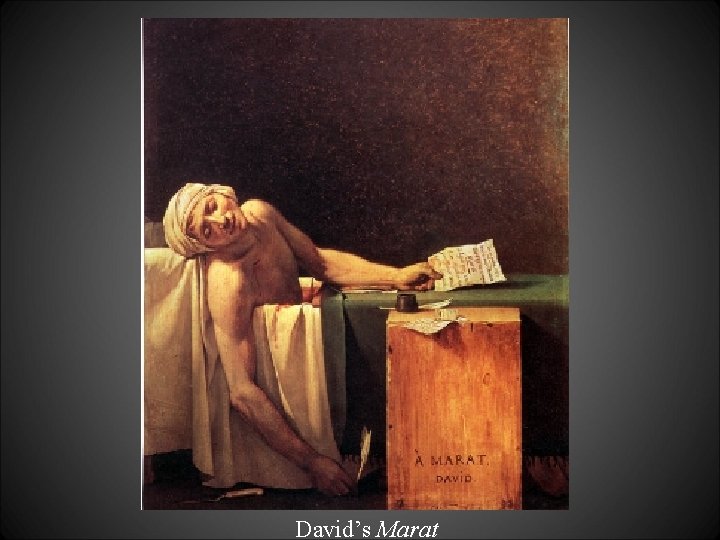
David’s Marat
Romanticism…. why? § Remember, 18 th century(1700’s)…. all about human reason § Romanticism is about emotion
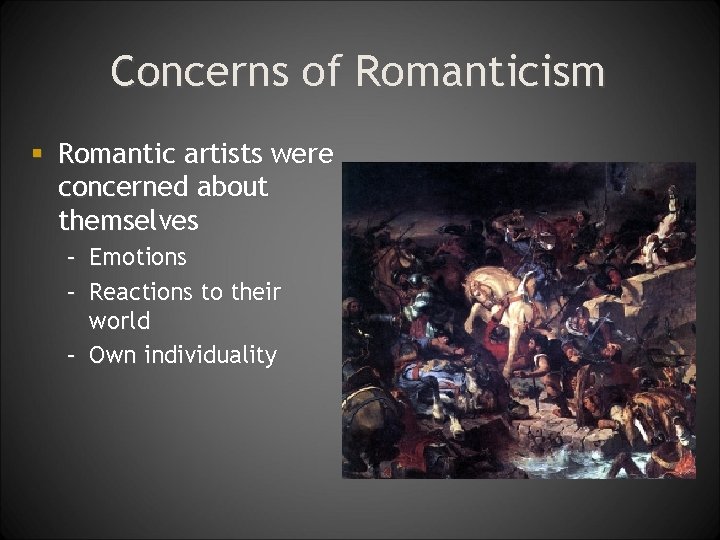
Concerns of Romanticism § Romantic artists were concerned about themselves – Emotions – Reactions to their world – Own individuality
Definition v. Romanticism refers to a movement in art, literature, and music during the 19 th century. v. Romanticism is characterized by the 5 “I”s v. Imagination v. Intuition v. Idealism v. Inspiration v. Individuality
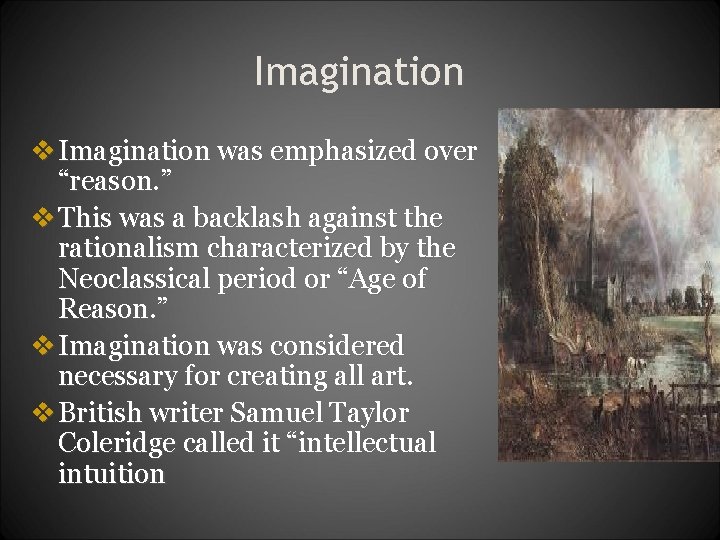
Imagination v Imagination was emphasized over “reason. ” v This was a backlash against the rationalism characterized by the Neoclassical period or “Age of Reason. ” v Imagination was considered necessary for creating all art. v British writer Samuel Taylor Coleridge called it “intellectual intuition
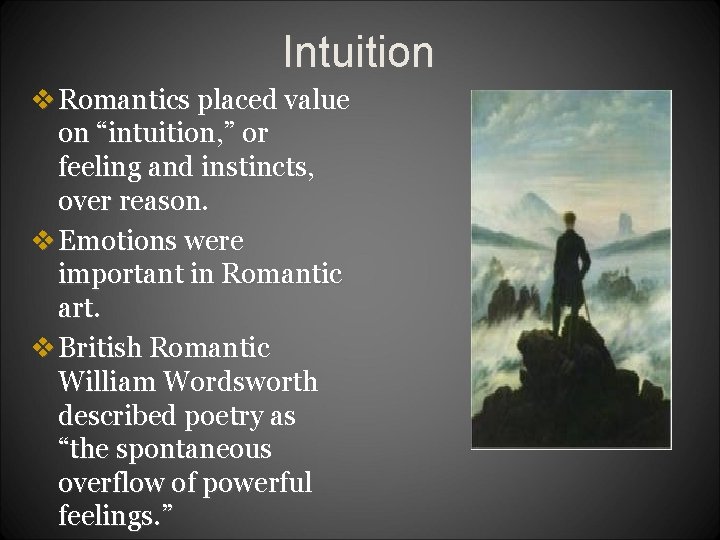
Intuition v Romantics placed value on “intuition, ” or feeling and instincts, over reason. v Emotions were important in Romantic art. v British Romantic William Wordsworth described poetry as “the spontaneous overflow of powerful feelings. ”
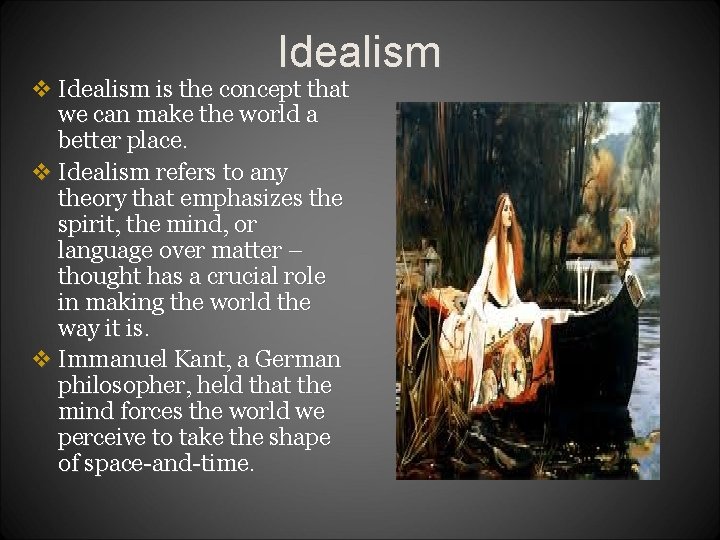
Idealism v Idealism is the concept that we can make the world a better place. v Idealism refers to any theory that emphasizes the spirit, the mind, or language over matter – thought has a crucial role in making the world the way it is. v Immanuel Kant, a German philosopher, held that the mind forces the world we perceive to take the shape of space-and-time.
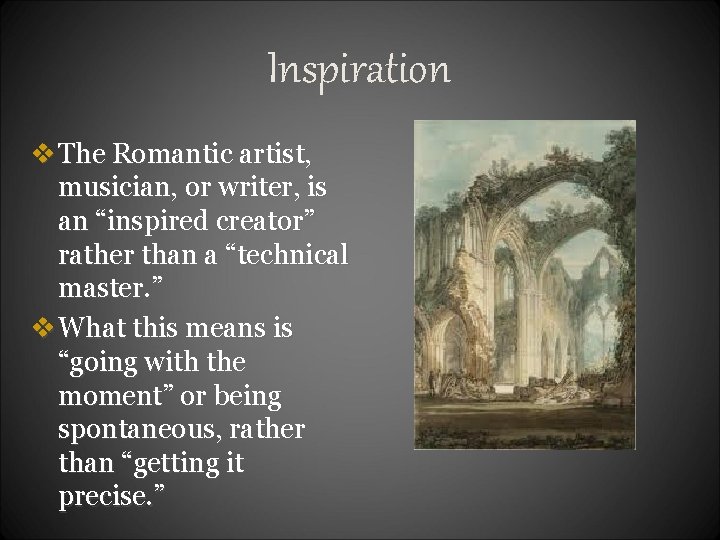
Inspiration v The Romantic artist, musician, or writer, is an “inspired creator” rather than a “technical master. ” v What this means is “going with the moment” or being spontaneous, rather than “getting it precise. ”
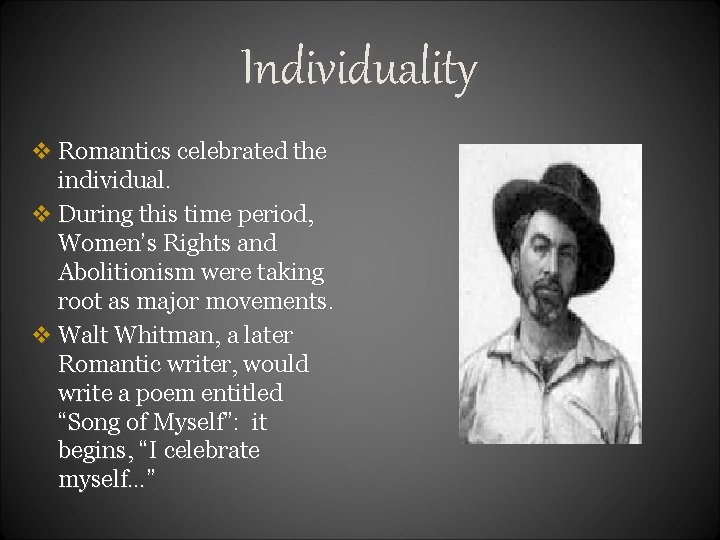
Individuality v Romantics celebrated the individual. v During this time period, Women’s Rights and Abolitionism were taking root as major movements. v Walt Whitman, a later Romantic writer, would write a poem entitled “Song of Myself”: it begins, “I celebrate myself…”
Political views of Romanticism § Democratic § Lord Byron and Delacroix supported liberalism HOWEVER § Conservative because they distrusted human reason
Romanticism in Germany § Escape from German political life § Intensified spirit of German patriotic fervor § Conservative censorship § Thinkers and artists retreated inward to their own emotions
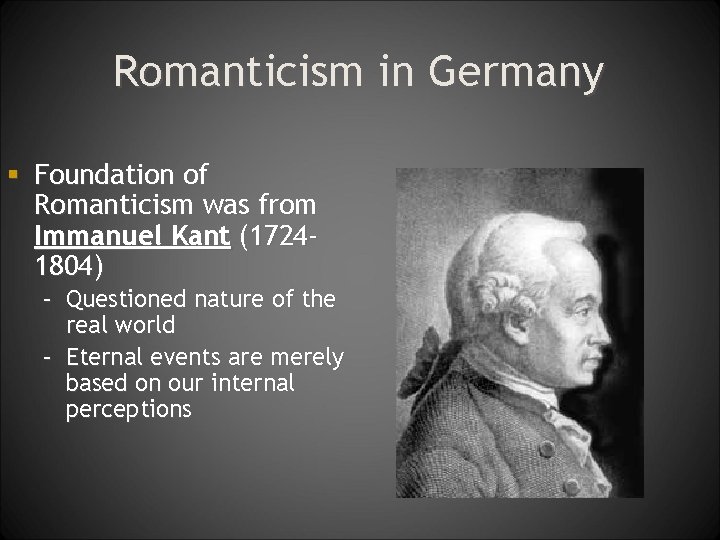
Romanticism in Germany § Foundation of Romanticism was from Immanuel Kant (17241804) – Questioned nature of the real world – Eternal events are merely based on our internal perceptions
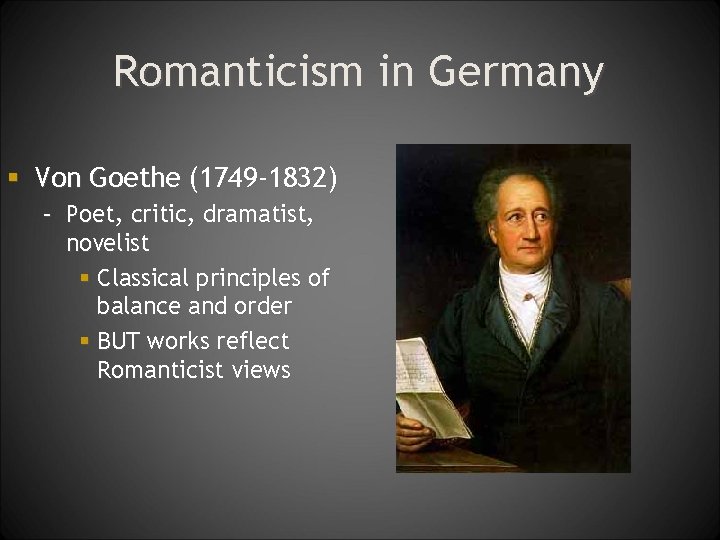
Romanticism in Germany § Von Goethe (1749 -1832) – Poet, critic, dramatist, novelist § Classical principles of balance and order § BUT works reflect Romanticist views
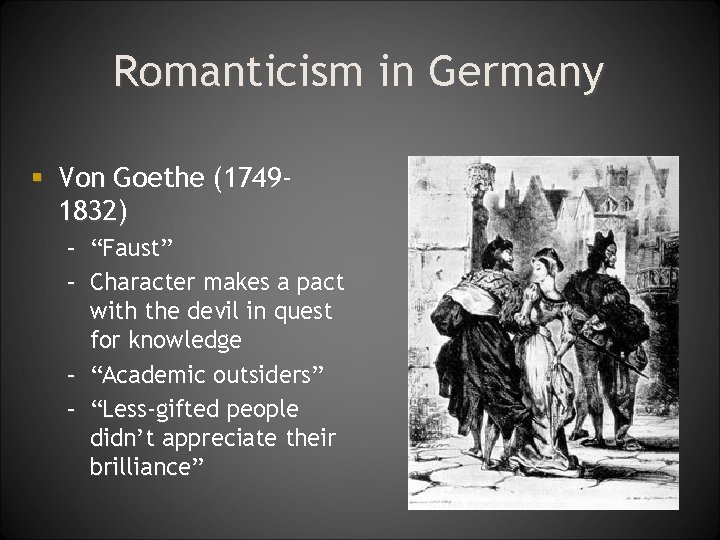
Romanticism in Germany § Von Goethe (17491832) – “Faust” – Character makes a pact with the devil in quest for knowledge – “Academic outsiders” – “Less-gifted people didn’t appreciate their brilliance”
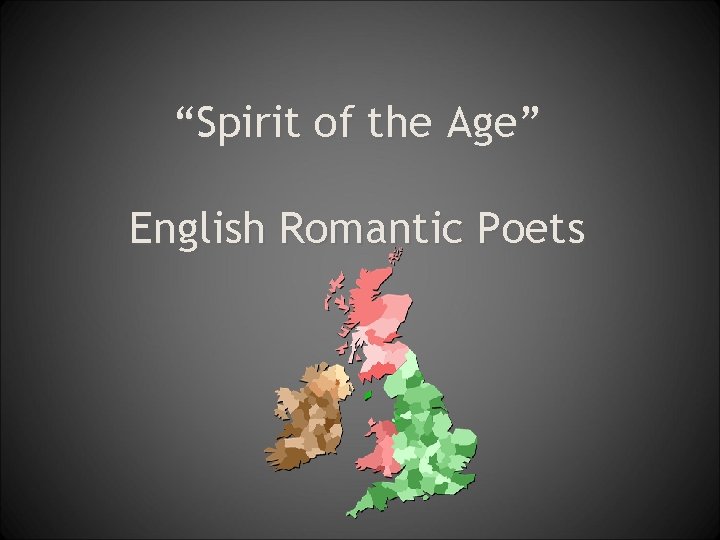
“Spirit of the Age” English Romantic Poets
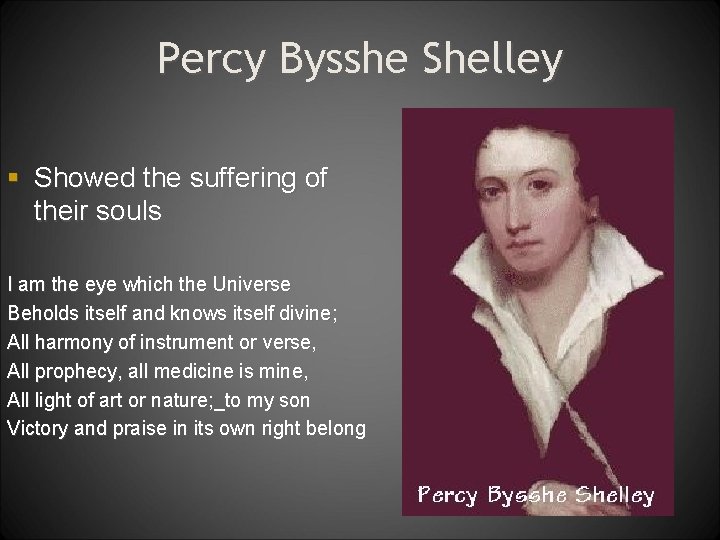
Percy Bysshe Shelley § Showed the suffering of their souls I am the eye which the Universe Beholds itself and knows itself divine; All harmony of instrument or verse, All prophecy, all medicine is mine, All light of art or nature; _to my son Victory and praise in its own right belong
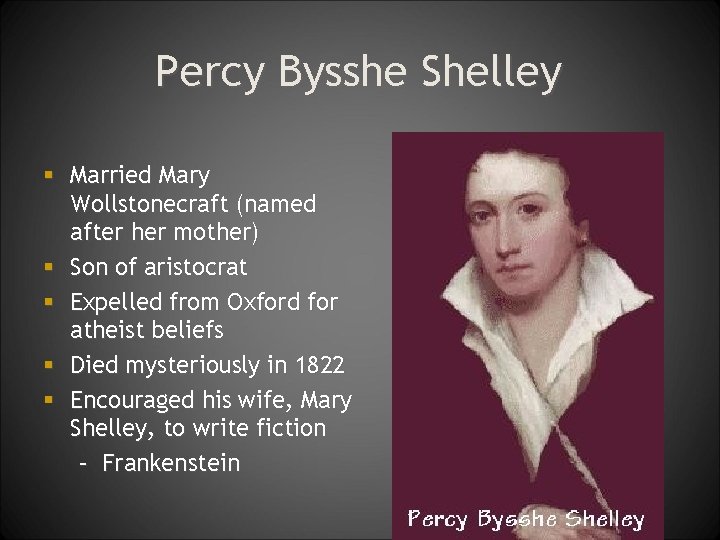
Percy Bysshe Shelley § Married Mary Wollstonecraft (named after her mother) § Son of aristocrat § Expelled from Oxford for atheist beliefs § Died mysteriously in 1822 § Encouraged his wife, Mary Shelley, to write fiction – Frankenstein
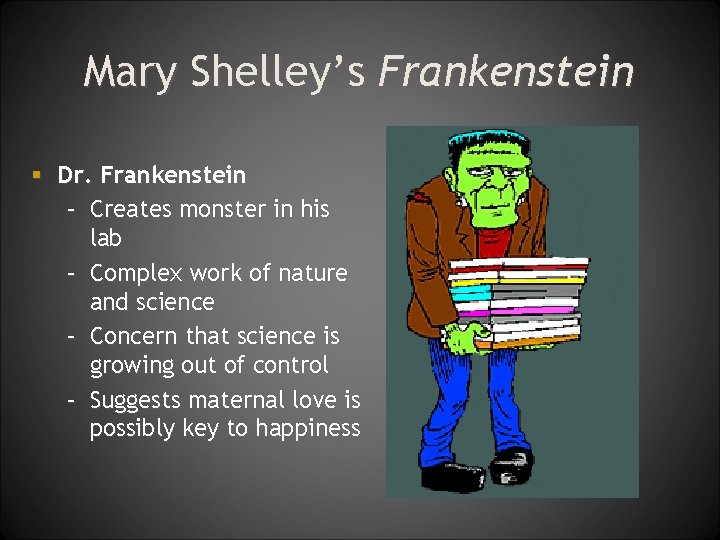
Mary Shelley’s Frankenstein § Dr. Frankenstein – Creates monster in his lab – Complex work of nature and science – Concern that science is growing out of control – Suggests maternal love is possibly key to happiness
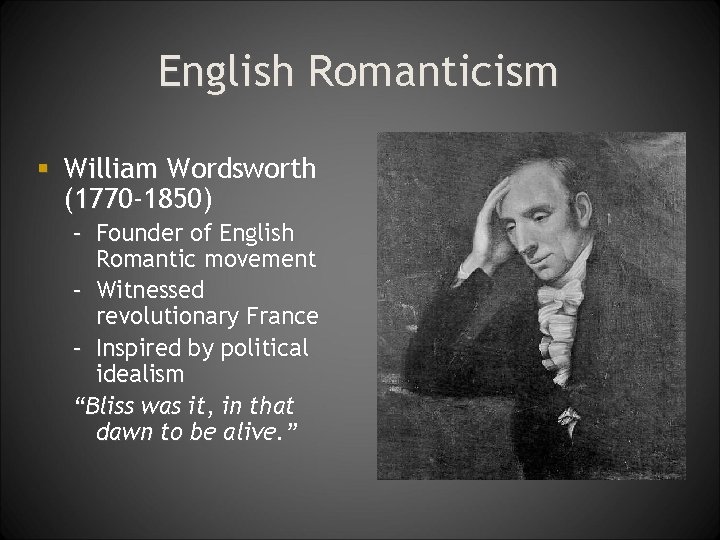
English Romanticism § William Wordsworth (1770 -1850) – Founder of English Romantic movement – Witnessed revolutionary France – Inspired by political idealism “Bliss was it, in that dawn to be alive. ”
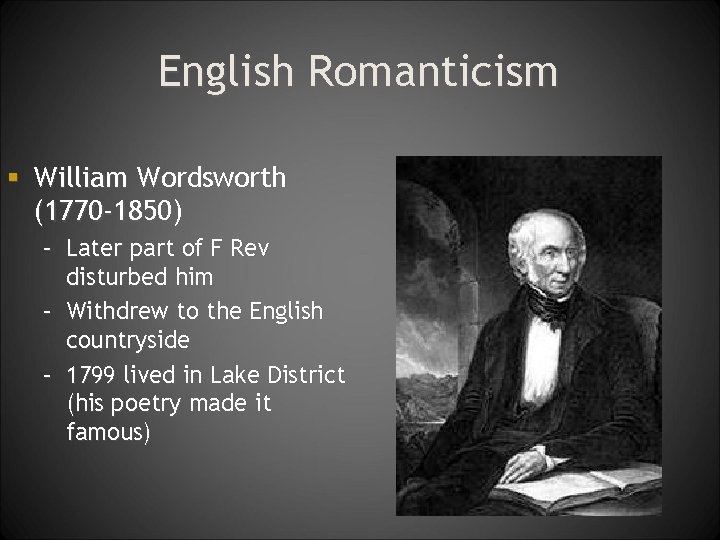
English Romanticism § William Wordsworth (1770 -1850) – Later part of F Rev disturbed him – Withdrew to the English countryside – 1799 lived in Lake District (his poetry made it famous)
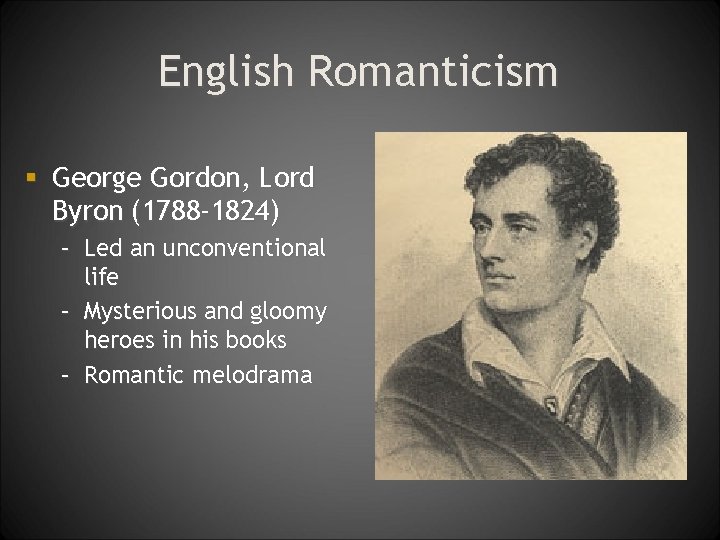
English Romanticism § George Gordon, Lord Byron (1788 -1824) – Led an unconventional life – Mysterious and gloomy heroes in his books – Romantic melodrama
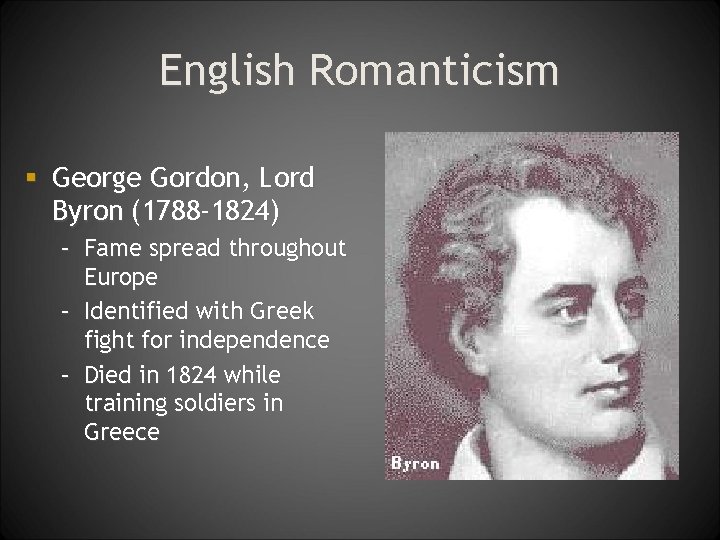
English Romanticism § George Gordon, Lord Byron (1788 -1824) – Fame spread throughout Europe – Identified with Greek fight for independence – Died in 1824 while training soldiers in Greece
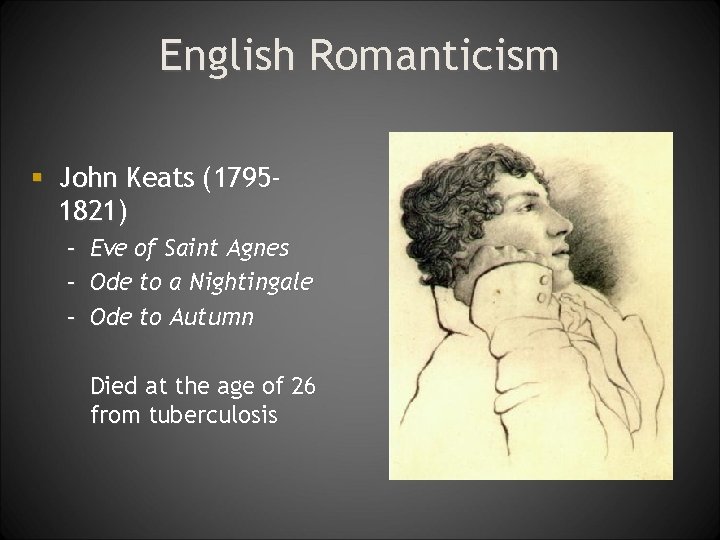
English Romanticism § John Keats (17951821) – – – Eve of Saint Agnes Ode to a Nightingale Ode to Autumn Died at the age of 26 from tuberculosis
“The Horrors of War” Emotion in Romantic Painting
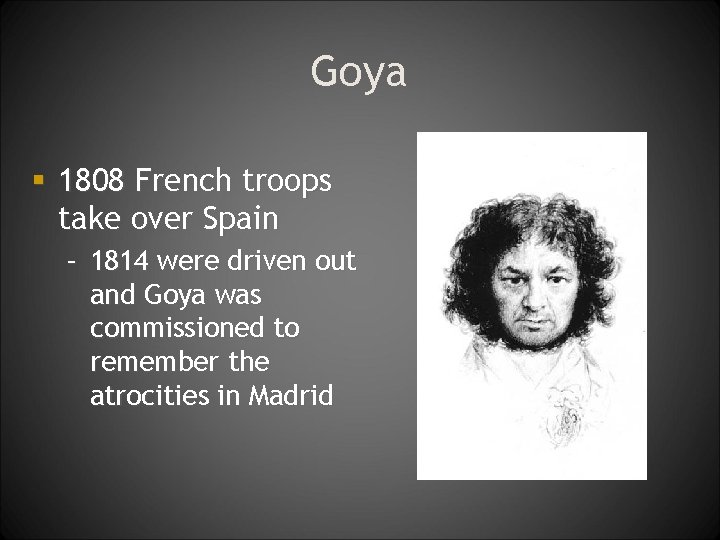
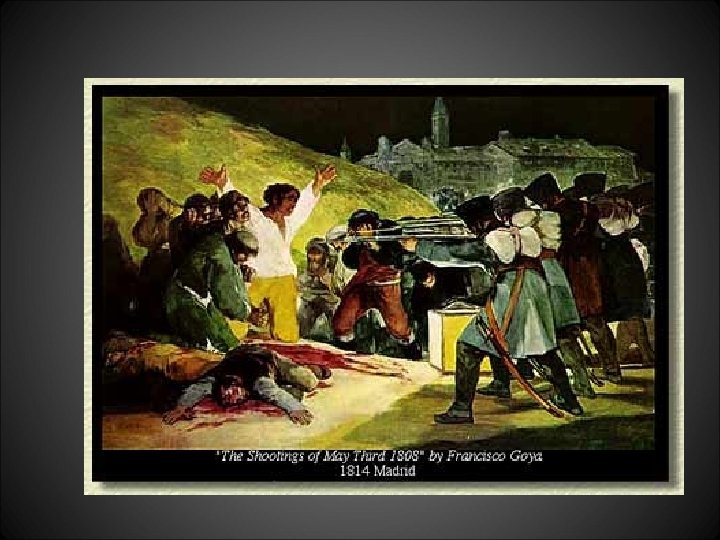
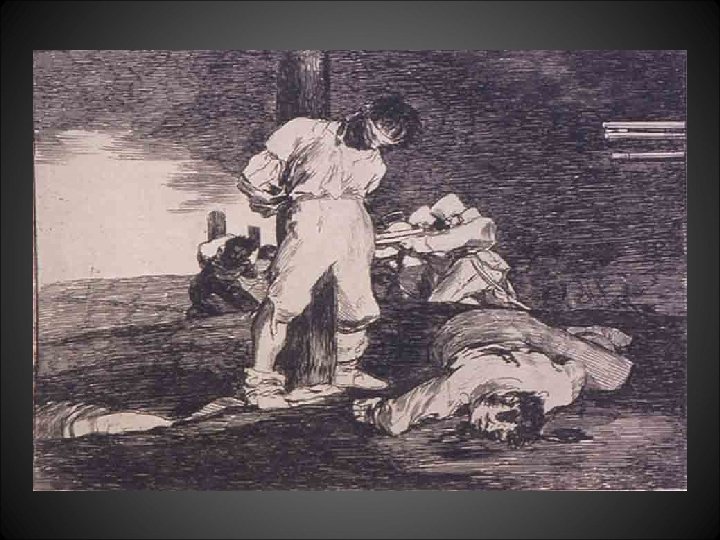
Goya § 1808 French troops take over Spain – 1814 were driven out and Goya was commissioned to remember the atrocities in Madrid
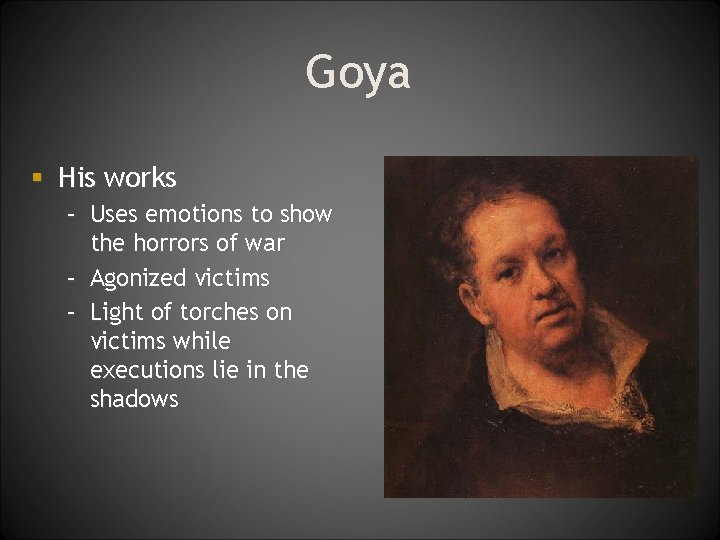
Goya § His works – Uses emotions to show the horrors of war – Agonized victims – Light of torches on victims while executions lie in the shadows
Romantic Painting in France
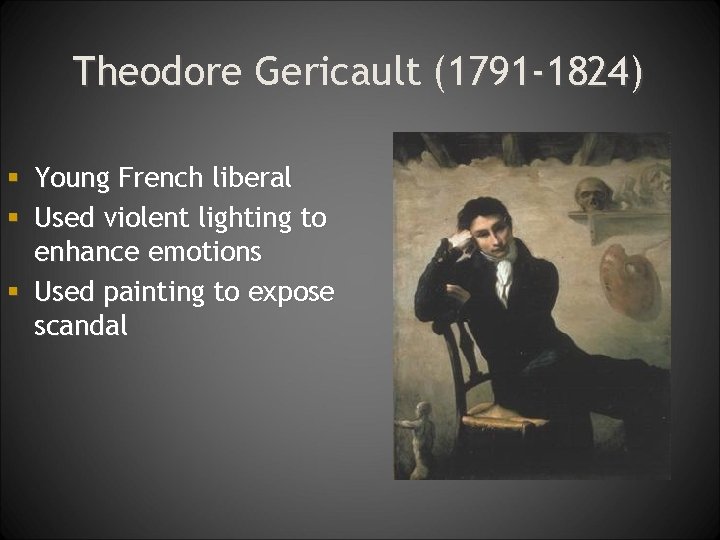
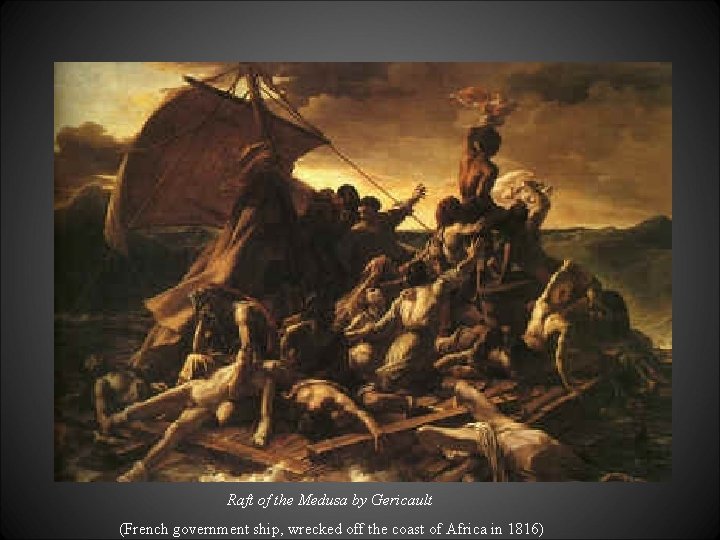
Theodore Gericault (1791 -1824) § Young French liberal § Used violent lighting to enhance emotions § Used painting to expose scandal
Raft of the Medusa by Gericault (French government ship, wrecked off the coast of Africa in 1816)
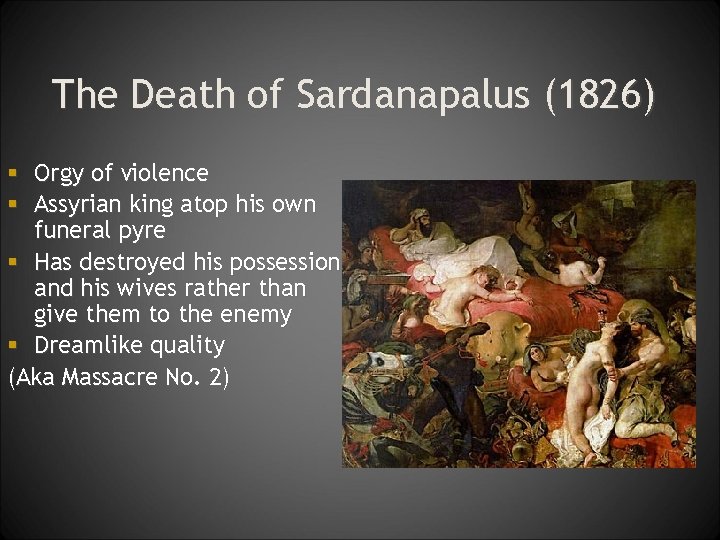
The Death of Sardanapalus (1826) § Orgy of violence § Assyrian king atop his own funeral pyre § Has destroyed his possession and his wives rather than give them to the enemy § Dreamlike quality (Aka Massacre No. 2)
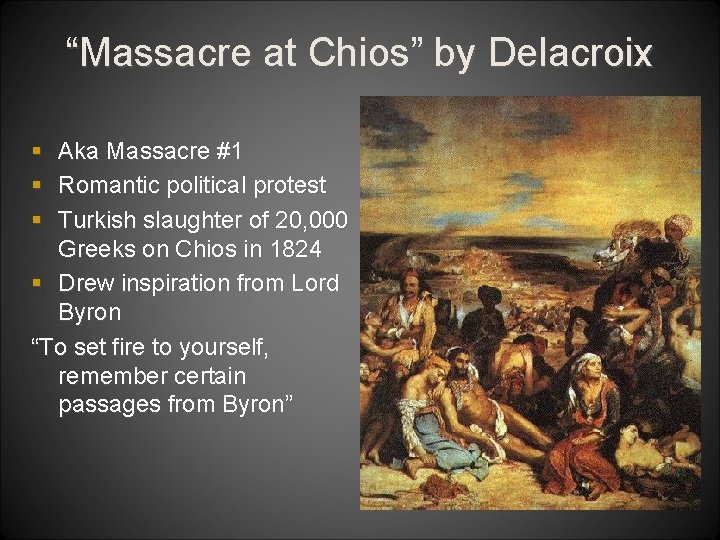
“Massacre at Chios” by Delacroix § Aka Massacre #1 § Romantic political protest § Turkish slaughter of 20, 000 Greeks on Chios in 1824 § Drew inspiration from Lord Byron “To set fire to yourself, remember certain passages from Byron”
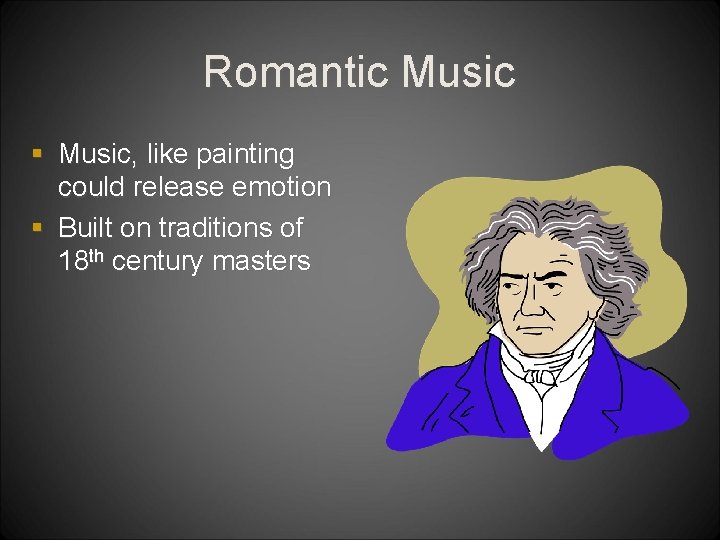
Romantic Music § Music, like painting could release emotion § Built on traditions of 18 th century masters
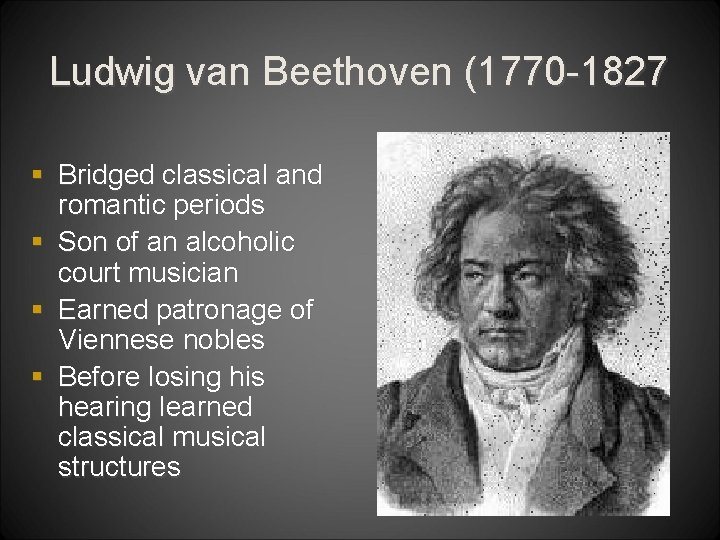
Ludwig van Beethoven (1770 -1827 § Bridged classical and romantic periods § Son of an alcoholic court musician § Earned patronage of Viennese nobles § Before losing his hearing learned classical musical structures
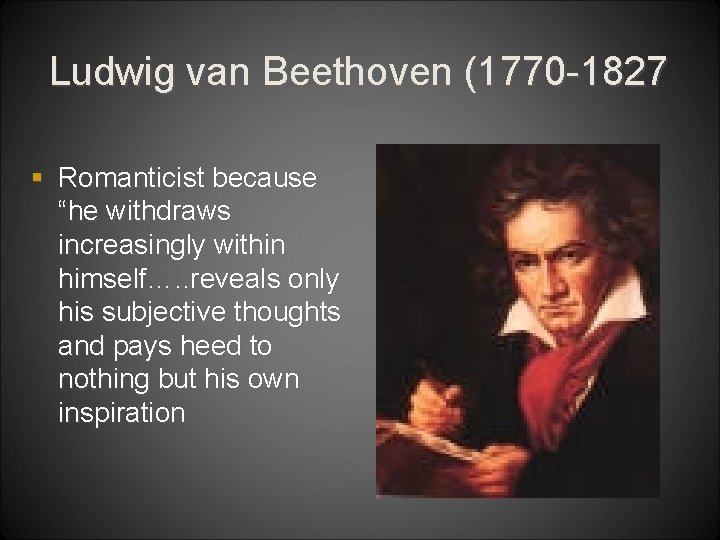
Ludwig van Beethoven (1770 -1827 § Romanticist because “he withdraws increasingly within himself…. . reveals only his subjective thoughts and pays heed to nothing but his own inspiration
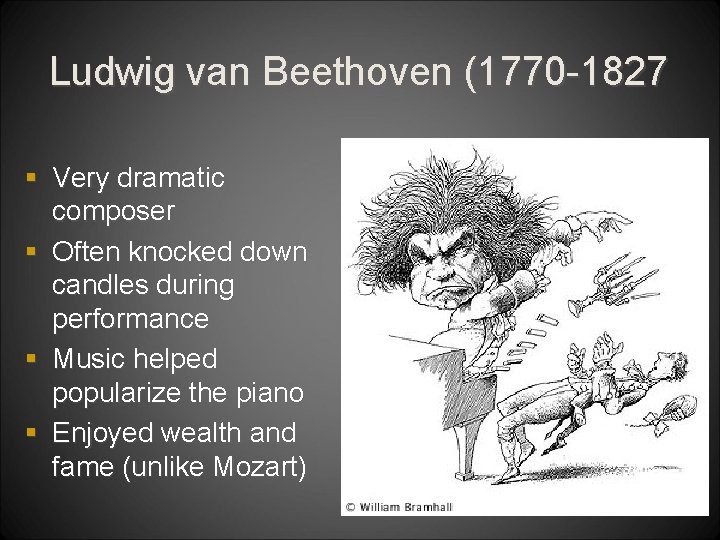
Ludwig van Beethoven (1770 -1827 § Very dramatic composer § Often knocked down candles during performance § Music helped popularize the piano § Enjoyed wealth and fame (unlike Mozart)
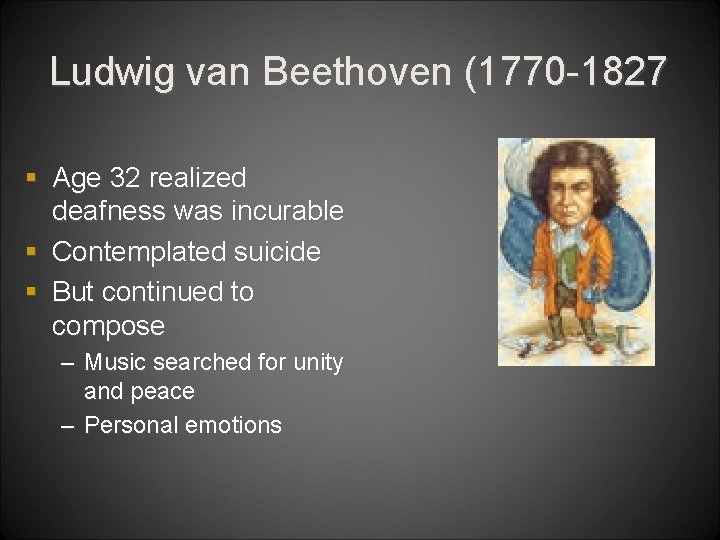
Ludwig van Beethoven (1770 -1827 § Age 32 realized deafness was incurable § Contemplated suicide § But continued to compose – Music searched for unity and peace – Personal emotions
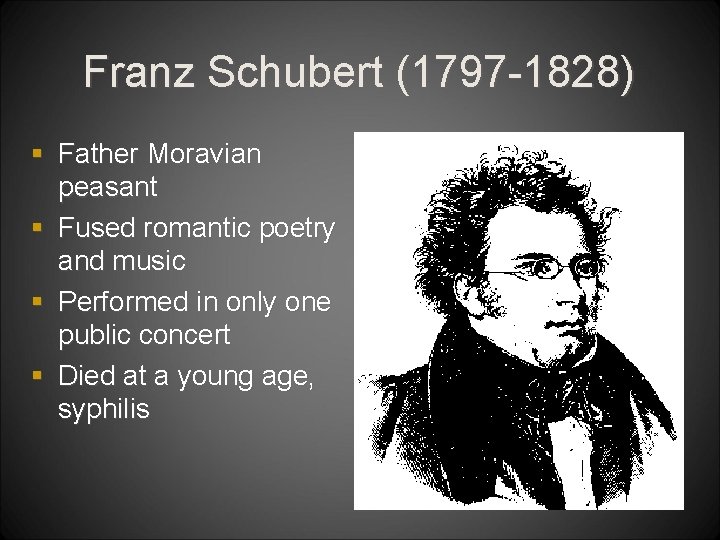
Franz Schubert (1797 -1828) § Father Moravian peasant § Fused romantic poetry and music § Performed in only one public concert § Died at a young age, syphilis
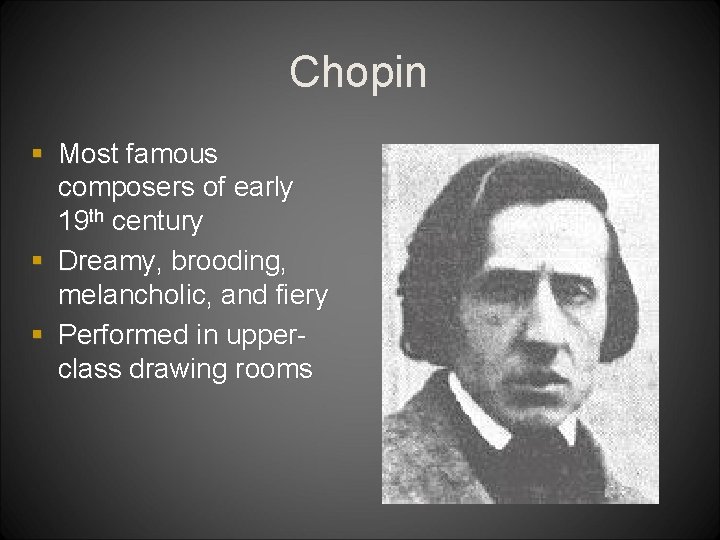
Chopin § Most famous composers of early 19 th century § Dreamy, brooding, melancholic, and fiery § Performed in upperclass drawing rooms
The middle class § Loved classical music § Attended by musically educated listeners § Private concerts took place in middle class homes § Piano playing became common § Children received music lessons