
Romantic View of Nature Romantic Encounters with Nature


- Slides: 65
Romantic View of Nature
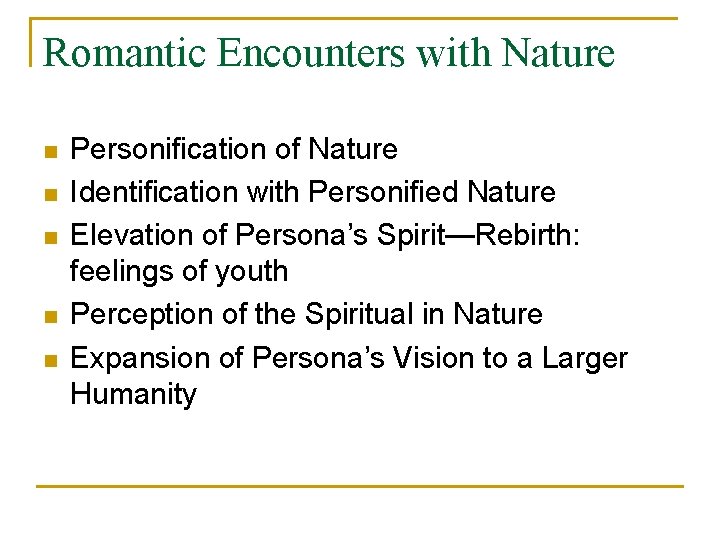
Romantic Encounters with Nature n n n Personification of Nature Identification with Personified Nature Elevation of Persona’s Spirit—Rebirth: feelings of youth Perception of the Spiritual in Nature Expansion of Persona’s Vision to a Larger Humanity
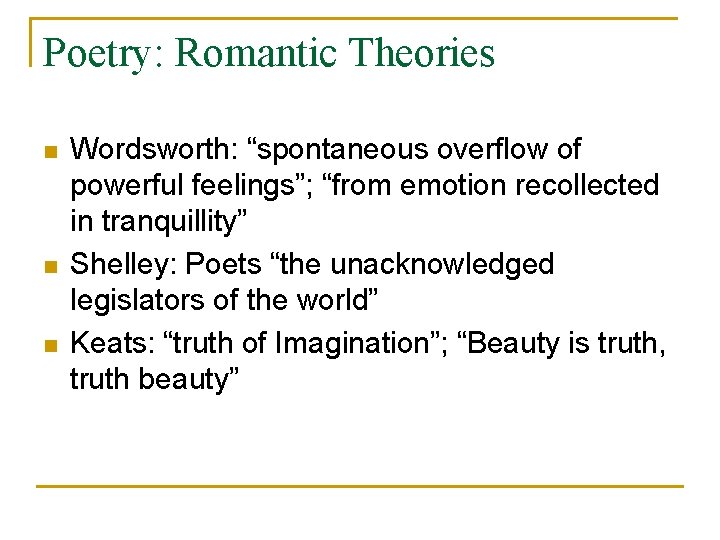
Poetry: Romantic Theories n n n Wordsworth: “spontaneous overflow of powerful feelings”; “from emotion recollected in tranquillity” Shelley: Poets “the unacknowledged legislators of the world” Keats: “truth of Imagination”; “Beauty is truth, truth beauty”
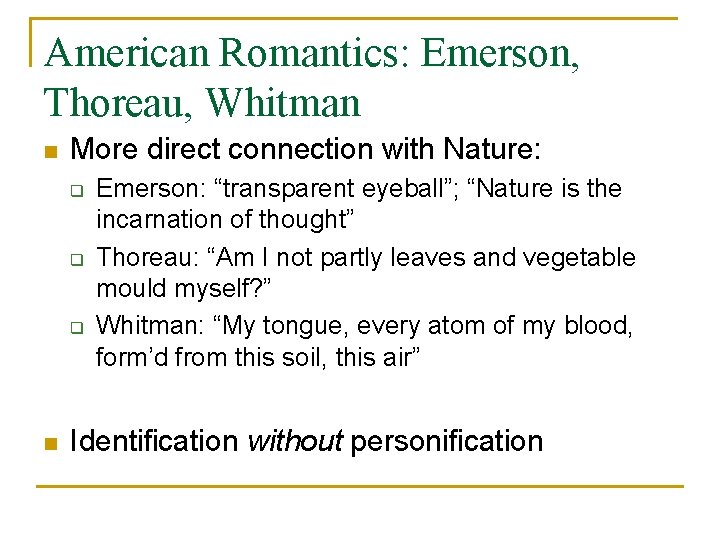
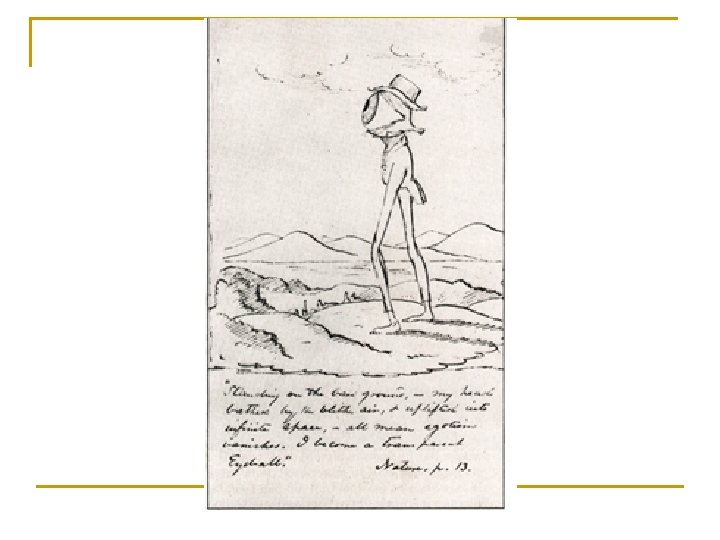
American Romantics: Emerson, Thoreau, Whitman n More direct connection with Nature: q q q n Emerson: “transparent eyeball”; “Nature is the incarnation of thought” Thoreau: “Am I not partly leaves and vegetable mould myself? ” Whitman: “My tongue, every atom of my blood, form’d from this soil, this air” Identification without personification
Romanticism and Landscape Pastoral, Picturesque, Sublime
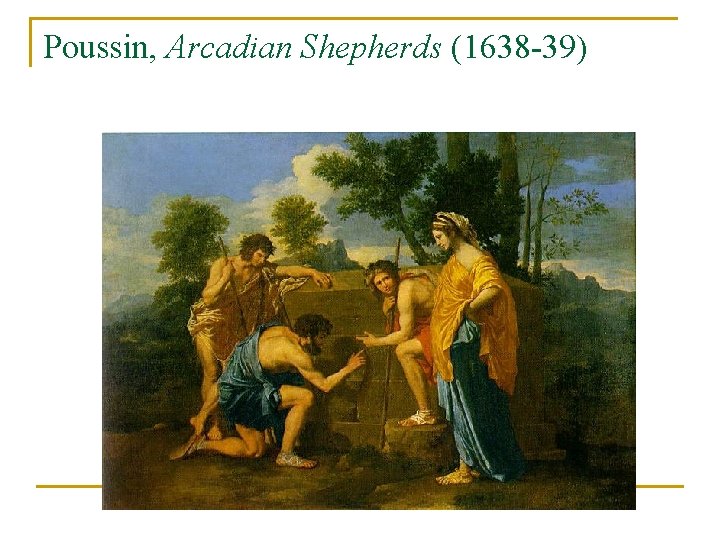
Poussin, Arcadian Shepherds (1638 -39)
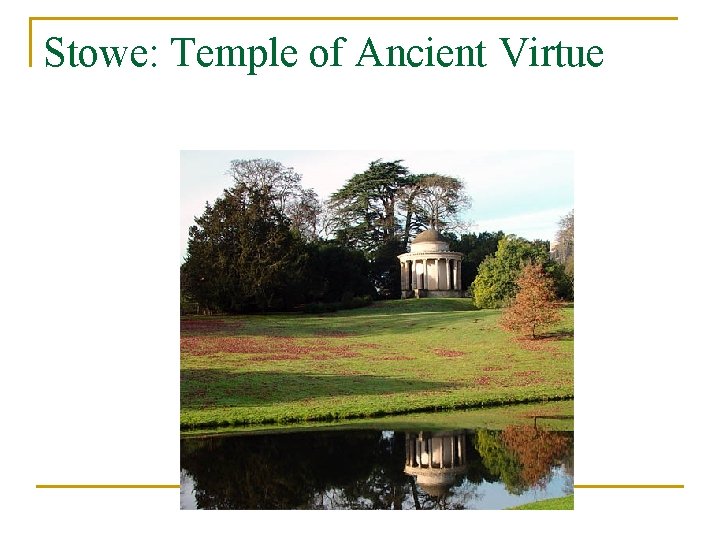
Stowe: Temple of Ancient Virtue
English Landscape Tradition n Edmund Burke, Philosophical Inquiry into the Origins of Our Ideas of the Sublime and the Beautiful (1757 -59) William Gilpin, Three Essays on Picturesque Beauty (1794) Uvedale Price, Essay on the Picturesque (1794)
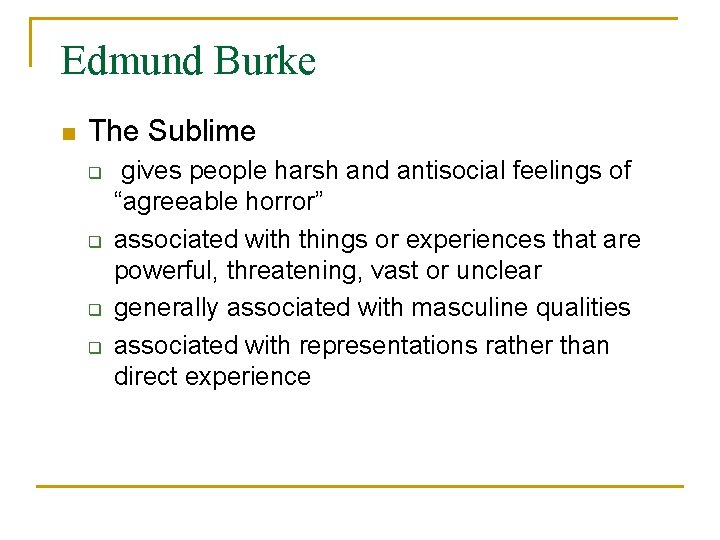
Edmund Burke n The Sublime q q gives people harsh and antisocial feelings of “agreeable horror” associated with things or experiences that are powerful, threatening, vast or unclear generally associated with masculine qualities associated with representations rather than direct experience
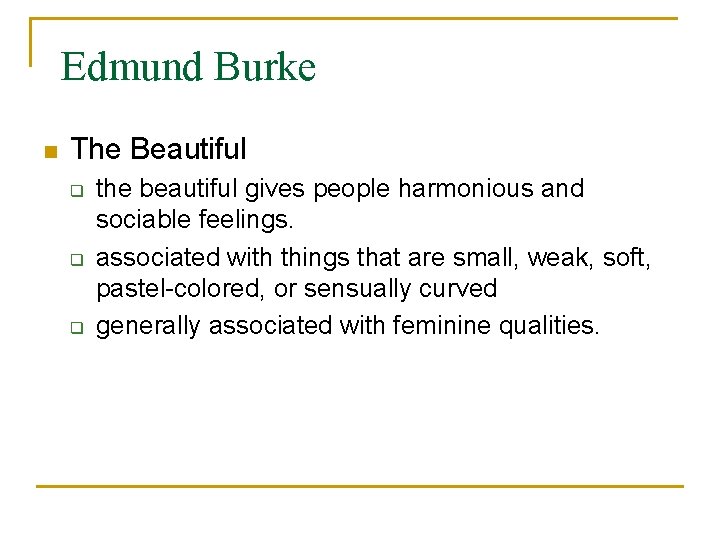
Edmund Burke n The Beautiful q q q the beautiful gives people harmonious and sociable feelings. associated with things that are small, weak, soft, pastel-colored, or sensually curved generally associated with feminine qualities.
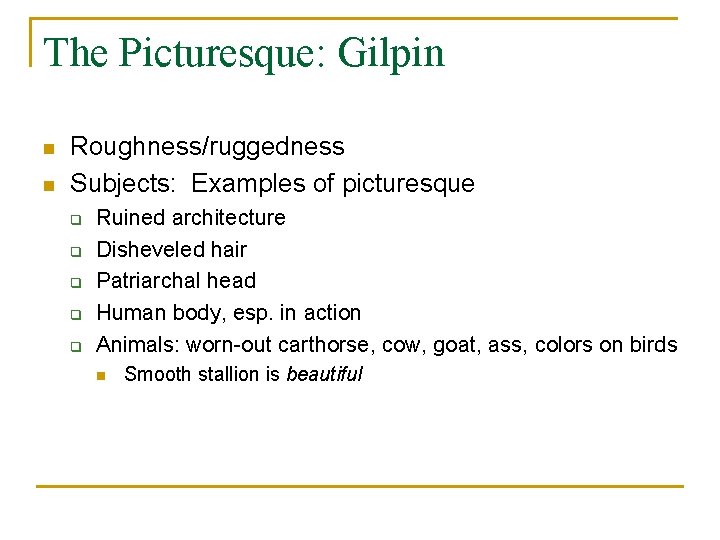
The Picturesque: Gilpin n n Roughness/ruggedness Subjects: Examples of picturesque q q q Ruined architecture Disheveled hair Patriarchal head Human body, esp. in action Animals: worn-out carthorse, cow, goat, ass, colors on birds n Smooth stallion is beautiful
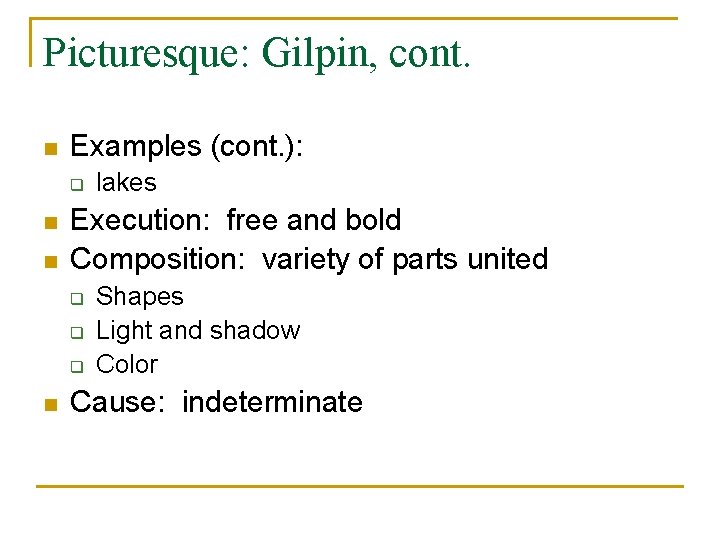
Picturesque: Gilpin, cont. n Examples (cont. ): q n n Execution: free and bold Composition: variety of parts united q q q n lakes Shapes Light and shadow Color Cause: indeterminate
The Picturesque: Price n n n Roughness, sudden variation (4) Associated with ruins, not with “the highest order of created beings” (8) Examples: q q q Gothic architecture Hovels, mills, insides of old barns, stables, etc. “limbs of huge trees shattered by lightning or tempestuous winds” (6) Animals: Ass, sheep, deer, lion (more than lioness) ruffled birds (6 -8) People: gypsies and beggars (8)
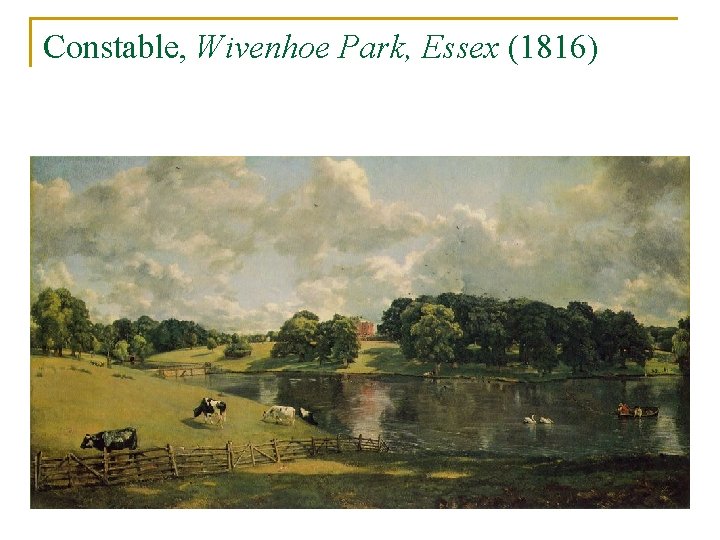
Constable, Wivenhoe Park, Essex (1816)
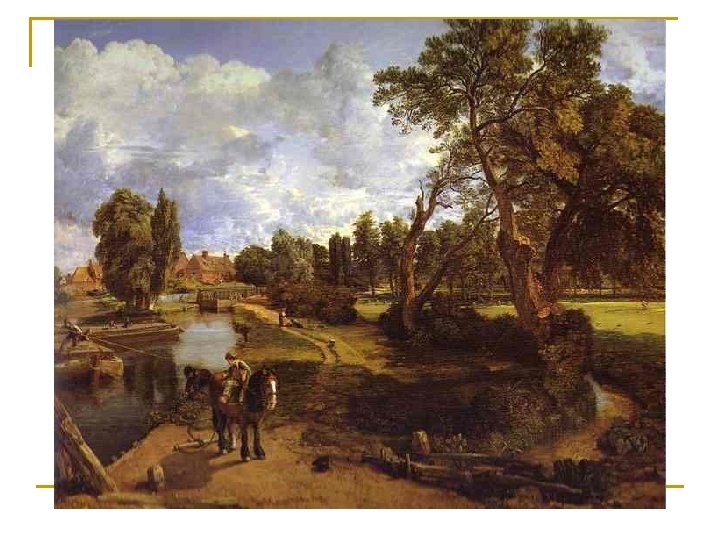
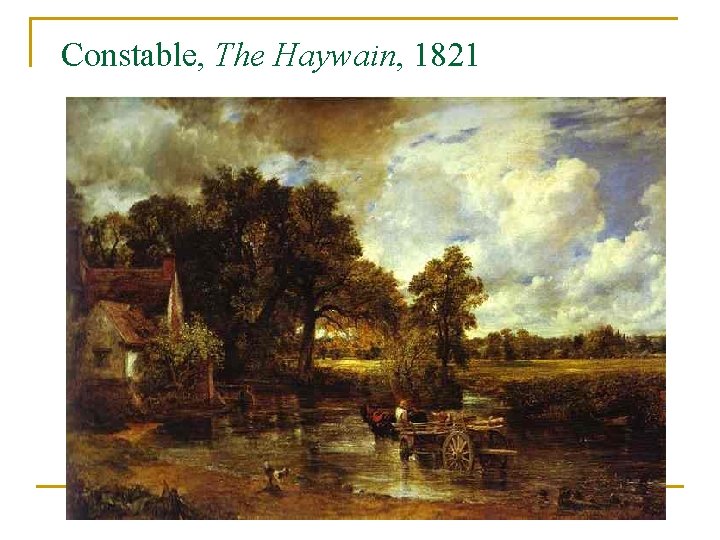
Constable, The Haywain, 1821
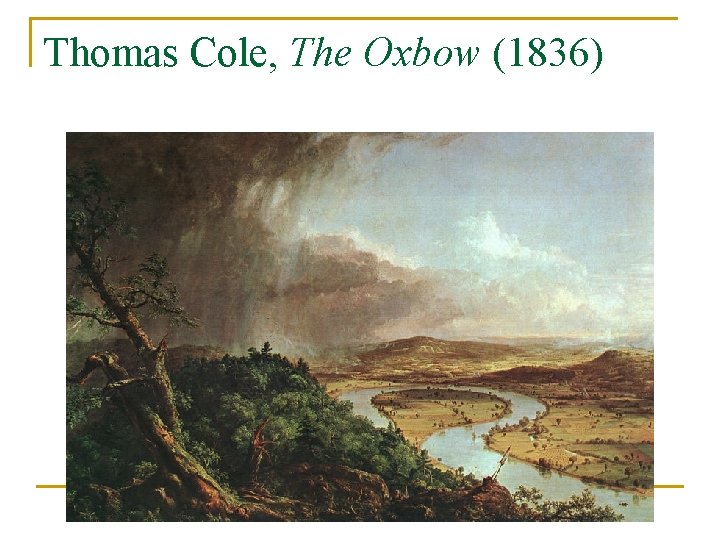
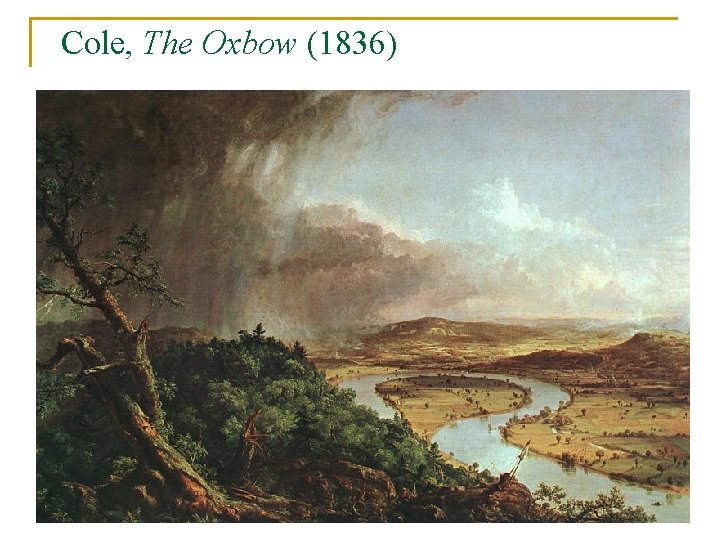
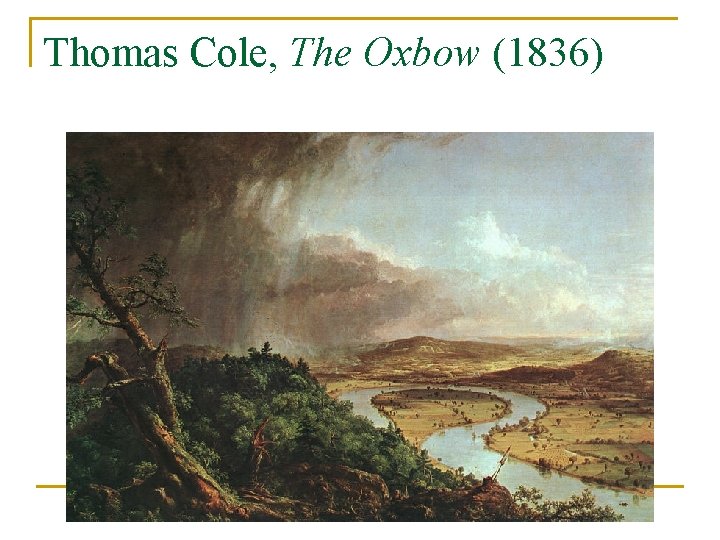
Thomas Cole, The Oxbow (1836)
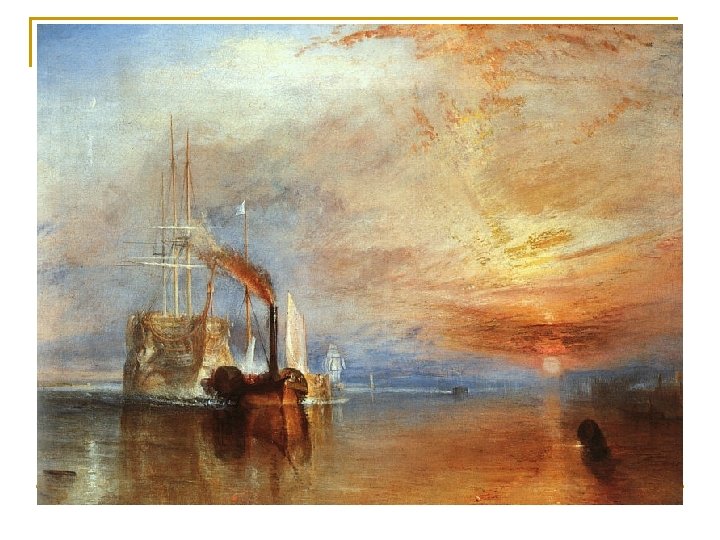
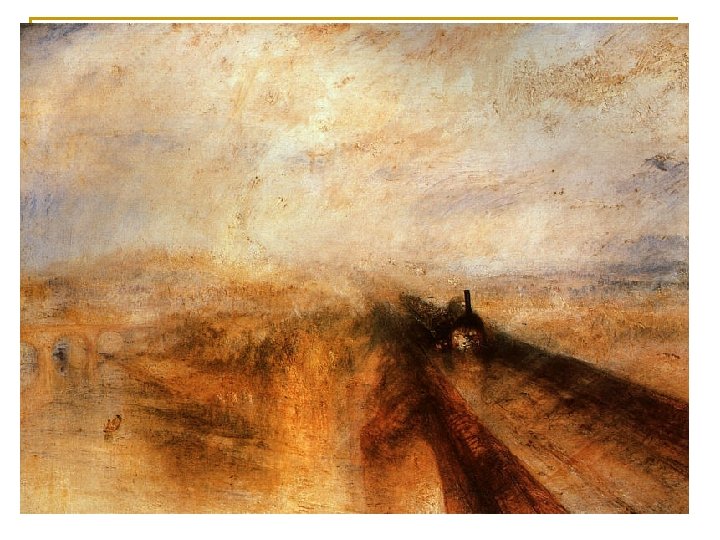
n Turner
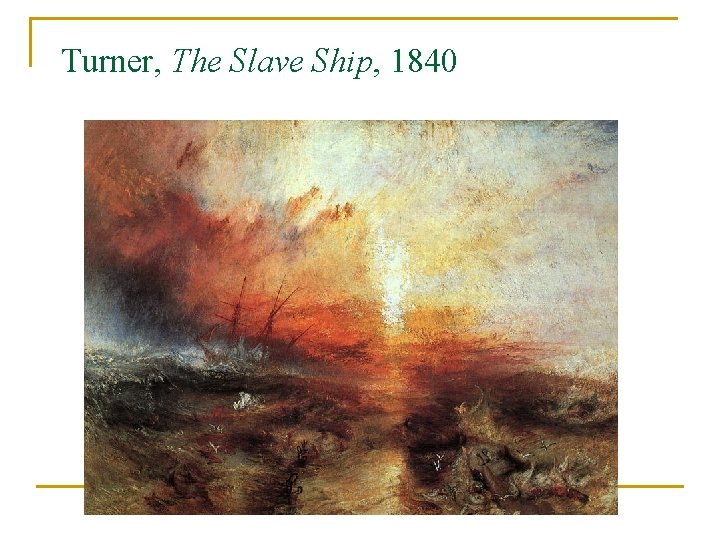
Turner, The Slave Ship, 1840
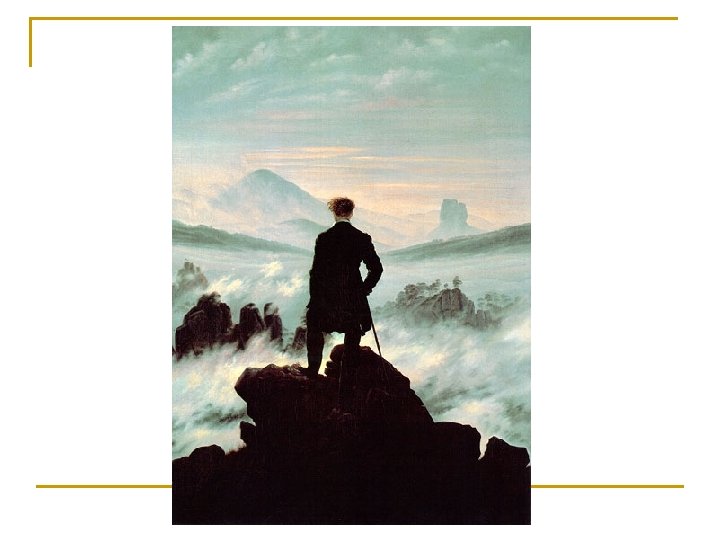
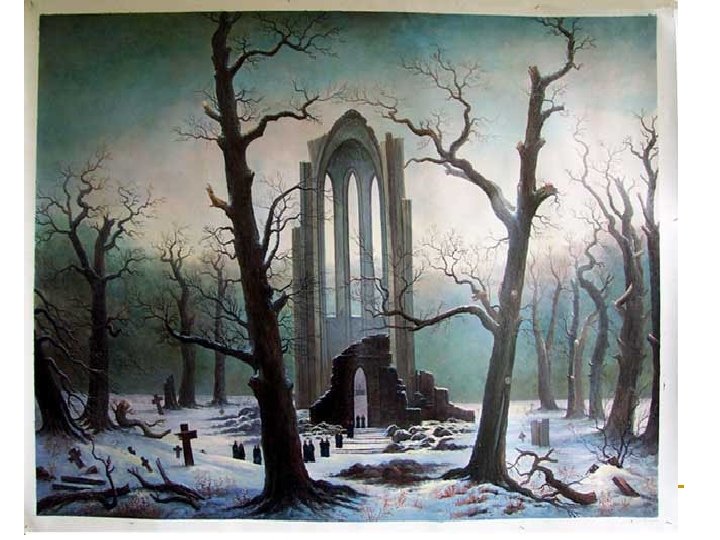
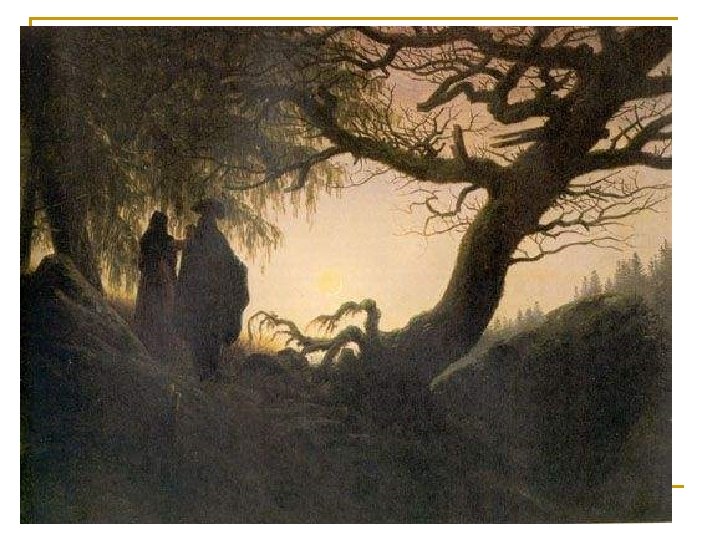
n Friedrich
th 19 Earlier C. American Literature and Painting The American Landscape
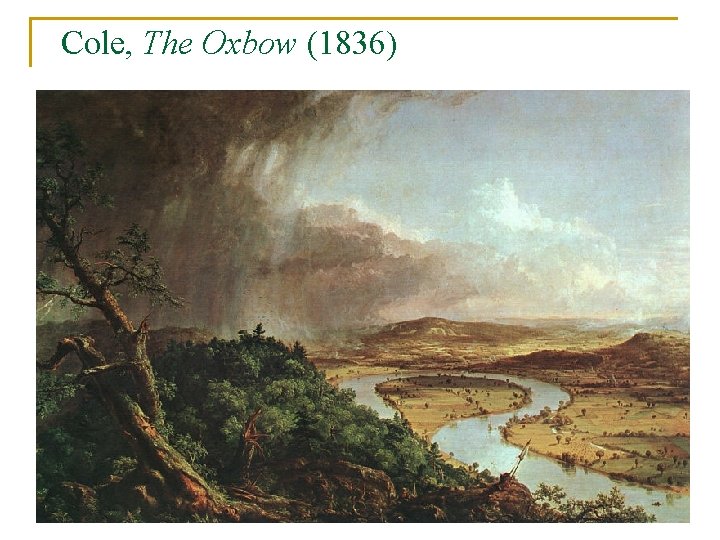
Cole, The Oxbow (1836)
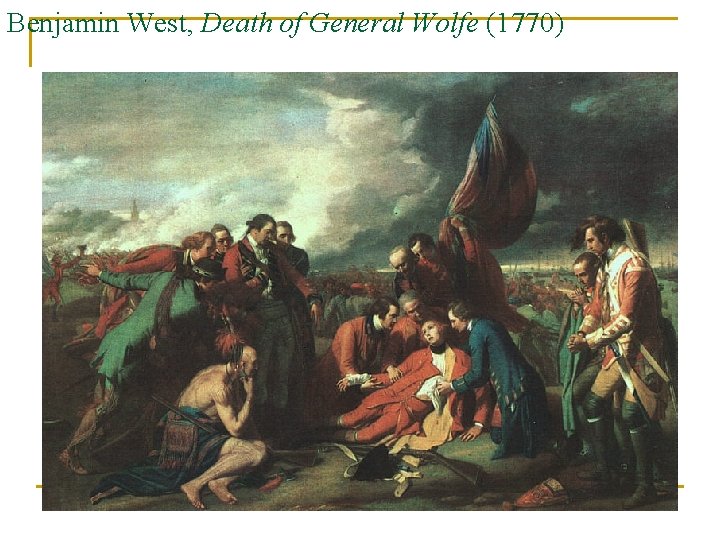
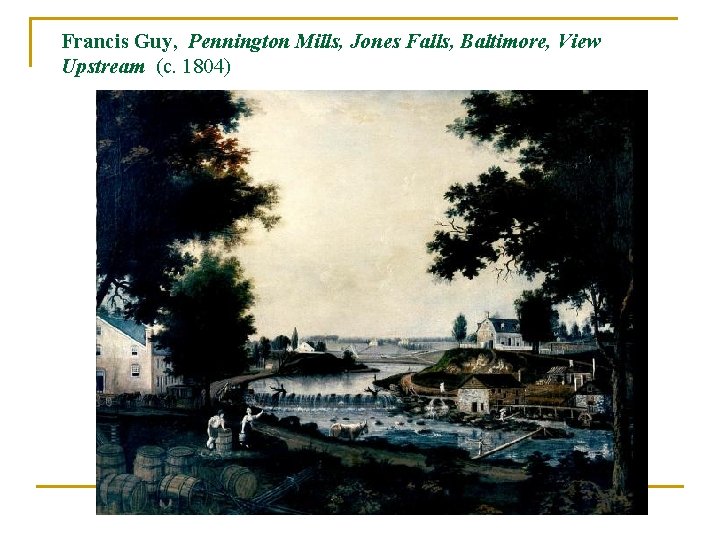
American Landscape Painting n In the U. S. before 1820, landscape painting was considered inferior to history painting and portraiture. n Landscape paintings were informational views of estates or cities: they were not considered great art.
Benjamin West, Death of General Wolfe (1770)
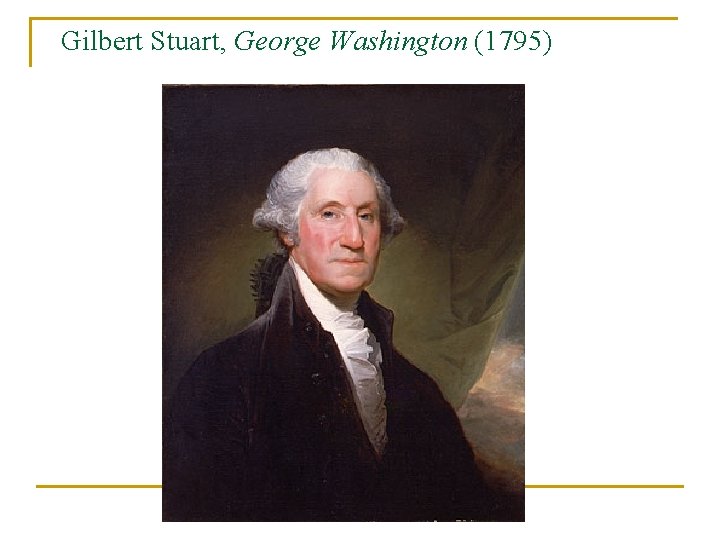
Gilbert Stuart, George Washington (1795)
Francis Guy, Pennington Mills, Jones Falls, Baltimore, View Upstream (c. 1804)
American Landscape Painting n n However, between the 1820 s and the Civil War, landscape painting became the most important genre of American painting—the genre most associated with American identity. Thomas Cole was largely responsible for this change.
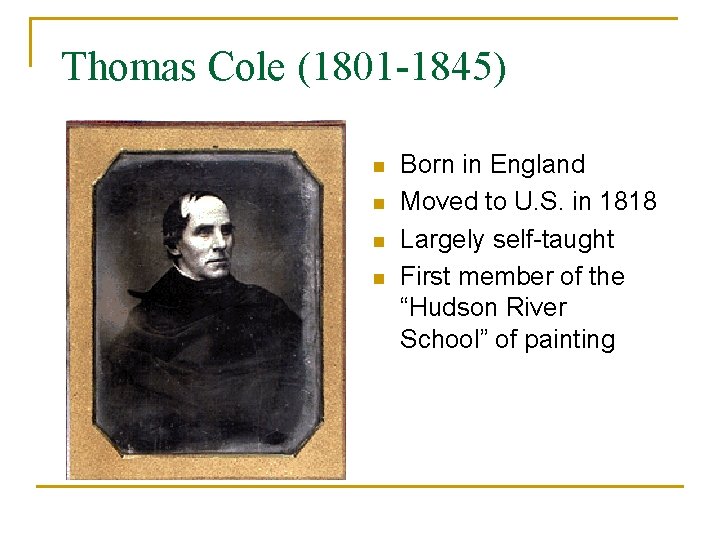
Thomas Cole (1801 -1845) n n Born in England Moved to U. S. in 1818 Largely self-taught First member of the “Hudson River School” of painting
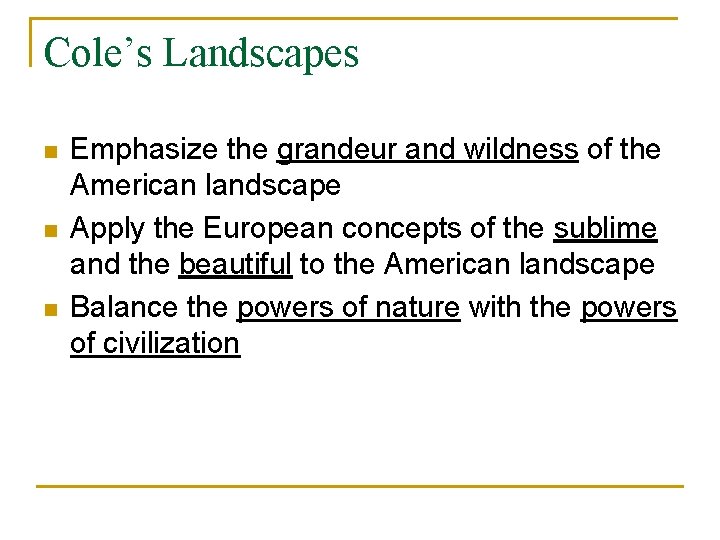
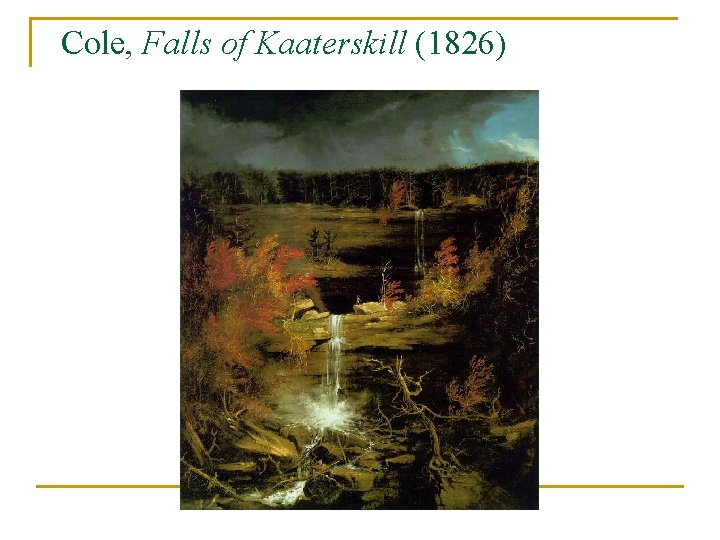
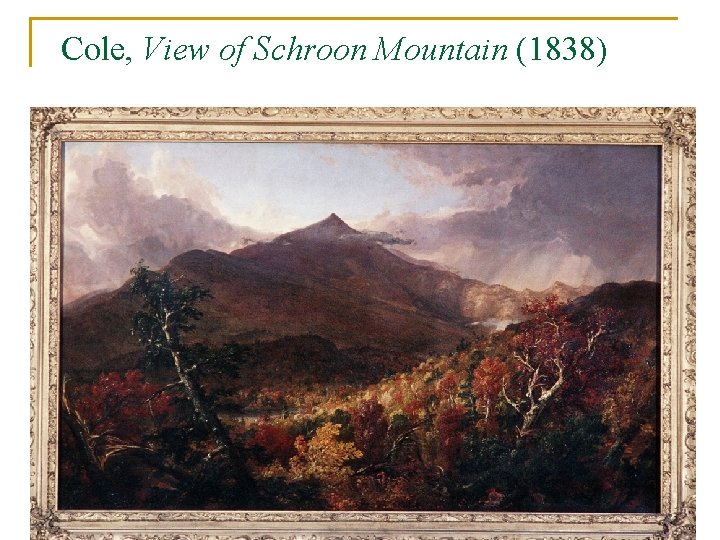
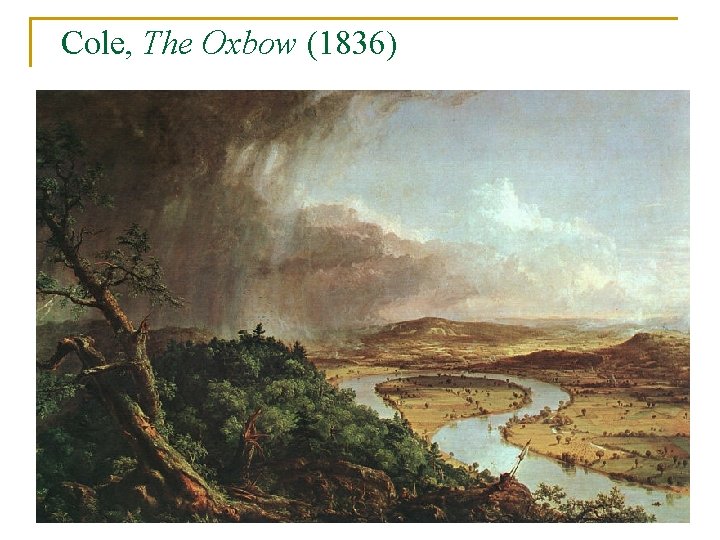
Cole’s Landscapes n n n Emphasize the grandeur and wildness of the American landscape Apply the European concepts of the sublime and the beautiful to the American landscape Balance the powers of nature with the powers of civilization
Cole, Falls of Kaaterskill (1826)
Cole, View of Schroon Mountain (1838)
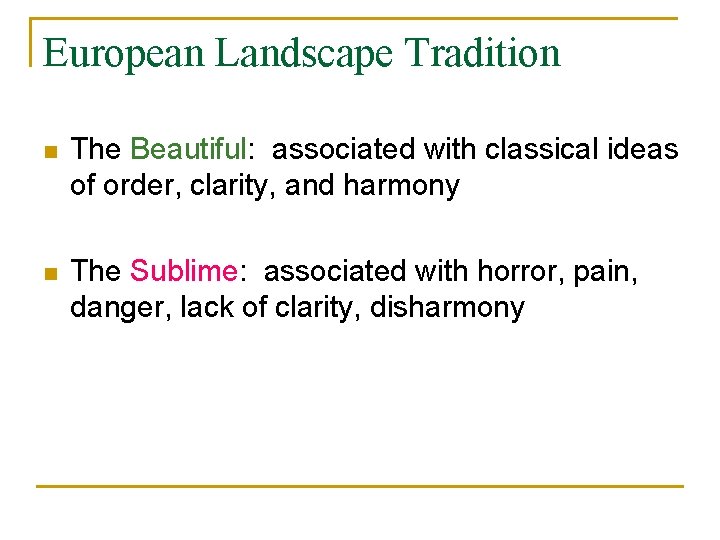
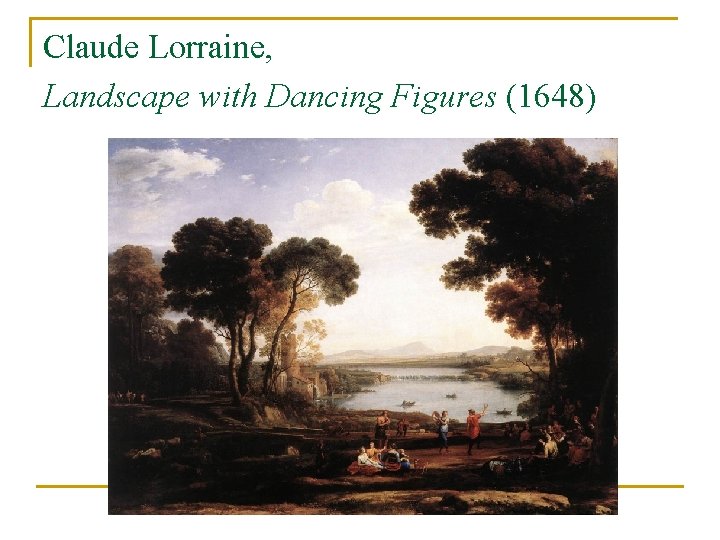
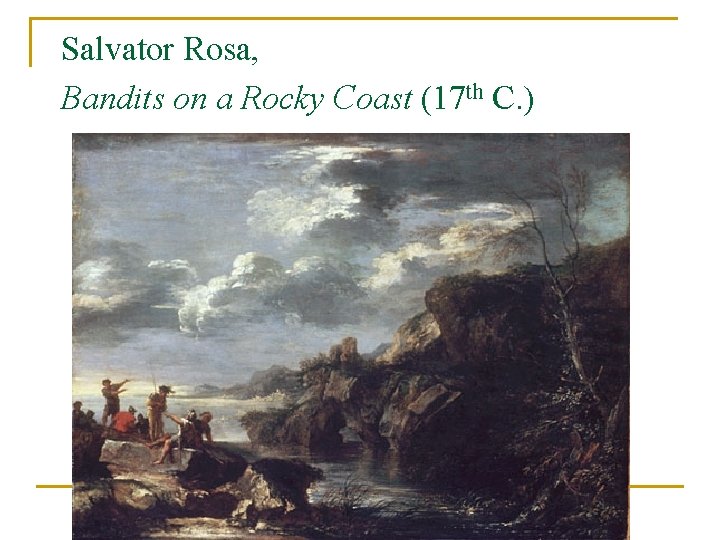
European Landscape Tradition n The Beautiful: associated with classical ideas of order, clarity, and harmony n The Sublime: associated with horror, pain, danger, lack of clarity, disharmony
Claude Lorraine, Landscape with Dancing Figures (1648)
Salvator Rosa, Bandits on a Rocky Coast (17 th C. )
Cole, The Oxbow (1836)
Cole, The Oxbow (1836)
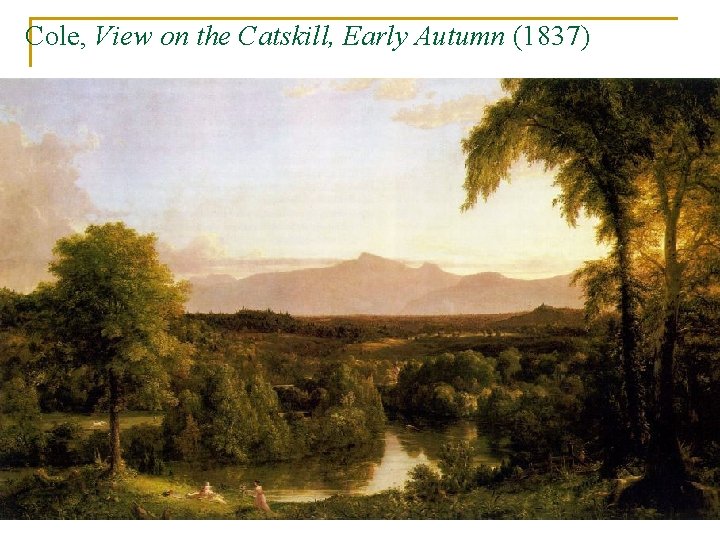
Cole, View on the Catskill, Early Autumn (1837)
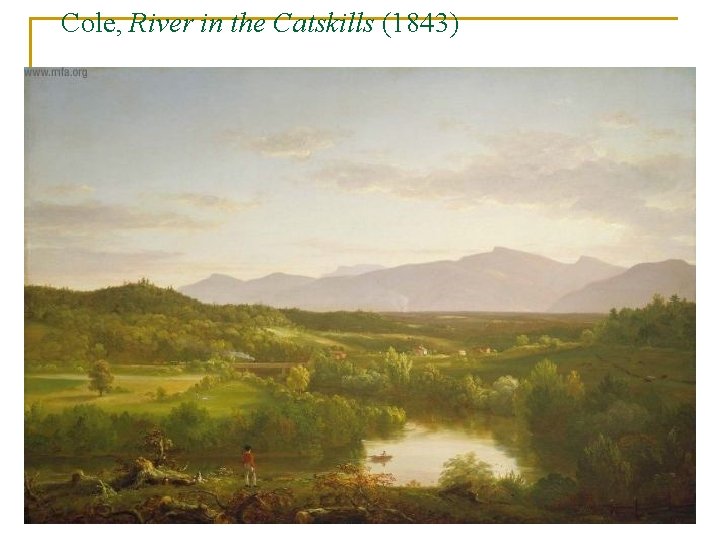
Cole, River in the Catskills (1843)
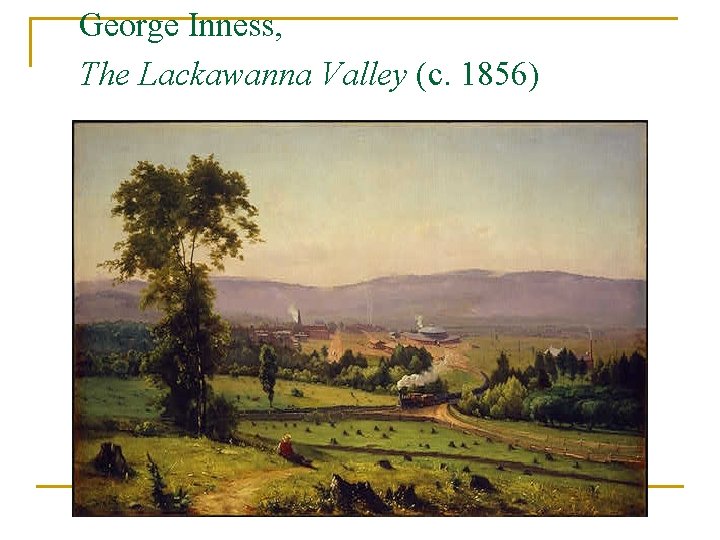
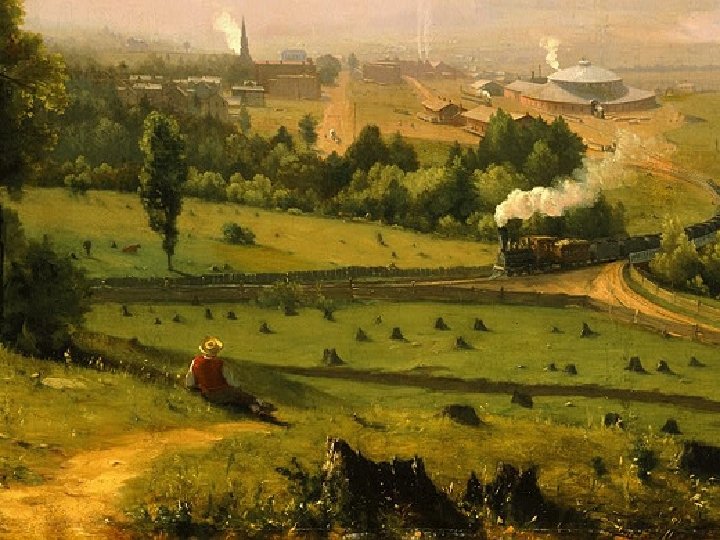
George Inness, The Lackawanna Valley (c. 1856)
Transcendentalism and Luminism
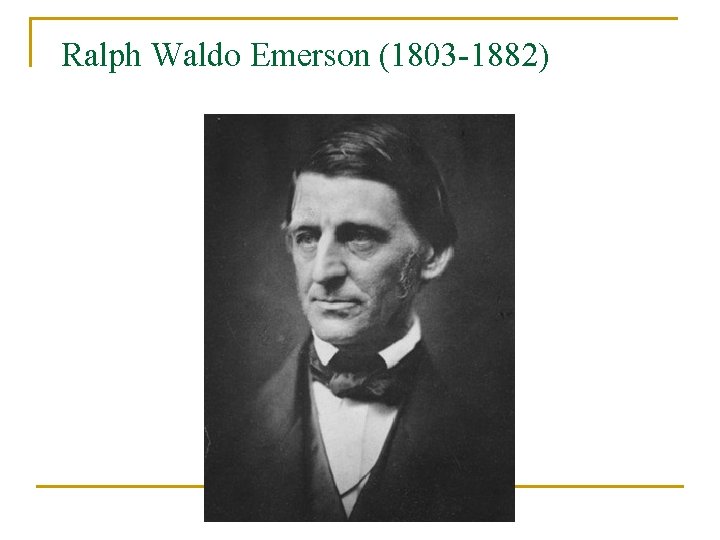
Ralph Waldo Emerson (1803 -1882)
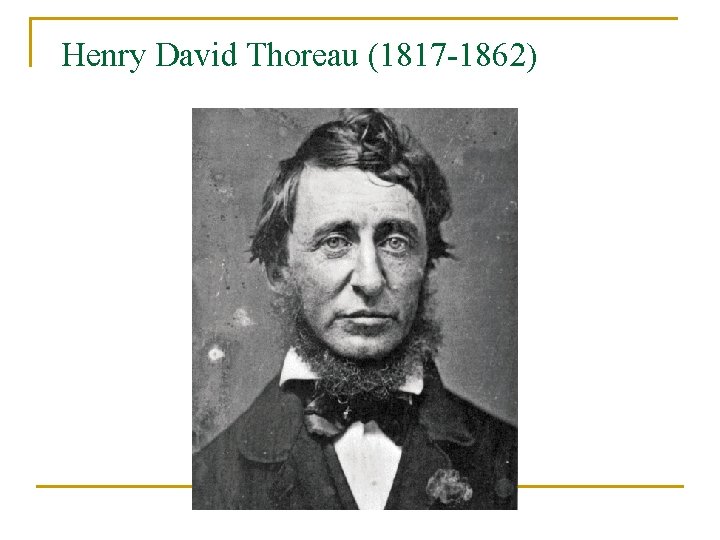
Henry David Thoreau (1817 -1862)
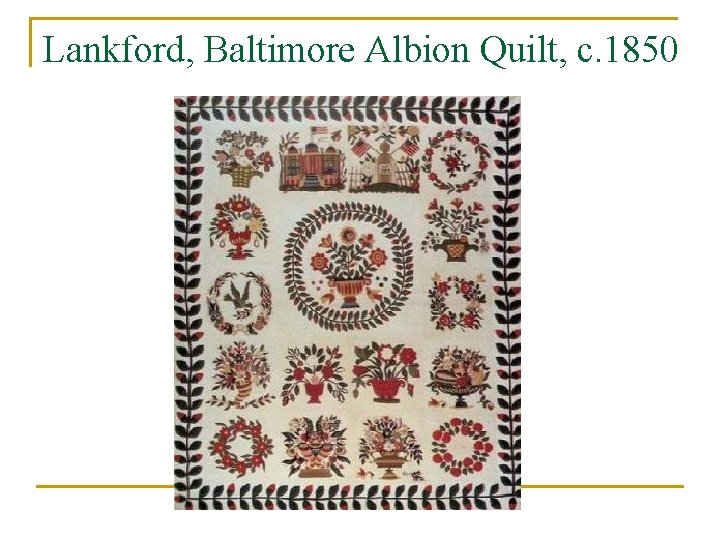
Lankford, Baltimore Albion Quilt, c. 1850
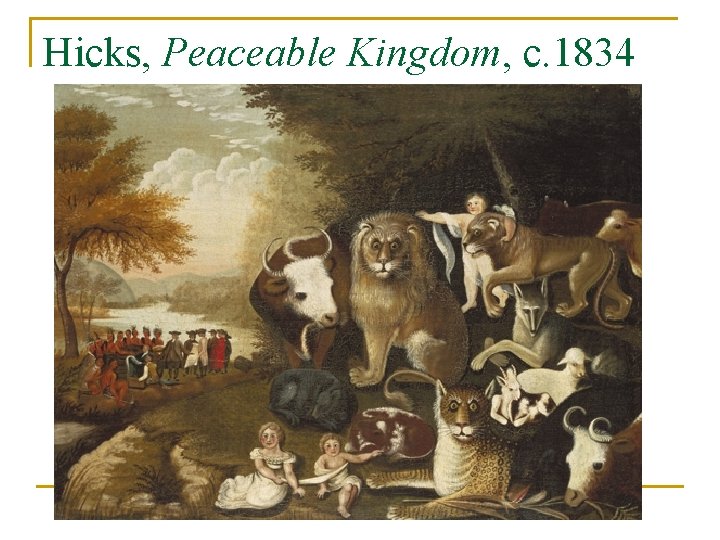
Hicks, Peaceable Kingdom, c. 1834
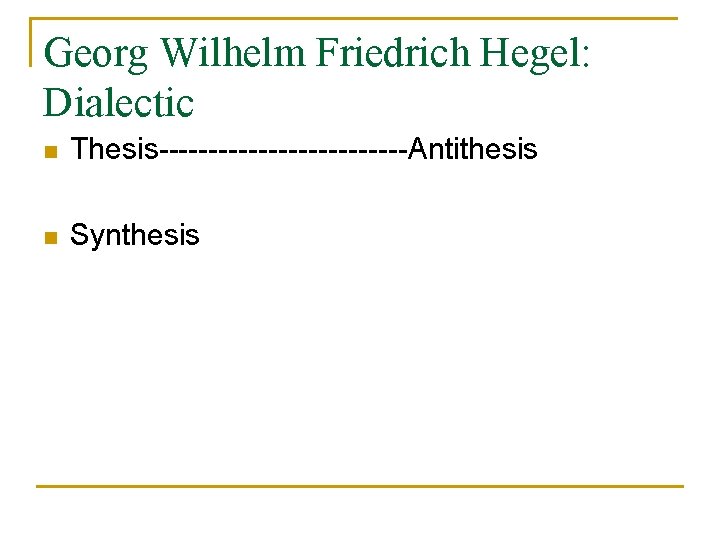
Georg Wilhelm Friedrich Hegel: Dialectic n Thesis-------------Antithesis n Synthesis
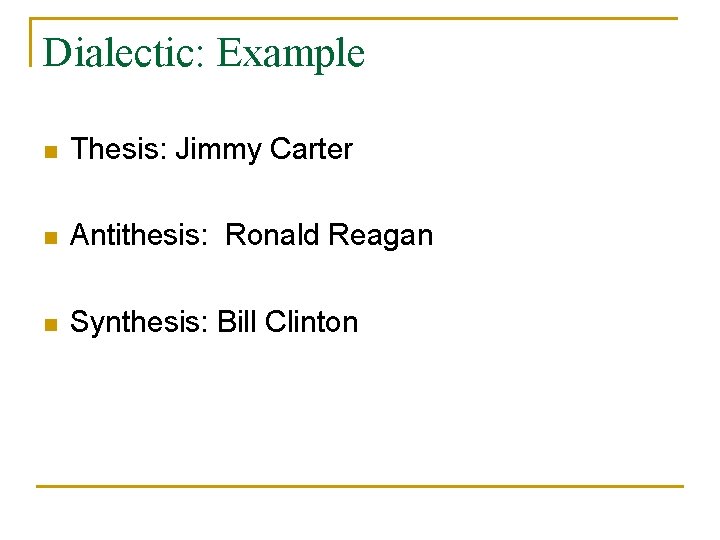
Dialectic: Example n Thesis: Jimmy Carter n Antithesis: Ronald Reagan n Synthesis: Bill Clinton
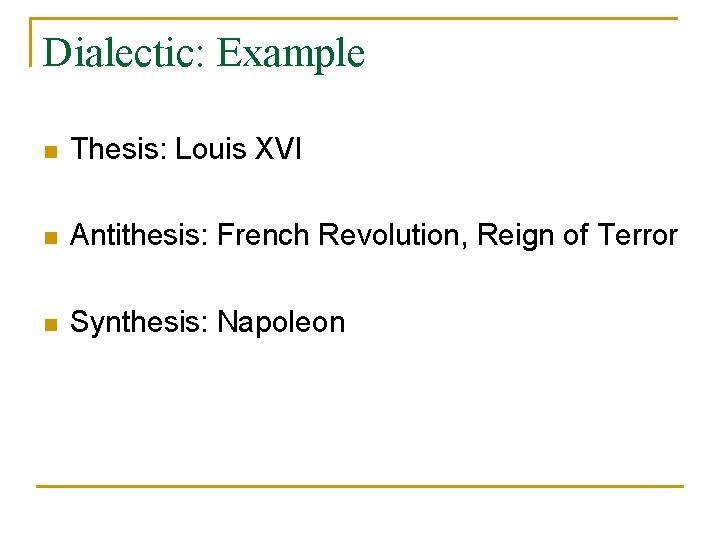
Dialectic: Example n Thesis: Louis XVI n Antithesis: French Revolution, Reign of Terror n Synthesis: Napoleon
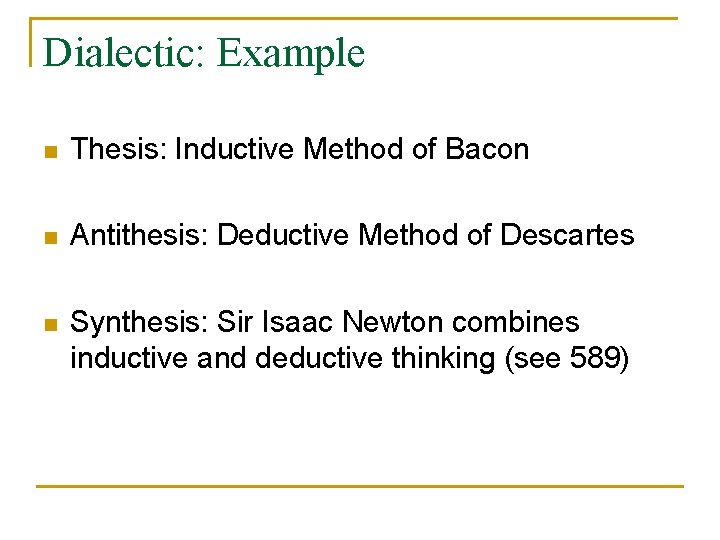
Dialectic: Example n Thesis: Inductive Method of Bacon n Antithesis: Deductive Method of Descartes n Synthesis: Sir Isaac Newton combines inductive and deductive thinking (see 589)
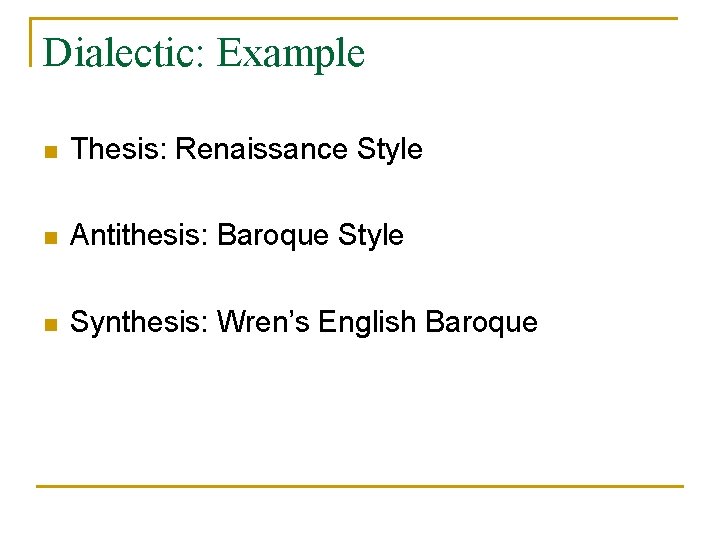
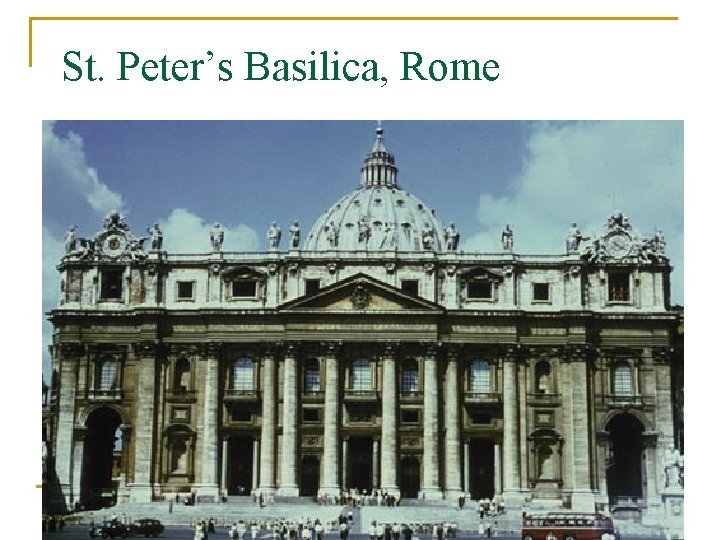
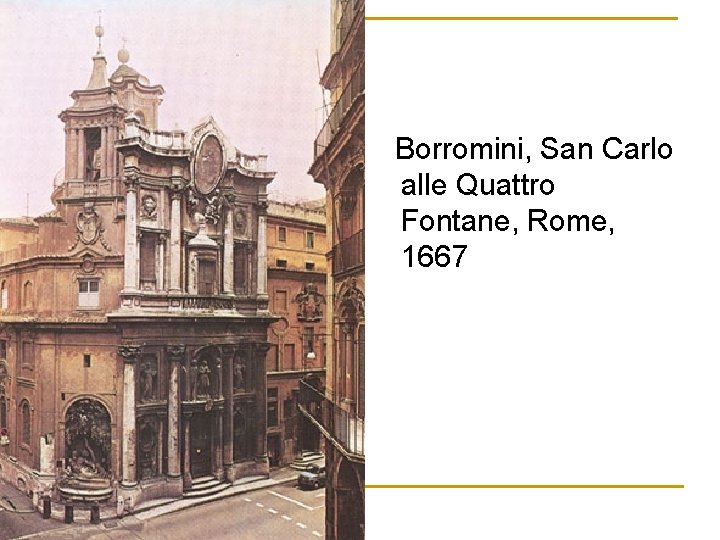
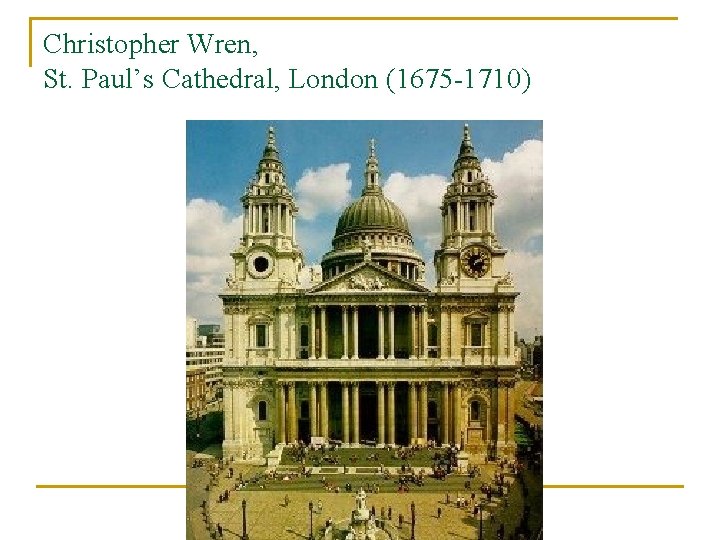
Dialectic: Example n Thesis: Renaissance Style n Antithesis: Baroque Style n Synthesis: Wren’s English Baroque
St. Peter’s Basilica, Rome
Borromini, San Carlo alle Quattro Fontane, Rome, 1667
Christopher Wren, St. Paul’s Cathedral, London (1675 -1710)
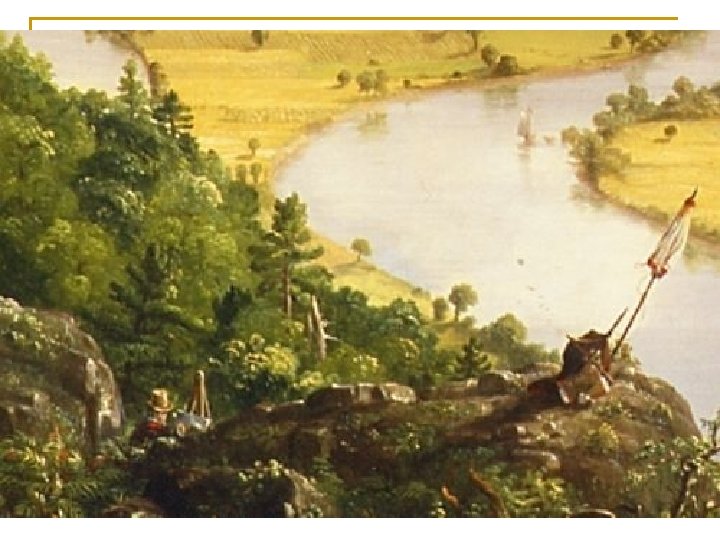
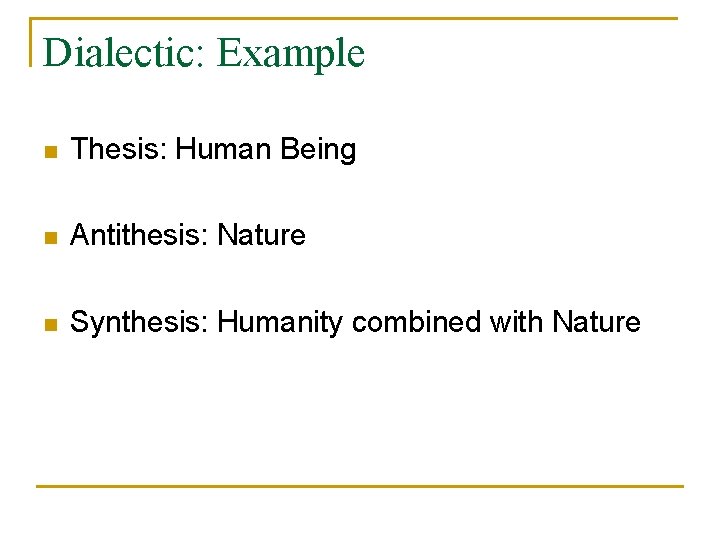
Dialectic: Example n Thesis: Human Being n Antithesis: Nature n Synthesis: Humanity combined with Nature
Thomas Cole, The Oxbow (1836)
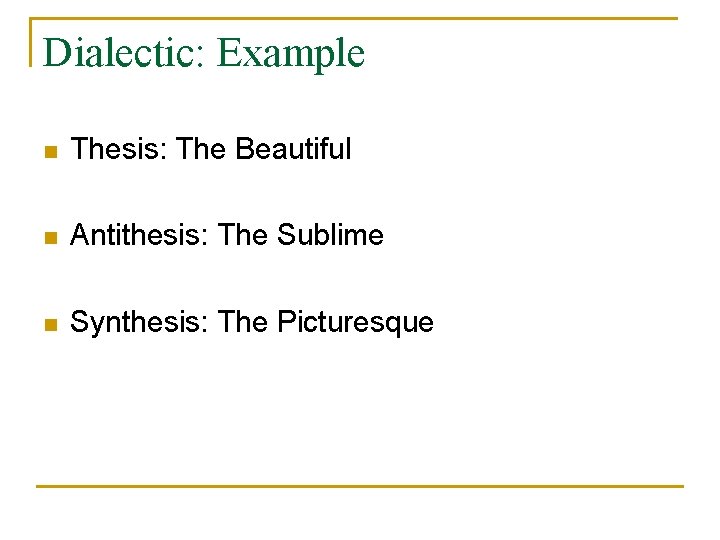
Dialectic: Example n Thesis: The Beautiful n Antithesis: The Sublime n Synthesis: The Picturesque