
Roman Theatre 200 s B C E 400
Roman Theatre 200 s B. C. E. – 400 s A. D.
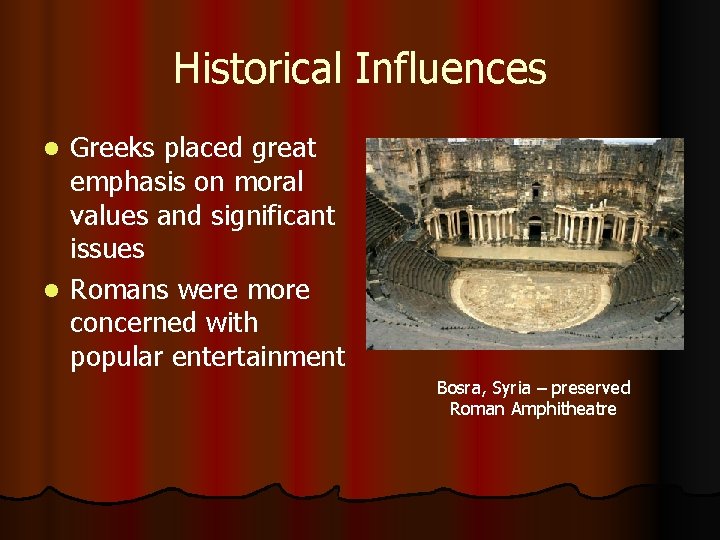
Historical Influences Greeks placed great emphasis on moral values and significant issues l Romans were more concerned with popular entertainment l Bosra, Syria – preserved Roman Amphitheatre

Big change in attitude Roman Theatre became associated with low comedy and spectacles of violence and death l This lowered the esteem of theatre in the eyes of the church l
2 Types of Plays l Fabula Palliata – Translations of Greek tragedies l Fabula Togata – Based on broadly farcical situations and physical humor – also includes gladiators and chariot races
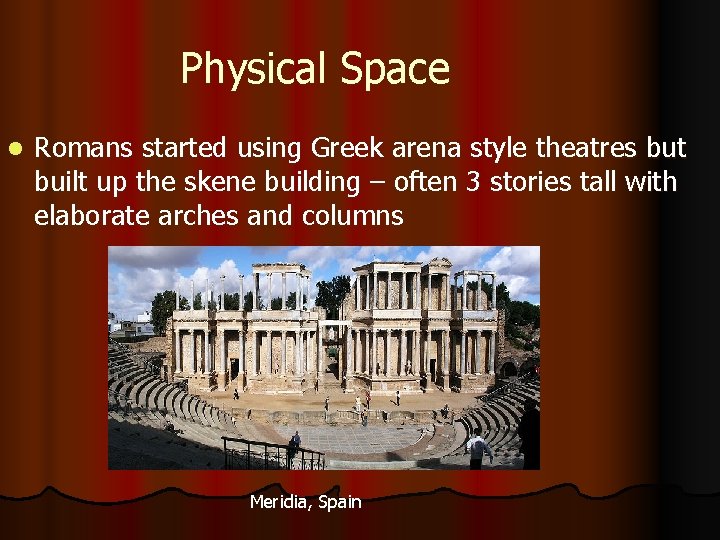
Physical Space l Romans started using Greek arena style theatres but built up the skene building – often 3 stories tall with elaborate arches and columns Meridia, Spain
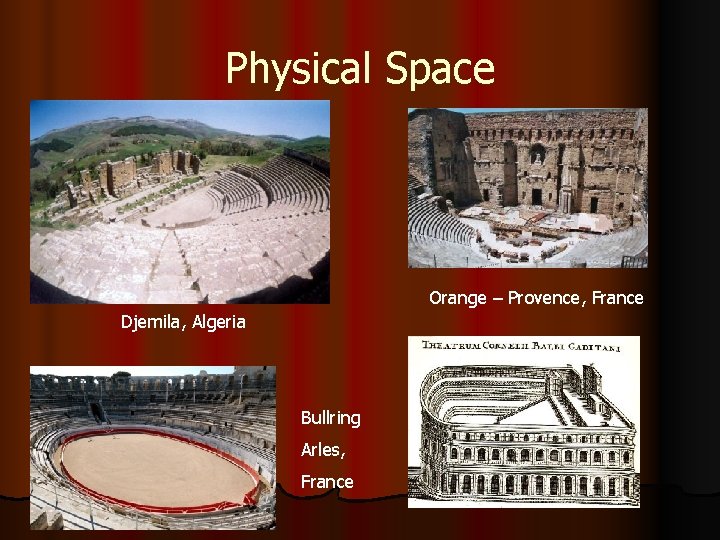
Physical Space Orange – Provence, France Djemila, Algeria Bullring Arles, France
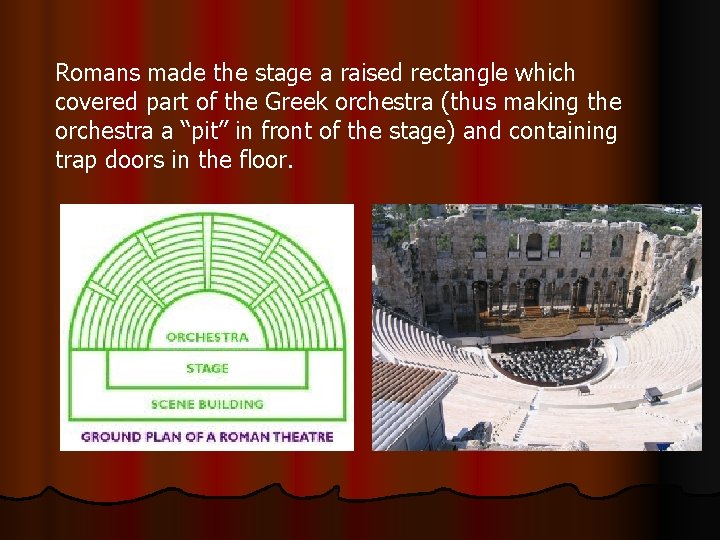
Romans made the stage a raised rectangle which covered part of the Greek orchestra (thus making the orchestra a “pit” in front of the stage) and containing trap doors in the floor.
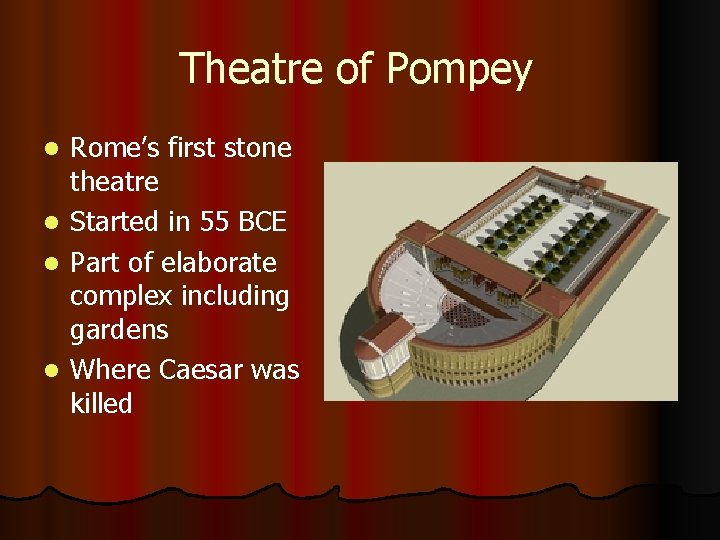
Theatre of Pompey l l Rome’s first stone theatre Started in 55 BCE Part of elaborate complex including gardens Where Caesar was killed

Roman Colosseum l l l Started in 72 AD Largest Roman theatre Considered greatest work of architecture and engineering Seats 50, 000 Ceased entertainment use during Medieval times Earthquakes and stone robbers caused deterioration
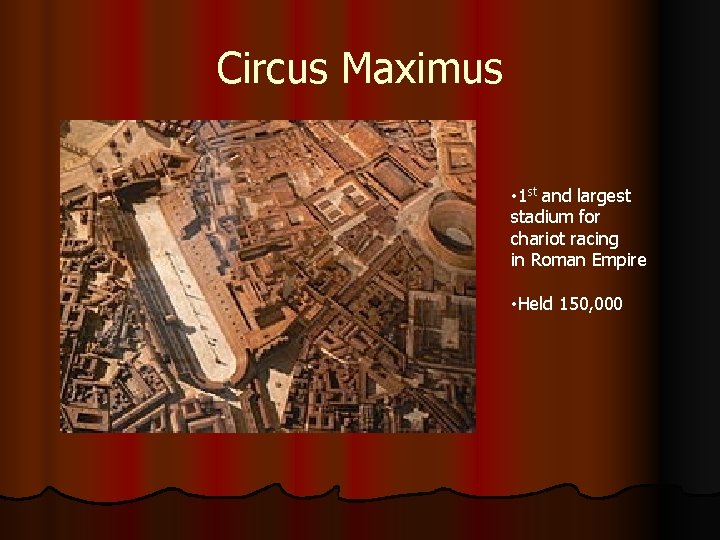
Circus Maximus • 1 st and largest stadium for chariot racing in Roman Empire • Held 150, 000
Characteristics of Productions Still male performers l More comedy and physical humor (slapstick) l More violence – especially in remakes of Greek tragedies l Less importance of chorus l More use of music like flutes l Eventual move toward wigs and paint (make-up) and away from masks l
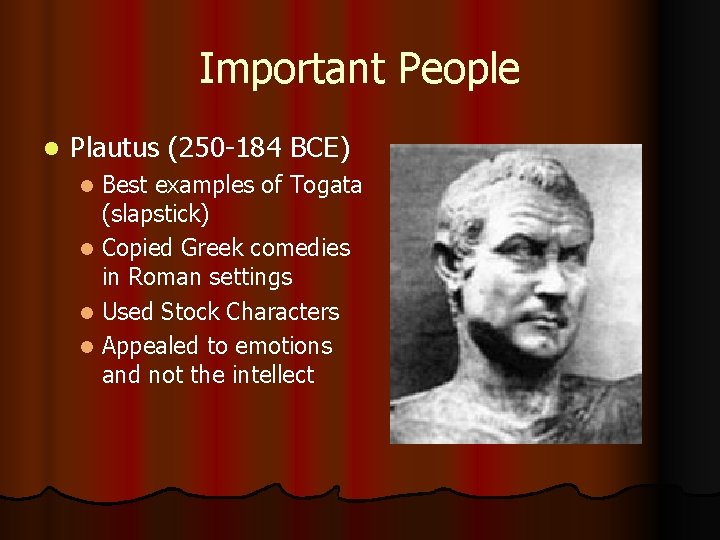
Important People l Plautus (250 -184 BCE) Best examples of Togata (slapstick) l Copied Greek comedies in Roman settings l Used Stock Characters l Appealed to emotions and not the intellect l
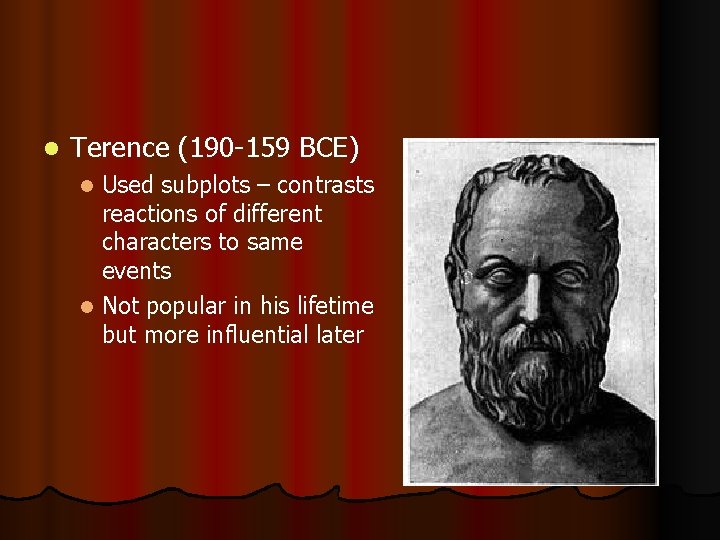
l Terence (190 -159 BCE) Used subplots – contrasts reactions of different characters to same events l Not popular in his lifetime but more influential later l
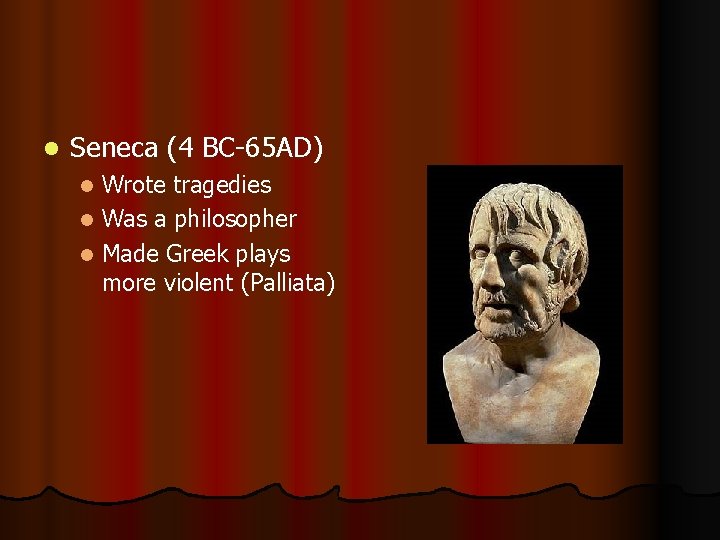
l Seneca (4 BC-65 AD) Wrote tragedies l Was a philosopher l Made Greek plays more violent (Palliata) l
Titles l Menaechmi l Sometimes by Plautus called The Brothers Menaechmus l Was the basis of Shakespeare’s Comedy of Errors l Ridiculous situations from mistaken identity of a set of twins (Togata)
- Slides: 15