
ROMAN REPUBLIC 509 BCE27 BCE The TOP SEVEN

ROMAN REPUBLIC: 509 BCE-27 BCE The TOP SEVEN
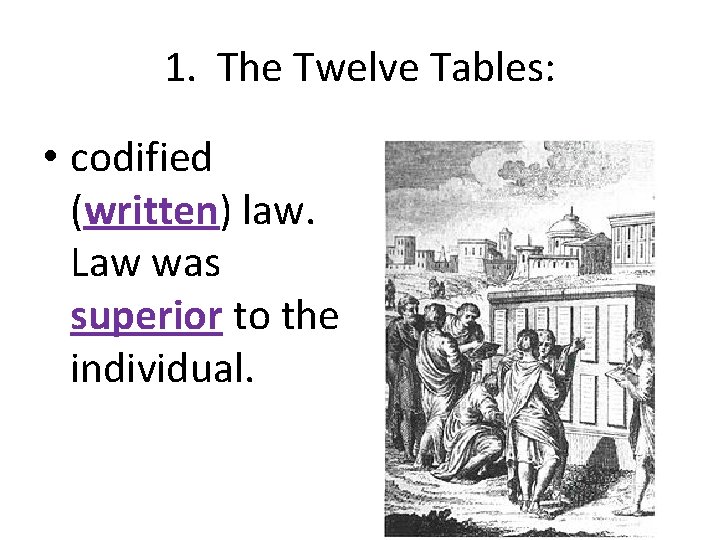
1. The Twelve Tables: • codified (written) law. Law was superior to the individual.
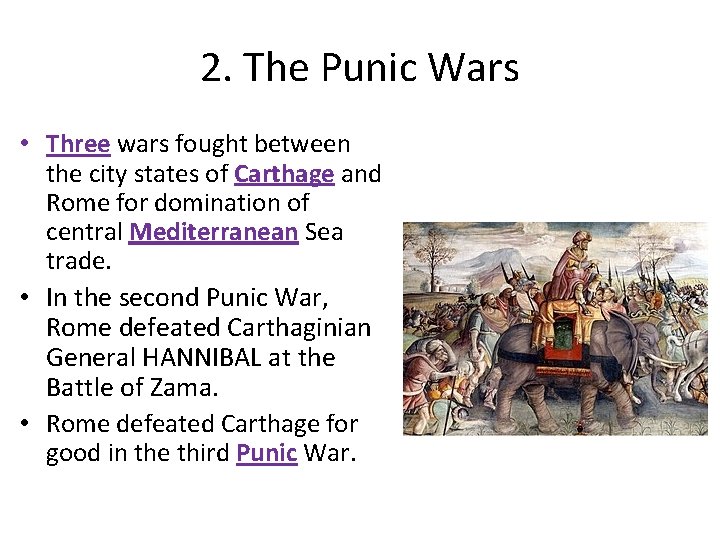
2. The Punic Wars • Three wars fought between the city states of Carthage and Rome for domination of central Mediterranean Sea trade. • In the second Punic War, Rome defeated Carthaginian General HANNIBAL at the Battle of Zama. • Rome defeated Carthage for good in the third Punic War.

Don’t panic, the next 5 slides are not in your notes, and they don’t have to be!
First Punic War: 264 BC-241 BC… • Carthage began with Naval superiority, but Rome built a fleet and the war raged for decades; • Carthage surrendered in 241 BC • Rome gained the islands of Sicily, Sardinia, and Corsica

Carthaginian Warship
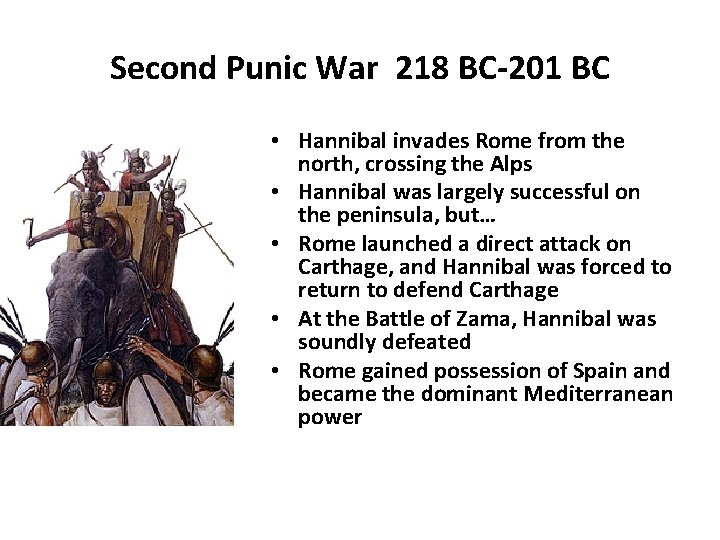
Second Punic War 218 BC-201 BC • Hannibal invades Rome from the north, crossing the Alps • Hannibal was largely successful on the peninsula, but… • Rome launched a direct attack on Carthage, and Hannibal was forced to return to defend Carthage • At the Battle of Zama, Hannibal was soundly defeated • Rome gained possession of Spain and became the dominant Mediterranean power
Third Punic War: 149 BC-146 BC • • “Carthage must be destroyed” -Cato And it was… Lands around Carthage became Roman colony of Africa People of Carthage were massacred or sold into slavery
Roman Expansion: • During Punic Wars, Rome also gained parts of Spain, Gaul (France) Macedonia, and Greece. • Rome organized conquered lands into provinces, each headed by a governor appointed by the Senate • Rome did NOT try to change local custom, religion, or government, which made their domination more comfortable to conquered peoples. • Roman innovations, such as roads, spread throughout their conquered lands.
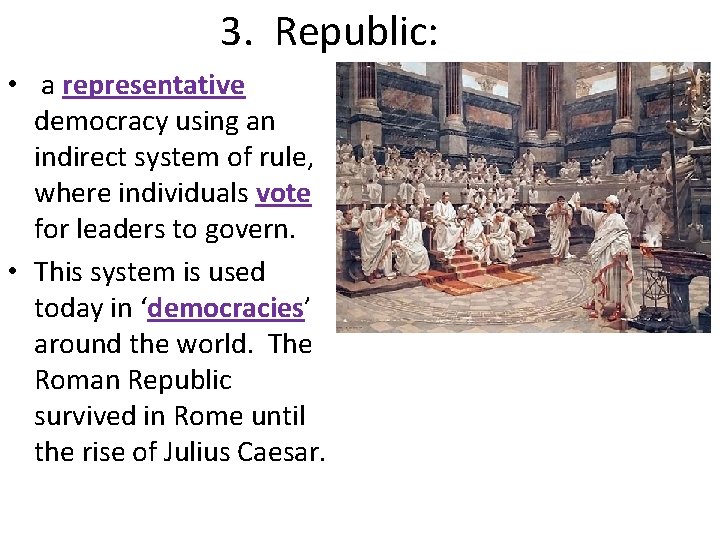
3. Republic: • a representative democracy using an indirect system of rule, where individuals vote for leaders to govern. • This system is used today in ‘democracies’ around the world. The Roman Republic survived in Rome until the rise of Julius Caesar.
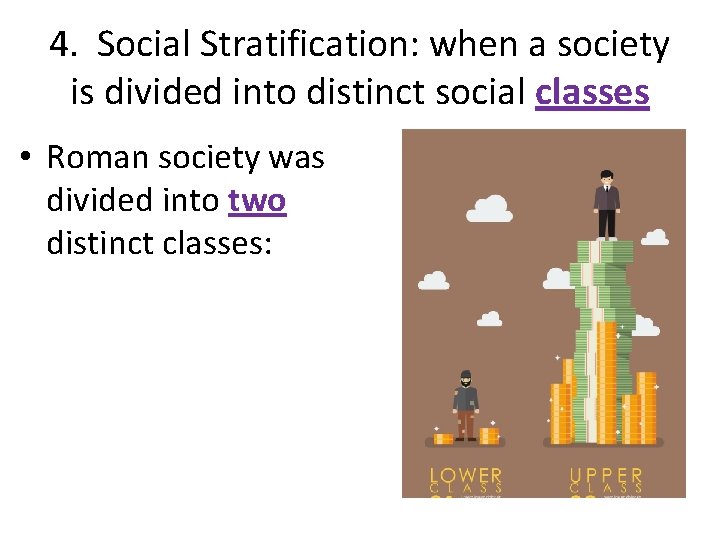
4. Social Stratification: when a society is divided into distinct social classes • Roman society was divided into two distinct classes:
Patricians (aristocrats) held most of the power , (only Patricians could serve in the Senate, or during the early Republic period, in the Army)
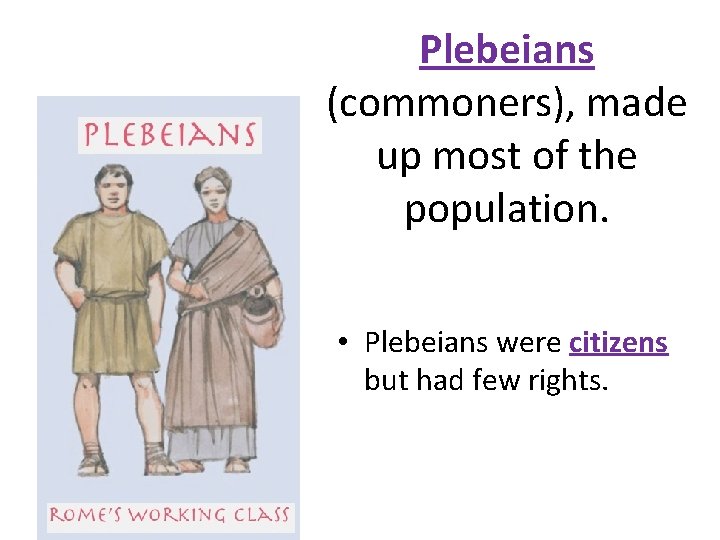
Plebeians (commoners), made up most of the population. • Plebeians were citizens but had few rights.
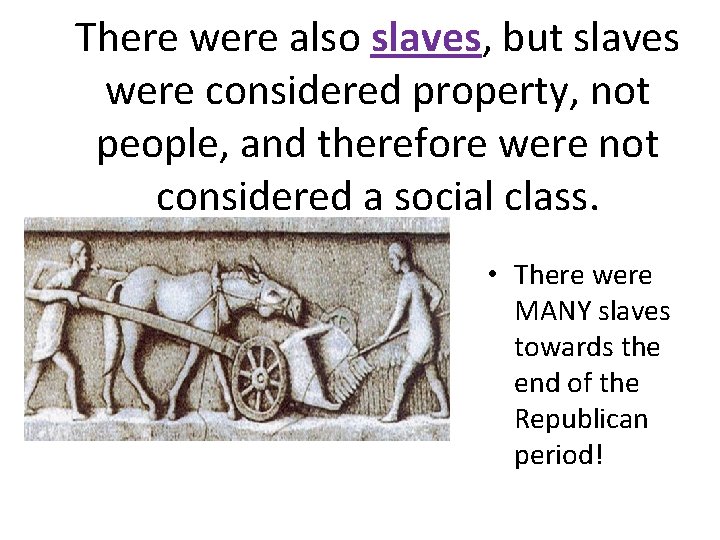
There were also slaves, but slaves were considered property, not people, and therefore were not considered a social class. • There were MANY slaves towards the end of the Republican period!
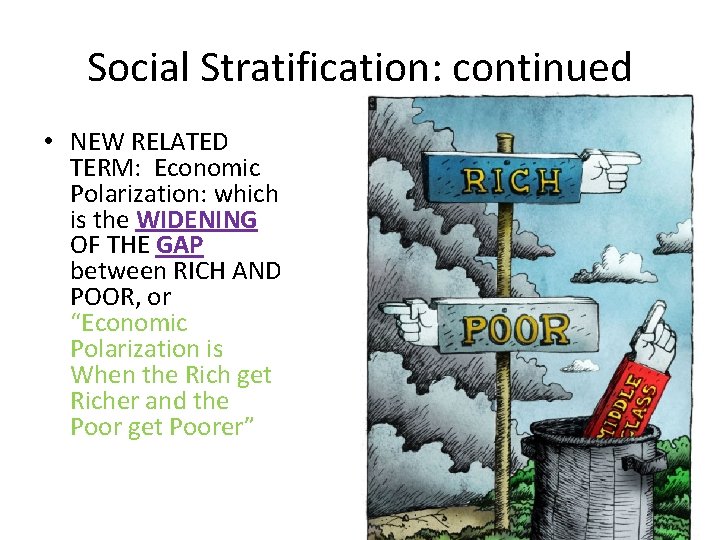
Social Stratification: continued • NEW RELATED TERM: Economic Polarization: which is the WIDENING OF THE GAP between RICH AND POOR, or “Economic Polarization is When the Rich get Richer and the Poor get Poorer”
5. Engineering: application of science to solve a problem • Romans studied science and math with practical purpose in mind.
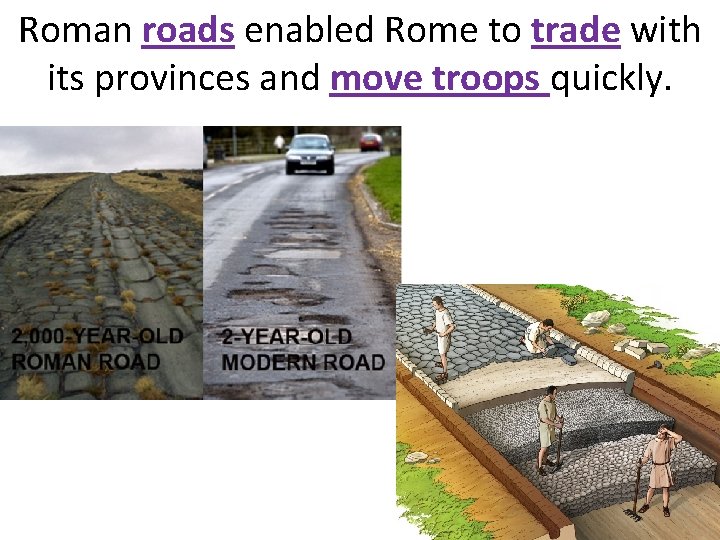
Roman roads enabled Rome to trade with its provinces and move troops quickly.

Engineering is a PROCESS! Technology is the PRODUCT of Engineering!
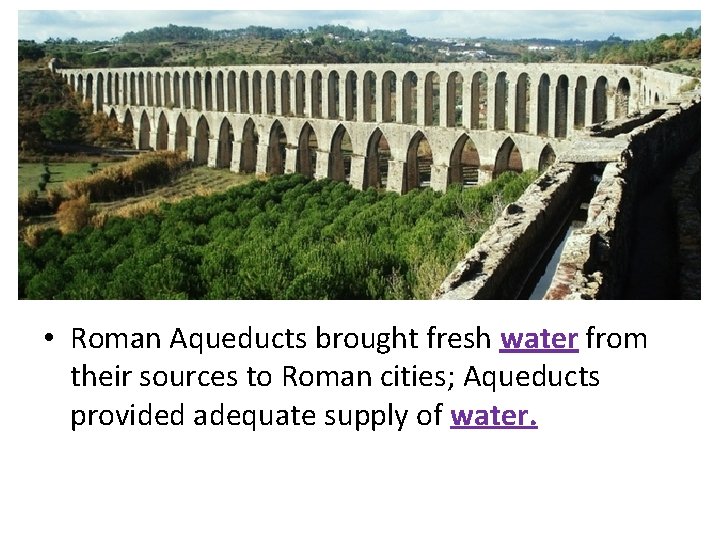
• Roman Aqueducts brought fresh water from their sources to Roman cities; Aqueducts provided adequate supply of water.
6 Paterfamilias: A PATRIARCHAL SOCIETY • Rome began as a male dominated society. Men controlled the household without question. Fathers could disown or banish children, or even sell them into slavery. However, later on, during the period of empire, women began to have greater rights and status.
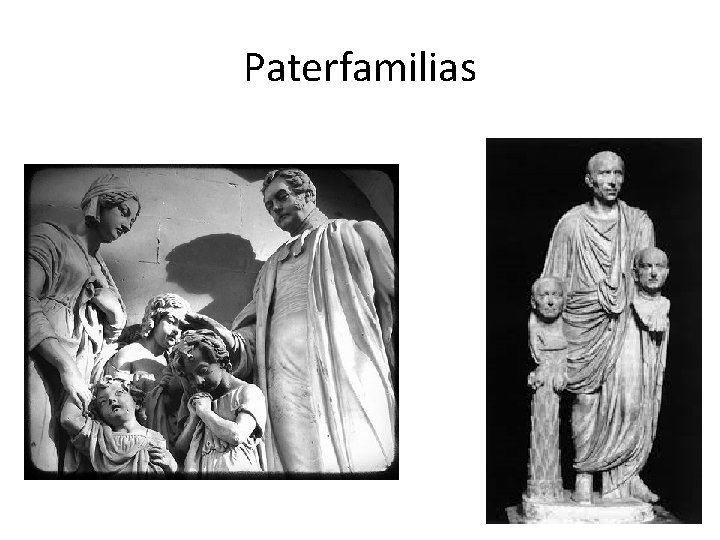
Paterfamilias
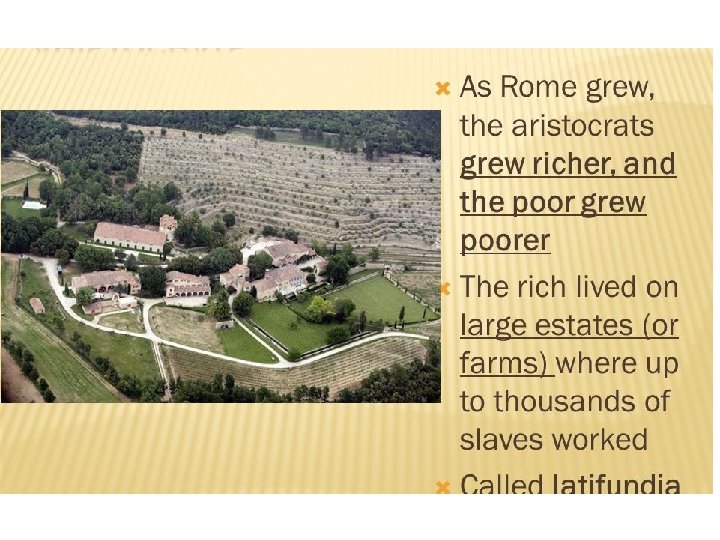
7. Latifundia Huge plantation farms that fed the cities and the lands held by Rome. Latifundia began which rich Patricians started lowering food prices so that small farmers could not compete and were driven out of business. In the last years of the Republic, tens of thousands of displaced farmers flooded the city of Rome

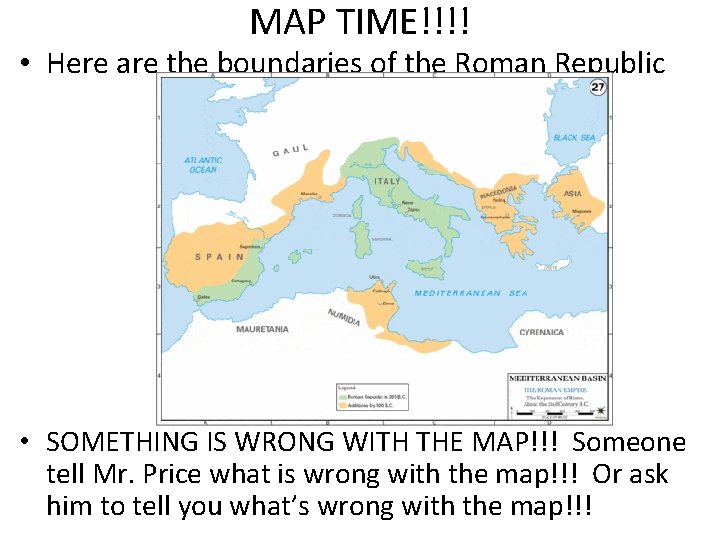
MAP TIME!!!! • Here are the boundaries of the Roman Republic • SOMETHING IS WRONG WITH THE MAP!!! Someone tell Mr. Price what is wrong with the map!!! Or ask him to tell you what’s wrong with the map!!!
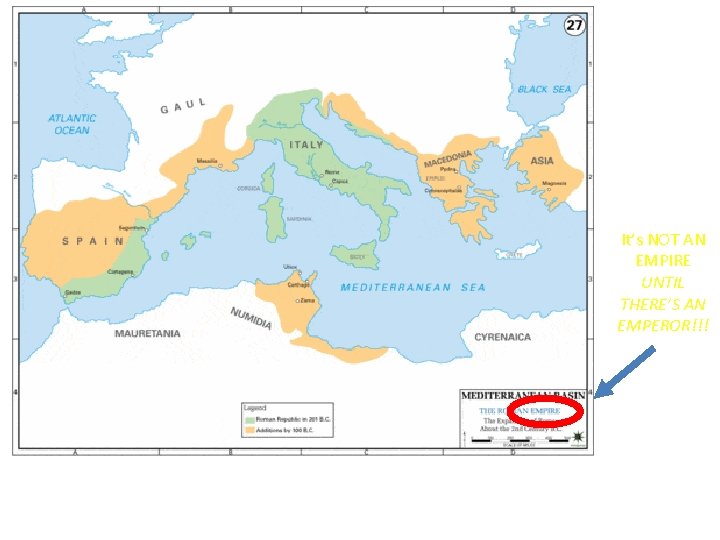
It’s NOT AN EMPIRE UNTIL THERE’S AN EMPEROR!!!
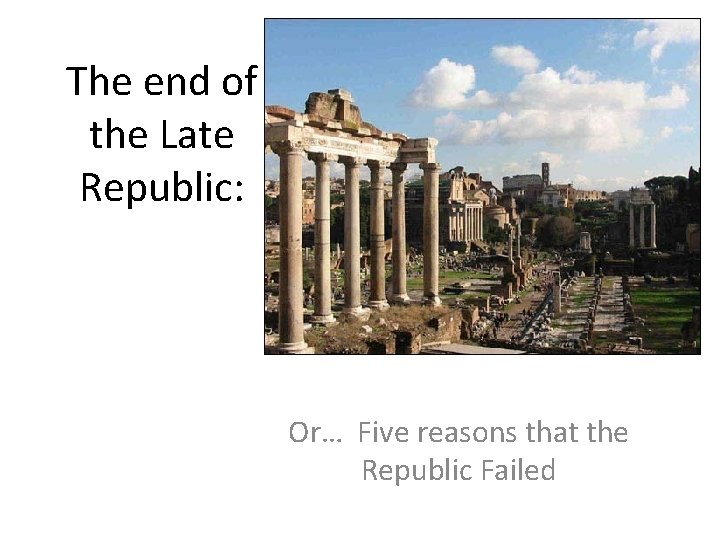
The end of the Late Republic: Or… Five reasons that the Republic Failed
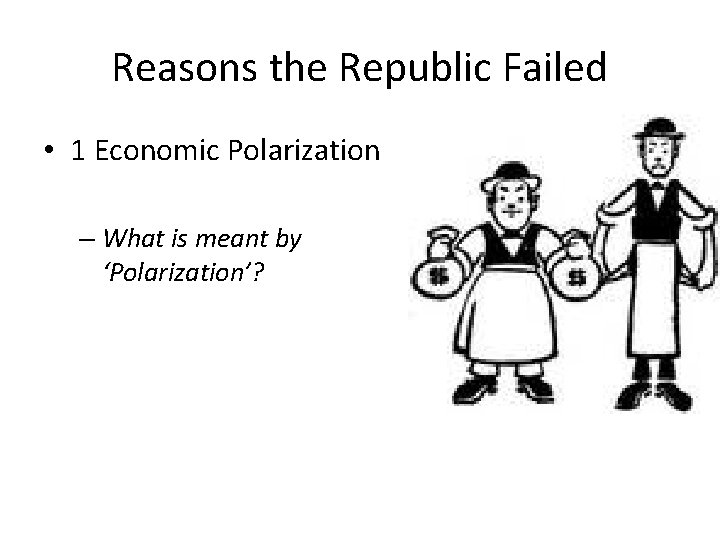
Reasons the Republic Failed • 1 Economic Polarization – What is meant by ‘Polarization’?
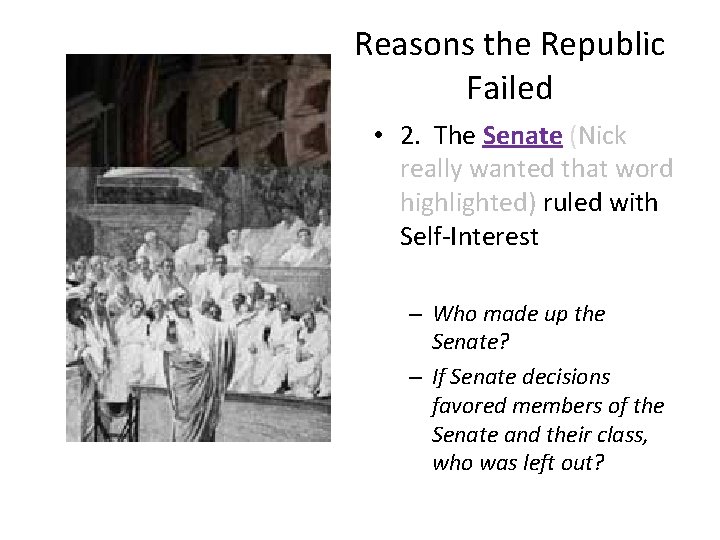
Reasons the Republic Failed • 2. The Senate (Nick really wanted that word highlighted) ruled with Self-Interest – Who made up the Senate? – If Senate decisions favored members of the Senate and their class, who was left out?
Reasons the Republic Failed • 3. The disenfranchised poor in the city of Rome – What is meant by ‘disenfranchised’? – What was one specific group who made up this disenfranchised population.
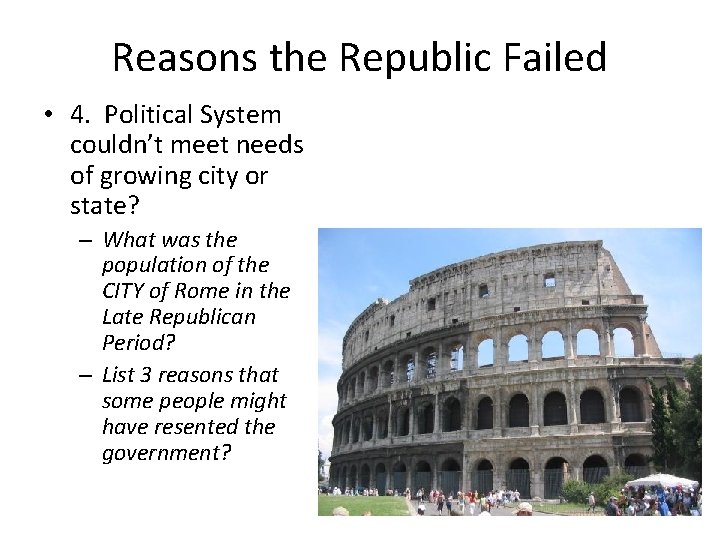
Reasons the Republic Failed • 4. Political System couldn’t meet needs of growing city or state? – What was the population of the CITY of Rome in the Late Republican Period? – List 3 reasons that some people might have resented the government?
Reasons the Republic Failed • 5. Ambitious Individuals – Generals, usually Plebeians or from the Provinces, became RESENTFUL towards the Senate. – The First and Second Triumvirates were alliances of powerful Roman generals AGAINST the Roman government • What might happen if a government loses control of its military?
TRANSITION BETWEEN POLITICAL SYSTEMS IS DIFFICULT… • Supporters of the old system try to hold on • Individuals who do not feel represented and are suffering will try to seek change • Individuals who think that they have a better plan may try to take advantage of the situation – If you were a poor plebeian in Rome, would you want to stick with the old system, or try something new? Why?
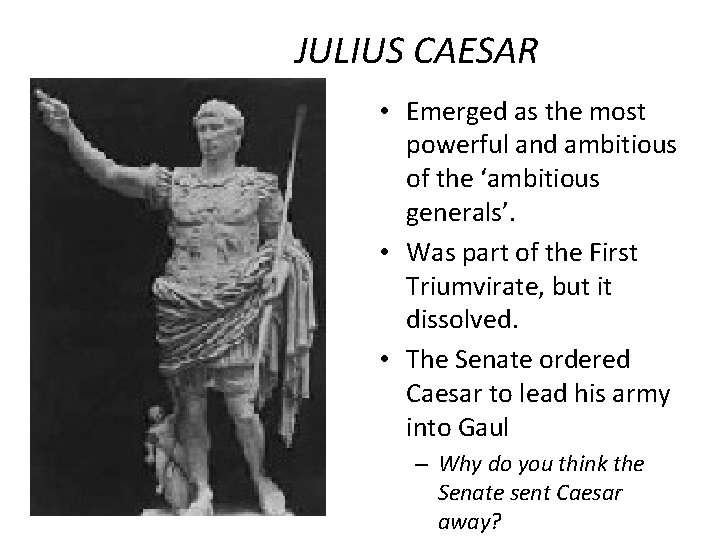
JULIUS CAESAR • Emerged as the most powerful and ambitious of the ‘ambitious generals’. • Was part of the First Triumvirate, but it dissolved. • The Senate ordered Caesar to lead his army into Gaul – Why do you think the Senate sent Caesar away?
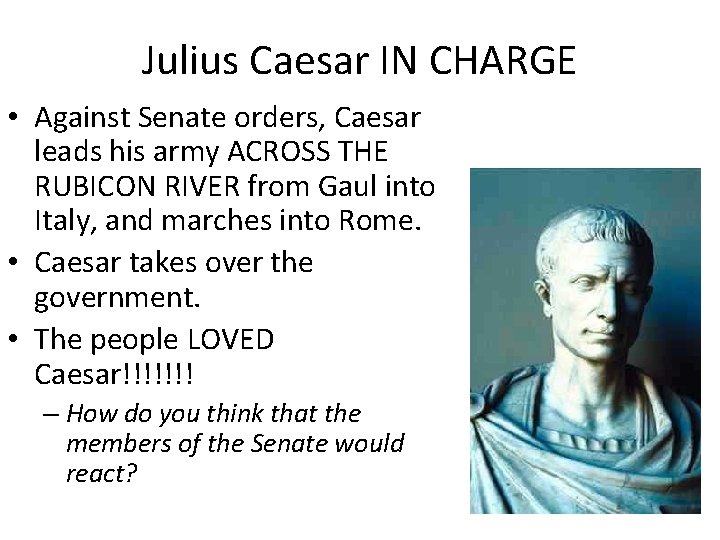
Julius Caesar IN CHARGE • Against Senate orders, Caesar leads his army ACROSS THE RUBICON RIVER from Gaul into Italy, and marches into Rome. • Caesar takes over the government. • The people LOVED Caesar!!!!!!! – How do you think that the members of the Senate would react?
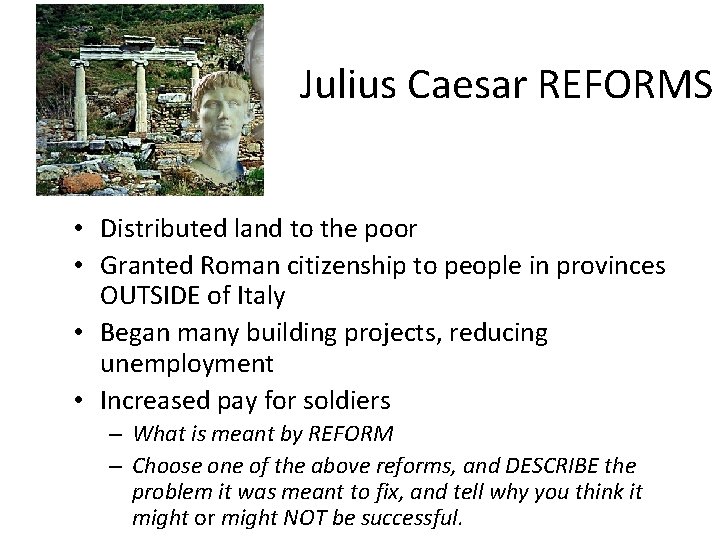
Julius Caesar REFORMS • Distributed land to the poor • Granted Roman citizenship to people in provinces OUTSIDE of Italy • Began many building projects, reducing unemployment • Increased pay for soldiers – What is meant by REFORM – Choose one of the above reforms, and DESCRIBE the problem it was meant to fix, and tell why you think it might or might NOT be successful.
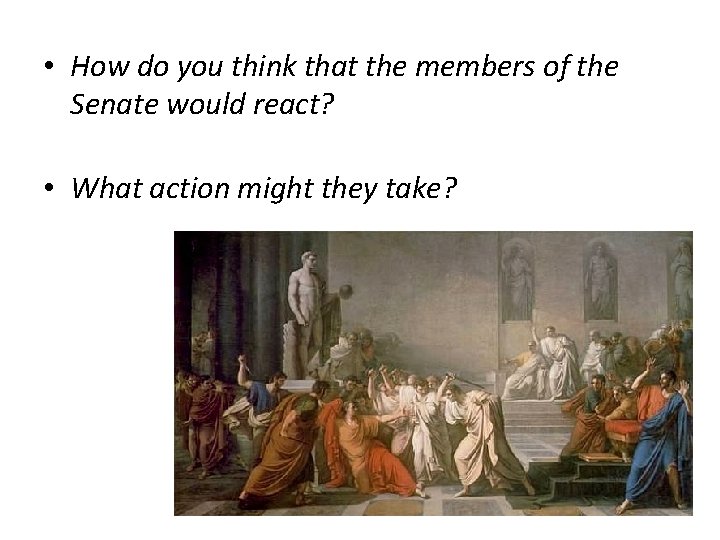
• How do you think that the members of the Senate would react? • What action might they take?
• • • Just for fun… here a few CNY/NNY places named after Roman-connected places, people, and things Cato Syracuse Marcellus Carthage Aurelius Sempronius Camillus Hannibal Rome Utica • • Brutus Ovid Fabius Pompey Virgil Manlius Turin
CAESAR VIDEO TIME • In the blank space on the right hand side of the notes, list three ‘positive’ facts or opinions about Julius Caesar, and one ‘negative’ fact or opinion about Julius Caesar.
- Slides: 39