
Roman Entertainment ROME Republic 509 BC 27 BC

Roman Entertainment
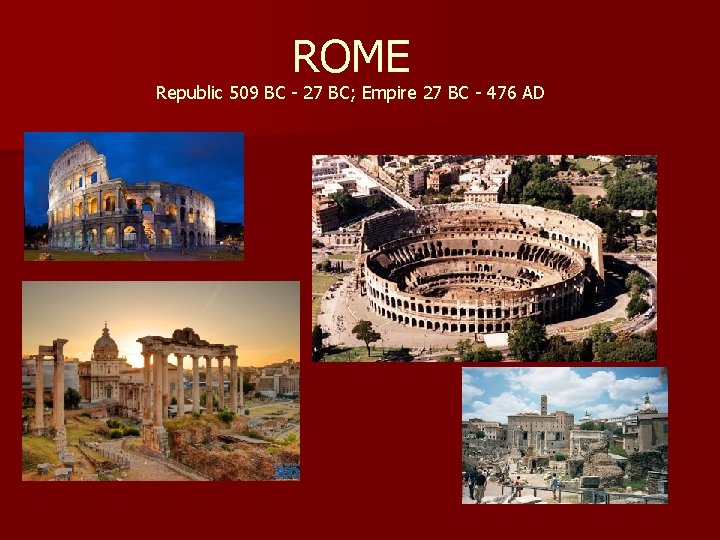
ROME Republic 509 BC - 27 BC; Empire 27 BC - 476 AD
Rome Roman Republic Roman Empire Disciplined n Loyal n Theatre more similar to Greek Comedy and Tragedy n One day of theatre n n Becomes more debaucherous n Rise of Christianity— which leads to more Civic Religious festivals n 175 days a year
Entertainment n Theatre in honor of religious festivals; civic celebrations (to honor the dead, or celebrate if we won a battle) n 3 Main Types – Theatre-Comedy and Tragedy – Chariot Races – BLOOD SPORTS

Roman Comedy n Main playwrights: Terrence and Plautus n Based on Greek comedies— n more like a musical comedy today with music accompanying 2/3 of the show n Domestic situations plots with mistaken identity n Stock characters: servants, soldiers, young lovers, creepy old men, shrewish wives.
Roman Tragedy n Seneca most famous playwright n Adapted Greek plays of Medea, Oedipus and Agamemnon n Was tutor to Emperor Nero—Nero later ordered Seneca to commit suicide n Seneca was large influence on Christopher Marlow and William Shakespeare.

ARE YOU NOT ENTERTAINED? n https: //www. youtube. com/watch? v=l. Tml. Y Ki. LBHI
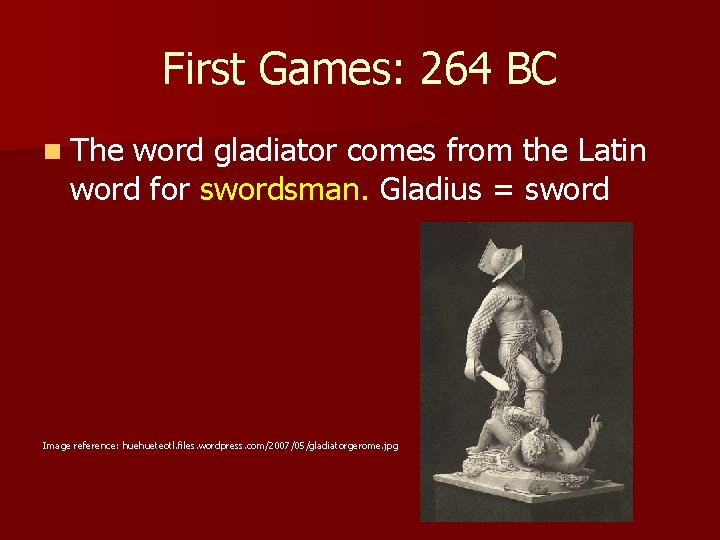
First Games: 264 BC n The word gladiator comes from the Latin word for swordsman. Gladius = sword Image reference: huehueteotl. files. wordpress. com/2007/05/gladiatorgerome. jpg
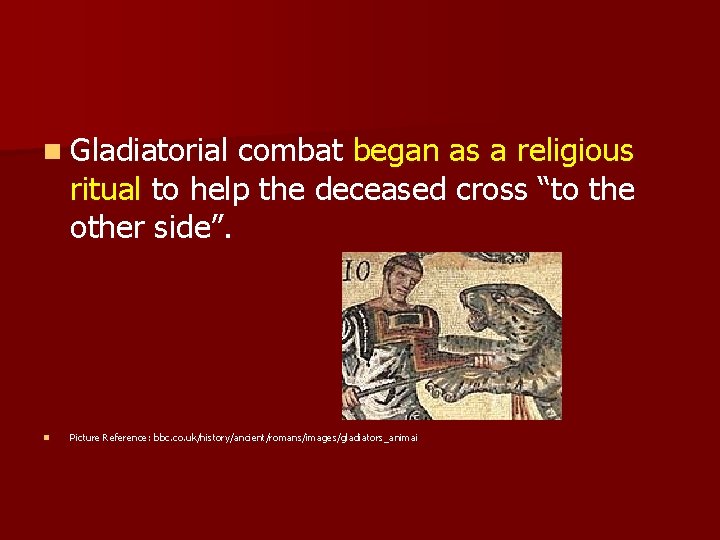
n Gladiatorial combat began as a religious ritual to help the deceased cross “to the other side”. n Picture Reference: bbc. co. uk/history/ancient/romans/images/gladiators_animai
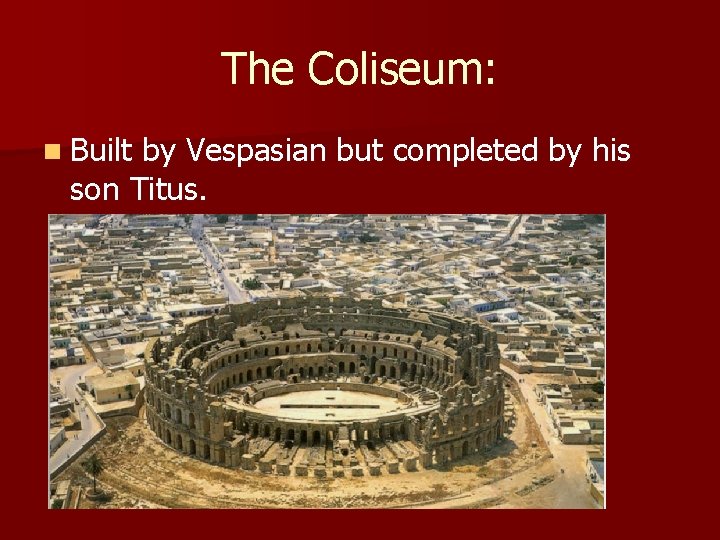
The Coliseum: n Built by Vespasian but completed by his son Titus.
Blood sports n Gladiatorial contests – Hand to hand combat n Venationes – Wild animal fights n Naumachaie – Sea battles. The romans would flood a stadium and have mock battles in boats, but people actually died
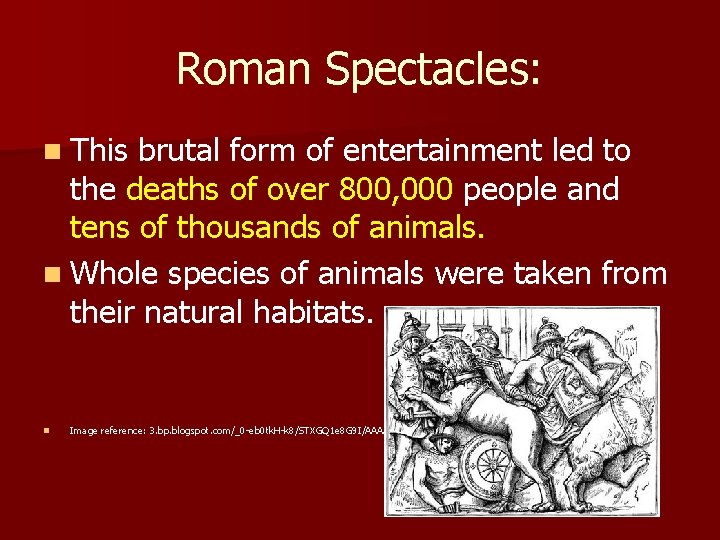
Roman Spectacles: n This brutal form of entertainment led to the deaths of over 800, 000 people and tens of thousands of animals. n Whole species of animals were taken from their natural habitats. n Image reference: 3. bp. blogspot. com/_0 -eb 0 tk. H-k 8/STXGQ 1 e 8 G 9 I/AAAAAOQ/GE 3 ae. MQKum. A/s 400/roman-gladiators-4
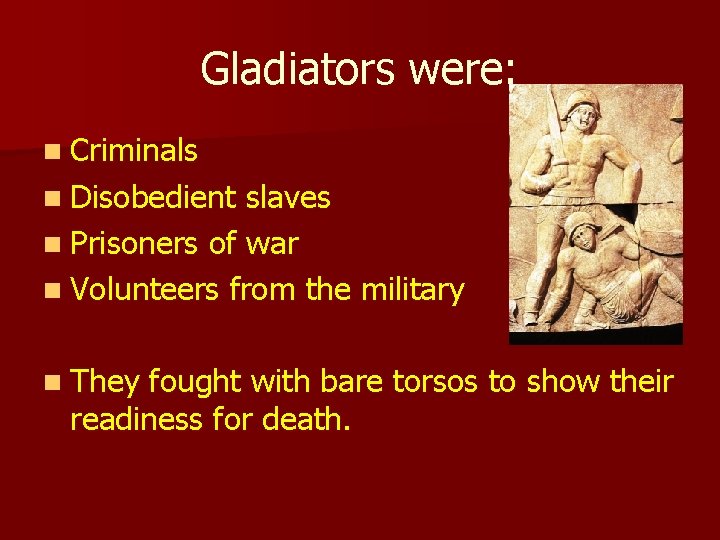
Gladiators were: n Criminals n Disobedient slaves n Prisoners of war n Volunteers from the military n They fought with bare torsos to show their readiness for death.
Sports/Entertainment in Rome: – Were an emphasized spectacle – Funded by the government and wealthy citizens – Were a display of the power of the leaders – A diversion of the people § 70% of population on “welfare” – Excluded women athletes – BREAD AND CIRCUSES

BEN HUR n https: //www. youtube. com/watch? v=fr. E 9 r Xna. Hp. E
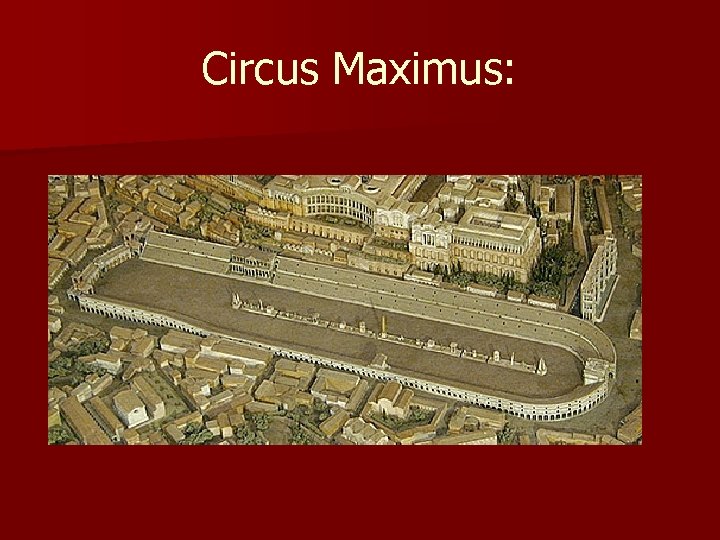
Circus Maximus:
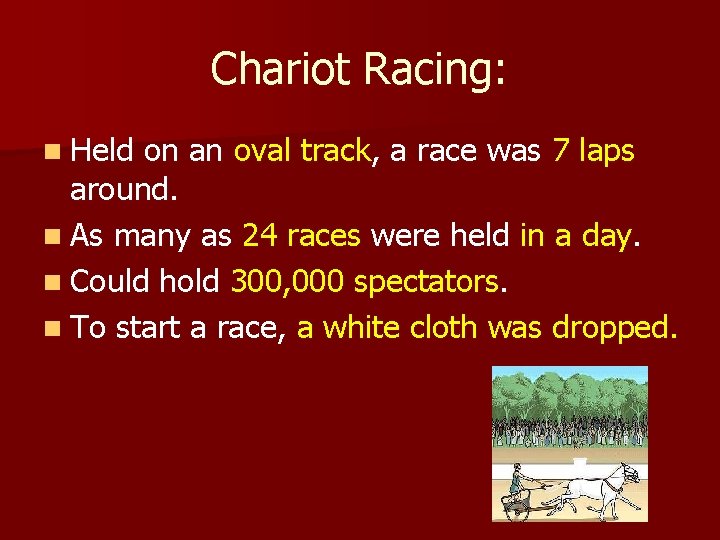
Chariot Racing: n Held on an oval track, a race was 7 laps around. n As many as 24 races were held in a day. n Could hold 300, 000 spectators. n To start a race, a white cloth was dropped.
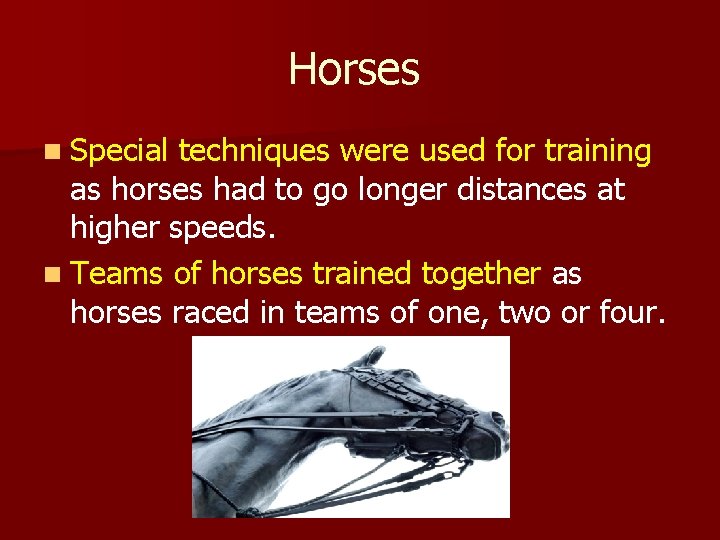
Horses n Special techniques were used for training as horses had to go longer distances at higher speeds. n Teams of horses trained together as horses raced in teams of one, two or four.
Fall of the roman empire n With the rise of Christian Church— gladiators and animal fights start to fade in popularity n Although more Roman plays survive than Greek pays, Greek plays are done more frequently by modern theatres because Greek theatre is more philosophical.
- Slides: 19