
Roman design and Inventions Bridges Bridges The Romans
Roman design and Inventions

Bridges
Bridges The Romans built long durable bridges. Many of their bridges still stand today. They used stone and concrete to build their bridges and used the arch as the basic architectural feature to make them strong. The largest Roman bridge ever built was the Trajan bridge over the river Danube. It was over 3700 feet long and 62 feet high.
Bridges • Connection between cities, ports, mines and neighbouring civilizations brought the need of creating stable and permanent roads. They then started bridging rivers and extreme land formations with wood logs and stones. Roman builders and mathematicians discovered new ways of moulding the weight of bridge material into structures that could remain strong enough to carry incredible weights.
Aqueducts
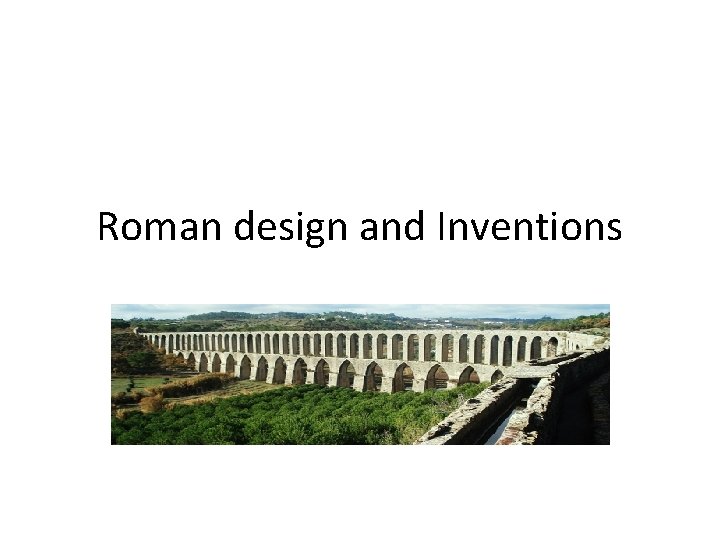
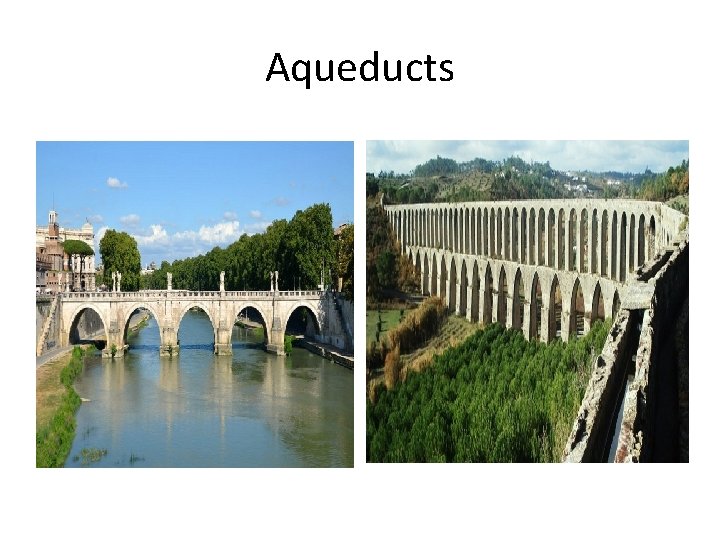
Aqueducts The Romans built huge and extensive aqueducts, which is Latin for waterway. These under- and aboveground channels, typically made of stone, brick, and volcanic cement, brought fresh water for drinking and bathing as much as 50 to 60 miles from springs or rivers. Aqueducts helped keep Romans healthy by carrying away used water and waste, and they also took water to farms for irrigation.
The engineers used gravity to keep the water moving. If the channel was too steep, water would run too quickly and wear out the surface. Too shallow, and water would stagnate and become undrinkable. The Romans built tunnels to get water through ridges, and bridges to cross valleys. Once it reached a city, the water flowed into a main tank called a castellum. Smaller pipes took the water to the second castella, and from those the water flowed through lead pipes to public fountains and baths, and even to some private homes.
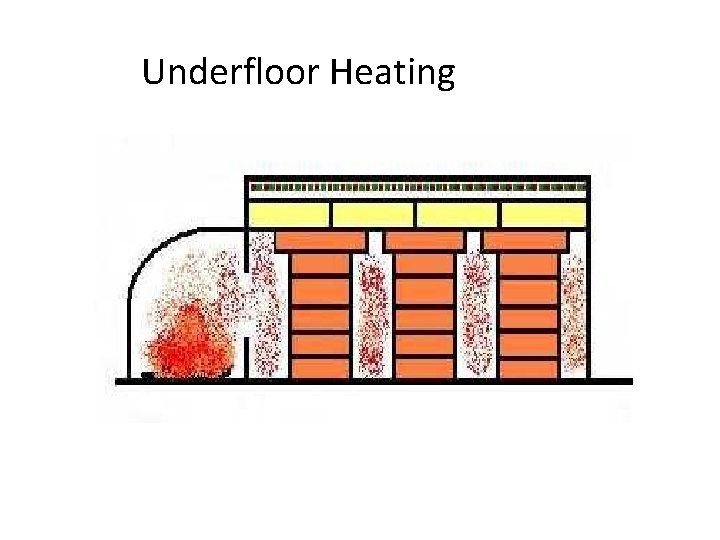
Underfloor Heating
The floor was laid out as series of concrete slabs raised up on tiles, with a furnace at the bottom of one exterior wall. By placing the fire here, the draught would take the heat under the floor, and up through the walls to chimneys located in the corners of the room. The height of the stack of tiles was about 2 ft (60 cm) as this was found to be the most efficient height for the air to travel through.
Once the air had passed under the floor, the air was drawn into the walls and up the flues by the action of the hot air already rising in the flues creating a partial vacuum and so pulling the air below into the walls. The walls were very often made of bricks with two holes horizontally through them. This had the effect of passing the air through the walls and into the flues, thereby warming the walls also.


Underground drains
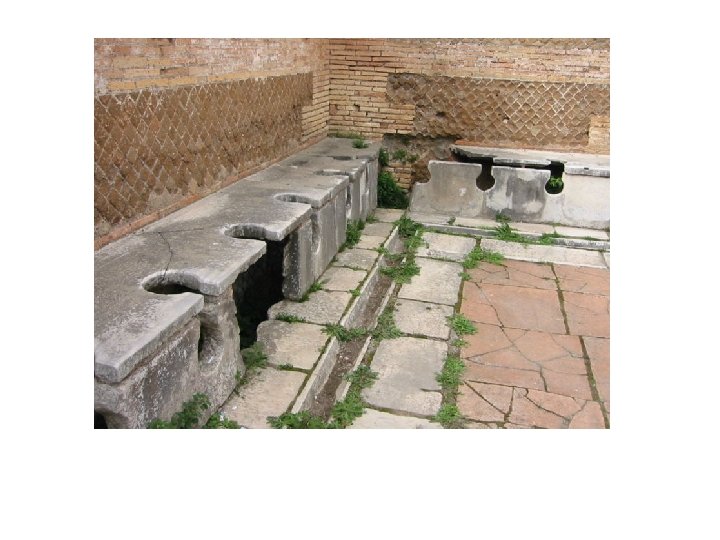
The Romans laid the first underground sewers in the city of Rome around 500 BC. These cavernous tunnels below the city's streets were built of finely carved stones. Such structures then became the norm in many cities throughout the Roman world. Sewer galleries didn't run under every street, nor service every area. But in some cities, including Rome itself, the length and breadth of the main sewer, the Cloaca Maxima, rivals the extent of the main sewer lines in many of today's cities.
Roman sewers moved filthy water away from where it hindered cleanliness, economic growth, urban development and even industry. Its purpose was removing water that pooled on the city's uneven streets and draining water from low-lying areas when the adjacent Tiber River flooded, which happened quite frequently.
- Slides: 15