
Rolling Process Instructional Design Document STAM Interactive Solutions
- Slides: 16
Rolling Process Instructional Design Document STAM Interactive Solutions
Demo Outline (For reference)
Change Log (as per the minutes pdf)
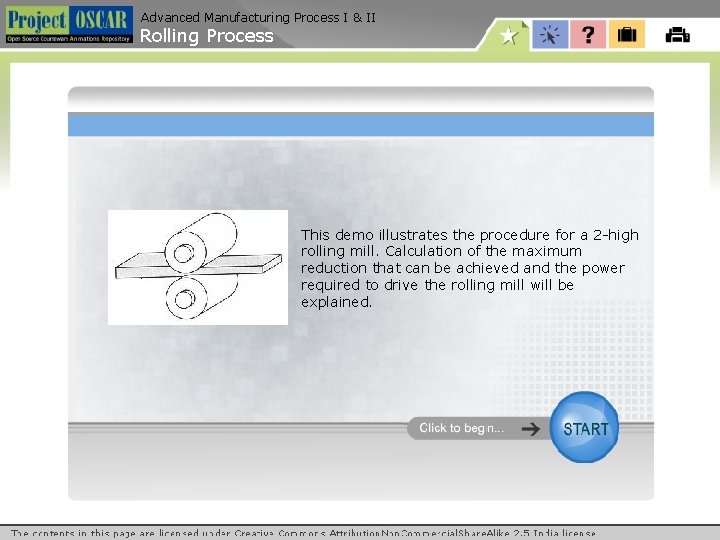
Advanced Manufacturing Process I & II Rolling Process This demo illustrates the procedure for a 2 -high rolling mill. Calculation of the maximum reduction that can be achieved and the power required to drive the rolling mill will be explained.
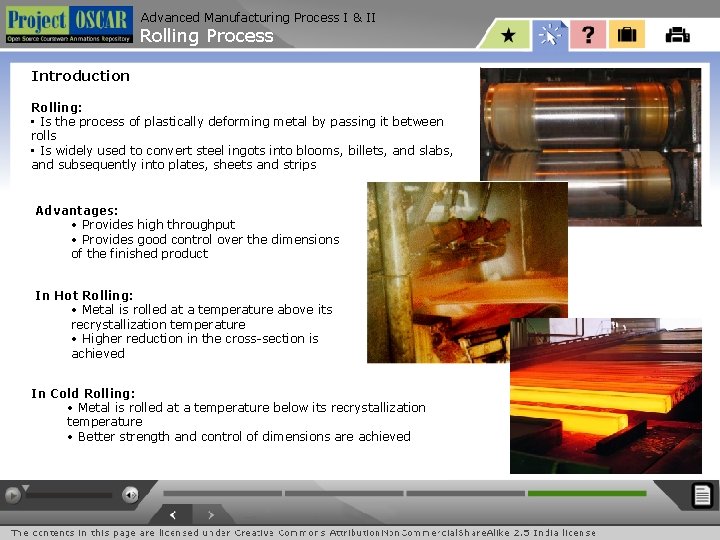
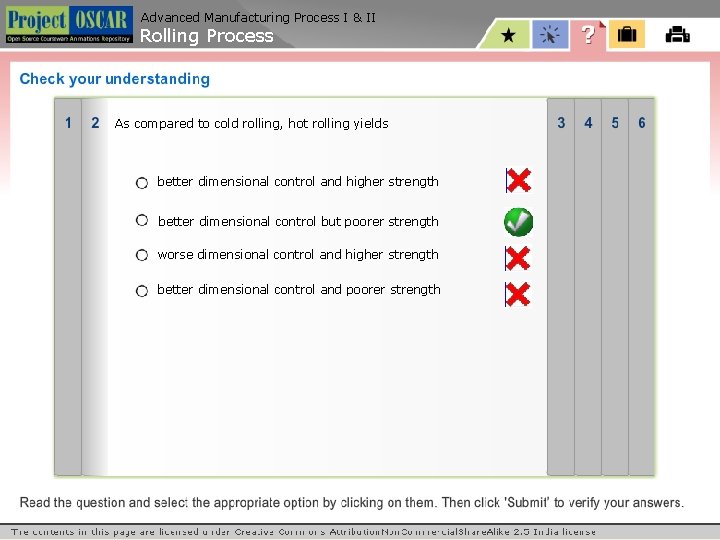
Advanced Manufacturing Process I & II Rolling Process Introduction Rolling: • Is the process of plastically deforming metal by passing it between rolls • Is widely used to convert steel ingots into blooms, billets, and slabs, and subsequently into plates, sheets and strips Advantages: • Provides high throughput • Provides good control over the dimensions of the finished product In Hot Rolling: • Metal is rolled at a temperature above its recrystallization temperature • Higher reduction in the cross-section is achieved In Cold Rolling: • Metal is rolled at a temperature below its recrystallization temperature • Better strength and control of dimensions are achieved
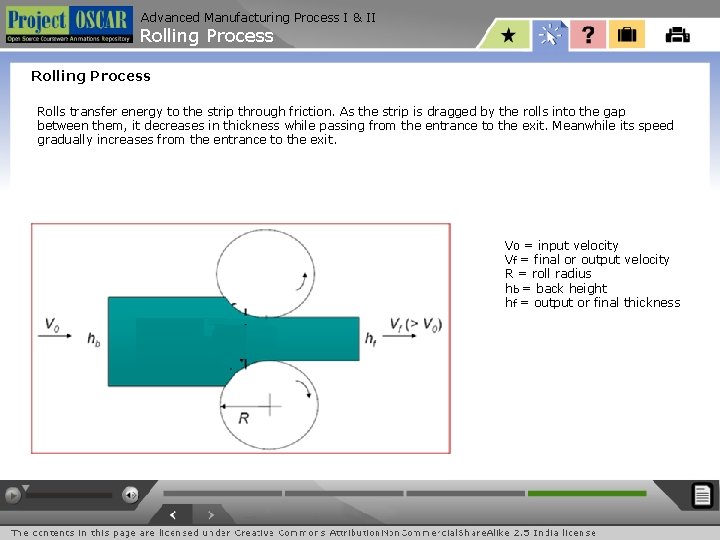
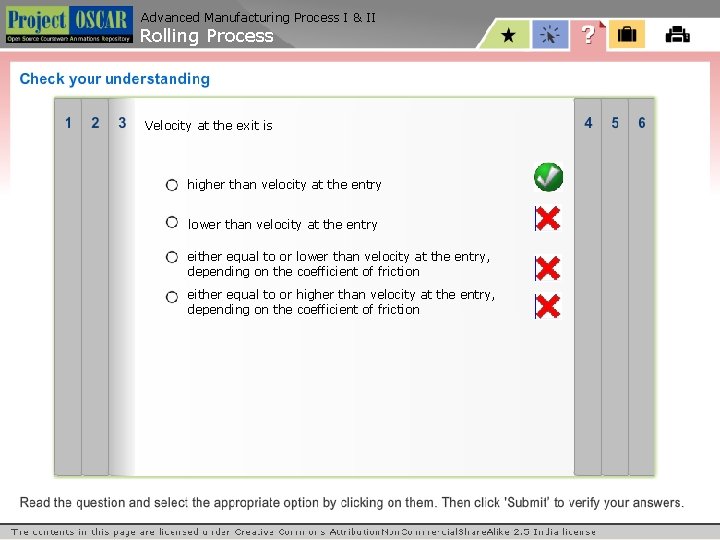
Advanced Manufacturing Process I & II Rolling Process Rolls transfer energy to the strip through friction. As the strip is dragged by the rolls into the gap between them, it decreases in thickness while passing from the entrance to the exit. Meanwhile its speed gradually increases from the entrance to the exit. V 0 = input velocity Vf = final or output velocity R = roll radius hb = back height hf = output or final thickness
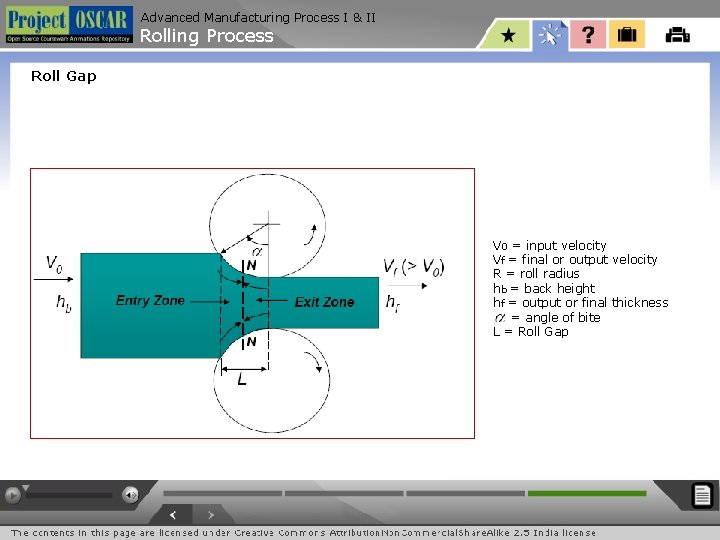
Advanced Manufacturing Process I & II Rolling Process Roll Gap V 0 = input velocity Vf = final or output velocity R = roll radius hb = back height hf = output or final thickness = = angle of bite L = Roll Gap
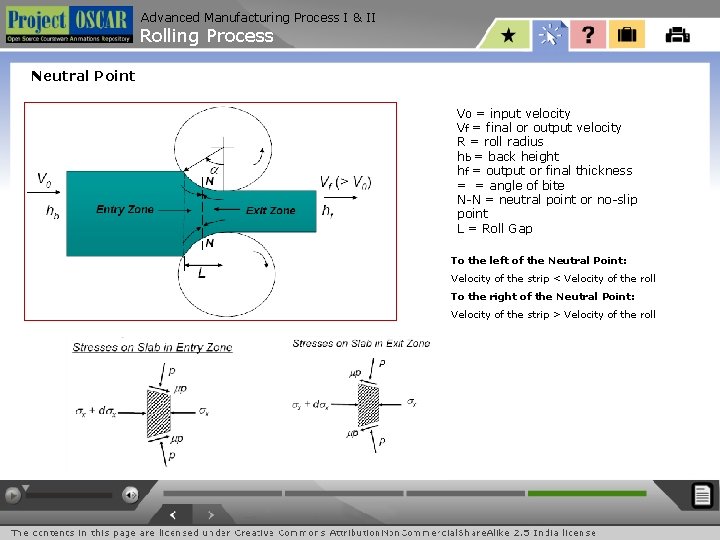
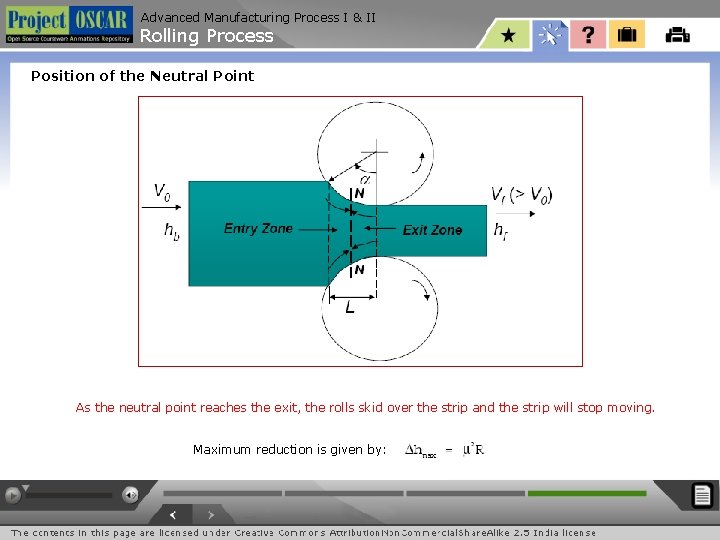
Advanced Manufacturing Process I & II Rolling Process Neutral Point V 0 = input velocity Vf = final or output velocity R = roll radius hb = back height hf = output or final thickness = = angle of bite N-N = neutral point or no-slip point L = Roll Gap To the left of the Neutral Point: Velocity of the strip < Velocity of the roll To the right of the Neutral Point: Velocity of the strip > Velocity of the roll
Advanced Manufacturing Process I & II Rolling Process Position of the Neutral Point As the neutral point reaches the exit, the rolls skid over the strip and the strip will stop moving. Maximum reduction is given by:
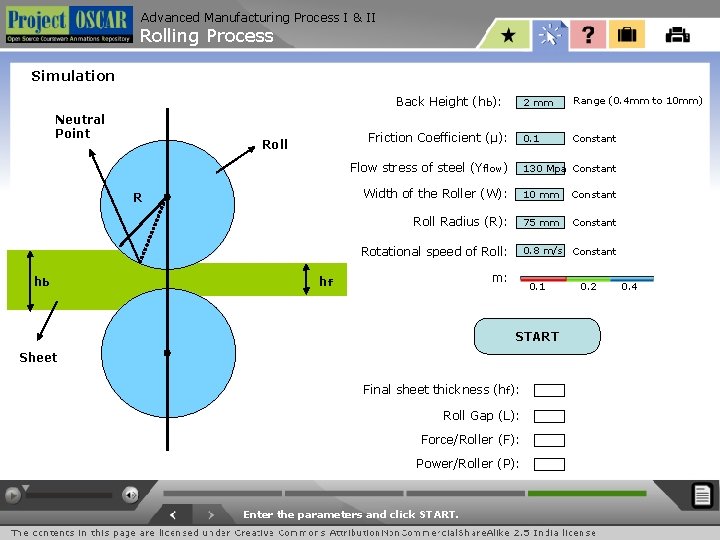
Advanced Manufacturing Process I & II Rolling Process Simulation Back Height (hb): Neutral Point Friction Coefficient (µ): Roll Flow stress of steel (Yflow) R Range (0. 4 mm to 10 mm) 0. 1 Constant 130 Mpa Constant Width of the Roller (W): 10 mm Constant Roll Radius (R): 75 mm Constant Rotational speed of Roll: hb 2 mm 0. 8 m/s Constant m: hf 0. 1 0. 2 0. 4 START Sheet Final sheet thickness (h f): Roll Gap (L): Force/Roller (F): Power/Roller (P): Enter the parameters and click START.
Advanced Manufacturing Process I & II Rolling Process Resources Books: • Serope Kalpakjian & Steven R. Schmid, “Manufacturing Process for Engineering Materials”, Section 6. 3 – Rolling Process • Ghosh & Malik, “Manufacturing Science”
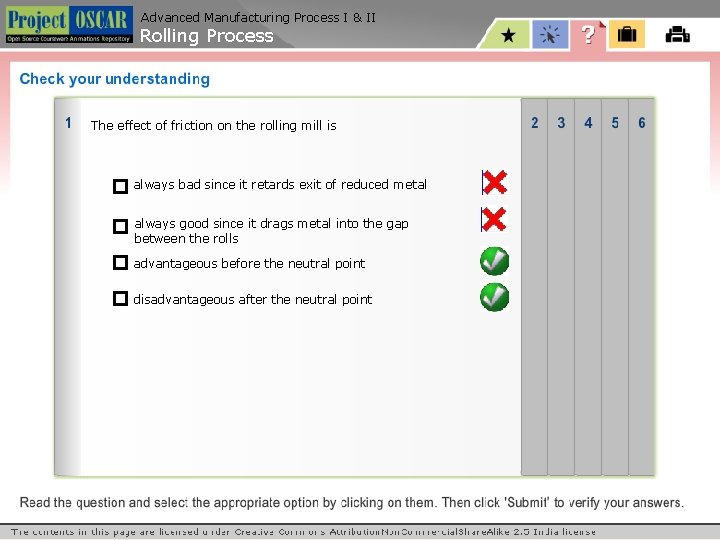
Advanced Manufacturing Process I & II Rolling Process The effect of friction on the rolling mill is always bad since it retards exit of reduced metal always good since it drags metal into the gap between the rolls advantageous before the neutral point disadvantageous after the neutral point
Advanced Manufacturing Process I & II Rolling Process As compared to cold rolling, hot rolling yields better dimensional control and higher strength better dimensional control but poorer strength worse dimensional control and higher strength better dimensional control and poorer strength
Advanced Manufacturing Process I & II Rolling Process Velocity at the exit is higher than velocity at the entry lower than velocity at the entry either equal to or lower than velocity at the entry, depending on the coefficient of friction either equal to or higher than velocity at the entry, depending on the coefficient of friction
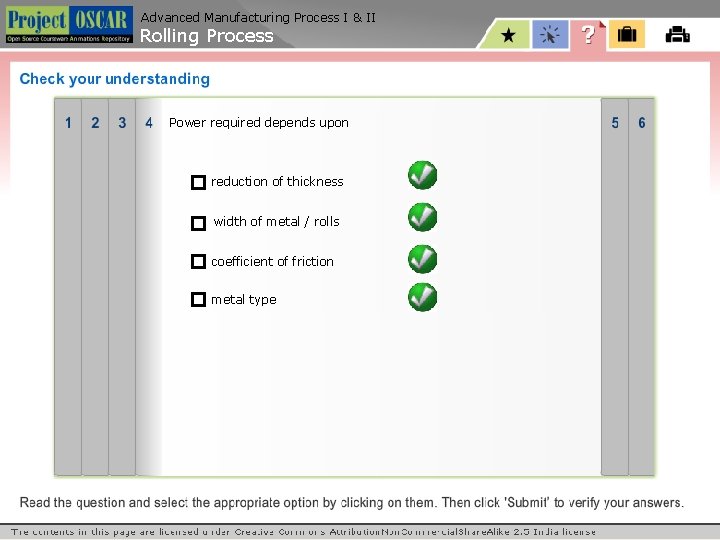
Advanced Manufacturing Process I & II Rolling Process Power required depends upon reduction of thickness width of metal / rolls coefficient of friction metal type
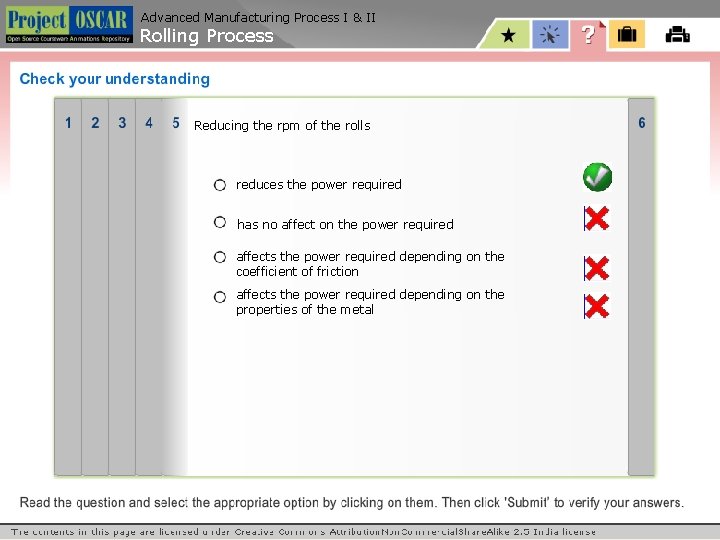
Advanced Manufacturing Process I & II Rolling Process Reducing the rpm of the rolls reduces the power required has no affect on the power required affects the power required depending on the coefficient of friction affects the power required depending on the properties of the metal