
Rolling and Forging of Metals Group 8 ME








- Slides: 50
Rolling and Forging of Metals Group 8 ME 260 Fall 2005 10/10/05 Kurt Sorenson Derek Benavidez Colin Evans Steven Best
Introduction ¡ ¡ ¡ ¡ Flat Rolling- Processes and Practices Rolling- Processes and Mills Die Forging- Open, Impression, and Closed Forging Operations Forgeability of Metals and Defects Die Design, Die Materials, Lubrication, and Manufacturing Methods Forging Machines, and Economics
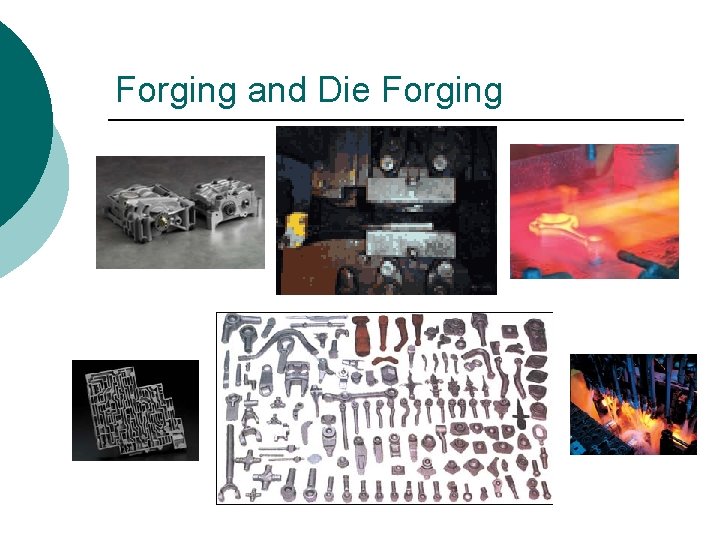
Forging and Die Forging
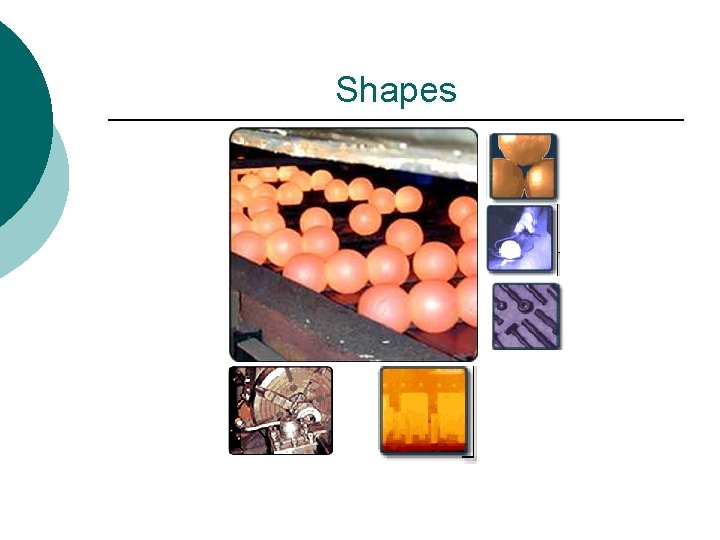
Shapes
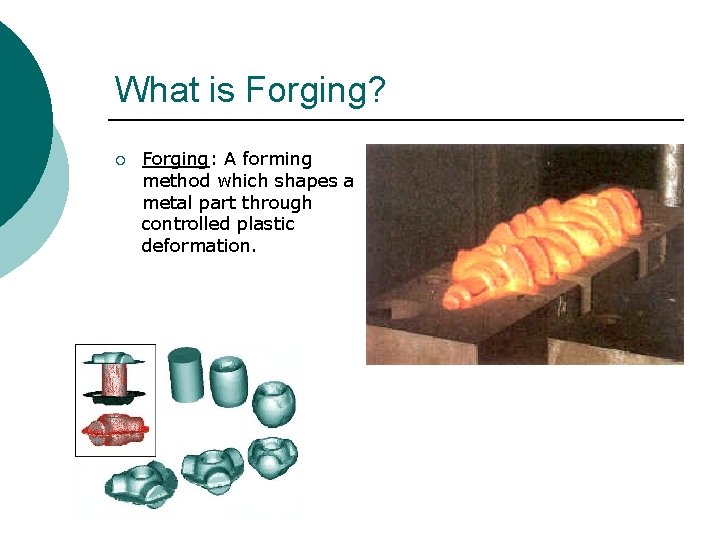
Definitions ¡ ¡ ¡ Plastic Deformation- When forces are applied to a material causing it to take on a new shape. Basis for all forming processes Forging- A forming method which shapes a metal part through controlled plastic deformation. Die- An impression or an opposite machined copy of an existing shape or complex structure (generally a ceramic or highly treated metal) used to repeatedly mimic the desired product shape in a press.
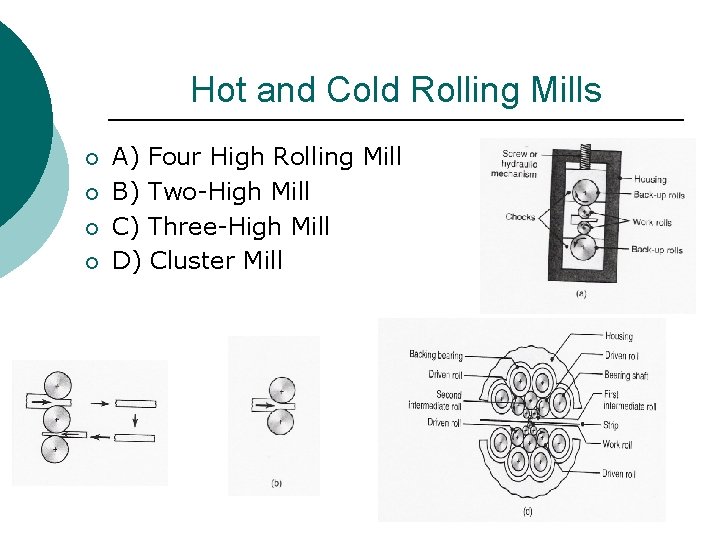
Hot and Cold Rolling Mills ¡ ¡ A) Four High Rolling Mill B) Two-High Mill C) Three-High Mill D) Cluster Mill
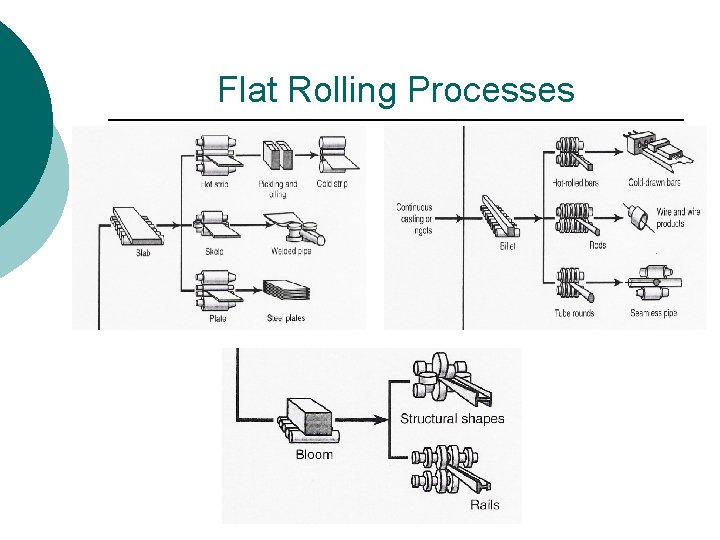
Flat Rolling Processes
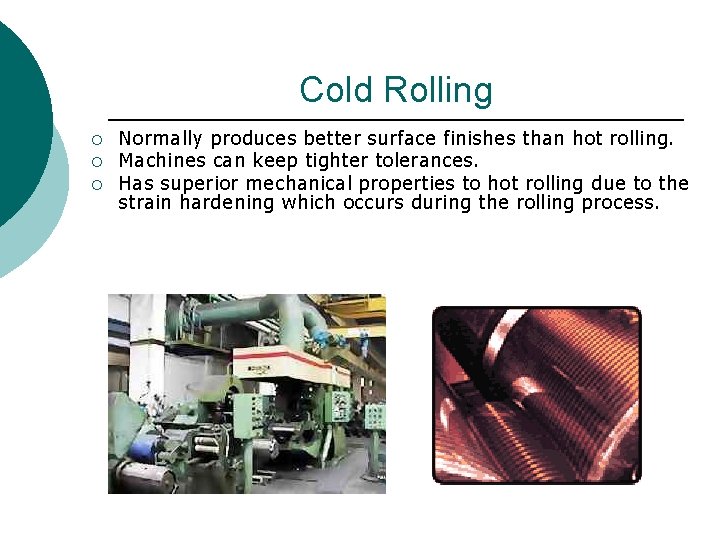
Cold Rolling ¡ ¡ ¡ Normally produces better surface finishes than hot rolling. Machines can keep tighter tolerances. Has superior mechanical properties to hot rolling due to the strain hardening which occurs during the rolling process.
Hot Rolling ¡ ¡ ¡ The first hot-rolling operation is called the bloom or slab ( usually rectangular cross section). Further processed into I-beams, railroad rails. Commonly the surfaces are conditioned prior to being hot rolled (normally by acid etching or rough grinding).
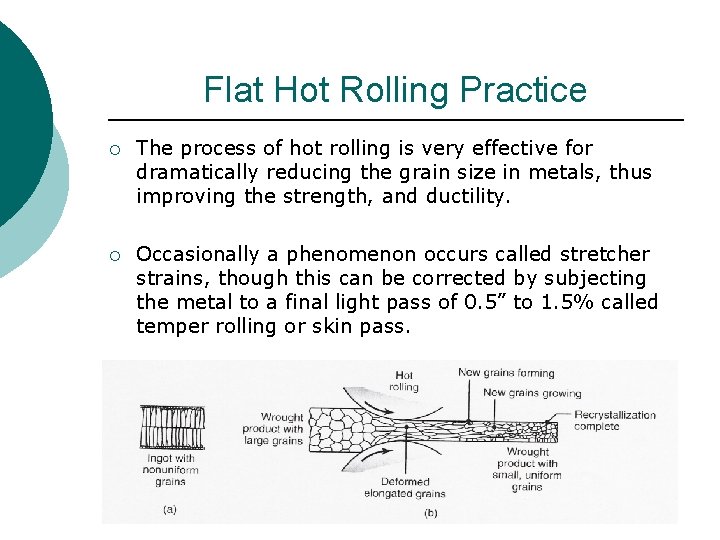
Flat Hot Rolling Practice ¡ The process of hot rolling is very effective for dramatically reducing the grain size in metals, thus improving the strength, and ductility. ¡ Occasionally a phenomenon occurs called stretcher strains, though this can be corrected by subjecting the metal to a final light pass of 0. 5” to 1. 5% called temper rolling or skin pass.
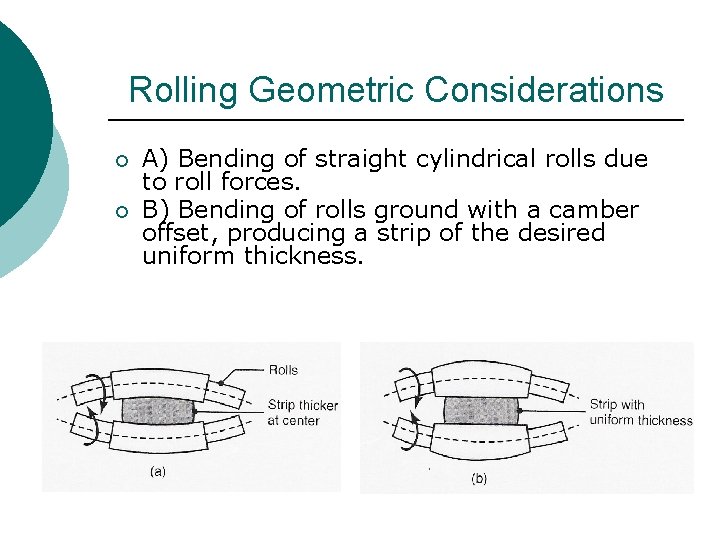
Rolling Geometric Considerations ¡ ¡ A) Bending of straight cylindrical rolls due to roll forces. B) Bending of rolls ground with a camber offset, producing a strip of the desired uniform thickness.
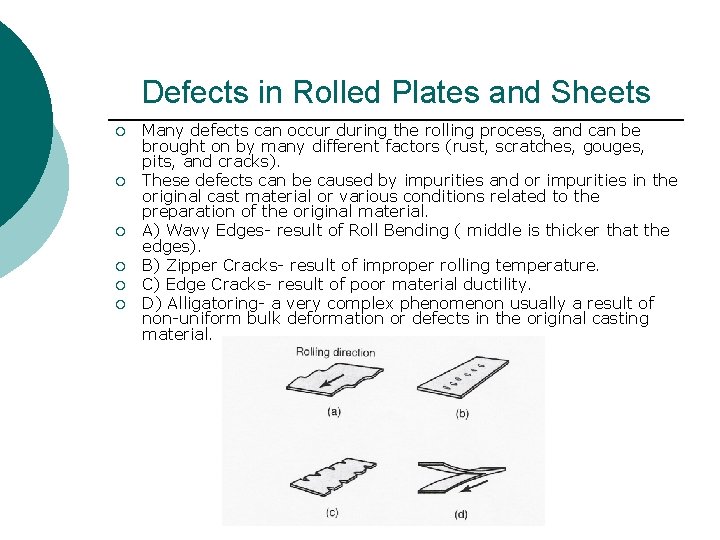
Defects in Rolled Plates and Sheets ¡ ¡ ¡ Many defects can occur during the rolling process, and can be brought on by many different factors (rust, scratches, gouges, pits, and cracks). These defects can be caused by impurities and or impurities in the original cast material or various conditions related to the preparation of the original material. A) Wavy Edges- result of Roll Bending ( middle is thicker that the edges). B) Zipper Cracks- result of improper rolling temperature. C) Edge Cracks- result of poor material ductility. D) Alligatoring- a very complex phenomenon usually a result of non-uniform bulk deformation or defects in the original casting material.
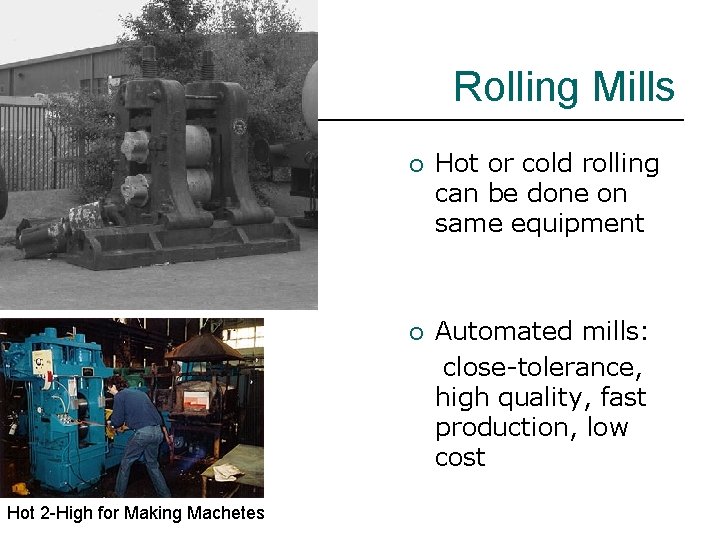
Rolling Mills Hot 2 -High for Making Machetes ¡ Hot or cold rolling can be done on same equipment ¡ Automated mills: close-tolerance, high quality, fast production, low cost
Rolling Mills ¡ Two-high rolling mills for initial hot rolling ¡ Four-high mills: small diameter rolls reduce power requirements and spreading but need support from larger rolls 2 High Temper Pass Mill
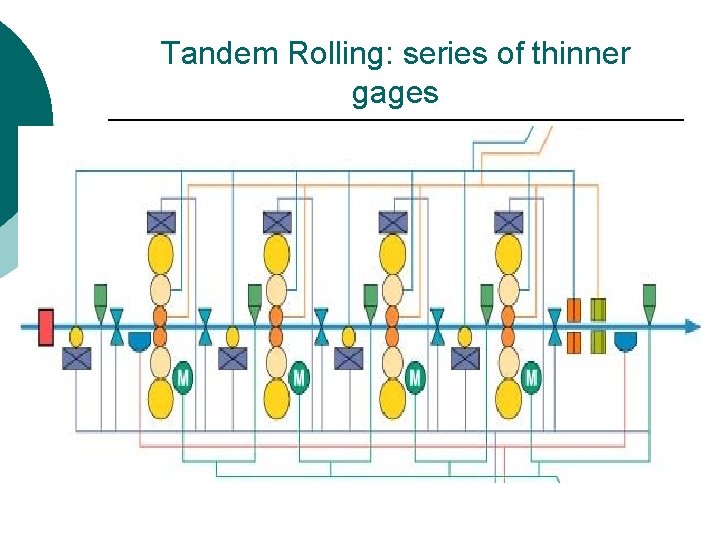
Tandem Rolling: series of thinner gages
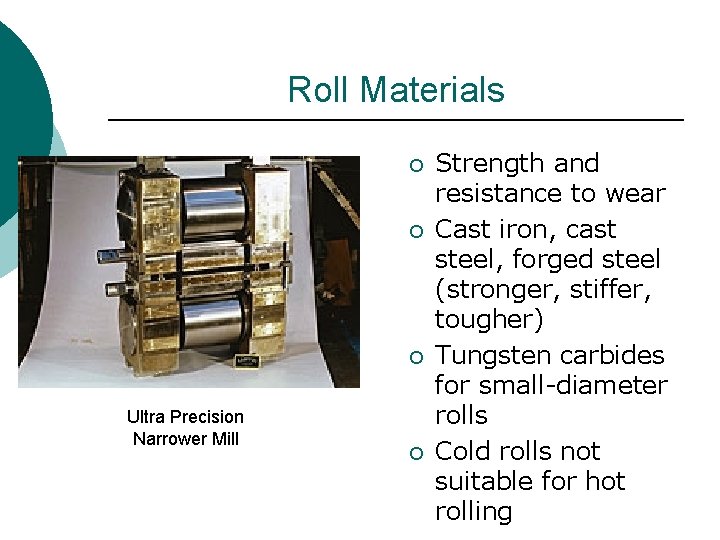
Roll Materials ¡ ¡ ¡ Ultra Precision Narrower Mill ¡ Strength and resistance to wear Cast iron, cast steel, forged steel (stronger, stiffer, tougher) Tungsten carbides for small-diameter rolls Cold rolls not suitable for hot rolling
Lubricants for Hot and Cold Rolling Hot Rolling: Ferrous alloys do not require lubricants Non-ferrous are hot rolled with compounded oils, emulsions, and fatty acids ¡ Cold Rolling: Use of water-soluble oils or low viscosity lubricants (mineral oils, emulsions, paraffin, and fatty oils) ¡
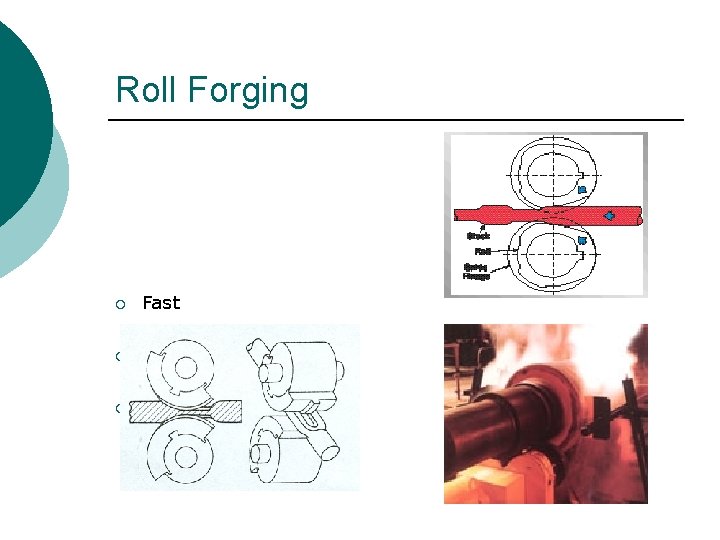
Rolling Processes ¡ Shape rolling: I-beams, railroad rails Shape Rolling ¡ Roll Forging Roll forging: tapered shafts, table knives, springs, hand tools
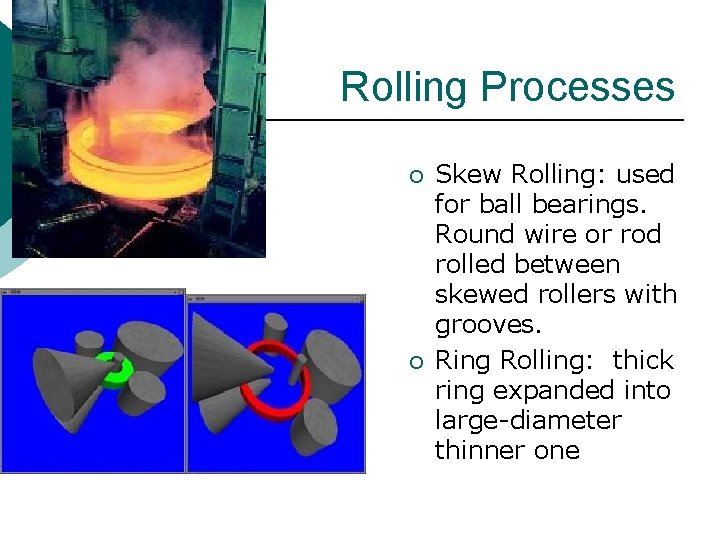
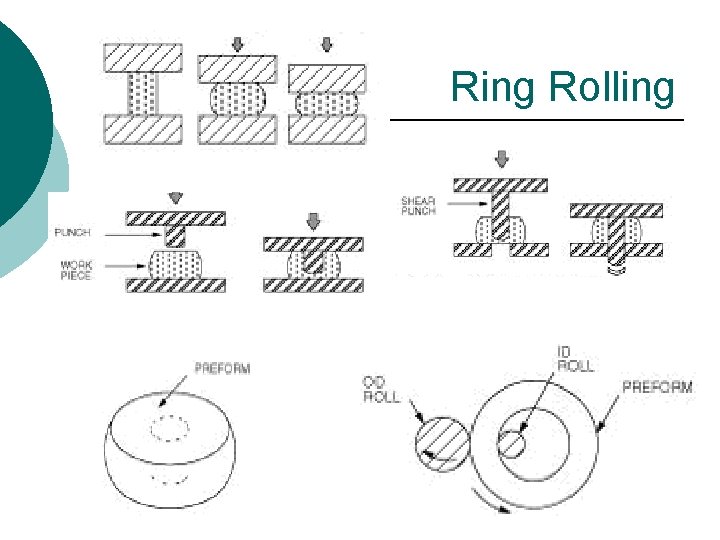
Rolling Processes ¡ ¡ Skew Rolling: used for ball bearings. Round wire or rod rolled between skewed rollers with grooves. Ring Rolling: thick ring expanded into large-diameter thinner one
Ring Rolling
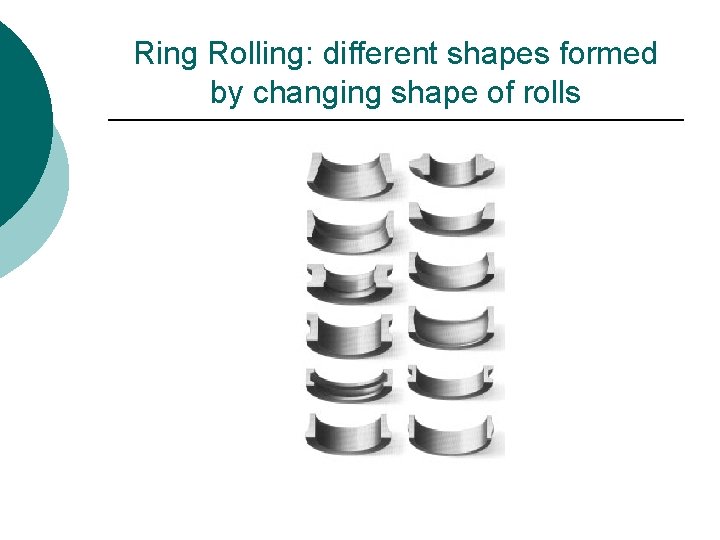
Ring Rolling: different shapes formed by changing shape of rolls
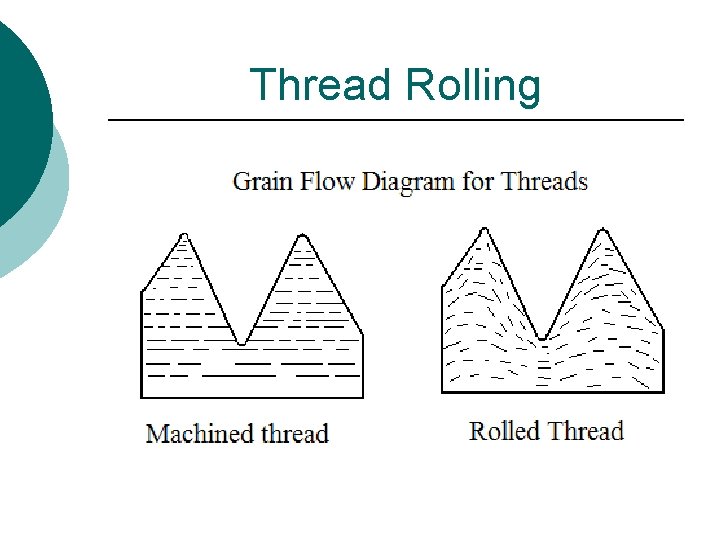
Thread Rolling: Process of adding threads to screws and bolts
Thread Rolling
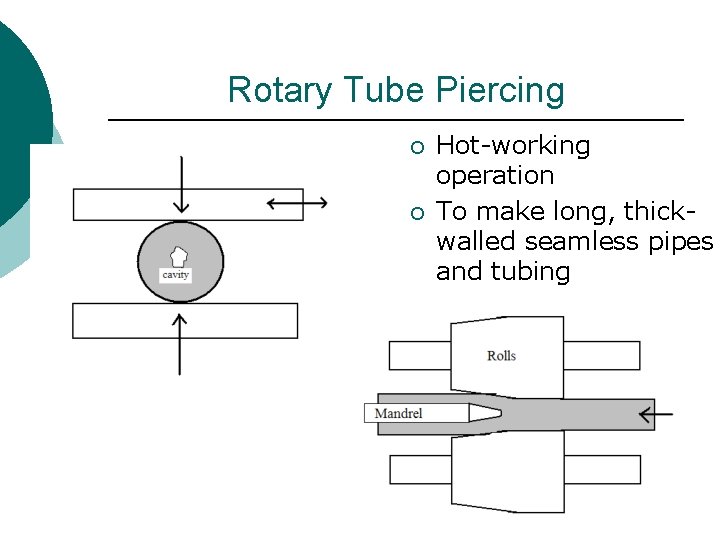
Rotary Tube Piercing ¡ ¡ Hot-working operation To make long, thickwalled seamless pipes and tubing
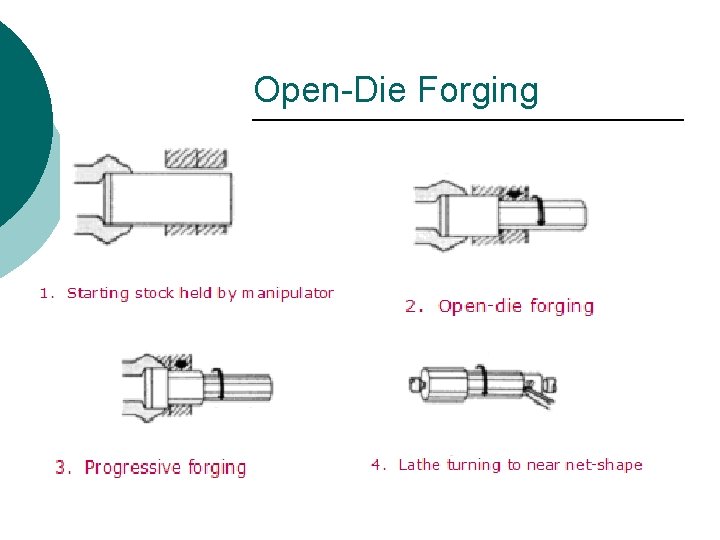
Open-Die Forging ¡ ¡ ¡ Flat-Die Forging Hot forging Uses simple and inexpensive dies Limited to simple shapes
Open-Die Forging
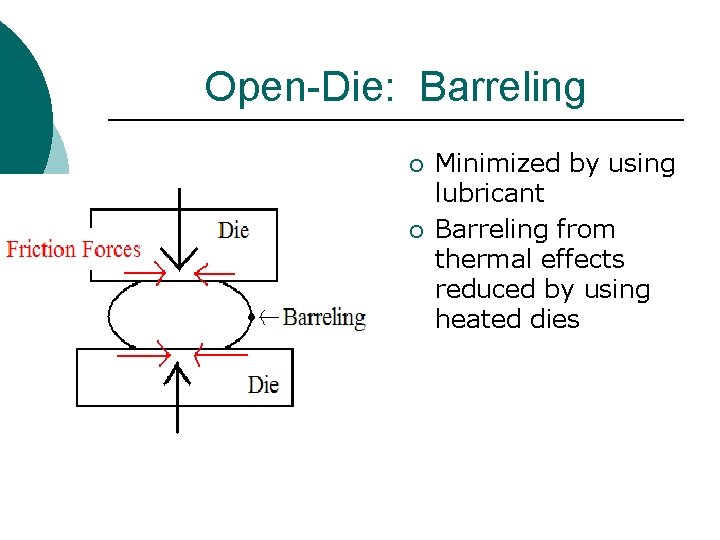
Open-Die: Barreling ¡ ¡ Minimized by using lubricant Barreling from thermal effects reduced by using heated dies
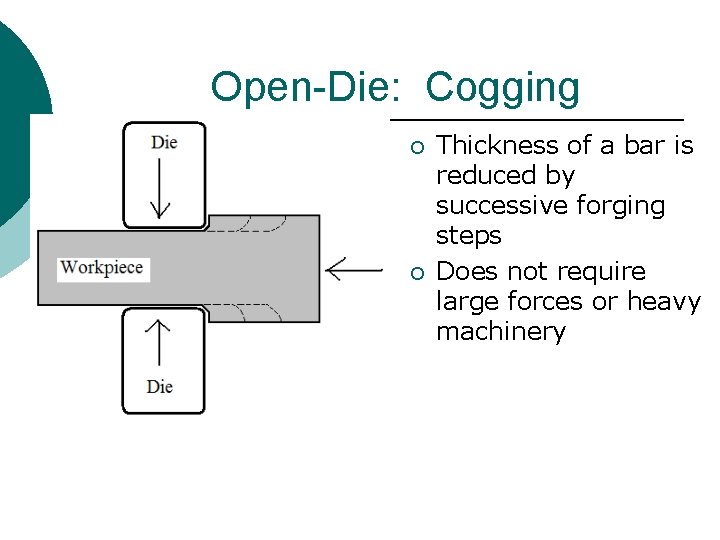
Open-Die: Cogging ¡ ¡ Thickness of a bar is reduced by successive forging steps Does not require large forces or heavy machinery
Impression-Die and Closed-Die Forging ¡ Impression-Die l l ¡ Takes shape of die cavity Forms a flash Performing Operations l l Fullering- material distribute away Edging- material gathered into localized area
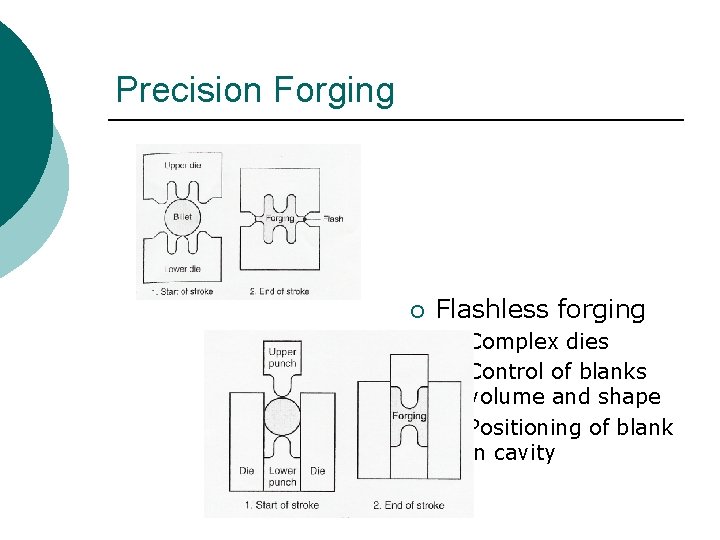
Precision Forging ¡ Flashless forging l l l Complex dies Control of blanks volume and shape Positioning of blank in cavity
Various Forging Operations ¡ Coining l l l ¡ Closed-die forging process Very high pressure required No lubricants Heading l l Upset forging Nails, bolt heads, etc.
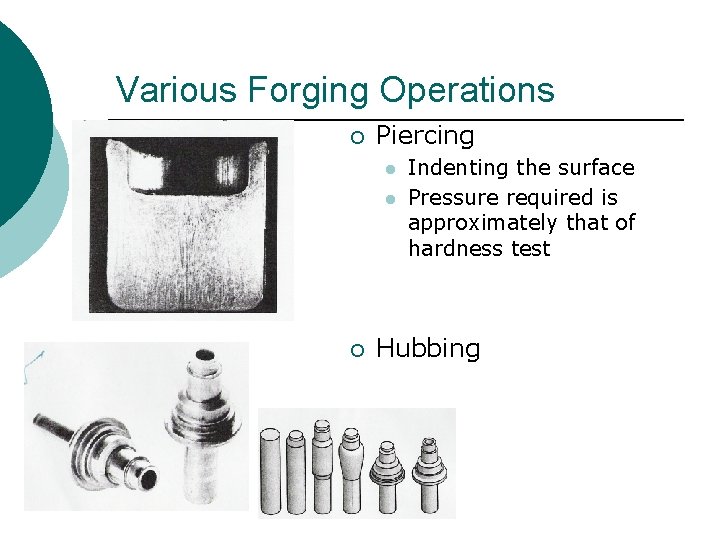
Various Forging Operations ¡ Piercing l l ¡ Indenting the surface Pressure required is approximately that of hardness test Hubbing
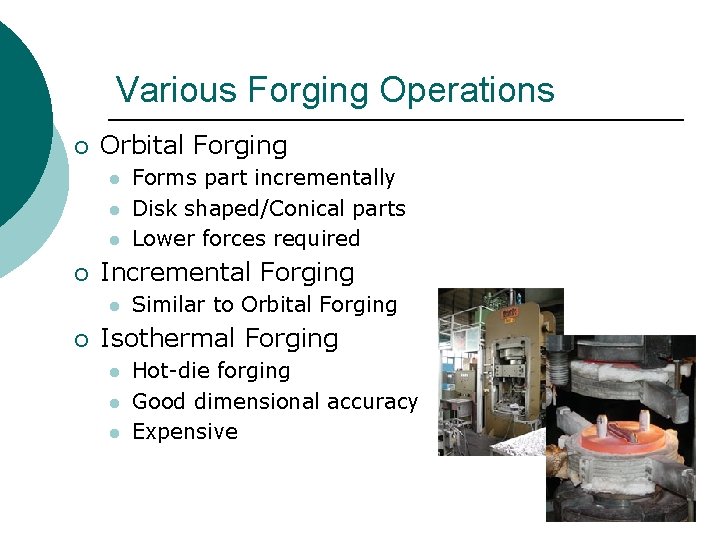
Various Forging Operations ¡ Orbital Forging l l l ¡ Incremental Forging l ¡ Forms part incrementally Disk shaped/Conical parts Lower forces required Similar to Orbital Forging Isothermal Forging l l l Hot-die forging Good dimensional accuracy Expensive
Various Forging Operations ¡ Rotary Swaging l Radial forging, rotary forging, or swaging 1. ¡ 2. ¡ 3. ¡ 4. ¡ 5. ¡ Retainer Planetary rollers Hammer Driver Die
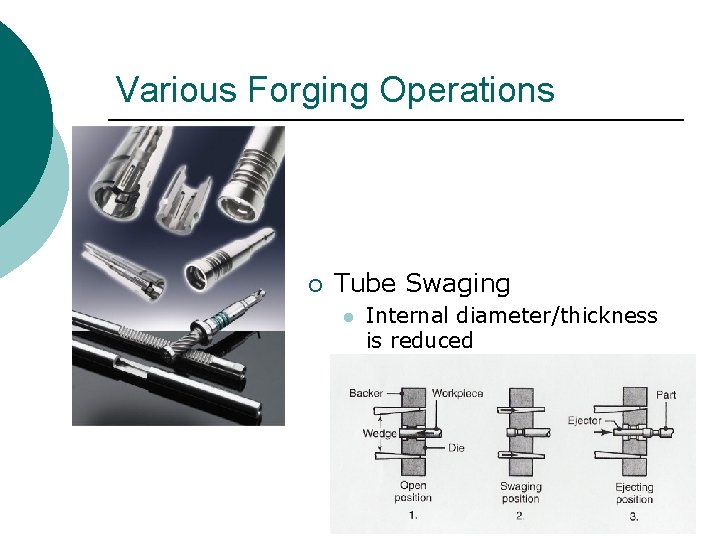
Various Forging Operations ¡ Tube Swaging l l Internal diameter/thickness is reduced Mandrels ¡ Fits inside piece ¡ Have a specific geometry/pattern style
Forgeability of Metals– Forging Defects ¡ Upsetting Test l l ¡ Solid, cylindrical specimen is upset between flat dies Greater deformation, greater forgeability Hot-Twist Test l l Specimen twisted until it fails Different specimens & temps.
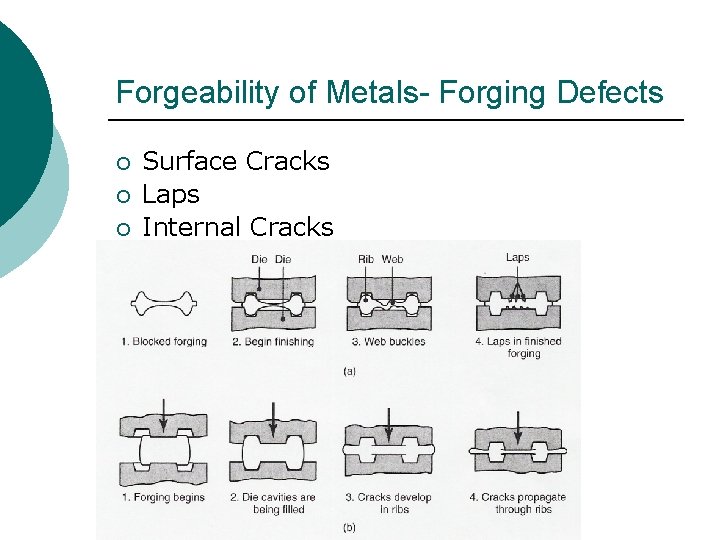
Forgeability of Metals- Forging Defects ¡ ¡ ¡ Surface Cracks Laps Internal Cracks
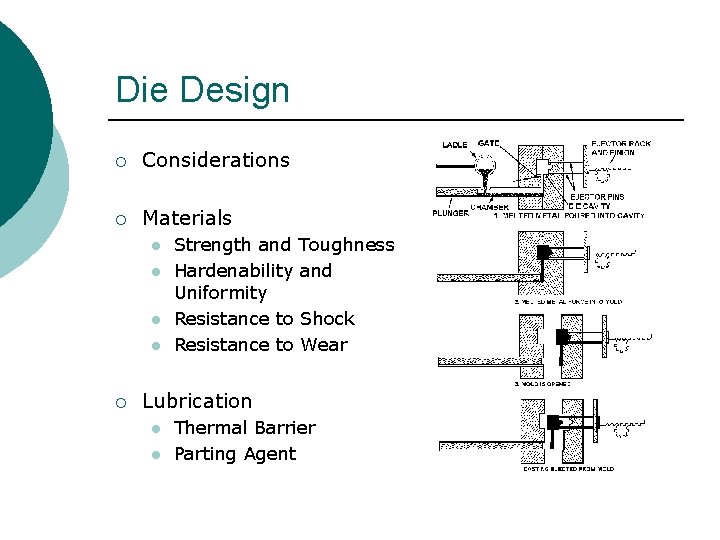
Die Design ¡ Considerations ¡ Materials l l ¡ Strength and Toughness Hardenability and Uniformity Resistance to Shock Resistance to Wear Lubrication l l Thermal Barrier Parting Agent
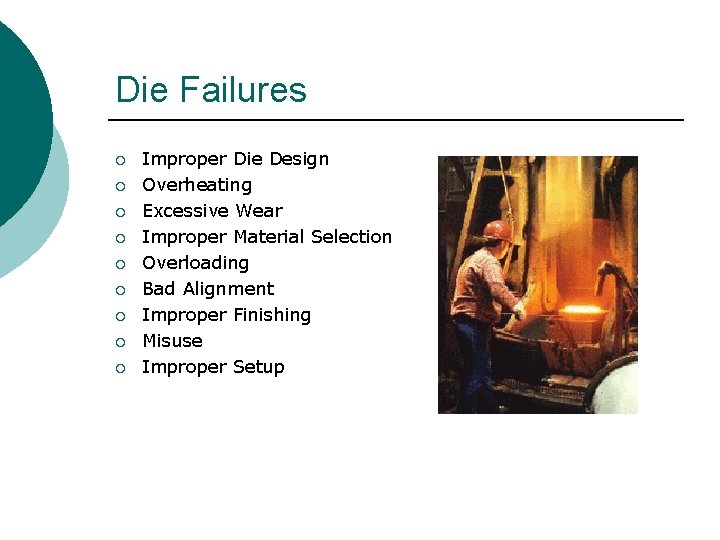
Die Failures ¡ ¡ ¡ ¡ ¡ Improper Die Design Overheating Excessive Wear Improper Material Selection Overloading Bad Alignment Improper Finishing Misuse Improper Setup
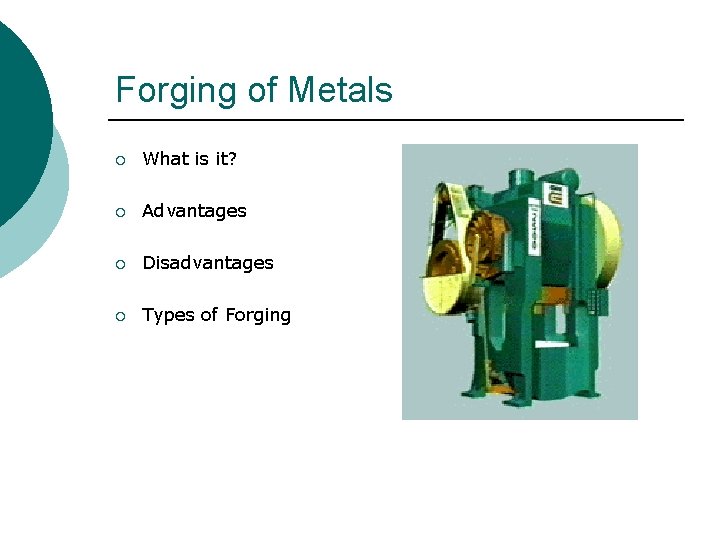
Forging of Metals ¡ What is it? ¡ Advantages ¡ Disadvantages ¡ Types of Forging
What is Forging? ¡ Forging: A forming method which shapes a metal part through controlled plastic deformation.
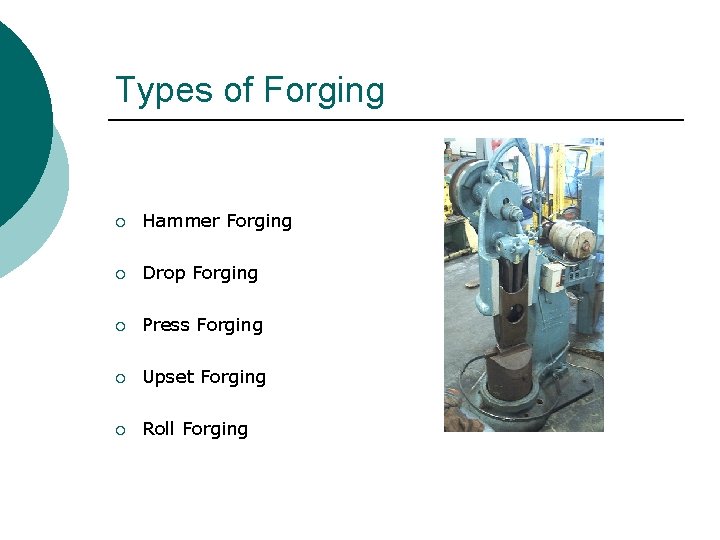
Types of Forging ¡ Hammer Forging ¡ Drop Forging ¡ Press Forging ¡ Upset Forging ¡ Roll Forging
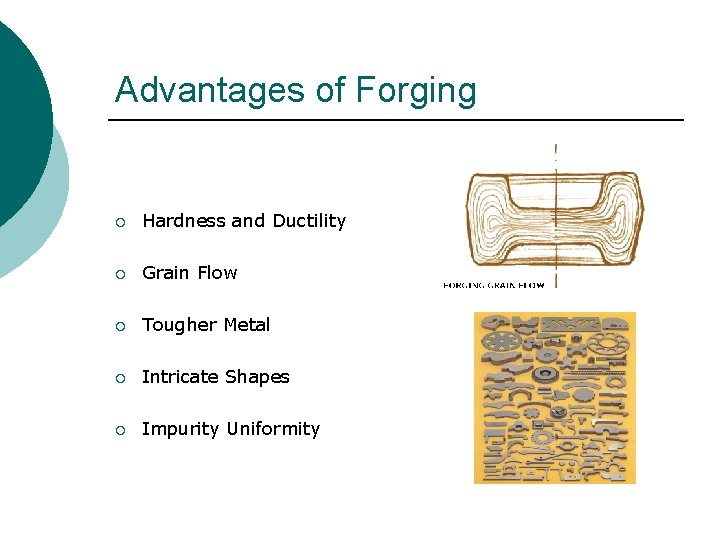
Advantages of Forging ¡ Hardness and Ductility ¡ Grain Flow ¡ Tougher Metal ¡ Intricate Shapes ¡ Impurity Uniformity
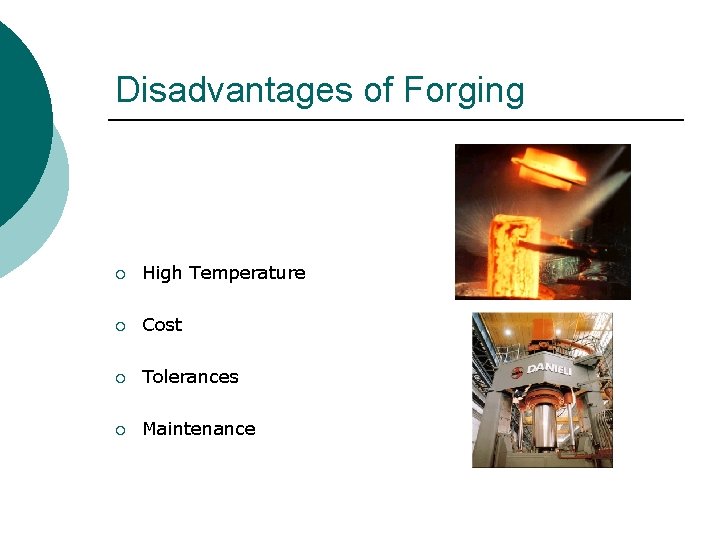
Disadvantages of Forging ¡ High Temperature ¡ Cost ¡ Tolerances ¡ Maintenance
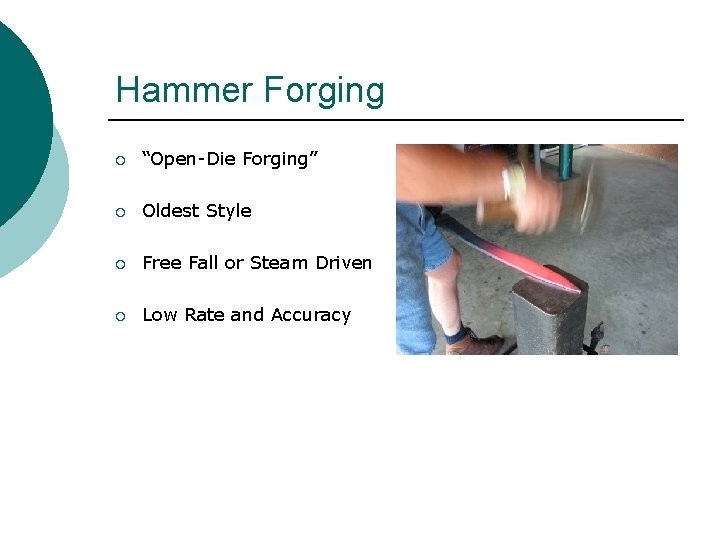
Hammer Forging ¡ “Open-Die Forging” ¡ Oldest Style ¡ Free Fall or Steam Driven ¡ Low Rate and Accuracy
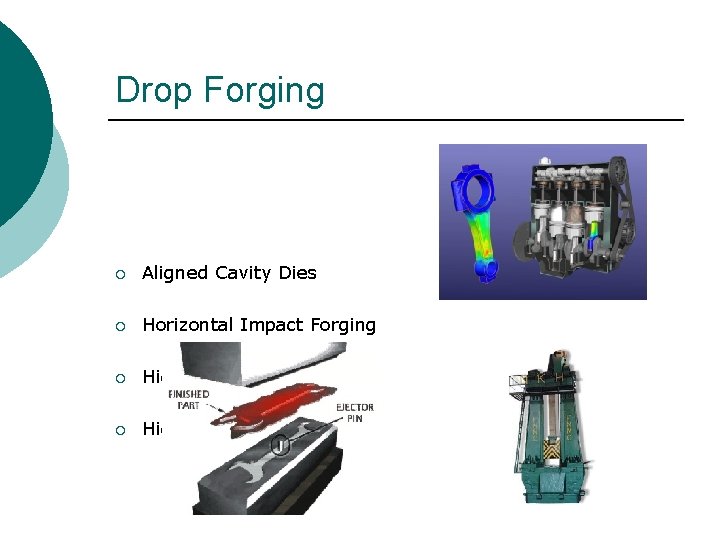
Drop Forging ¡ Aligned Cavity Dies ¡ Horizontal Impact Forging ¡ High Accuracy ¡ High Tensile Strength
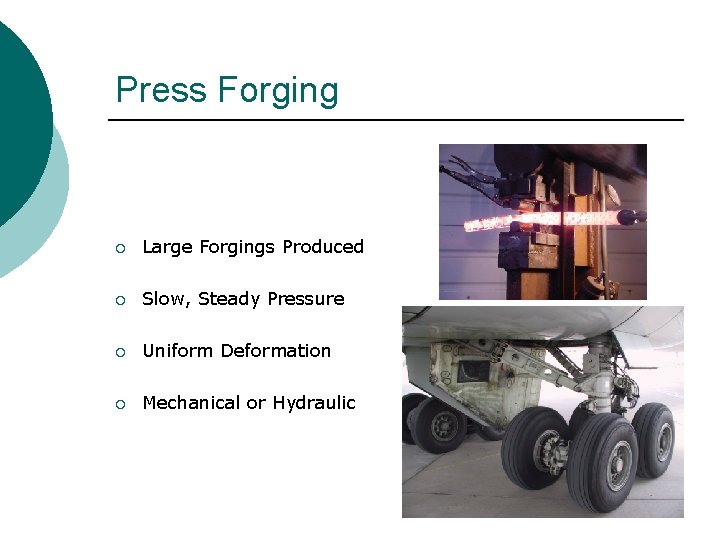
Press Forging ¡ Large Forgings Produced ¡ Slow, Steady Pressure ¡ Uniform Deformation ¡ Mechanical or Hydraulic
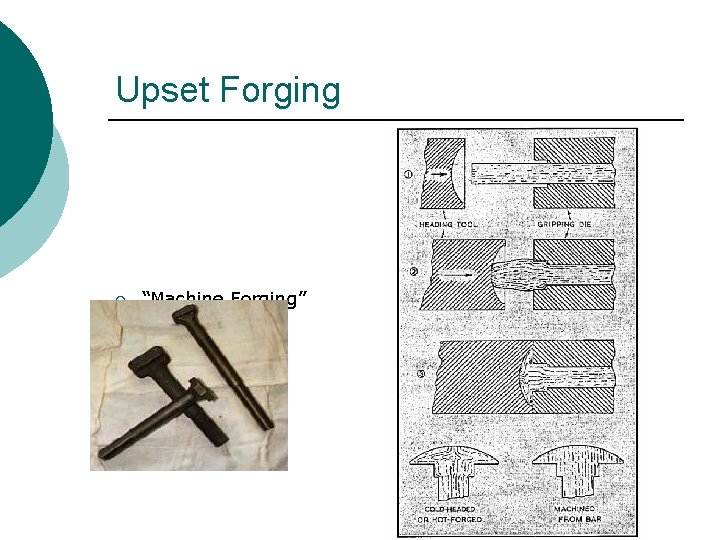
Upset Forging ¡ “Machine Forging” ¡ Common ¡ Hot or Cold
Roll Forging ¡ Fast ¡ Widely Used ¡ Long, Tapered or Symmetrical Sections
References Callister, William D. Jr. Materials Science And Engineering An Introduction. New York: John Wiley & Sons, Inc. , © 2003. Kalpakjian, Serope, and Steven R. Schmid. Manufacturing Engineering and Technology. Upper Saddle River: Pearson Education Inc. , © 2006. Lindbeck, John R. Product Design and Manufacturing. Upper Saddle River: Prentice-Hall, © 1995. AIST Steellinks. com. Association for Iron & Steel Technology. October 4, 2005. http: //www. steellinks. com