
Roles of Organisms in an Ecosystem Other roles
- Slides: 20
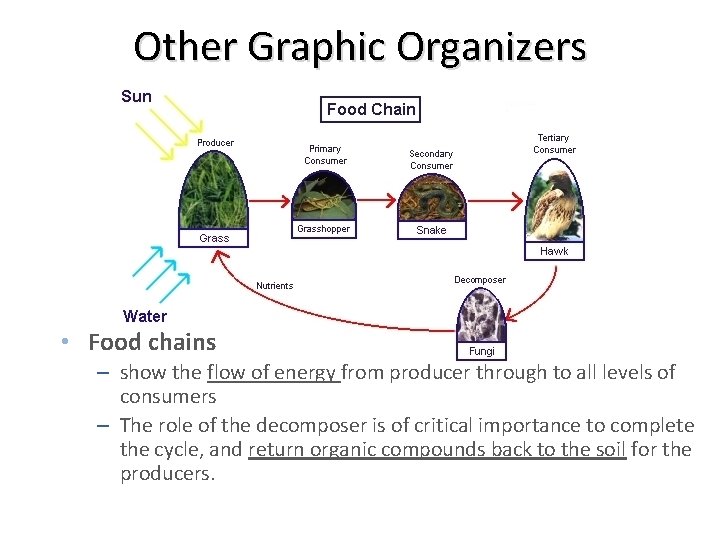
Roles of Organisms in an Ecosystem • Other roles: – Scavengers • an animal that feeds on dead and decaying animals it did not kill itself – Decomposers • organisms that break down decaying organic matter into simpler molecules • return organic material to the soil
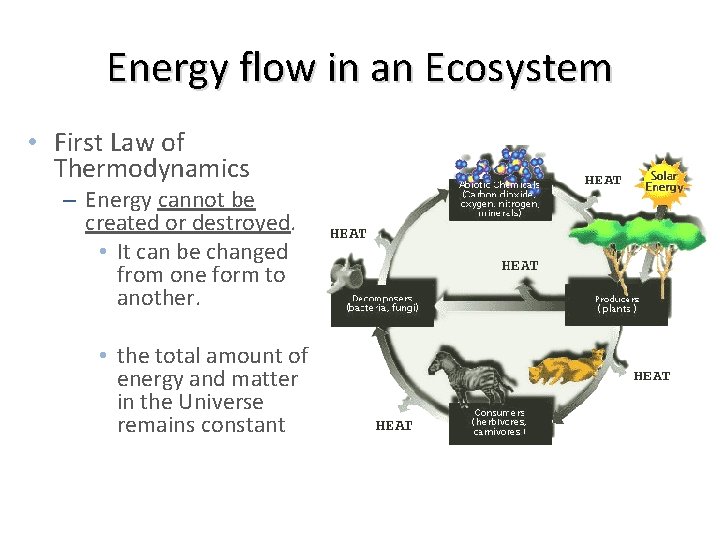
Energy flow in an Ecosystem • First Law of Thermodynamics – Energy cannot be created or destroyed. • It can be changed from one form to another. • the total amount of energy and matter in the Universe remains constant
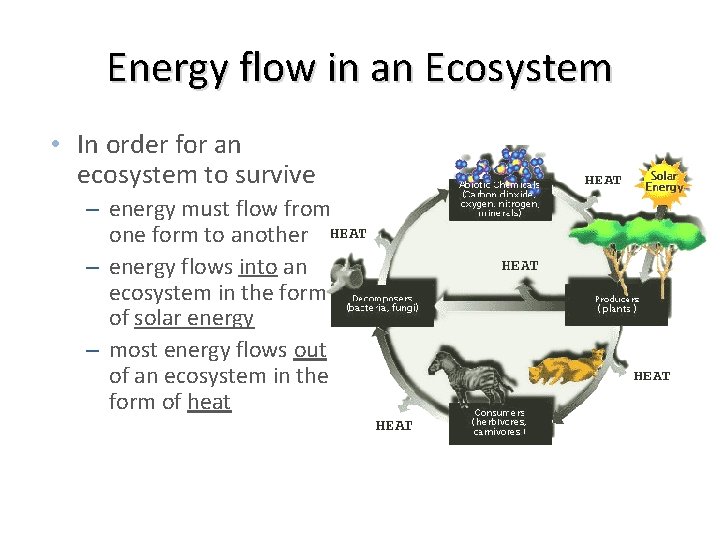
Energy flow in an Ecosystem • In order for an ecosystem to survive – energy must flow from one form to another – energy flows into an ecosystem in the form of solar energy – most energy flows out of an ecosystem in the form of heat
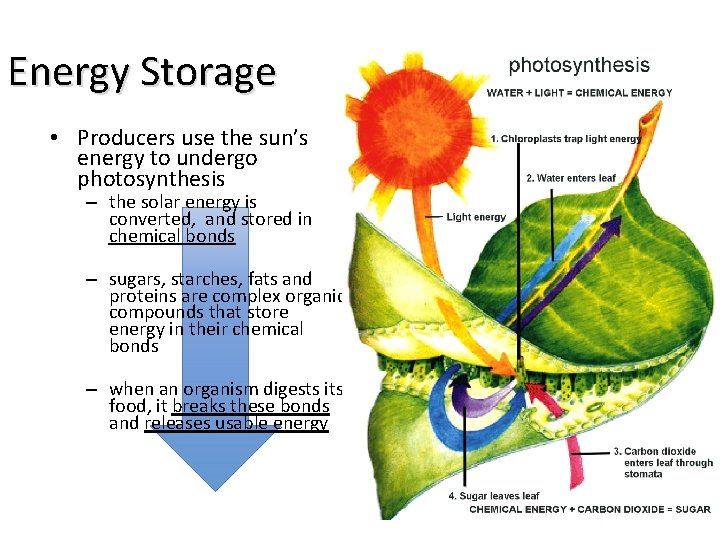
Energy Storage • Producers use the sun’s energy to undergo photosynthesis – the solar energy is converted, and stored in chemical bonds – sugars, starches, fats and proteins are complex organic compounds that store energy in their chemical bonds – when an organism digests its food, it breaks these bonds and releases usable energy
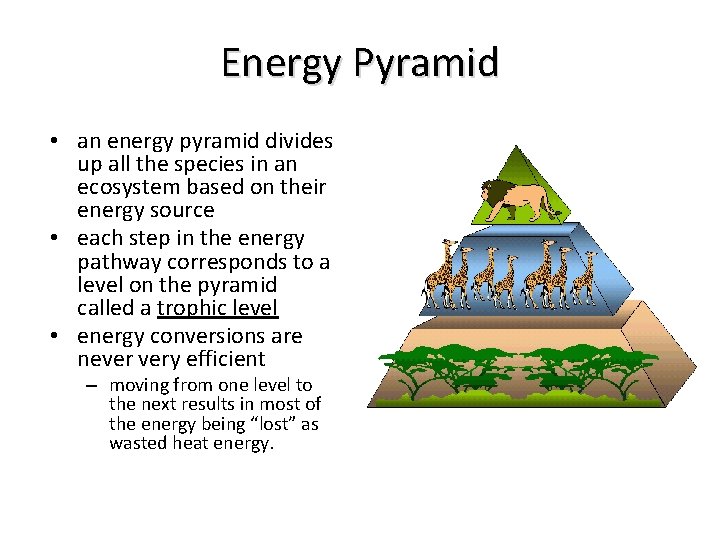
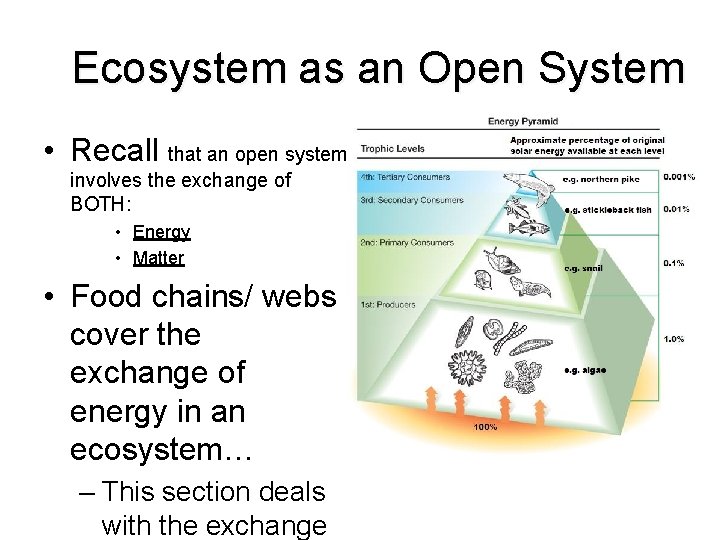
Energy Pyramid • an energy pyramid divides up all the species in an ecosystem based on their energy source • each step in the energy pathway corresponds to a level on the pyramid called a trophic level • energy conversions are never very efficient – moving from one level to the next results in most of the energy being “lost” as wasted heat energy.
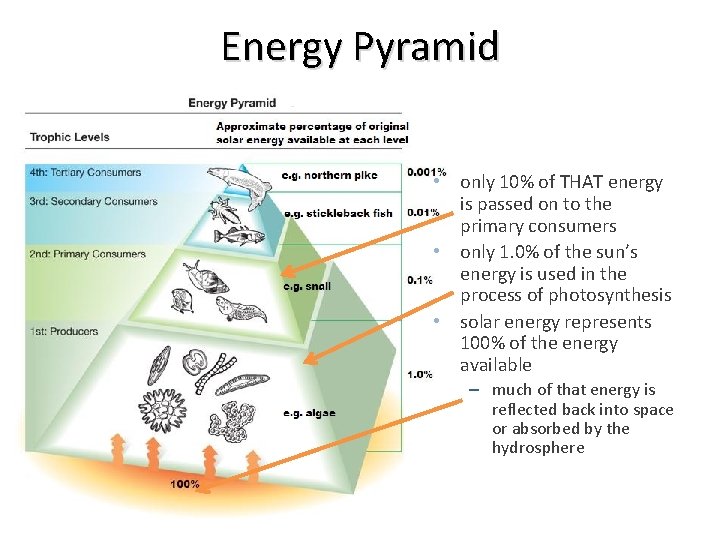
Energy Pyramid • only 10% of THAT energy is passed on to the primary consumers • only 1. 0% of the sun’s energy is used in the process of photosynthesis • solar energy represents 100% of the energy available – much of that energy is reflected back into space or absorbed by the hydrosphere
Energy pyramid • In fact only about 10% of the energy at any level is available is passed on to the next level • the rest of the energy (90%) isn’t destroyed – it is “lost” to the environment as heat • therefore each trophic level requires a greater volume of food to obtain the necessary energy – example: • a grasshopper consumes about 0. 1 g of grass a day • a peregrine falcon consumes about 500 g of other birds a day
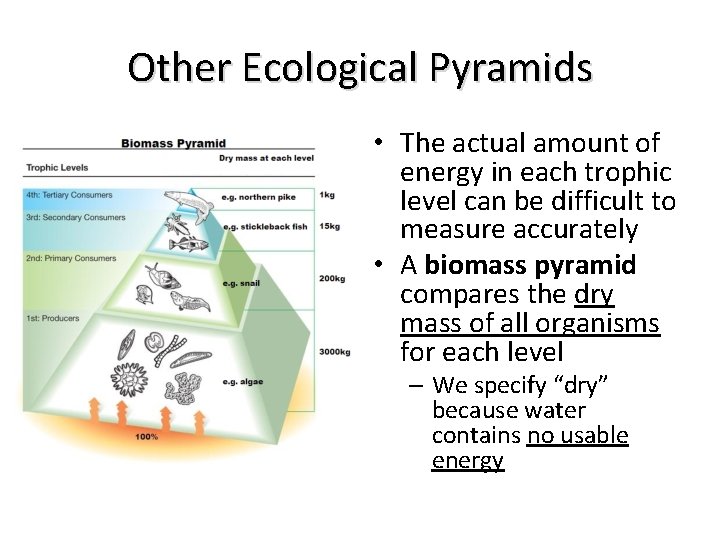
Other Ecological Pyramids • The actual amount of energy in each trophic level can be difficult to measure accurately • A biomass pyramid compares the dry mass of all organisms for each level – We specify “dry” because water contains no usable energy
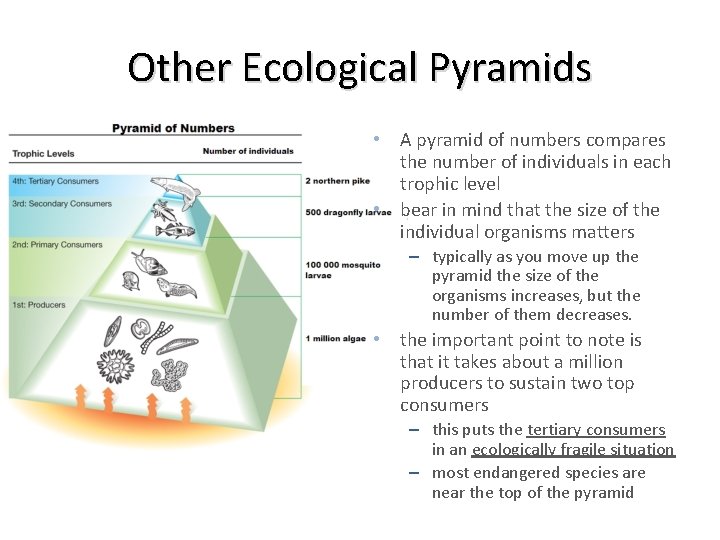
Other Ecological Pyramids • A pyramid of numbers compares the number of individuals in each trophic level • bear in mind that the size of the individual organisms matters – typically as you move up the pyramid the size of the organisms increases, but the number of them decreases. • the important point to note is that it takes about a million producers to sustain two top consumers – this puts the tertiary consumers in an ecologically fragile situation – most endangered species are near the top of the pyramid
Other Graphic Organizers • Food chains – show the flow of energy from producer through to all levels of consumers – The role of the decomposer is of critical importance to complete the cycle, and return organic compounds back to the soil for the producers.
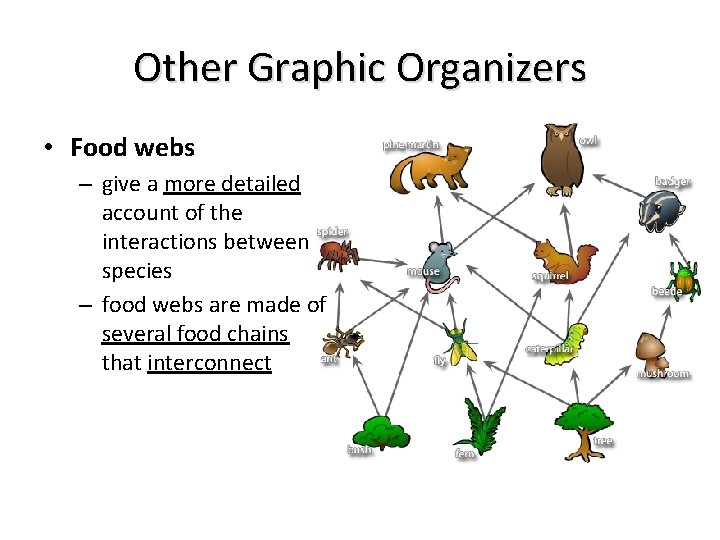
Other Graphic Organizers • Food webs – give a more detailed account of the interactions between species – food webs are made of several food chains that interconnect
Assignment: • Complete the “ROLES OF ORGANISMS WITHIN THE PRAIRIE GRASSLAND ECOSYSTEM” Chart • PRACTICE PROBLEMS – #’s 25 & 26 • 1. 3 Summary Q’s 2 -6 (pg 432)
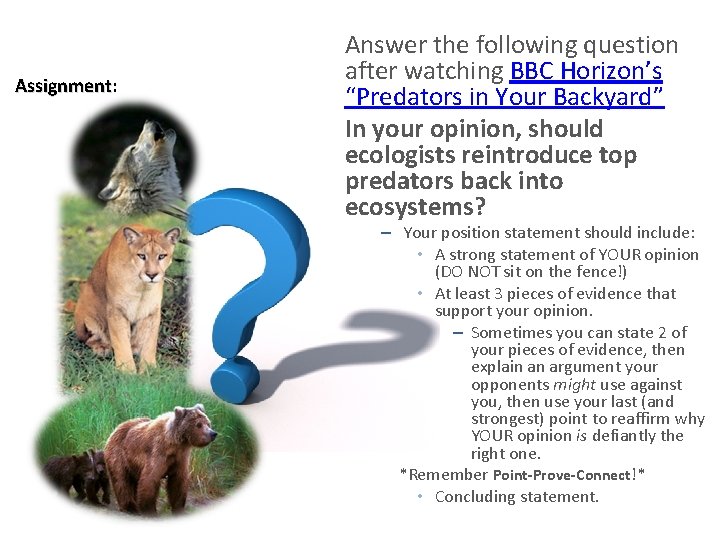
Assignment: Assignment Answer the following question after watching BBC Horizon’s “Predators in Your Backyard” In your opinion, should ecologists reintroduce top predators back into ecosystems? – Your position statement should include: • A strong statement of YOUR opinion (DO NOT sit on the fence!) • At least 3 pieces of evidence that support your opinion. – Sometimes you can state 2 of your pieces of evidence, then explain an argument your opponents might use against you, then use your last (and strongest) point to reaffirm why YOUR opinion is defiantly the right one. *Remember Point-Prove-Connect!* • Concluding statement.
The Biosphere of Life Section 1. 5 The Recycling of Matter
Ecosystem as an Open System • Recall that an open system involves the exchange of BOTH: • Energy • Matter • Food chains/ webs cover the exchange of energy in an ecosystem… – This section deals with the exchange
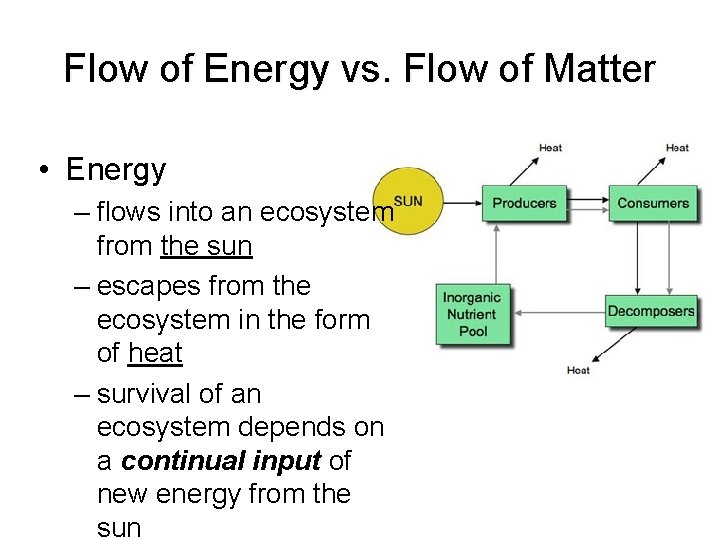
Flow of Energy vs. Flow of Matter • Energy – flows into an ecosystem from the sun – escapes from the ecosystem in the form of heat – survival of an ecosystem depends on a continual input of new energy from the sun
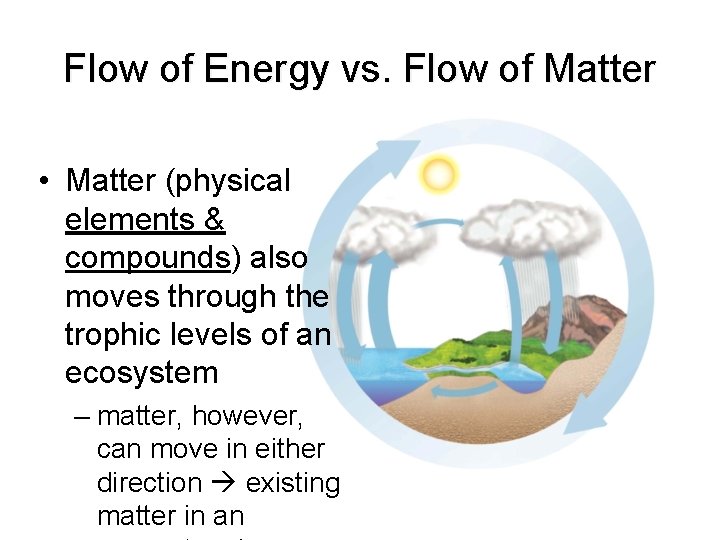
Flow of Energy vs. Flow of Matter • Matter (physical elements & compounds) also moves through the trophic levels of an ecosystem – matter, however, can move in either direction existing matter in an
What’s the Matter? There are four main types of matter that are cycled through ecosystems are: water, carbon, oxygen and nitrogen Two types of cycles: hydrologic cycle (water cycle) the movement of water through an ecosystem biogeochemical cycles the movement of elements and compounds between
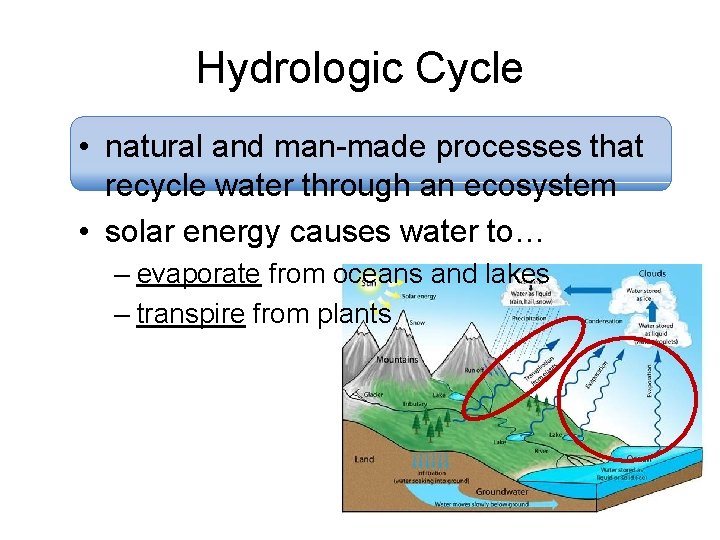
Hydrologic Cycle • natural and man-made processes that recycle water through an ecosystem • solar energy causes water to… – evaporate from oceans and lakes – transpire from plants
Hydrologic Cycle • natural and man-made processes that recycle water through an ecosystem • This causes water vapour to be added to the atmosphere, this increases the humidity in the air. – Indicators of increased humidity are; • fog, dew, development of large cumulonimbus (fluffy looking) clouds and precipitation. • an increase in humidity also makes the temperature seem higher.