
Roles and Responsibilities of a Board Member Training
Roles and Responsibilities of a Board Member Training Introduction to Regulatory Governance Council on Licensure, Enforcement and Regulation
Session Introduction
Learning Objectives §Upon completion of the session, you will be able to: §Identify the roles and responsibilities of individual board members, and the board as a whole §Recognize the roles of staff and how staff and board members interact §Summarize a code of conduct for board members and staff §Identify and avoid conflicts of interest §Evaluate board performance

Session Map Roles and Responsibilities of a Board Member Responsibility Code of Conduct Sharing Information Building Good Relationships Evaluation Session Review

Board Member Responsibilities
A Regulatory Body is a Public Organization §Entrusted to professions §Privilege §Instrument of government §Privilege can be taken away
Protecting the Public Interest §Mandated to protect the public §Entry to practice §Professional conduct §Continuing competency and quality assurance §Linked to reputation
Adding Value §Setting strategic direction §Concentrating on: §Organizational well-being §Financial health §Quality of your work §Asking probing questions §Adherence to, and adoption of regulations §Enabling a high performing CEO to assist and partner with the board
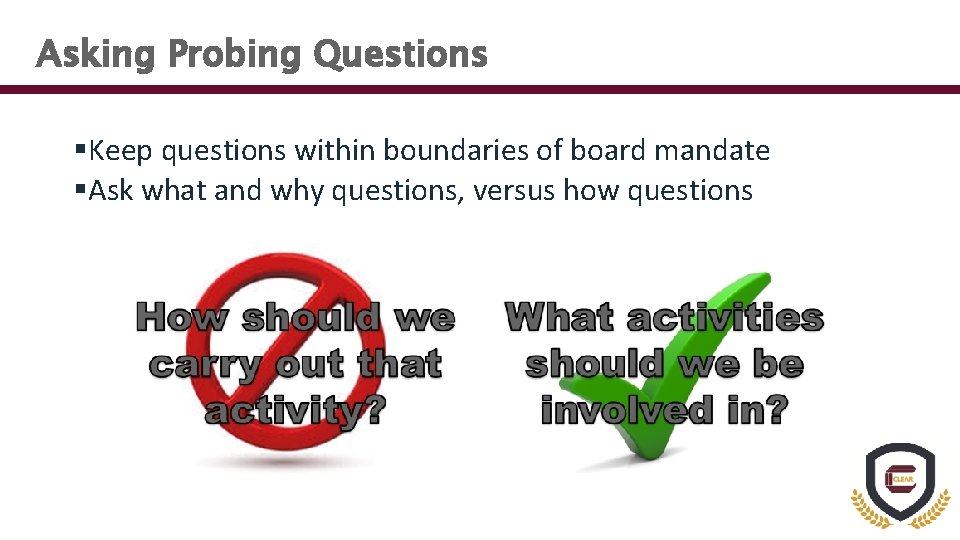
Asking Probing Questions §Keep questions within boundaries of board mandate §Ask what and why questions, versus how questions
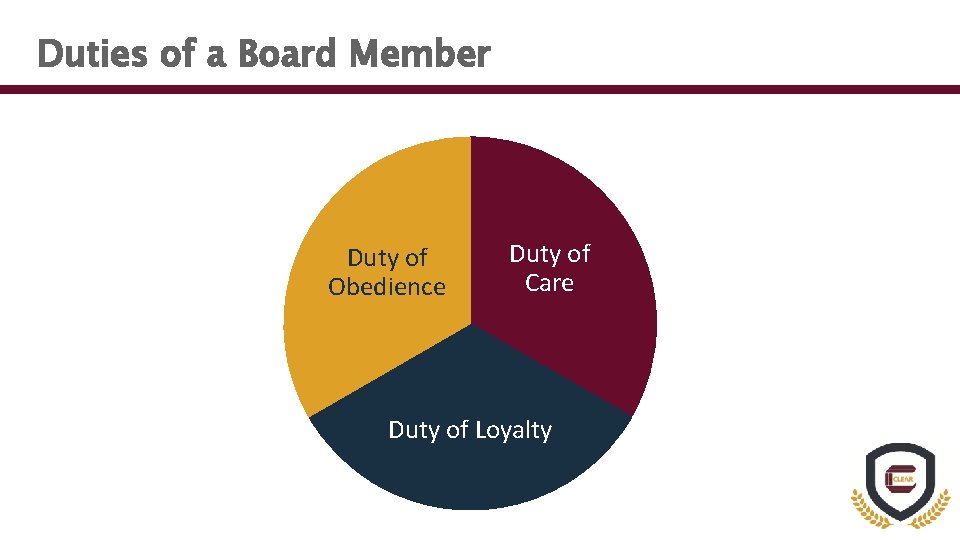
Duties of a Board Member Duty of Obedience Duty of Care Duty of Loyalty
Duty of Care §Accountable to act with due diligence towards: §Activities mandated by enabling legislation §Financial matters §Evaluations
Duty of Loyalty §Alignment with the best interests of the organization §Do you have the public’s best interests in mind? §Loyalty addresses conflicts of interest and speaking with one voice
Duty of Obedience §To the rules and unity of command §Are you obeying the rules as a board member? §Rules have many forms §Bylaws §Rules of order §Governance policies §Codes of conduct
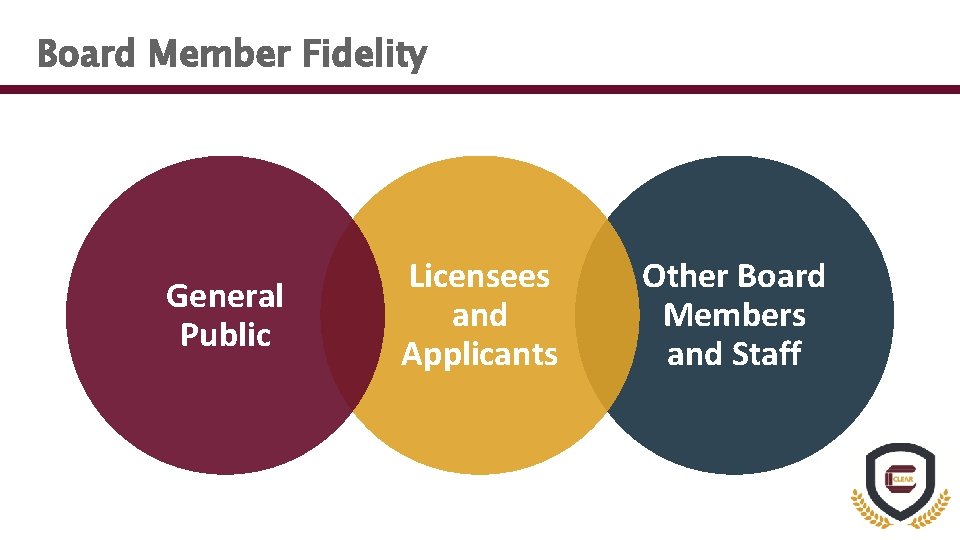
Board Member Fidelity General Public Licensees and Applicants Other Board Members and Staff
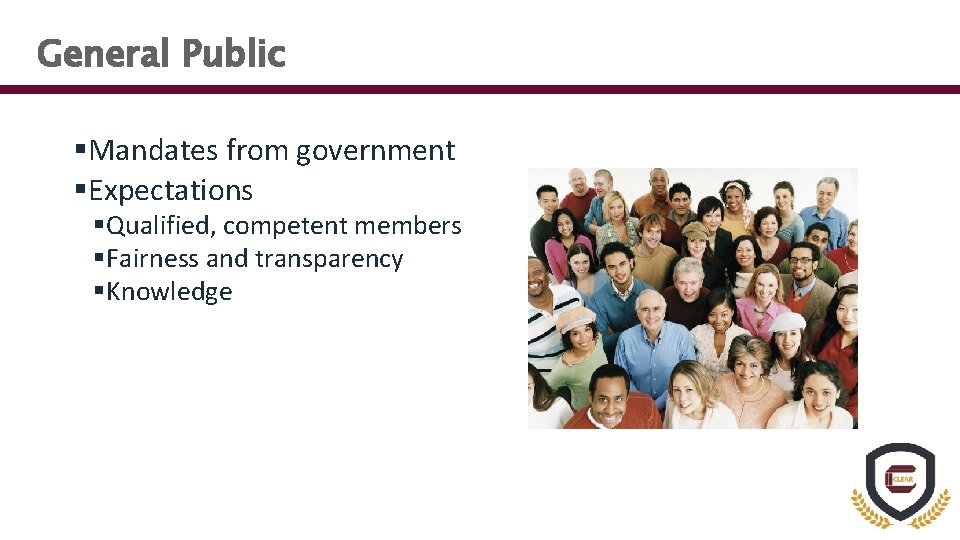
General Public §Mandates from government §Expectations §Qualified, competent members §Fairness and transparency §Knowledge
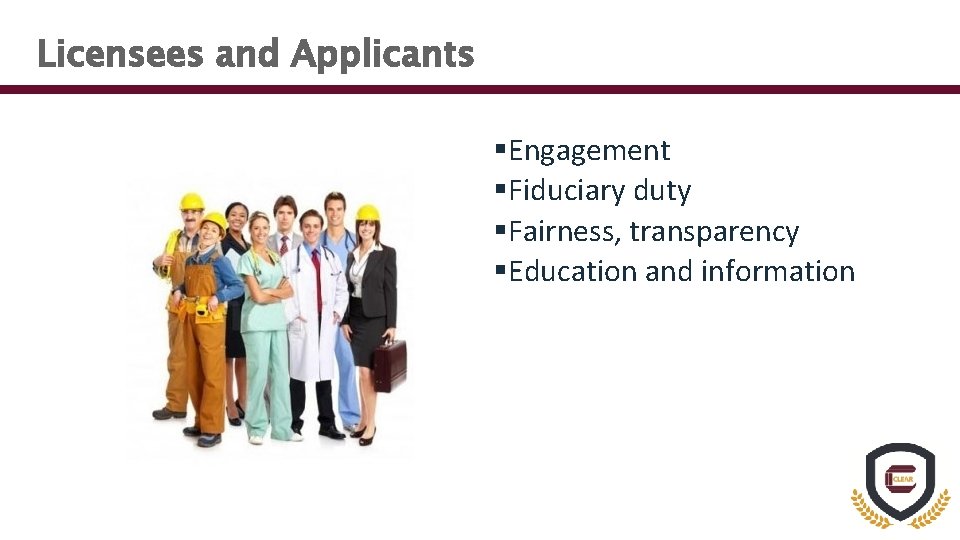
Licensees and Applicants §Engagement §Fiduciary duty §Fairness, transparency §Education and information
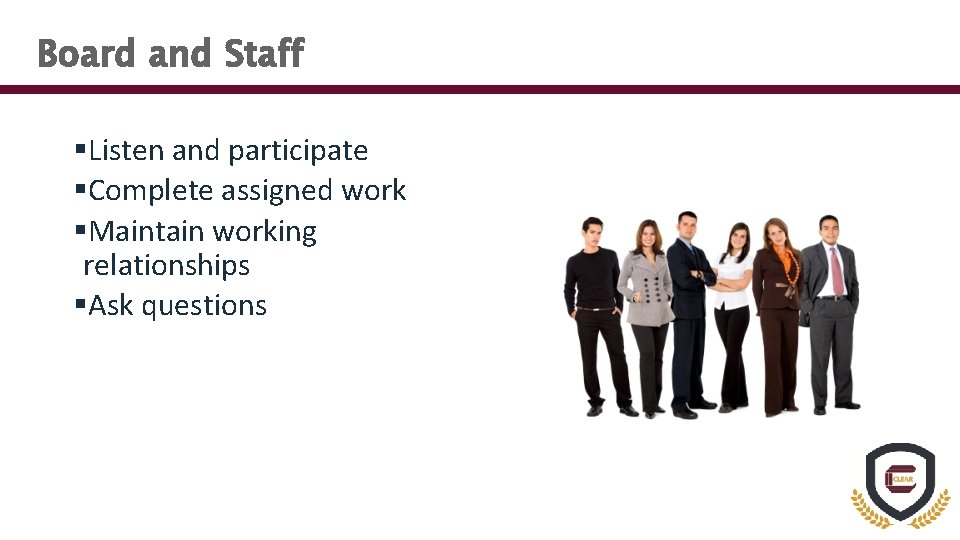
Board and Staff §Listen and participate §Complete assigned work §Maintain working relationships §Ask questions
Code of Conduct
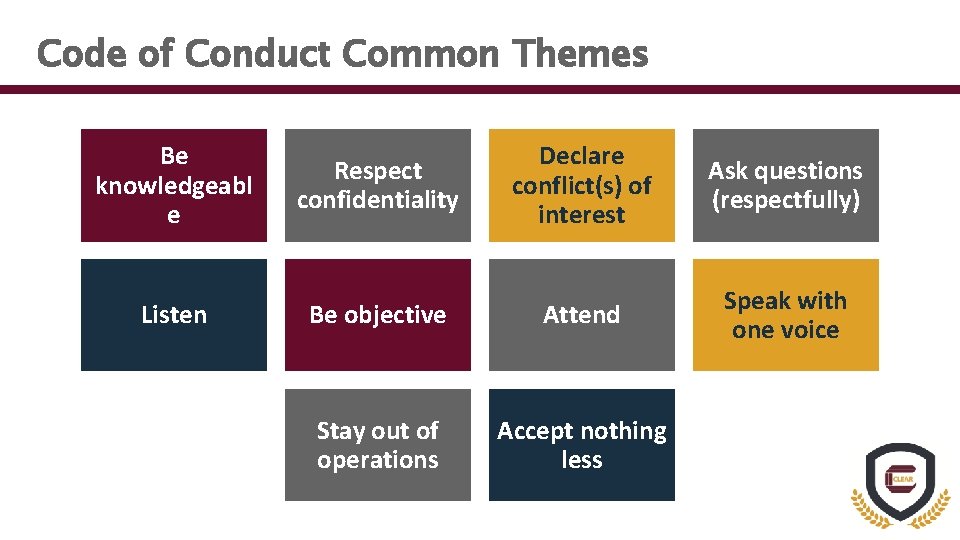
Code of Conduct Common Themes Be knowledgeabl e Respect confidentiality Declare conflict(s) of interest Ask questions (respectfully) Listen Be objective Attend Speak with one voice Stay out of operations Accept nothing less
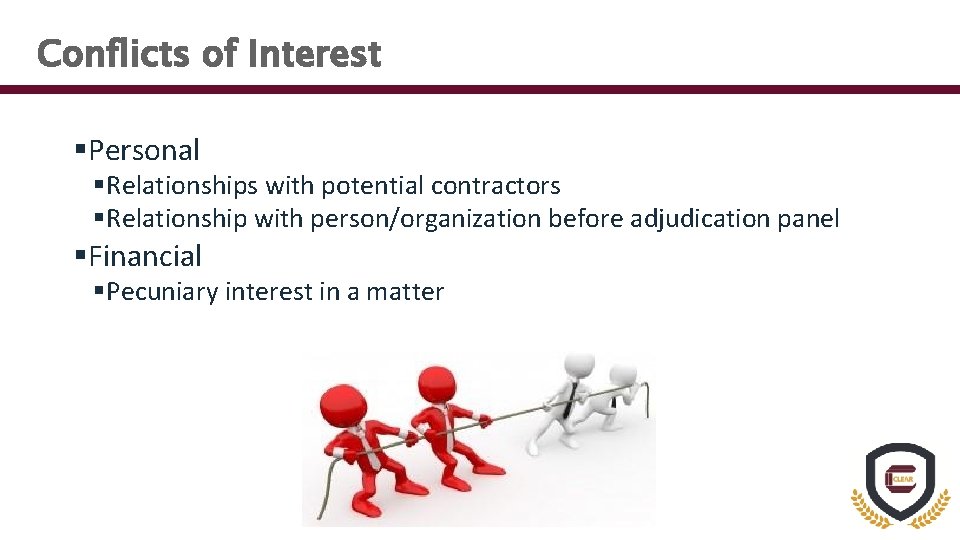
Conflicts of Interest §Personal §Relationships with potential contractors §Relationship with person/organization before adjudication panel §Financial §Pecuniary interest in a matter
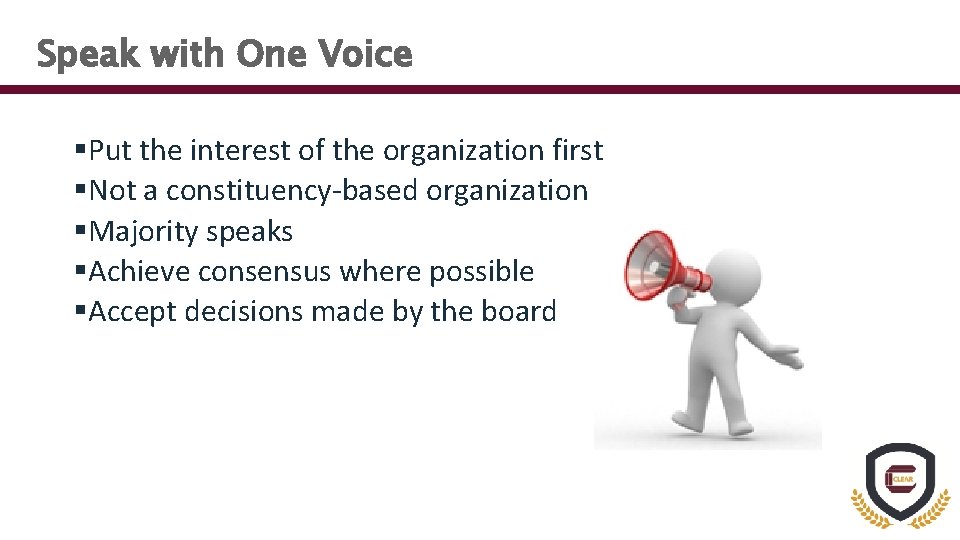
Speak with One Voice §Put the interest of the organization first §Not a constituency-based organization §Majority speaks §Achieve consensus where possible §Accept decisions made by the board
Bad Faith Decisions §Not common §Insurance, indemnification often protects board for decisions made §No protection for board member where: §Undeclared conflict §Breach of confidentiality §Reputation management
Best Practices Regarding Conflicts of Interest §Know the policy §Declare conflict §Seek advice from Chair, CEO or Committee Chair §Leave the room; include departure in minutes §Train board members to encourage declaration
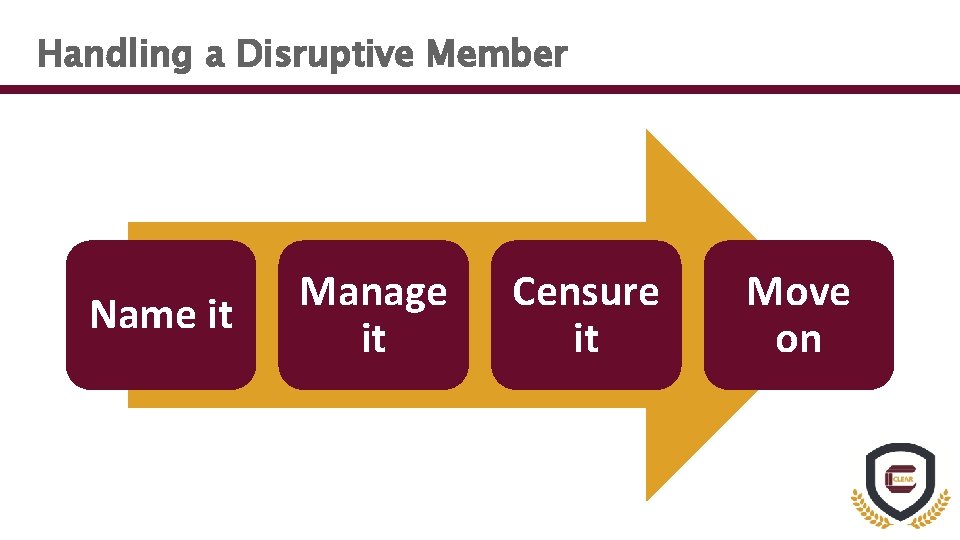
Handling a Disruptive Member Name it Manage it Censure it Move on

Sharing Information
Public Information §Laws §Decisions taken under statute §Governance (by choice) §Exception to public information §In camera meetings §Executive session meetings
Benefits of an Informed Public §Increased public confidence §Increased public trust §Enables members of public to exercise rights §Ensures quality of service §Increased knowledge of inner workings of regulation
Benefits of an Informed Profession §Knowledge of the rules of regulation §Integration of standards into practice §Decreased confusion between regulatory and professional organizations §Increased engagement in policy making
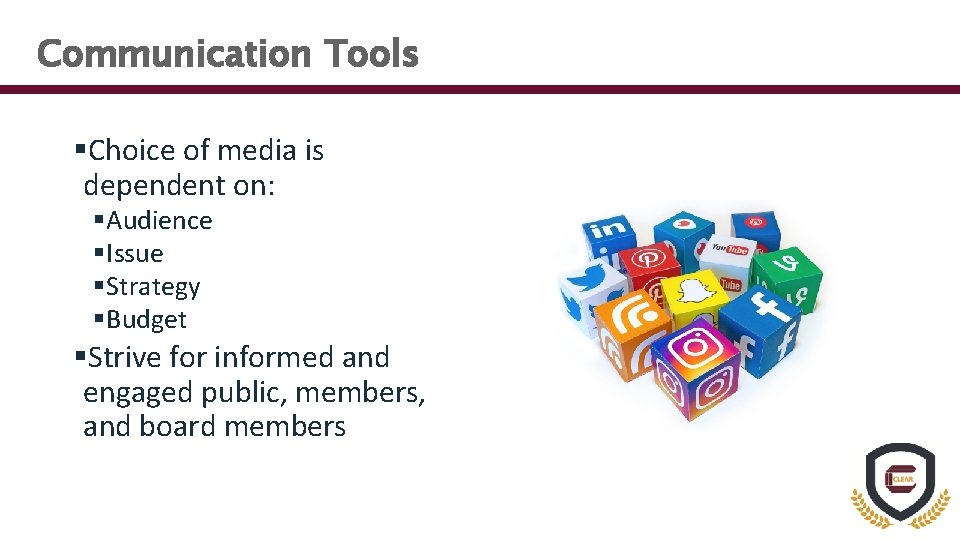
Communication Tools §Choice of media is dependent on: §Audience §Issue §Strategy §Budget §Strive for informed and engaged public, members, and board members
Building Good Relationships
Building and Maintaining Strong Relationships §Strong stakeholder relationships lead to an influential governing voice §Identify stakeholders and their strategic fit within the organization §Internal – board members, staff, licensees §External – government, consumers, academia, other professions §Attend to the relationship with your stakeholders
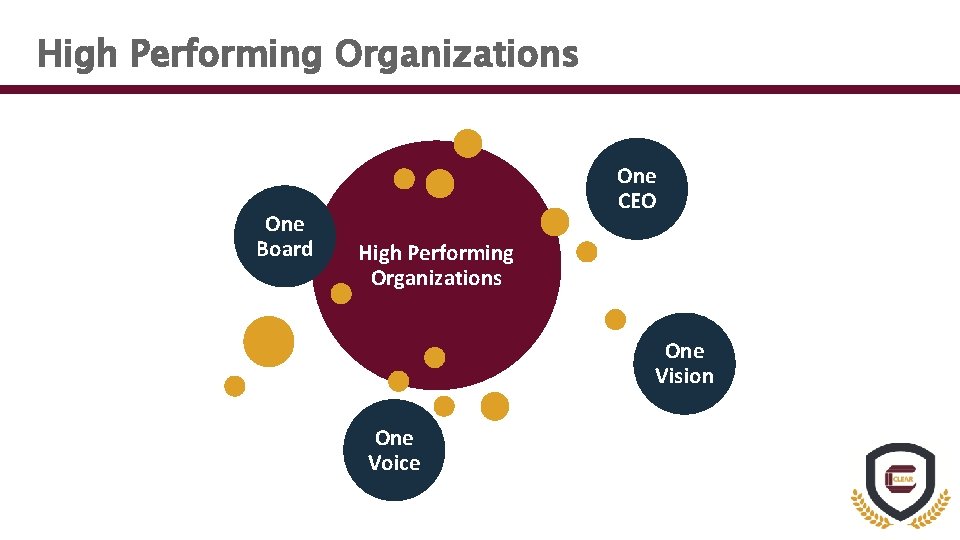
High Performing Organizations One Board One CEO High Performing Organizations One Vision One Voice
One Staff Person §Board hires CEO §CEO hires staff §Staff works under CEO direction
Evaluation
Evaluating Board Performance §Meeting evaluation §Annual evaluation §Self evaluation §Peer evaluation
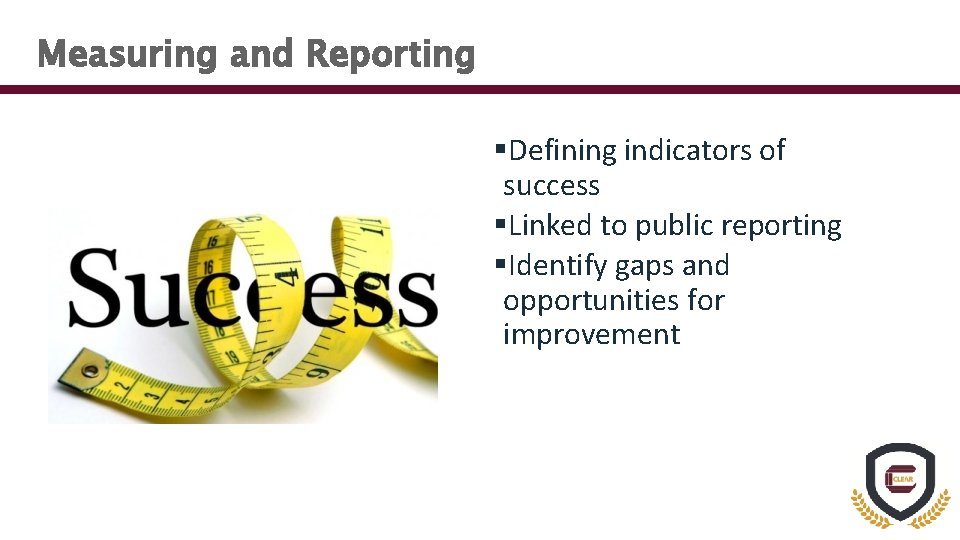
Measuring and Reporting §Defining indicators of success §Linked to public reporting §Identify gaps and opportunities for improvement
Session Review
Session Review §Responsible to many §Governance, not operations §Partners in leadership §Build public trust
Learning Objectives Review §You should now be able to: §Identify the roles and responsibilities of individual board members, and the board as a whole §Recognize the roles of staff and how staff and board members interact §Summarize a code of conduct for board members and staff §Identify and avoid conflicts of interest §Evaluate board performance

Practical Exercise

Questions
- Slides: 41