
Roles and Responsibilities in the Courtroom Judge The
Roles and Responsibilities in the Courtroom

Judge The role of the judge is to be independent and impartial. • Deciding the admissibility of evidence: • The selection and empanelling of a jury • Safeguarding the rules of procedure: . • Deciding all questions of law: . • Deciding questions of fact when there is no jury • Deciding the sanction

Jury The jury listens to the evidence, considers the evidence and reaches a verdict. • Listens to all evidence and submissions presented by counsel for both sides • Remembers, collates and analyses arguments presented for both sides • Decides questions of fact • Follows instructions given by the judge on questions of evidence, procedure and points of law • Follows the judge’s direction, if issued, to acquit the accused • Takes note of the judge’s final summary of the case • Reaches and delivers a verdict.
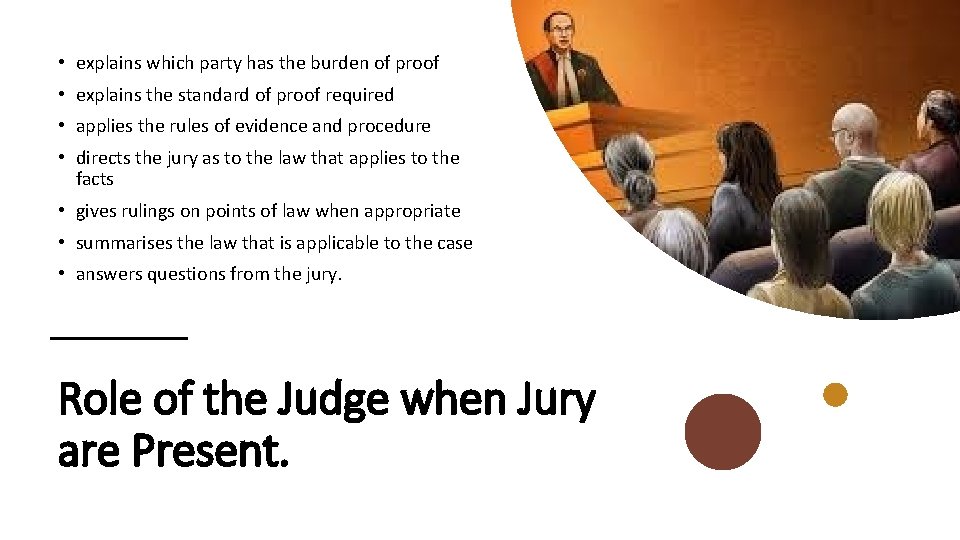
• explains which party has the burden of proof • explains the standard of proof required • applies the rules of evidence and procedure • directs the jury as to the law that applies to the facts • gives rulings on points of law when appropriate • summarises the law that is applicable to the case • answers questions from the jury. Role of the Judge when Jury are Present.
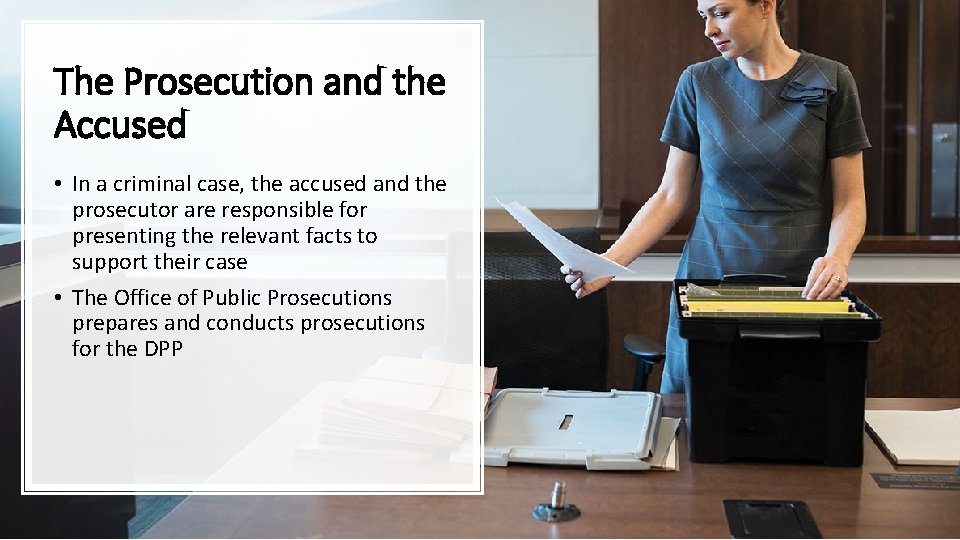
The Prosecution and the Accused • In a criminal case, the accused and the prosecutor are responsible for presenting the relevant facts to support their case • The Office of Public Prosecutions prepares and conducts prosecutions for the DPP
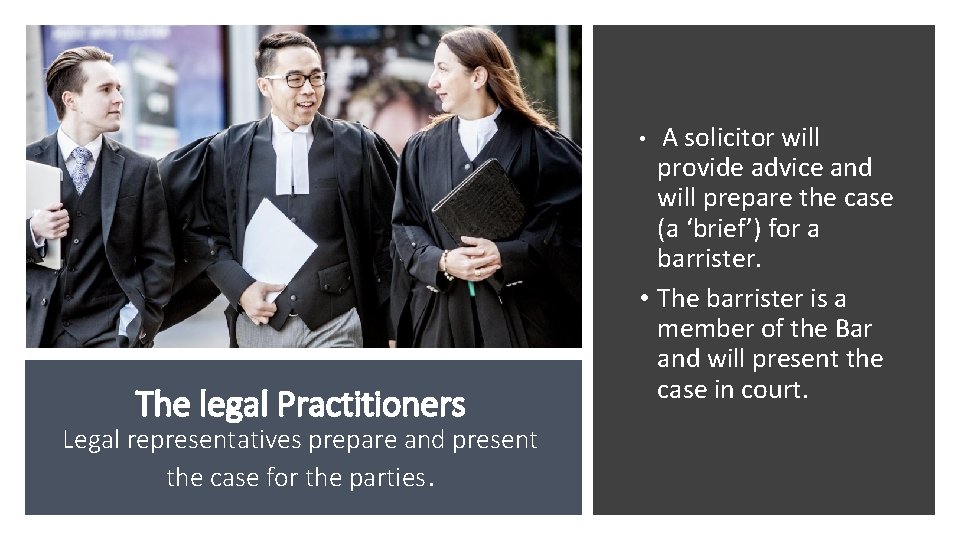
A solicitor will provide advice and will prepare the case (a ‘brief’) for a barrister. • The barrister is a member of the Bar and will present the case in court. • The legal Practitioners Legal representatives prepare and present the case for the parties.
- Slides: 6