
Role of women in early REDD implementation Anne
- Slides: 11
Role of women in early REDD+ implementation Anne Larson, Amy E. Duchelle Therese Dokken, Andina Auria Dwi Putri COP 21 Gender Day - Paris, France - 09 December 2015 a. duchelle@cgiar. org
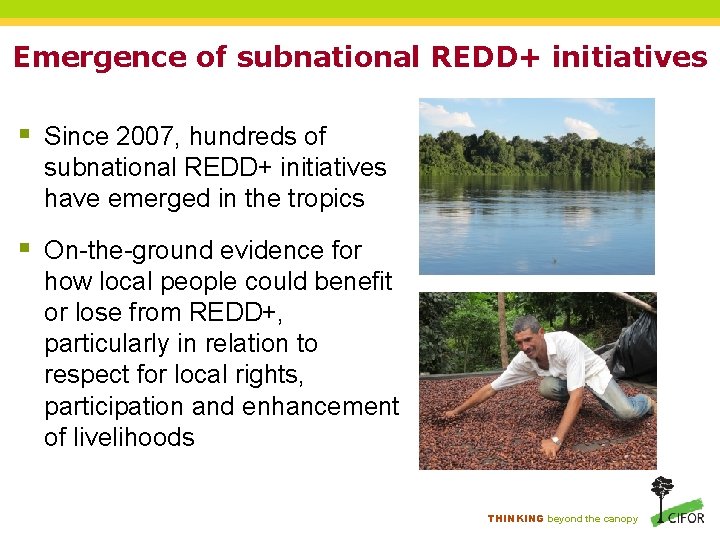
Emergence of subnational REDD+ initiatives § Since 2007, hundreds of subnational REDD+ initiatives have emerged in the tropics § On-the-ground evidence for how local people could benefit or lose from REDD+, particularly in relation to respect for local rights, participation and enhancement of livelihoods THINKING beyond the canopy
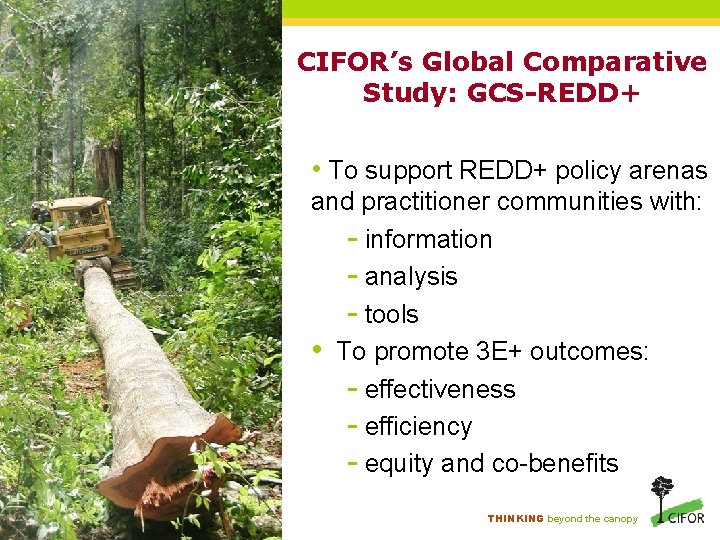
CIFOR’s Global Comparative Study: GCS-REDD+ • To support REDD+ policy arenas and practitioner communities with: - information - analysis - tools • To promote 3 E+ outcomes: - effectiveness - efficiency - equity and co-benefits THINKING beyond the canopy
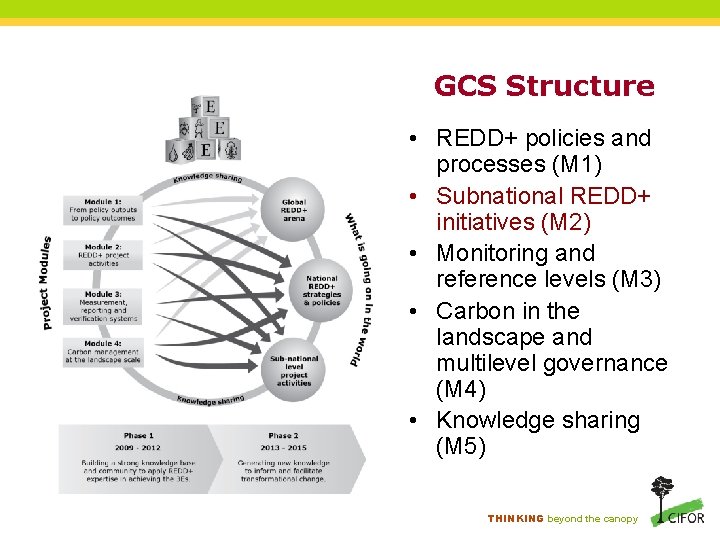
GCS Structure • REDD+ policies and processes (M 1) • Subnational REDD+ initiatives (M 2) • Monitoring and reference levels (M 3) • Carbon in the landscape and multilevel governance (M 4) • Knowledge sharing (M 5) THINKING beyond the canopy
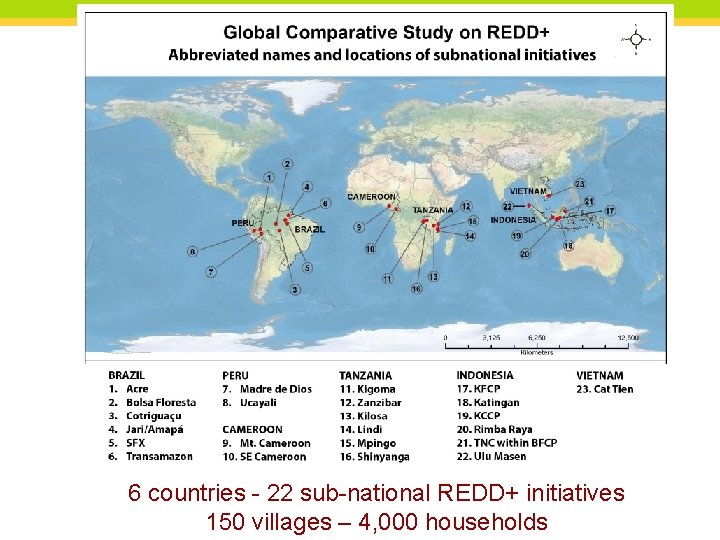
6 countries - 22 sub-national REDD+ initiatives 150 villages – 4, 000 households
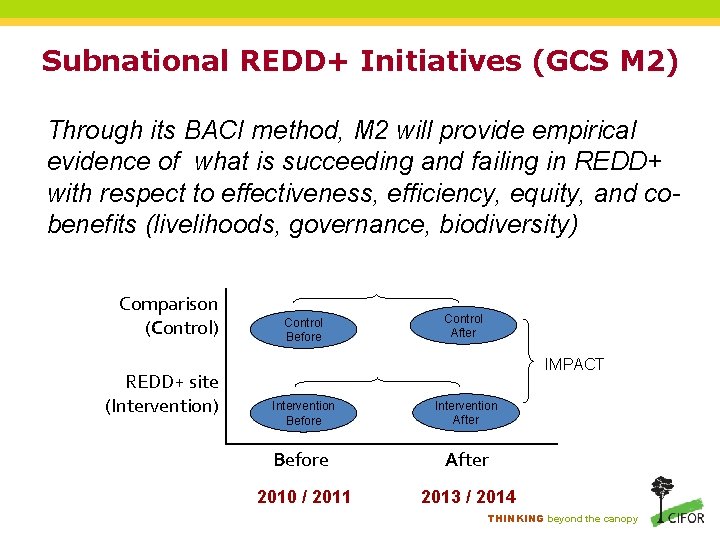
Subnational REDD+ Initiatives (GCS M 2) Through its BACI method, M 2 will provide empirical evidence of what is succeeding and failing in REDD+ with respect to effectiveness, efficiency, equity, and cobenefits (livelihoods, governance, biodiversity) Comparison (Control) REDD+ site (Intervention) Control Before Control After IMPACT Intervention Before Intervention After Before After 2010 / 2011 2013 / 2014 THINKING beyond the canopy
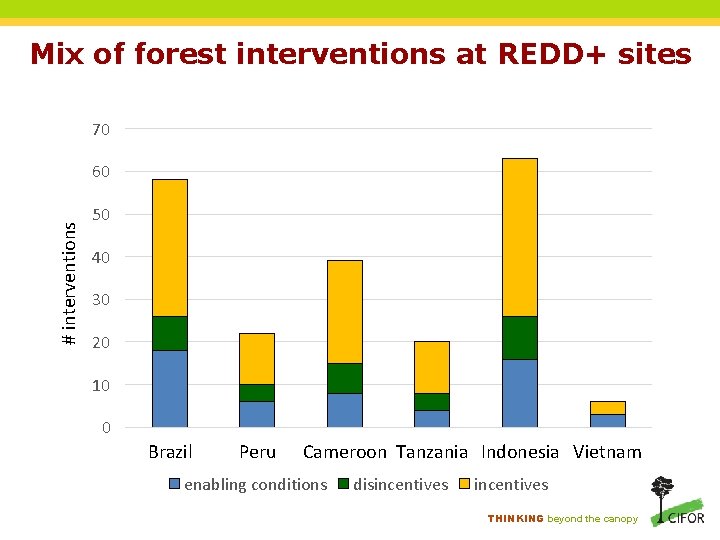
Mix of forest interventions at REDD+ sites 70 # interventions 60 50 40 30 20 10 0 Brazil Peru Cameroon Tanzania Indonesia Vietnam enabling conditions disincentives THINKING beyond the canopy
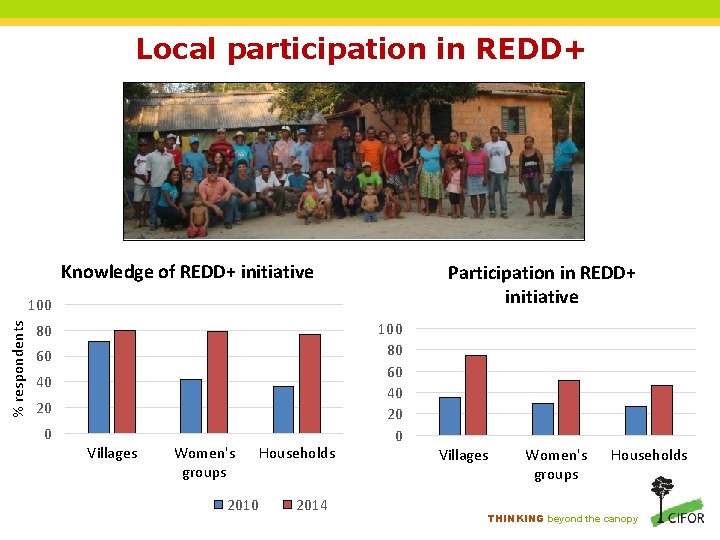
Local participation in REDD+ Knowledge of REDD+ initiative Participation in REDD+ initiative % respondents 100 80 60 40 20 0 Villages Women's groups Households 2010 2014 100 80 60 40 20 0 Villages Women's groups Households THINKING beyond the canopy
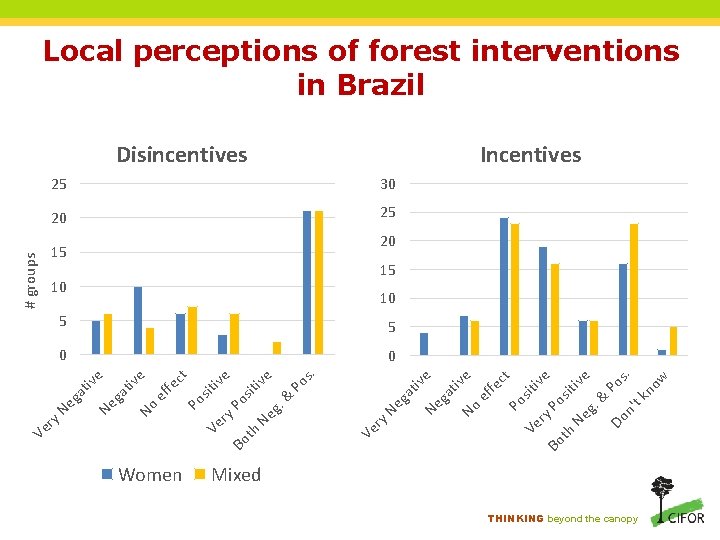
ive at eg ry N Women at eg ry N # groups 25 30 20 25 15 10 5 5 0 0 iv Ne e ga tiv No e ef fe c Po t Ve siti ve ry Bo Po th s Ne itive g. & Do Pos. n' tk no w Ve Ne ga tiv No e ef fe ct Po Ve sitiv e ry Po Bo si th Ne tive g. & Po s. Ve Local perceptions of forest interventions in Brazil Disincentives Incentives 20 15 10 Mixed THINKING beyond the canopy
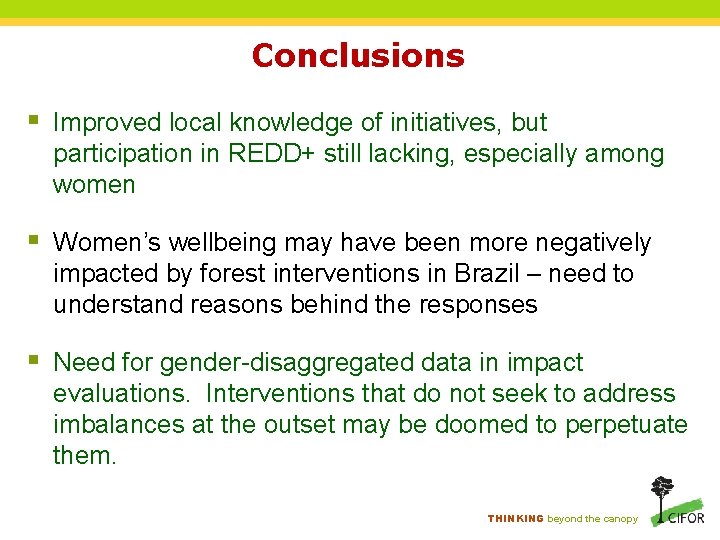
Conclusions § Improved local knowledge of initiatives, but participation in REDD+ still lacking, especially among women § Women’s wellbeing may have been more negatively impacted by forest interventions in Brazil – need to understand reasons behind the responses § Need for gender-disaggregated data in impact evaluations. Interventions that do not seek to address imbalances at the outset may be doomed to perpetuate them. THINKING beyond the canopy
Financial support for GCS-REDD+: Norwegian Agency for Development Cooperation, Australian Agency for International Development, European Commission, UK Department for International Development, CGIAR Forests, Trees and Agroforestry (FTA) Programme. Global Comparative Study on REDD+: http: //www. cifor. org/gcs/ Forests and Gender: http: //www. cifor. org/gender/