
Role of WMO in supporting adaptation to climate
- Slides: 19
Role of WMO in supporting adaptation to climate variability and change Professor Hong Yan Deputy Secretary General World Meteorological Organization 1
Presentation Plan • WMO at a glance • Role of WMO in supporting adaptation to climate variability and change • Monitoring, research, modelling and prediction • Adaptation and sustainable development 2
WMO at a glance • Established in 1950 as a specialized agency of the United Nations • UN authoritative voice on weather, climate and water • 187 Members from 6 regions • 8 Commissions – provide scientific guidance and insight 3
WMO VISION • Provide world leadership in expertise and international cooperation in weather, climate, hydrology and water resources, and related environmental issues, • Contributing to the safety and well being of people throughout the world and to the economic benefit of all nations. 4
WMO Achievements In the climate area, – World Climate Programme (WCP) – Intergovernmental Panel on Climate Change (IPCC) – Global Climate Observing Systems (GCOS) – World Climate Research Programme (WCRP) 5
Role of WMO in supporting adaptation to climate variability and change • WMO recognizes – Adapting to present climate variability will go a long way in adapting to long-term climate change. – The adaptation and mitigation together can help achieve sustainable development. 6
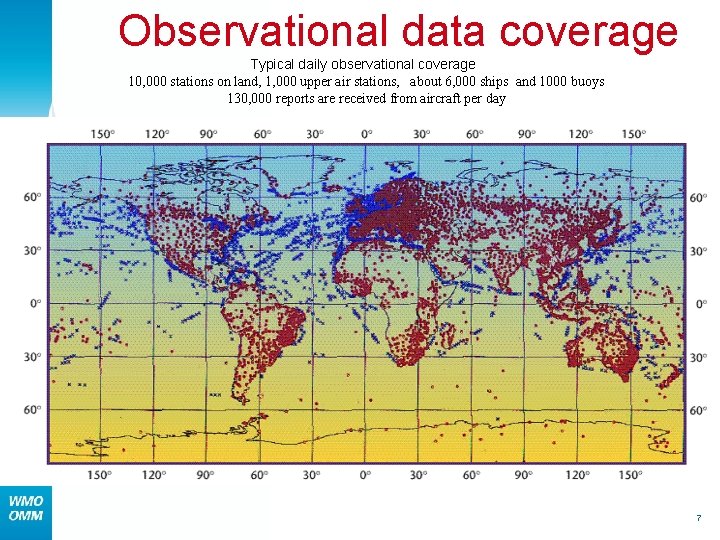
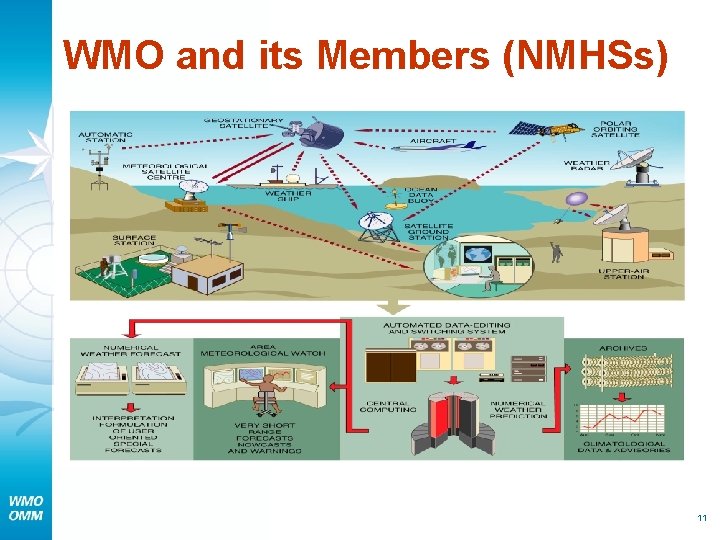
Observational data coverage Typical daily observational coverage 10, 000 stations on land, 1, 000 upper air stations, about 6, 000 ships and 1000 buoys 130, 000 reports are received from aircraft per day 7
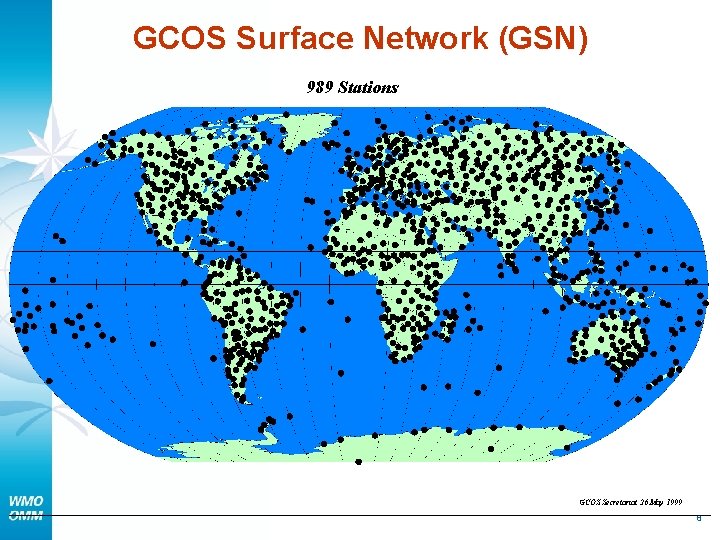
GCOS Surface Network (GSN) 989 Stations GCOS Secretariat 26 May 1999 8
WMO and its Members (NMHSs) 11
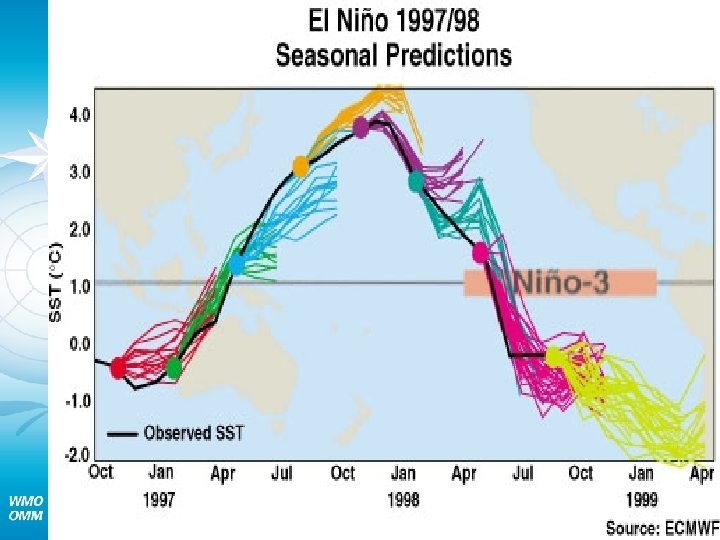
12
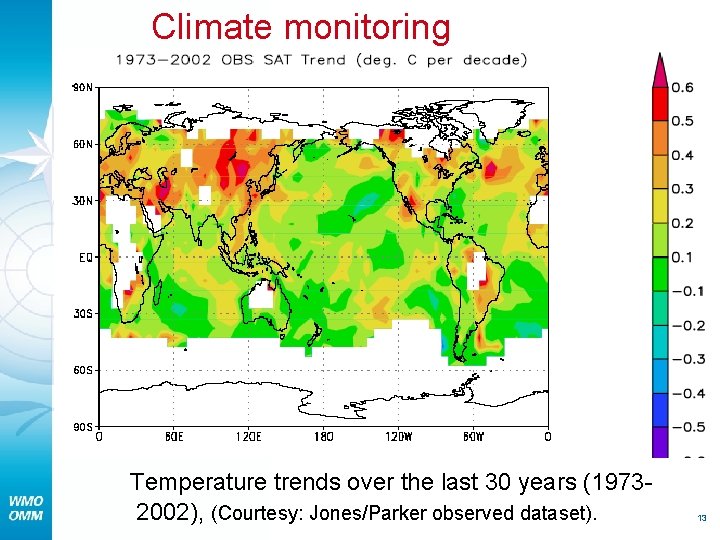
Climate monitoring Temperature trends over the last 30 years (19732002), (Courtesy: Jones/Parker observed dataset). 13
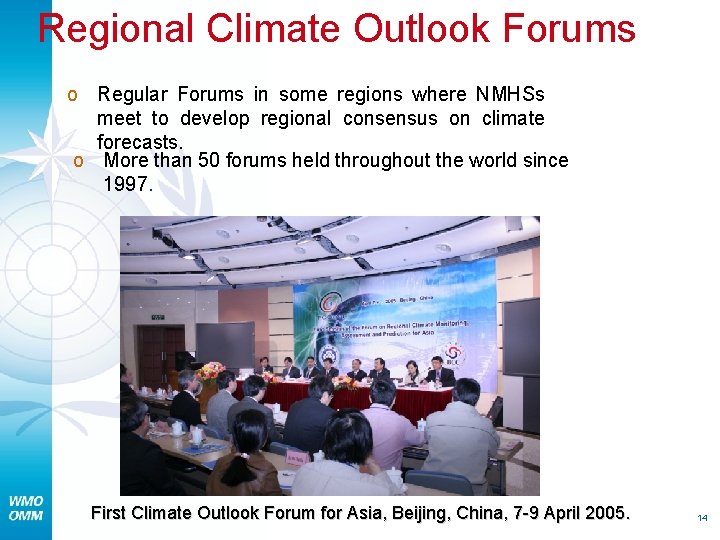
Regional Climate Outlook Forums o Regular Forums in some regions where NMHSs meet to develop regional consensus on climate forecasts. o More than 50 forums held throughout the world since 1997. First Climate Outlook Forum for Asia, Beijing, China, 7 -9 April 2005. 14
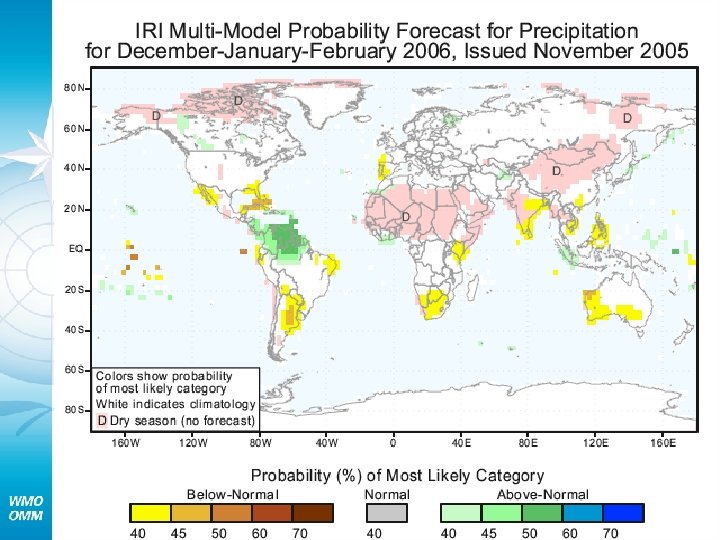
(Courtesy: IRI, New York, USA). 16
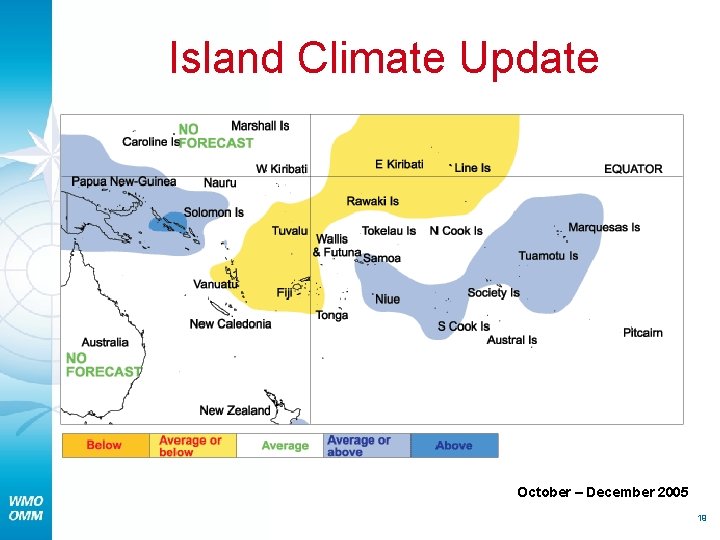
Island Climate Update October – December 2005 19
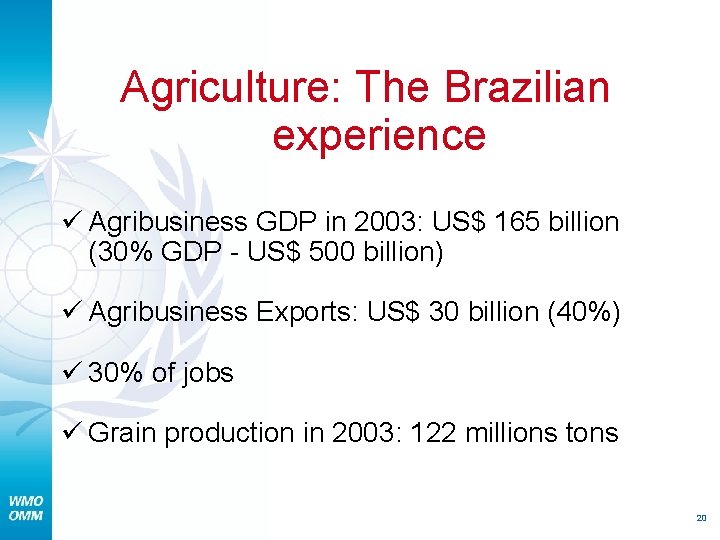
Agriculture: The Brazilian experience ü Agribusiness GDP in 2003: US$ 165 billion (30% GDP - US$ 500 billion) ü Agribusiness Exports: US$ 30 billion (40%) ü 30% of jobs ü Grain production in 2003: 122 millions tons 20
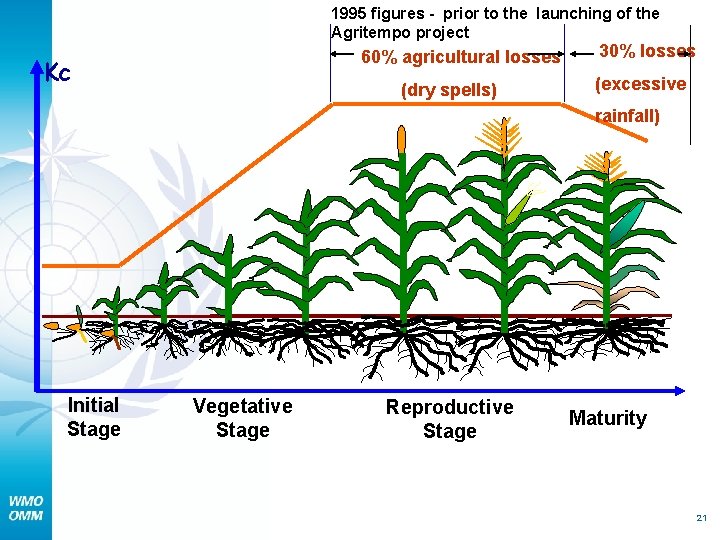
1995 figures - prior to the launching of the Agritempo project 60% agricultural losses Kc (dry spells) 30% losses (excessive rainfall) Initial Stage Vegetative Stage Reproductive Stage Maturity 21
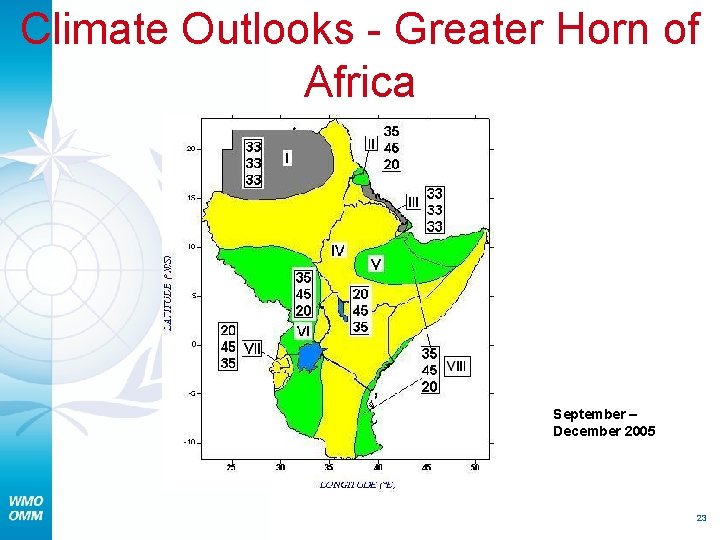
Climate Outlooks - Greater Horn of Africa September – December 2005 23
What is needed in the future? • Enhanced global observation systems of system • New frontiers in climate monitoring, research, modelling and prediction • Climate knowledge – for adaptation and sustainable development 24
Concluding remarks • Weather systems do not recognize political boundaries. WMO and its 187 Members are working together! • WMO will support adaptation to climate variability and change programmes and activities at all levels through its systematic observation, monitoring, research, prediction, applications and capacity building programmes • WMO will help National Meteorological and Hydrological Services (NMHSs) to fulfil their mandates - safeguarding public safety, ensuring environmental quality and contributing to socio-economic and sustainable development 25